DESIGNING OF CAR HOOD AND ITS COMPONENTS
HOOD DESIGN
HOOD COMPONENTS:
- Outer Panel
- Inner Panel
- Hinge
- Latch and stricker
HOOD:
Hood are typically made out of steel or aluminum which are used to cover the front side of the car where the engine is to be placed, although aftermarket manufacturers may manufacture hoods out of fiberglass, carbon fiber, or dry carbon.The hood or bonnet is the hinged cover over the engine of motor vehicles that allows access to the engine compartment for maintenance and repair. On passenger cars, a hood may be held down by a concealed latch.Some high performance cars have ‘hood scoops’ which channel outside air directly to the air filter, which gives improved performance and efficiency.It is hinged thin sheet which covers and protects the main parts of car like engine.
Data to follow:
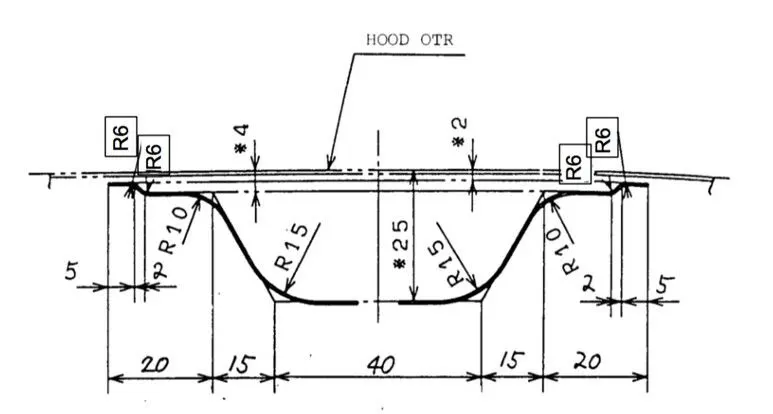
Data to be used:
Hood Thickness Information
- Outer Panel Thickness = 0.75mm
- Inner Panel Thickness = 0.75mm
- Reinforcement Thickness = 1.5mm
Inner Panel:
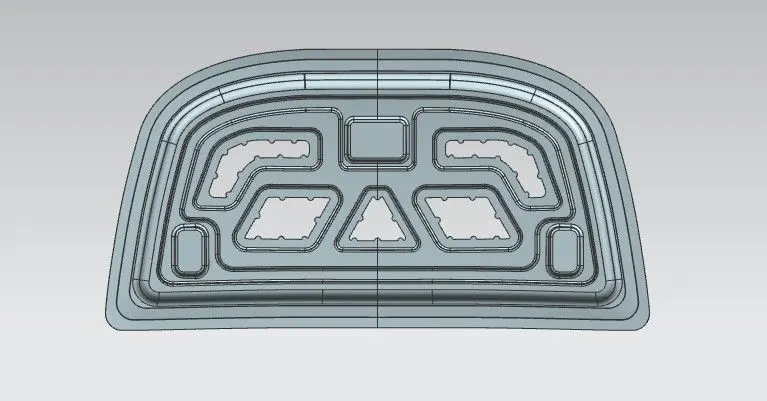
The inner panel supports the outer panel. it consists of embosses & holes. Embosses provide stiffness as well as it dissipates energy towards reinforcement.
Outer Panel:
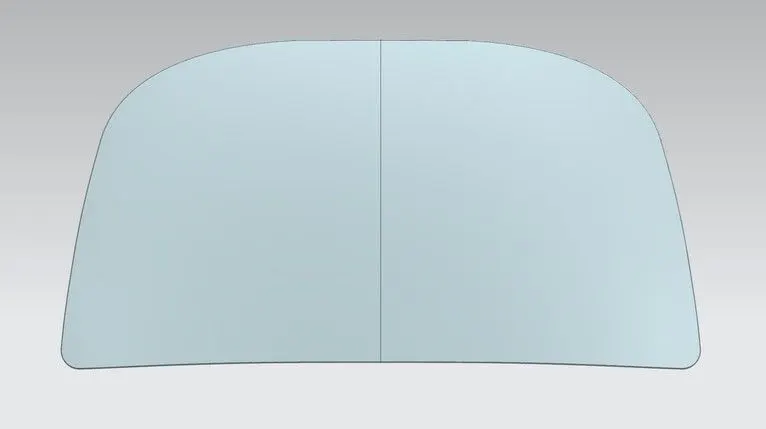
Outer Panel is used to cover the inner panel which comprises of the engine below it. It is usually ,ade of steel or aluminium.
Mastic Data:
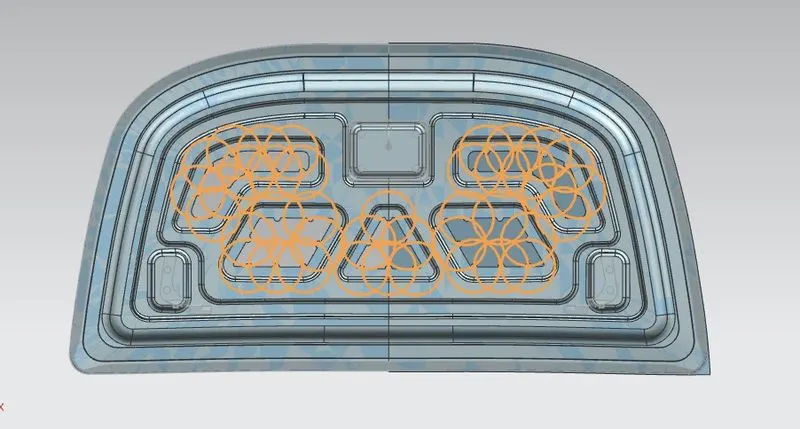
Mastic Data is nothing but there must be some NVH issues while driving which cause discomfort to the user. hence Mastic points are created to arrest the NVH issues. It should be within 80 mm to be perfect and efficient. In these mastic points, Masic rubbers will be placed to arrest the Vibrations.
Hemming Relief and Tolerance:
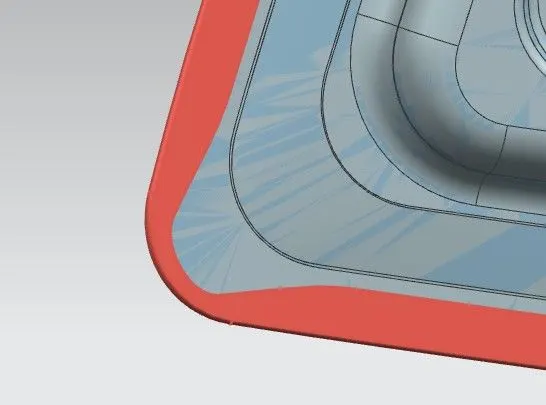
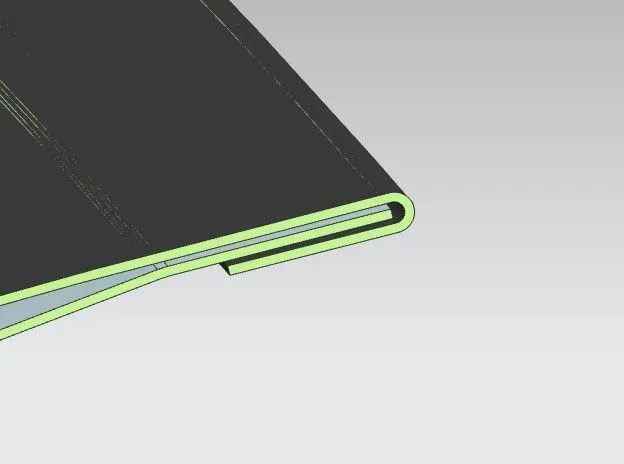
Hemming Relief and tolerance is given to the edge of the panels to give smooth hemming whiling bending corners otherwise it may cause some wavy typr of hemming which is inefficient.
Trajectory Circle function:
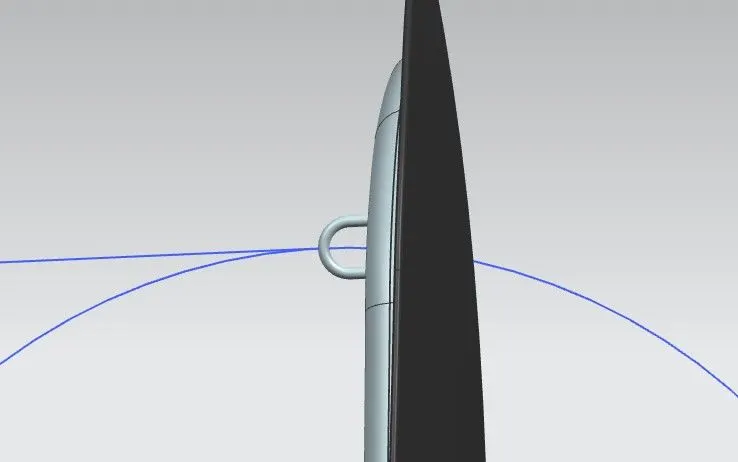
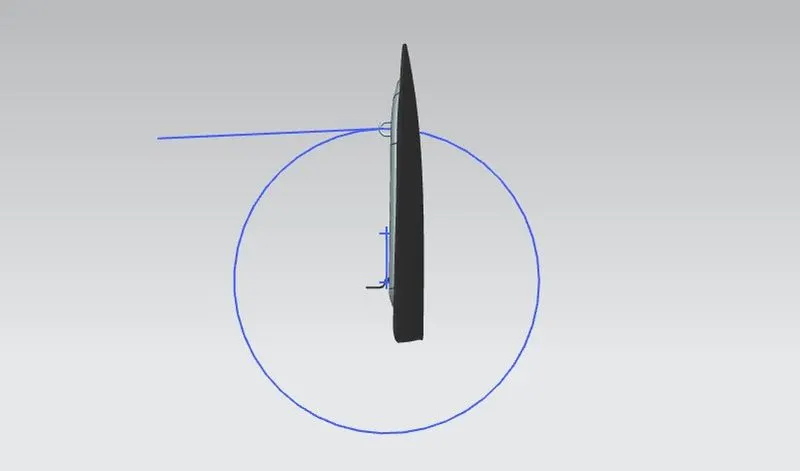
The Latch and stricker which is used to close and open the lid should be in a postion hat the tangent line of the circle from the axis f the hinge placement should be coplaner with the stricker line. This is demonstrated as shown.
Shock Flow:
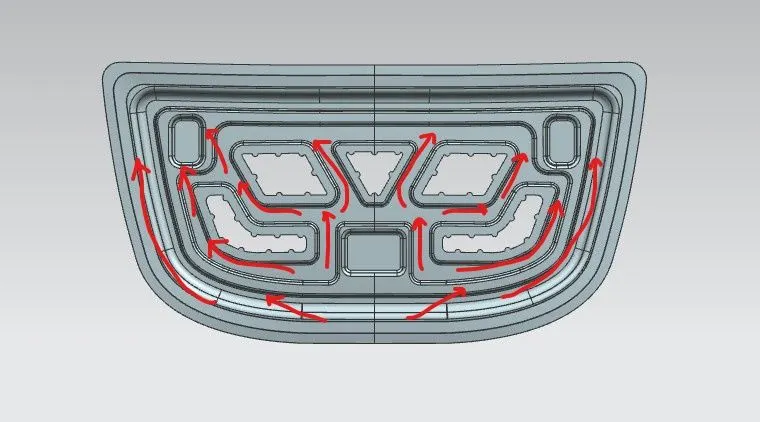
This topic is very important when it comes to crash test report. The Inner pqanle is designed in such a way that when the car get crahed from the front the shock flow will propogate in such a way that it doesnt hit the driver but will end at the side of the car which is as shown.
ASSEMBLY OF HOOD:
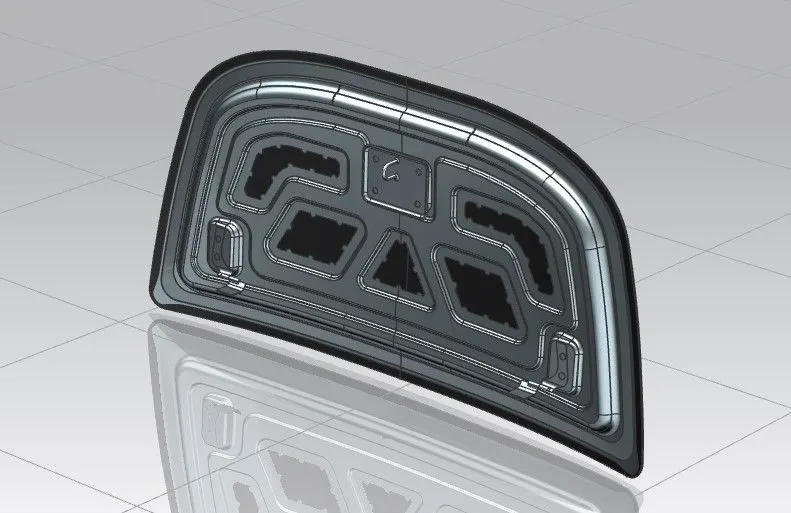
After creating each and every component needed for the Hood, The conponents are all assebled as shown.
Conclusion:
As per the given data and tolerances the hood and its components are sucessfully created and assembled and the data is analysed for crash and safety measures by EURO NCAP as well.