Door Arm Rest Week 8 Challenge
DESIGN OF DOOR ARM REST DESIGN USING CLASS A SURFACE:
GIVEN SURFACES:
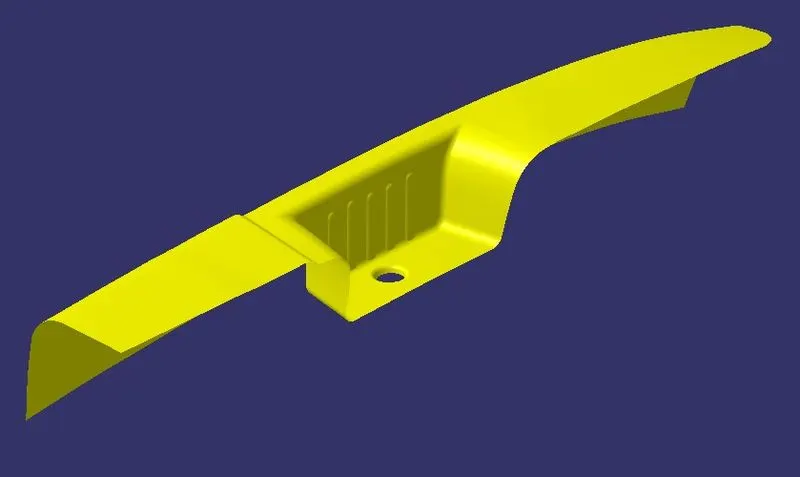
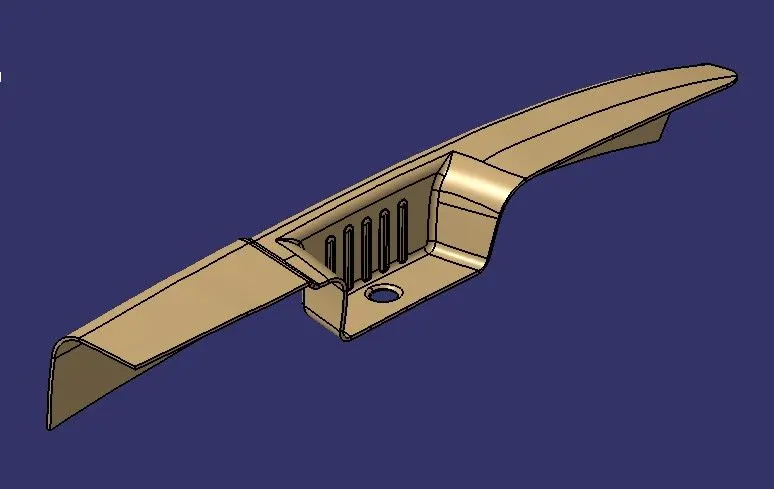
Door Arm Rest Class A:
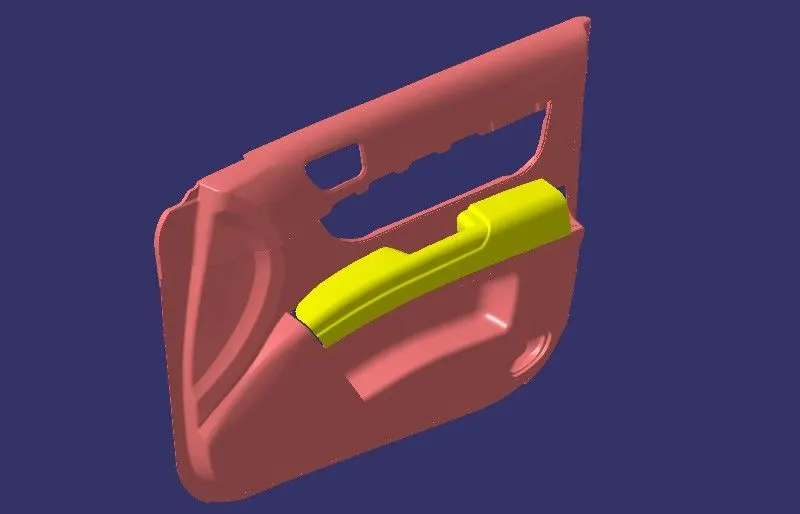
Door for reference:
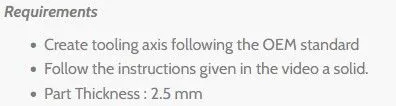
INSTRUCTIONS:
TOOLING AXIS:
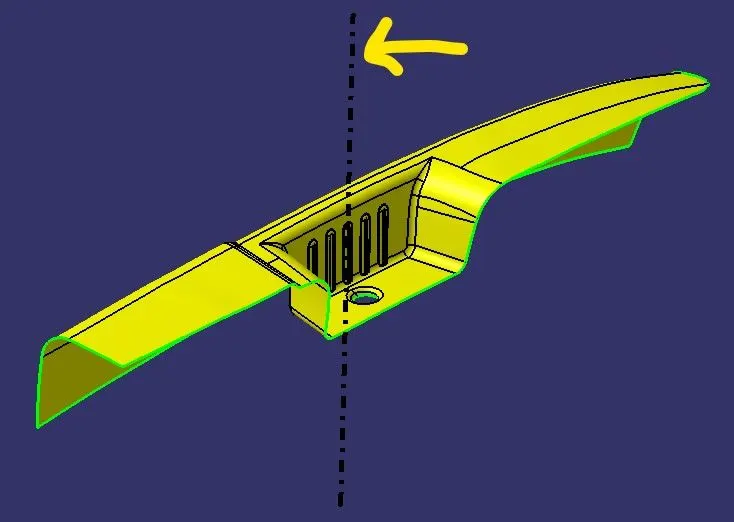
Tooling axis is the axis or direction of the core and cavity in which it passes to fix on the other part to create a solid part. Hence the tooling axis should be created at first after getting the A surfaces.
This tooling axis should be created in a direction where it satisfies most of the part creation. Hence a definite axis creation is a must in any plastic product design.
MAIN TOOLING AXIS:
SIDE CORE AXIS:
Even if we create a tooling axis for the surface, there are some exceptions where some areas wont be covered, or molded in that direction. Hence Side core axis is created to fit those areas.
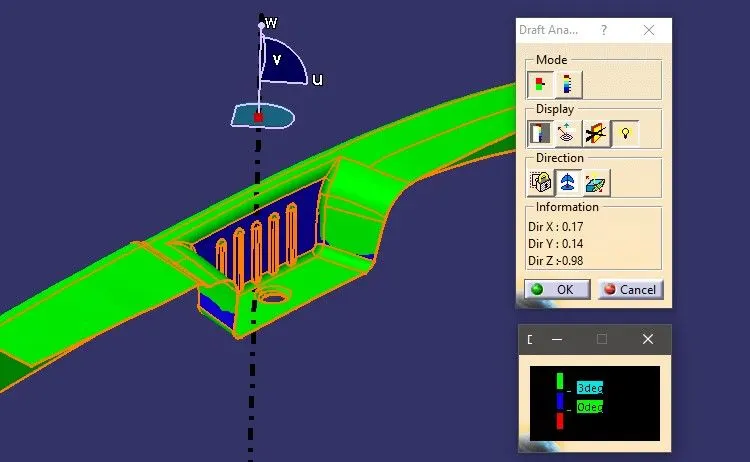
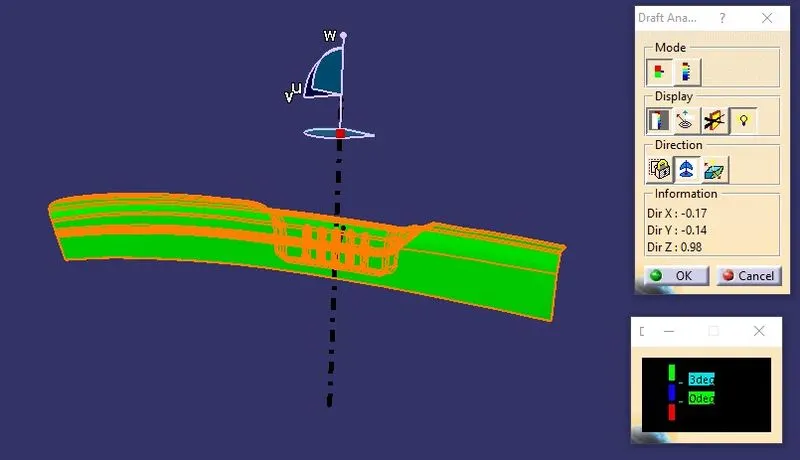
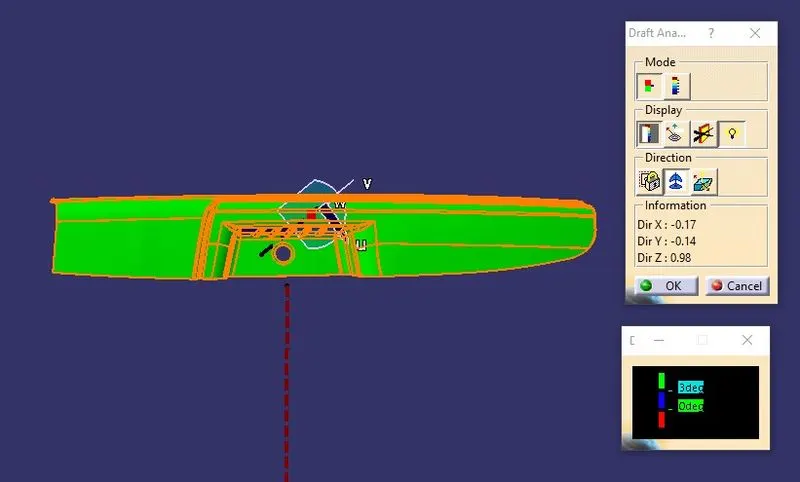
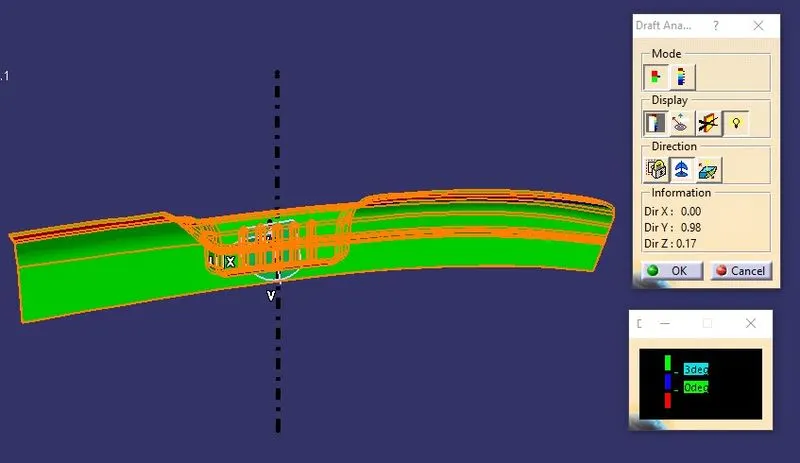
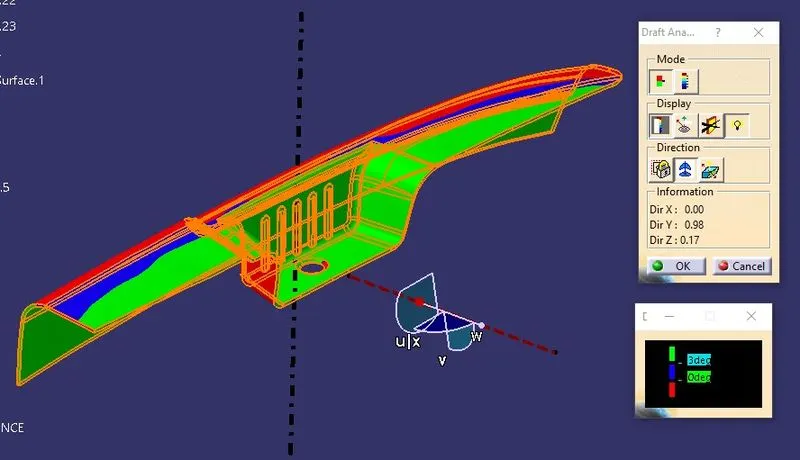
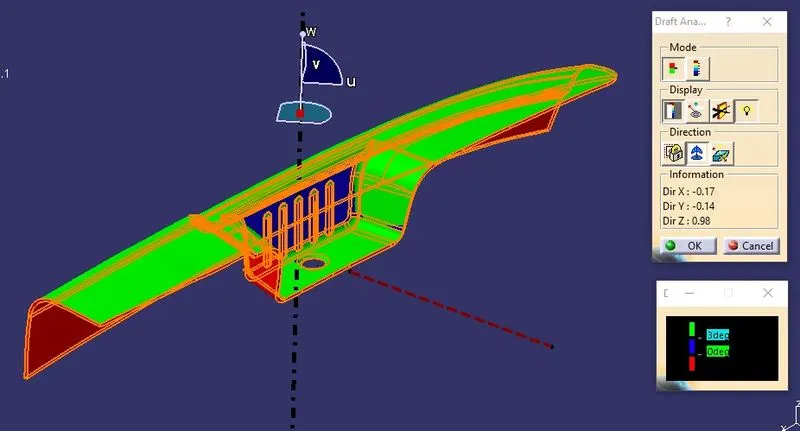
As the draft analysis shows, the blue areas are where the main tooling axis cant be able to cover up, hence creating a side core axis to cover those areas is required.
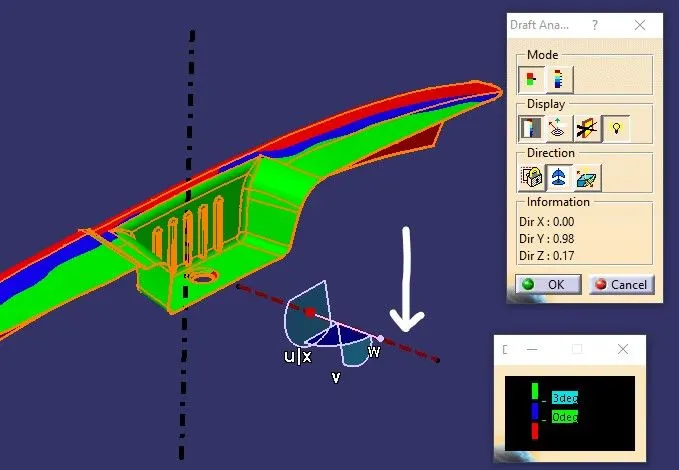
Hence the side core tooling axis is created satisfying he draft analysis.
DRAFT ANALYSIS:
Draft Analysis is a procedure to check wherether the created tooling axes satifies the molding process so that we will get a clear view of error in terms of colors.
Here, for plastic product design, the draft angle must be 0.5 - 3 DEG, this will be represented in red, blue and green color respectively.
RED - Below 0 Deg
BLUE -Between 0 - 3 Deg
GREEN - More that 3 Deg
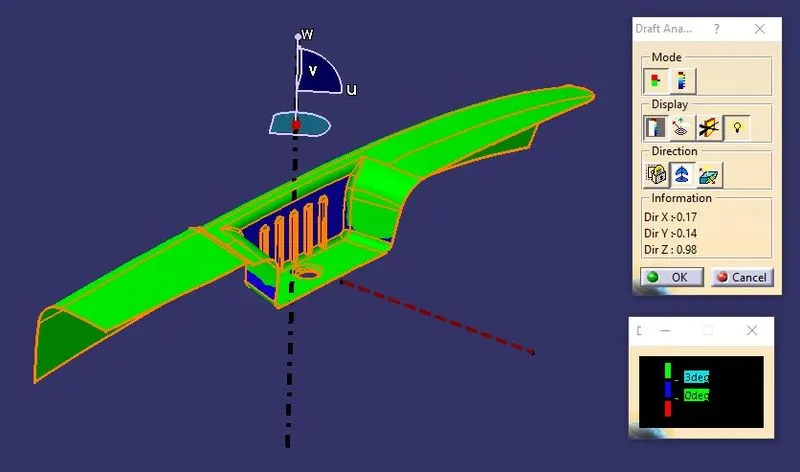
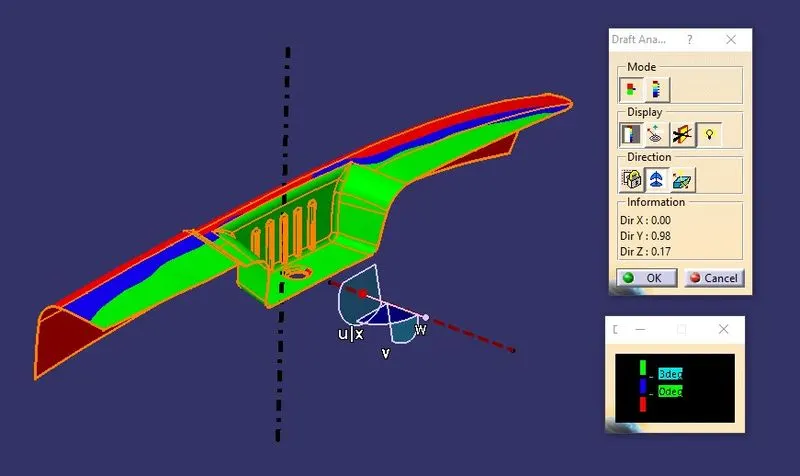
As in both images the green color represents that it satisfied the part creation without damage. These two images are taken because there is a requirement of side core tooling axis since the main tooling axis has failed to cover some areas.
CREATION of B SURFACE:
The surface which is creatd below the class A surface using the same as reference for thickness is known as B surface. It is usually extrapolated for easy solid creation. Hence it is always large when compared to Class A surface.
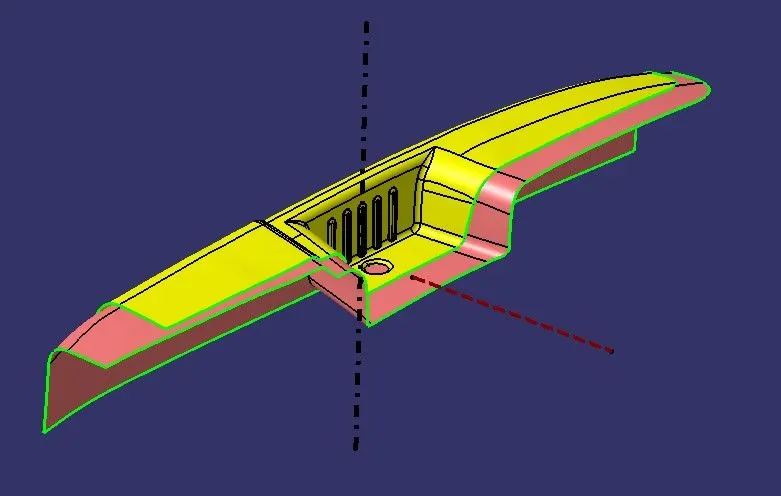
CLASS C SURFACE:
Class C Surface is created using the boundary of Class A considering the draft angle to be given. It is the trimmed with Class C and the joined with Class A for created a closed surface.
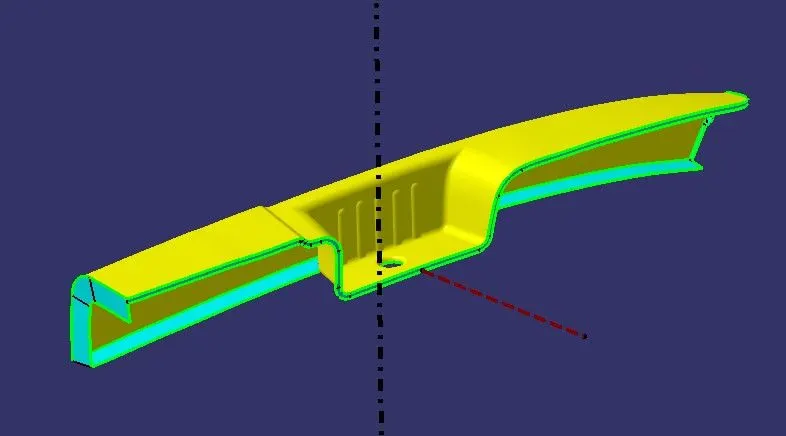
CLOSED SURFACE:
After joining all class sufaces, it forms a closed surface with no boundary or untrimmed edges making it easy for creating a solid part out of it.
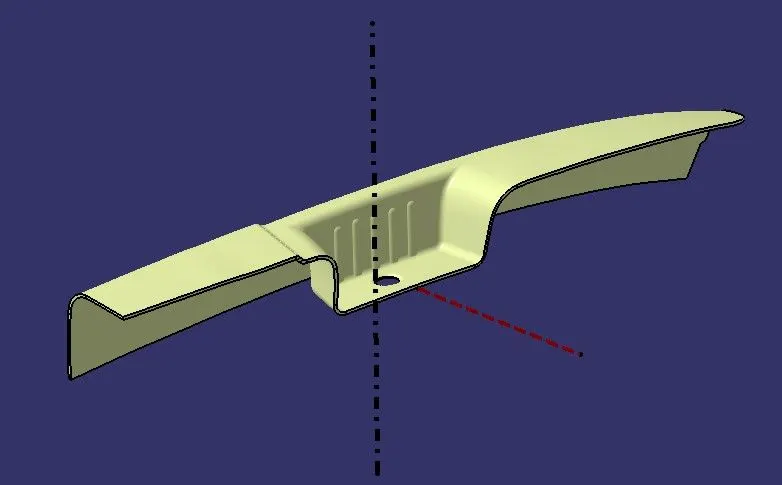
PART CREATION:
After the surface is closed, it is then converted into a solid part.
DRAFT ANALYSIS OF PLASIC PART: