Week 8: Literature review RANS derivation and analysis
introduction
Reynolda number
the Reynolds number is the ratio of inertia force to viscous force within a fluid that is being subjected to relative internal movement due to different fluid velocities which is known as a boundary layer in case bounding surface such as the interior of the pipe.
Reynolds decomposition
Reynold decomposition is a mathematical technique to split the flow variable into the main component and fluctuating component.
Types of fluid flow
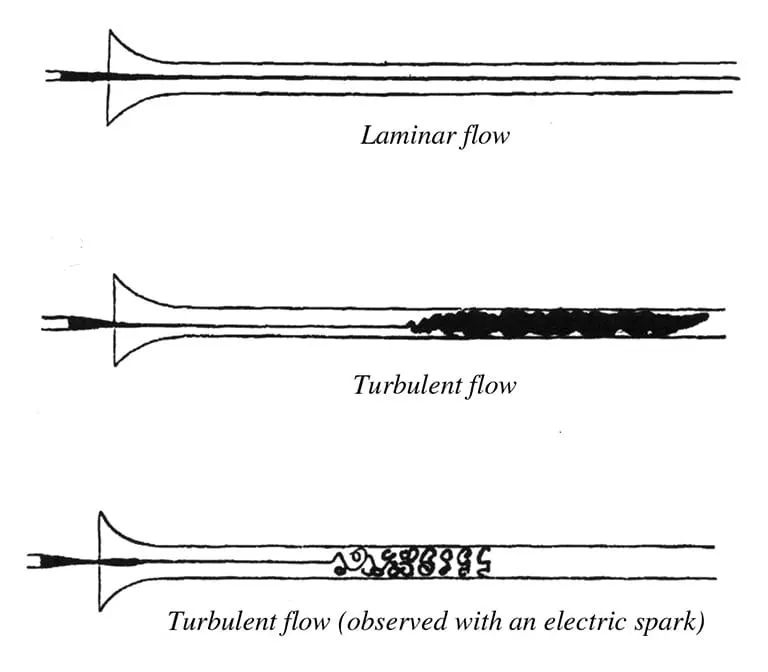
laminar flow
transient flow
turbulence flow
the type of flow can be determined using the Reynolds number. a low Reynolds number corresponds to laminar flow where the flow is in an orderly manner and parameters like pressure and velocity remain steady. A high Reynolds number correspond to turbulent flow where the flow is chaotic and parameter are fluctuating.
Turbulence modeling
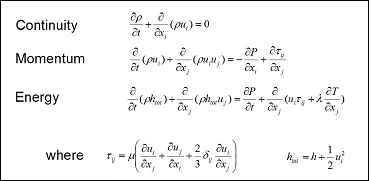
turbulence modeling is used to calculate Reynolds stress term and turbulent viscosity, the effect of turbulence can be modeled using a method called direct numerical simulation which involves solving the Naver stoke equation over the turbulent time step. but the turbulent time step is very small thus computational cell size is required to solve.
Renolds shear stress
Reynolds shear stress is the function of the product of turbulent viscosity and velocity gradient
Reynolds stress
Reynolds stress is a component of stress in the fluid which is obtained by averaging operation over never stoke question used to account for turbulent function in a fluid moment.
Turbulent viscosity
the turbulent viscosity is a function of fluctuation in velocity terms and is influenced by randomness or disorderliness inflow
It is nonlinear and difficult to estimate
it is dependent on flow domains such velocity,Reynolds number and not a fluid property
it is dominant in turbulent flow regimens with Reynolds number
the flow velocity is high nad turbulent viscosity Depend velocity and flow condition of fluid
Molecular viscosity
is a resistance to the move, ent of one layer of fluid over an adjacent of fluid
it is a liner and is easy to measure
it is the fluid property and is independent of geometry
it is dominant in laminar flow regimes where Reynolds number is low
the velocity of flow is generally and molecular viscosity dependence the thickness of fluid