Week 8 - Simulating Cyclone separator with Discrete Phase Modelling
Introduction
cyclone separators are separation devices that use the principle of inertia to remove particulate matter from flue gases .cyclone separator is one of many air pollution control devices known as pre-cleaners since they generally remove large pieces of particulate matter, this prevents finer filtration method from having to deal with large, more abrasive particle later on .in addition several cyclone separators can operate in parallel and this system is known as a multi-cyclone
collection or separation efficiency is most properly defined for given particle size. As mentioned, fractional efficiency is defined as the fraction of particles of a given size collected in the cyclone, compared to those of that size going into the cyclone.
Empirical models for cyclone separator efficiency
lozia and leith model
the model assumes that a particle carried by vortex endures the influence of two forces a centrifugal force Z and flow resistance W.
`eta=1/(1+((diameter pc )/(diameter partic))^beta`
Li and Wnag model
the Li and wang model include particle bounce or re-entrainment and turbulent diffusion at the cycling wall.A two -dimensional analytical expression of particle distribution in cyclone is obtained Li and wang model was developed based on the following assumptions
1) the radial particle velocity and the radial concentration profile are not constant ,for uncollected particle within cyclones
2) boundary condition with consideration of turbulent diffusion coefficient and particle bounce re entrainment on cyclone wa
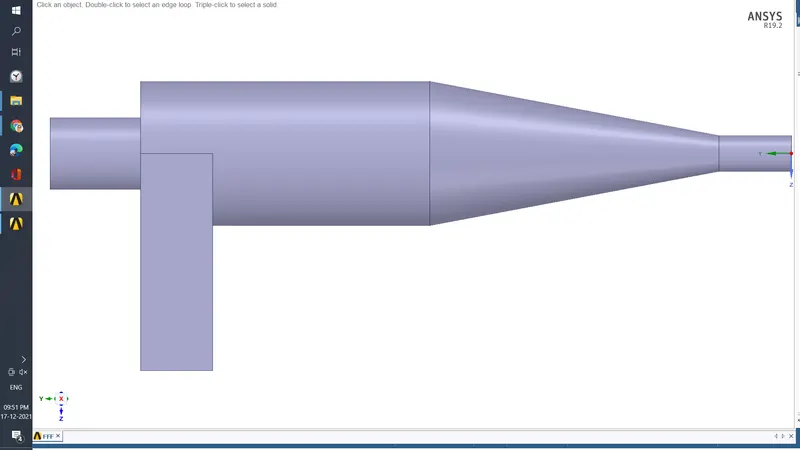
Geometry
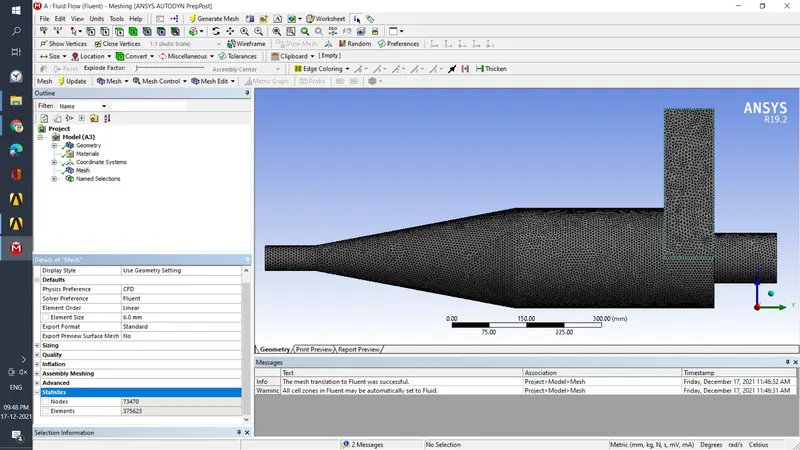
meshing
nodes=76470
elements=575623
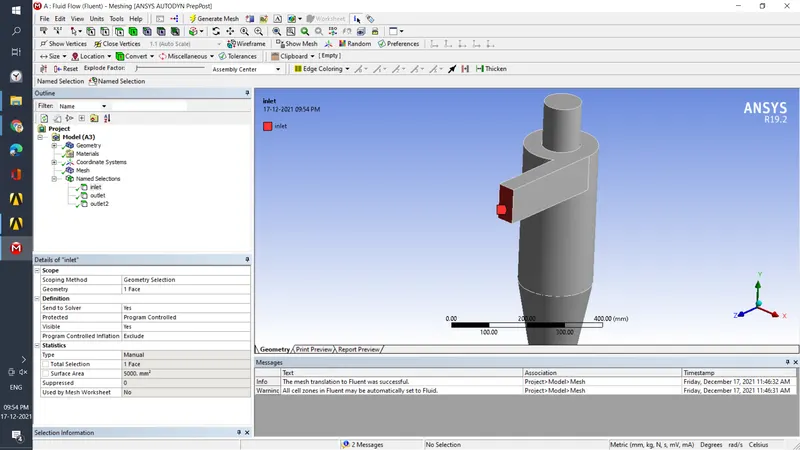
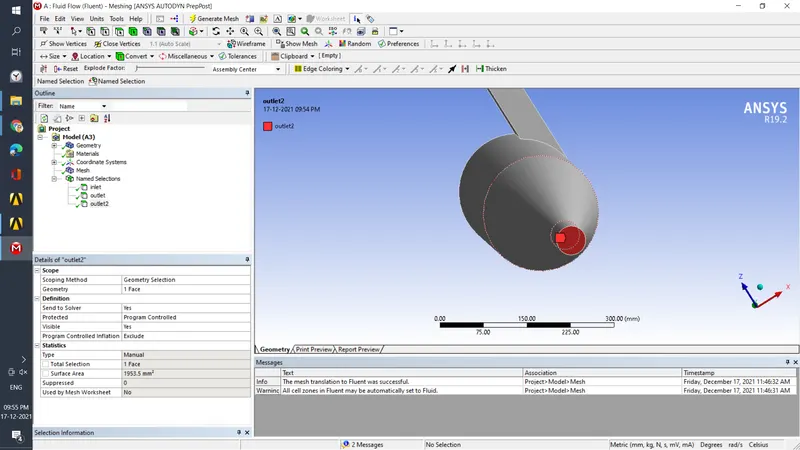
naming section
inlet
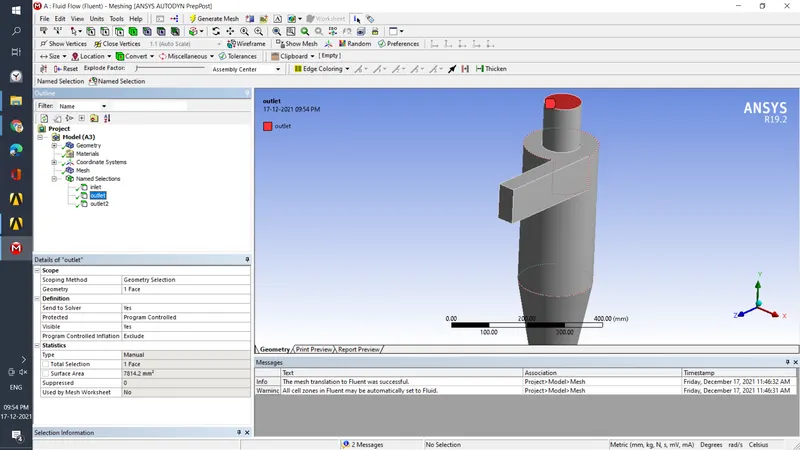
outlet 1
ouletr2
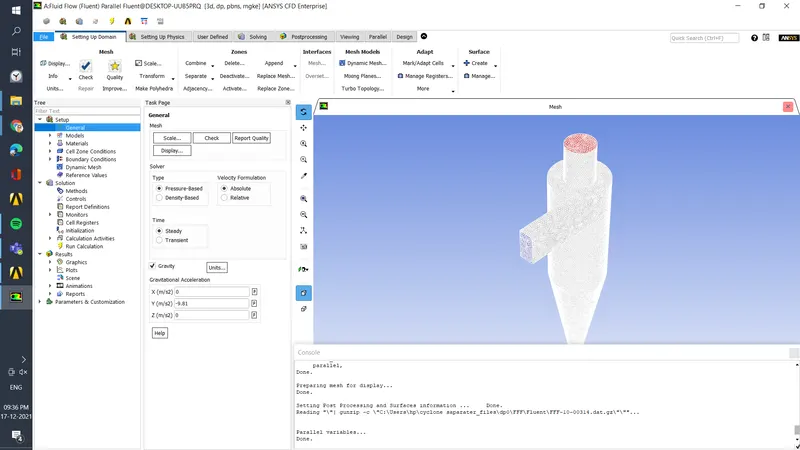
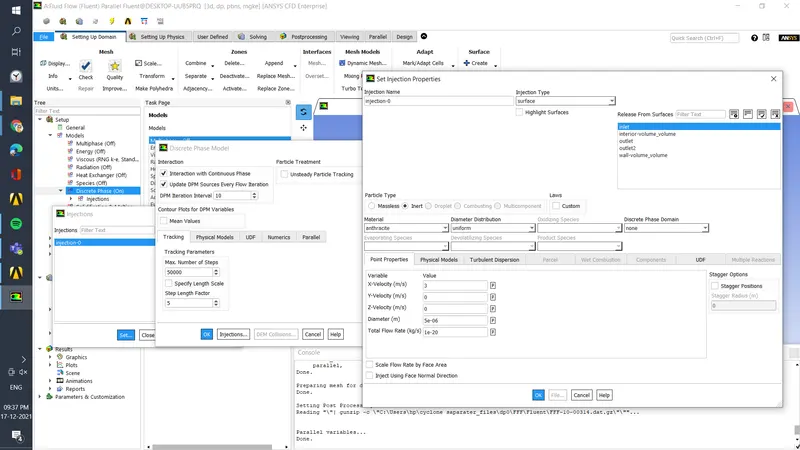
problem setup
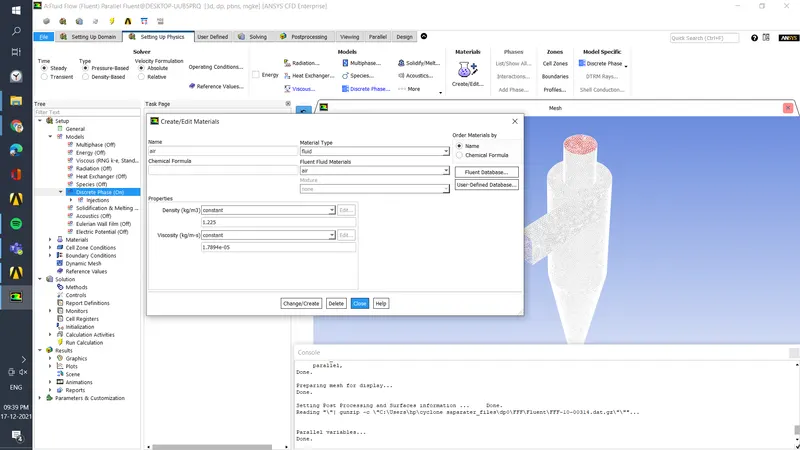
materials
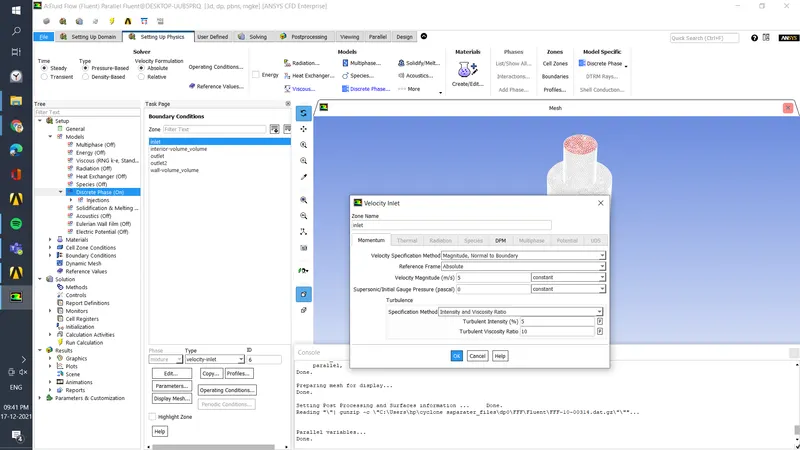
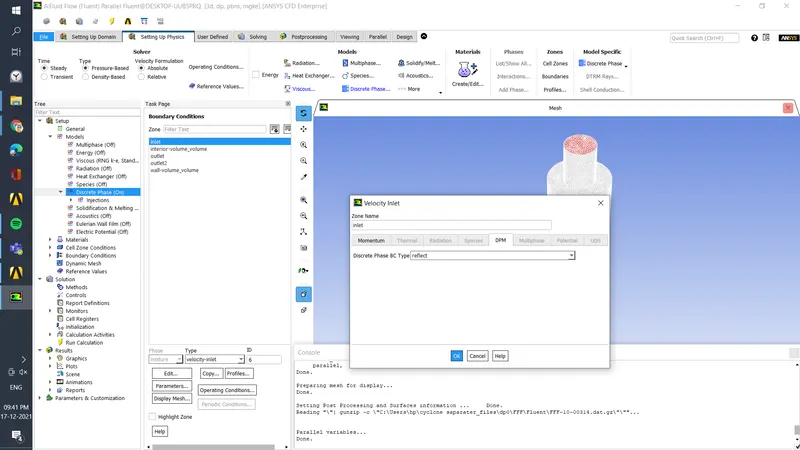
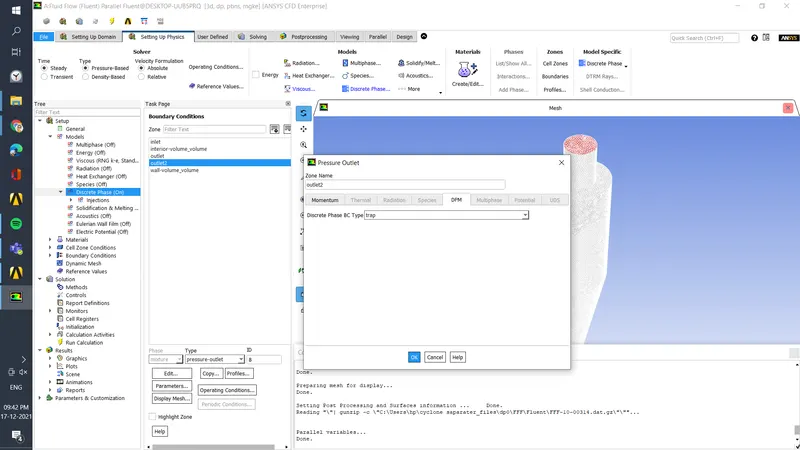
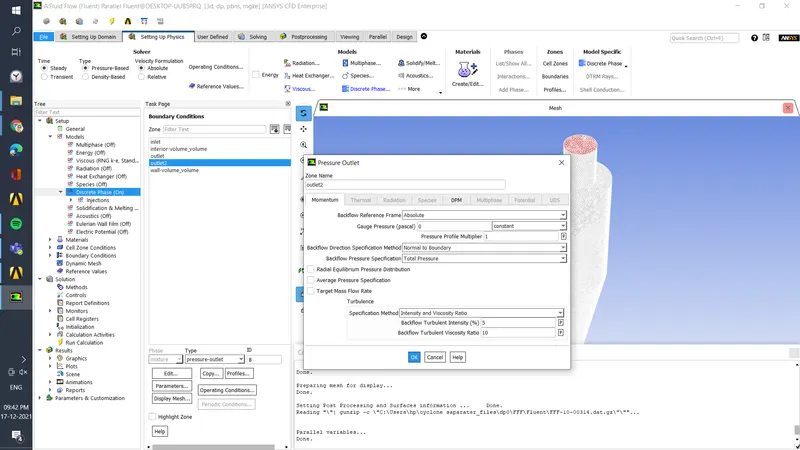
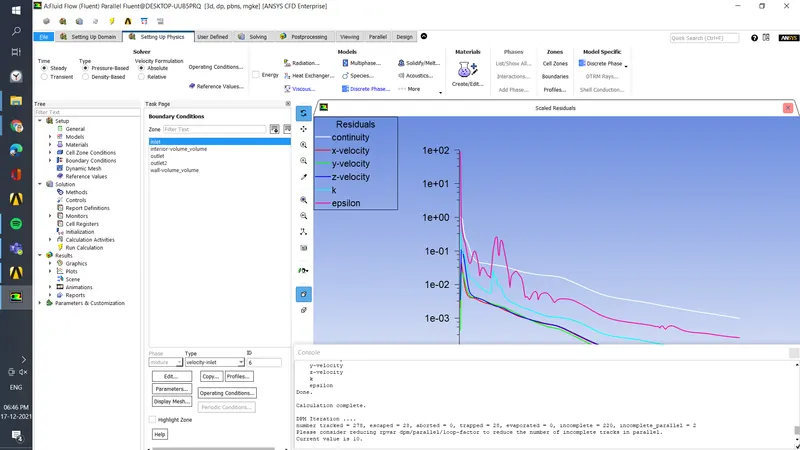
Boundary condiction
inlet
outlet
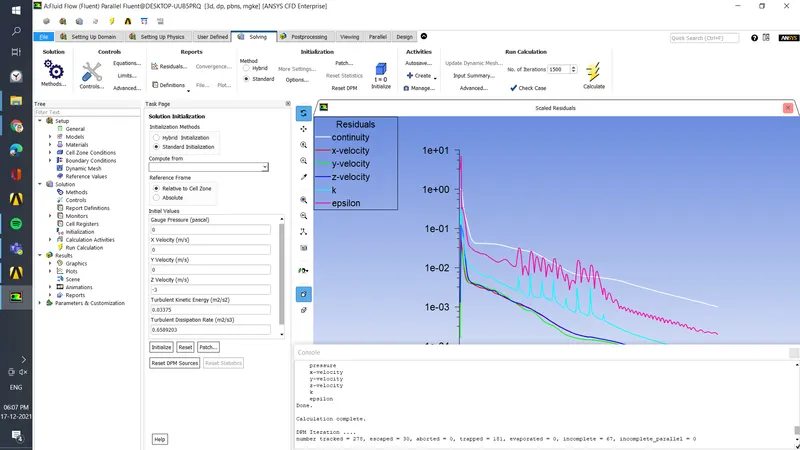
analysis on a given cyclone separator model by varying the particle diameter from 1 μm to 5 μm
case 1= 1 μm
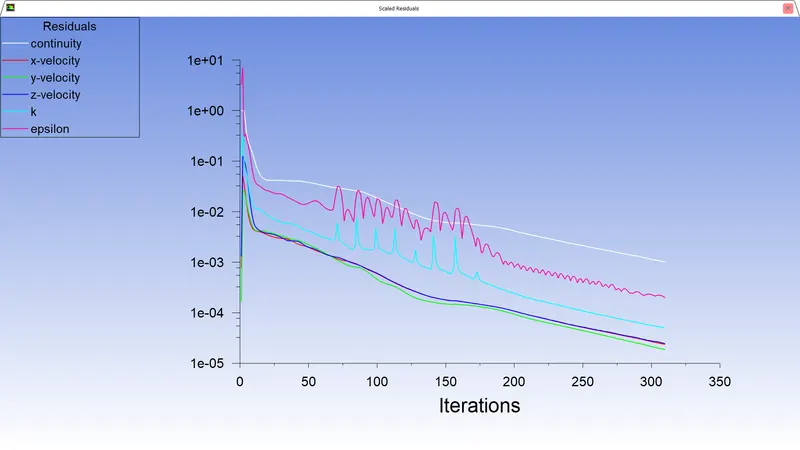
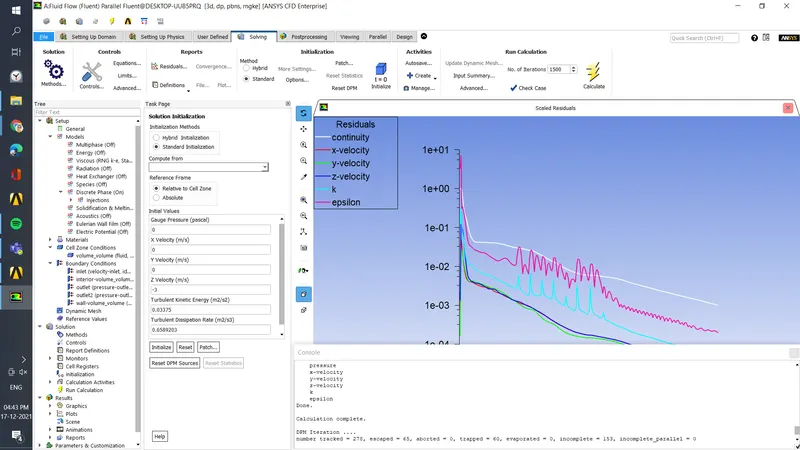
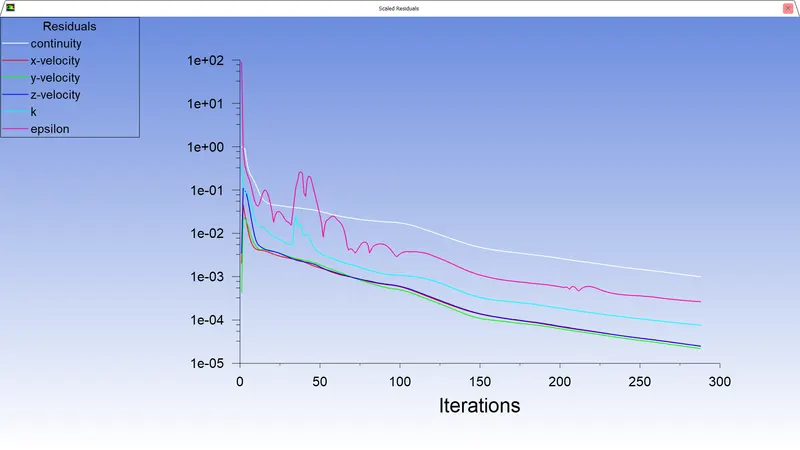
#residuls
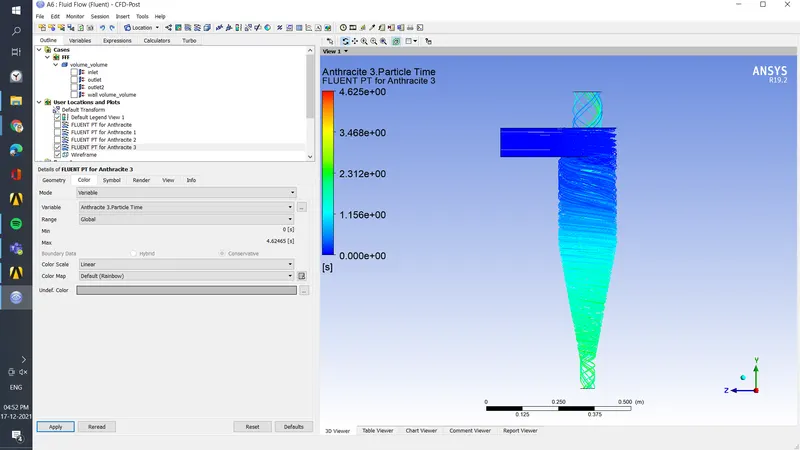
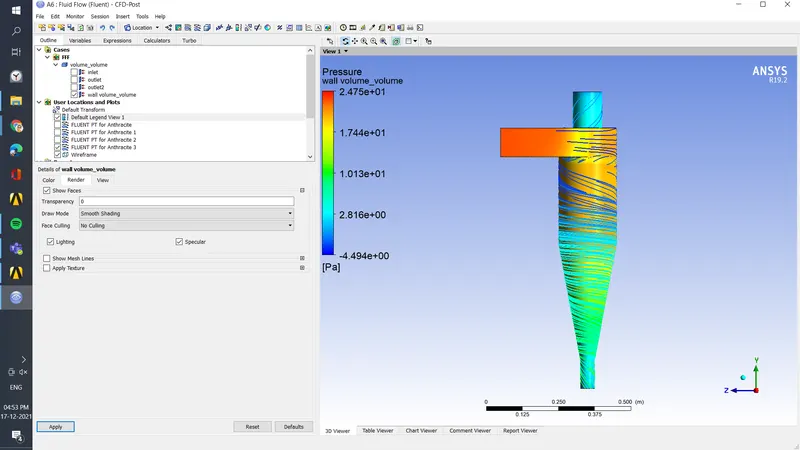
case 1= 3 μm
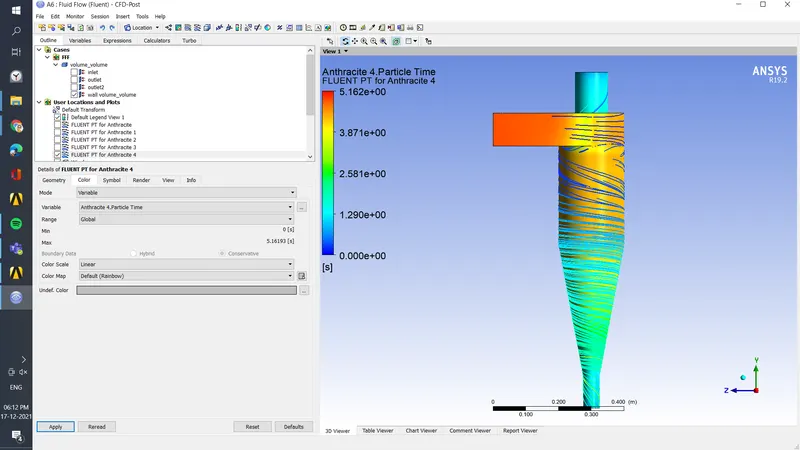
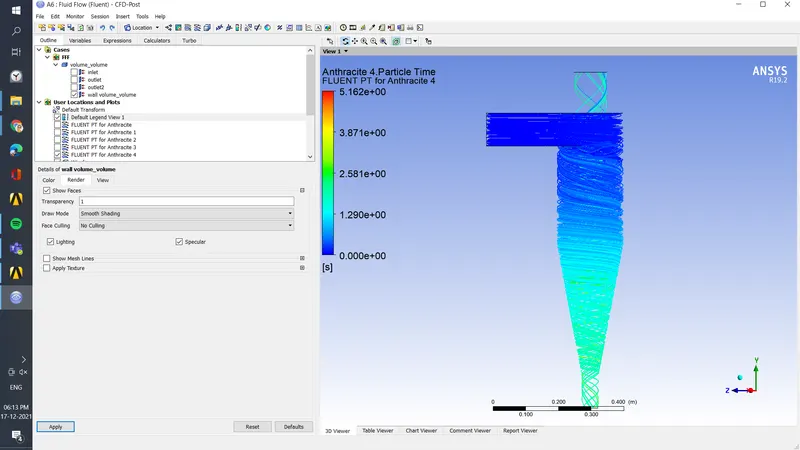
case 3= 5μm
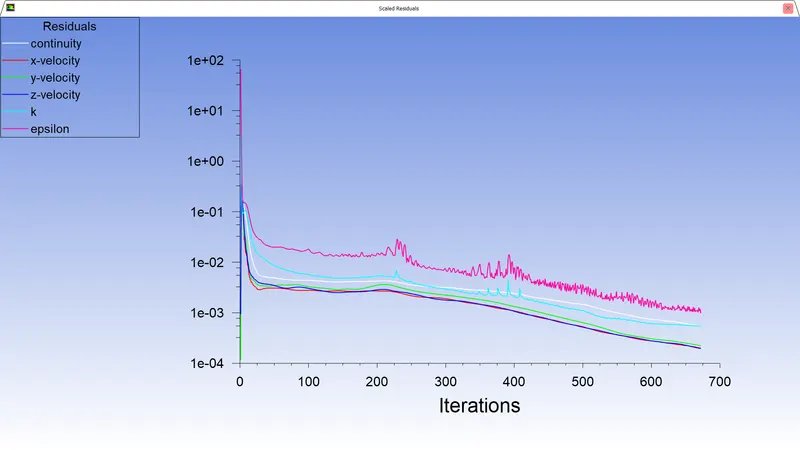
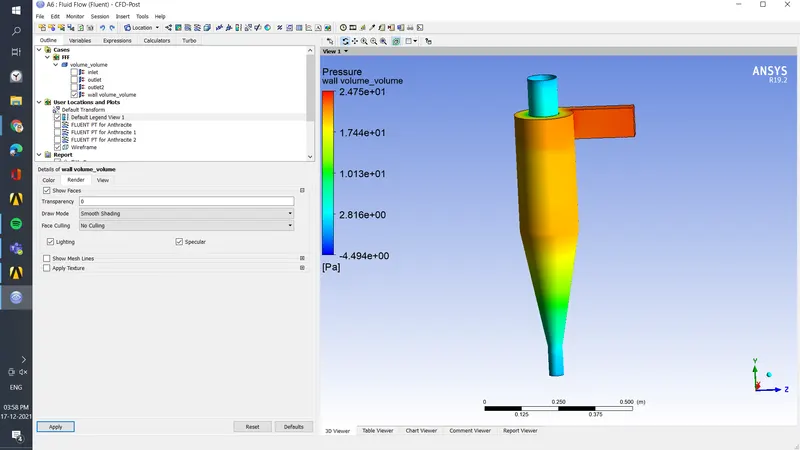
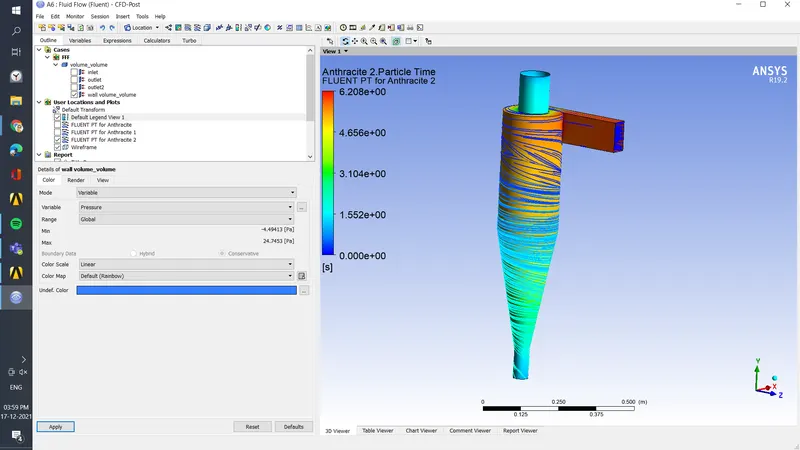
cyclone efficiency will generally increase with increases in particle size
given cyclone separator model by varying the particle velocity from 1 m/sec to 5 m/sec and calculating the separation efficiency and pressure drop in each case.
case 1
velocity= 1m/s
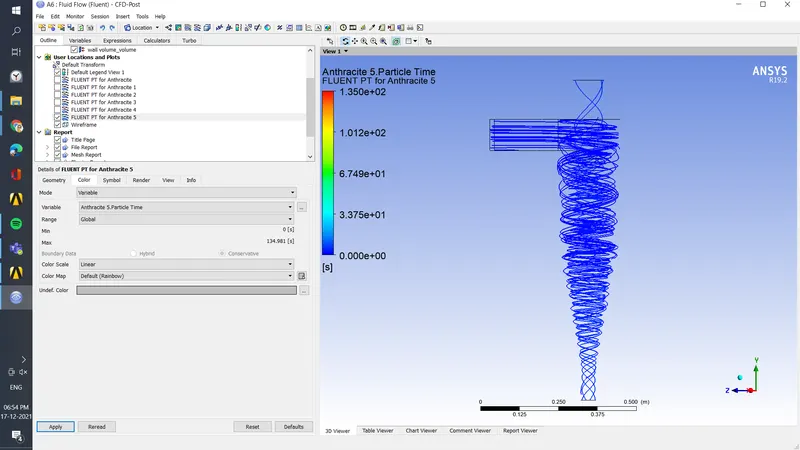
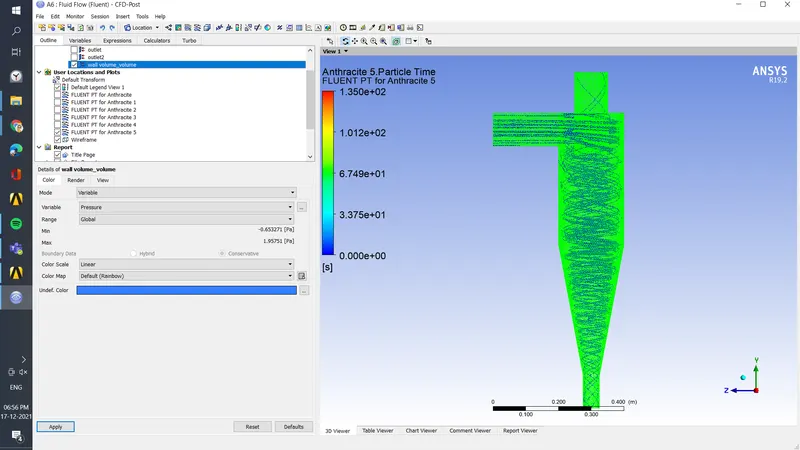
velocity= 3m/s
velocity= 5m/s
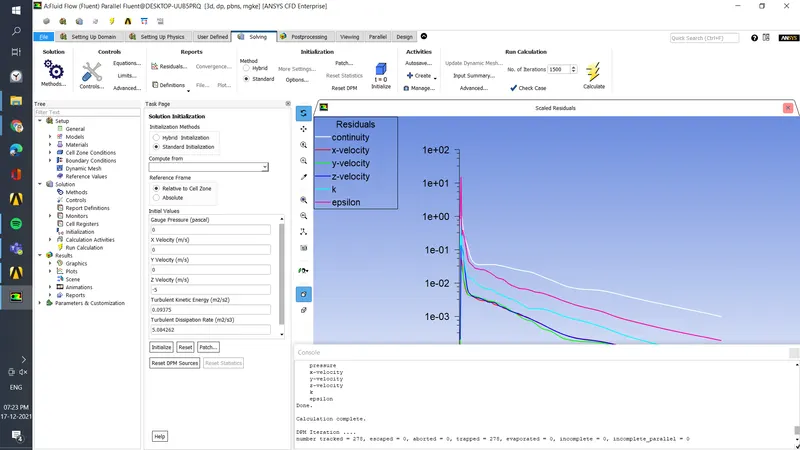
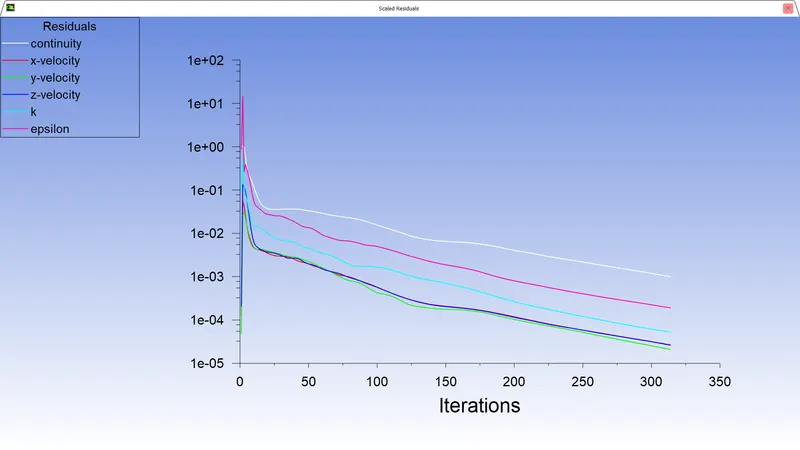
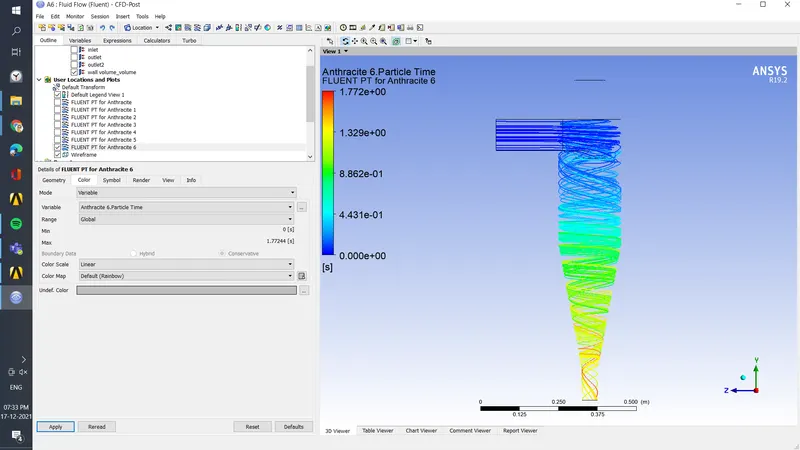
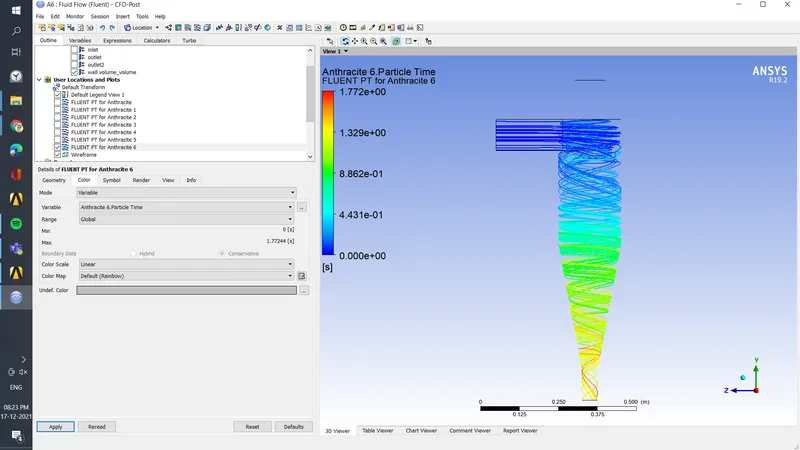
cyclone efficiency will generally increase with increases in inlet velocity
Increasing the cyclone inlet velocity decreases the pressure drop
conclusion
cyclone efficiency will generally increase with increases in inlet velocity
Increasing the cyclone inlet velocity decreases the pressure drop
cyclone efficiency will generally increase with increases in particle size