Week 10 - Simulating Combustion of Natural Gas.
- Aim:
Perform a combustion simulation on the combustor model using methane as fuel.
- Objectives:
Part I
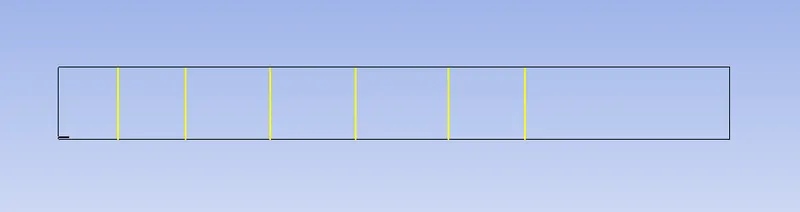
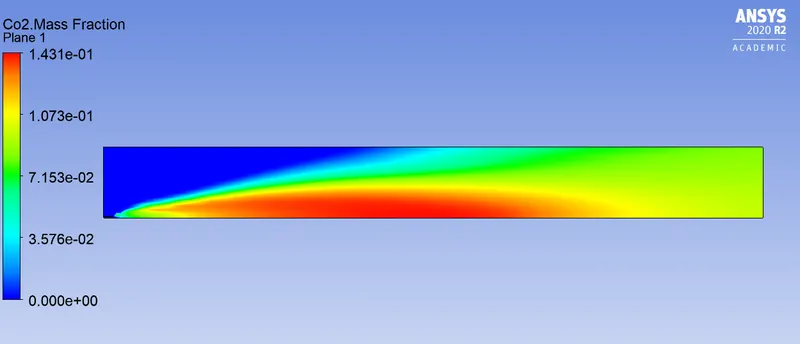
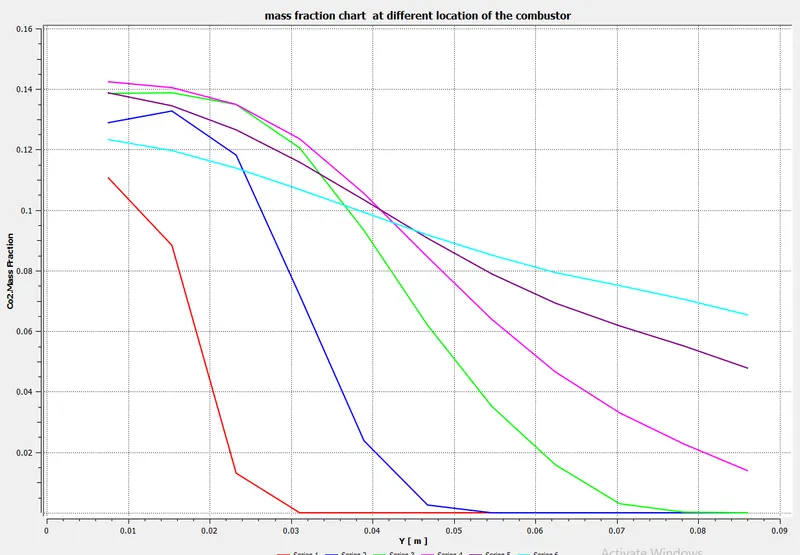
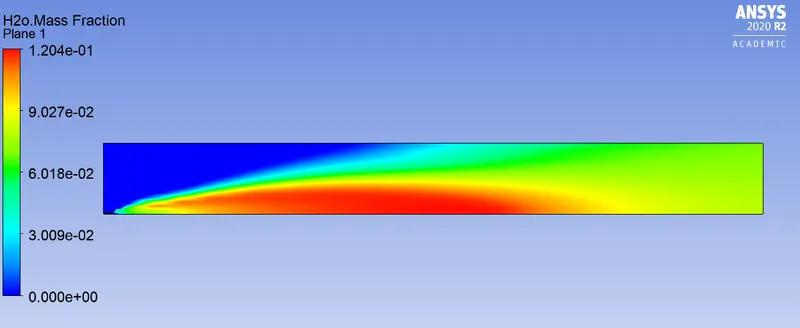
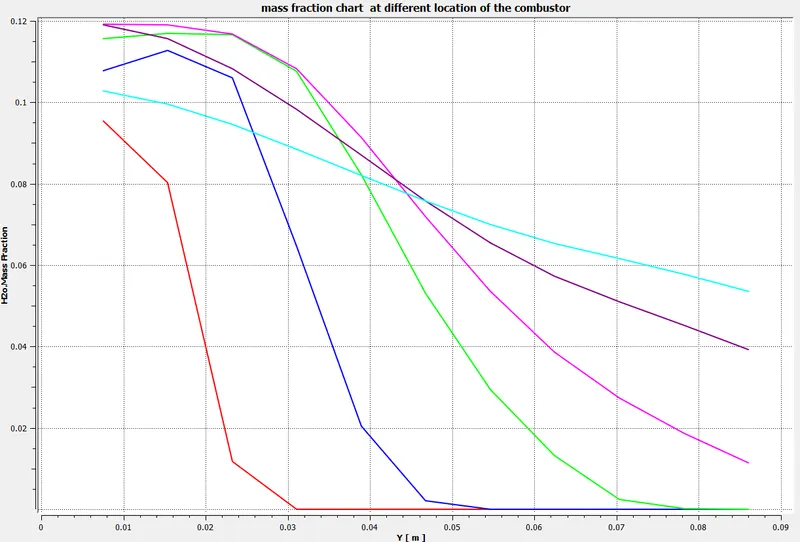
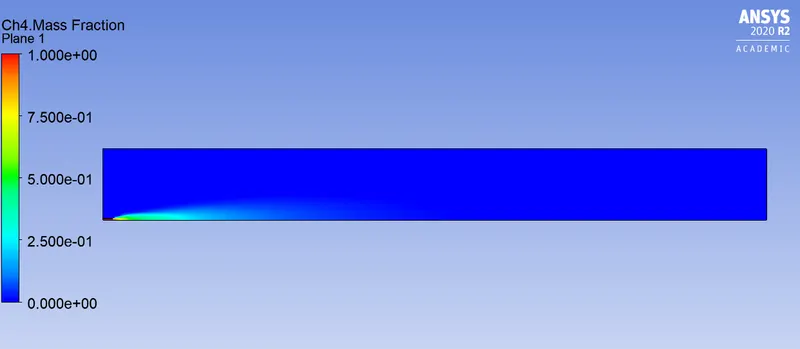
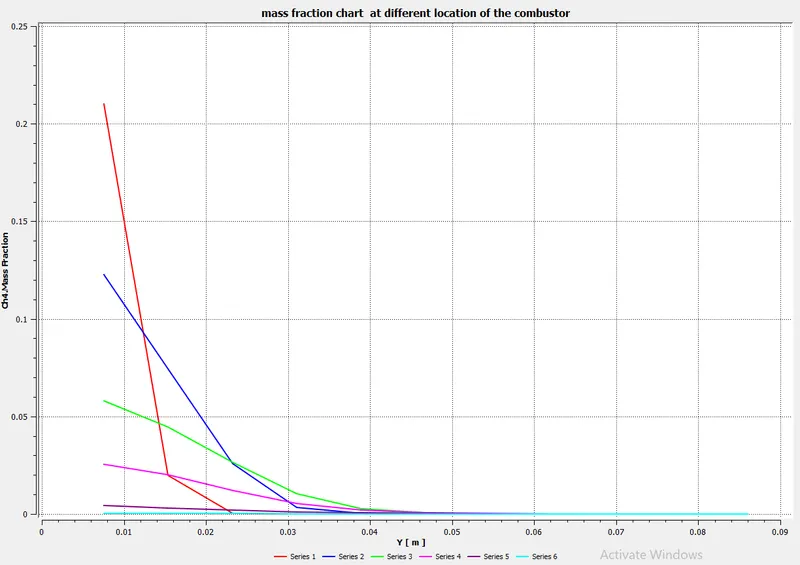
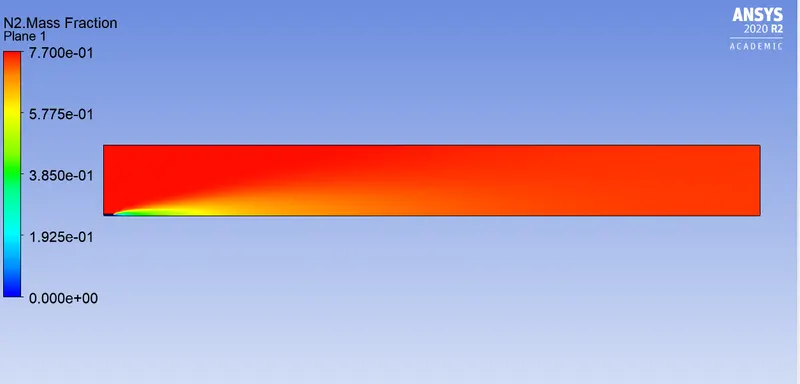
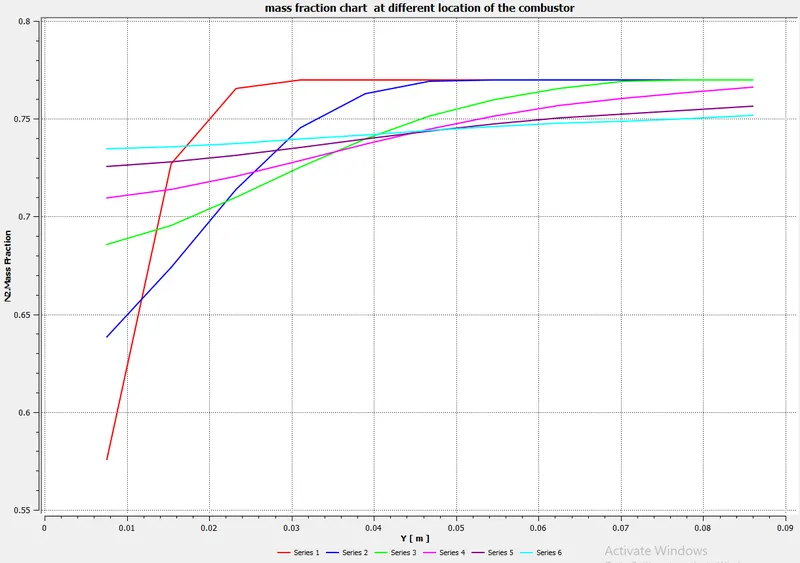
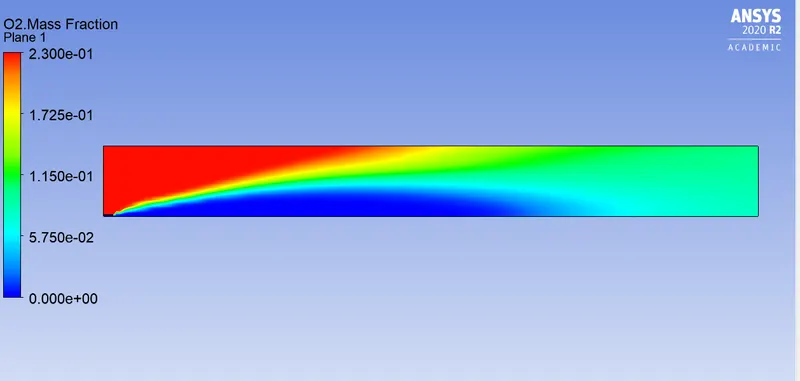
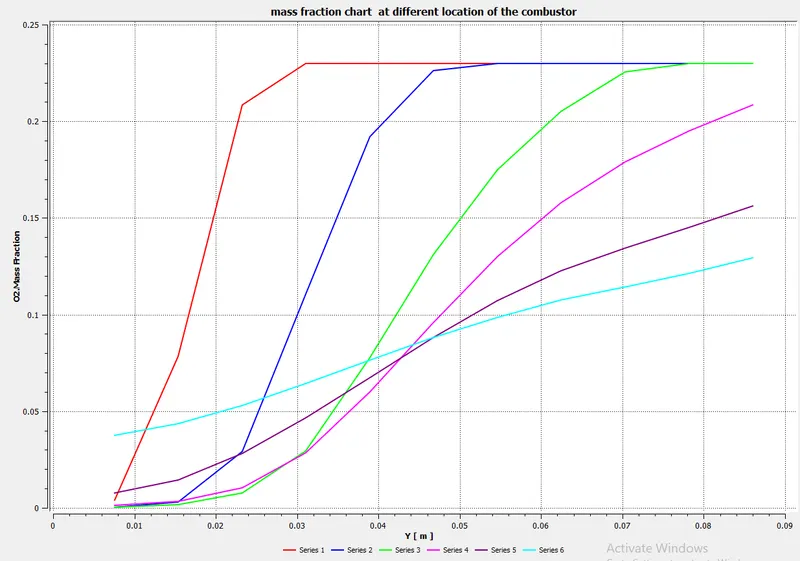
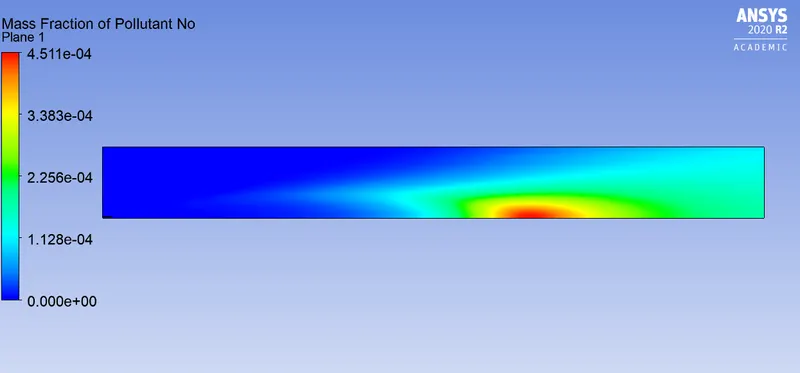
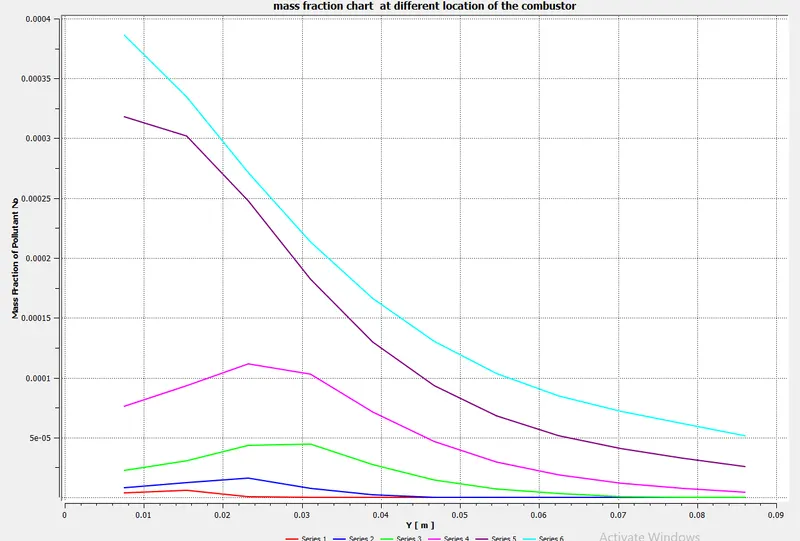
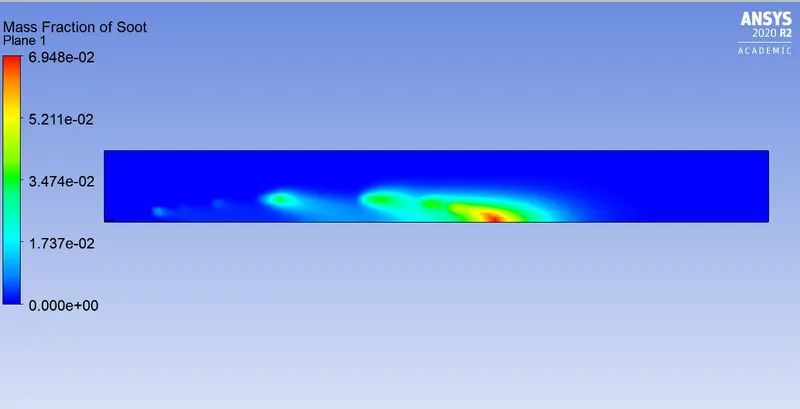
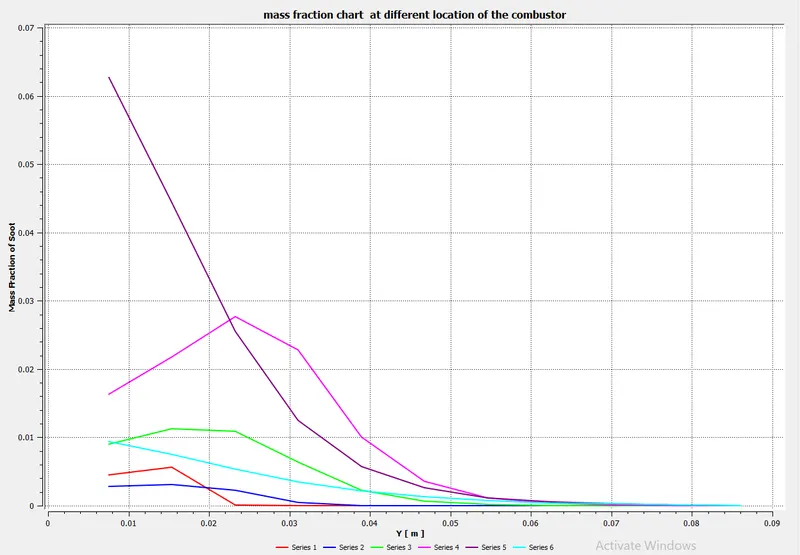
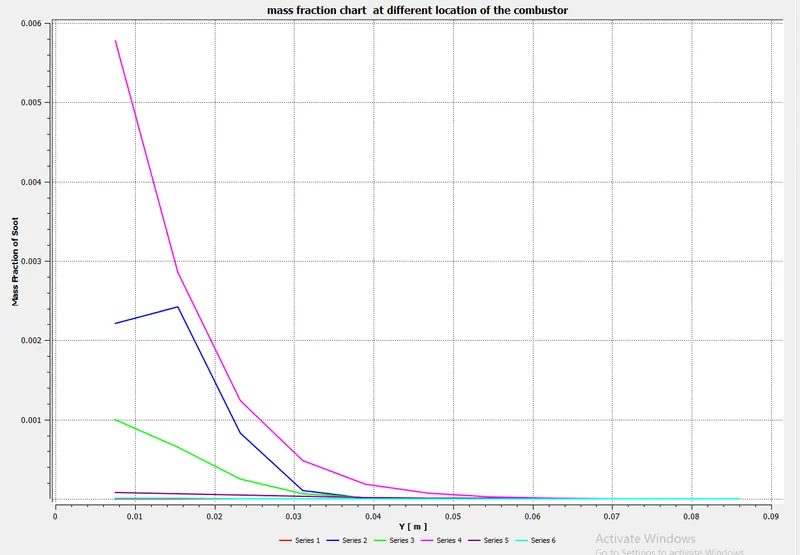
Perform a combustion simulation on the combustor model and plot the variation of the mass fraction of the different species’ in the simulation using line probes at different locations of the combustor as shown in Fig. You need to plot for CO2, H2O, CH4, N2, O2, NOx emissions & Soot formation.
Part II
As you must have observed from the above simulation, the Nox and soot are getting formed at the outlet of the combustor. Such formation has harmful effects on the environment and humans. The stringent government norms also demand the least formation of Nox and soot and to satisfy those requirements, you need to check the effect of adding the water in the fuel.
In this part, you need to add the water content in the fuel from 5% to 30% by mole and observe the effect of it on the results. It is necessary to provide line plots and contours to prove your claim.
- Theory:
1. Combustion:
Combustion, or burning, is a high-temperature exothermic redox chemical reaction between a fuel (the reductant) and an oxidant, usually, atmospheric oxygen, that produces oxidized, often gaseous products, in a mixture termed as smoke. Combustion does not always result in fire, because a flame is only visible when substances undergoing combustion vapourise, but when it does, a flame is a characteristic indicator of the reaction. While the activation energy must be overcome to initiate combustion (e.g., using a lit match to light a fire), the heat from a flame may provide enough energy to make the reaction self-sustaining. Combustion is often a complicated sequence of elementary radical reactions. Solid fuels, such as wood and coal, first undergo endothermic pyrolysis to produce gaseous fuels whose combustion then supplies the heat required to produce more of them. Combustion is often hot enough that incandescent light in the form of either glowing or a flame is produced. A simple example can be seen in the combustion of hydrogen and oxygen into water vapour, a reaction commonly used to fuel rocket engines. This reaction releases 242 kJ/mol of heat and reduces the enthalpy accordingly (at constant temperature and pressure):
- 2H2(g) + O2(g) → 2H2O(g)
Combustion of an organic fuel in air is always exothermic because the double bond in O2 is much weaker than other double bonds or pairs of single bonds, and therefore the formation of the stronger bonds in the combustion products CO
2 and H2O results in the release of energy.
Stoichiometric combustion of a hydrocarbon in oxygen:
Generally, the chemical equation for stoichiometric combustion of a hydrocarbon in oxygen is:
 {mathit {x}}CO2{}+{frac {mathit {y}}{2}}H2O}}}" />
Where, 
For example, the stoichiometric burning of propane in oxygen is
 {underset {carbon dioxide}{3CO2}}+{underset {water}{4H2O}}}}}" />
2. Chemical kinetics:
Chemical kinetics, also known as reaction kinetics, is the branch of physical chemistry that is concerned with understanding the rates of chemical reactions. It is to be contrasted with thermodynamics, which deals with the direction in which a process occurs but in itself tells nothing about its rate. Chemical kinetics includes investigations of how experimental conditions influence the speed of a chemical reaction and yield information about the reaction's mechanism and transition states, as well as the construction of mathematical models that also can describe the characteristics of a chemical reaction.
3. Chemical reaction model:
Chemical reaction models transform physical knowledge into a mathematical formulation that can be utilized in the computational simulation of practical problems in chemical engineering. Computer simulation provides the flexibility to study chemical processes under a wide range of conditions. Modeling a chemical reaction involves solving conservation equations describing convection, diffusion, and reaction source for each component species.
Series transport equation-

Ri is the net rate of production of species i by chemical reaction and Si is the rate of creation by addition from the dispersed phase and the user-defined source. Ji is the diffusion flux of species i, which arises due to concentration gradients and differs in both laminar and turbulent flows. In turbulent flows, computational fluid dynamics also considers the effects of turbulent diffusivity. The net source of chemical species i due to reaction, Ri which appeared as the source term in the species transport equation is computed as the sum of the reaction sources over the NR reactions among the species.
Reaction rate models:
a. Laminar finite rate model:
The laminar finite rate model computes the chemical source terms using the Arrhenius expressions and ignores turbulence fluctuations. This model provides the exact solution for laminar flames but gives inaccurate solution for turbulent flames, in which turbulence highly affects the chemistry reaction rates, due to highly non-linear Arrhenius chemical kinetics. However, this model may be accurate for combustion with small turbulence fluctuations, for example, supersonic flames.
b. Eddy dissipation model:
The eddy dissipation model, based on the work of Magnussen and Hjertager, is a turbulent-chemistry reaction model. Most fuels are fast burning and the overall rate of reaction is controlled by turbulence mixing. In the non-premixed flames, turbulence slowly mixes the fuel and oxidizer into the reaction zones where they burn quickly. In premixed flames, the turbulence slowly mixes cold reactants and hot products into the reaction zones where the reaction occurs rapidly. In such cases, the combustion is said to be mixing-limited, and the complex and often unknown chemical kinetics can be safely neglected. In this model, the chemical reaction is governed by a large-eddy mixing time scale. Combustion initiates whenever there is turbulence present in the flow. It does not need an ignition source to initiate the combustion. This type of model is valid for the non-premixed combustion, but for the premixed flames the reactant is assumed to burn at the moment it enters the computation model, which is a shortcoming of this model as in practice the reactant needs some time to get to the ignition temperature to initiate the combustion.
Factors affecting reaction rate:
1. Nature of reactants
2. Physical state
3. Surface area of solid-state
4. Concentration
5. Temperature
6. Catalysts
7. Pressure
8. Absorption of light
Applications:
The mathematical models that describe chemical reaction kinetics provide chemists and chemical engineers with tools to better understand and describe chemical processes such as food decomposition, microorganism growth, stratospheric ozone decomposition, and the chemistry of biological systems. These models can also be used in the design or modification of chemical reactors to optimize product yield, more efficiently separate products, and eliminate environmentally harmful by-products. When performing catalytic cracking of heavy hydrocarbons into gasoline and light gas, for example, kinetic models can be used to find the temperature and pressure at which the highest yield of heavy hydrocarbons into gasoline will occur.
Chemical Kinetics is frequently validated and explored through modeling in specialized packages as a function of ordinary differential equation-solving (ODE-solving) and curve-fitting.
4. Mass fraction:
A mass fraction can also be expressed, with a denominator of 100, as a percentage by mass. It is one way of expressing the composition of a mixture in a dimensionless size; mole fraction (percentage by moles, mol%) and volume fraction (percentage by volume, vol%) are others.
When the prevalences of interest are those of individual chemical elements, rather than of compounds or other substances, the term mass fraction can also refer to the ratio of the mass of an element to the total mass of a sample. In these contexts, an alternative term is a mass percent composition. The mass fraction of an element in a compound can be calculated from the compound's empirical formula or its chemical formula.
5. Nitrogen Oxide (NOx) emissions:
Nitrogen dioxide is an irritant gas, which at high concentrations causes inflammation of the airways. When nitrogen is released during fuel combustion it combines with oxygen atoms to create nitric oxide (NO). This further combines with oxygen to create nitrogen dioxide (NO2). Nitric oxide is not considered to be hazardous to health at typical ambient concentrations, but nitrogen dioxide can be. Nitrogen dioxide and nitric oxide are referred to together as oxides of nitrogen (NOx).
NOx gases react to form smog and acid rain as well as being central to the formation of fine particles (PM) and ground-level ozone, both of which are associated with adverse health effects.
6. Soot formations:
Soot forms when hydrocarbon fuels such as oil, natural gas, and wood are burned. Soot particles form when gaseous molecules are heated to high temperatures, and they don't easily turn back into gaseous molecules the way water droplets do when they are heated. Soot as an airborne contaminant in the environment has many different sources, all of which are results of some form of pyrolysis. They include soot from coal-burning, internal-combustion engines, power-plant boilers, hog-fuel boilers, ship boilers, central steam-heat boilers, waste incineration, local field burning, house fires, forest fires, fireplaces, and furnaces. These exterior sources also contribute to the indoor environment sources such as smoking of plant matter, cooking, oil lamps, candles, quartz/halogen bulbs with settled dust, fireplaces, exhaust emissions from vehicles, and defective furnaces.
- Content:
1. Geometry:
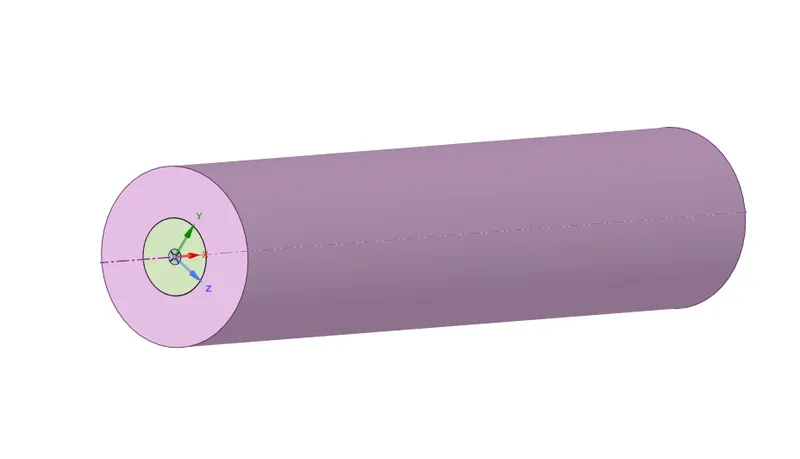
a. Upload the combustor model into SpaceClaim, since it is a 3D model and we are only interested in the 2D geometry of the combustor. Therefore, we need to split the body by 3/4th and select the plane XY plane region of geometry since we are using the axisymmetric condition.
3D model of the combustor:
Splitting the body:
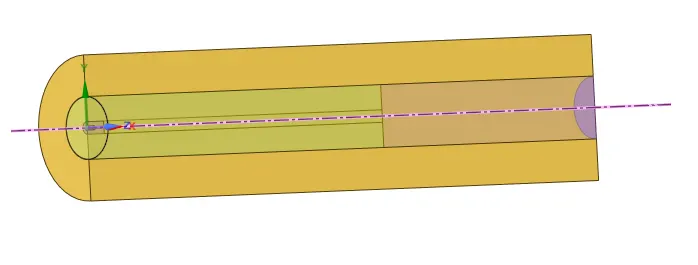
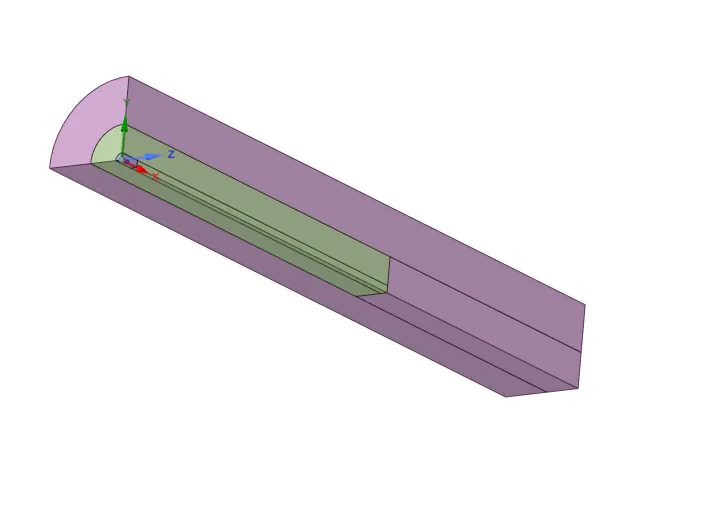
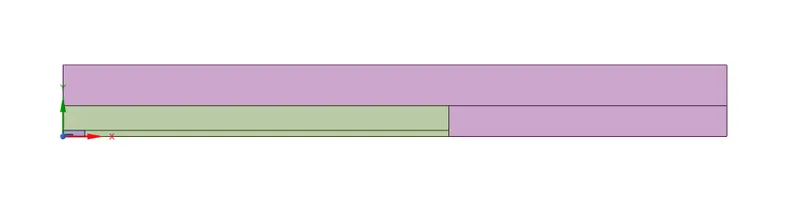
b. After splitting the body, select the 2D Plane normal to the Z-axis and copy that geometry to a new design sheet and delete the old one since we do not need it.
2D geometry:
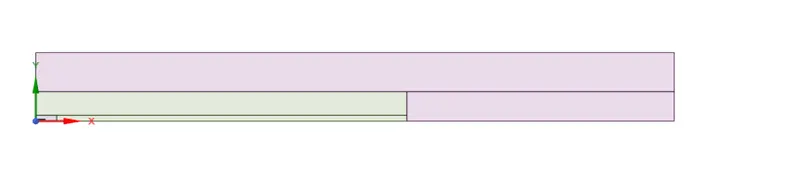
After creating new design use the combine command to merge all the parts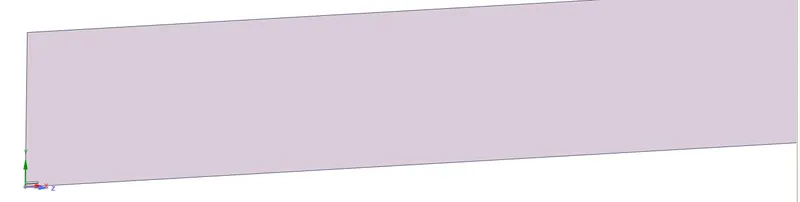
2. Mesh setup:
a. Generate base mesh with capture proximity settings and set the cell gap to 3 cells or as per your requirement.
Mesh settings:
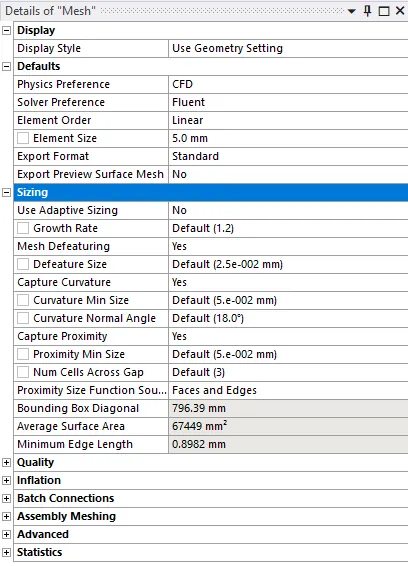
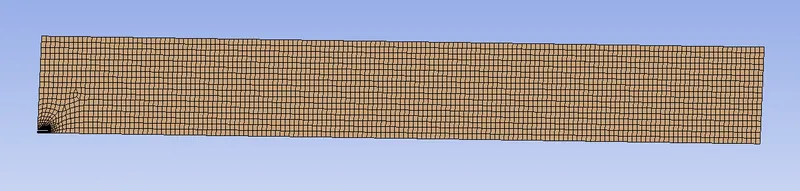
b. Provide name selections for the necessary inlet, outlet, and walls.
- Air inlet

- fuel inlet

- axis

- wall

- outlet

Fluent setup:
- Physics setup
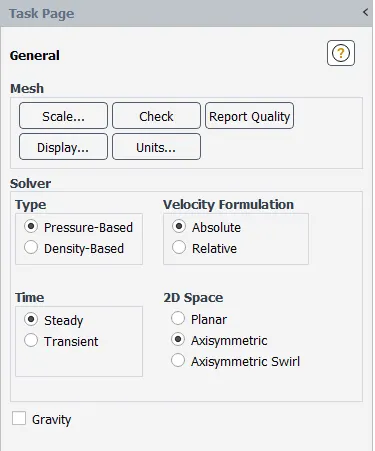
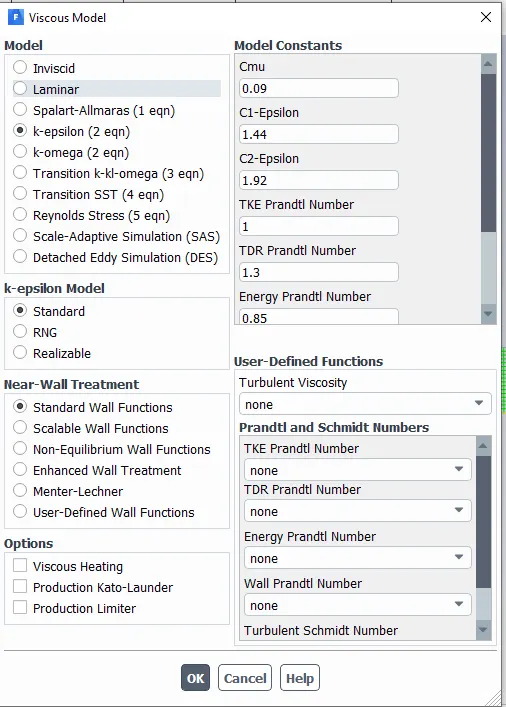
Species and model:
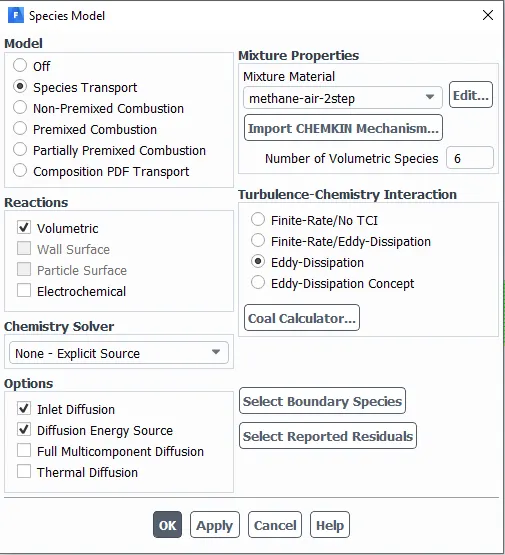
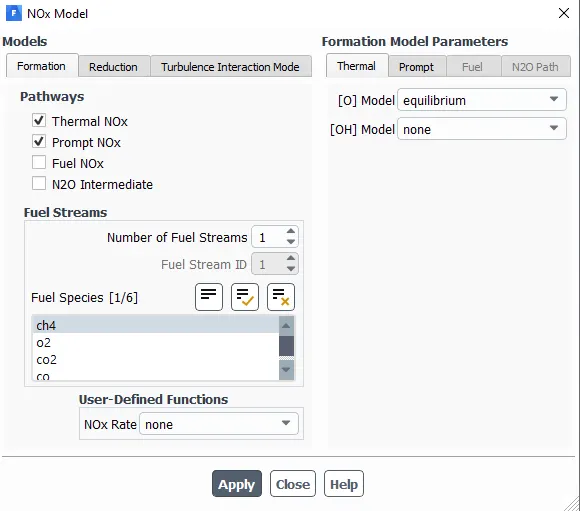
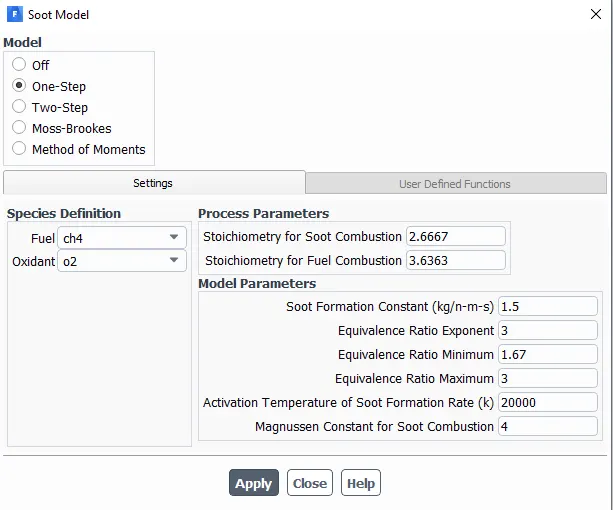
- And enabling the energy
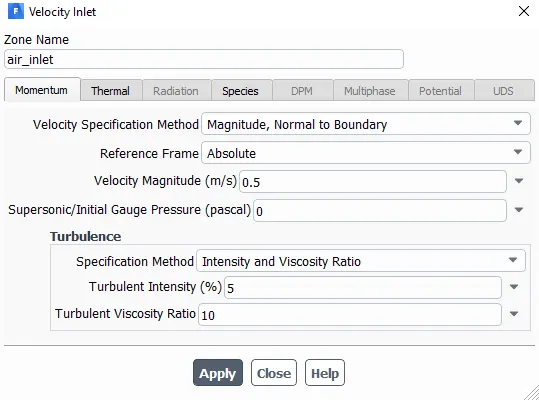
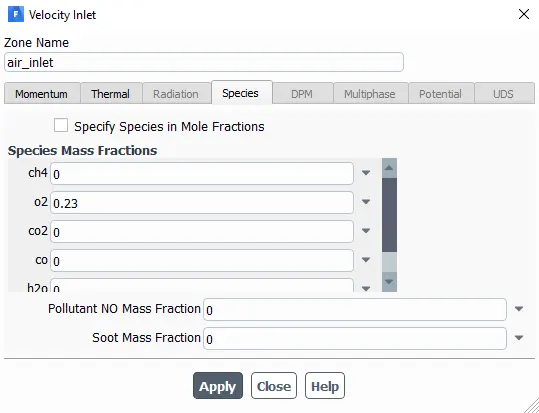
- air inlet boundary
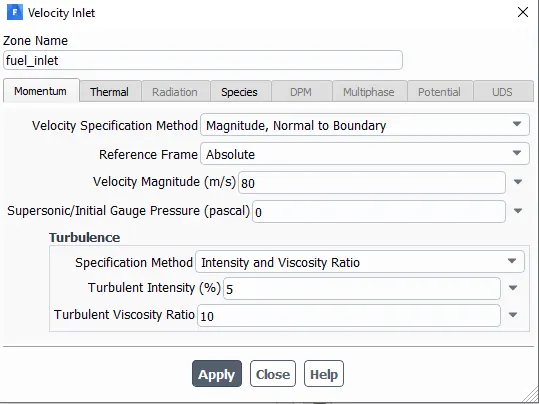
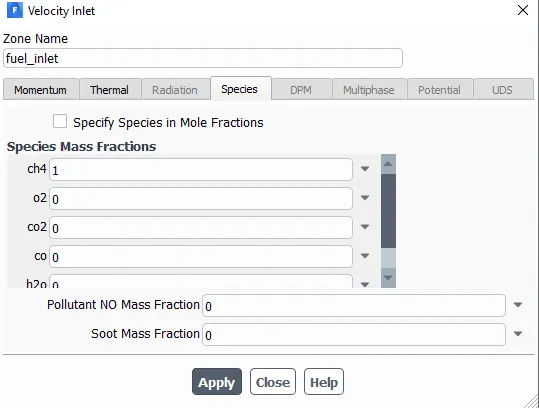
- fuel inlet boundary
Part 1:
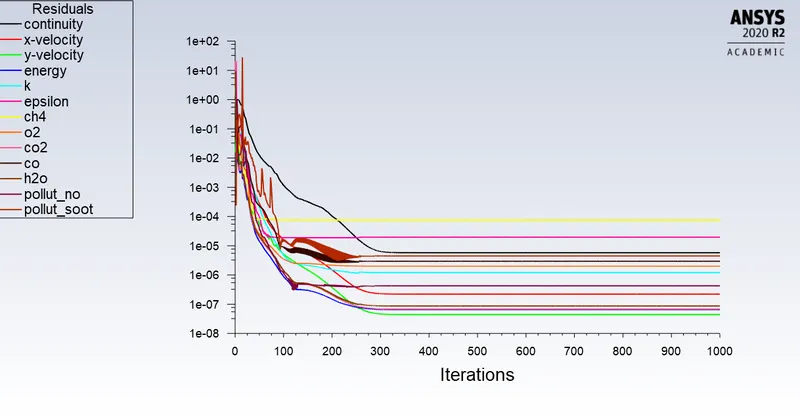
Residual plot:
Creating line probes in the CFD post:
Temperature contour and temperature at different location of the combustor:
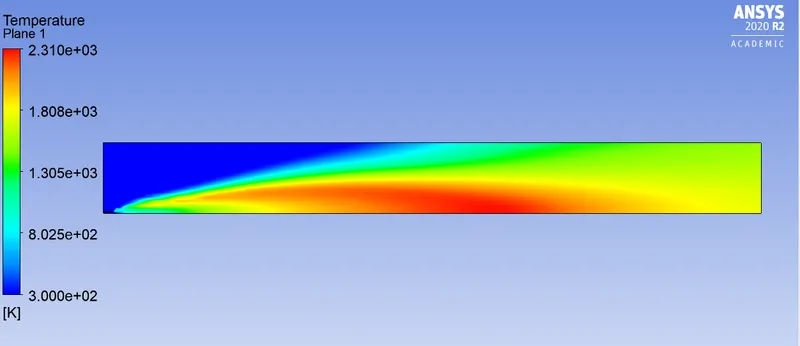
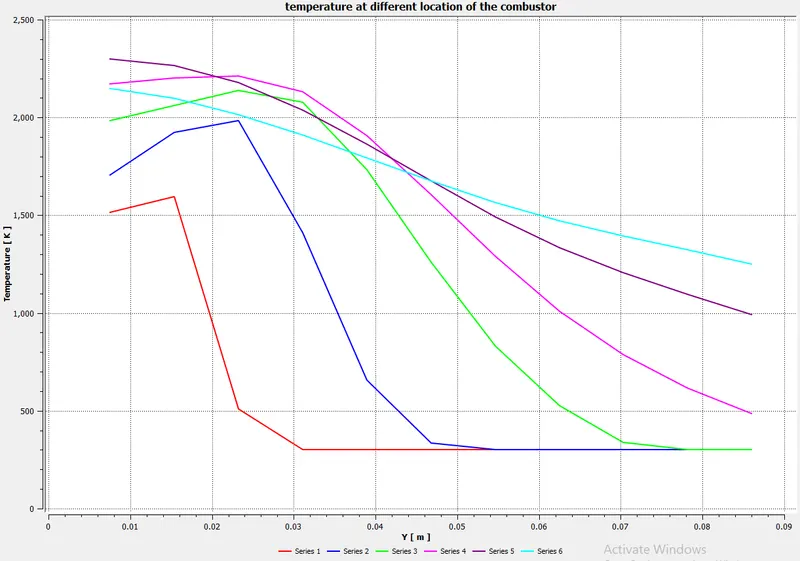
CO2 contour and mass fraction chart at different location of the combustor:
H2O contour and mass fraction chart at different location of the combustor:
CH4 contour and mass fraction chart at different location of the combustor:
N2 contour and mass fraction chart at different location of the combustor:
O2 contour and mass fraction chart at different location of the combustor:
NOx contour and mass fraction chart at different location of the combustor:
Shoot formation contour and mass fraction chart at different location of the combustor:
Part 2:
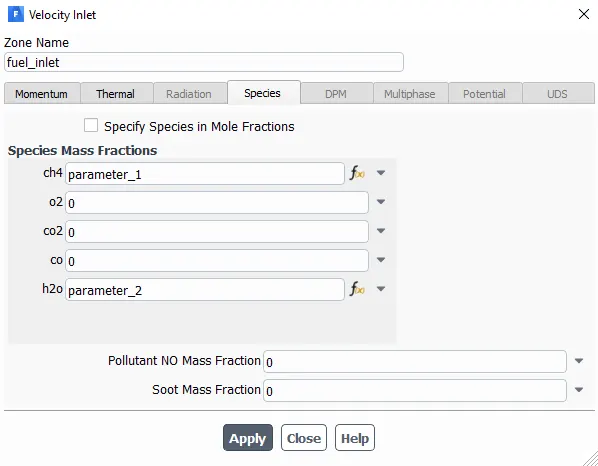
In this challenge, our objective is to add water into the fuel inlet
setting CH4 and H2O as the parameter in the fuel inlet boundary
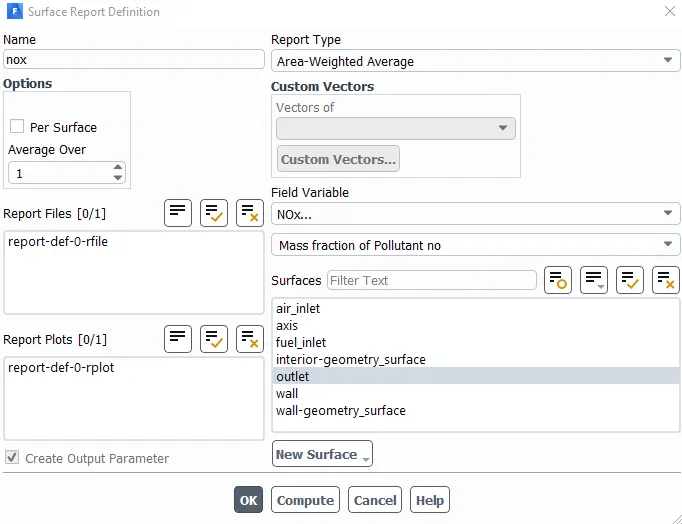
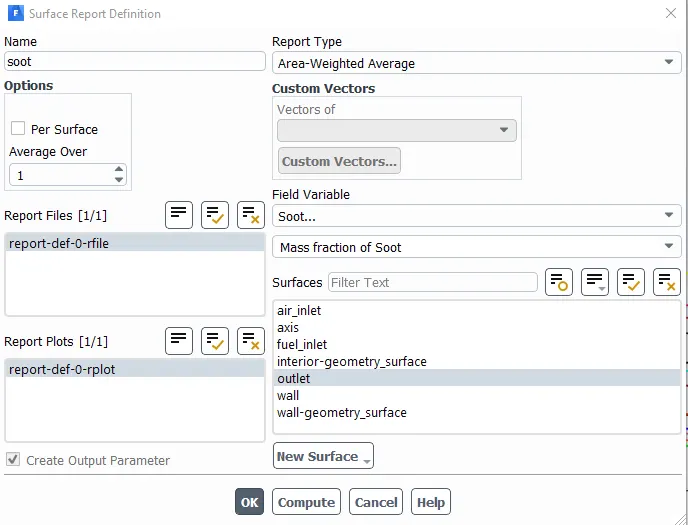
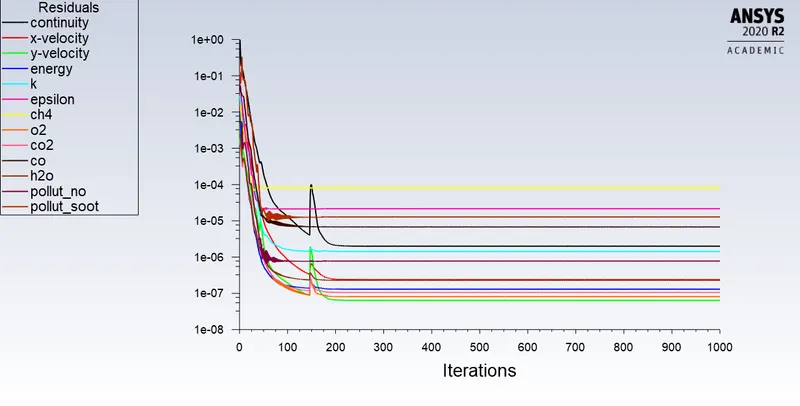
Residual plot
Here we used the parametric study approach:
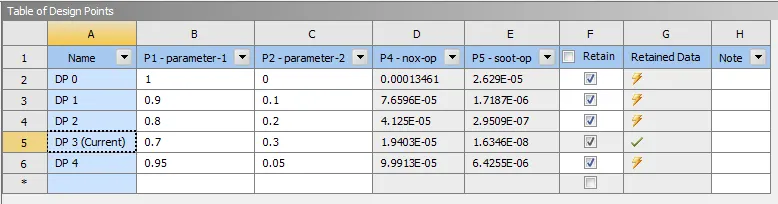
- For 5% addition of water into the fuel CH4(0.95)
NOx contour and mass fraction chart at different location of the combustor:
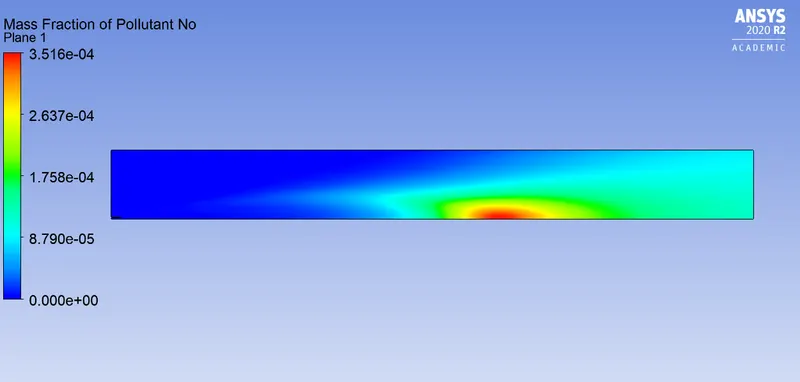
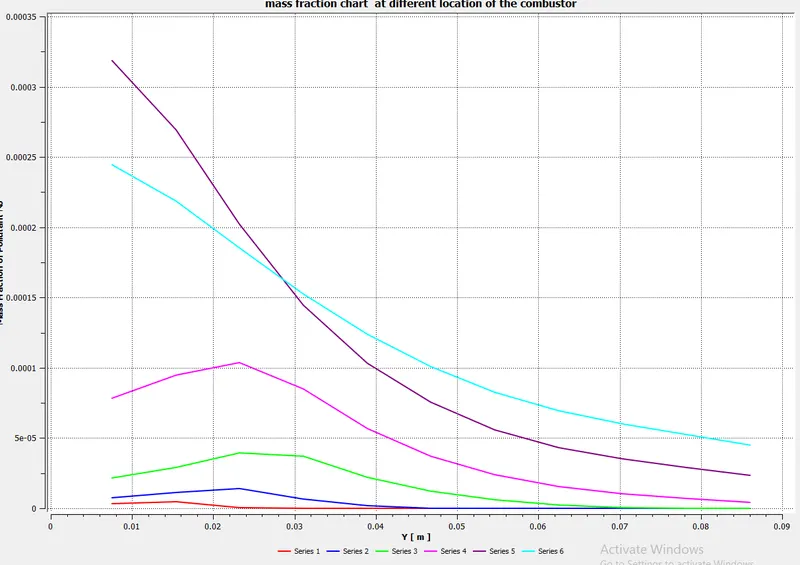
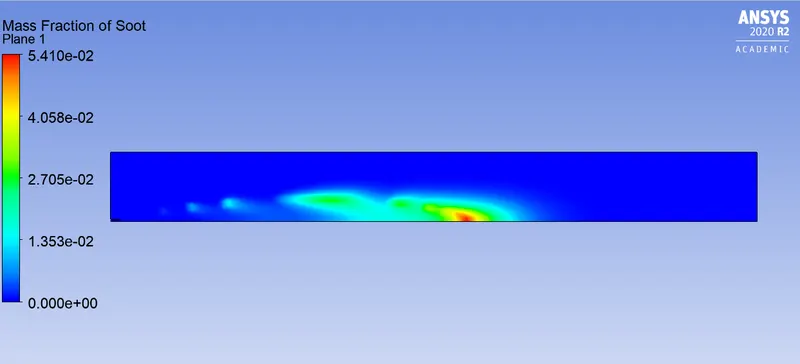
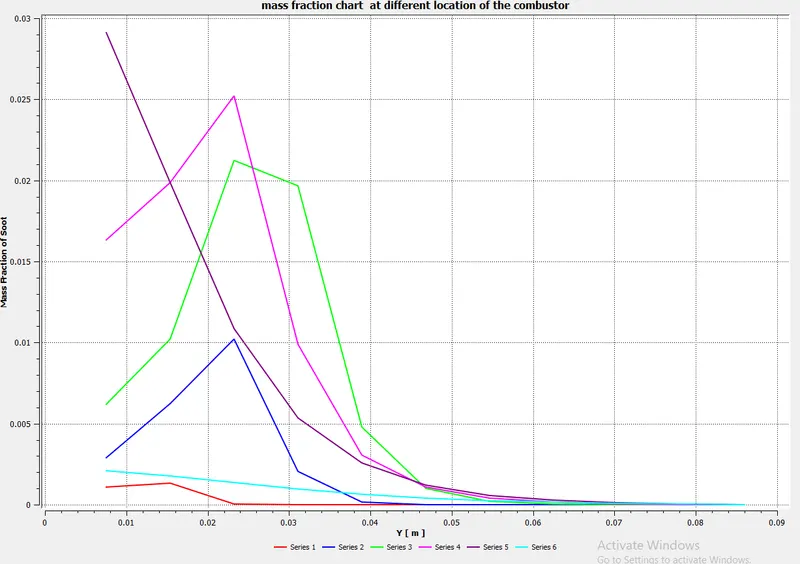
Shoot formation contour and mass fraction chart at different location of the combustor:
- For 10% addition of water into the fuel CH4(0.9)
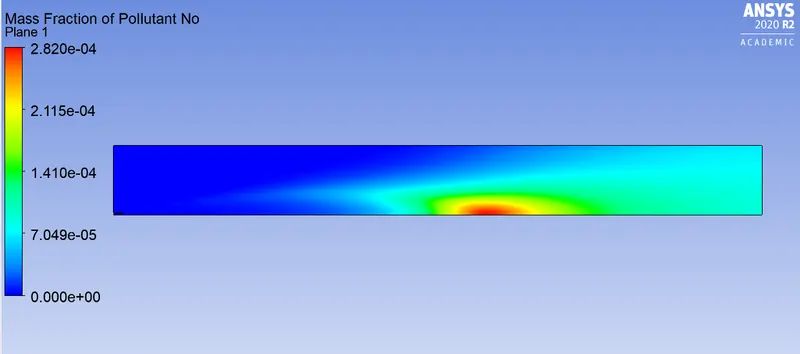
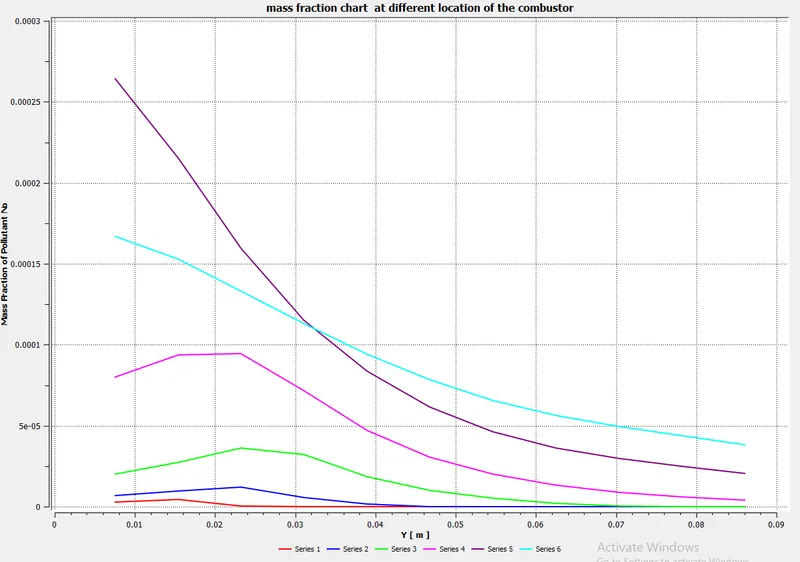
NOx contour and mass fraction chart at different location of the combustor:
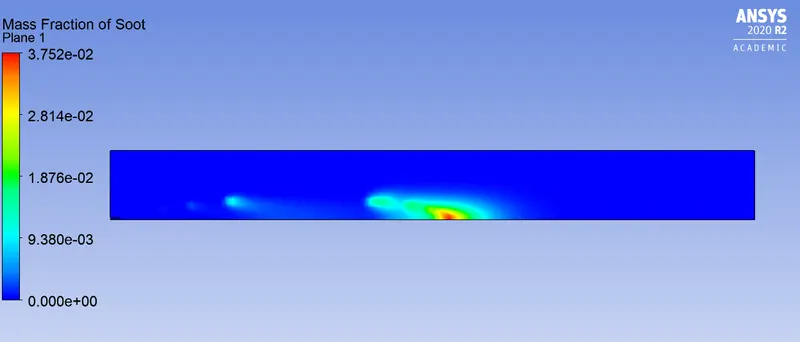
Shoot formation contour and mass fraction chart at different location of the combustor:
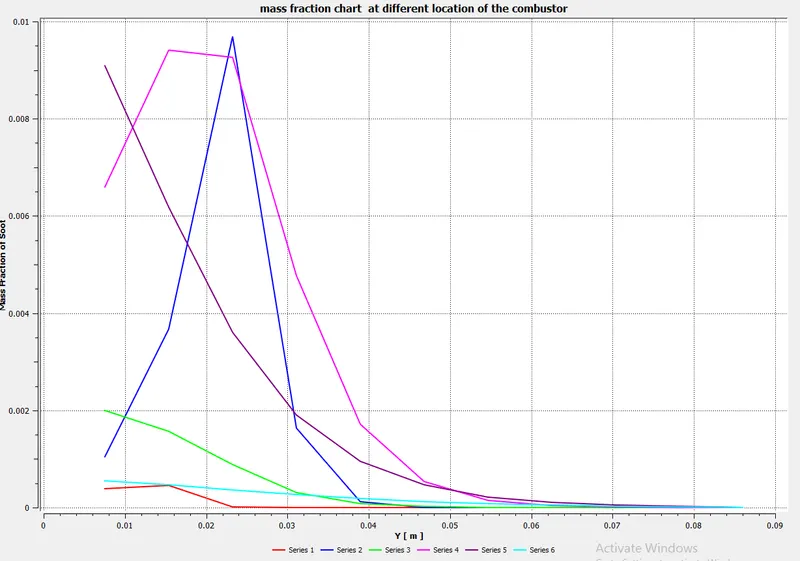
- For 20% addition of water into the fuel CH4(0.8)
NOx contour and mass fraction chart at different location of the combustor:
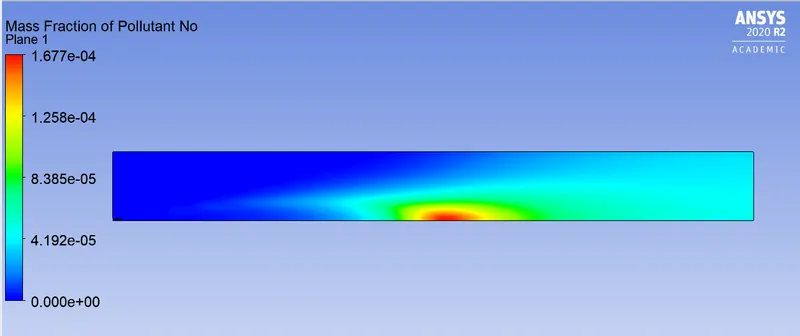
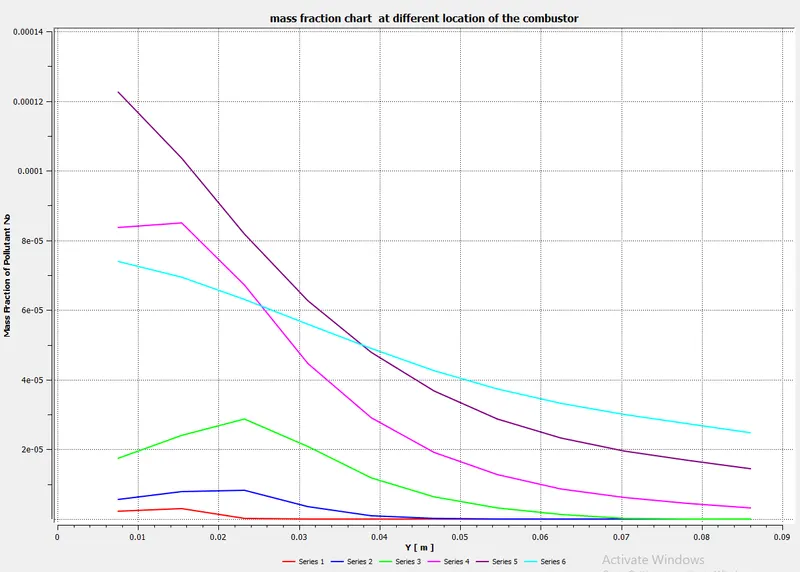
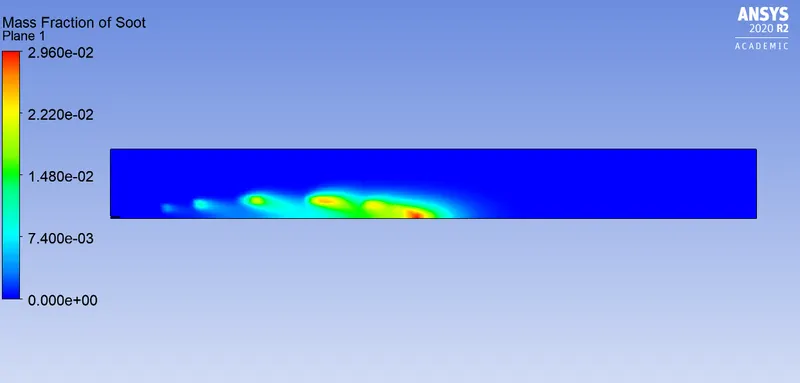
Shoot formation contour and mass fraction chart at different location of the combustor:
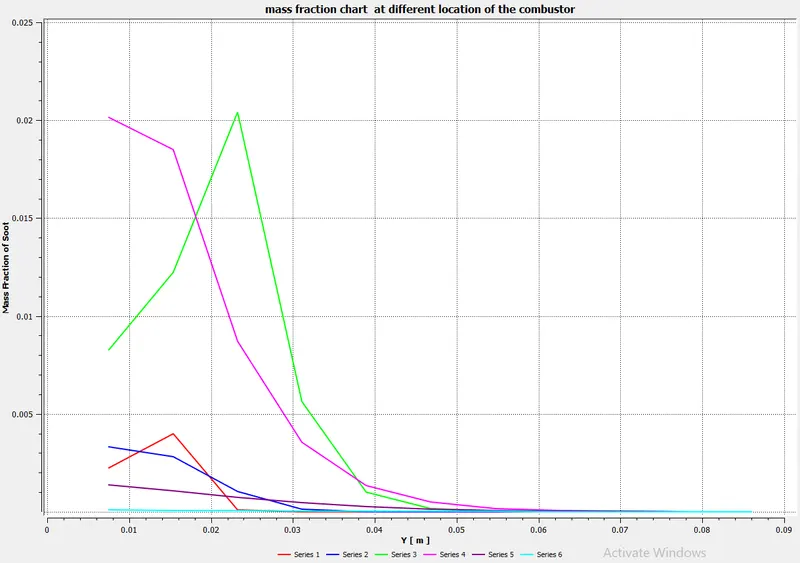
- For 30% addition of water into the fuel CH4(0.7)
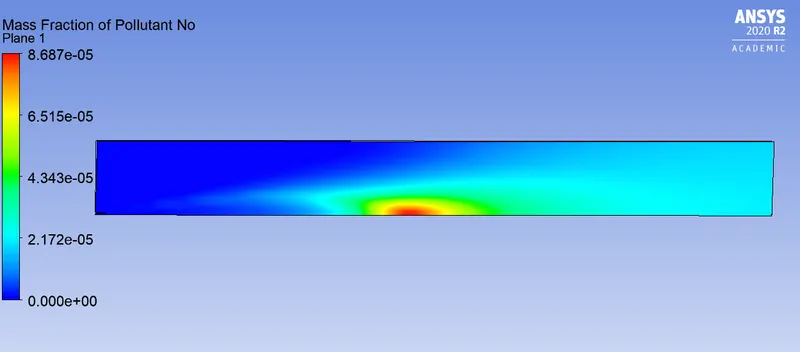
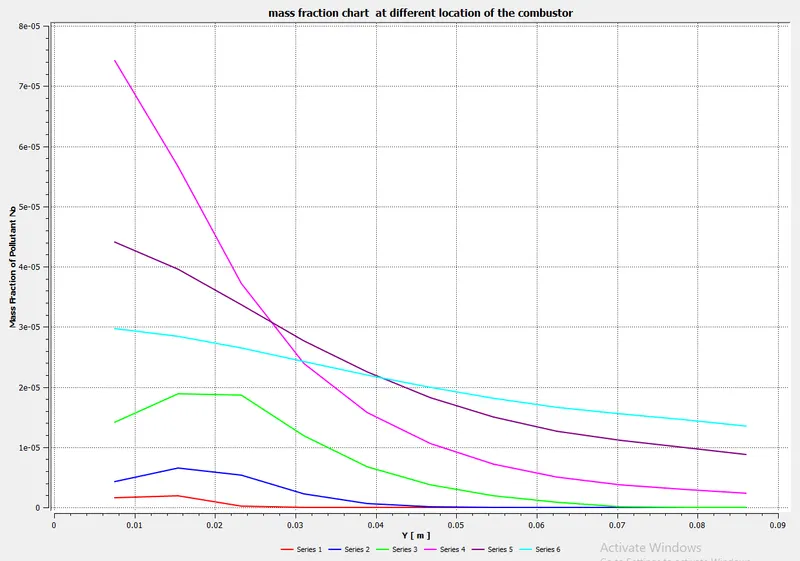
NOx contour and mass fraction chart at different location of the combustor:
Shoot formation contour and mass fraction chart at different location of the combustor:
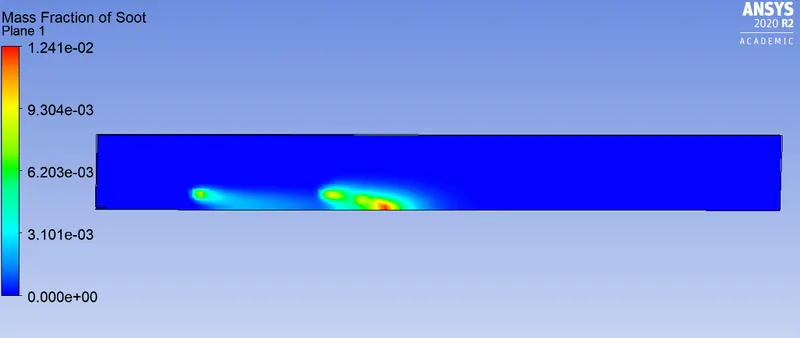
Comparison of NOx and Soot formation mass fraction for the volume of water addition:
| percentage of water addition | percentage of fuel | NOx mass fraction | soot mass fraction |
| 5 | 95 | 9.991332E-05 | 6.4254959E-06 |
| 10 | 90 | 7.6596002E-05 | 1.7186901E-06 |
| 20 | 80 | 4.1249973E-05 | 2.9508549E-07 |
| 30 | 70 | 1.9402501E-05 | 1.6345577E-08 |
From the above plots, it is observed that the NOx and soot formation is reduced with an increase in the mole fraction of water in the methane-air mixture. With the addition of water in the fuel mixture, the temperature is reduced which in turn delays the combustion to takes place which leads to an efficient mixture of fuel and air. With the proper mixture of fuel and air complete combustion takes place because of which nitrogen oxides formation is reduced as there is no oxygen left to react with nitrogen to form nitrogen oxides.
Soot is formed as a result of the burning of fuel in presence of less oxygen at low temperatures. As complete combustion takes place due to efficient mixing of the fuel and air there is very less amount of fuel and oxygen present after combustion as a result the soot formation is reduced.
Conclusion:
1. With the increase in the Mass fraction of water in the fuel-air mixture NOx pollutant is reduced.
2. With the increase in the Mass fraction of water in the fuel-air mixture Soot formation is reduced.
3. With the increase in the Mass fraction of water in the fuel-air efficient mixture of fuel-air is achieved.
4. With the increase in the Mass fraction of water in the fuel-air mixture temperature of the exhaust gases is reduced.
5. With the increase in the Mass fraction of water in the fuel-air mixture velocity of the exhaust gas is reduced.