Mechanical · PG program

Post Graduate Program inBattery Technology for Mechanical Engineers

Gain industry-relevant skills to develop an efficient Battery Management System to power EVs with the battery technology course in India. Our course on battery technology will take you through different modelling systems for a battery pack, including thermal and MATLAB.

Duration
32 weeks
Content
81 hours
Courses
6
Projects
14
Mode
Online
Overview

What you'll
be able to do.

  • The Post Graduate Program in Battery Technology for Mechanical Engineers is a unique program consisting of fundamentals and tool-based courses for designing, developing, and managing battery systems.
  • The program covers the basics of the batteries, their working principles, and the battery management system including the design of the thermal management and cooling system while providing a hands-on approach to gaining skills in computational tools such as C/C++, MATLAB, OpenFOAM, GT-Suite and ANSYS Fluent.
  • The program is designed with utmost care by industry experts to combine the right amount of theory while keeping the focus on applied or skill-based content required by the learners to get a clear understanding of how industries solve problems related to battery technology in the EV industry.

Why this program

  • This program builds a strong foundation on battery systems and the skills for solving problems in the research and development of battery design and management.
  • The skills that are gained from this program are:
    • Cell and battery pack system performance modelling using 1D modelling (MATLAB/Simulink)
    • Battery thermal management / cooling system design using both 1D & 3D CFD (GT Suite & Ansys Fluent)
    • Battery management system - Software - Embedded C/C++, RTOS, Design Studio IDE, JTAG Debugger, Quectel GSM/GPRS and GNSS modules, etc.
    • Importantly, the courses are created to gain the ability of fast-thinking to understand and solve current engineering problems and assess novel concepts or designs for advanced product creation as the majority of the research institutes, universities, and industries use the same software packages.
  • After completing the program, students can apply for job roles like
    • Battery systems engineer
    • Battery/cell modelling engineer
    • Battery design engineer
    • Battery thermal modelling / CAE engineer
    • Battery research engineer
  • Students can also apply for advanced master's or post-master's in
    • Sustainable automotive electrification
    • Electrical automotive engineering
    • Sustainable energy technologies
    • Smart, connected and autonomous vehicles
    • Material science and engineering
Tools you'll use
ANSYS FluentSpaceClaimCFD PostMATLABSimulinkOpenFOAMOctaveANSA
Curriculum

6 courses,
48 modules.

Get the full syllabus ↓
  1. 01Introduction to Battery Technology for Electric Vehicle10 modules
    1. Energy and electrochemistryW01
      • Sources of energy for propulsion & their comparison: Net Calorific Value & Conversion efficiency
      • History and background of battery technology
      • Electrochemistry fundamentals & terminologies
      • Lithium-ion battery and different chemistries
    2. Important terms and characteristicsW02
      • Portable power applications and electrical load requirements
      • Factors affecting the choice of EV battery systems
      • Commercially available lithium-ion cells
      • Electrical characteristics of battery: Capacity, C-rate, impedance, DOD, SOC, SOH, Life cycles, Mechanical characteristics, Form factor, Safety
    3. Mathematical ModellingW03

      In this week, the following topics are covered:

      • Reading cell manufacturer’s specifications
      • Cell characterization
      • Tools and standard testing
      • Battery capacity estimation algorithms
      • Electrical equivalent circuit & mathematical model in MATLAB
    4. Battery Pack ConstructionW04

      In this week, the following topics are covered:

      • Battery modules and complete battery pack system
      • Assembly methods
      • Electrical connections
      • Cell level protection system
      • Battery pack level protection system
      • Understanding laptop battery pack system
    5. New Energy Storage Technologies W05

      In this week, the following topics are covered:

      • Other energy sources: New battery technologies, Ultracapacitor, Fuel cell, Flywheel
      • Hybridization of energy storage systems
    6. Battery Management System: IntroductionW06

      In this week, the following topics are covereed:

      • Battery pack requirements: Measurement
      • Protection and management
      • Cell balancing
      • Battery pack electronics
      • Battery Management System (BMS): Functionality, technology and topology (centralized, modular, master-slave, distributed)
    7. Battery Management System: DesignW07

      In this week, the following topics are covered:

      • BMS Application Specific Integrated Circuit (ASIC) selection
      • Analog BMS design
      • Digital BMS design
      • BMS deploying: Installing, testing and troubleshooting
    8. Battery ChargingW08

      In this week, the following topics are covered:

      • Battery charge management
      • MATLAB simulation of battery charging circuit
      • Charger circuit overview
      • EV charging technology review
      • Charging behavior: life cycle & safety
    9. Thermal ManagementW09

      In this week, the following topics are covered:

      • Types of temperature sensors
      • Thermal management system
      • Thermal model of battery pack
      • Drive cycle simulation and vehicle range estimation
      • Cooling materials and methods
    10. Recent Trends and EconomyW10

      In this week, the following topics are covered:

      • Communication systems for battery pack
      • Review of electric car battery pack
      • Important considerations
      • Recent trends: Grid level energy storage
      • Solar & wind integration
      • Recycling and pricing
  2. 02Advanced CFD Meshing using ANSA5 modules
    1. Introduction to ANSA GUI and ToolsW01
      • In this module, you will be introduced to the ANSA Software. You will learn the Graphical User Interface(GUI) of the ANSA tool.
      • You will get to know about different solvers and the types of analysis carried out using them.
      • You will be introduced to the basic tools that will help you with geometric cleanups and other deck setups in ANSA.
      • The topics covered in this module are,
        • Introduction to ANSA
        • ANSA GUI
        • Geometric tools and topology cleanup
        • Different tools used in the TOPO deck
    2. 2D (Surface) Meshing to Pressure valveW02
      • In this module, you will be introduced to the pressure valve model. You will learn to perform surface meshing on a pressure valve model.
      • The topics covered in this module are,
        • PID creation and PID assignment
        • Different selection techniques and visibility tools
        • Basic Topology cleanup
        • Basic tools used in surface meshing
    3. 3D (Volume) Meshing to TurbochargerW03
      • In this module, you will be introduced to the turbocharger model.
      • You will get to know, how to perform volumetric meshing to a turbocharger model.
      • The topics covered in this module are,
        • Geometry cleanup to define volumes
        • Various geometry checks
        • Surface meshing as per quality criteria
        • Volumetric meshing as per requirements
    4. CFD meshing to BMW M6 Model inside Wind tunnelW04
      • In this module, you will be introduced to the BMW M6 model.
      • You will learn how to perform CFD meshing on a BMW M6 model.
      • The topics covered in this module are,
        • Advanced topology cleanup to define volumes
        • Variable surface meshing part by part
        • Solving quality failed elements as per quality criteria
        • Symmetry operation for surface and mesh elements
        • Wind tunnel creation
        • CFD meshing for wind tunnel
    5. Surface Wrap to an Automotive AssemblyW05
      • In this module, you will be introduced to three different automotive models: engine, transmission, and gearbox.
      • You will learn how to perform surface wrap on an automotive assembly for CFD analysis of the outer flow.
      • The topics covered in this module are,
        • Geometry cleanups for the surface wrap.
        • Merging of different models into one GUI.
        • Surface wrapping for an assembly.
  3. 03Introduction to CFD using MATLAB and OpenFOAM6 modules
    1. What is Computational Fluid Dynamics?W01
      • In this module, you will understand the basics and significance of CFD.
      • You will also learn what the Navier-Stokes equations are and how they are derived.
      • The following topics are covered this week.
        • CFD - An Introduction, Necessity, Advantages, and CFD Modeling Process
        • Deriving and understanding the Navier Stokes equations
          • Substantial Derivative
          • Continuity Equation
          • Momentum Equation
          • Energy Equation
          • Significance of the Reynolds number in the NS equations
    2. Mathemathics and Fluid Dynamics EssentialsW02
      • In this module, you will be writing solvers and introduced to different numerical methods.
      • The following topics are covered this week.
        • Basic Vector Calculus - Divergence, Gradient, and Curl
        • Taylor’s Series
        • Initial and Boundary Conditions
        • Classification of PDEs and their characteristics
        • Learning essential fluid dynamics quantities and their dimensional analysis
    3. Introduction to MATLAB and Basic CFD ConceptsW03
      • It is essential to establish a rigid foundation before plunging into the farther depths of CFD.
      • This is where you get introduced to MATLAB and learn the basic concepts of CFD by writing MATLAB scripts.
      • Here are some topics that we would cover:
        • Getting acclimated to the MATLAB interface
        • Numerical discretization and its types
        • FDM - Understanding different schemes with worked examples in MATLAB
        • Deriving own FD schemes using Taylor’s table
        • Solving ODEs in MATLAB using the ‘ode45’ solver
    4. Exploring CFD by Solving Standard CFD Problems using FDMW04
      • In this module, you will venture into the Finite Difference Approach to discretization and solve various benchmark CFD problems in MATLAB.
        • Solving coupled linear systems using iterative solvers
          • Jacobi
          • Gauss-Seidel
          • SOR
    5. Introduction to FVM and OpenFOAMW05
      • In this module, you will learn how to run a simulation on OpenFOAM and the significance of using an FVM approach.
      • These are the topics you would learn:
        • Finite Volume Method and Gauss Divergence Theorem
        • Understanding the Linux environment
        • OpenFOAM code organisation and case setup
        • Detailed blockMeshDict tutorial
    6. Solving Standard CFD Problems in OpenFOAMW06
      • In this module, you will be using OpenFOAM for exploring and simulating a wide variety of problems.
      • You will also create a platform that will enable you to start any simulation from scratch and establish confidence in your result.
  4. 04Introduction to GUI based CFD using ANSYS Fluent9 modules
    1. Introduction to CFDW01
      • In this module, you will understand what CFD is and its uses. You will also be introduced to the basic governing equations solved and many schemes and algorithms used to stabilize and improve the accuracy of the solution.
        • Governing Equations of Fluid Motion
        • Numerical Discretization
        • Fluid Solver
        • Boundary Conditions
        • Post-Processing
    2. Simulating Laminar and Turbulent Flows in ANSYS FluentW02
      • In this module, the focus is to simulate basic compressible and incompressible flows using ANSYS Fluent. You will be introduced to the streamlined workflow on the Workbench tool, from geometry creation to the solution post-processing procedure. You will get hands-on experience in
        • Geometry Creation
        • Meshing
        • Boundary and Initial Condition Calculation
        • Setting up solution algorithms
        • Solving and post-processing
    3. Performing Steady State SimulationsW03
      • In this module, the focus is to simulate basic compressible and incompressible steady-state simulations. This provides you with an introduction to the solution setup procedure for a steady-state simulation. You will get hands-on experience in
        • Geometry created using SpaceClaim
        • How to set up Steady-State Simulations?
        • Checking for Convergence and understanding when the simulation converges for different boundary conditions
        • How to create Runtime Animation of Engineering Parameters?
        • Project 1: HVAC Simulation Inside a Mixing TEE
        • Project 2: Performing Parametric Study on Flow Inside a Gate Valve
        • Project 3: Performance Characterization of a Cyclone Separator
    4. Exploring Meshing strategiesW04
      • Meshing is an important component in CFD analysis. Improper meshing can lead to bad results. In this module, you will learn the different meshing techniques that can improve the solution accuracy with a balanced computational cost. More hands-on experience in
        • Methods of providing local refinement like Sphere of Influence, Body Sizing, etc.
        • Concept of Y plus and its importance
        • Inflation Layers and Controls
        • Mesh Dependence Test
    5. External AerodynamicsW05
      • You will learn the fundamentals of performing external flow analysis using ANSYS Fluent. It provides you with knowledge on boundary layer concepts, needs of Y plus, and wall functions. Here, we will focus on the following topics.
        • Setting up Virtual Wind Tunnels using the Enclosure Utility
        • Understand Vortices, calculating Downforce & the drag on a Vehicle
        • Y+ Estimation & Grid Refinement
    6. Conjugate Heat TransferW06
      • In this module, you will learn how to simulate solid-side heat transfer along with the fluid flow. Conjugate Heat Transfer (CHT) refers to simulating multiple modes of heat transfer. For example, in one of the projects, you will simulate the heat transfer in an exhaust manifold when hot exhaust products are flowing through it. When you complete this module, you will be able to do the following:
        • Extracting solid and fluid volumes
        • Creating Shared Topologies for Creating Conformal Meshes
        • Setting up Volumetric Heat Sources
        • Visualizing Heat Transfer Coefficient Distribution
    7. Discrete Phase ModellingW07
      • Discrete Phase Modelling (DPM) is used to model particles, fuel drops, coal, and any other type of suspended phase. You will work on problems like the Cyclone Separator, where you will incorporate the DPM approach to simulate how suspended impurities travel through a Cyclone Separator. You will get hands-on experience in
        • Different types of discrete phase boundary conditions and their effects
        • Methods of tracking the Discrete Phase Particles
        • Turbulence Intensity and Vortex Core Visualisation
    8. Introduction to User Defined FunctionsW08

      You will learn how to write a customized program, create different monitor points, and extract the relevant information you need to form a simulation.

    9. Basic Reacting Flows W09

      In this module, you will learn how to simulate reacting flows using ANSYS Fluent. This includes combustion applications.

  5. 05Li-ion Battery System design in EV & ES12 modules
    1. Introduction to Li-ion BatteryW01
      • Li-ion Battery – An Introduction, Advantages
      • Voltage, Current, Watts, Ampere-hour, Watt-hour
      • Structure of a Li-ion cell, Evolution of the Li-ion cells, Li-ion cell chemistries
    2. Safety Operating Area of Li-ionW02
      • Electrical Cell Model
        • Identifying RC Value of Cell using MATLAB
        • SOC Estimation using the RC Value
    3. Battery Pack DesignW03
      • Identifying Number of Cells in Series and Parallel
      • Battery Aging
      • Peak Load Optimization
      • Importance of Mechanical Enclosure
    4. Battery Pack ModellingW04
      • Cell Testing Methods and Techniques
      • Battery pack Modelling
      • Battery Charging Topologies
      • Fast Charging
    5. Introduction to Battery Management SystemW05
      • Need of BMS
      • Features of BMS
      • Architecture of BMS
    6. Battery Management SystemW06
      • Individual Cell Voltage Measurement
      • Charge and Discharge Current Measurement
      • Cell Temperature Measurement
      • BMS Fault Safety Features
    7. Battery Management SystemW07
      • MOSFET Switching Profile
      • Cell Balancing
        • Passive Cell Balancing
        • Active Cell Balancing
    8. SOC Measurement in Battery SystemW08
      • Voltage Translation SOC Measurement
      • Coulomb Counting SOC Measurement
      • Combination of Voltage Translation and Coulomb Counting
    9. BMS CommunicationW09
      • Types of Communication
        • RS485 Communication Protocol
        • CAN Communication Protocol
    10. Battery Pack Range EstimationW10
      • Standard Drive Cycle
      • Vehicle Dynamics for Range Estimation
      • Battery Pack Range Calculation using Microsoft Excel
      • Battery Performance for Acceleration
    11. Thermal SystemW11
      • Introduction to Thermal Management System for Li-ion battery
      • Need for TMS
      • Types of Thermal Cooling System
      • Design Calculations for Li-ion Battery Cooling System
    12. High Voltage Lithium-ion Battery Electrical SafetyW12
      • High Voltage Battery Pack Shock
      • Hazard Classification of Batteries
      • Shock Hazard Signs
      • Fire Extinguish Methods
      • Thermal Runaway
      • Li-ion Battery Fire Extinguish
      • Guidelines
  6. 06Battery Thermal Management using Ansys Fluent and MATLAB6 modules
    1. Concept of Heat Transfer and Fluid FlowW01

      In this week, you will learn about

      • Engineering Heat Transfer
      • Heat and Other Forms of Energy
      • The First Law of Thermodynamics
      • Heat Transfer Mechanisms
      • Conduction
      • Convection
      • Radiation
      • Simultaneous Heat Transfer Mechanism
    2. Introduction to Battery Technology and Electrochemical ModellingW02

      In this week, you will learn about

      • How electrochemical cells work
      • Choosing active materials
      • Lithium-ion cell make-up
      • Availability of Lithium
      • Manufacturing: Making the Electrodes
      • Manufacturing: Assembling the Cell
      • Failure Modes
    3. Equivalent Circuit Modelling of Cell and Thermodynamic of CellW03

      In this week, you will learn about

      • Open Circuit Voltage (OCV)
      • State of Charge
      • Linear Polarization
      • OCV Testing
      • Coulombic Efficiency
      • Thermal Logic and Algorithms
      • Li-ion Aging
      • Butler Volmer Model
    4. Battery Thermal ManagementW04

      In this week, you will learn about

      • Air Cooling and Heating
      • Liquid Cooling and Heating
      • Direct Refrigerant Cooling and Heating
      • PCM
      • Thermoelectric Module
      • Heat Pipe
      • PTC Heater
      • Forced Air System
      • Liquid System
      • PCM System
      • Thermoelectrics
      • Combined Liquid System (CLS)
      • PCM Model (CLS+PCM)
    5. Concepts of CFDW05

      In this week, you will learn about

      • Computational Fluid Dynamics: Why?
      • Computational Fluid Dynamics as a Research Tool
      • Computational Fluid Dynamics as a Design Tool
      • Governing Equations of CFD
      • Type of Boundary Conditions
      • Finite Difference Method
      • Finite Volume Method
      • Introduction to Commercial Software (Fluent/StarCCM+)
    6. Thermal and Flow Modelling of Battery PackW06

      In this week, you will learn about

      • Geometry Cleanup
      • Preprocessing (Meshing strategies)
      • Solution Setup
      • Post-processing
      • Pressure Drop Study
      • Selection of Fan/Pump for Cooling System
      • 3D Modelling of Liquid-cooled Thermal Systems using Fluent
      • 3D Thermal Modelling of an Air-cooled Battery Pack
Industry projects

14 projects
you'll ship.

Our projects are designed by experts in the industry to reflect industry standards. By working through our projects, Learners will gain a practical understanding of what they will take on at a larger-scale in the industry. In total, there are 14 Projects that are available in this program.

Mechanical Design of Battery Pack
Introduction to Battery Technology for Electric Vehicle

Mechanical Design of Battery Pack

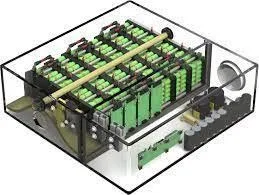
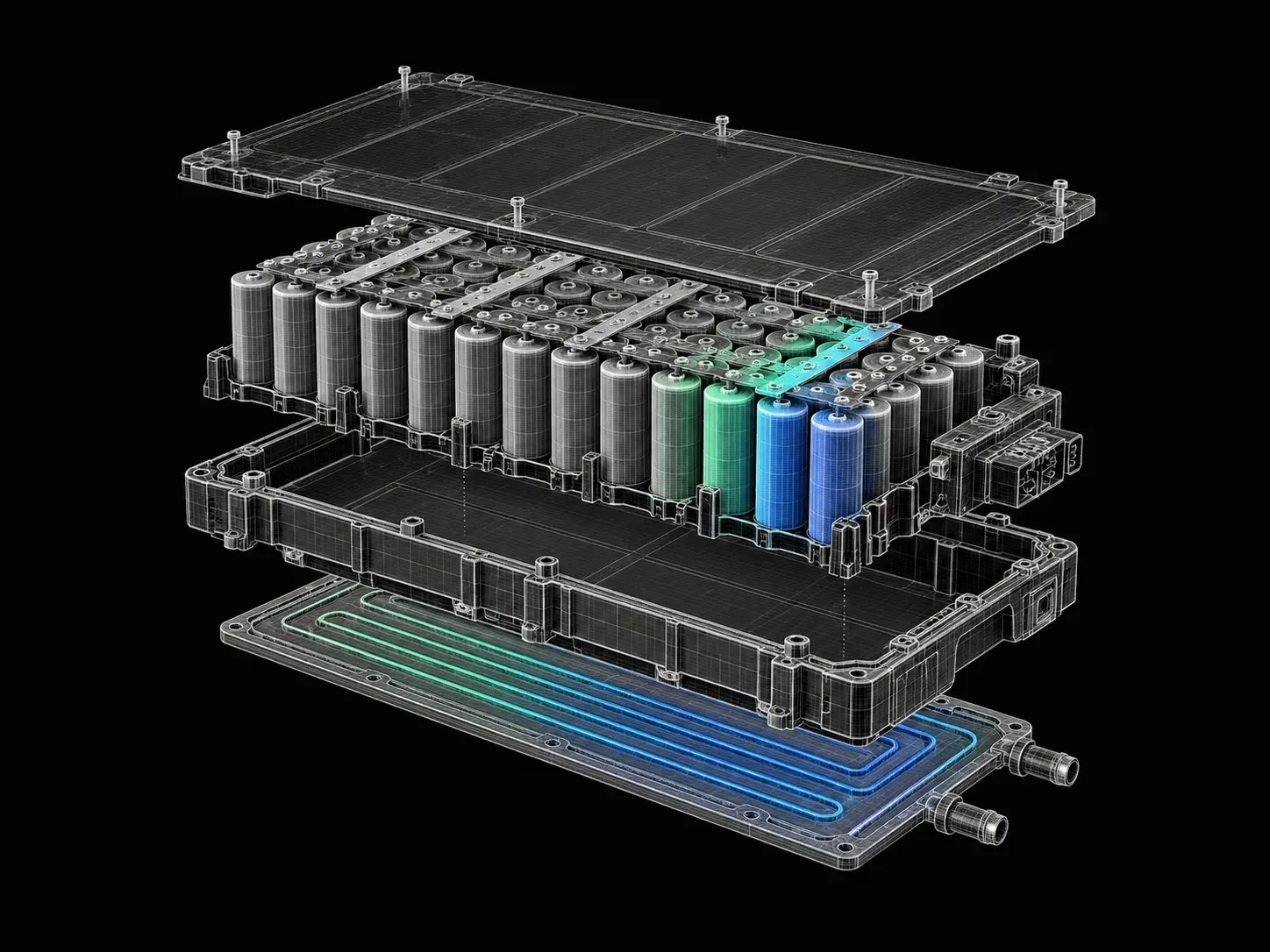
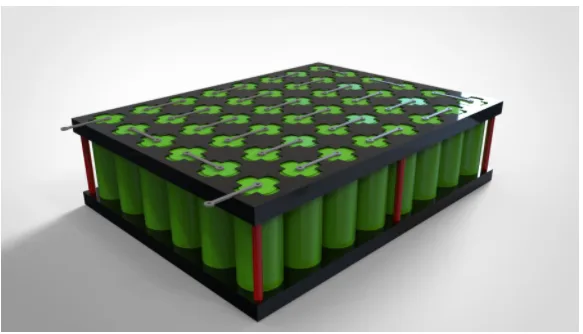
This project requires the student to design a CAD model of a lithium-ion battery pack by choosing series and parallel cells, with electrical connections, and mechanical holders.
Thermal Modelling of Battery Pack
Introduction to Battery Technology for Electric Vehicle

Thermal Modelling of Battery Pack

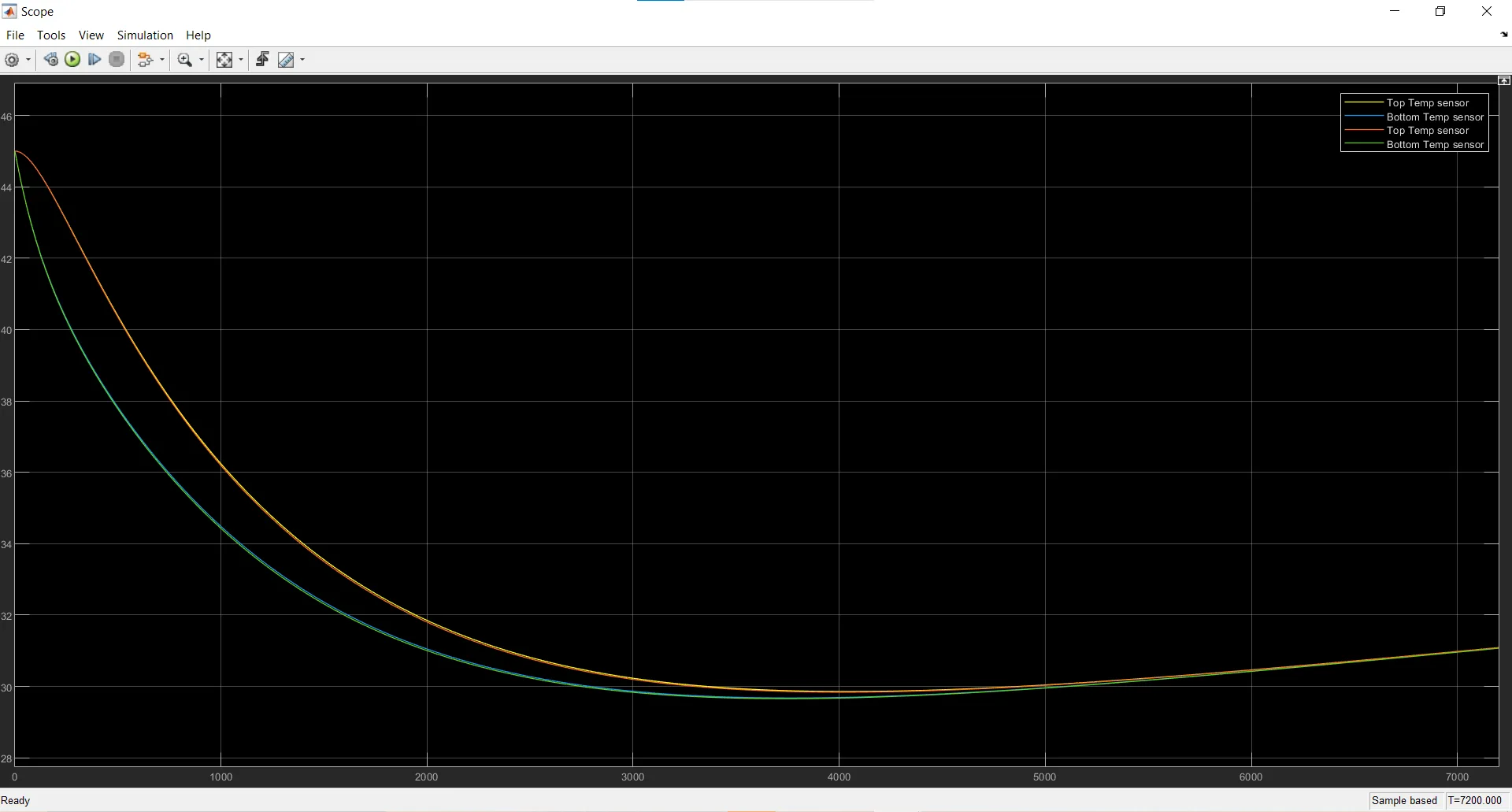
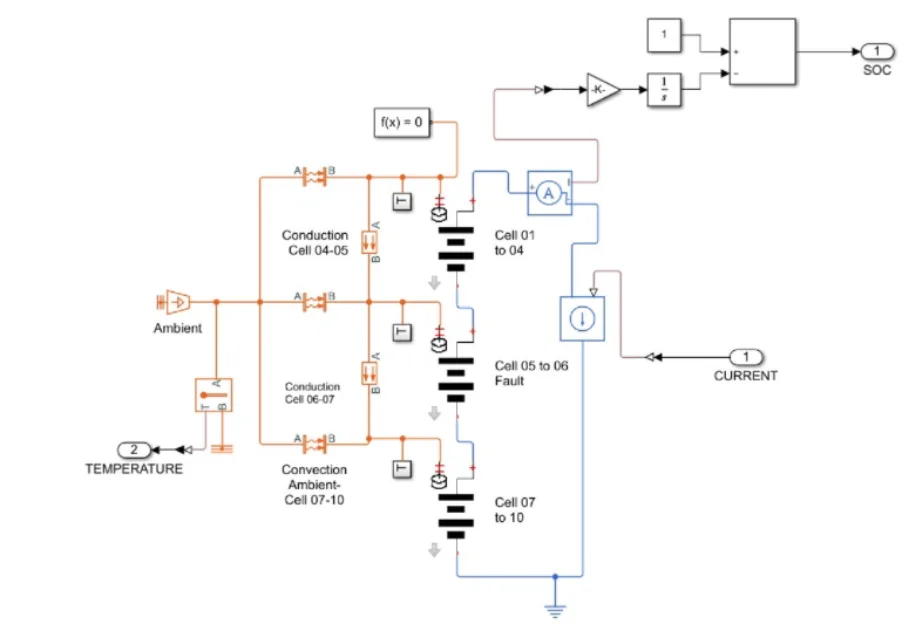
The model consists of a battery pack that includes 10 lithium-ion batteries connected in series. The battery pack is simulated with different temperature conditions and the perform…

Modeling & testing of battery management system with Simulink
Introduction to Battery Technology for Electric Vehicle

Modeling & testing of battery management system with Simulink

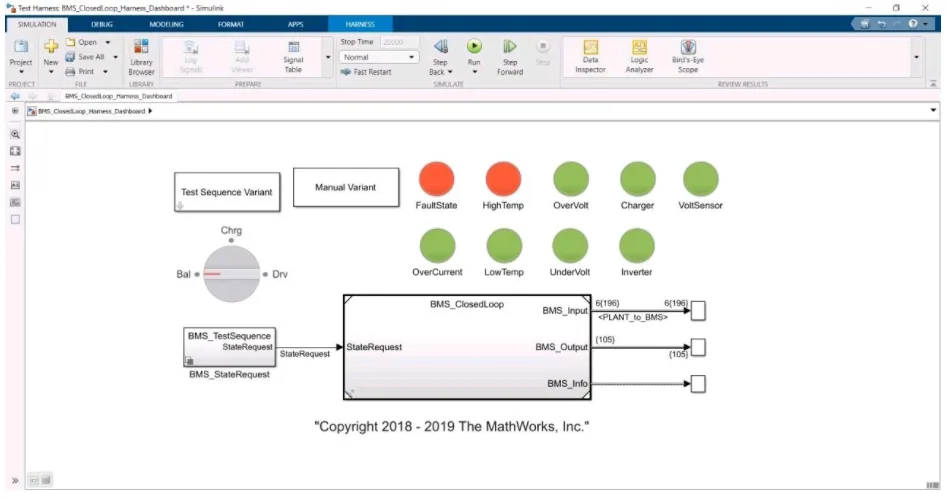
In this project, the students will test the BMS model for various types of faults during charge and discharge conditions.

2D Heat Conduction Simulation
Introduction to CFD using MATLAB and OpenFOAM

2D Heat Conduction Simulation

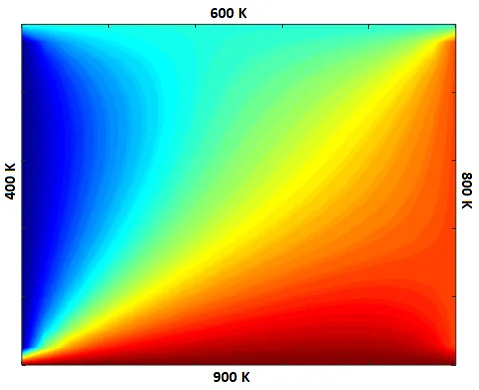
In MATLAB/Octave, write a code to solve and obtain a stable reliable solution to problems with steady and unsteady diffusion phenomena using FDM.

Supersonic Nozzle Flow Simulation using MacCormack Method
Introduction to CFD using MATLAB and OpenFOAM

Supersonic Nozzle Flow Simulation using MacCormack Method

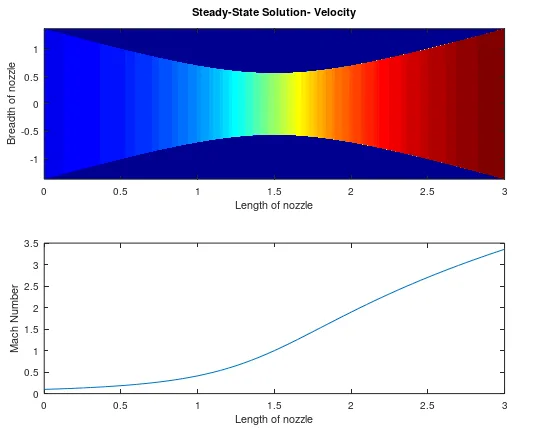
In MATLAB/Octave, perform simulations over a subsonic-supersonic convergent-divergent isentropic nozzle. Investigate the conservation and non-conservation forms of the governing eq…

Flow over a Backward Facing Step
Introduction to CFD using MATLAB and OpenFOAM

Flow over a Backward Facing Step

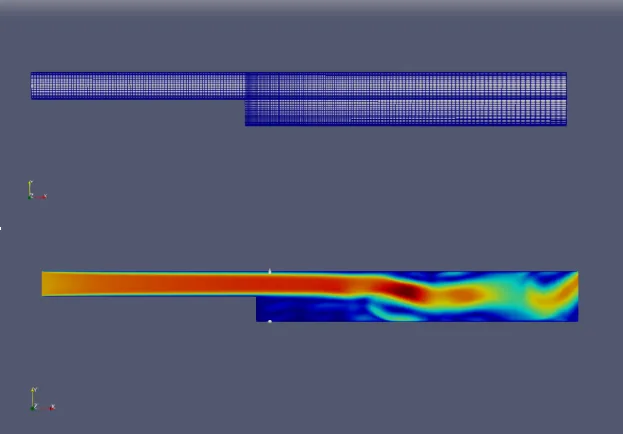
In this project, you will learn to set up, run and customize OpenFOAM in a Linux environment and solve different basic problems using it.

Automated BlockMesh Generation for Meshing Pipe Geometry
Introduction to CFD using MATLAB and OpenFOAM

Automated BlockMesh Generation for Meshing Pipe Geometry

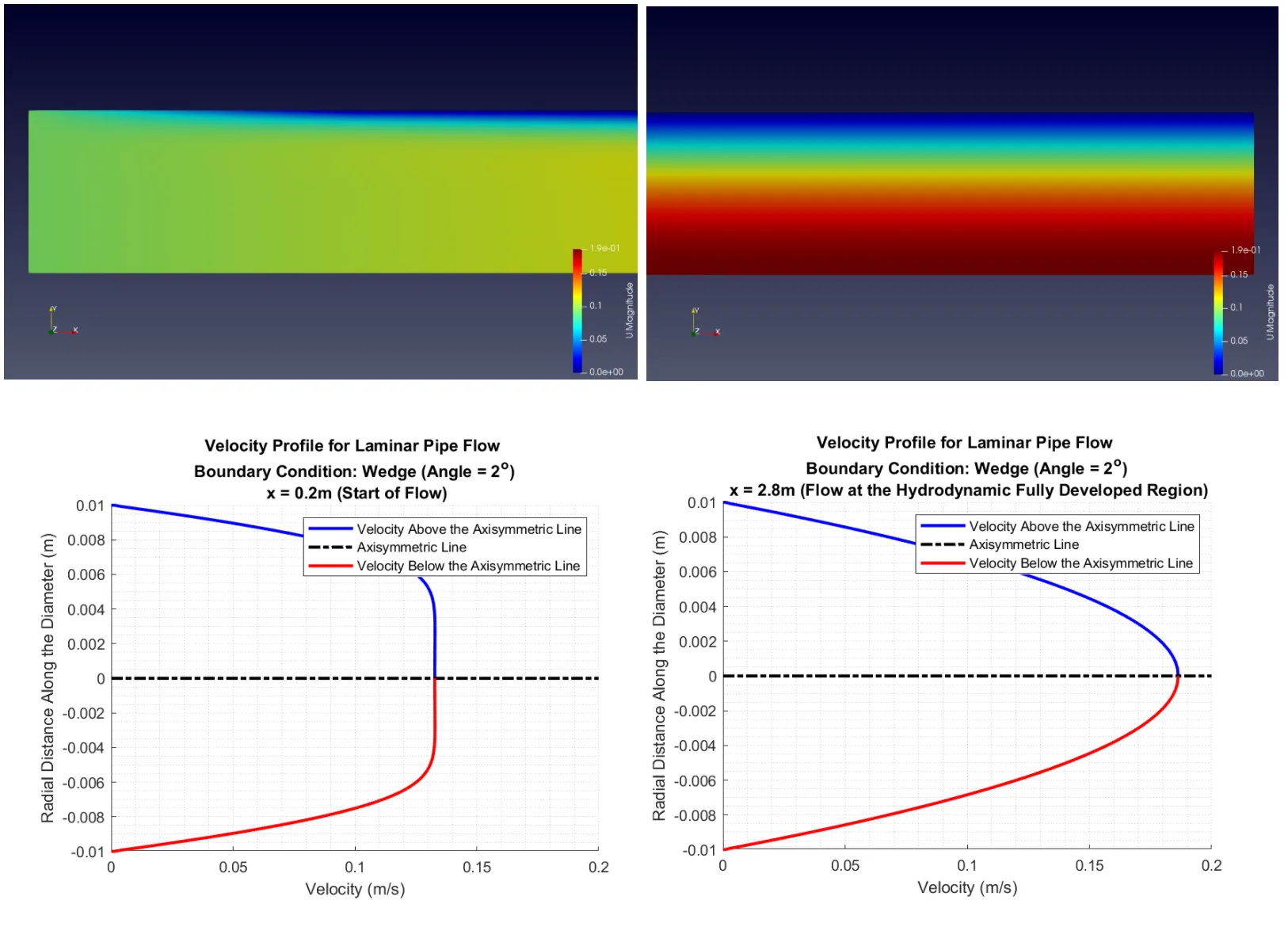
This project compares analytical and simulated results for a laminar viscous flow of a liquid over a regular pipe. Additionally, you will write code to automate mesh generation and…

Estimating the Voltage-based SOC of the Battery using 1 RC Model in MATLAB
Li-ion Battery System design in EV & ES

Estimating the Voltage-based SOC of the Battery using 1 RC Model in MATLAB

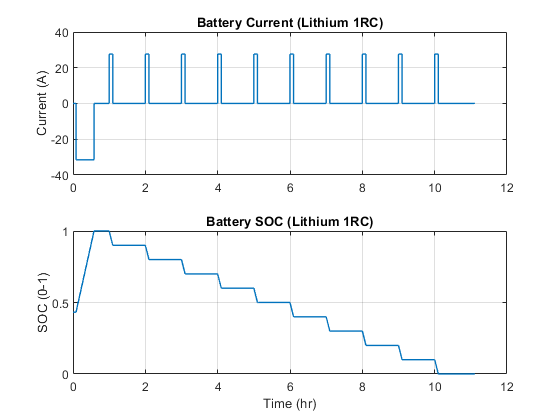
In this project, the students will estimate the voltage-based SOC of the battery using the 1 RC model in the MATLAB environment.

Project-Based on a Real-world Scenario
Li-ion Battery System design in EV & ES

Project-Based on a Real-world Scenario

In this project, the students will design a battery pack based on the given customer requirements.

1D Thermal System Model  for Liquid Cooling System using MATLAB Simulink
Battery Thermal Management using Ansys Fluent and MATLAB

1D Thermal System Model for Liquid Cooling System using MATLAB Simulink

In this project, you will model a 1D thermal system for a liquid cooling system using MATLAB Simulink. You will also determine the heat generation in the battery pack, and understa…

3D Modelling of Liquid and Air Cooled Cooling Systems using Ansys Fluent
Battery Thermal Management using Ansys Fluent and MATLAB

3D Modelling of Liquid and Air Cooled Cooling Systems using Ansys Fluent

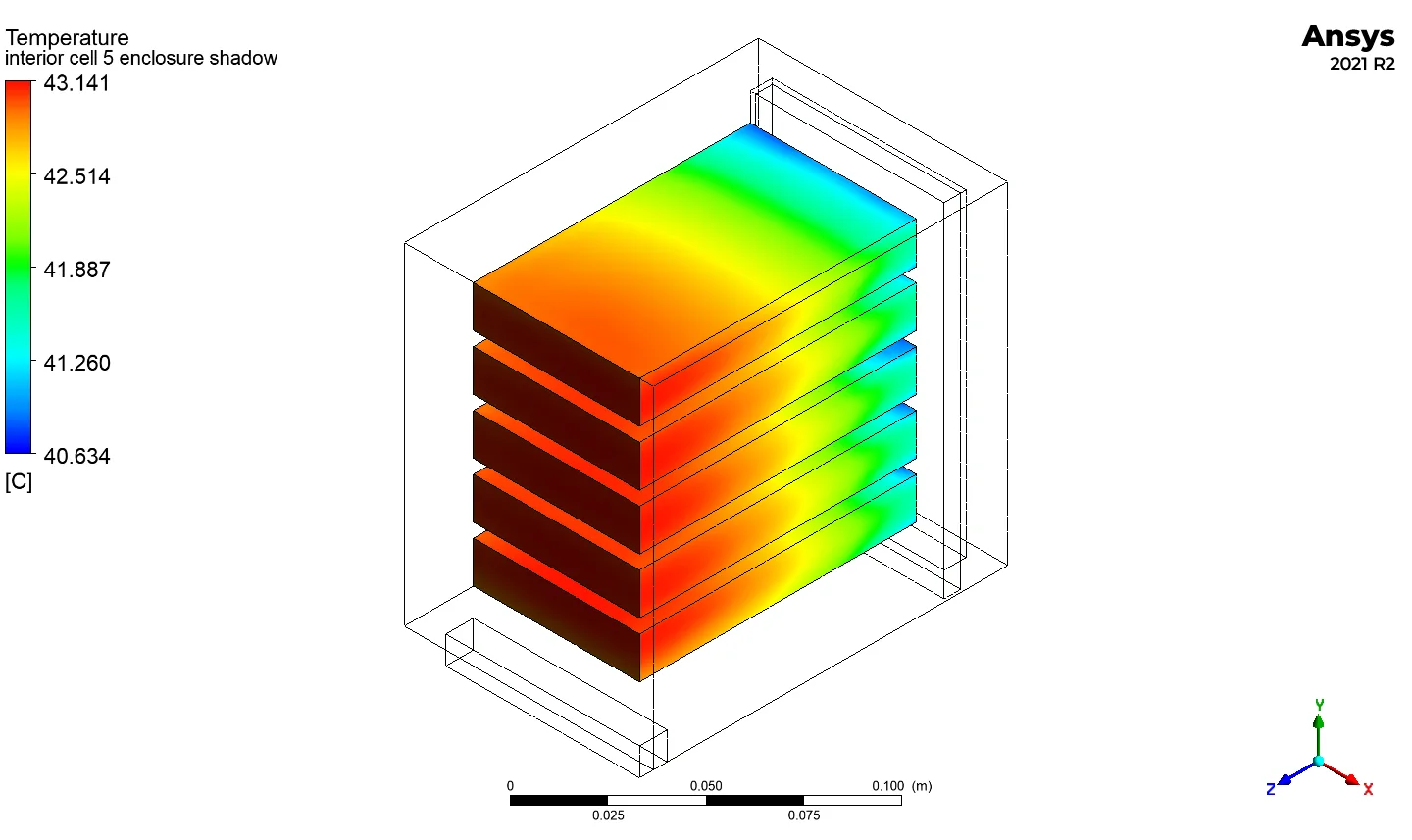
Part 1 In this project, you will use Ansys Fluent to create a 3D model of a liquid-cooled cooling system. You will create geometry for the battery module with a liquid cooling syst…

CFD meshing to a Truck Model inside a wind tunnel
Advanced CFD Meshing using ANSA

CFD meshing to a Truck Model inside a wind tunnel

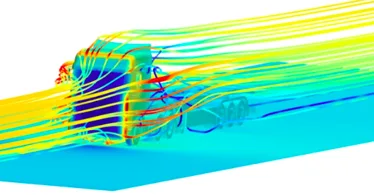
In this project, the students will perform CFD meshing to a truck model inside a wind tunnel using ANSA.

+ 2 more projects in the full syllabus

Fee

One fee.
Everything included.

Become job ready with our comprehensive industry focused curriculum for freshers & early career professionals

Premium
₹2,75,000
Inclusive of all chargesEMI from ₹14,375/month
  • Career Service Assurance
  • Personalized Career Services Mentorship
  • 1 Year Access
  • Personalized Page
  • Live Individual & Group Sessions
  • Personalized & Hands-On
  • Job-Oriented Industry Relevant Curriculum
Check eligibility →
FAQ

Questions,
answered.

Who can take up the PG Program in Battery Technology course?

Students and graduates of mechanical engineering and related streams of engineering can take up this course on new battery technologies in the EV domain. This course is for anyone interested in future battery technologies.

Is the PG Program in Battery Technology an online program?

Yes, the PG Program in Battery Technology is delivered 100% online.

What is the duration of this PG Program in Battery Technology?

One of the top battery technology courses in India, the PG Program in Battery Technology is an 8-month long course covering both basic to advanced level concepts in the domain.

How much can a Battery Engineer earn yearly?

According to Glassdoor, the average annual salary of a Battery Engineer is around INR 6 Lakhs per annum. However, packages tend to increase with your experience and expertise.

Is there any certificate for completing the Battery Technology for Mechanical Engineers program?

Yes, you shall be given a course completion certificate after completing the battery technology course online. The top 5% of the scorers will be given a merit certificate alongside the course completion certificate.

Is there any technical support available for this PG Program in Battery Technology?

Yes, you can clear your doubts during coursework from our technical support team through email support.

Can you tell me more about Skill-Lync?

Skill-Lync is among India’s leading edtech platforms dedicated to transforming engineering education. We equip young engineers with the latest skill sets and cutting-edge tools in new-age technologies.

The brainchild of two engineers from Chennai, Skill-Lync is on a mission to bridge the skill gap between aspiring professionals and the industry’s demands through job-oriented courses.

Next step

Not sure it's
the right fit?

A counsellor will walk you through the syllabus, projects and fee options — and tell you honestly if another course suits you better.

Get the syllabus + a call back

We'll email the full syllabus and call within one working day.

By submitting you agree to our Terms and Privacy Policy.

Call usEnquire

Talk to a career counsellor

Free 20-minute call. We'll map the right course to where you want to work.

By submitting you agree to our Terms and Privacy Policy.