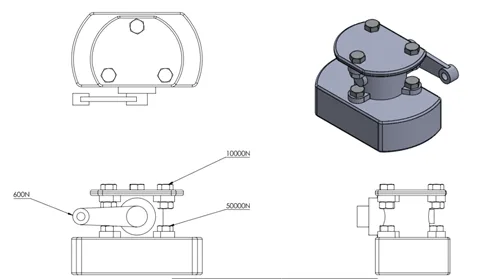
Pre-Tension Analysis using Ansys Workbench
In this project, students will analyse the provided model component.
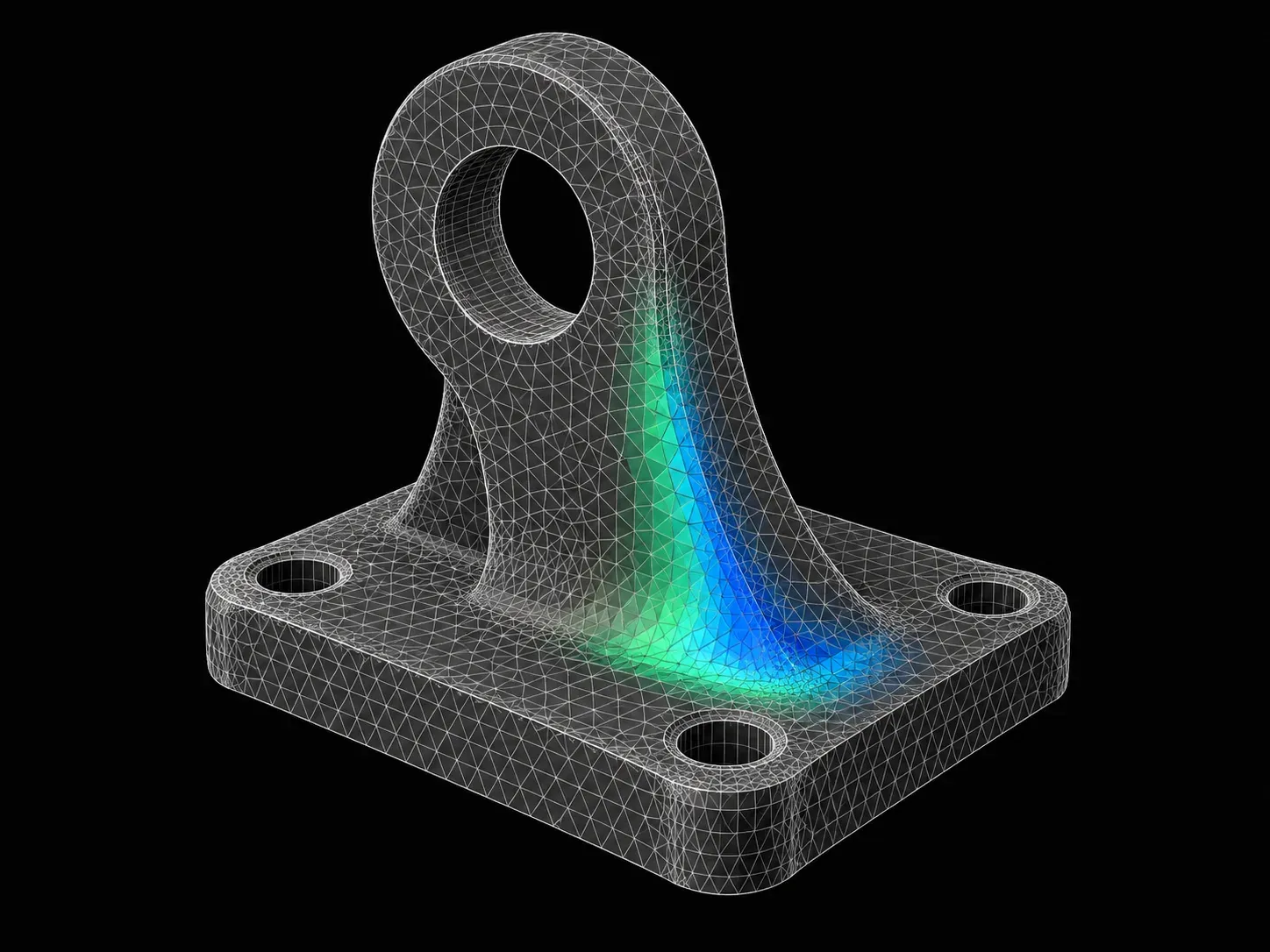
An in-depth and comprehensive course on Structural Analysis using Ansys Workbench.
Structural Analysis using Ansys Workbench is an online course from Skill-Lync: 7 weeks, 14 hours of content and 2 industry projects.
3 h 19 min of this course's own recorded sessions, with transcripts, on Grow by Skill-Lync:
Our projects are designed by experts in the industry to reflect industry standards. By working through our projects, Learners will gain a practical understanding of what they will take on at a larger-scale in the industry. In total, there are 2 Projects that are available in this program.
In this project, students will analyse the provided model component.
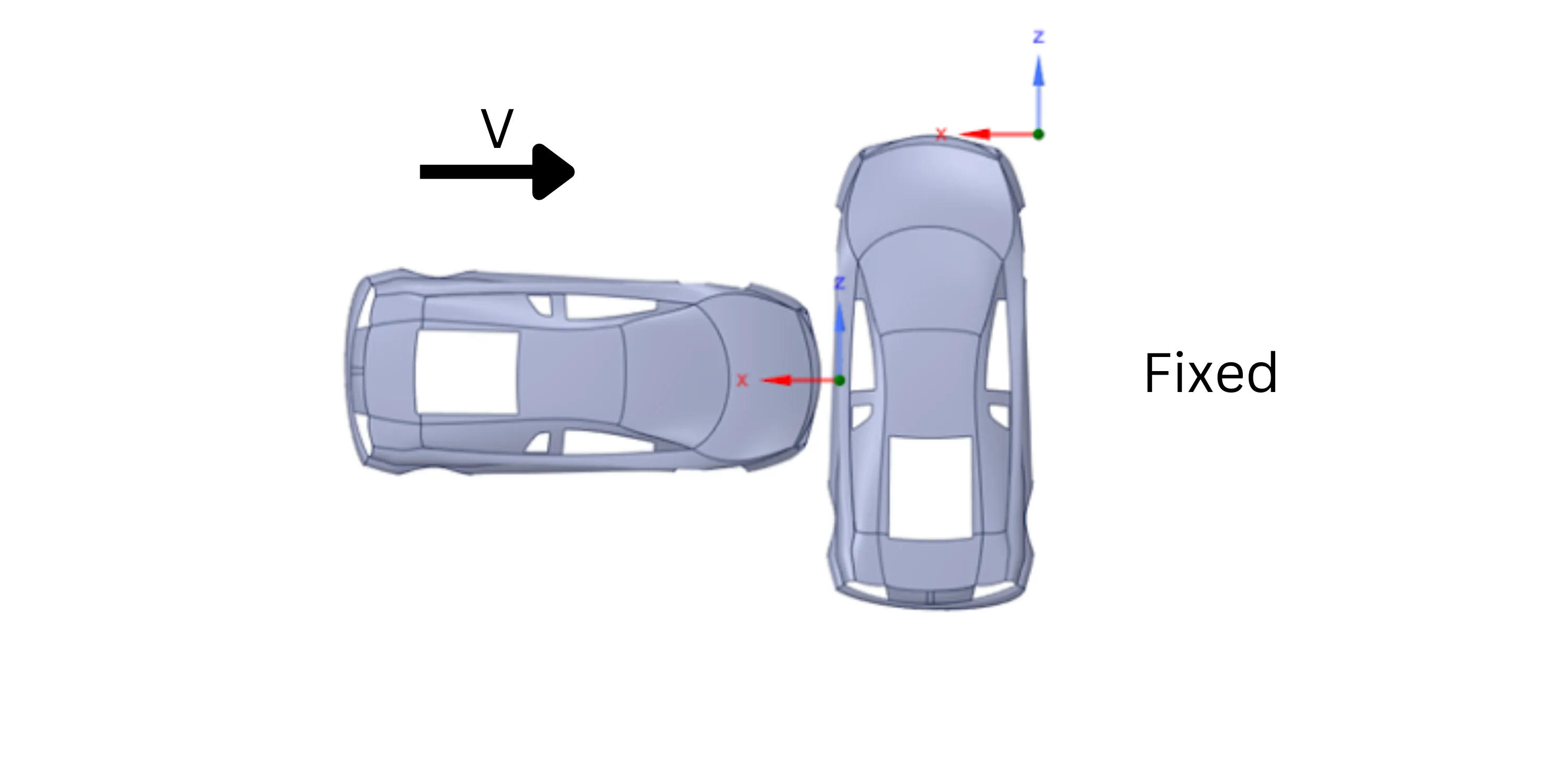
In this project, the students will conduct a side impact analysis of two cars using the Ansys Workbench tool.
Video stories from learners of related mechanical programs, from Skill-Lync's YouTube channel.
by the Skill-Lync team
Ansys Workbench is the project window that links the steps of a simulation. You build or clean the geometry in Ansys SpaceClaim, then set up the finite element model in Ansys Mechanical: mesh, supports, loads, contacts between parts, solve, and read deformation, stress and reaction forces.
The analysis type depends on the load. Static structural is for loads that do not change with time. Modal finds natural frequencies and mode shapes. Harmonic (frequency response) is the steady response to a vibrating load. Transient follows a load that changes with time, and explicit dynamics handles short, violent events such as a drop or an impact. This course works through each of these in 10 modules.
Check it against a hand calculation and against equilibrium before you trust it. The third lesson of this course does exactly that on a cantilever: length 1 m, a 100 N load at the free end, . Taking steel ( GPa) gives , a solid round bar of 17.86 mm diameter.
The instructor's rule is the useful part: FEA is an approximate method, so before showing anyone a stress plot, confirm the reactions add up to the applied loads and the moments and contact forces make sense. The first three lessons are free to watch on Grow.
Implicit solvers find equilibrium at each step and can take large time steps, so they suit static loads and slow dynamics. Explicit solvers march forward in very small steps without solving for equilibrium, which suits impacts, drops and crashes that last milliseconds.
The explicit step is limited by how long a stress wave takes to cross the smallest element: , with . For steel, m/s, so a 5 mm element allows about 1 microsecond per step, and a 10 ms impact needs around 10,000 steps. Module 7 covers this (explicit vs implicit, energy balance, time-step calculation) before the phone-drop and car-frame impact models in module 8.
Industrial parts, not textbook shapes: a backhoe loader bucket (static, modal and rigid-body dynamics), the contact between a differential housing's parts, a prestressed beam and a T-shaped model in modal and harmonic analysis, a phone drop and a car frame impact, a rack and pinion in transient analysis, and the pretension of a jack's bolt. The two graded projects are a pre-tension analysis and a side impact between two cars.
The recorded course is 10 lessons, about 13.6 hours of video, and it is also part of Skill-Lync's PG Program in CAE and Pre-Graduate Program in FEA.
Skill-Lync's own records, as of 16 Nov 2026: the PG Program in CAE, which includes this course, has 296 recorded placements from 2019 to 2026, most often as FEA engineers (65) and CAE engineers (44). The 279 disclosed salaries have a median of ₹3.0 LPA. The biggest hirers were Cyient (29), Xitadel (22) and Tata Elxsi (12). Treat this as a starting point, not a promise; this short course alone is a first step, not the full program.
More detail: CAE engineer salaries from Skill-Lync placements.
| Course | Length | Projects | Tools | Fee |
|---|---|---|---|---|
| Structural Analysis using Ansys Workbench (this page)Ansys Workbench: static, contact, modal, harmonic, impact, pretension | 7 weeks, 14 h | 2 | ANSYS Workbench | ₹40,000 |
| Basics of FEA - Explicit and Implicit FEAFEA theory first: bar, 2D and 3D elements, equations of motion, explicit vs implicit | 12 weeks, 23 h | 3 | ANSYS Workbench | ₹40,000 |
| FEA using SOLIDWORKSSOLIDWORKS Simulation: buckling, fatigue, drop test, frequency | 4 weeks, 4 h | 1 | SOLIDWORKS | ₹40,000 |
| LS-DYNA for Structural Mechanics/FEALS-DYNA explicit: keywords, time step, materials, crash and safety | 12 weeks, 19 h | 2 | LS-DYNA, LS-PREPOST | ₹40,000 |
| Pre-Graduate Program in Finite Element AnalysisIncludes this course with ANSA and HyperMesh meshing | 16 weeks, 73 h | 9 | ANSA, HyperMesh, ANSYS Workbench | ₹1,50,000 |
| PG Program in CAEIncludes this course; LS-DYNA, HyperMesh, Radioss, ANSA | 48 weeks, 149 h | 17 | LS-DYNA, LS-PREPOST, HyperMesh, Radioss, ANSA, MATLAB, MASTAN, ANSYS Workbench | ₹2,75,000 |
Lengths, projects and fees are taken from each course page on 16 Nov 2026; fees are the Premium plan in INR, including all charges.
Become job ready with our comprehensive industry focused curriculum for freshers & early career professionals
A counsellor will walk you through the syllabus, projects and fee options — and tell you honestly if another course suits you better.