Mechanical · PG program

Post Graduate Program inCFD Solver Development

A combination of courses that will help you to develop your own solver in CFD and also learn more about the different types of solvers

Duration
12 weeks
Content
119 hours
Courses
7
Projects
21
Mode
Online
Overview

What you'll
be able to do.

  • The Masters in CFD Solver Development is a tiered program that is designed for students interested in working on developing Computational Fluid Dynamics code.
  • The courses included in the program aim to provide strong coupling between theory and practice.
  • Additionally, the course aims to help students not only start CFD coding from scratch but also gives them strong training in working on existing frameworks, such as those provided by the immensely popular open-source toolbox, OpenFOAM.
  • This gives students equal opportunities to branch out into industry or academia.

Why this program

  • Application Engineer to test validate and use software for industry problems
  • Developer to write and develop new features for CFD code
  • CHT Engineer
  • Aerodynamics Engineer
  • Software Developer in CFD companies
Tools you'll use
PythonCanteraOpenFOAMCONVERGEParaviewMATLABOctaveVisual StudioANSYS Fluent
Curriculum

7 courses,
66 modules.

Get the full syllabus ↓
  1. 01Python for Mechanical Engineers6 modules
    1. Introduction to PythonW01
      • This module provides an introduction to Python using different mathematical operations and performing operations such as,
        • Array manipulations
        • Plotting and understanding the relationship between 2 variables
        • Looping using one or more looping conditions
    2. Plotting and VisualizationW02
      • In this module, you will write programs that plot the p-v line of an air standard cycle and also create animations for a robotic arm with 2 degrees of freedom and simulate the motion of a pendulum.
        • In this module, you will learn the following,
          • Understanding the relationship between 2 variables using plots
          • Saving plots and creating animations using ImageMagick
          • Using tables
    3. Solving Dynamic EquationsW03
      • In this module, you will learn to solve ordinary differential equations using the SciPy module. This is of particular interest since differential equations govern the equations of motion for various mechanical systems and this method can be used to numerically solve initial value problems.
        • Using odeint to solve initial value differential equations
        • Create a pendulum using the available coordinates
        • Plotting and saving images
        • Creating an animation using ImageMagick
    4. Curve Fitting and RegressionW04
      • In this module, you will learn how to perform curve fitting using Python.
      • Curve fitting finds widespread use in predicting the relationship between different variables for which an existing relationship doesn’t exist.
      • Furthermore, curve fitting can also be used as a predictive tool in machine learning and AI to predict what will happen in the future using the trend of the plot.
      • Students will learn about,
        • Curve fitting using the SciPy module
        • Learning how to check how well the data has been fitted
    5. Understanding Iterative SolversW05
      • This module covers iterative solvers, which find widespread use in the solution of polynomial equations, and other aspects like understanding how to obtain the solution in the most optimised manner possible.
      • This module also explains,
        • How to use an iterative solver
        • How to use while loops?
    6. Data AnalysisW06
      • The final module of the coursework deals with data manipulation, which is used in many industries like CAE and CFD to post-process the results from the simulation.
      • This is particularly useful if the same simulation is run multiple times for different configurations, and this code can be used to obtain the data automatically.
      • At the end of this module, you will be able to,
        • Take data from a file and manipulate the data to create meaningful plots.
        • Make the necessary calculations.
        • Automate the post-processing procedure.
  2. 02Introduction to CFD using MATLAB and OpenFOAM6 modules
    1. What is Computational Fluid Dynamics?W01
      • In this module, you will understand the basics and significance of CFD.
      • You will also learn what the Navier-Stokes equations are and how they are derived.
      • The following topics are covered this week.
        • CFD - An Introduction, Necessity, Advantages, and CFD Modeling Process
        • Deriving and understanding the Navier Stokes equations
          • Substantial Derivative
          • Continuity Equation
          • Momentum Equation
          • Energy Equation
          • Significance of the Reynolds number in the NS equations
    2. Mathemathics and Fluid Dynamics EssentialsW02
      • In this module, you will be writing solvers and introduced to different numerical methods.
      • The following topics are covered this week.
        • Basic Vector Calculus - Divergence, Gradient, and Curl
        • Taylor’s Series
        • Initial and Boundary Conditions
        • Classification of PDEs and their characteristics
        • Learning essential fluid dynamics quantities and their dimensional analysis
    3. Introduction to MATLAB and Basic CFD ConceptsW03
      • It is essential to establish a rigid foundation before plunging into the farther depths of CFD.
      • This is where you get introduced to MATLAB and learn the basic concepts of CFD by writing MATLAB scripts.
      • Here are some topics that we would cover:
        • Getting acclimated to the MATLAB interface
        • Numerical discretization and its types
        • FDM - Understanding different schemes with worked examples in MATLAB
        • Deriving own FD schemes using Taylor’s table
        • Solving ODEs in MATLAB using the ‘ode45’ solver
    4. Exploring CFD by Solving Standard CFD Problems using FDMW04
      • In this module, you will venture into the Finite Difference Approach to discretization and solve various benchmark CFD problems in MATLAB.
        • Solving coupled linear systems using iterative solvers
          • Jacobi
          • Gauss-Seidel
          • SOR
    5. Introduction to FVM and OpenFOAMW05
      • In this module, you will learn how to run a simulation on OpenFOAM and the significance of using an FVM approach.
      • These are the topics you would learn:
        • Finite Volume Method and Gauss Divergence Theorem
        • Understanding the Linux environment
        • OpenFOAM code organisation and case setup
        • Detailed blockMeshDict tutorial
    6. Solving Standard CFD Problems in OpenFOAMW06
      • In this module, you will be using OpenFOAM for exploring and simulating a wide variety of problems.
      • You will also create a platform that will enable you to start any simulation from scratch and establish confidence in your result.
  3. 03Introduction to OpenFOAM Development12 modules
    1. Introduction and Setting UpW01
      • In this week, the following topics are covered.
        • Introduction to OpenFOAM
        • Users, Future Opportunities
        • OS and Version Selection
        • Windows Subsystem for Linux
        • Basics of Linux
        • Test Case
        • Installing Opt and Debug Modes
    2. Basics of C++W02
      • In this week, the following topics are covered.
        • Setting up the environment: Visual Studio Code
        • Namespaces
        • Data Structures
        • Pointers
        • Static and Dynamic Arrays
        • STL - std::array and std::vector
        • Declarations and Definitions
        • Passing by Reference/Value
        • Function Parameters and Overloading
    3. Basics of C++W03
      • In this week, the following topics are covered.
        • OOP – Classes and Objects
        • Inheritance
        • Smart Pointers – auto, unique, and shared
        • Template Programming
        • Polymorphism
        • Operator Overloading
        • Abstract Classes, Virtual Functions
    4. High Level Programming 1W04
      • In this week, the following topics are covered.
        • Introduction to parallel programming MPI
        • Make files and Cmake
        • Library and class organization
        • Compiling a solver
    5. High Level Programming 2W05
      • In this week, the following concepts are covered.
        • 5 OpenFOAM Classes: Constructor/Destructor,Overloading,Inheritance & Polymorphism
        • Time dictionary
        • IOobject and objectRegistry
        • Fields Dictionary
        • Scalars, Vectors, and Tensors
        • Implicit & Explicit namespaces (FVM & FVC)
    6. FVM for OpenFOAM 1W06
      • In this week, the following topics are covered.
        • General Conservation Equation
        • Navier-Stokes Equations
        • Gauss Divergence Theorem
        • Discretization of the Source Term
        • Discretization of the Convective Term
        • Upwind
        • Linear Upwind
        • Flux Limiter (TVD)
        • Stability criterion - CFL condition
    7. FVM for OpenFOAM 2W07
      • In this week, the following topics are covered.
        • Gradient schemes
        • Green-Gauss Cell-Based
        • Green- Gauss Node Based
        • Discretization of the diffusion term
        • Laplacian schemes
        • Non-orthogonal meshes and solution
        • N-S Equations revisited
        • Collocated vs Staggered grids
        • SIMPLE algorithm
    8. FVM for OpenFOAM 3W08
      • In this week, the following topics are covered.
        • SIMPLE algorithm - Need for Under Relaxation
        • SIMPLEC algorithm - Consistent SIMPLE
        • PISO algorithm
        • PIMPLE algorithm
    9. Linear SolversW09
      • In this week, the following topics are covered.
        • Non-orthogonal correctors
        • From mesh to matrix
        • Linear solvers
        • Jacobi
        • Gauss-Seidel
        • Newton-Krylov family
        • Preconditioners
        • Smoothers
        • Solver tolerances
    10. Turbulence 1W10
      • In this week, the following topics are covered.
        • Basics of turbulence
        • RANS averaging
        • The k-epsilon model
        • The k-omega model
    11. Turbulence 2W11
      • In this week, the following topics are covered.
        • The k-omega SST model
        • Wall modeling and wall functions
        • Creating a turbulence model
    12. Temporal DiscretizationW12
      • In this week, the following topics are covered.
        • Discretization of the time term
        • Forward and backward Euler
        • Crank-Nicholson
        • Function Objects
        • Latex for Report Writing
  4. 04Advanced CFD using OpenFOAM12 modules
    1. Introduction to CFD and OpenFOAMW01
      • Components of NS equations in detail, i.e., diffusion, convection, source terms, etc.
      • How does a basic CFD study work?
      • Generating geometry
      • Meshing
      • Initial conditions
      • Choosing relevant solver
      • Post-processing and repeating till achieving accurate results
      • Installation of OpenFOAM and versions of the software
    2. Introduction to OpenFOAMW02
      • Basic introduction
      • Background and its syntax with the file structure
      • Example problems from SimpleFoam (flow in the cavity) and potential flow (flow over cylinder) to explain how geometry, meshing, and solving works
      • Introduction to SimpleFoam and PimpleFoam
      • Post-processing with ParaView
    3. Meshing in OpenFOAM & CHT TheoryW03
      • Mesh using snappyHexMesh - An advanced tutorial
      • Example problem:
        • Meshing pipe flow with an obstacle in the middle and explain geometry import, castellation, layering, snap controls and mesh quality controls
      • Basics of CHT theory with theoretical example problems of heat transfer in pipes
      • Convection, conduction, radiation, and the significance of heat transfer coefficients
      • A brief introduction to controls provided in OpenFOAM for heat transfer
    4. Setting up the Simulation and Basics of Heat Exchanger-1W04
      • Simulation controls provided with OpenFOAM
      • Setting up shell and tube heat exchanger with the tutorial problem in OpenFOAM and explaining the run controls
      • Basics of heat exchanger (theoretical), discussing important coefficients, importing the geometry, and meshing
    5. Basics of Heat exchanger- II & VOF TheoryW05
      • Setting up simulation and post-processing
      • Improving the mesh and setting up a grid-dependent study
      • Volume of fluid theory
        • Solvers
        • Tracking methods
        • Applications
        • Limitations in OpenFOAM
    6. VOF Simulations in OpenFOAM & Rising Bubble - VOFW06
      • Meshing the domain for VOF problems
      • interFoam and sloshing in a tank
      • Dynamic mesh and adaptive meshing in VOF
      • Example problem: Rising bubble
    7. Filling a Container Problem and Oil/Water Separation in a Vessel with OpenFOAMW07
      • VOF simulation of filling up of a container using interFoam
      • Meshing and post-processing
      • Separation of two isosurfaces of oil and water in an industrial separation vessel using multiphase interFoam to find the inlet velocity for ~99% purity of fluids
    8. Compressible Flow and TurbulenceW08
      • Introduction to Compressible Flows and Turbulence
      • Example problem for compressible flow
        • Flow over a cylinder to show turbulent separation and the Karman vortex sheet
      • Example problem:
        • Flow over an airfoil
      • Importing geometry, making a grid, choosing the type of solver, and the post-processing
    9. Introduction to Combustion CFD and Performing a Burner SimulationW09
      • Brief lecture on basic definitions and integration of CFD with combustion
      • Differential equations of motion, methods to solve, and types of combustion simulations
      • A basic introduction to combustion in OpenFOAM
      • Simulation of flame progression in a Bunsen burner non-premixed combustion in OpenFOAM (methane+air) using fireFoam solver and analyzing flame propagation
    10. Flow over Bluff body and I.C. Engine BasicsW10
      • Flow over a V-Gutter flame stabilizer with Jet-A + air premixed combustion
      • Mesh generation using snappyHexMesh
      • Using LES solver and fireFoam
      • Introduction to XiEngineFoam and a tutorial problem
      • Setting up the case, solving for chemical kinetics, meshing, and post-processing
    11. Fuel Injectors and Usage of LES in CombustionW11
      • CFD analysis of combustion in a chamber with fuel injector using reactingFoam
      • Analyzing the exhaust products with varying equivalence ratios using reactingFoam
      • A brief introduction to LES
      • An example problem of exhaust jet (due to high computational cost)
    12. Lean Blow Out and Simulation of Detonation in a TubeW12
      • Explaining flame extinction in a gas turbine combustor
      • Blow-out conditions
      • Methods to prevent blowout using re-ignition
      • Simulating detonation in a long tube using OpenFOAM with a provided custom-made solver
  5. 05Introduction to CFD using OpenFOAM and Python9 modules
    1. Introduction to CFD (Definition, Process, Advantages)W01
      • In this week the following topics are covered
        • Introduction to CFD
        • Introduction to PDE
        • Introduction to Navier Stokes Equation
    2. Numerical Solution to NS EquationW02
      • In this week. the following topics are covered
        • Discretization Techniques
        • Order of Accuracy
        • Finite Difference Method
        • Iterative Solvers
    3. Introduction to PythonW03
      • In this week, the following topics are covered
        • Introduction to Python
        • Data types and Memory model
        • Condition and Loops
        • Packages
        • 2D Heat Conduction Equation
        • FDM Solution of 2D Heat Conduction Equation
    4. Finite Volume MethodW04
      • In this week, the following topics are covered
        • Finite Volume Method
        • Linear Convection Equation
        • Numerical Stability and convergence
    5. 1D Nonlinear convection equation W05
      • In this week, the following topics are covered
        • 1D Non-Linear Convection Equation
        • Theory and Numerical Analysis
        • Neumann Stability Analysis
        • Numerical Dissipation and Dispersion
        • High-Resolution Scheme
    6. Discretization of Euler EquationW06
      • In this week, the following topics are covered
        • Compressible Euler Equation
        • Implicit and Explicit Discretization
        • Flux Estimation
        • Boundary Conditions
        • OpenFOAM Installation
        • Testing OpenFOAM
        • Folder Structure
    7. Solving 1D Supersonic Nozzle Flow using AUSM MethodW07
      • In this week, the following topics are covered
        • Quasi 1D Euler Equation
        • FVM Discretization of Euler Equation
        • Quasi 1D CD Nozzle
        • Inviscid Solution for 1D CD Nozzle
        • OpenFOAM Solution for Quasi 1D CD Nozzle
    8. Solving Backward Facing Steps using OpenFOAMW08
      • In this week, the following topics are covered
        • Backwards Facing Step-Problem Statement
        • OpenFOAM Solution
        • Solver Setup and Schemes
        • Boundary Condition
        • Turbulence Models
        • Post-process Results
        • OpenFOAM Post-process
        • Paraview Post-process
        • Study the impact of scheme and turbulence
        • Linear, Upwind, and Limited Linear Schemes
        • Wall Function and Turbulence Model
    9. Introduction to OpenFOAM CapabilitiesW09
      • In this week, the following topics are covered
        • OpenFOAM capabilities
        • Solvers
        • Schemes
        • Models
        • Utilities
        • Pressure Based Solvers
        • Pressure Equation
        • SIMPLE and PISO Algorithm
        • Checkerboard Problem
        • 2D Lid-Driven problem
  6. 06Computational Combustion Using Python and Cantera9 modules
    1. Fundamental of ChemistryW01
      • In this module, you will learn about different fuel types, species nomenclature, and concepts such as:
        • Molecular weight
        • Moles
        • Density
        • Mass Fraction, Mole Fraction, and PPM
        • Vapour pressure
        • Equation of State
        • The air-to-fuel ratio
        • Equivalence ratio
      • This module covers the various properties of thermodynamics as well as combustion, which is very useful in modeling combustion. The relationship between various properties helps you make the right decision, and the results are compared with the numerical data of those properties. The module also covers the units of the above entities and their significance.
    2. Intermediary ThermodynamicsW02
      • This module provides the opportunity to refresh your basics in thermodynamics and learn several intermediary concepts such as:
        • Enthalpy of reaction
        • Adiabatic flame temperature
        • Lower and higher heating values
      • This module will cover concepts that are helpful in understanding the derived properties of chemical kinetics and will help understand the rate of reactions and their impact on reactor systems.
      • The above parameters can be a good starting point for optimizing the reactor system. The theoretical calculation of the above parameters will help you understand the practicality of the system we are designing.
    3. Equilibrium ChemistryW03
      • Equilibrium chemistry models are very commonly used to construct simplified combustion models. In this module, you will learn the following:
        • Full Equilibrium
        • Water Gas Equilibrium
        • Pressure effects
        • Understanding NASA's thermodynamic data files
      • This module will teach the difference between homogeneous and heterogeneous equilibrium. Understanding equilibrium will allow you to understand if a chemical reaction is at equilibrium and in which direction the chemical reaction must proceed to attain equilibrium.
      • It helps you to understand the new equilibrium attained when a change in concentration of either a reactant or a product is made to a system initially at equilibrium. Besides, this module will also teach you to read NASA or any other standard data that helps design the reactor system.
    4. Elementary ReactionsW04
      • This module will introduce you to chemical kinetics and you will learn the following topics:
        • Global and elementary reactions
        • Rate of a reaction
        • Forward rate and backward rate
        • CHEMKIN formatted mechanism file
      • In this module, we define the reaction rate and a few associated terms and introduce the simplest type of chemical reaction, which is a single-step reaction known as an elementary reaction. We will investigate the various factors that determine the rate of an elementary reaction, which allows you to calculate rate constants and explain their temperature dependence.
    5. Introduction to Python and CanteraW05
      • In this module, you will study Python, an extremely popular programming language.
      • You will learn Python by writing programs related to chemical kinetics.
      • Once you can write simple programs in Python, we will introduce you to Cantera.
      • With Cantera, you will be able to simulate different types of combustion systems.
      • Cantera is an extremely popular tool that is used in several universities and organizations for research and industrial purposes.
    6. Ignition Delay CalculationW06
      • Ignition delay is the time lag between the start of injection and the start of combustion when the air-fuel mixture is ignited. It is one of the major factors that helps in determining the performance of an IC engine. In this module, we will teach you to build several zero-dimensional reactors. These types of simulations will be used to predict the ignition delay and flame speeds of popular fuels.
        The objective of the module is to study the dependence of ignition delay time on
        • Cylinder ambient gas temperature
        • Cylinder ambient gas pressure
        • Injection pressure
        • Injector nozzle orifice diameter
    7. Flame Speed CalculationW07
      • While designing combustion systems, flame speed plays an important role in determining their performance.
      • In this module, you will learn how to calculate flame speeds.
      • Note that this parameter depends upon the type of reaction mechanism that is being employed and the thermodynamic conditions in the combustion chamber.
      • You will also perform a sensitivity analysis that helps you determine which of the elementary reactions is going to affect the flame speed the most.
    8. Advanced Topics in CombustionW08
      • In this module, you will learn the following topics:
        • Perfectly stirred reactor
        • Steady-state combustion and its relevance for gas turbine applications
        • Extinction and blow-off limits
        • Premixed, diffusion, and partially premixed flames
    9. Introduction to 3D CombustionW09
      • In this module, you will be trained in the core concepts that are used while simulating combustion in complex 3D geometry.
      • Here, you will learn about the current trends along with the cutting-edge tools that are used in the industry.
  7. 07Turbulence and RANS Modelling12 modules
    1. What is Turbulence?W01
    2. From Physics to ModelingW02
      • In this session, you will learn
        • The difficulties and simple assumptions of the Navier-stokes equation
        • Vorticity and “eddy” modelling
        • Why model? From low to high fidelity models
        • How to choose models
    3. Reynolds Averaging - 1W03
      • In this session, you will learn
        • What is averaging in fluid mechanics?
        • Decomposition of variables
        • Averaging of Navier-Stokes equations
        • Modeling effect of fluctuations
    4. RANSW04
      • In this week, you will learn
        • The effect of fluctuations and Reynolds stress tensor
        • tensors
        • Kinetic theory, Gradient diffusion hypothesis, and Knudsen number
          • Difference between molecular and turbulent eddy motion
    5. Dynamics and scales of Turbulence-Part 1W05
      • In this session, you will learn
        • Energy cascade in real space
        • Kolmogorov’s theory (small scale dynamics)
        • Correlation functions
        • Space and time scales
    6. Dynamics and scales of Turbulence-Part 2W06
      • In this week, you will learn
        • Isotropic (Homogeneous) turbulence
        • Equations in Fourier space
        • The role of pressure
        • Velocity spectra
        • Taylor’s hypothesis
        • Spectral view of energy cascade
    7. Free Shear FlowsW07
      • In this week, you will learn
        • Energy exchange between the mean flow and turbulence
        • Free shear flow
        • Self similarity
        • Round jet
        • Plane flow equations
    8. Wall-bounded Shear Flows W08
      • In this session, you will learn
        • Wall flows
        • Plane flow equations
        • Log law
        • The importance of modelling
        • Heat transfer in wall flows
    9. Modeling Basics-Part 1W09
      • In this session, you will learn
        • Turbulent viscosity hypothesis
        • Reynolds stress analogy
        • Reynolds stresses equation
        • Closure problem
    10. Modeling Basics-Part 2W10
      • In this session, you will learn
        • Mixing length model
        • Other algebraic models
        • Turbulent kinetic energy models
    11. Practical Models-Part 1W11
      • In this session, you will learn
        • The k-epsilon model
        • The k-omega model
        • Near wall treatments
    12. Practical Models-Part 2W12
      • In this session, you will learn
        • Reynolds stress models
        • Role of numerical dissipation
Industry projects

21 projects
you'll ship.

Our projects are designed by experts in the industry to reflect industry standards. By working through our projects, Learners will gain a practical understanding of what they will take on at a larger-scale in the industry. In total, there are 21 Projects that are available in this program.

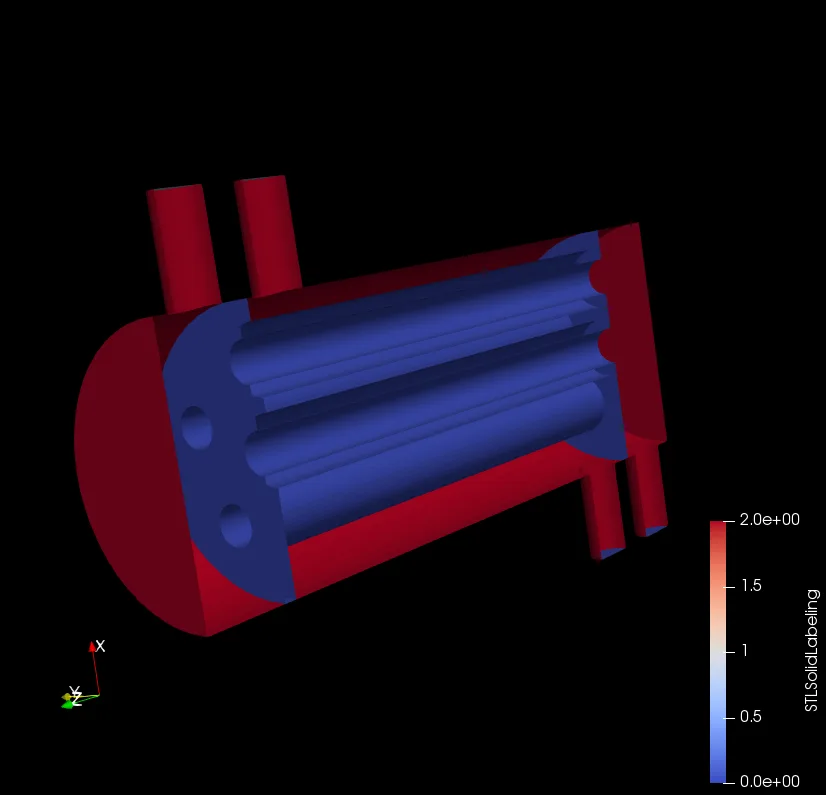
Simulating flow in an industrial heat exchanger
Advanced CFD using OpenFOAM

Simulating flow in an industrial heat exchanger

This project helps the student understand the working of a conjugate heat exchanger using OpenFOAM. In this project, the students will simulate flow in a heat exchanger (geometry p…
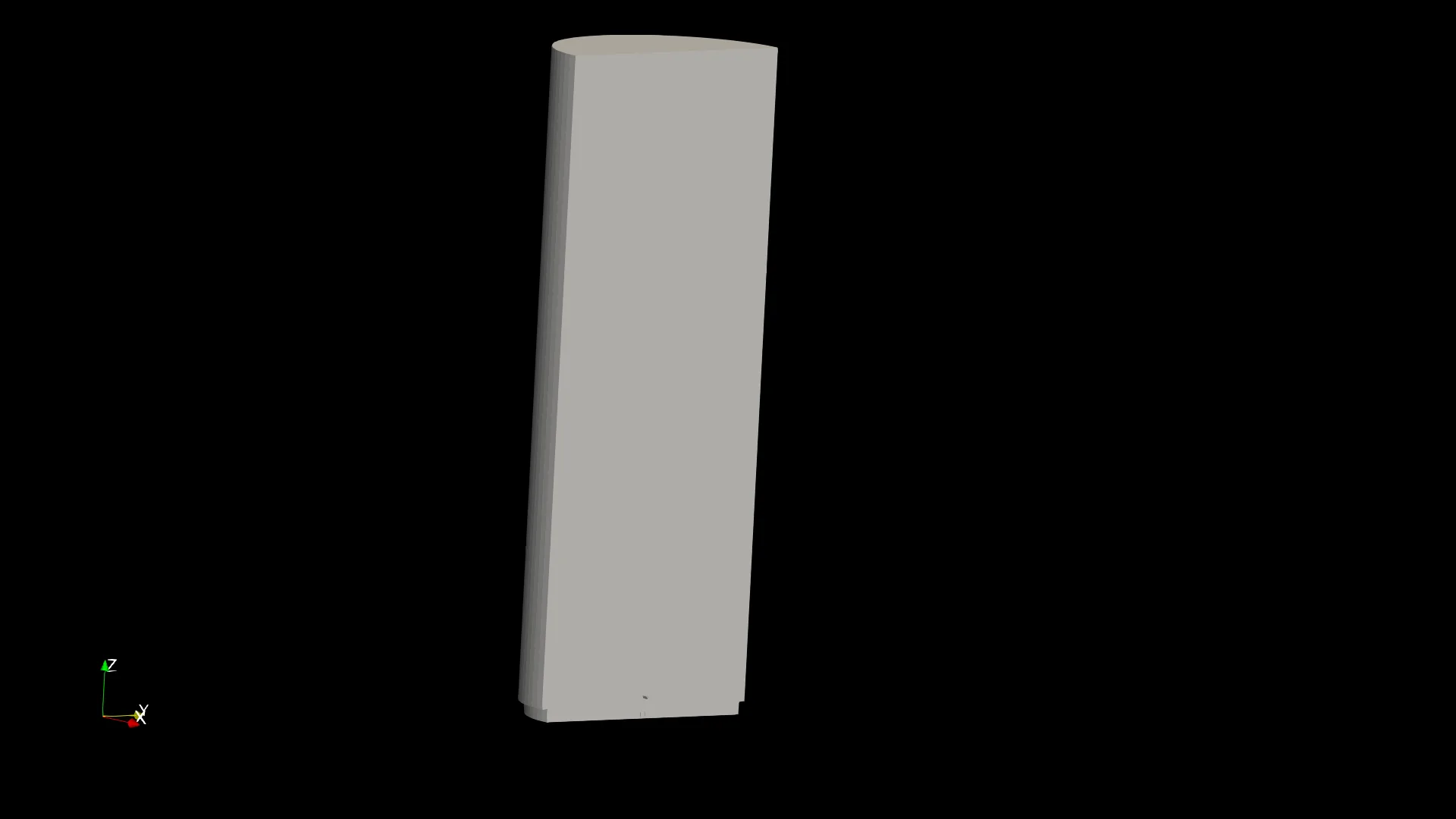
Lean blowout study with flame stabilizer
Advanced CFD using OpenFOAM

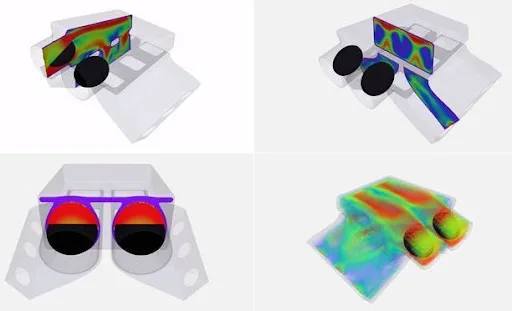
Lean blowout study with flame stabilizer

Lean blowout is a phenomenon common in combustors. In this project, students will try to understand how to mitigate the lean blowout phenomenon by making use of a flame stabilizer …

Steady and Transient Flow over a Throttle Body
Advanced CFD for IC Engine Applications using CONVERGE

Steady and Transient Flow over a Throttle Body

In this project, the students will simulate airflow through a throttle body under different conditions. They will also study the effect of valve dynamics.

Diesel Engine Characterization
Advanced CFD for IC Engine Applications using CONVERGE

Diesel Engine Characterization

In this project, the students will run simulations of the CAT3410 engine using different piston bowls. They will also understand the effects due to changes in piston bowl shapes.

Port Fuel Injection Simulation
Advanced CFD for IC Engine Applications using CONVERGE

Port Fuel Injection Simulation

In this project, the students will perform the simulations of port fuel injection. They will analyse the data from the plots obtained.

 2D Couette-Poiseuille flow
Turbulence and RANS Modelling

2D Couette-Poiseuille flow

In this project, you will implement the given turbulence model into a fundamental flow problem and verify with experimental data.

Simulating turbulent flow through pipes
Turbulence and RANS Modelling

Simulating turbulent flow through pipes

In this project, you will calculate and compare a practical flow case using SA, k-epsilon, k-omega, and RST models in Fluent.

Reaction Mechanism Reduction
Computational Combustion Using Python and Cantera

Reaction Mechanism Reduction

In this project, the students will be asked to perform a mechanism reduction technique. They will also be asked to capture the aspects of the combustion process.

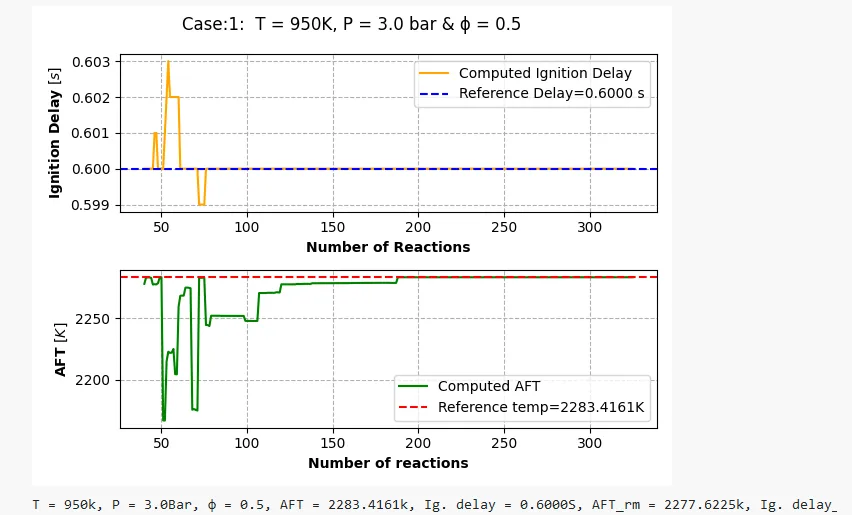
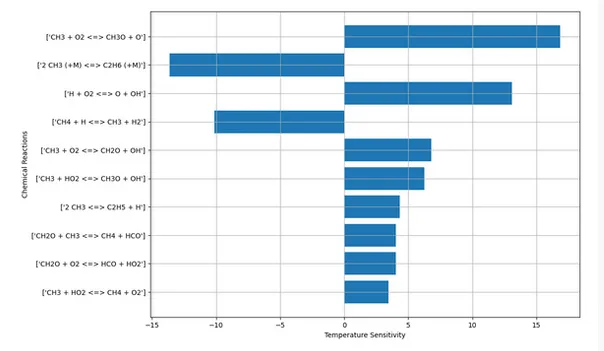
Sensitivity Analysis on GRI Mechanism with respect to Temperature using Cantera
Computational Combustion Using Python and Cantera

Sensitivity Analysis on GRI Mechanism with respect to Temperature using Cantera

In this project, the students will be asked to perform sensitivity analysis using Cantera. They will be capturing the time-wise variation of thermodynamic variables.

Creating Scalar Form
Introduction to OpenFOAM Development

Creating Scalar Form

In this project, you will create a solver using OpenFOAM. You will learn to customize it and its attributed cases.

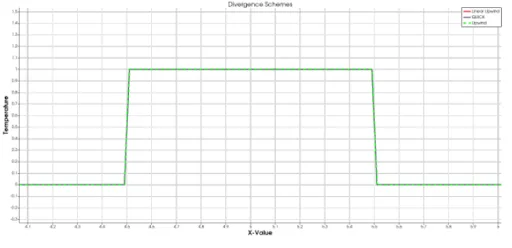
Discretization Schemes
Introduction to OpenFOAM Development

Discretization Schemes

In this project, you will simulate cases such as diffusion and convection by varying the diffusion coefficient or velocity.

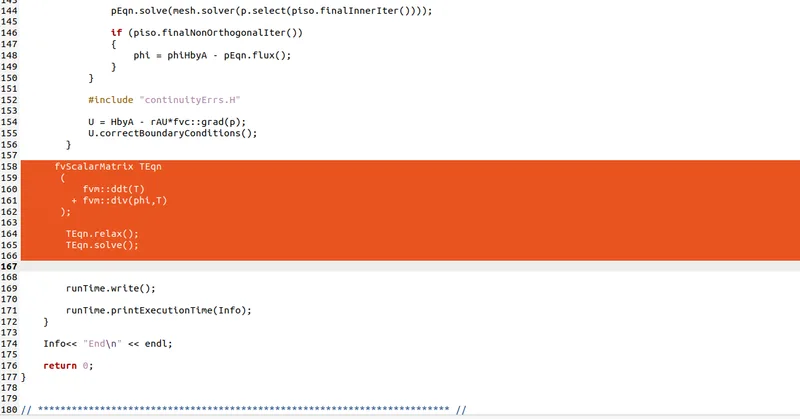
Creating icoTempFoam
Introduction to OpenFOAM Development

Creating icoTempFoam

In this project, you will add an equation of temperature in the icoFoam solver, customize it and its cases. You will be asked to solve the incompressible flow equations for mass an…

+ 9 more projects in the full syllabus

Fee

One fee.
Everything included.

Become job ready with our comprehensive industry focused curriculum for freshers & early career professionals

Premium
₹2,75,000
Inclusive of all chargesEMI from ₹14,375/month
  • Career Service Assurance
  • Personalized Career Services Mentorship
  • 1 Year Access
  • Personalized Page
  • Live Individual & Group Sessions
  • Personalized & Hands-On
  • Job-Oriented Industry Relevant Curriculum
Check eligibility →
FAQ

Questions,
answered.

Who can take up the Post Graduate Program in CFD Solver Development?

Students and graduates of mechanical engineering and related engineering streams can take up the Post Graduate Program in CFD Solver Development. It is for anyone interested in simulating fluid flow.

Is the Post Graduate Program in CFD Solver Development an online program?

Yes, this CFD certification course is 100% online.

What is the duration of the Post Graduate Program in CFD Solver Development?

The CFD certification course is a 12-week course covering all the basic to advanced level concepts needed for performing heat flow analysis.

How much can a CFD engineer earn?

According to Ambitionbox, the average base pay of a CFD engineer is around Rs 5.4 Lakhs per annum. However, packages tend to increase with your experience and expertise.

Is there any certificate for completing the Post Graduate Program in CFD Solver Development?

Yes, after completing this one of the best CFD courses online, you shall be given a course completion certificate. The top 5% of the scorers will receive a merit certificate alongside the course completion certificate.

Is there any technical support available for this advanced CFD online course?

Yes, you can clear your doubts during coursework from our technical support team through email, forum, telephone, and individual and group video support.

Can you tell me more about Skill-Lync?

Skill-Lync is among India’s leading edtech platforms dedicated to transforming engineering education. We equip young engineers with the latest skill sets and cutting-edge tools in new-age technologies.

The brainchild of two engineers from Chennai, Skill-Lync is on a mission to bridge the skill gap between aspiring professionals and the industry’s demands through job-oriented courses.

Next step

Not sure it's
the right fit?

A counsellor will walk you through the syllabus, projects and fee options — and tell you honestly if another course suits you better.

Get the syllabus + a call back

We'll email the full syllabus and call within one working day.

By submitting you agree to our Terms and Privacy Policy.

Call usEnquire
Talk to a career counsellor

Talk to a career counsellor

Free 20-minute call. We'll map the right course to where you want to work.

By submitting you agree to our Terms and Privacy Policy.