Roof Assembly Design
OBJECTIVE
To design the roof assembly of a vehicle using Siemens NX 12 as a sheet metal component.
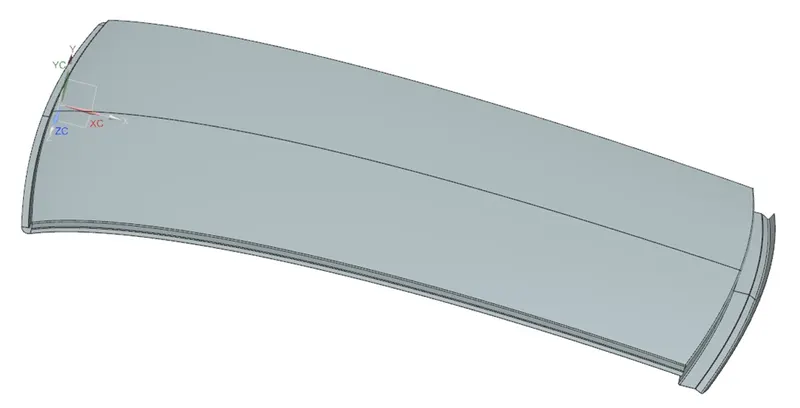
- To design the Roof outer panel from the given Class -A surface of the roof
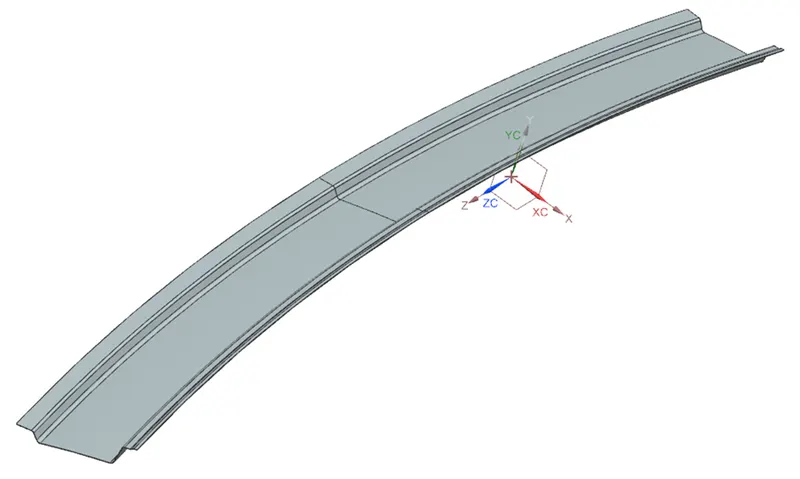
- To design Front roof rail, Roof Bows, Roof center reinforcement, and rear roof rail as individual components as per given master sections and create an assembly.
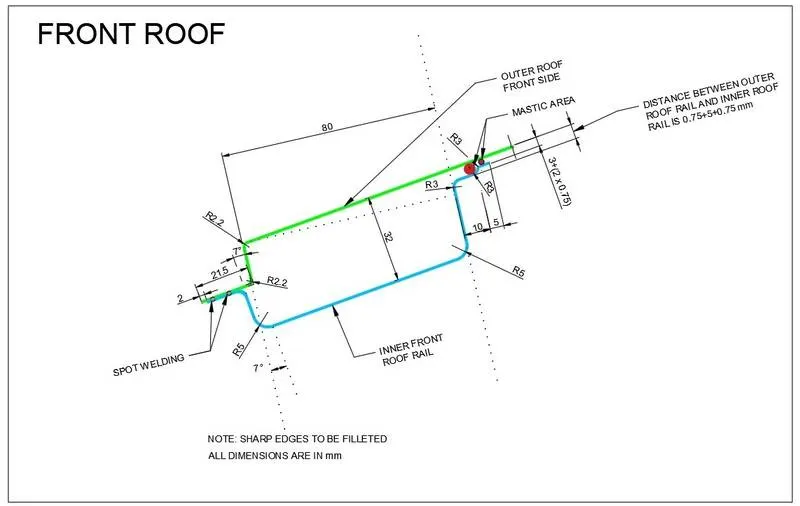
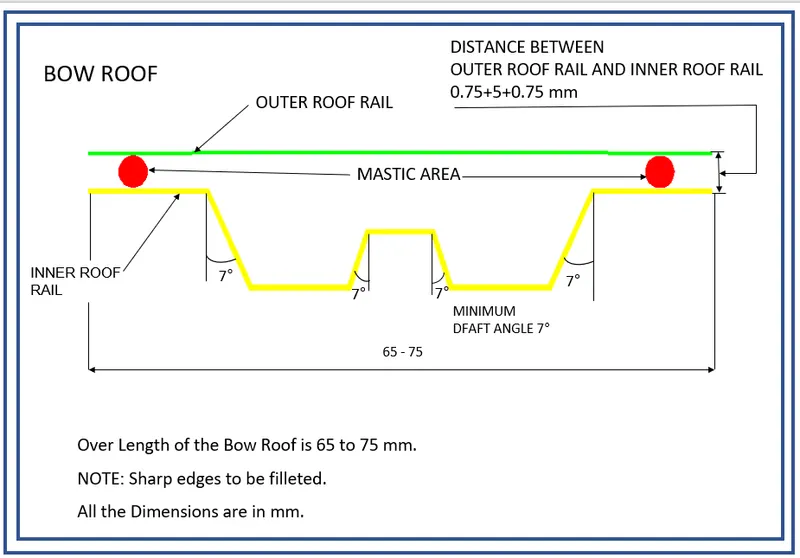
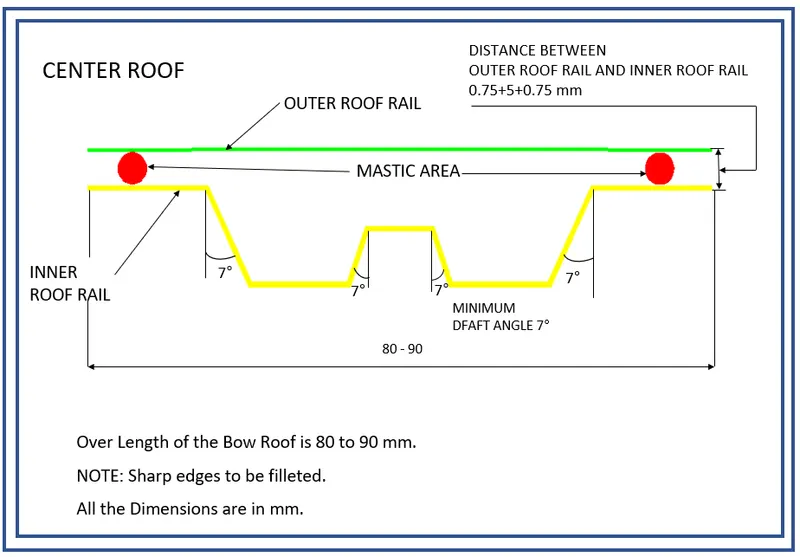
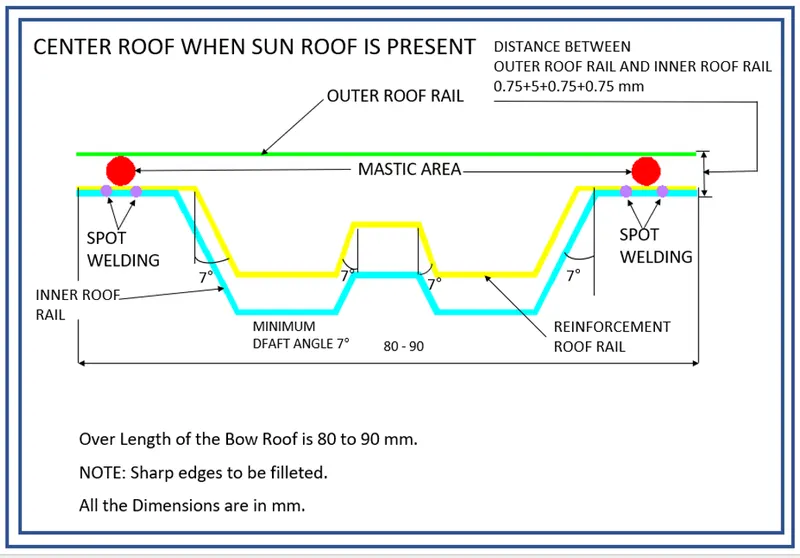
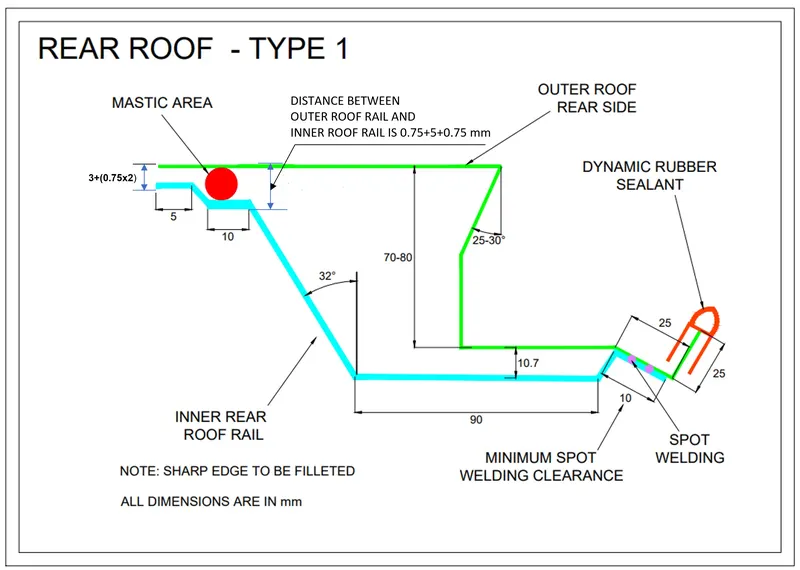
- To validate the Heat distortion and Snow load criteria for the roof
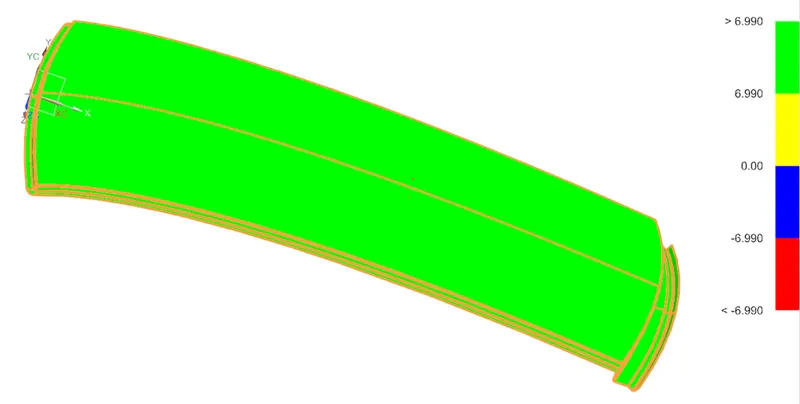
- To perform draft analysis for all components.
WHAT IS A CAR ROOF?
An automobile roof or car top is the portion of an automobile that sits above the passenger compartment, protecting the vehicle passengers from the sun, wind, rain, and other external elements.
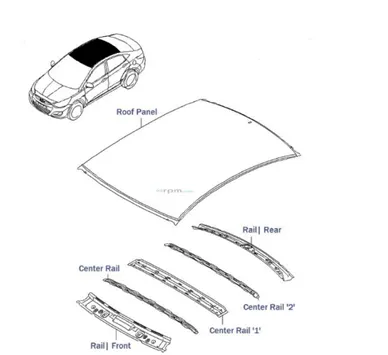
Thus, a car roof majorly has the following components:
- Roof outer panel
- Front roof rail
- Roof Bows (can be more than 1 as per requirement)
- Centre Roof reinforcement
- Rear roof rail
WHY ROOF BOWS AND REINFORCEMENTS?
Because the roof is a single sheet of metal with a large area and curvature, roof bows and reinforcements become necessary to strengthen the roof to withstand impact and natural forces. With time, reducing vehicle weight has become a significant role player in increasing performance and efficiency due to which roofs are made using thinner and composite materials which in turn requires more structurally strong bows and reinforcements.
DESIGN CONSIDERATIONS WHILE DESIGNING A ROOF
- Driver Visibility criteria
- Headroom clearance
- Child parts fitment
- Heat Distortion criteria
- Snow load criteria
- Part manufacturability
TESTING METHODOLOGY FOR ROOFS
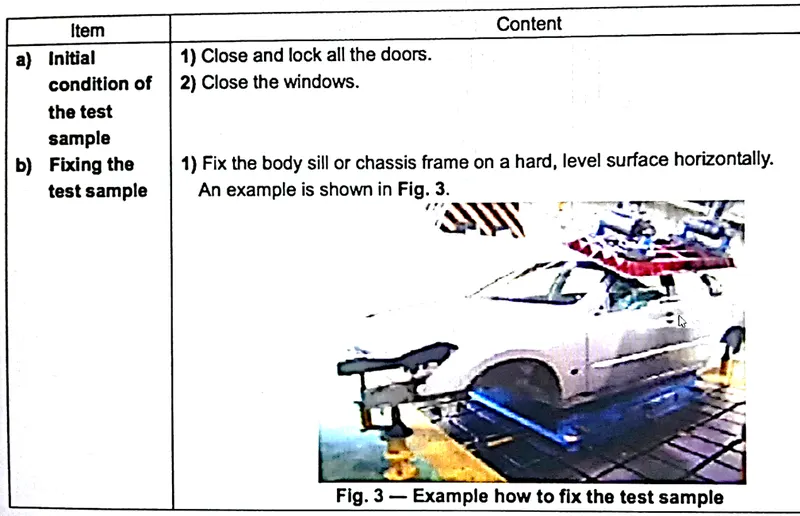
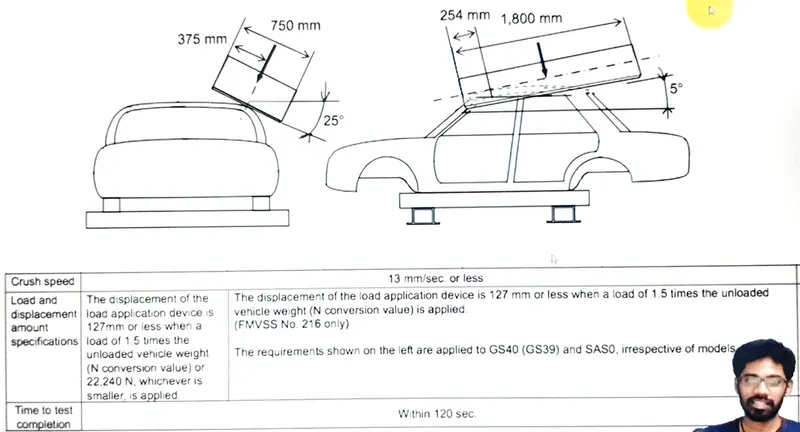
The main scenario for roof testing is for vehicle rollovers. In testing labs, this rollover is simulated by a crush test which is as follows:
- Initially, all doors are locked and windows are closed.
- The car body is fixed on a hard and horizontal surface.
- As per the Insurance Institute for Highway Safety (IIHS), the loading device should be at an angle of 25 degrees from the sideways and inclined by 5 degrees towards the front and should contact the car body at the roof front corner.
DESIGNED ROOF PARTS
- ROOF OUTER PANEL
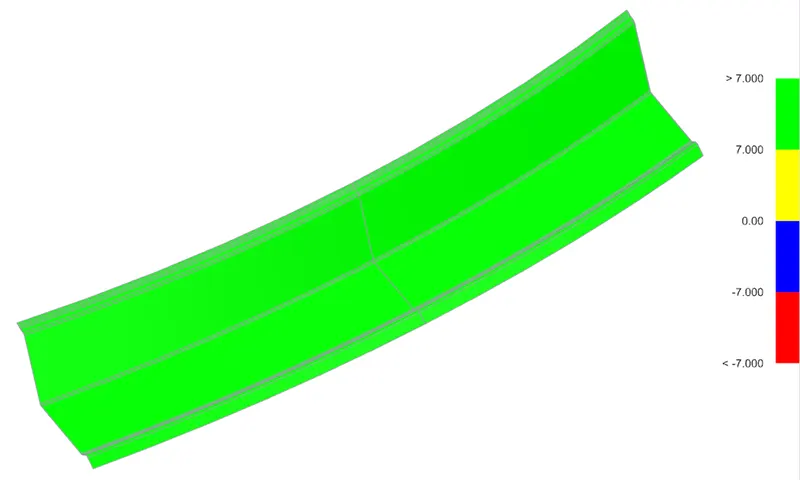
Draft analysis
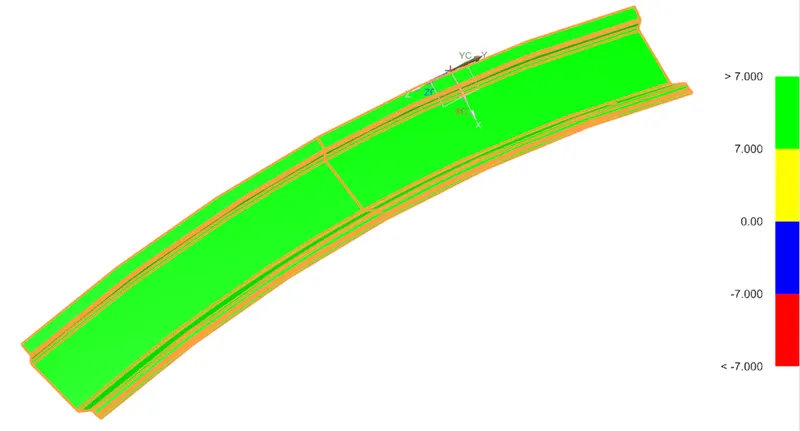
- FRONT ROOF RAIL
Draft analysis
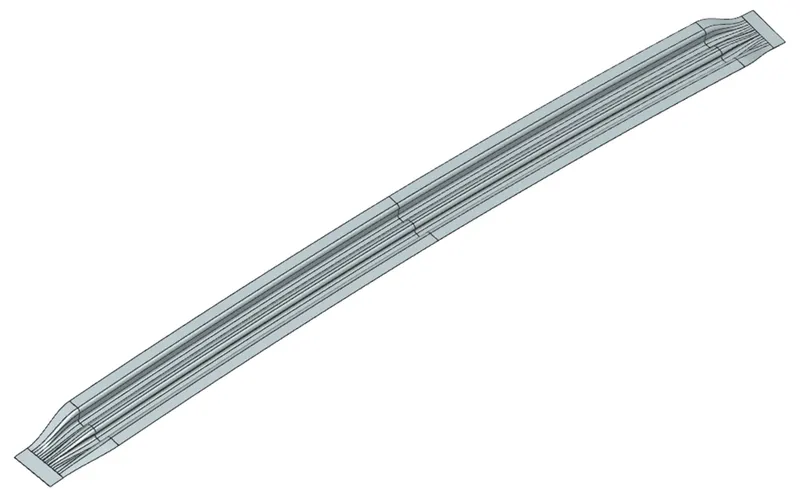
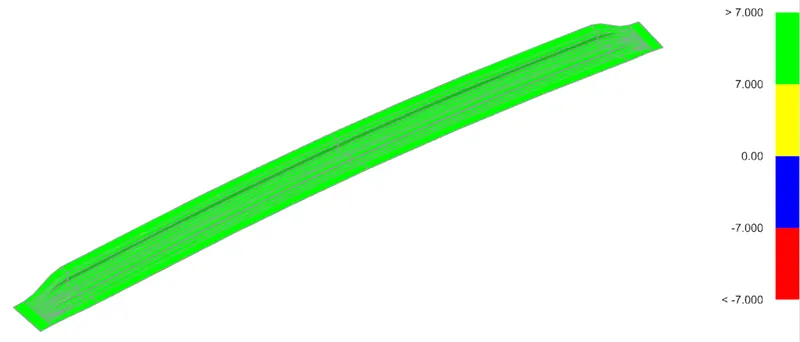
- BOW ROOF 1
Draft analysis
- CENTER ROOF REINFORCEMENT
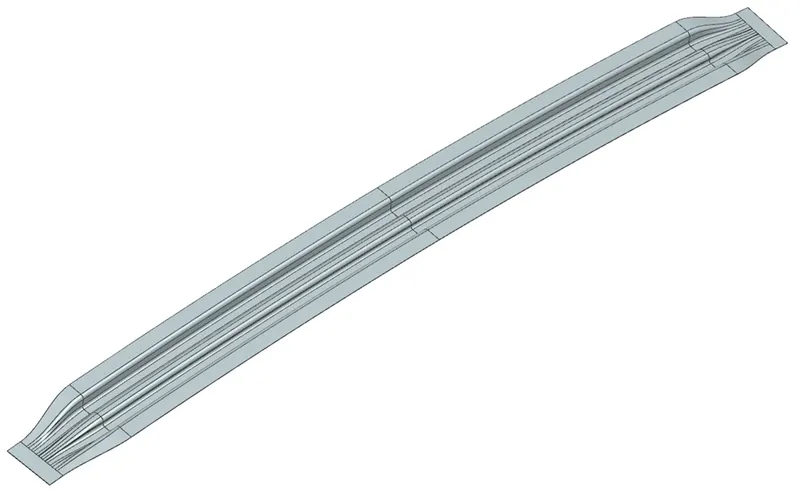
Draft analysis
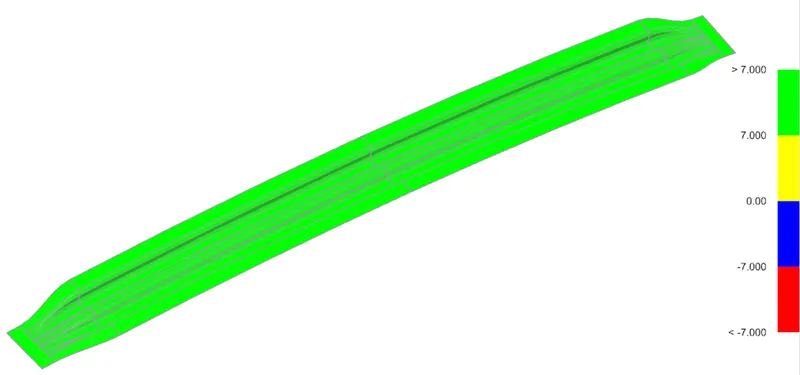
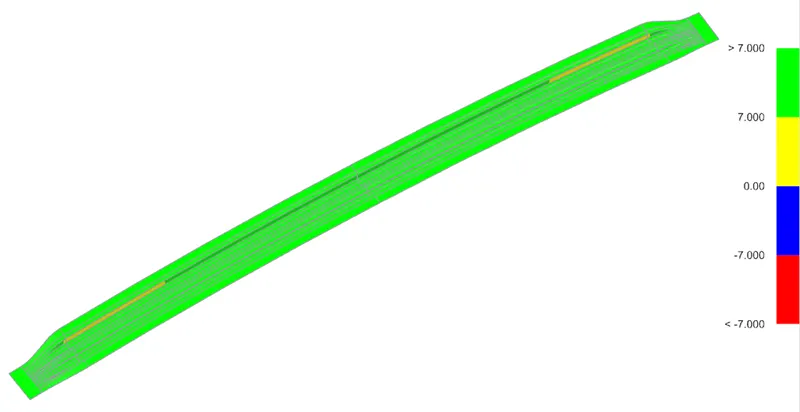
- BOW ROOF 2
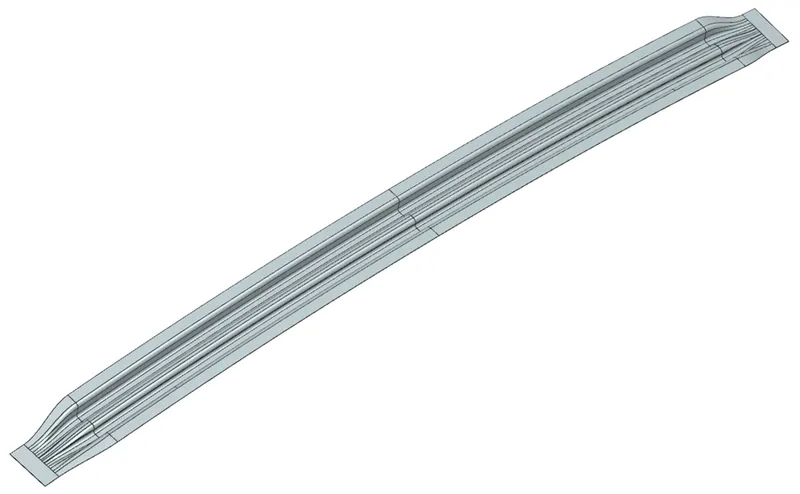
Draft analysis
- REAR ROOF RAIL
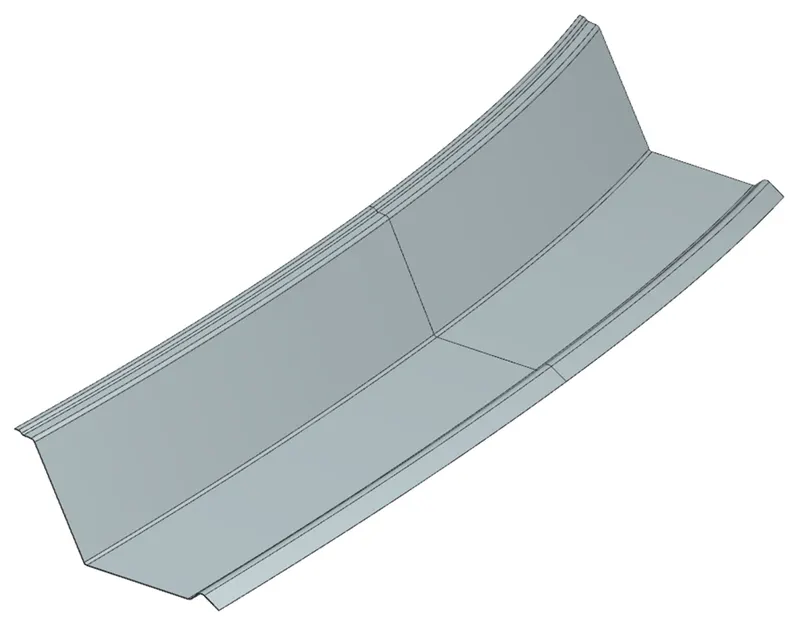
Draft analysis
COMPLETE ASSEMBLY
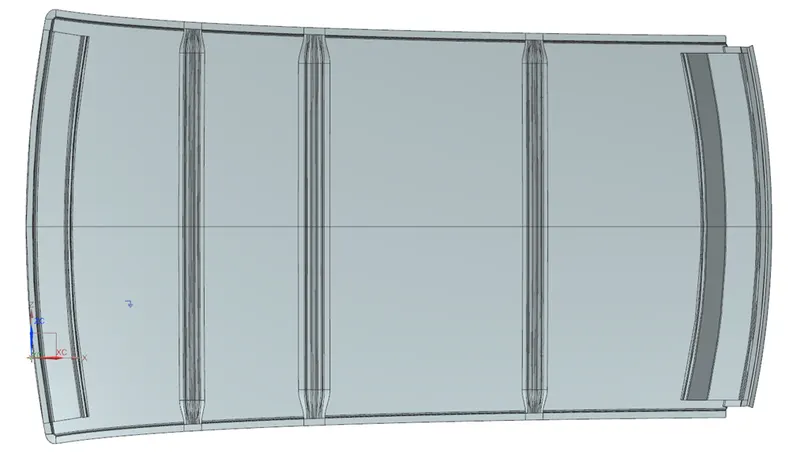
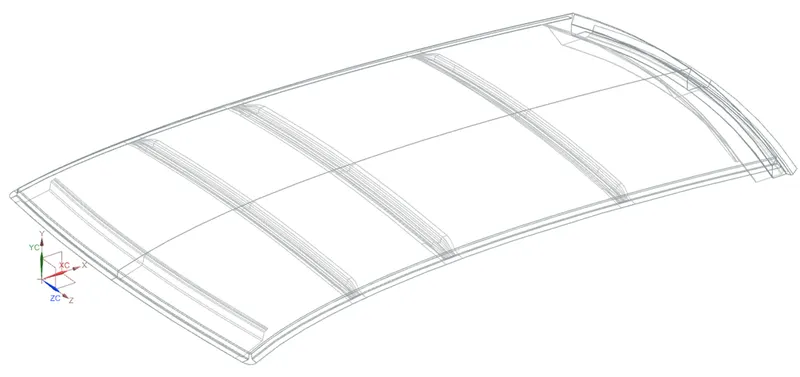
HEAT DISTORTION CRITERIA
Heat distortion temperature is the temperature at which the metal softens and deforms under a specific load. This study is done to check the ability of the roof to withstand high temperatures with respect to the positioning of the reinforcements which contribute to increased strength.
In countries where the summer is high, there are chances of heat distortion due to sun heat. When the radiation of the sun falls on the form of a car, then due to that heat, thermal expansion occurs, and due to some thermal expansion, the possibility of hanging the roof of the car is more in that area and the roof of that car becomes weak in that area.
By this calculation, we verify whether the roof will be able to withstand that condition or not.
If the area is not able to tolerate this condition then we have to give better support to that area to make the roof stronger.
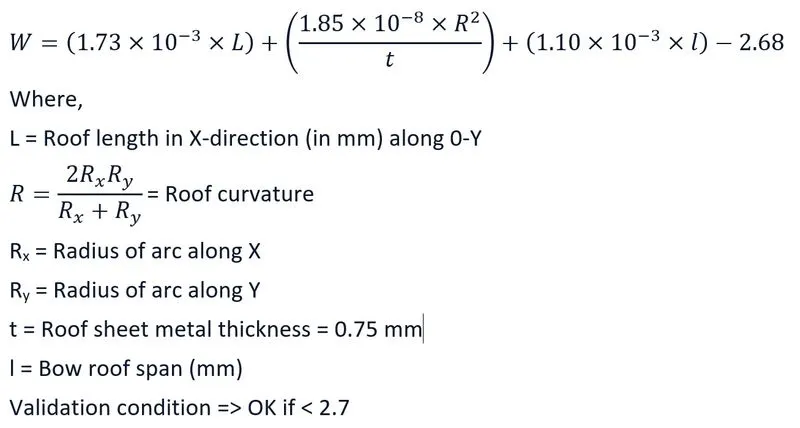
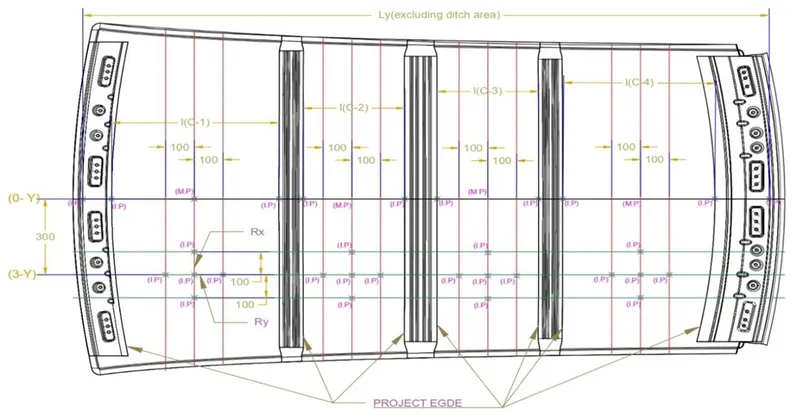
Variables explanation and their measurements
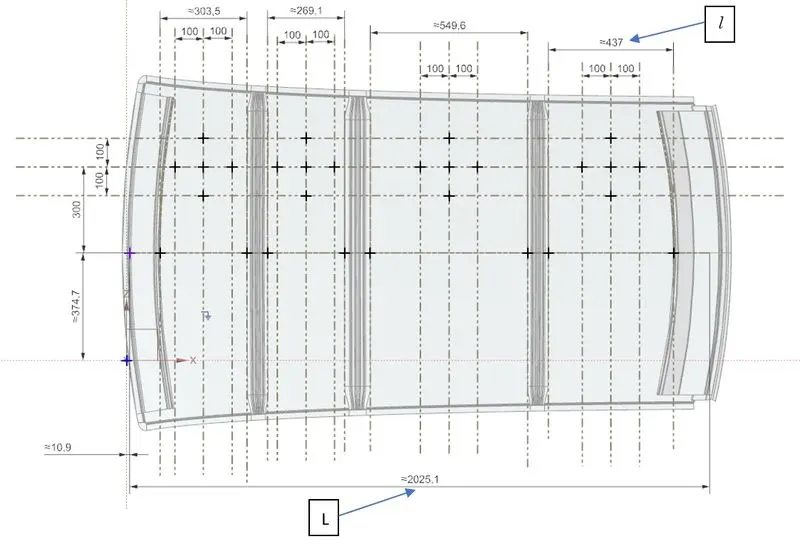
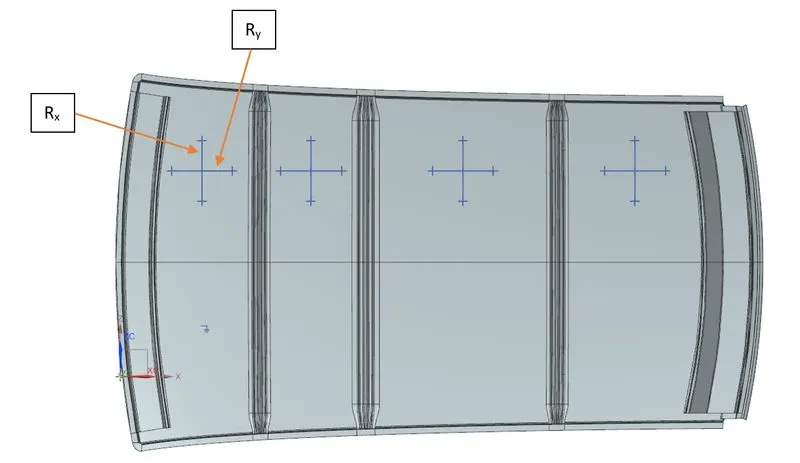
Calculations for heat distortion:
| CASE | L | t |
Rx |
Ry |
R |
l |
W | STATUS ( pass if < 2.7) |
| FR rail - Bow 1 | 2025.1 | 0.75 | 5740.14 | 2351.7 | 3336.47 | 303.5 | 1.432 | PASS |
| Bow 1 - CR | 2025.1 | 0.75 | 5255 | 5047.25 | 5149.03 | 269.1 | 1.77 | PASS |
| CR - Bow 2 | 2025.1 | 0.75 | 4251.8 | 9238.2 | 5823.42 | 549.6 | 2.26 | PASS |
| Bow 2 - Rr rail | 2025.1 | 0.75 | 3348.9 | 14140.6 | 5415.30 | 437 | 2.03 | PASS |
Conclusion: From the above table for heat distortion it is observed that W values for all cases are well below 2.7 hence our positioning of the bow roofs and center reinforcement are as per design considerations.
SNOW LOAD CRITERIA
A Snow Load Criteria study is done to check the withstanding ability of the roof when the snow loads over it during winter in snowfall regions. This study will analyze whether permanent deformations occur in the roof after removing the snow load. Though it can bend, it should bounce back to its original position.
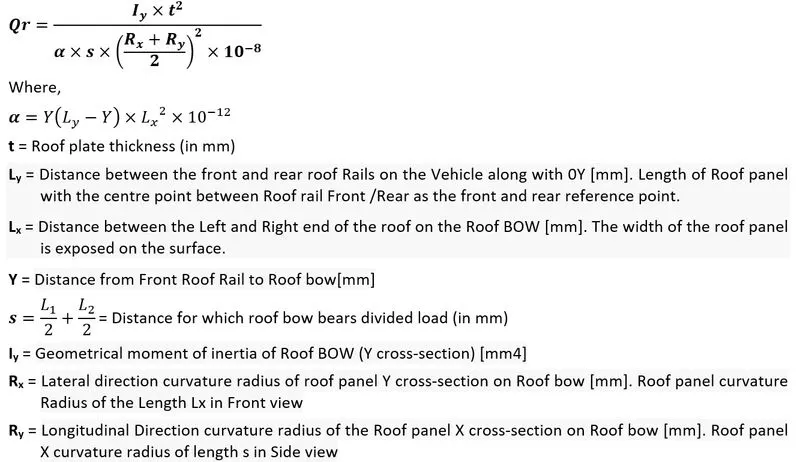
Validation condition => OK if Qr >= 3.1
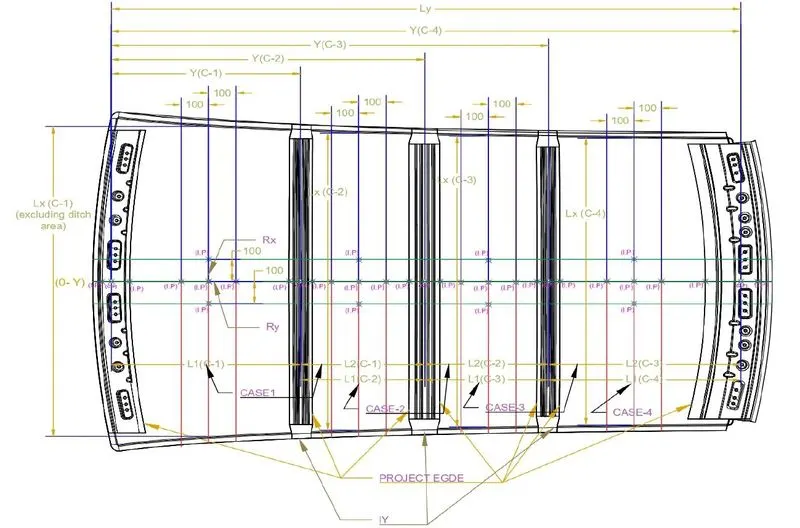
Variables explanation and their measurements
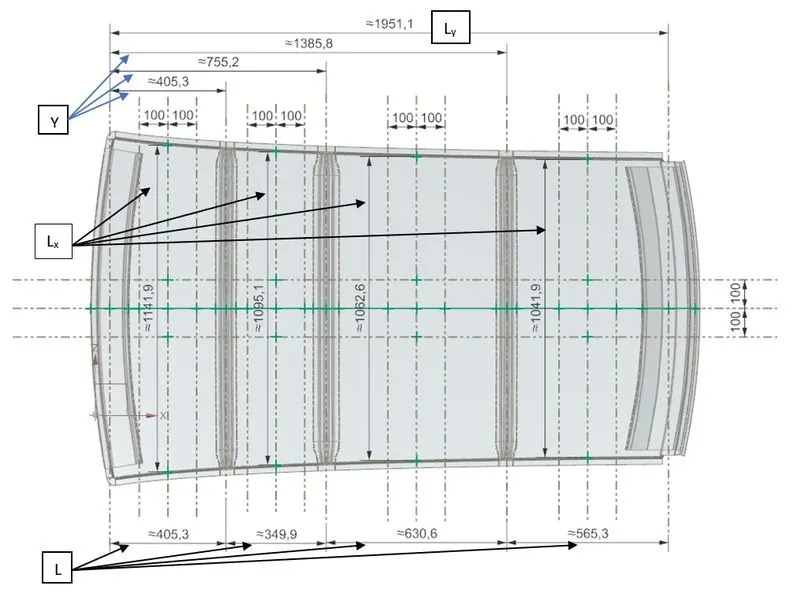
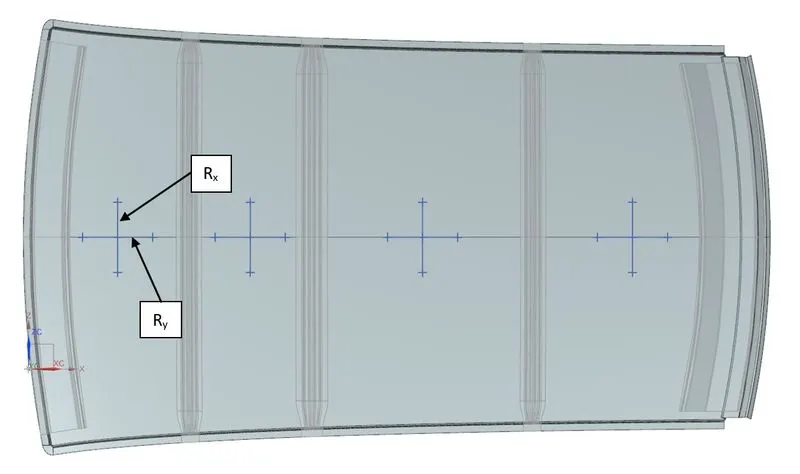
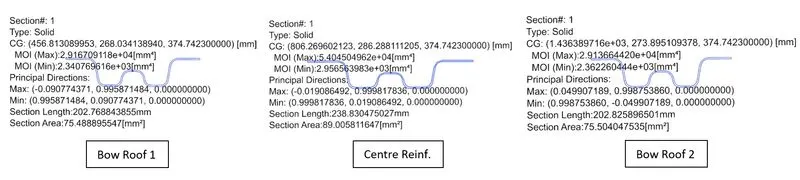
Calculations for snow load:
| CASE | Ly | t | Rx | Ry | L1 | L2 | s | Lx | Y | α |
Iy (Min) |
Qr | STATUS (pass if >3.1) |
|---|---|---|---|---|---|---|---|---|---|---|---|---|---|
| Bow Roof 1 | 1951.1 | 0.75 | 4729.37 | 2336.86 | 405.3 | 349.9 | 377.6 | 1141.9 | 405.3 | 0.817 | 2340.77 | 34.19 | PASS |
| Centre Reinf. | 1951.1 | 0.75 | 3773.89 | 4986.96 | 349.9 | 630.6 | 490.25 | 1095.1 | 755.2 | 1.083 | 2956.56 | 16.32 | PASS |
| Bow roof 2 | 1951.1 | 0.75 | 4114.21 | 9428.01 | 630.6 | 565.3 | 596.45 | 1062.6 | 1385.8 | 0.885 | 2362.26 | 5.49 | PASS |
Conclusion: From the above table for snow load it is observed that Qr values for all cases are well beyond 3.1 hence our positioning of the bow roofs and center reinforcement are as per design considerations.
CONCLUSION
Finally, we successfully designed a Roof assembly with its components and also checked the assembly for heat distortion and snow load criteria to validate the design for strength and safety. Moreover, I performed a draft analysis for every component for ease of manufacturability.