SUV Roof design and curvature study using UG NX 10.0
Objective:
- to develop required flanges for the given styling component of the roof using the master sections provided
- to perform curvature study on the roof at 0Y AND -3Y and endure that the position of bow roof is appropriate and meet the requirements and make sure that roof can withstand when loaded with snow and perform draft analysis .
Description:
roof is automobile commodity above the passenger compartment protects the passenger from sun, harsh weather,wind,dust rain etc.in some cases roofs are used as luggage carriers and in some roofs a sun roof is provided for styling purposes.in recent days solar roofs are implemented which got a major boost in automotive industry.
Since roof has numerous functions so the roof has to be stronger enough to withstand all possible damages and must possess good strength and stiffness.to give the rood desired strength different components are employed like front roof rail, rear roof rail, bow roofs, enter roof rail etc.
Bow roofs and reinforced roof rails are positioned in such a way that when a car meet an accident the car tends to roof over and these rails gives ample strength to the roof to withstand the damage occurred while roll over of the car and safeguards passengers from severe injuries.
There are some factors that affect the curvature of roof
- heat distortion
- snow load condition
- roof crush
Only snow load and heat distortion criteria can determine theoretically and roof crush is done practically to determine the load of failure
- heat distortion condition :
It the process done before manufacturing process.it is way to predict how a roof will behave when subjected to high heat exposure by sun. This study helps to determine the position of bow roofs for optimal heat distortion.
- Snow load condition:
It determines whether the roof can withstand the load caused by snowing on roof in western countries. This snow load I directly exerted on the roof and position can affect the strength of the roof.
Tools used:
Law extension, trim sheet, trim body, offset surface, offset curve, sketch, draft ,emboss, sew, datum plane, line ,arc, bridge curve, face blend, edge blend, fillet mirror geomentry, section inertia analysis ,measure, local radius, thicken etc.
Procedure:
front roof and rear roof rail
- Open the given part file
- Extract the surface and untrim the roof to get clean surface to work on
- Create a feature group from the roof front rail and start working on roof front rail
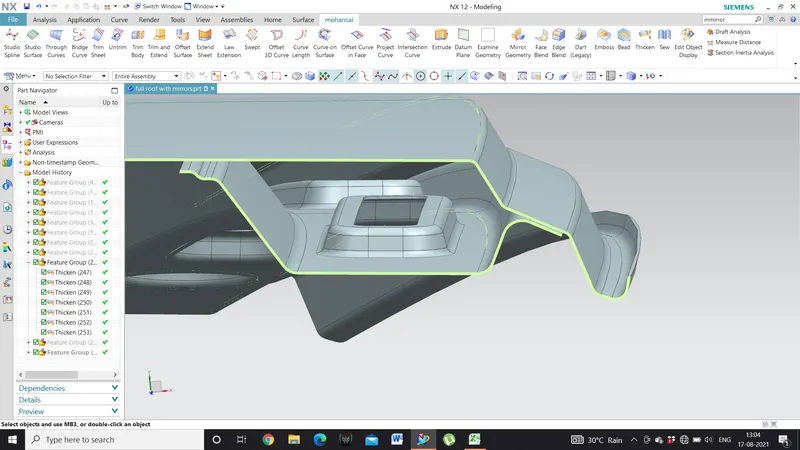
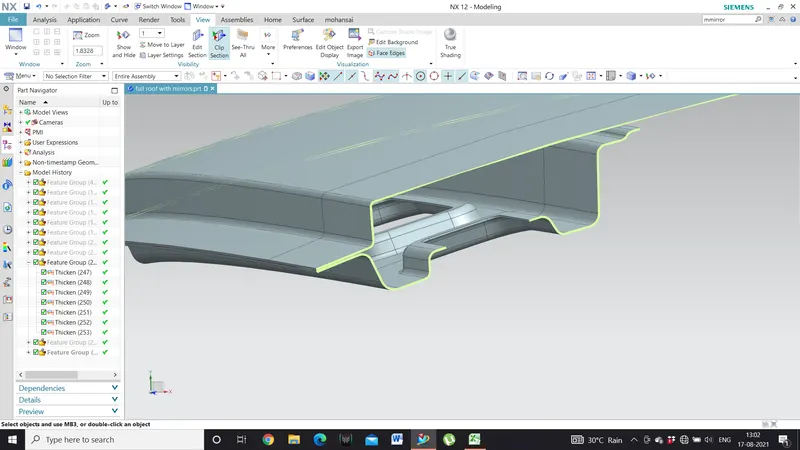
- Follow the master section and create the surfaces of the front roof rail following the design rules.
- Offset the surfaces in such a way that they won’t create problem while thickening the sheet body
- Using the master section crate the rear roof rail following the opening angle of 3degree
- Apply face blends make sure that all the surfaces are smooth
- Create ditch area connecting the front and rear roof rails
Bow roof and centre roof rails
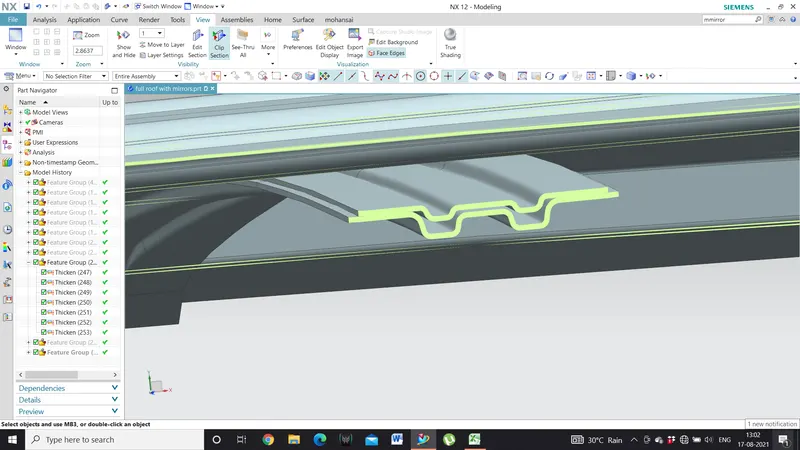
- Now to create the bow roof create a datum plane using point on curve and make intersection and offset the front roof rail curvature to some distance.
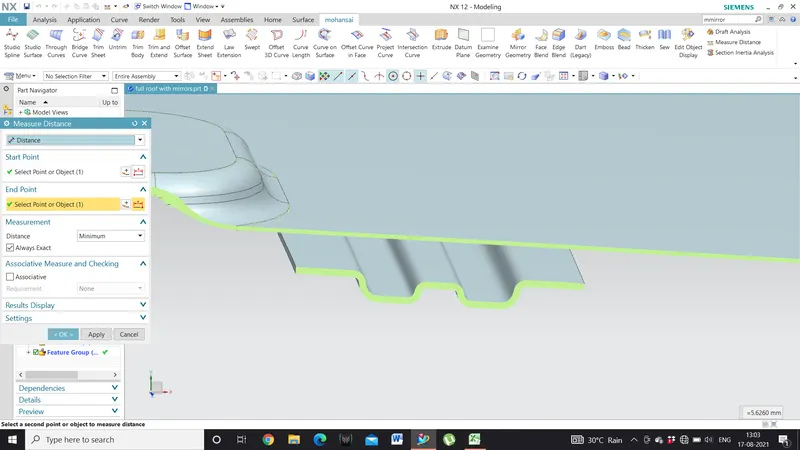
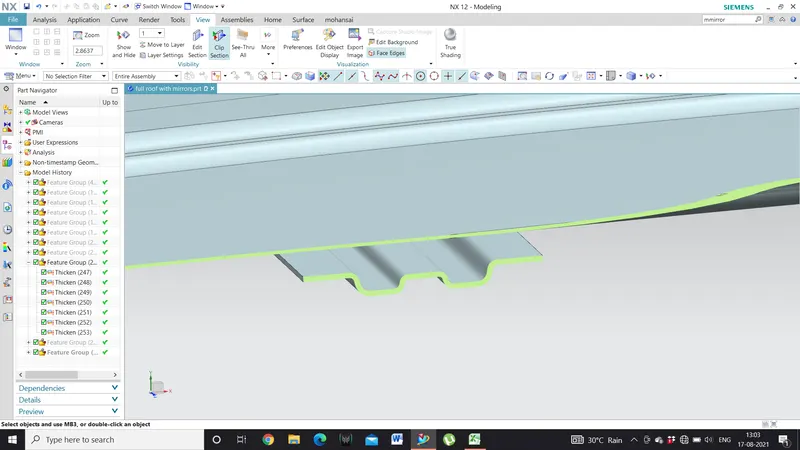
- Create a sketch for the bow roof following the master section and leave a 5mm clearance for the mastics to attach the bow roof to the roof outer panel
- Using sweep command sweep the sketch using the intersection curve so the sketch extrudes following the same curvature of the roof
- In the same way create centre roof rails and remaining bow roofs
- Trim the rails using a datum plane as all the rails are at some inward distance from the roof
- Use through curved to close the sheet body and apply blends.
- Mirror the geometry and sew them and apply thicken to get solid bodies i.e roof to 0.75mm and roof rails to 1.2mm
- make sure that there is no gap between the center roof rail and its reinnforcement as they are spotwelded together.
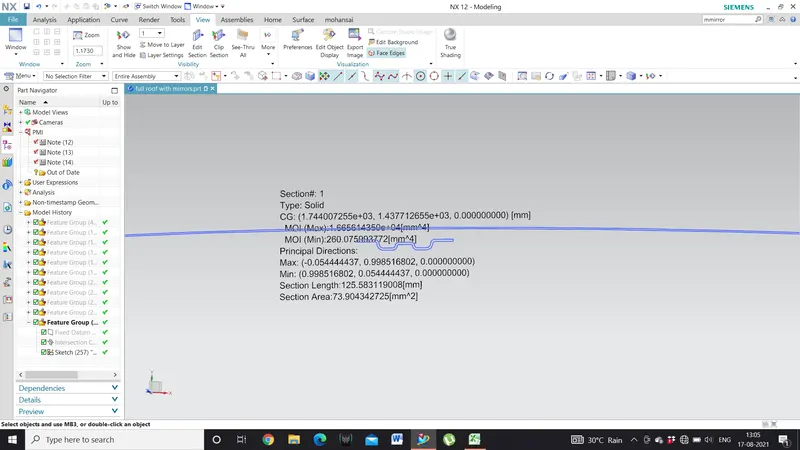
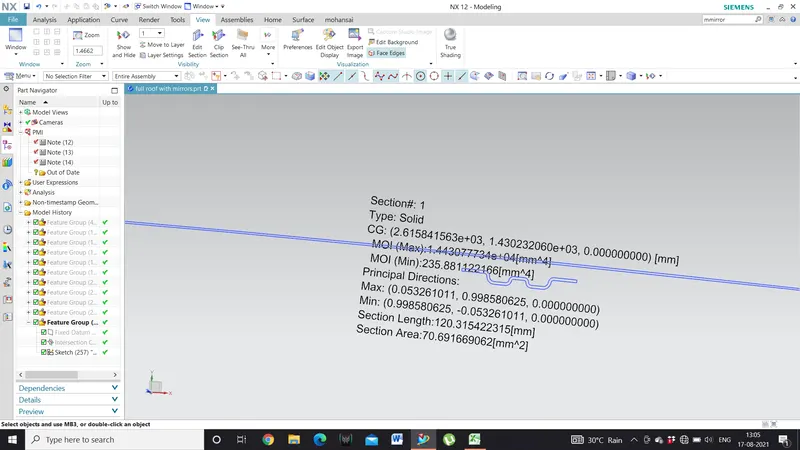
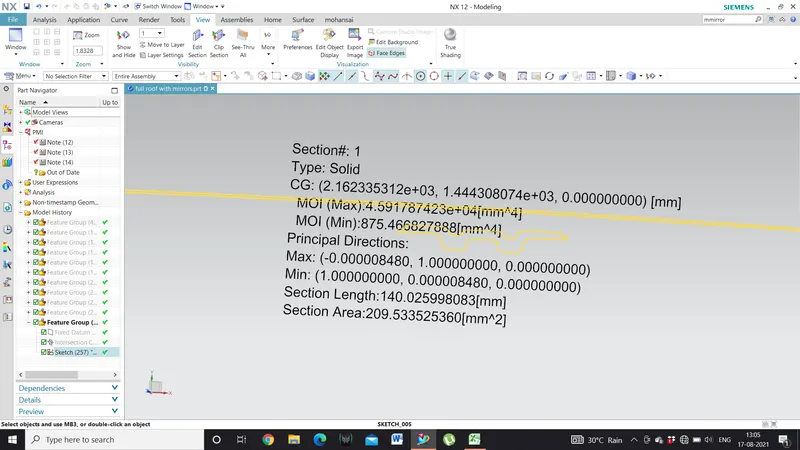
- Now perform section inertia analysis on the bow roof rails and reinforced centre roof rail
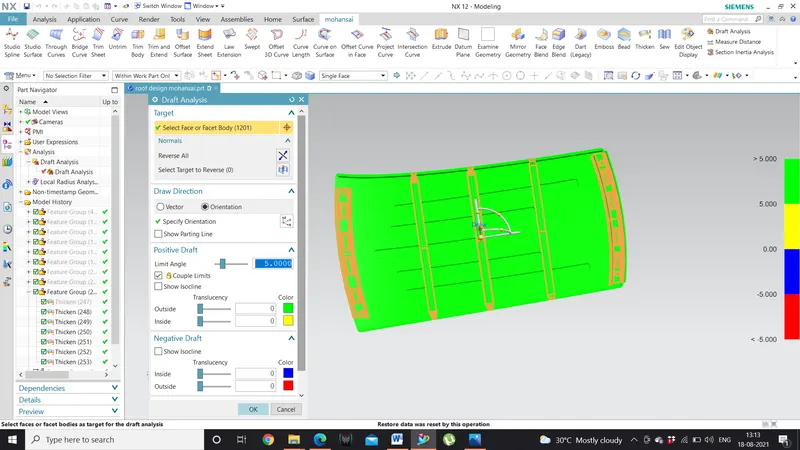
- Perform draft analysis using draft analysis command.
gap of minimumm 5mm for applicatio mastic sealant
draft analysis
Curvature study
- Perform curvature study on the roof to determine the heat distortion and snow load condition for the roof
- Curvature study should be performed at 0Y for snow load condition and at -3Y section for heat distortion condition
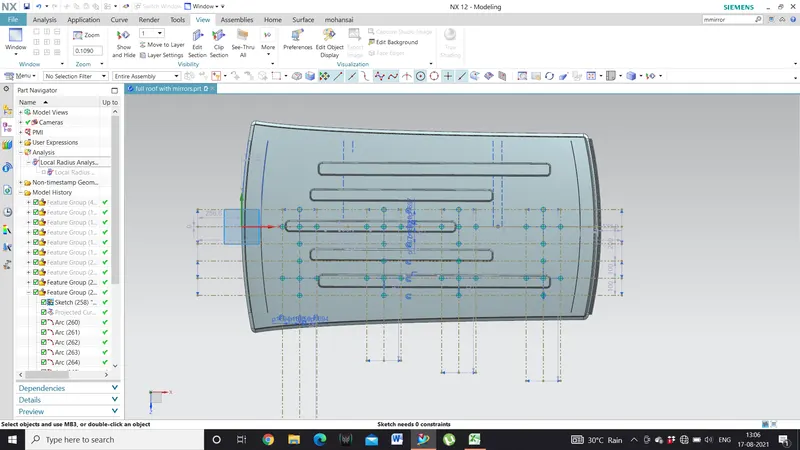
- Offset the curve 300mm from the centre and offset it symmetrically 100mm on either sides
- Create a mid-point of bow roof and centre roof rail and create a vertical line and offset it symmetrically 100mm on either sides and create intersection points
- Do this for remaining roof rails and create intersection points
- Project these intersection points on to the roof surface
- Use three point arc and create arcs using those points in x and y direction
- Use minimum radius in analysis tab and find minimum radius of curvature for the arcs
- Hence the curvature study is completed for the heat distortion condition
- Do the same for the snow load condition at 0Y section
- Create embosses on the surface of the roof reduce the roof curvature.
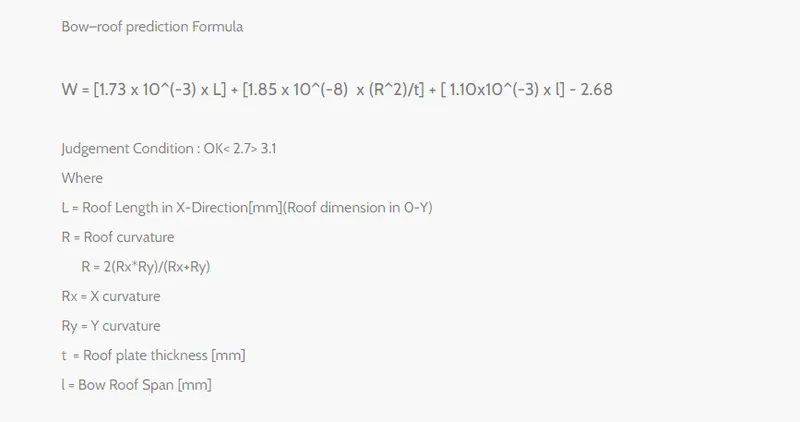
- Using the formulae given determine the heat distortion condition should be <2.7

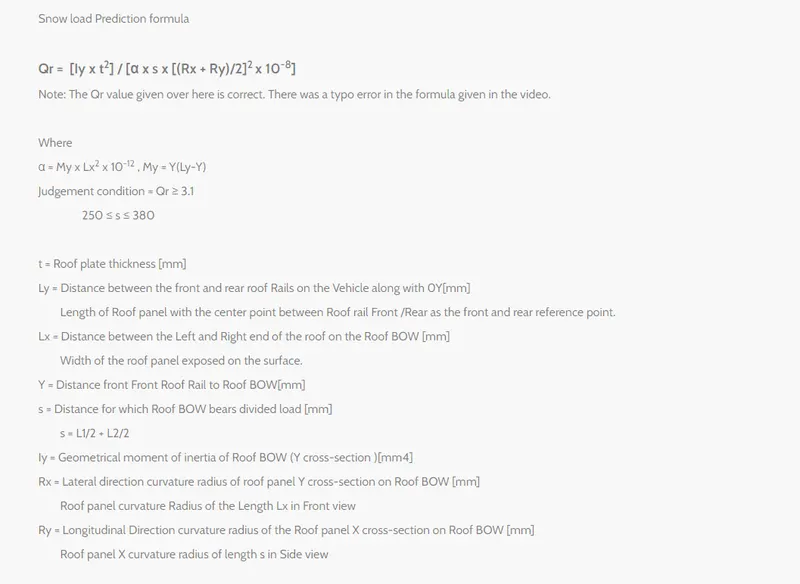
- For snow load condition the Qr should be >3.1

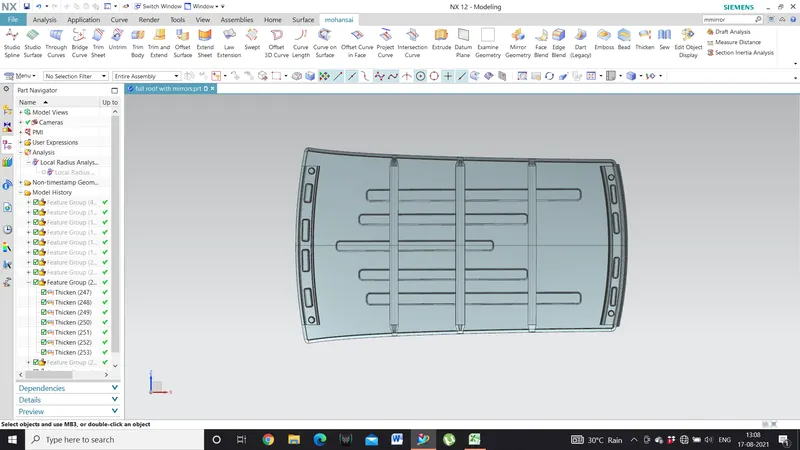
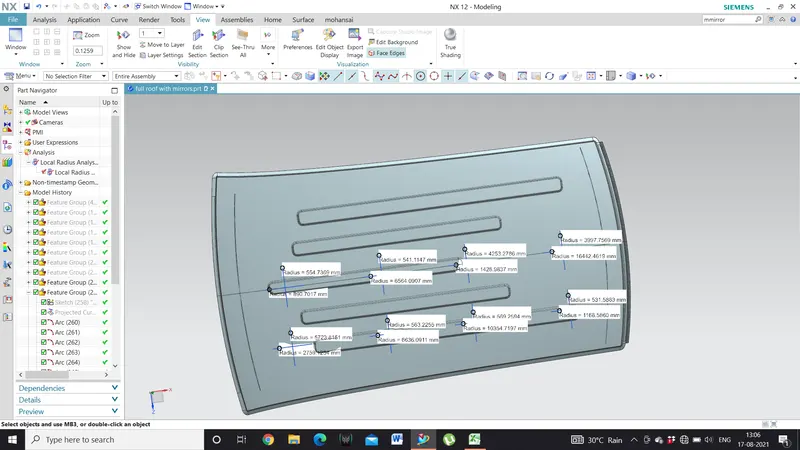
conclusion:
Hence all the conditions are satisfied if not adjust the distance between bow roofs and add embosses too the roof to make the curvature of the roof low.
make sure that there is no gap between the reinforcement and center roof rail as they are joined by spotwelding
make sure to leave minimum 5mm clearance between roof rails and roof outer panel for mastic application