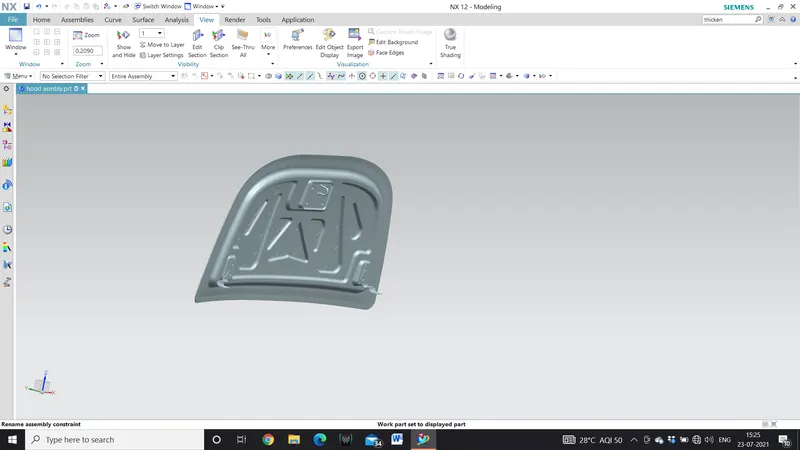
DESIGN OF AUTOMOTIVE HOOD and determining latchTrajectory using NX 10.0
AIM: to design hood using the given master section as input and considering all design criteria and make a complete hood assembly
Automotive hood is a component that covers the engine compartment it is a front mounted component of the car .the hood is hinged to the engine compartment and it has several design rules that makes designing hood a critical issue. Several factors come to play while designing hood.
Generally a hood is designed by the regulations given by European enhanced vehicle committee (EEVC) and European new car assessment program popularly known as (euro NCAP).
Hoods are typically made of sheet metal, steel, fiberglass based on the requirements
While designing a hood following factors should be considered
- Good impact distribution towards outside the car
- Pedestrian head injury criteria when struck by a car
- Frontal collision requirements
- Air flow dynamics
- Reinforcements to add strength to the hood
- Wrap around disitance
- Noise vibration and harshness(NVH)
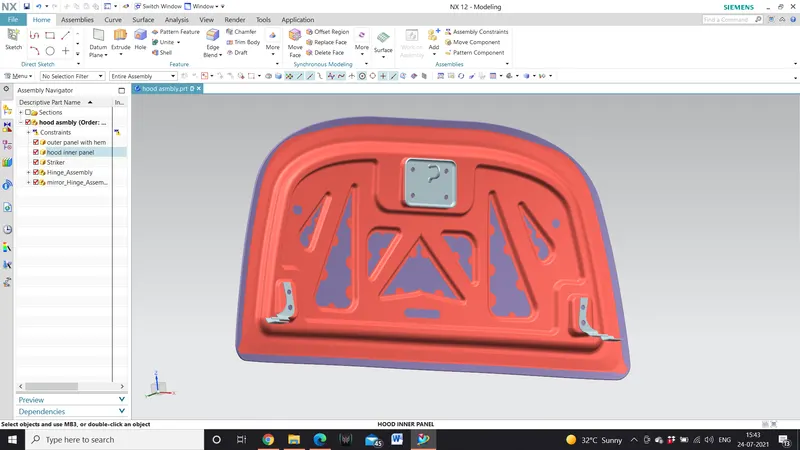
The assembly includes
- hood outer panel with hem created
- hood inner panel with embosses
- latch and striker assembly
- hinge assembly
wrap around dsitance
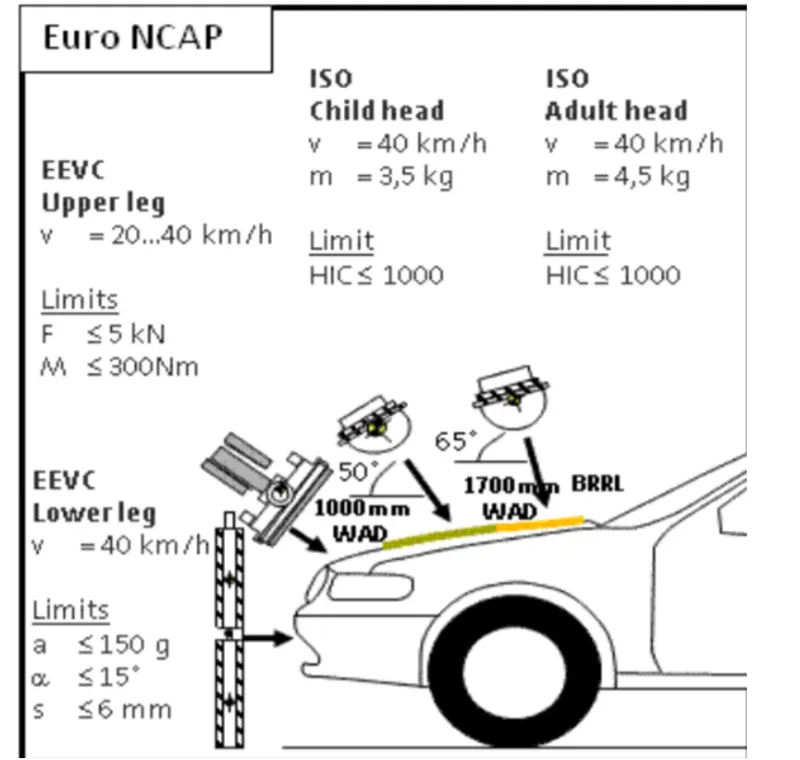
When a car crashes on the pedestrian, the whole human body wraps around the front shape of the car and the head impacts on the bonnet or the windscreen. The distance on which the head impacts on the car from the ground is called as the Wrap Around Distance (WAD). To be specific the Wrap Around Distance is a measurement of distance from the ground to the head impact zone over the outer surface of the car. The wrap around distance is measured longitudinally in the center of the vehicle from the ground.
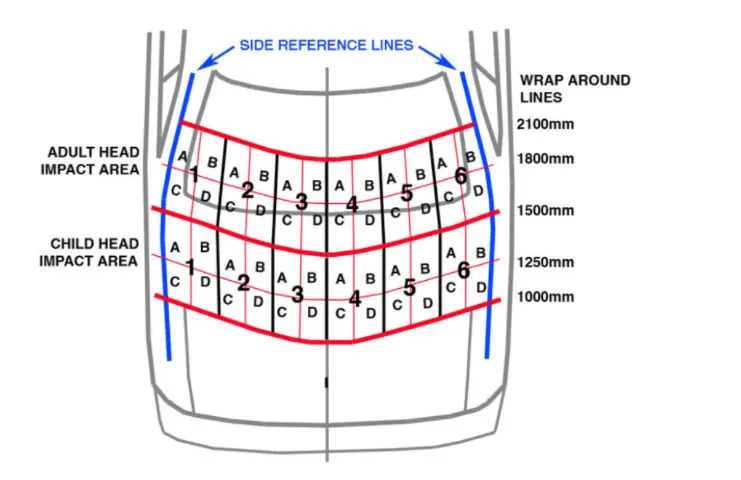
head impact criteria
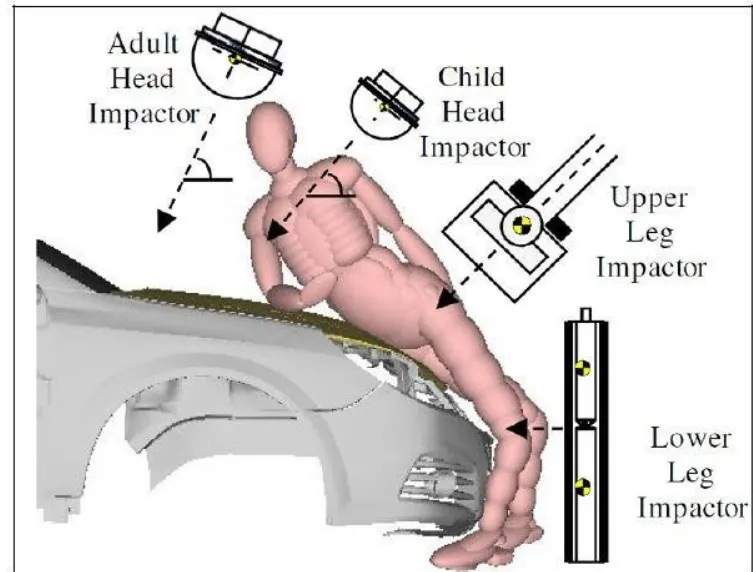
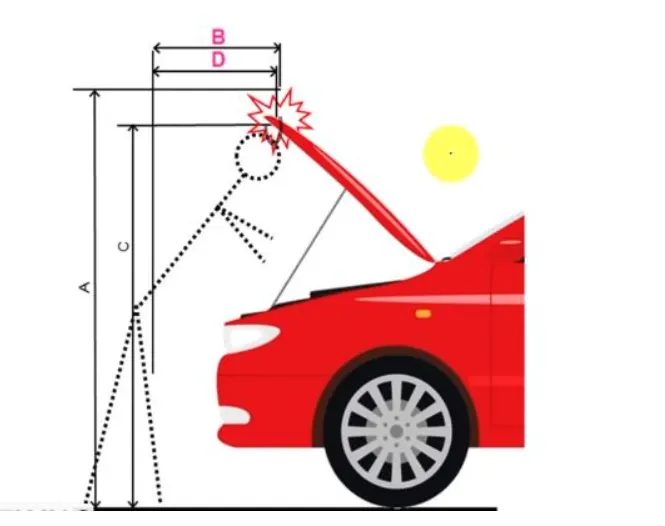
hood opening angle criteria
Procedure:
- the process all starts with a class A surface of hood outer panel
- the hood is asymmetric component the given input is trimmed to half and then we work on t
- It is offsite as per the master section.
- To create the embosses for the striker and hinge the surfaces are extracted from the extracted and the untrimmed because mounting surfaces should be flat and those extracted surfaces are used as end caps for the embosses ,these embosses are flat since the embosses are generated from the extracted surfaces not ram the embossed faces
- Create a parallel constraint between hinge assembly and x axis
- Create a parallel constraint between the hinge emboss and the hinge face
- Give touch constraints between the emboss and the hinge assembly
- Mirror the assembly using associative mirror to the other side
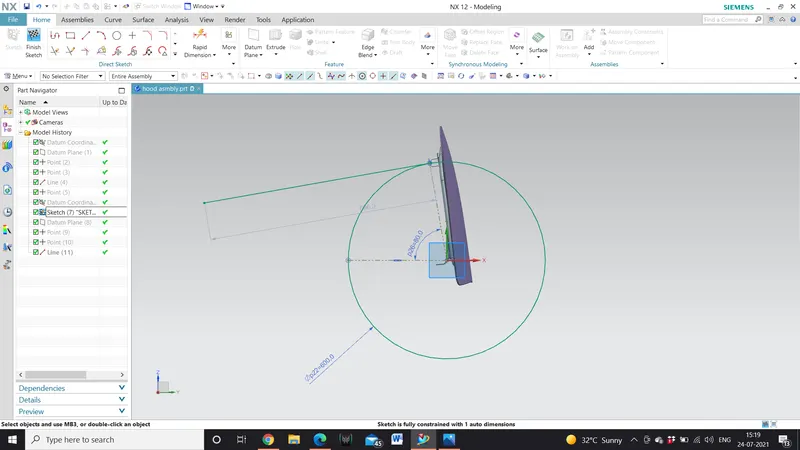
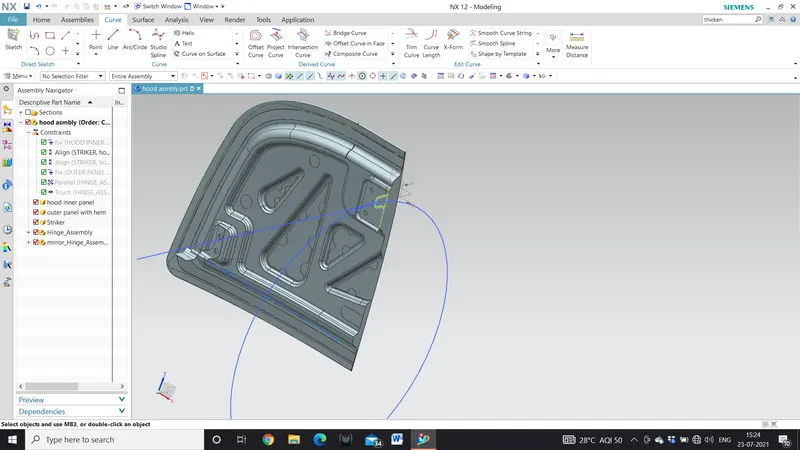
- To position latch in the correct place a latch trajectory circle is drawn from the hinge axis
- to make sure that the striker is perpendicular to the hood a circle is drawn to make sure of that
- the circle is drawn from the hinge axis which decides the closing and opening of the hood
- constraints are given to the hinge and striker
- make a tangent line to the circle and make a line on the striker
- make those two lines coincide each other
- adjust the diameter of the circle to position the striker in the correct place
- and then use wave geometry linker and extratct the face and use it as end cap for the emboss
- create required holes and sketches and trim the body with respect to XC plane
- use mirror geometry and then use sew to stitch the other symmetric half
- Thicken the sheet body to solid body.
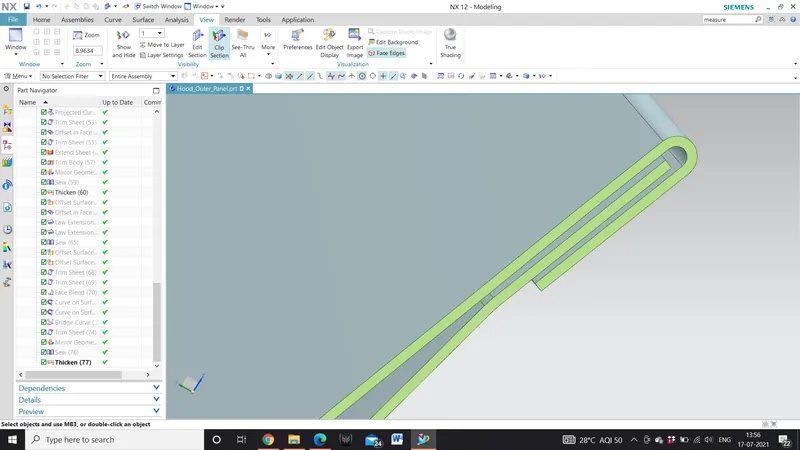
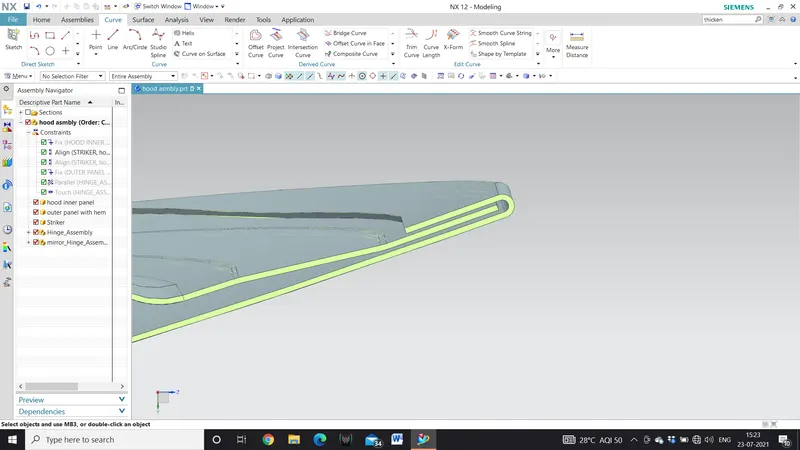
- Creating hem for outer panel
- Hemming is a forming process of bending sheet metal at 180 degree and joined
- This is done to save the component from welding and other aesthetic destroying joining processes
- Offset the hood outer panel according to the master section having 0.2mm clearance on either side of the hem
- Use offset curve on surface to 15mmupo hemming distance
- Use law extension to that edge and forested edge and create a three blend to get the he
- Thicken the component to 0.75mm
- Use section cut to ensure that there is no intersection in the hood outer panel and inner panel
- Hemming relief should be given at corners to remove tension from the corners and best fit will be possible and, in the clearance a sealant is applied and sealed.
latch trajectory
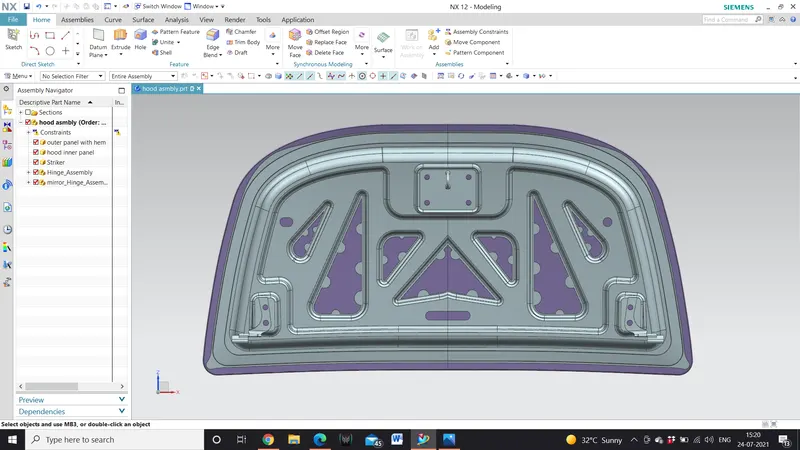
outer panel with HEM
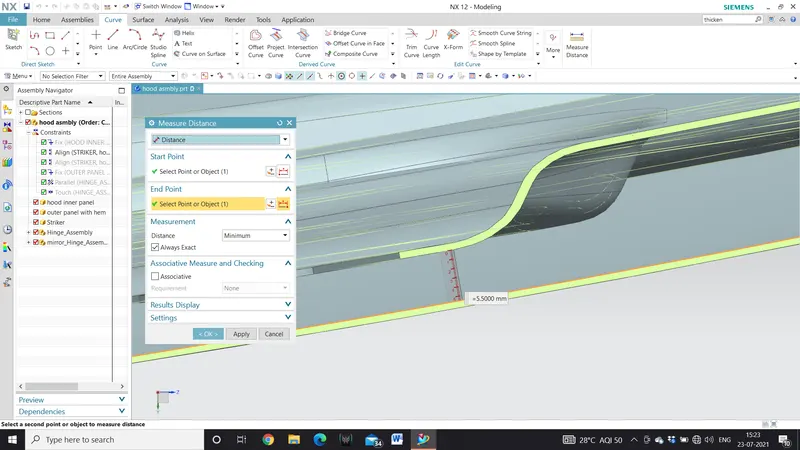
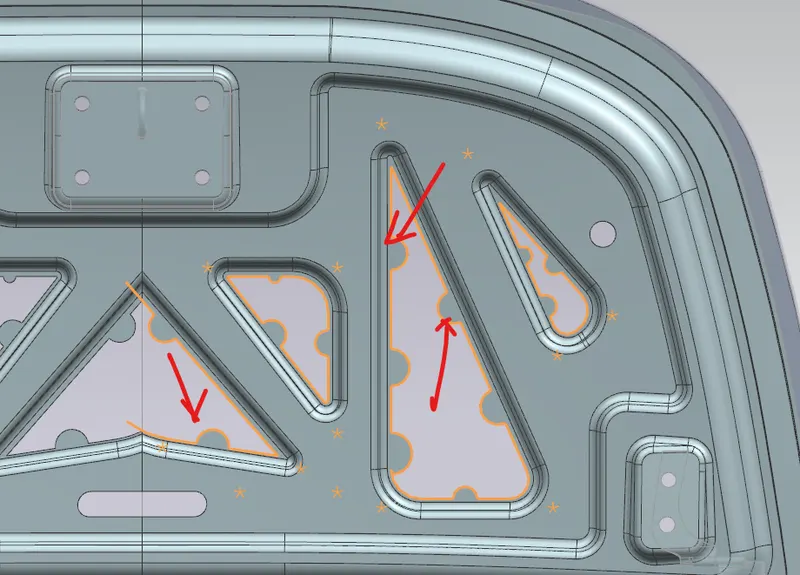
distance betweem outer panel and inner panel embosses for mastic sealant application(minimum 5mm) for effective sealing
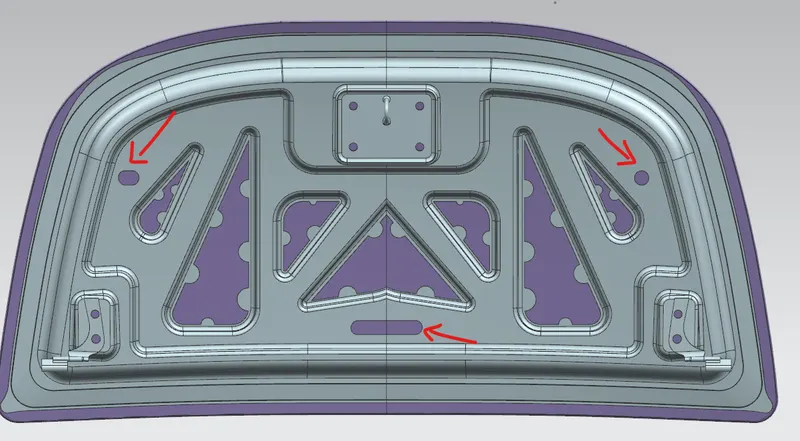
holes to fix the outer panel for hemming (a slot and a hole) and elongated hole for windscreen wash jet
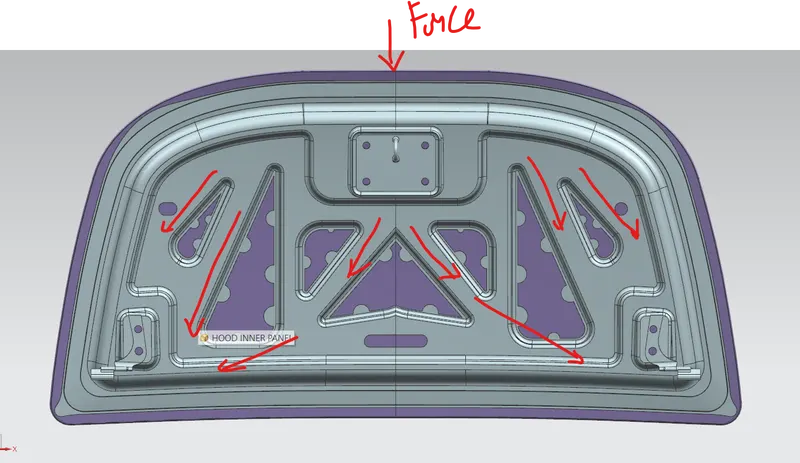
forces dissipation angled outward
mastic sealnat areas (mastic sealant has a spreading span of 80mm)
shaded hood