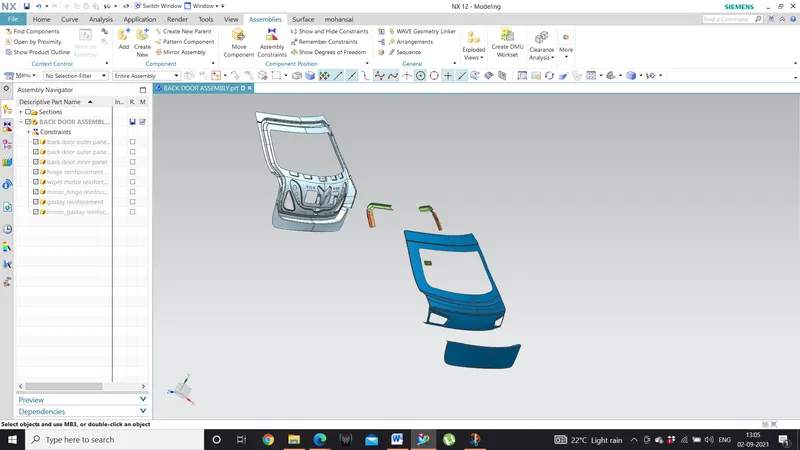
Design of backdoor of a LCV and determining latch trajectory using UG NX 10.0
Objective:
To design the inner panel and required reinforcements for mounting hinge and gasstay and wiper motor assembly for the given class A of the back door.
Introduction to back door:
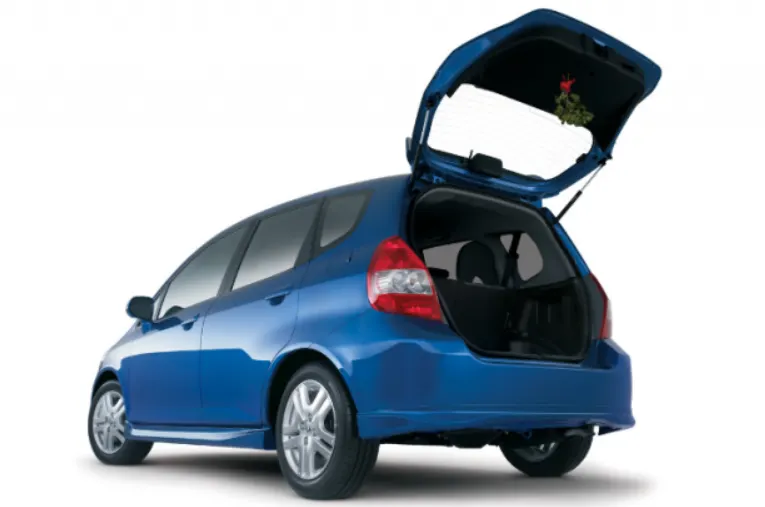
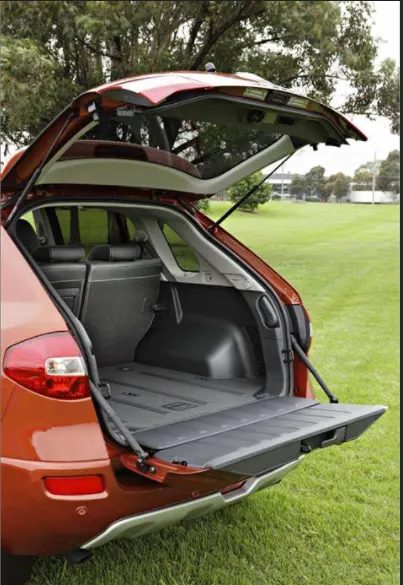
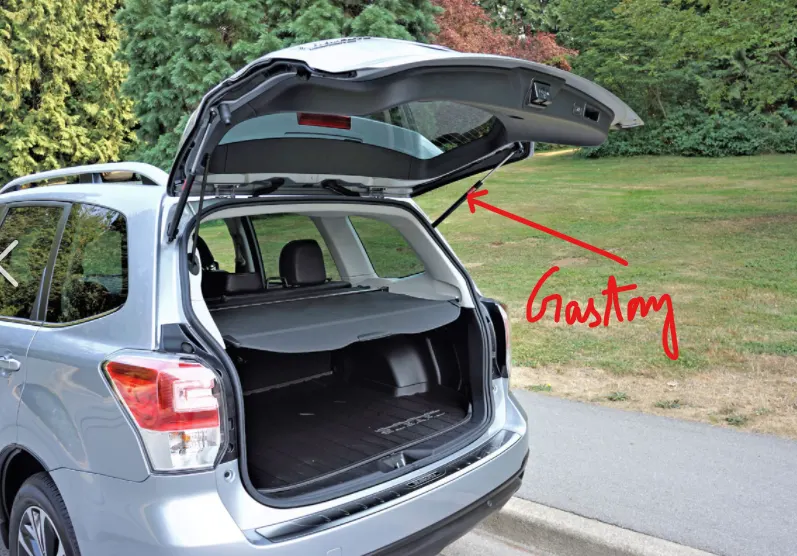
- The backdoor is a door that gives access to the rear storage compartment of vehicles like trucks, vans, and SUVs.
- It is made from steel panels that open and close with the help of a hinge mechanism.
- The most common types of tailgates are drop-down, swing, split, and multi-way.
- The benefits of replacing a faulty tailgate include avoiding costly repairs, preventing rust and corrosion.
components and their characterstics:
- Most of the steels used in automotive application are aluminium-killed steels of about 0.7 to 0.9 mm thickness.
- For inner automotive parts, drawing quality steels, such as SPCD (JIS G 3141), A619 (ASTM), CR3 (BS1449), and Sr13 (DIN 1623), while for outer panels requiring deep drawing such as fenders, hoods, oil pans, etc. Non-aging extra deep drawing steels such as SPCEN (JIS G 3141), A620 (ASTM), CR1 (Bs 1449), and St 14 (DIN 1623), are used. Aluminium-killed steels show little or no stretcher strains for a period of time sufficient to eliminate the need for roller-leveling.
- Thinner High Strength Low Alloy (HSLA) steels are being increasingly used for certain autobody components including skin panels.
- It must combine its high strength with a good level of formability, as a strength increase is always accompanied by a fall in formability.
- The improved bake hardening steels used specially for the external panels possesses sufficiently high formability and provides an increase in strength after the paint baking.
- A consequence of strength increase obtained during paint baking, is the improved dent resistance of the surface.
- Difficult autobody pressings of complex geometry have necessitated the use of steel grades with lower strengths too.
- Vacuum degassed microalloyed steels containing Ti and/or Nb additions are classed as Interstitial-free steels (IF-steels).
- IF-steels are being used with advantages of extremely high value of maximum drawing ratio, and the absence of the straining effect for difficult-to-form panels.
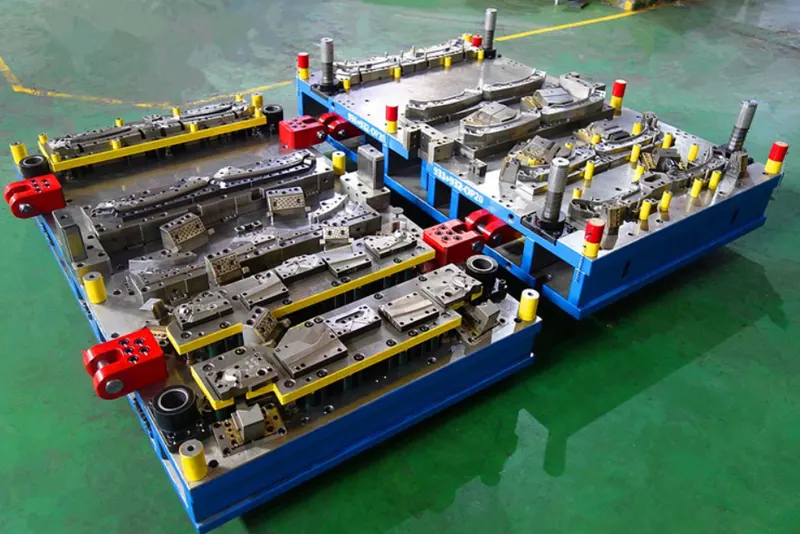
automotive stamping die
Procedure:
components of a car back door assembly:
- back door outer panel
- back door lower panel
- back door inner panel
- back door hinge reinforcemnt
- back door gastay reinforcement
- wiper motor reinforcement
correcting class A and determing tooling direction and latch and striker trajectory:
- Open the given class A input
- Try and join them if there are gaps create the surfaces locally using through curve mesh or studio surface and sew them
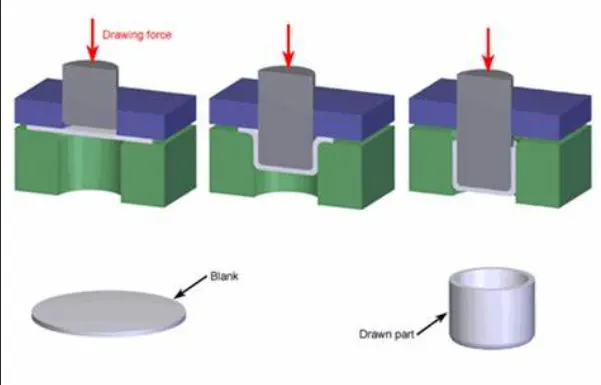
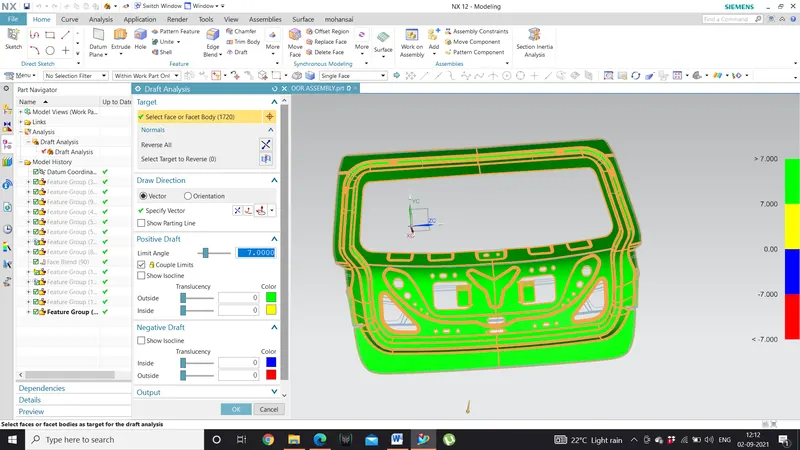
- Create a tooling direction for deep drawing the back door ,generally the tooling direction is taken from the centre of the wiper motor area or it can draw from the x axis at an angle and can be modified when performing draft analysis
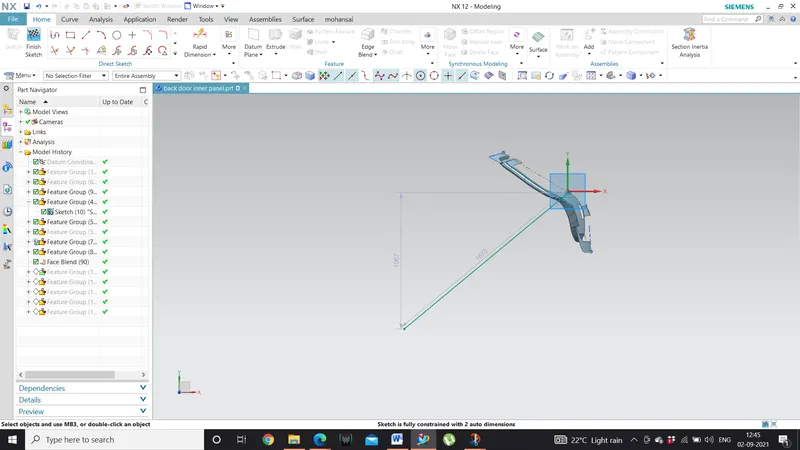
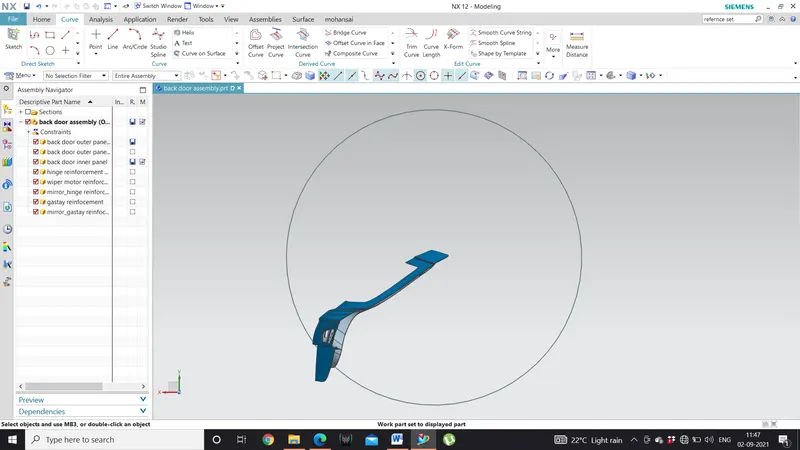
draw animaginary line from hinge axis to latch anf draw a circle and that faollows the latch and striker trajectory.
Creating inner panel of back door with flange and mastic flange
- The back door sits on the flange provided to avoid water getting into the car and to reduce the NVH properties of the car
- Offset the surface to 1.7mm where the position of the inner panel is determined and the flange must be 30mm from the outer panel
- Offset the curve on face and trim the inner panel to get the flange and then using through curves create the surface between the flange and the inner panel
- Likewise offset the lower panel to 60mm and then create a surface and trim them with the inner panel to get the inner panel with sealing flange
- Create required embosses and make sure there are no sharp corners
- To create flanges to apply mastic sealant offset the outer panel inwards upto 5mm and create swept surface between the inner panel and flange where mastics can be applied
- Create one hole and slot for proper positioning
- Crete embosses for hinge mounting and gasstay mounting
- Create embosses for mounting wiper motor and latch using sketch and project curve
- Trim he excess and create an extract body for thickening
- Using thicken command thicken the inner panel inwards to 0.75mm
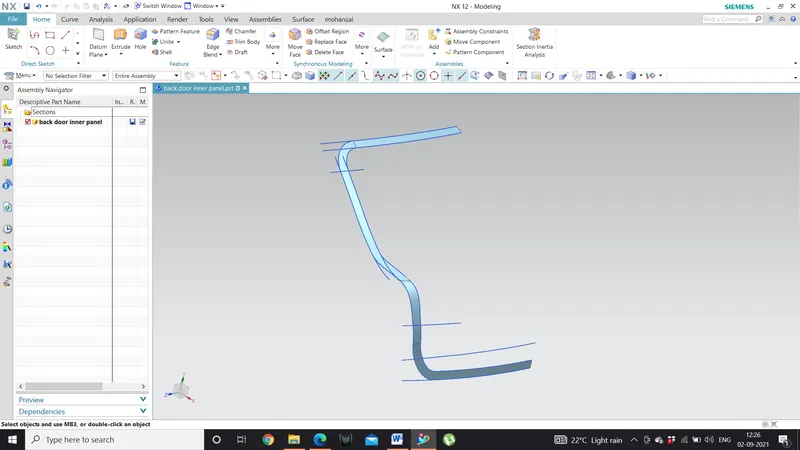
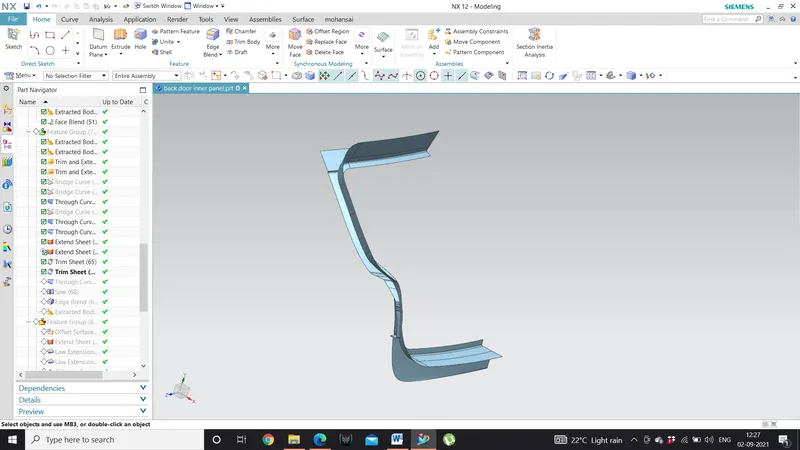
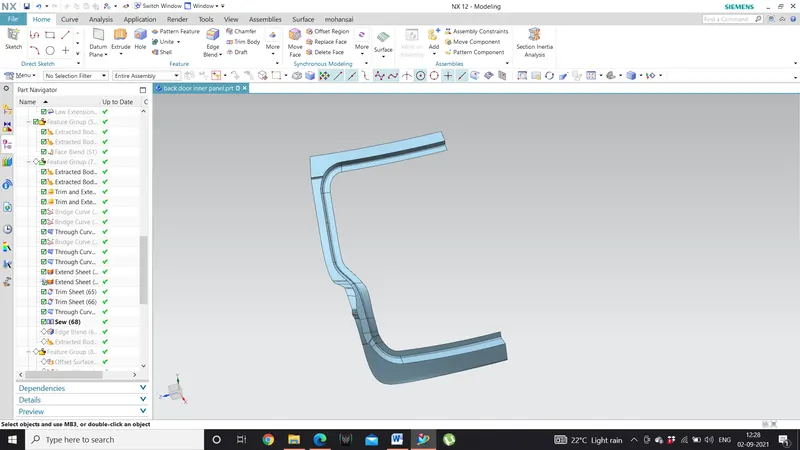
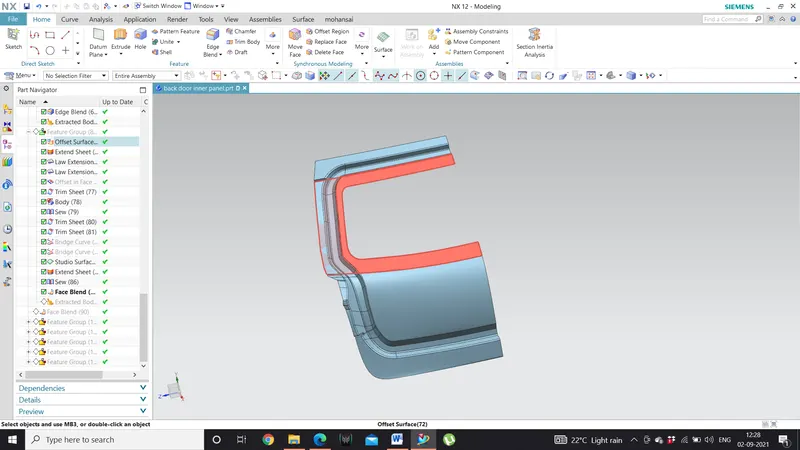
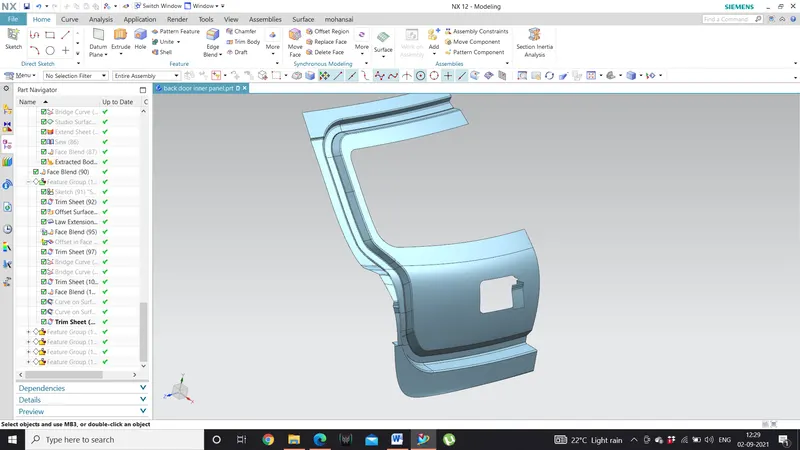
use sketch and project curve to project curves n the body and trim them to get the cutouts.
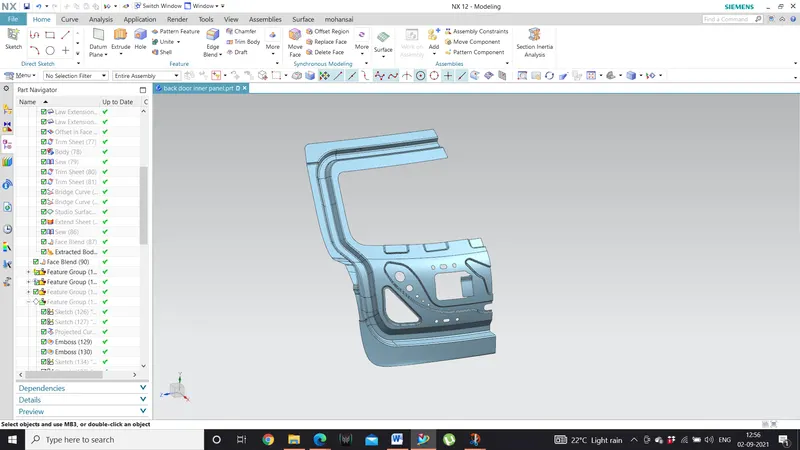
Creating outer panel hems
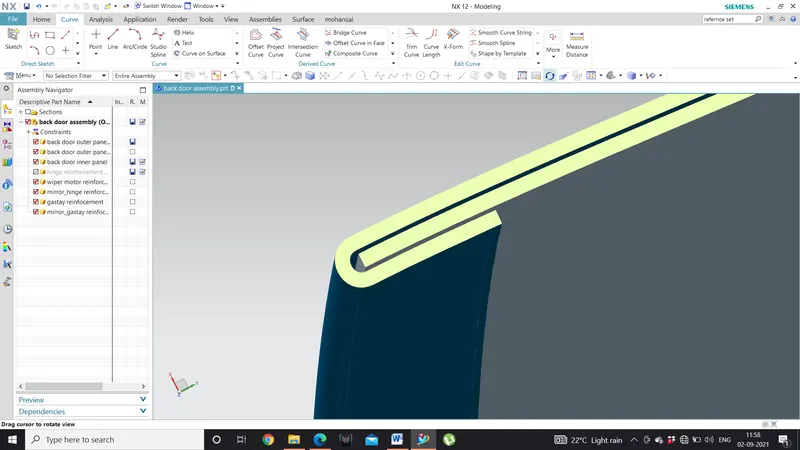
- Double click on the outer panel upper to create hem to join with inner panel
- Offset the inner panel to 2.65mm
- Offset cur e on surface and trim the sheet up to 7mm
- Use bridge curve and then using swept surface create the hem all along the surface if the outer panel
- Do the same for the lower panel these two gets joined by spot welding with the inner panel
- relief should be given at corners to reduce the stress concentration.
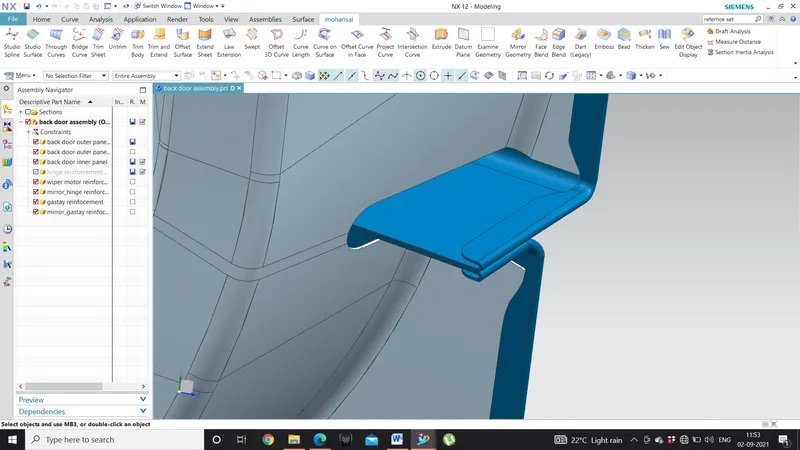
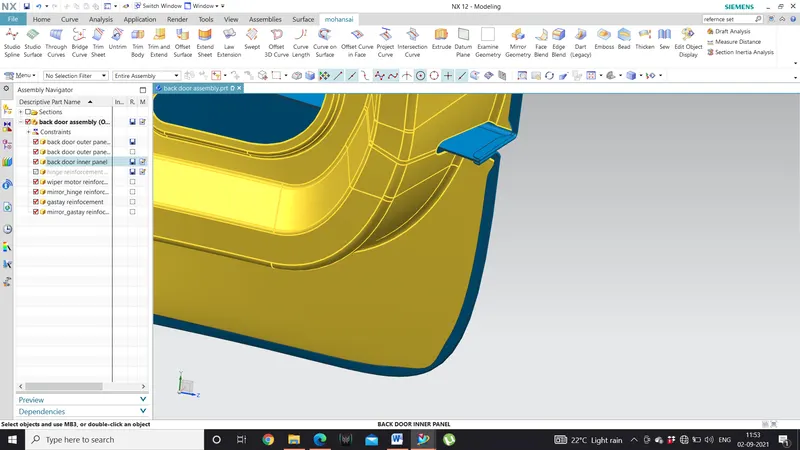
Creating reinforcements
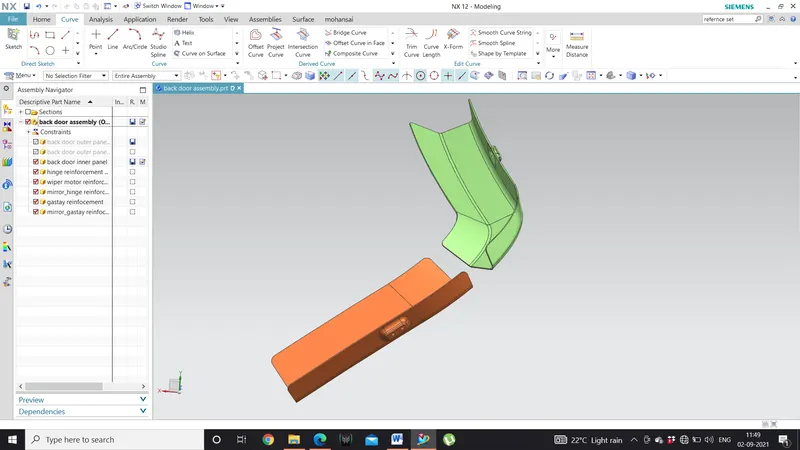
- Reinforcements are created from offseting the thicken part from the inner panel using wave geometry linker
- Trim the reinforcements accordingly
- Thicken the reinforcements to 1mm minimum to add extra strength locally.
- Finally mirror the entire assembly
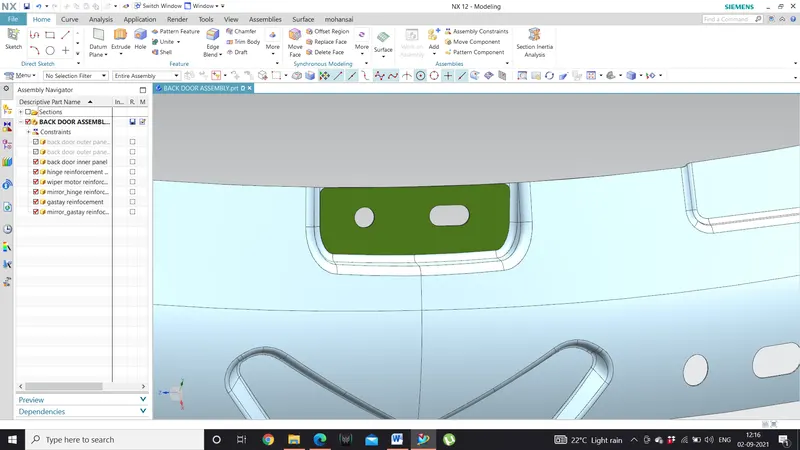
a hole and a slot for proper positioning of the wiper motor.
Draft analysis
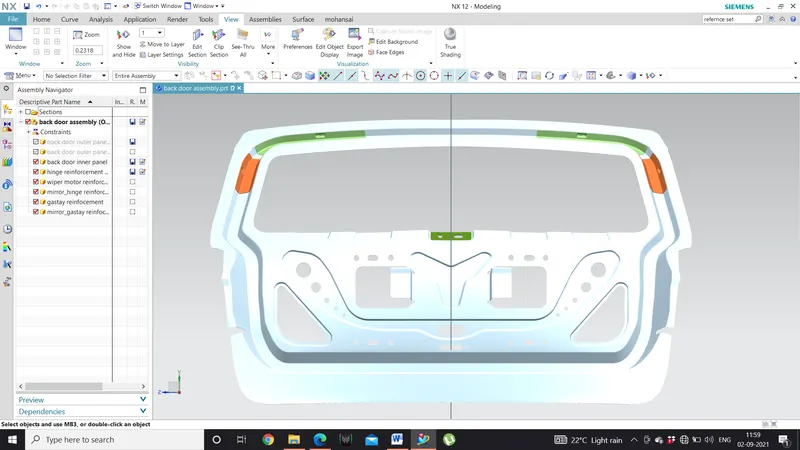
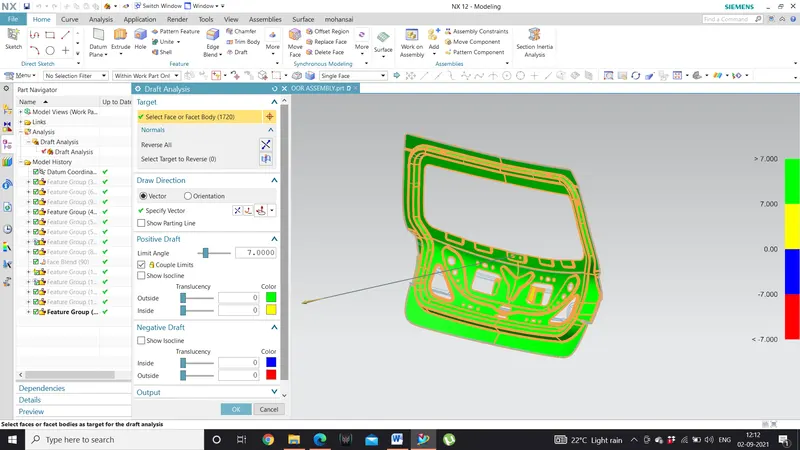
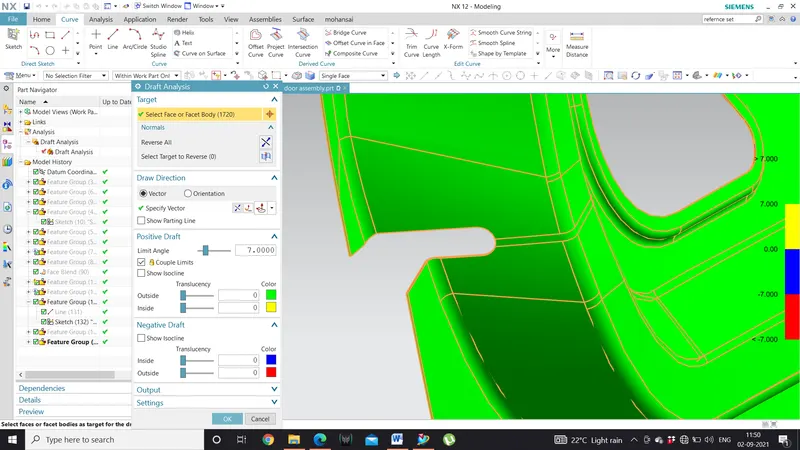
- Perform draft analysis selecting the tooling direction created before and give an angle of 7 degree .
concluion:
the tail gate of the inner panel is produced from the given class A input with proper opening angles for deep drawing and with proper reinforcemnts and embosses with dds extra strength to the body and draft analysis is performed with the drawing direction.