Hood design-Week 2
DESIGN AND ASSEMBLY OF HOOD USING NX-CAD
Objective:
To design hood outer panel and reinforcement with the given outer hood skin,master section and design parameters.
Introduction:
Hood is an opening body panel that covers the engine in the front of the vehicle.The hood is also considered an another type of door in a vehicle as it consists of outer and inner pannel.The inner pannel provides strength where as the outer panel functions as metal cover.Hood can open to access to the engine component for maintenance and repair purpose.
The design perspective of hood should meet some specific condition like pedestrain safety,hood head zone for the lock striker ,force distribution when subjected to frontal collision,manufacturibility etc.
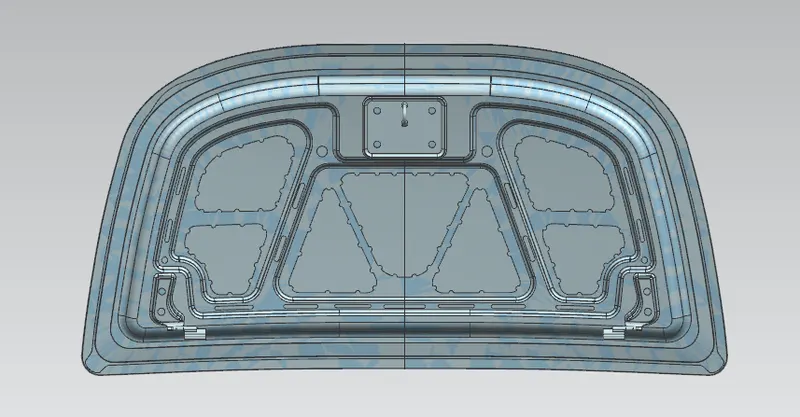
Design Parameters:
Hood thickness information:
- Outer panel thickness =0.75mm
- Inner panel thickness =0.75mm
- Reinforcement thickness=1.5mm
Master section:
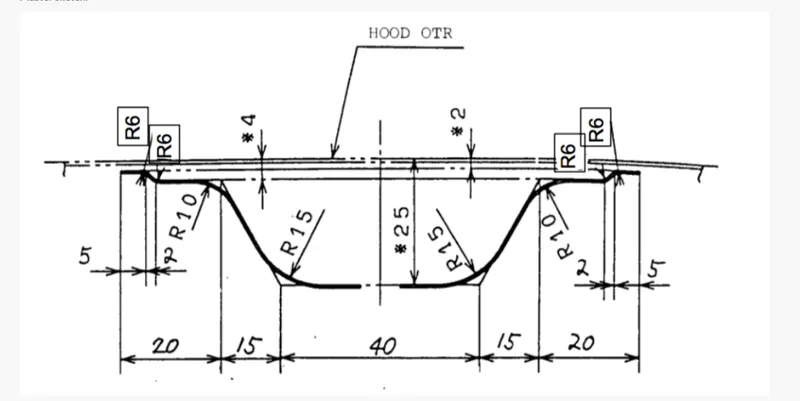
Design consideration for car hood:
Head clearance zone:
Head clearance zone is the clearance such that when the hood is in fully open condition it does not hurt the head of the person that is standing next to the hood . This is controlled by the opening angle of the hood . The opening angle of the hood is decided for the region the car is manufactured.
Pedestrian safety:
Safety is the most important criteria in automobile design which concentrates on both pedestrain and occupant safety.The pedestrain are the most vulnerable road user and are at high risk of traffic accidents.This is the major reason for the facility of the pedestrain in the traffic accidents is due to the head injury reasulting from the hard impact of the head against the stiffner hood or the ground.This leads to the necessity of new inner hood panel which is less stiffer and pedestrain friendly.The head impact analysis on the present hood of the car was done to study the response of the adult head at two different location .Structural and modal analysis for the same present hood assembly was done to observe the local and globla stiffness.In order to reduce the head injury of the pedestrain the local stiffness over the area of head impact has to be reduced thus the new design of hood inner panel was focused on that and structural and modal analysis was done for the new design.The design with lesser local stiffness and similar global stiffness compared to the existing hood was finalised.The head impact analysis for the new design of the hood inner panel was performed.The HIC values of the adult head form for two different location are found to be EEVC WG17 and Euro NCAP regulation.Thus the new design of the hood is pedestrain friendly ,considerably maintaining the overall global stiffness of the hood.
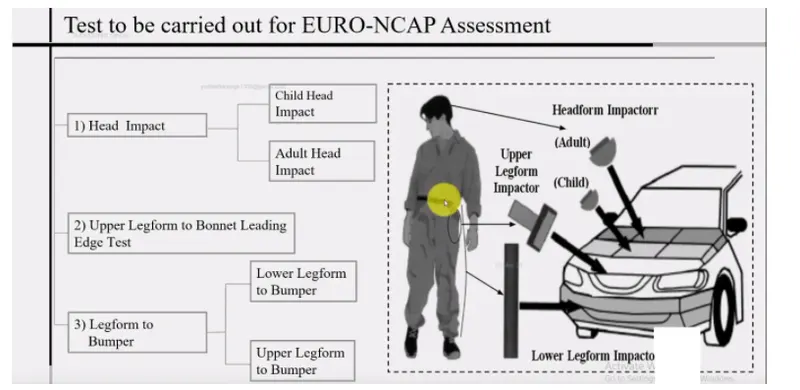
Hood outer panel:
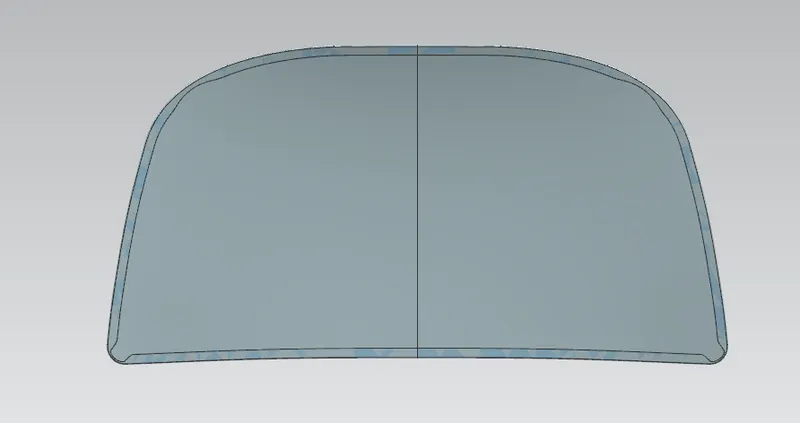
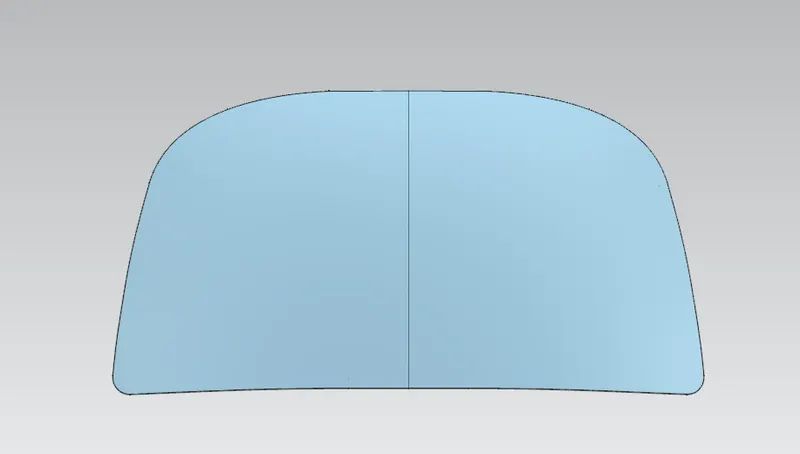
Outer panels are the aesthetic elements of the car.It is the styling team who provides the skin for the outer panel.The shape,position and size of the hood should satisfies the safety norms.So while designing the hood we should give moore importance to pedestrain safety.The outer pannel is attached to the inner pannel by hemming.So it is necessary to provide required hemming flange and the relif for the hemming operation.We also provide mastic sealents between outer panel and inner pannel to reduce vibration.
Hood inner panel:
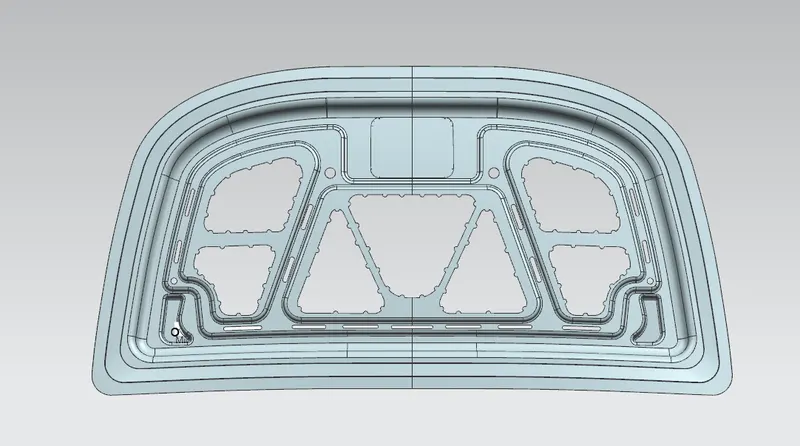
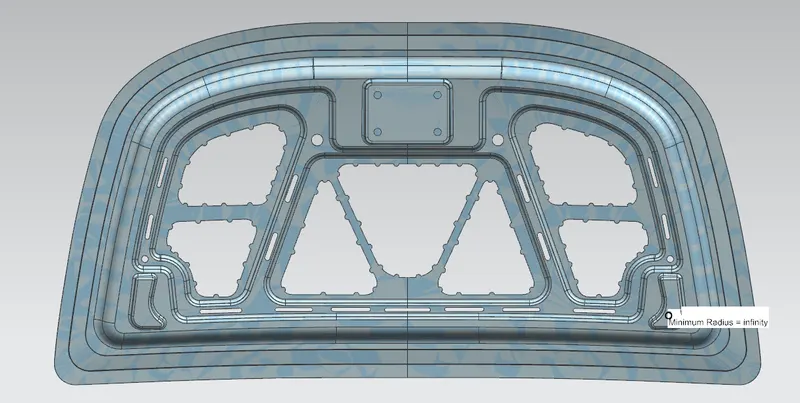
Inner panel is the part that gives strength and rigidity to the outer panel.It consists of emboss,holes,mastic sealeant for the purpose of dessipating or minimizing the force during the head on collision.The pannel is designed with V or Y shaped emboss to divert the force side ways so as to reduce the force acting on the cabin.
Hood stay:
After opening the hood the part which is used for holding the hood in it’s place is known as hood stay.
There are two types of hood stay is used:
- Gas stay
- Support rod
Gas stay:
The gas stay are designed to be used on upward lifting doors,once you have opened the door slightly the spring will push the door to the fully open position.This is mostly used for where the car bonnet weight is heavy.
Support rod:
This widely used in many cars,because this is very easy and cheap.In this type we have to lift the hood by overself and place the support rod in the space provided either in the hood or engine component.This is mostly used for where the car bonnet weight is small.
Reinforcements:
Reinforcement are provided according to the design requirement.Mainly it is provided at the hinge and latch regions to improve the strength locally.Usually thickness of reinforcement will be higher then that of the inner pannel and the value varies according to the cost and requirement.According to the design requirement here it is given 1.5mm thickness to both hing and latch reinforcement.
Emboss:
An embossing is a metal forming process in which a high pressure is applied on a die to make a imprint on the working surface.The imprint can be raised or sunked. In this process it is assumed that the metal thickness remains the same while embossing.
Throughout the inner panel we provide different embosses.We can increase the stiffness of the inner panel through these embosses.The shape and size of the embosses also determines the direction of the force distribution resulted from frontal collision.The force should be always distributed away from the passengers.
Mastic sealants:
Mastic sealent is used between the outer and the inner pannel to bond the two pannels.These mastic sealent are elastic compount that behave like rubber.The mastic also provides the strength for the hood outer panel.This can be a glue or a rubber which is placed in between the inner and the outer panel.This mastic has a influence area of 80mm
Deep drawing:
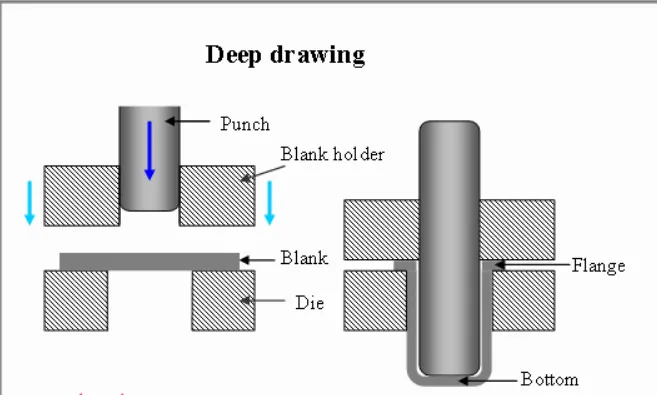
Deep drawing is a metal forming process, in which a flat metal blank is forced into a die cavity by hydraulically driven punch.
A cup-like cylindrical part, having the depth greater than its diameter, is formed as a result of deep drawing.
Typical stages of a deep drawing process are as follows:
- shearing a blank(round rectangular or other shape);
- clamping the blankon the die;
- stretching the blankby the punch forcing it into the die cavity;
- returning the punchand removal the part from the die;
- trimming the excess blank.
The maximum amount of deformation occurs in the cup walls, deformation of the flange is lower, bottom region undergoes no deformation.
Deep drawing alloys should possess high ductility in order to withstand large amounts of deformation.
Hemming:
Hemming is a forming operation in which the edges of the sheet are folded or folded over another part in order to achieve a tight fit. Normally hemming operations are used to connect parts together, to improve the appearance of a part and to reinforce part edges.
In car part production, hemming is used in assembly as a secondary operation after deep drawing, trimming and flanging operations to join two sheet metal parts (outer and inner) together. Typical parts for this type of assembly are hoods, doors, trunk lids and fenders.
The accuracy of the hemming operation is very important since it affects the appearance of the surface and surface quality. Material deformations, which occur during the hemming process, can lead to dimensional variations and other defects in parts. Typical hemming defects are splits or wrinkles in the flange, material overlaps in the corner areas or material roll-in. This is why it is important to use simulation tools in order to, on the one hand, better understand the hemming process and, on the other hand, significantly reduce the number of “trial and error” loops during tryout and production.
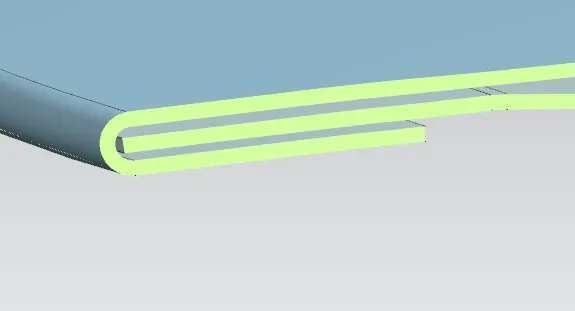
There are various types of hemming operations:
- Conventional die hemming
- Roll hemming
Conventional die hemming:
Conventional die hemming is suitable for mass production. In die hemming, the flange is folded over the entire length with a hemming tool. Normally the actual hemming is a result of a forming operation in which the flange is formed with a hemming tool after the drawing and trimming operations have been completed. The formed flange is then hemmed in several process steps. These steps include, for example, the pre-hemming and final hemming depending on the respective opening angle of the flange. Production plants for conventional die hemming are very expensive, but the cycle times are very low.
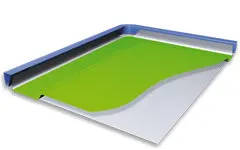
Roll hemming:
Roll hemming is carried out incrementally with a hemming roller. An industrial robot guides the hemming roller and forms the flange. Roll hemming operation can also be divided into several pre-hemming and final hemming process steps. Roll hemming is very flexible to use and tool costs are significantly lower as compared to those of conventional die hemming. However, the cycle times are much higher since the hemming is realized using a hemming roller which follows a defined path.
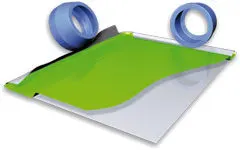
Latch trajectory:
Latch trajectory is given by the circle drawn from the hinge axis point.Hinge axis point is the centre point of the hinge axis.First we can fix either the latch or the hinge.If we fixed the hinge position then we should plot the trajectory circle for the latch.For proper mating condition the striker axis through the tip of the striker should be tagential to the latch trajectory.
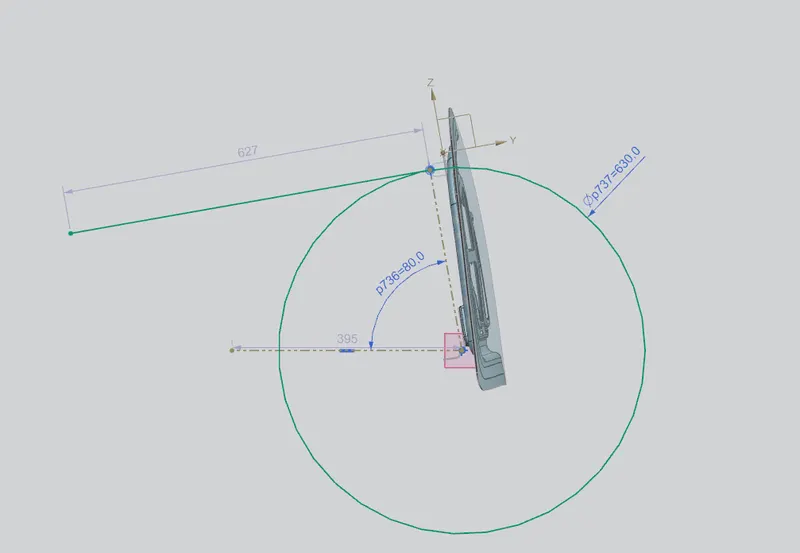
conclusion:
Thus the hood outer panel,inner panel and necessary reinforcement are designed using NX-CAD.