Roof challenge
ROOF CHALLENGE:
Introduction:
The roof part which starts from A-pillar and goes upto D-pillar.The roof purpose is to provide cover to the passenger inside the car and protect the passenger from elements like sun,rain,wind,etc.The roof also prevents unwanted object from falling inside the car.Roofs are generally made up of Aluminium.Aluminium based roof panel may reduce the overall weight of the assembly.
Types of Automobile roof:
- Convertible:A convertible ,cabriolet or spyder is a passenger car that can be driven with or without a roof in place.
- Hardtop:A hardtop is a rigid form of automobile roof,which for modern cars typically constructed from metal.A hardtop roof can be either fixed,detachable for separate storing or retractable within the vehicle itself.
- Sunroof:An Automotive sunroof is a movable panel that is operable to uncover a window in an automobile roof.which allows light and fresh air into the passanger compartment.
- T-top: A T-top is an automobile roof with a removable panel on each side of a rigid bar running from the center of one structural bar between pillars to the center of the next structural bar. The panels of a traditional T-top are usually made of auto grade safety glass.
- Targa Top: Itis a semi-convertible car body style with a removable roof section and a full width roll bar behind the seats.
- Vinyl roof:Vinyl roof refers to a vinyl converting for a automobile’s top.This converting was orginally designed to give the appearance of a convertible to models with a fixed roof but eventually,it evolved into styling statement in its own right.
Design Consideration:
- Visibility criteria
- Head clearence
- Curvature study
- Heat distortion and snow load condition
Components of roof:
- Front roof rail
- Rear roof rail
- Bow roof
- Centre roof rail
- Ditch area
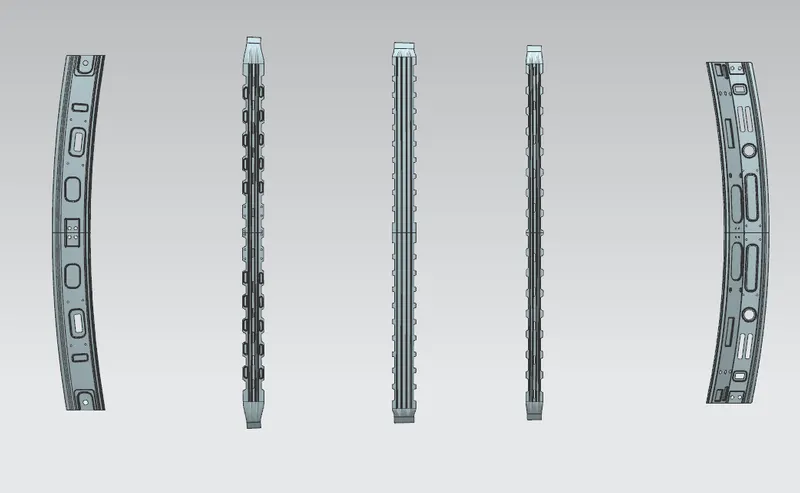
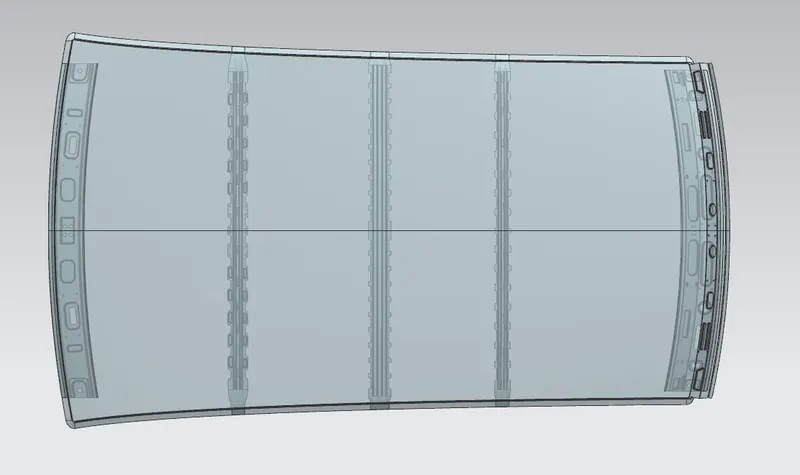
Front roof rail:
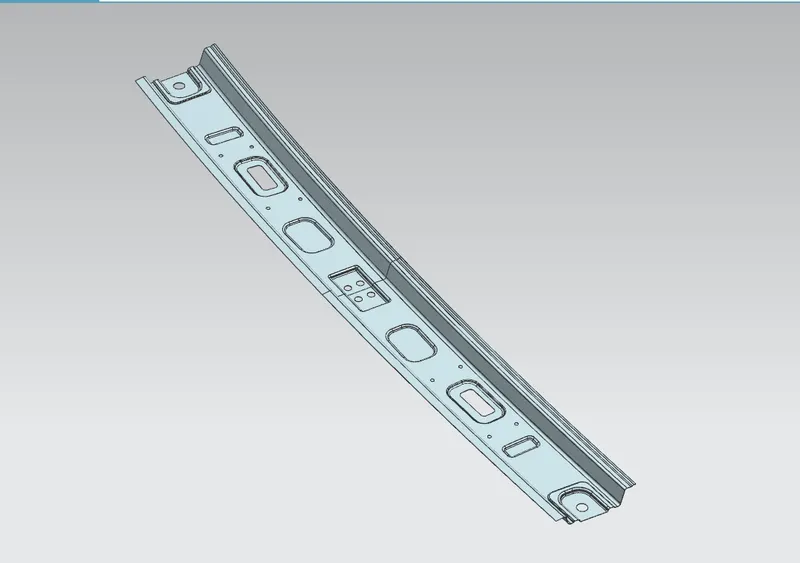
Front roof rail is used to provide strength to the roof panel front and it also acts as link between windshield glass, roof panel and headliner. Spot welds are applied at wind shield end of the rail and the other end is joined with roof using mastic sealent which also increases the strength.
Rear roof rail:
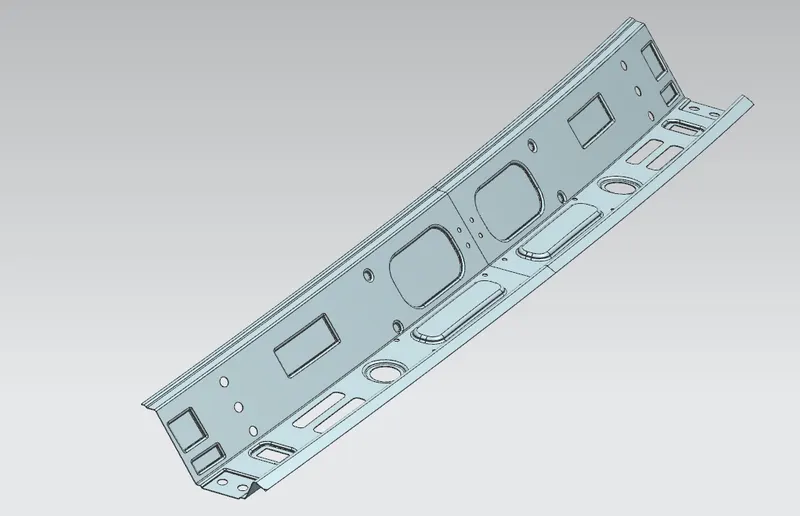
Rear roof rail is again used to strengthen the roof and it acts as a link between back glass and roof which connected to the backdoor of the car.Spot welds are applied at back doorend of the rail and the other end is joined with roof using mastic sealent.
Centre roof rail:
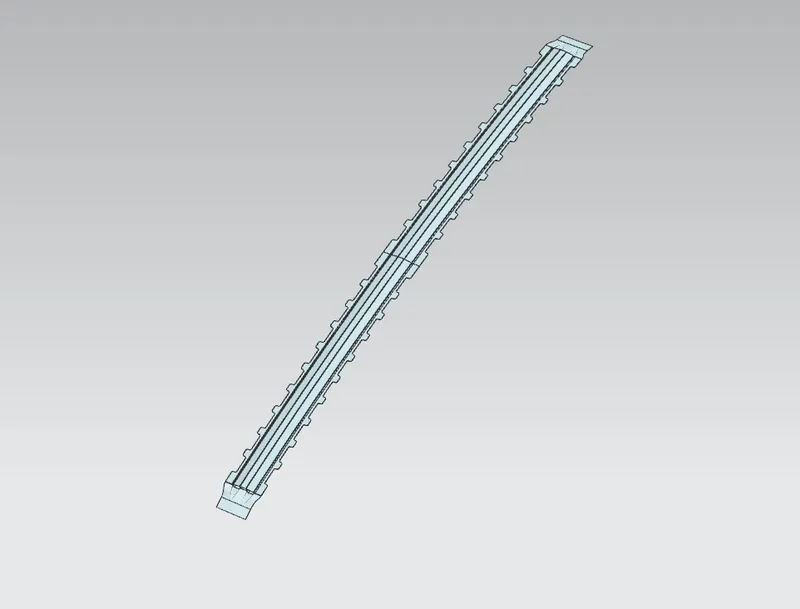
This is a roof rail that will be at the centre of the roof to provide strength and stability to the roof.Here the centre roof rail is joint with the roof through mastic sealent.
Bow Roof:
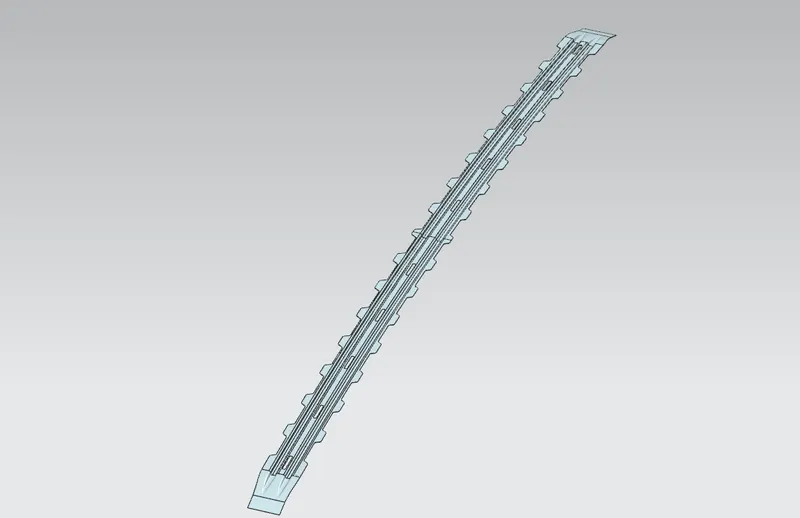
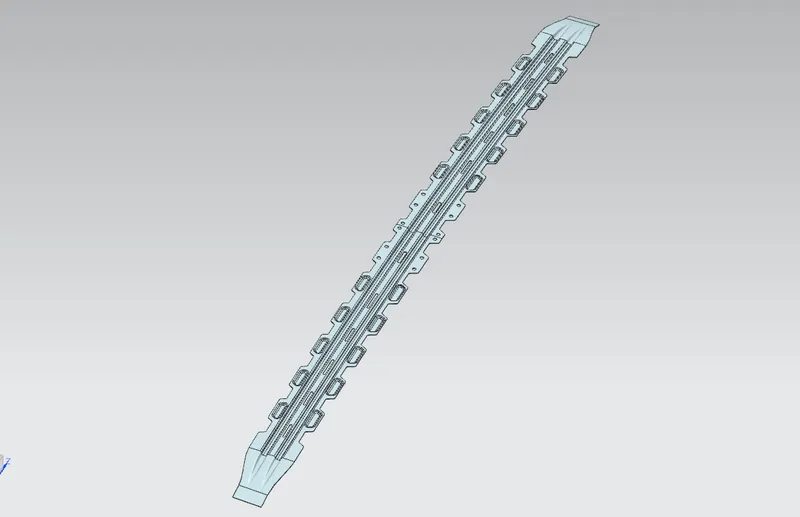
Bow roof is used for strengthening purpose
Ditch area:
Ditch area is a extended portion of the maim roof concellled by other BIW pannels.The rails support of the roof are attached to the ditch area using spot weld.
Analysis:
It is done to justify the position of the bow roofs.
1.Roof crash test.
2.Snow load test.
3.Heat distortion criteria
Heat distortion criteria:
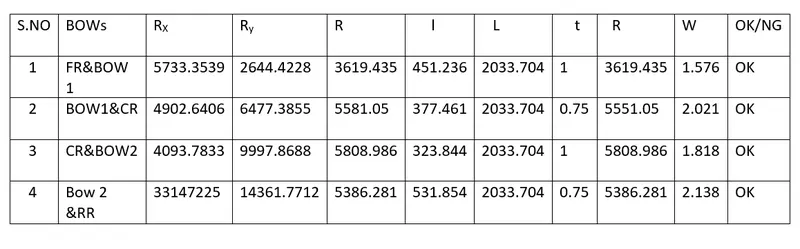
Heat distortion temperature is a temperature at which the metal softens and deform under a specific load.This study is done to check the ability of the roof to withstand high temperature with respect to the position of the reinforcement which contribute to the increase strength.
Prediction formula:W=[1.73×10⁻³×L] + [1.85× 10⁻⁸×R2/t]+[1.10×10-3×l]-2.68
Judgemental condition:Ok<2.7>3.1
Where
L=Roof length in X-direction in mm (Roof dimension in O-Y)
R=Roof curvature
R=2(RX×RY)/(RX+Ry)
RX=X Curvature
Ry=Y Curvature
T =Roof plate thickness in mm
L =Bow roof span in mm
Snow Load criteria:
Snow load criteria study is done to check the ability of the to withstand snowfall and bounce back to its orginal shape without any permenant deformation once the load is removed.
Snow load prediction formula :Qr =[(Iy × t2)/(α × s×(RX+RY/2)2 × 10-8)]
Where
α = My× Lx2× 10-12 ,My=Y(Ly -Y)
Judgement Condition:Qr≥3.1
t=Roof plate thicness in mm
LY =Distance between Front and rear roof rail on vehicle O-Y in mm i.e length of the roof panel with the centre point between roof rail FR/RR as the referance point of the front and rear
Y=Distance from front roof rail centre to bow roof in mm
S - Distance for which BOW bears divided load in mm
S= L1/2+L2/2
Iy=Geometrical moment of inertia of roof BOW (Cross-section)mm4
Rx=Lateral direction curvature radius of roof panel Y cross section on Roof ROW in mm
Ry =Longitudinal direction of the curvature radius of roof panel X cross section on BOW roof (mm)
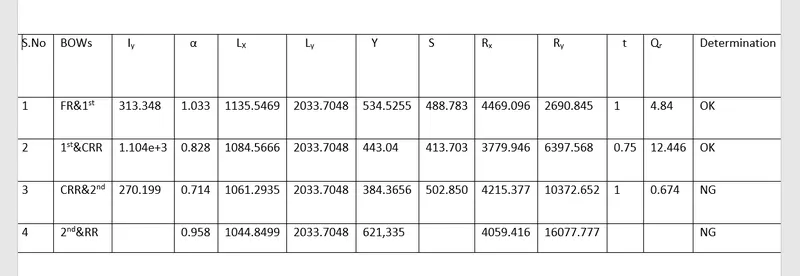
Here the CRR&2nd BOW roof is failed it can be overcomed by changing position,increasing thickness and also creating additional embosses.
Draft analysis:
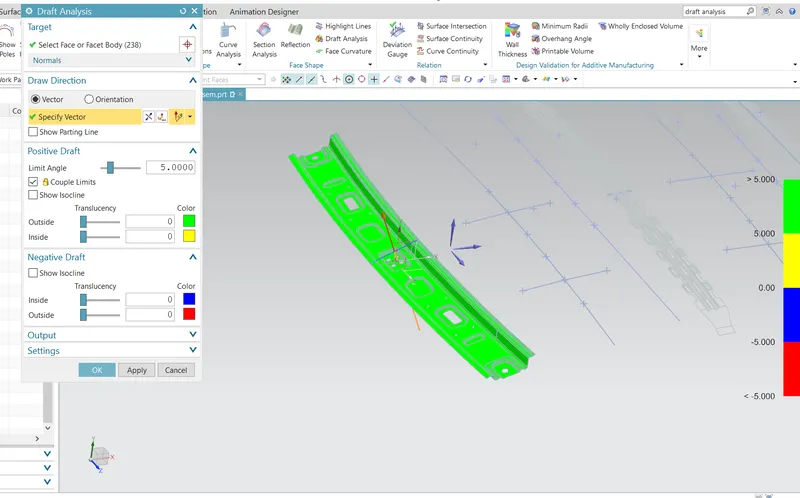
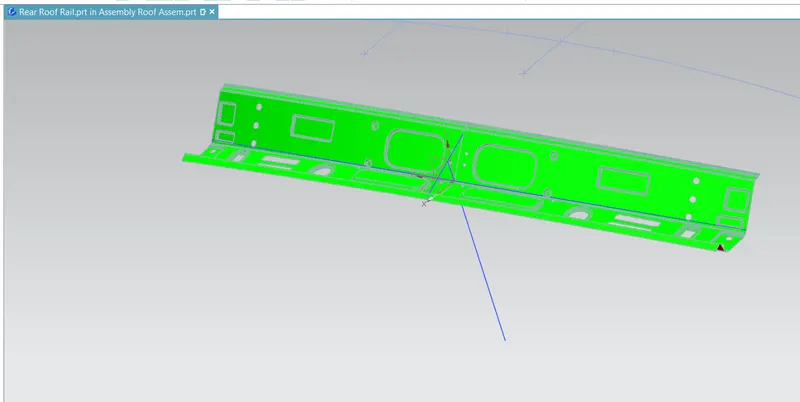
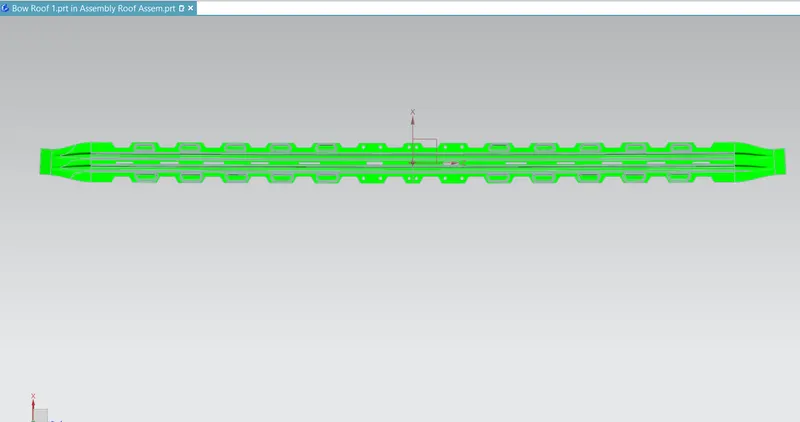
The Draft Analysis command enables you to detect if the part you drafted will be easily removed. This type of analysis is performed based on color ranges identifying zones on the analyzed element where the deviation from the draft direction at any point, corresponds to specified values.Here the draft angle is given as 5 degree.
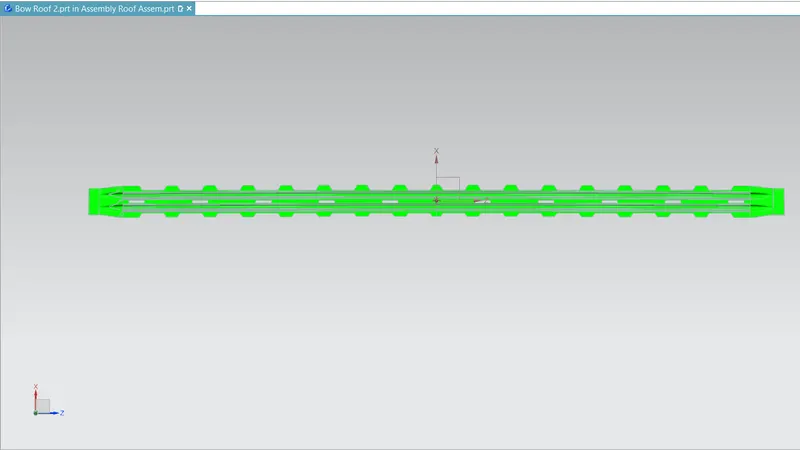
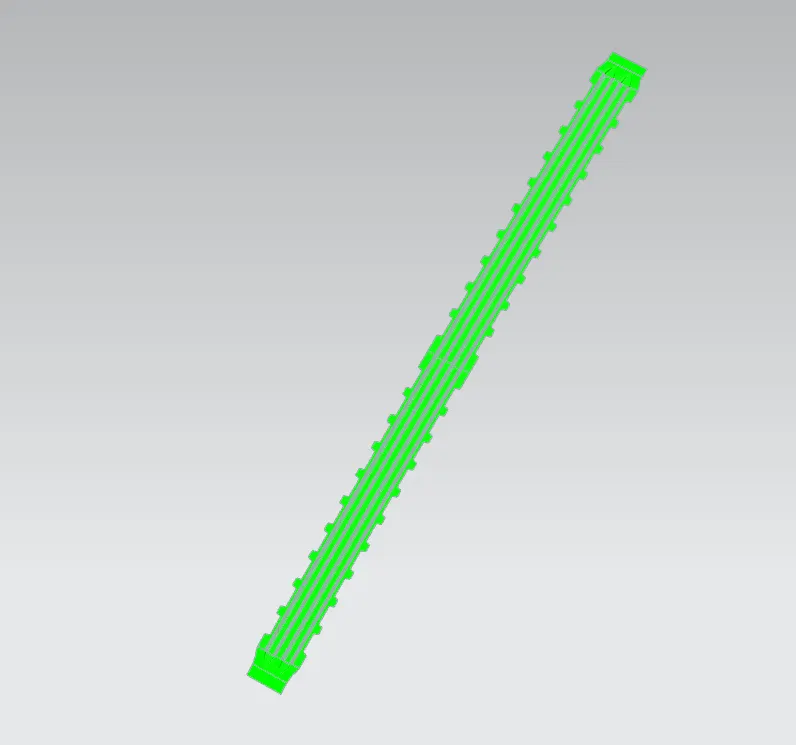
Section Modulus
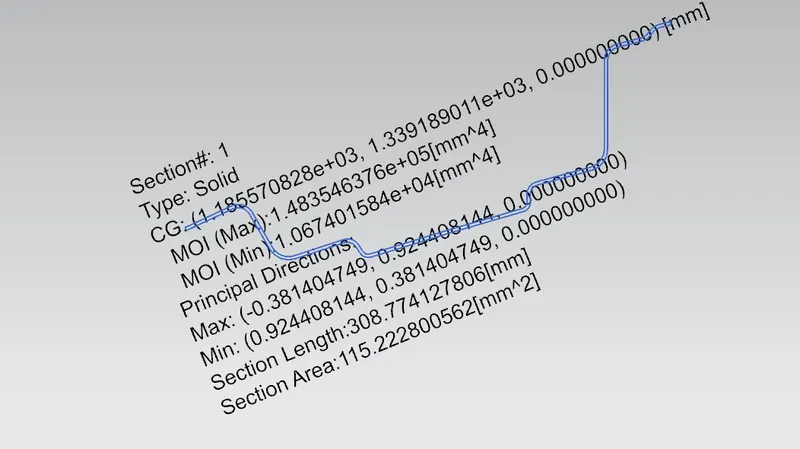
Section modulus is a direct measure of strength of any sectional area of an object about an referance axis(neutral axis). Strength is nothing but,capable of supporting greater loads,so higher the strength it has a high capable of supporting greater loads.
Section modulus represented with a symbol of ‘S’
S=I/Y
S-Section modulus
I-Distance from the referance line to one of the extreme end of the object
Front Rail:
I=1.0674e+4mm4
Y=60..533mm
S=176.333mm3
BOW Roof 1
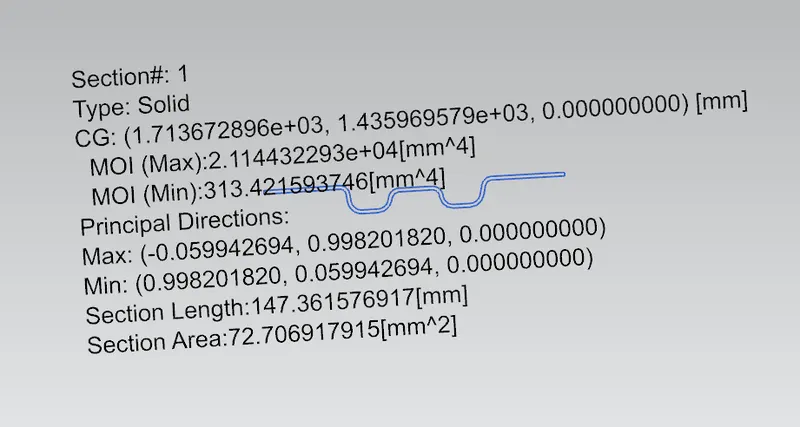
I=313.421mm4
Y=30mm
S=10.122mm3
Centre Roof Rail
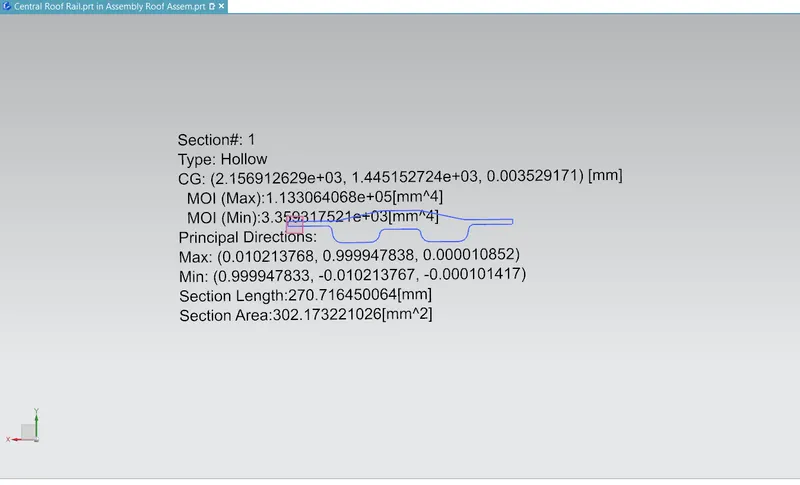
I=3.359e+03mm4
Y=35mm
S=95.971mm3
BOW Roof 2
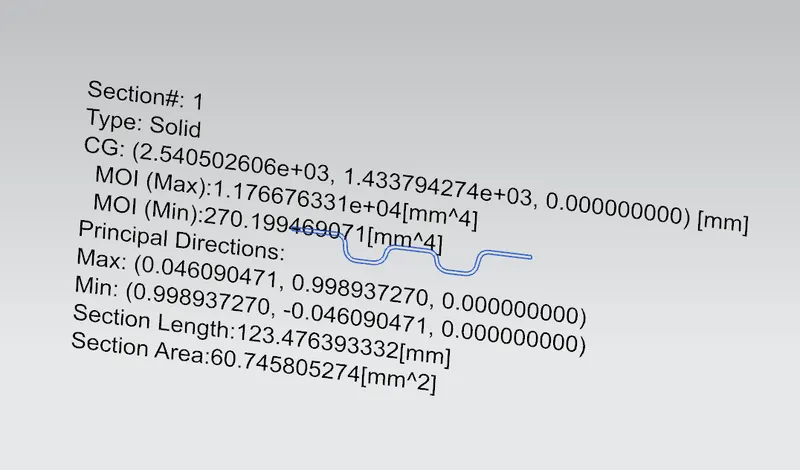
I=270.199mm4
Y=24.985mm
S=10.814mm3
Rear Roof
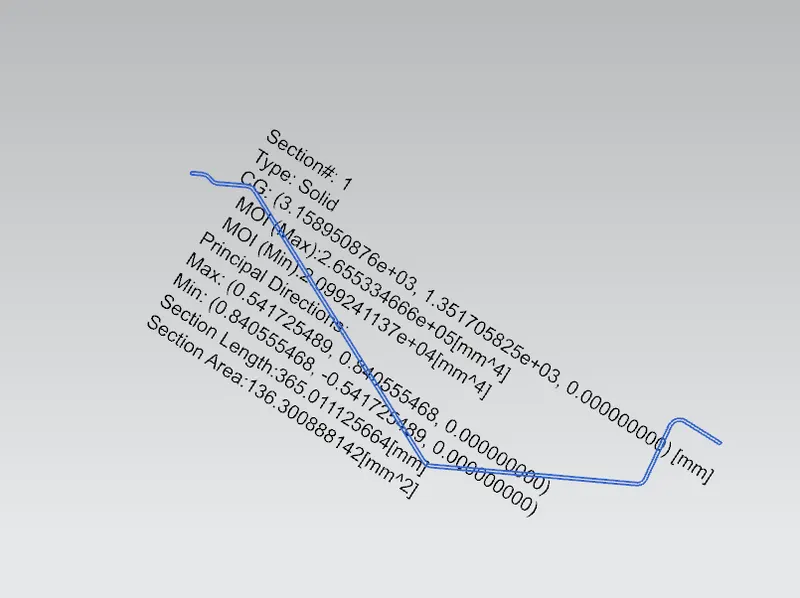
I=2.099e4mm4
Y=73.815mm
S=285.578mm3
Conclusion:
Thus the essential flanges and reinforcements are created and analysis such as heat distortion and snow load analysis is done on it.