Flow over an airfoil
Aim -
Make a case study and understand that, how different angle of attacks affects the drag force and lift.
Objective -
Our objective here is to Modle an Airfoil and vary the angle of attacks from 0 to 10 with the difference of 2 units, and compare the Drag Force (Df) and Lift.
Geometry -
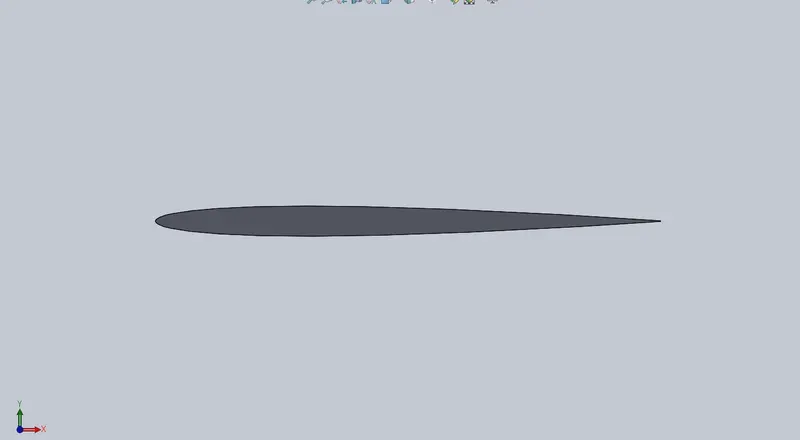
Steps -
• Insert the text file from he provided link in discription, convert the spline into a sketch using the convert entities button and then join the two open ends of the spline at the tail end of the airfoil using a line
• Make suret to turn on FLOW SIMULATION Add - in, and move fourther in the Simulation.
• Since it is an Flow over the foil, make sure we select External Flow in flow wizard and then select time dependnecy, fluid used is air having a density of 1.225 kg/m^3 and velocity of air in x-direction be given as 600 m/s. Other are se default.
• Before meching, we need to make sure that our Computational domain is 2-D in X-Y plane.
• After setting up computational domain large enough that the flow dosent affect the boundaries, build up the basic mesh and Refine the mesh gird near the surace for better results (build a local mesh at the surface of the airfoil as the basic mesh is not a body fitted mesh).
• Run the Simulation.
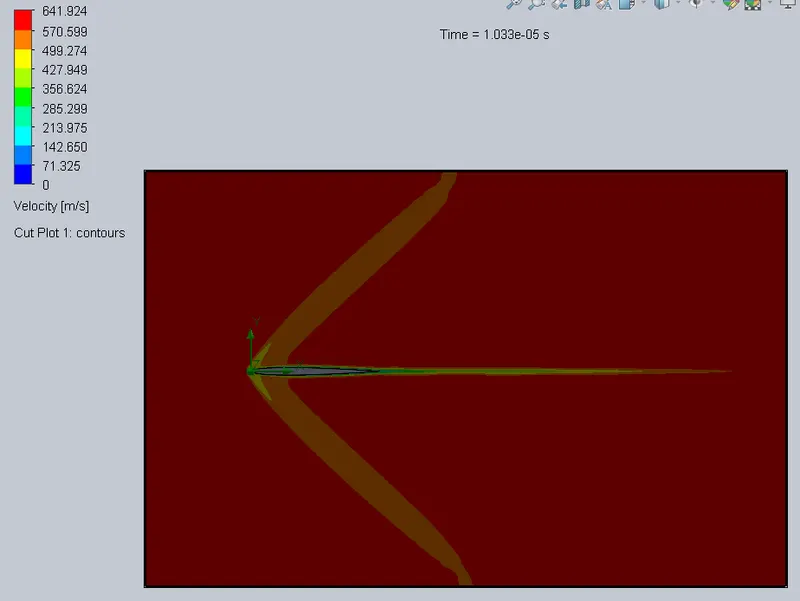
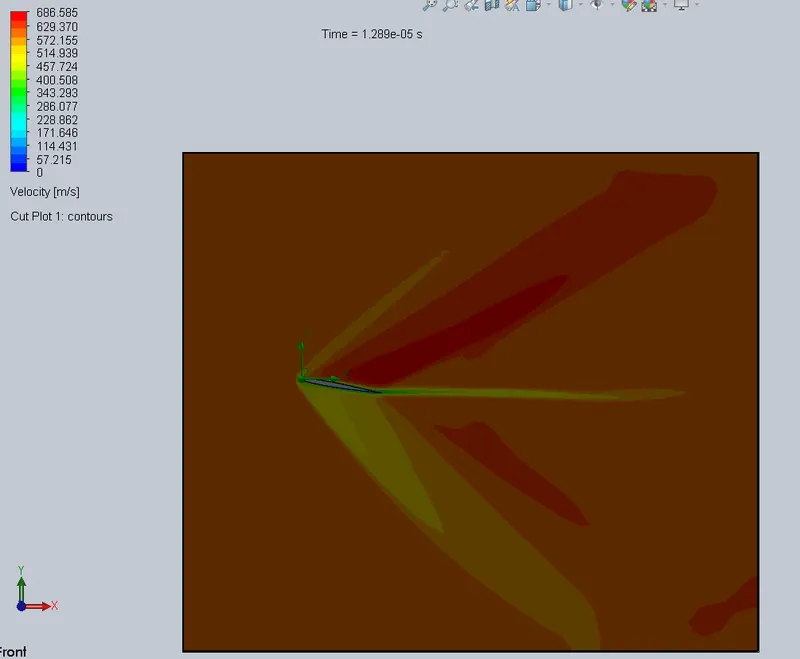
• Then create a cut plot to get the velocity profile
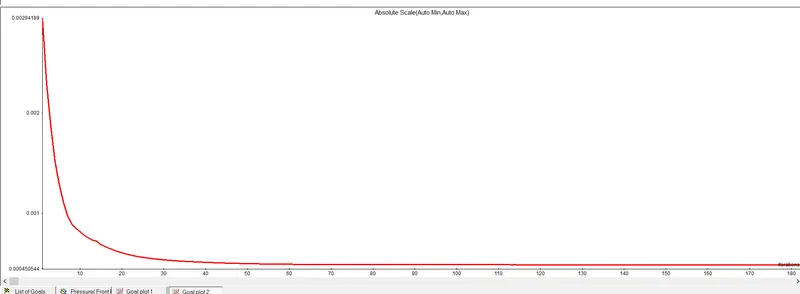
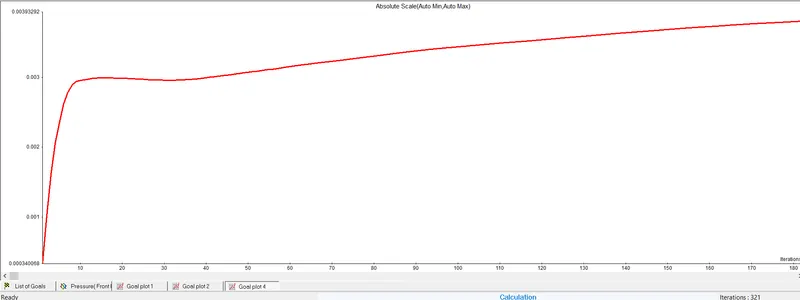
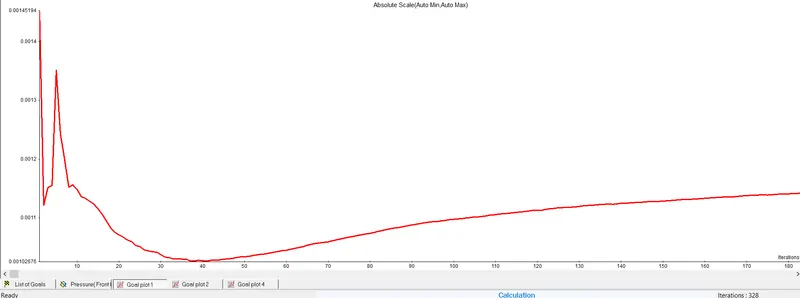
• Then using the goal from the insert data tree get the results for global goal and surface goal i.e, lift force and
drag force.
Observation:-
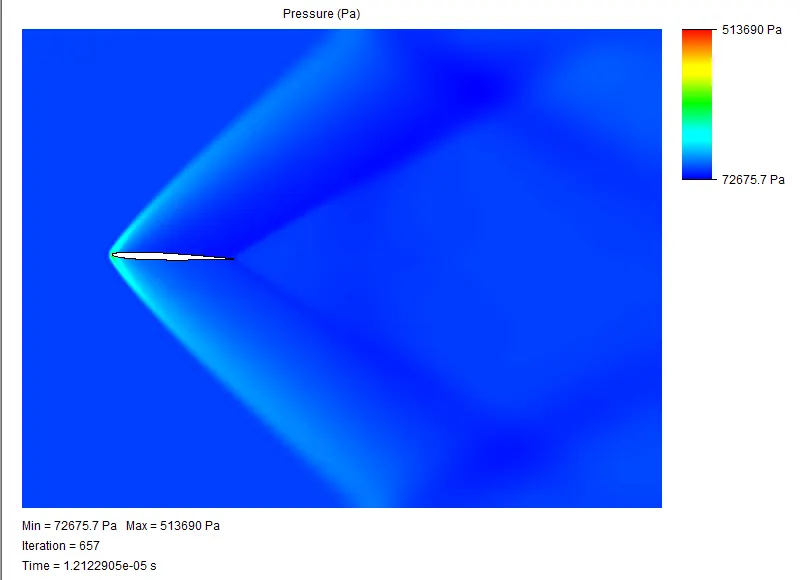
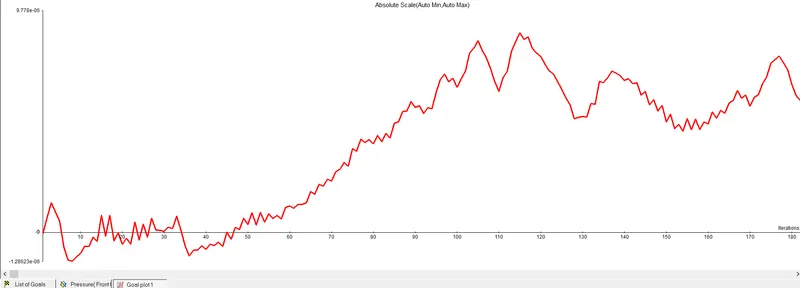
Case 1
Angle of attack = 0 degree
Velocity & Pressure plot
DRAG & LIFT FORCE

Case 2
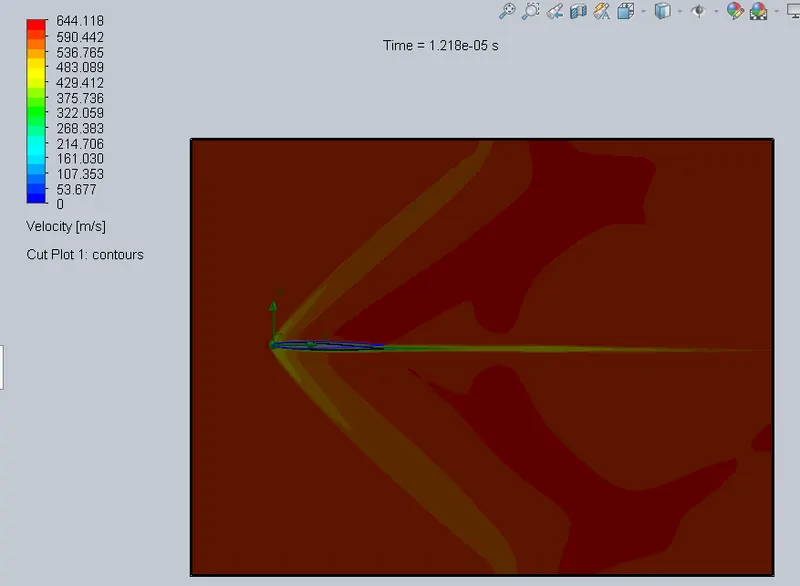
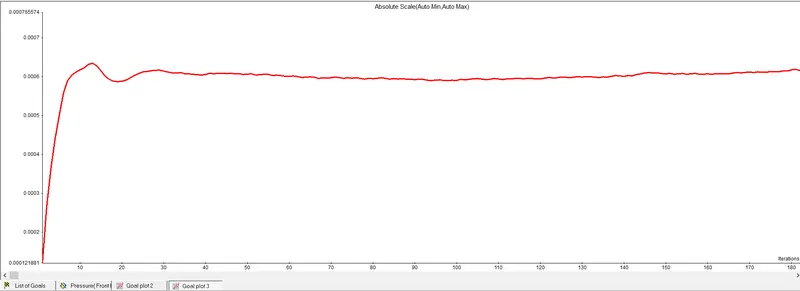
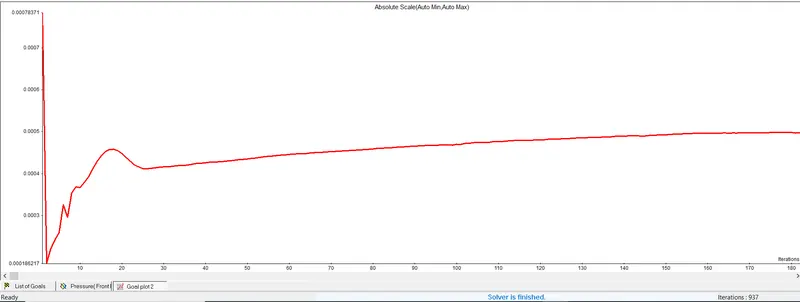
Angle of attack = 2 degree
Velocity & Pressure plot
DRAG & LIFT FORCE

Case 3
Angle of attack = 4 degree
Velocity & Pressure plot
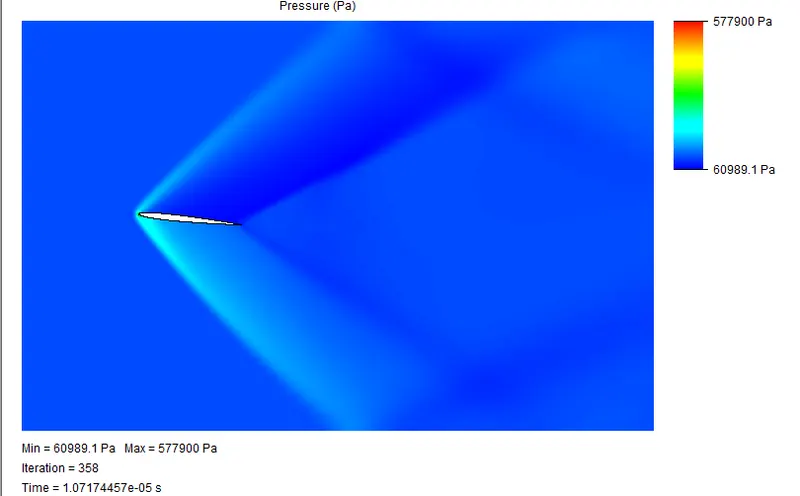
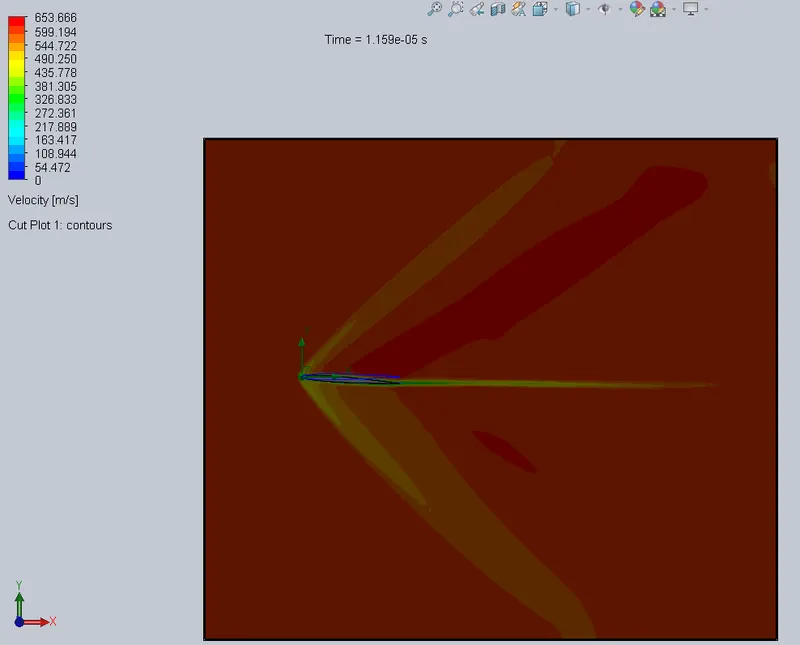
DRAG & LIFT FORCE
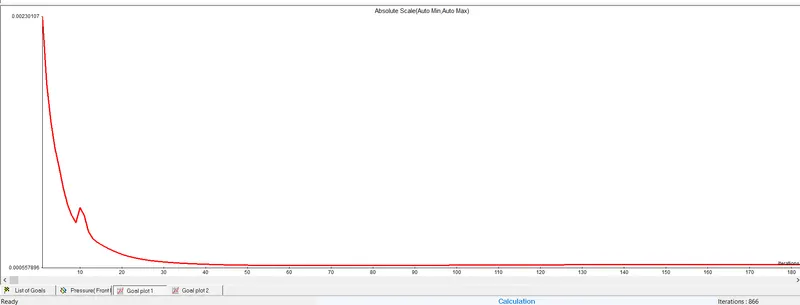
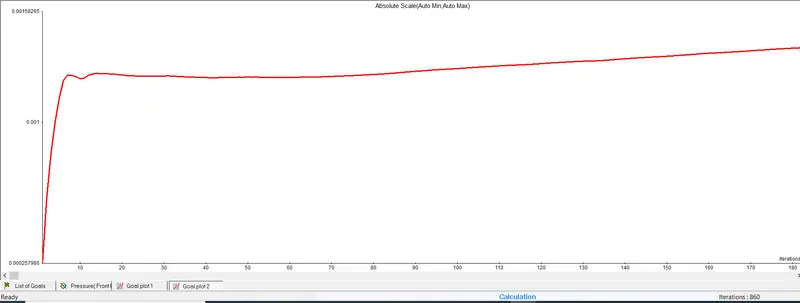

Case 4
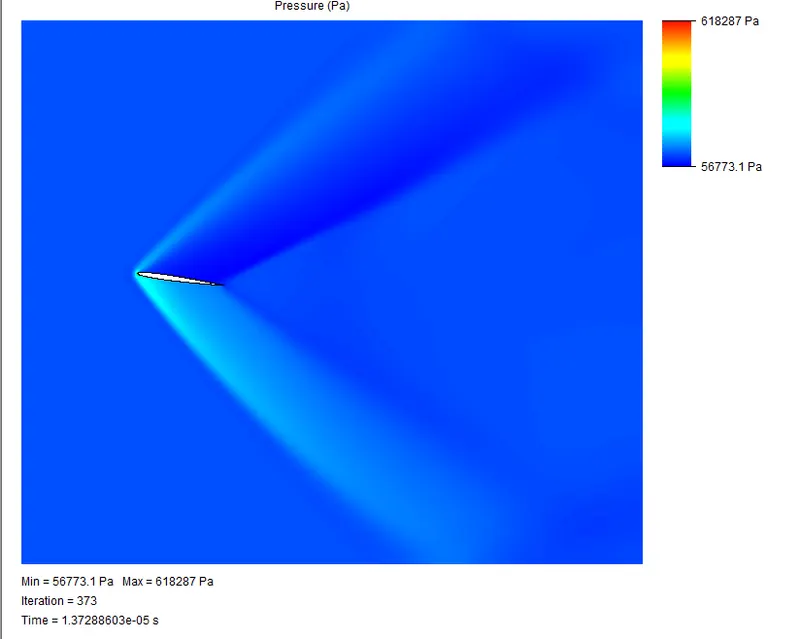
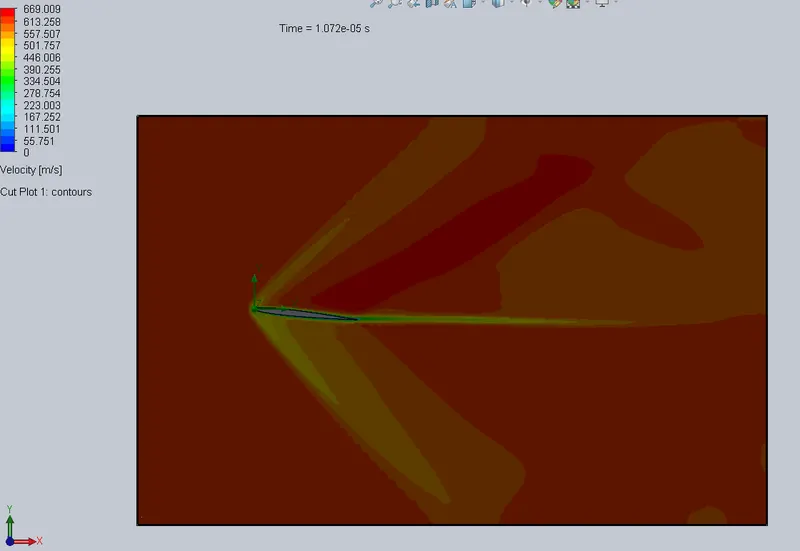
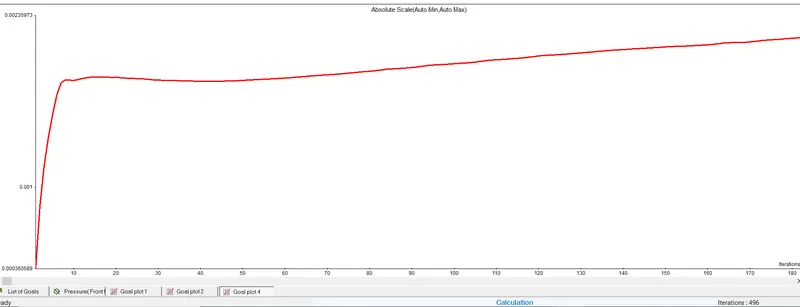
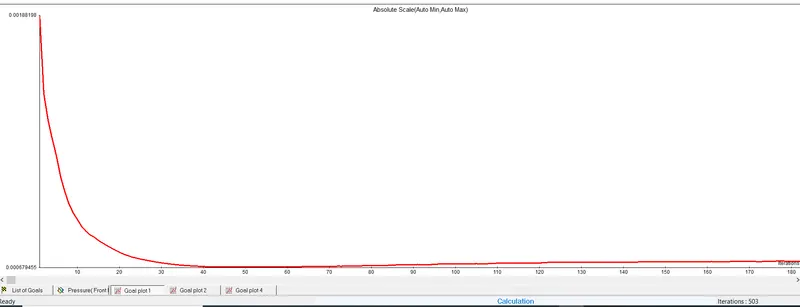
Angle of attack = 6 degree
Velocity & Pressure plot
DRAG & LIFT FORCE

Case 5
Angle of attack = 8 degree
Velocity & Pressure plot
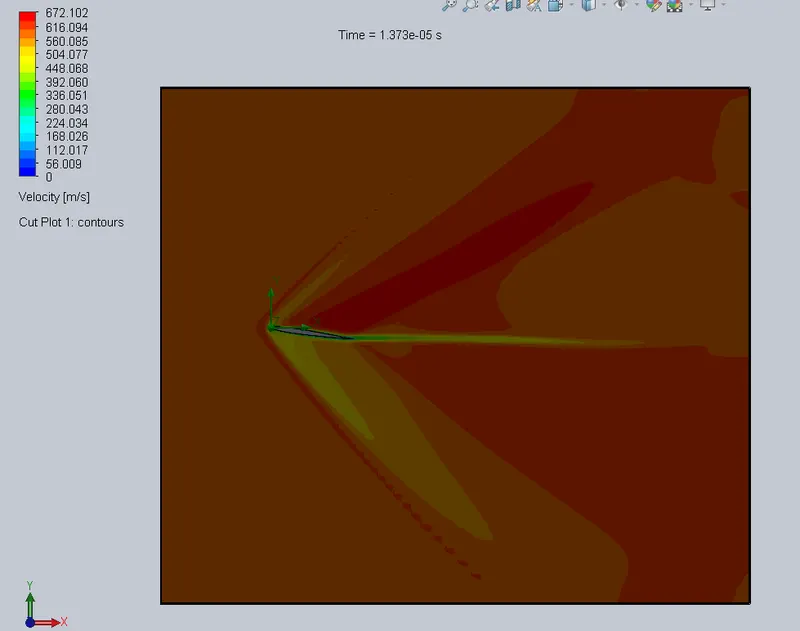
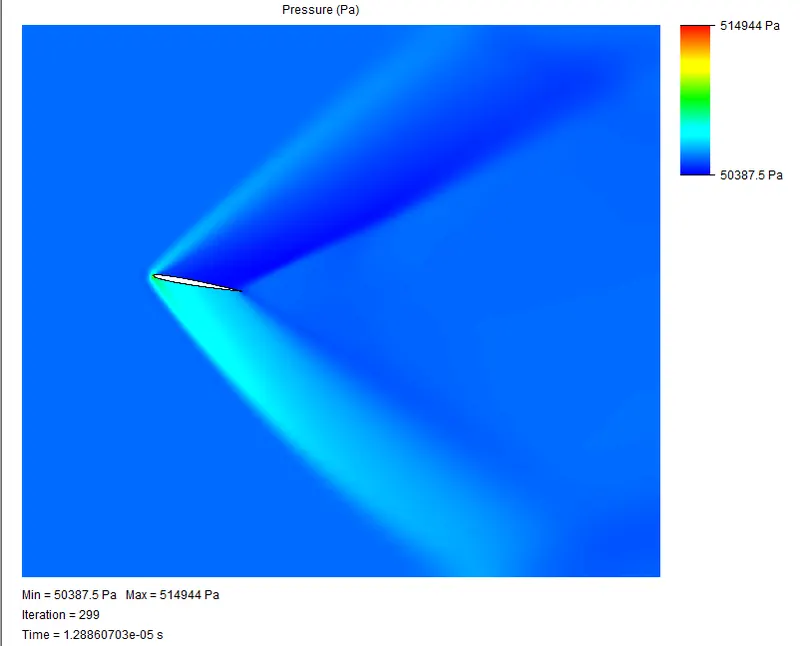
DRAG & LIFT FORCE
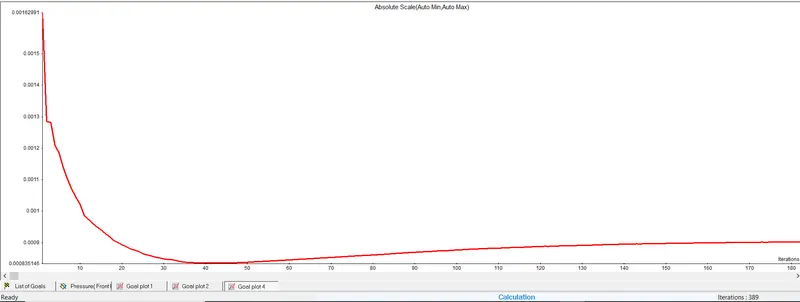
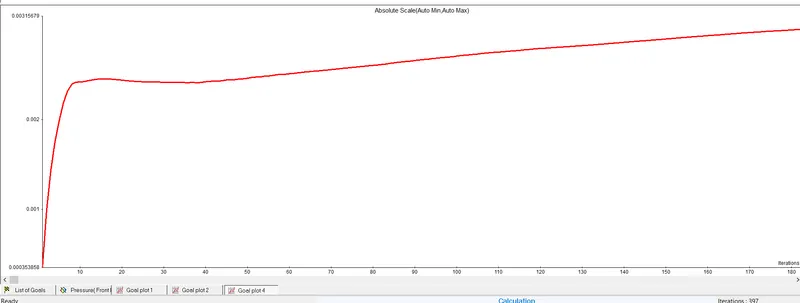

Case 6
Angle of attack = 10 degree
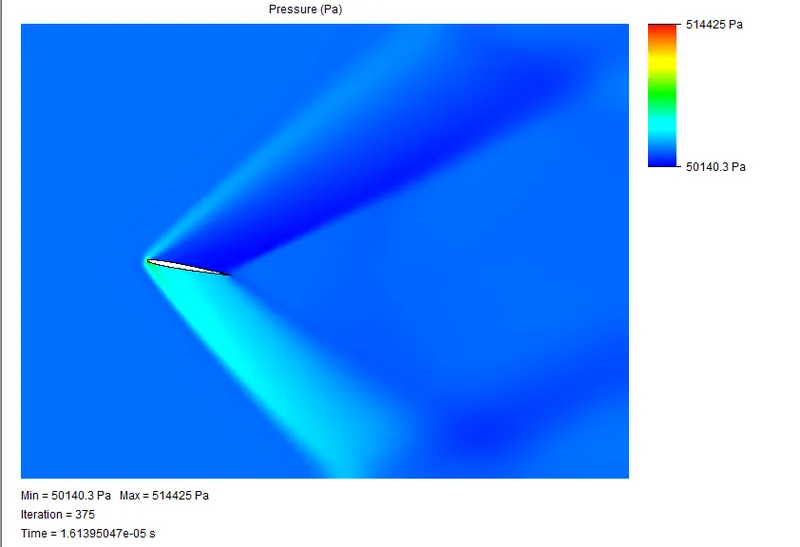
Velocity & Pressure plot
DRAG & LIFT FORCE

Conclusions
1: The lift increases as the angle of attack increases. Ther is negligible lift at 0 degree angle of attack.
2:The drag increases as the angle of attack increases
3: The minimum pressure experienced by the airfoil decreases as the angle of attack increases. No obvious relation in the case of maximum pressure.
4: More high velocity air flows through the top of the airfoil as expected to generate required lift as the angle of attack increases.
5: Similiarly the low pressure region is also at the top of the airfoil as the angle of attack increases to generate the required lift.