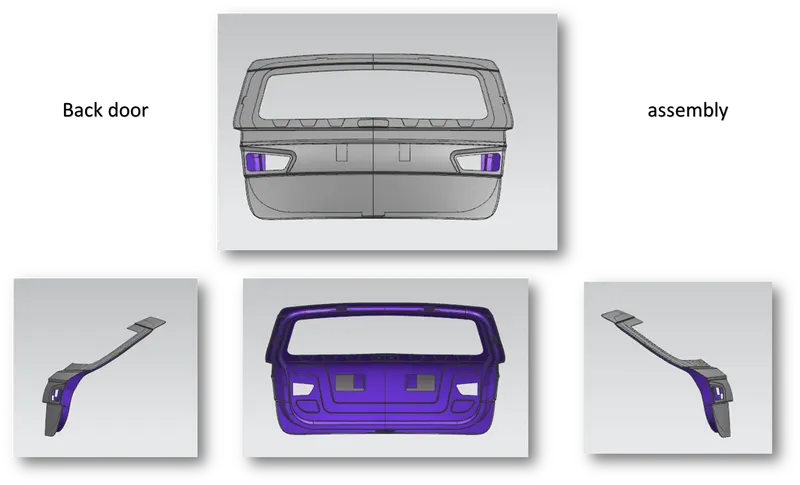
Design of backdoor
BACK DOOR DESIGN:
Introduction:
The purpose of an automotive car back door is to load and unload cargo, luggages and even for passengers to get in and out if seats are present at the rear.
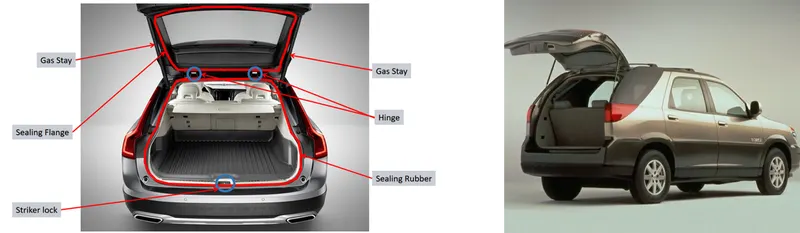
Working of back door:
- Mechanically operated
- Electrically operated
Mechanical operated:
Mechanically operated tail gate uses gas stray and are operated manually. Mostly basic and middle varient cars are used this type of operation.
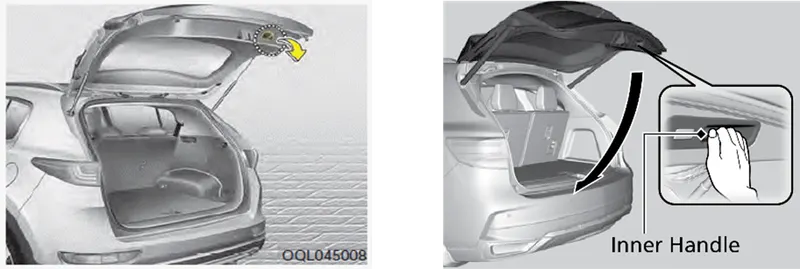
Electrically operated:
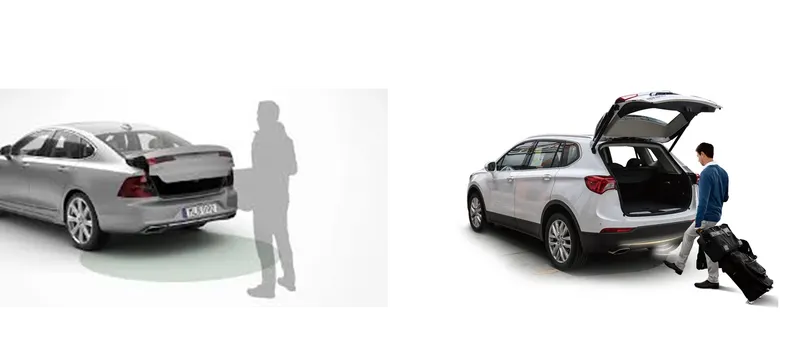
Electrically operated tail gates uses motor, remote access and sensors operation for open and close of tail gate operation. This type of operation are carried in luxury car segment. This type of operation is expensive.
Manufacturing process:
- Blanking
- Piercing
- Drawing
- Bending
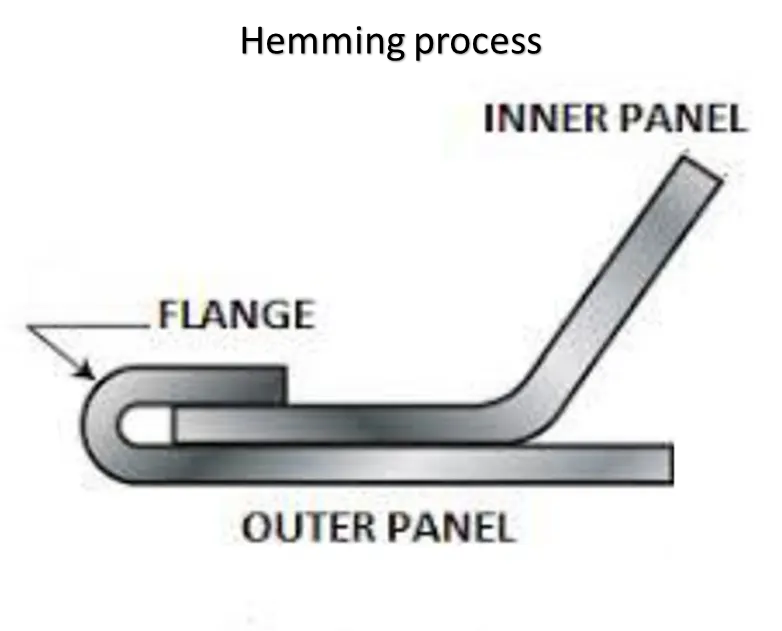
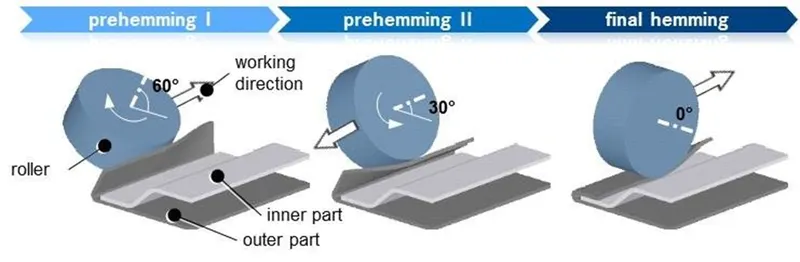
- Hemming
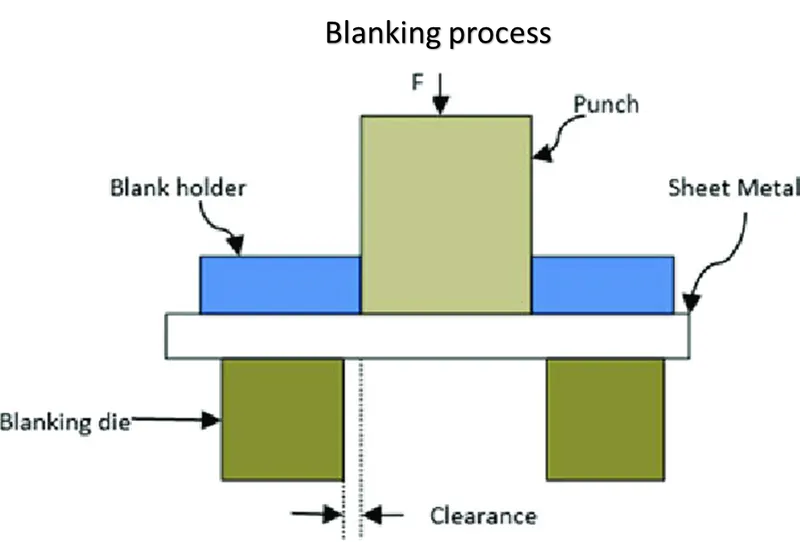
Blanking: Its is the process in which large sheet or coils of metal are trimmed or cut into small pieces which is ease for manufacturing.
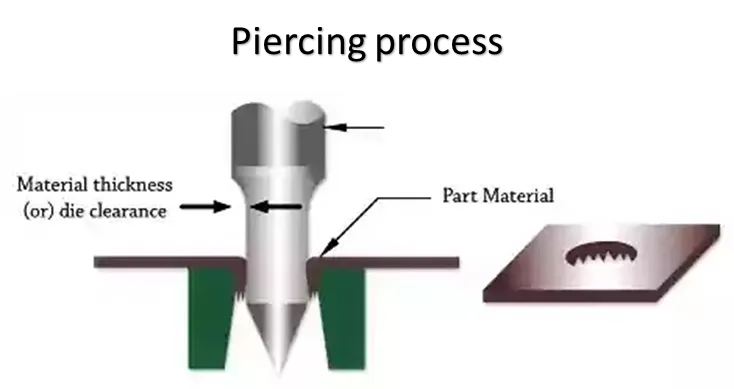
Piercing: The material which requires slots, holes and other differrent cutouts the piercing operation is carried out.
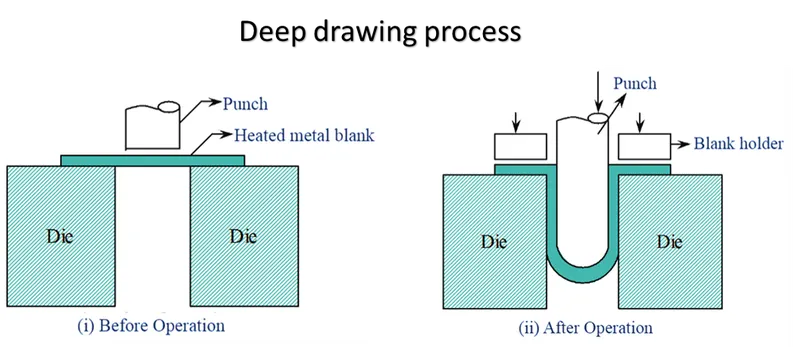
Drawing: It is a process in which the sheet metal is formed into required shape with the help of punch and die. A punch forces a section of metal through the die providing the primary shape of the part.
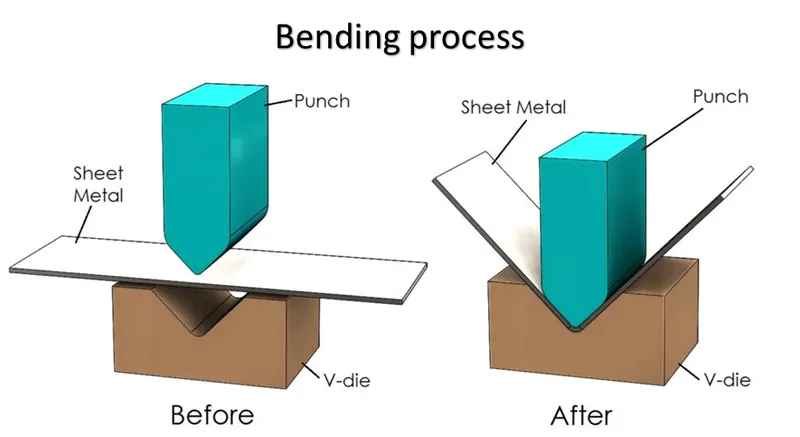
Bending: The part is placed on a specially designed die and a ram pushes against the metal to form required bend.
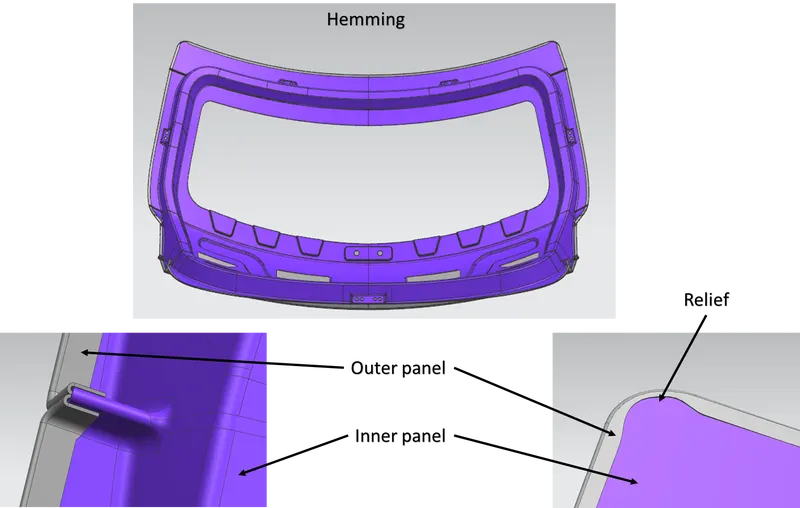
Hemming: It is a process of joining the outer panel and inner panel together. It is thge process of bending and folding the outer panel over the inner panel.
Design criteria for back door:
- Visibility criteria
- Force dissipation
- Hinge position
- Latch and stricker position
- Gas stay position
- Hemming and relief
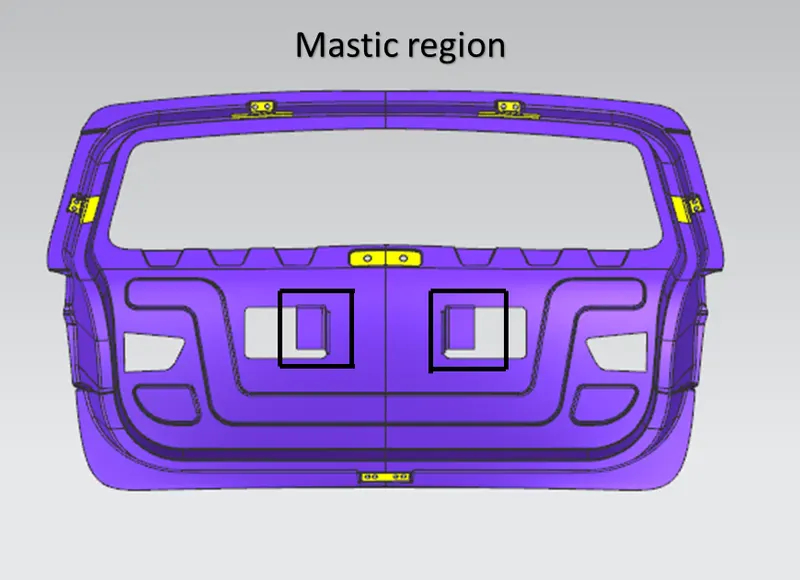
- Mastic area
- Weight reduction
Back door assembly:
- Outer panel
- Inner panel
- Hinge and its reinforcement
- Wiper motor and its reinforcement
- Latch & striker and its reinforcement
Outer panel:
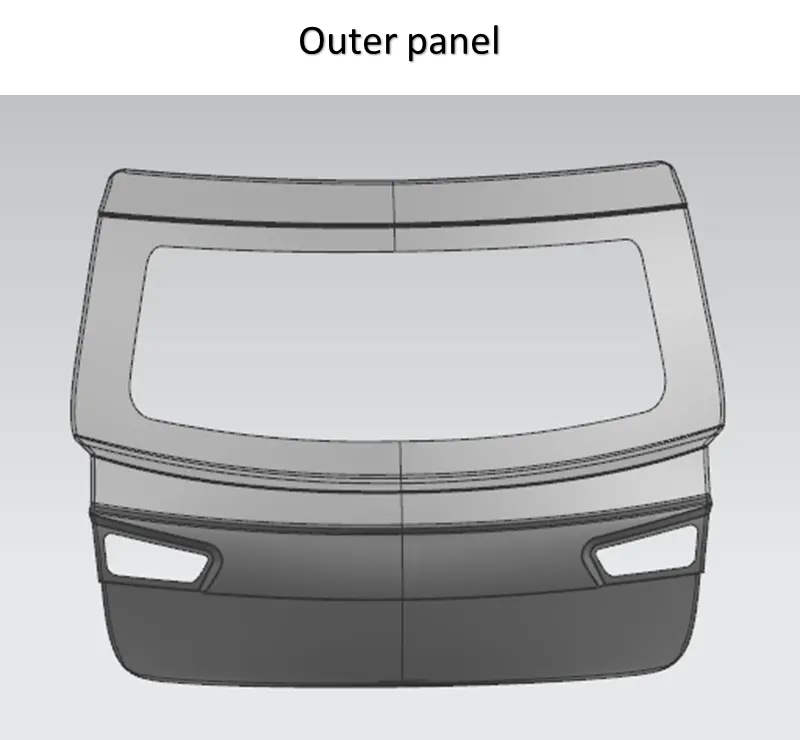
The outer panel is divided into two groups the upper outer panel and lower outer panel. The outer panel is designed with proper visibility criteria and reliefs. The thickness of outer panel is 0.75mm.
Inner panel:
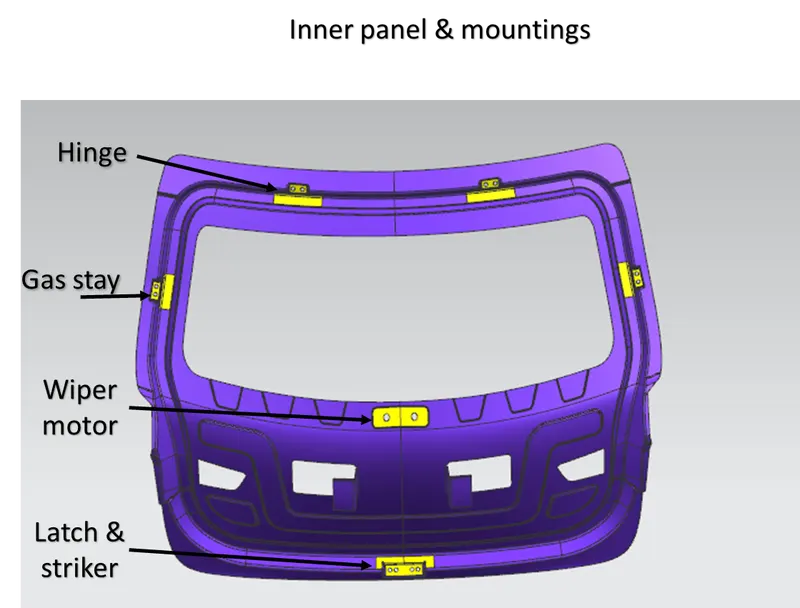
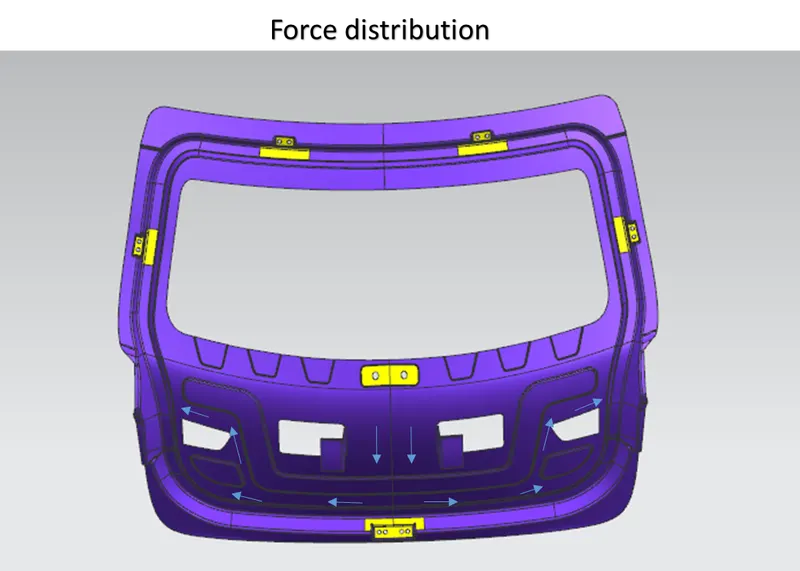
The inner panel is designed with the hinge mounting, gas stay mounting, wiper motor mounting, latch and striker mounting along with mastic region to avoid NVH of the vehicle. Visibility criteria are followed and additional reinforcement are added in mounting areas for better strength. Emboss are deed for force distribution.
Force distribution:
The inner panel is designed in such a way that it diverts the force to the corners during collision and ensures passengers safety.
Mastic area:
The outer and inner panel are hemmed together the center portions are joined together with the help of mastics to avoid noise and virations (NVH).
Hemming:
The outer and inner panel are joined together by using the hemming operation. The hemming relief are given at the corner.
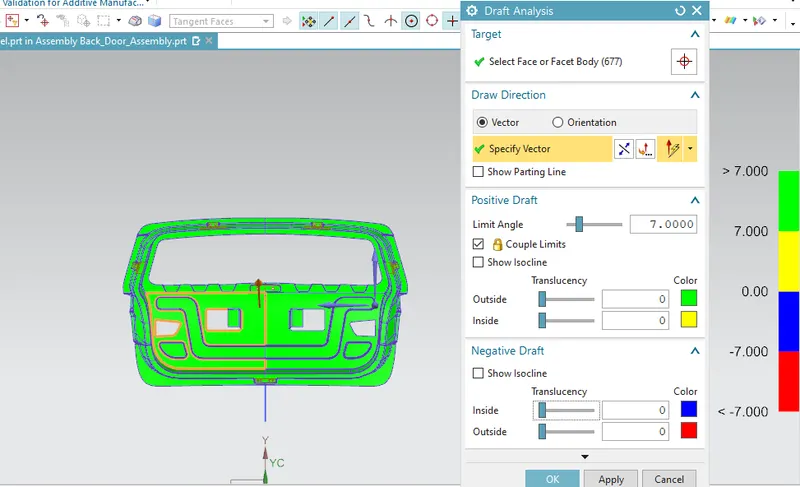
Draft analysis:
The draft analysis helps to find the product is suitable for manufacturing with the minimum draft angle of 7mm.
Trajectory:
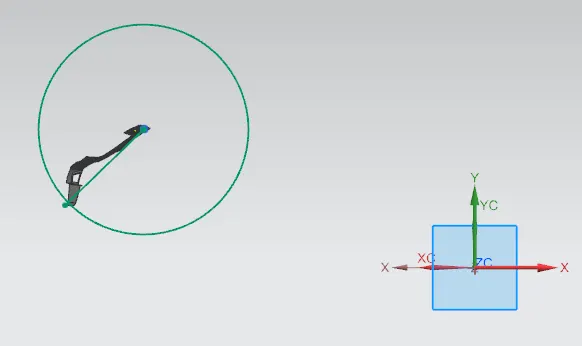
Is the method used to position the latch and striker. The latch system must able to catch the striker of the door while closing. The circle is drawn from the hinge axis.
Draft analysis:
Draft analysis is performed for the parduct to be manufactured perfectly with affecting the draft angle for the removal of material from the die.
The minimum draft angle is 7° for sheet metal.
Conclusion:
The back door or tail gate design is done with all the design parameters. The NX assembly and part files are been attached.