Hood design-Week 2
AUTOMOBILE HOOD DESIGN:
OBJECTIVE:
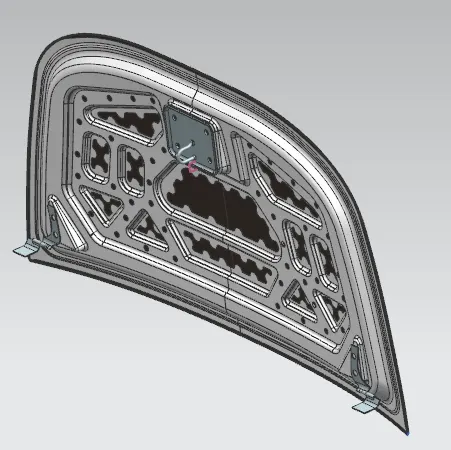
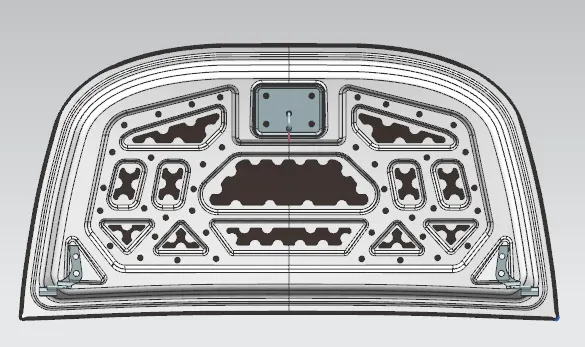
To design the complete hood structure with the given hood outer panel, hinge assembly & striker using NX 12 workbench.
INTRODUCTION:
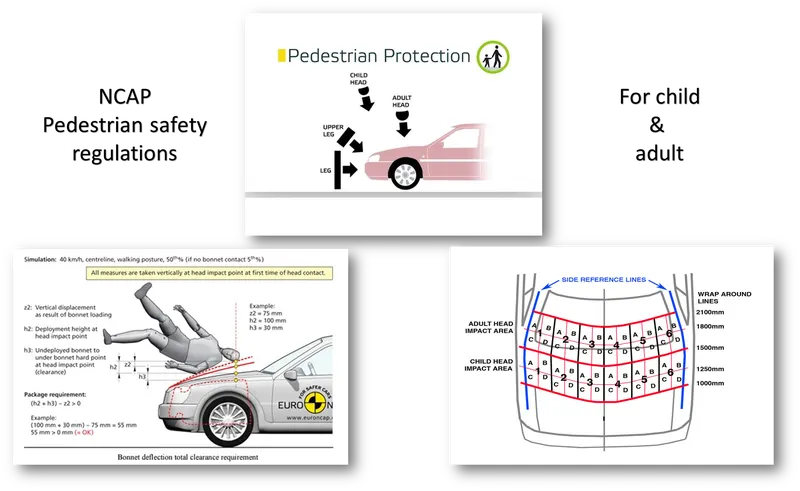
The hood also referred as bonnet, it is the hinge cover that rest over the engine bay of the front engine vehicle. It protect the engine and connecting parts and helps for easy access for maintenance and repair. The hood is important part after bumper in frontal crash. The hood is designed in a way for pedestrian safety.
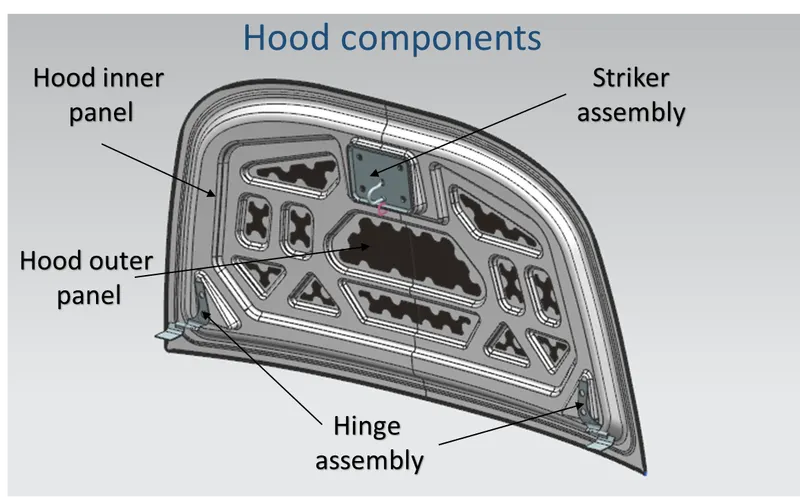
The hood or bonnet consist of following parts:
- Hood outer panel
- Hood inner panel
- Latch & striker reinforcement
- Hinge reinforcement
- Gas stay reinforcement
DESIGN CONSIDERATION FOR HOOD:
- Hood head zone
- Hood stay
- Pedestrian safety
- Mastic data
- Force distribution
Hood head zone:
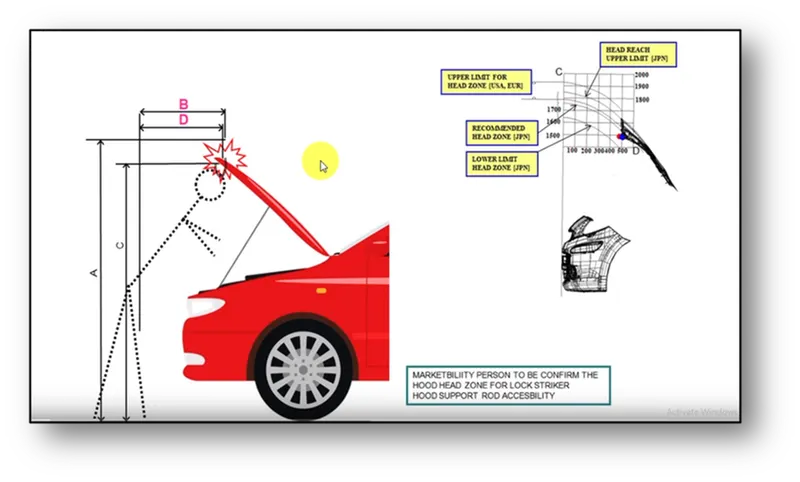
The average height of people differs from different country. The hood or bonnet in fully open condition should not collide or hit with the person who is accessing the engine for a repair or maintenance. The regulations for hood open height differes from countries.
Hood stay:
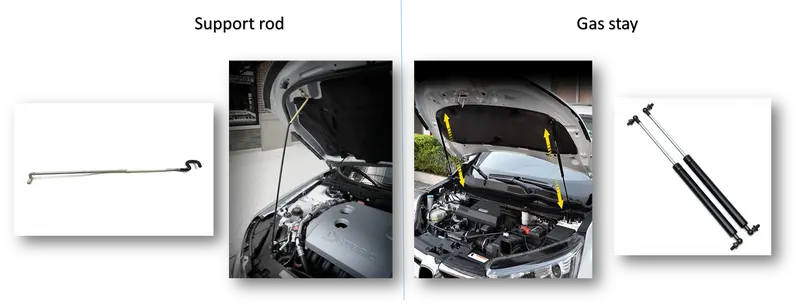
It is a support system that help the hood to rest on it while open condition. The hood stay is designed in a way it should able to withstand the load of the hood. And it should be easily access for open and close of hood. It should not interfere with other components and should not cause vibrations or ratteling while driving.
The hood stay has two type:
- Support rod
- Gas stay
The support rod is used for light weight bonnet and gas stay is used for heavier bonnet.
Pedestrian safety:
While hood designing the hood, pedestrian safety consideration is the important factor.
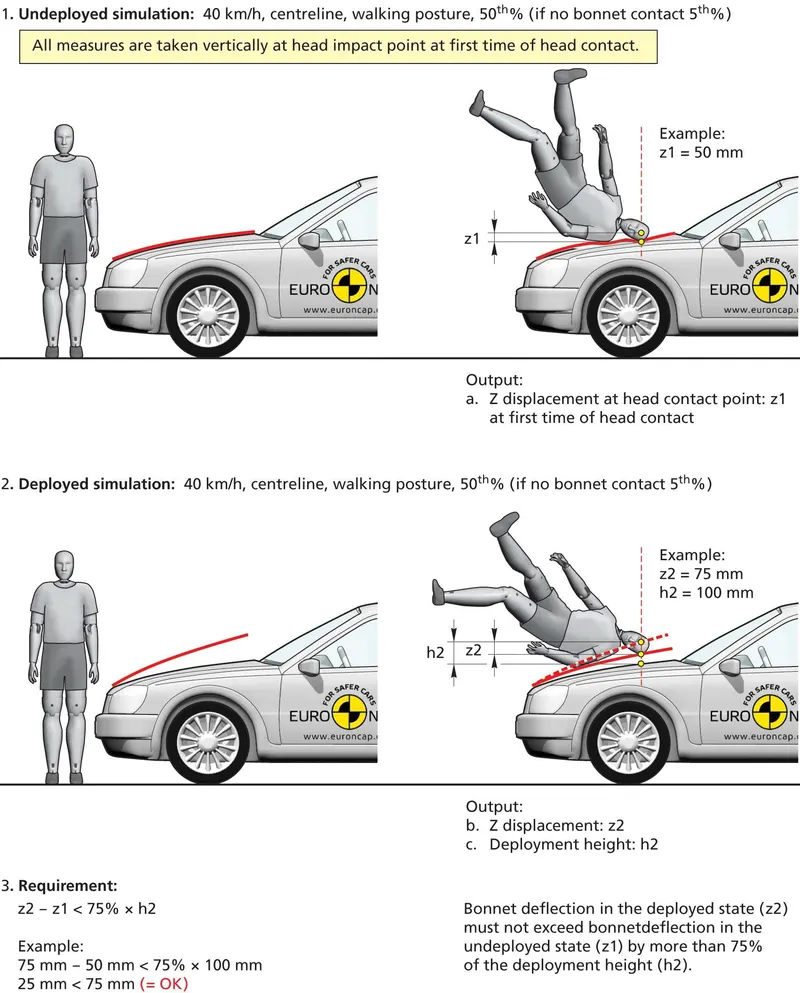
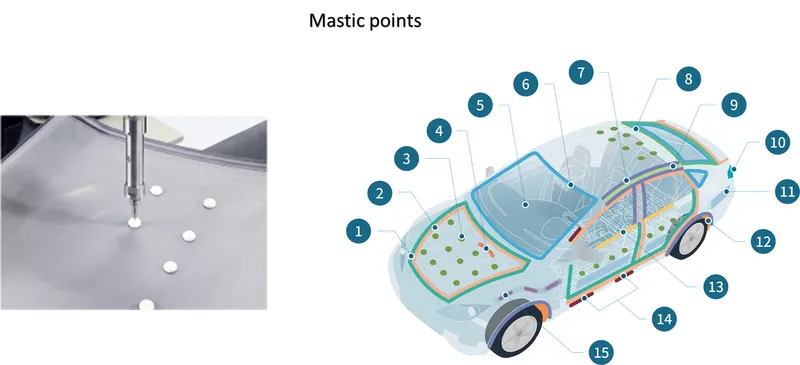
Mastic data:
The hood outer panel is joined with inner panel, since the outer panel is the styling surface it is not welded together. So the outer area is hemmed and the inner area are joined together with the mastic sealent
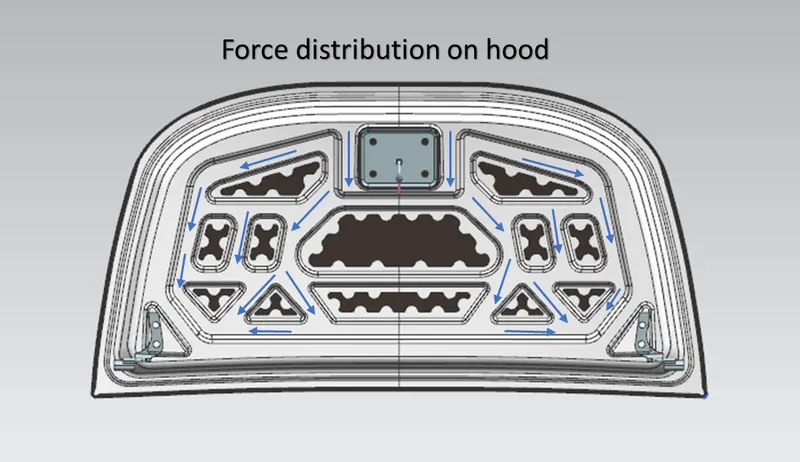
Force distribution:
The force distribution is very crucial for pedestrian safety. If the vehicle has frontal crash the load must be diverted to hinge mounting area as it safegaurd the passengers in vehicle.
Sheet metal manufacturing process:
- Blanking and punching
- Deep drawing
- Embosing
- Hemming
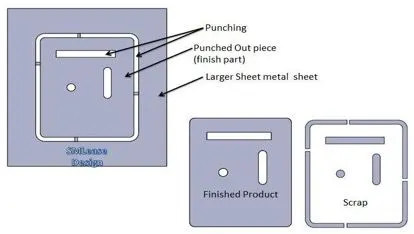
Blanking: It is a process in which metal work piece is removed from the primary metal sheet when it is punched. The removed material is the new work piece.
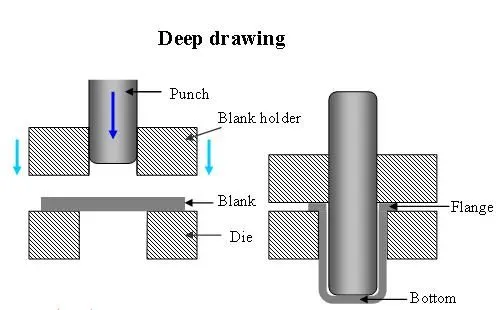
Deep drawing: It is a process in which the sheet metal is formed into the required shape with help of die. The die is punched to the material to form required shape.
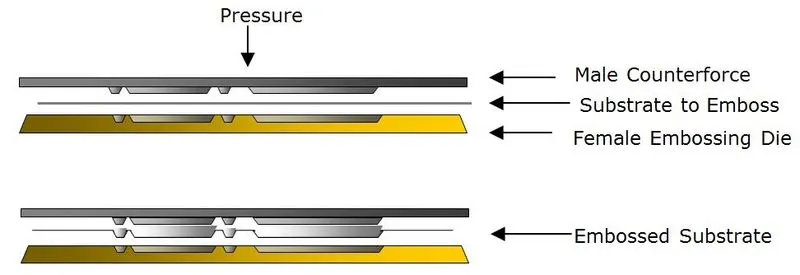
Emboss: It has the male and female die in which the sheet metal is placed between and pressed together to form the desired shape.
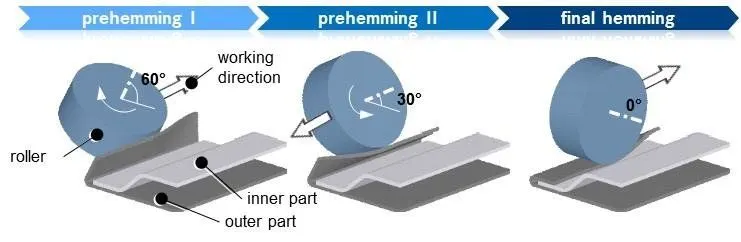
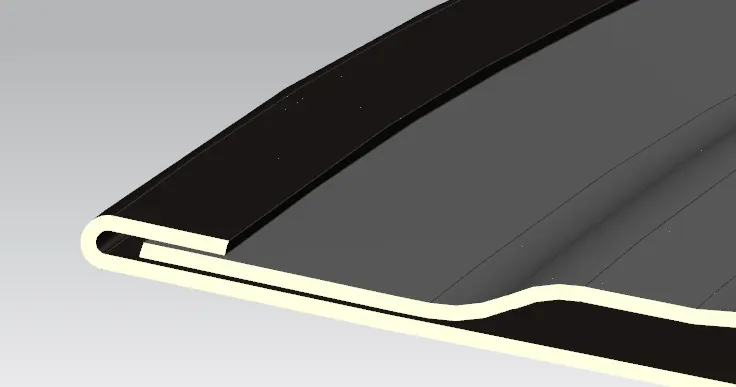
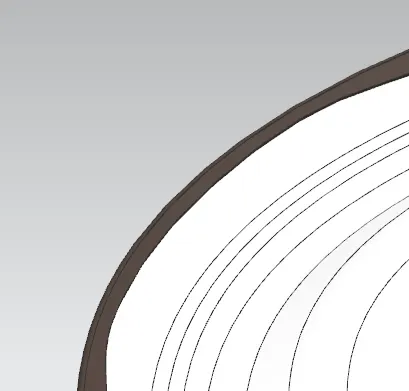
Hemming: It is the process in which the sheets are joined by bending the sheet to 180°, different rollers are used to bend the sheet metal.
Design procedure:
Given data:
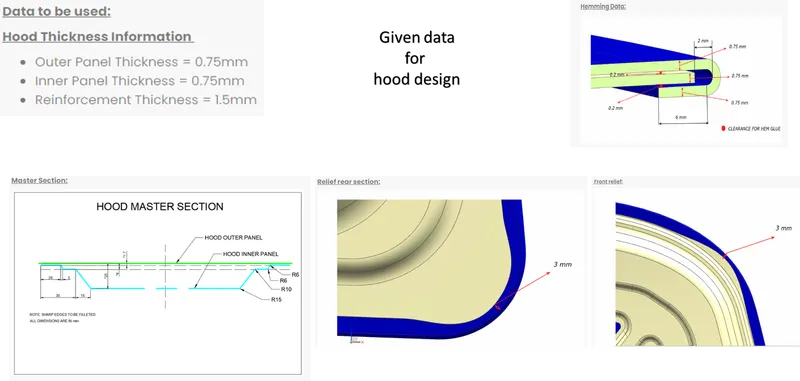
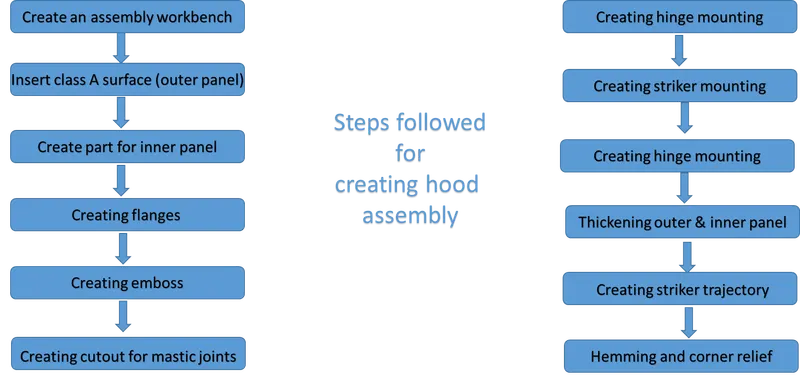
Procedure followed:
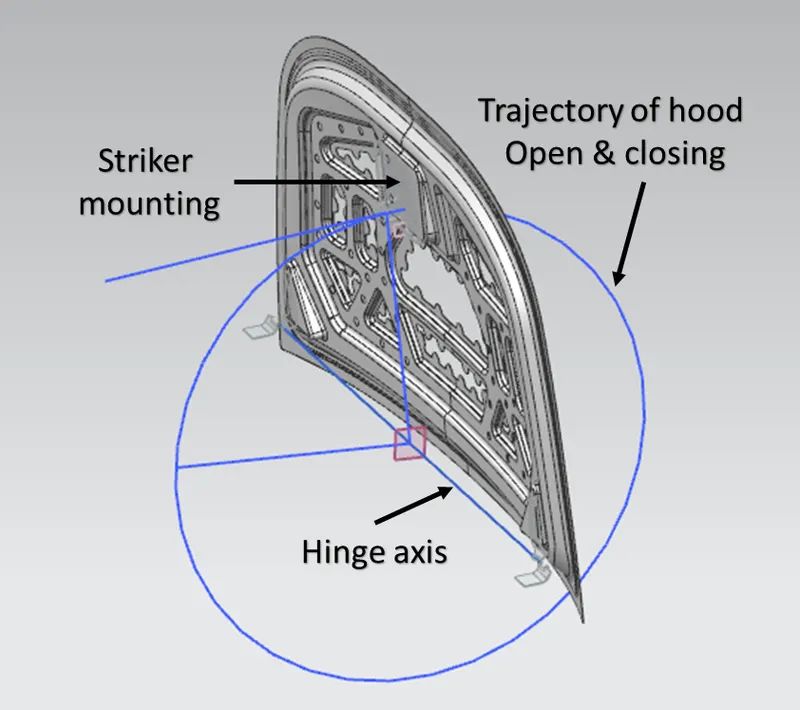
Hinge and striker trajectory:
Hemming:
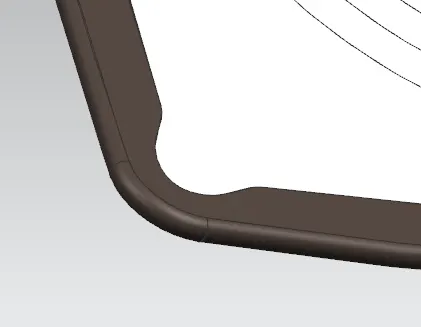
Side and corner relief:
Final hood assembly:
Isometric view:
Front view:
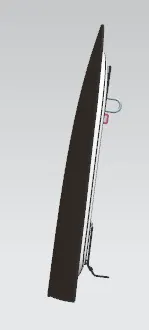
Side view:
Top view:
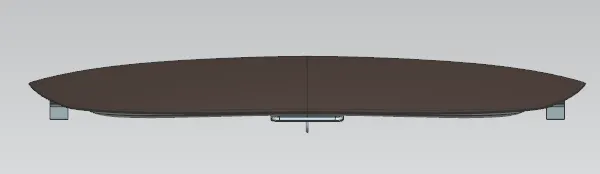
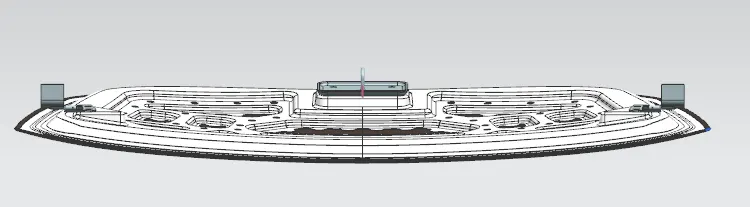
Bottom view:
CONCLUSION:
The hood assembly design is completed with the design rules. The NX assembly file and part files has been attached.