Week 10 - Challenge 2- Attachment Feature Creation (Dog House)
ATTACHMENT FEATURE CREATION - DOG HOUSE IN DOOR TRIM:
OBJECTIVE:
To create door trim component from the given class A surface as an input and the 'dog house' engineering feature is added to the B surface.
INTRODUCTION:
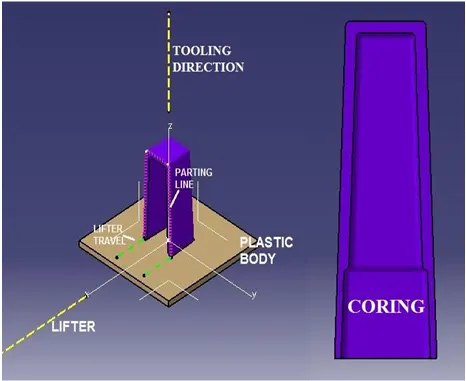
Dog house - It is an engineering feature in plastic trim design. It is used as a supporting feature in which locators, screw boss etc are mounted on it to increase their strenght.
For example : A screw boss has to located 50mm from its surface, so we can not design a screw boss of that height which can form sink mark and it wont be strength enought to withstand the load. In this case a dog house is designed and the screw boss is placed above it.
A dog house design:
DESIGN PROCEDURE:
- Understanding the class A surface
- Creating the tooling axis
- Draft analysis for class A
- Creating class B surface
- Creating class C surface
- Draft analysis for final product
- Adding engineering features to the product (dog house)
- Draft analysis for dog house feature
1.) Understanding the class A surface:
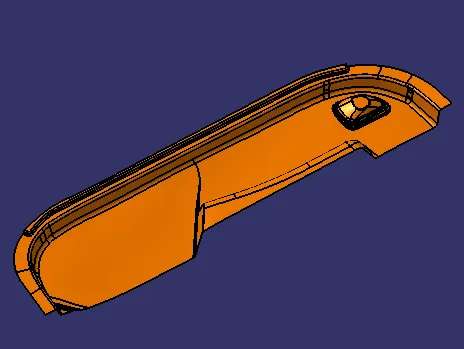
The class A surface is the aesthetic surface which is the visible part to the customers. The class A surface is developed into the plastic product and engineeringfeatures like ribs, screw boss, dog house etc are added as required.
Class A surface:
2.) Creating tooling axis:
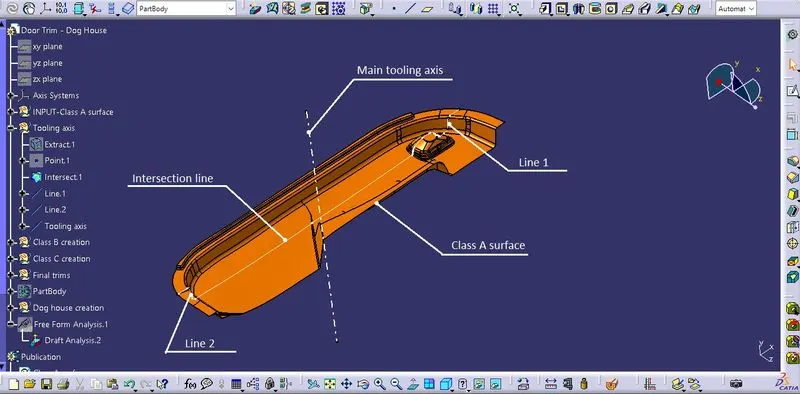
The tooling axis is important in which the mould (core & cavity) movement is decided. The tooling axis should clear the draft analysis. Tooling axis must be ease for manufacturing. Complicated tooling axis can lead more cost and time for manufacturing. The tooling axis is created by bisecting line method.
3.) Draft analysis for class A surface:
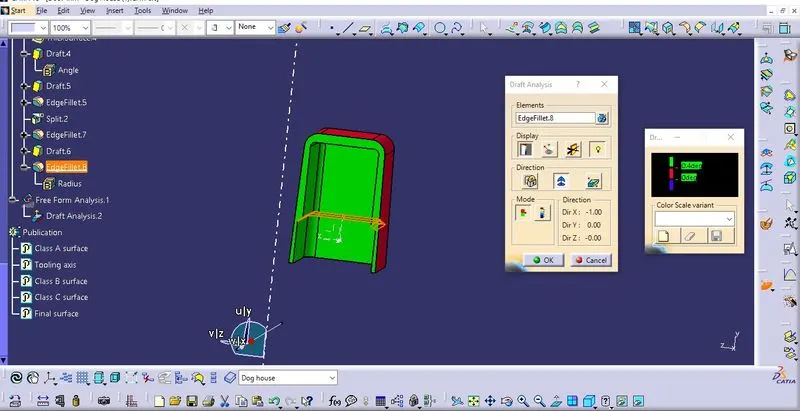
The draft analysis can show the draft angle in each surface and we can modify the toolig axis if it is not cleared the design rules.
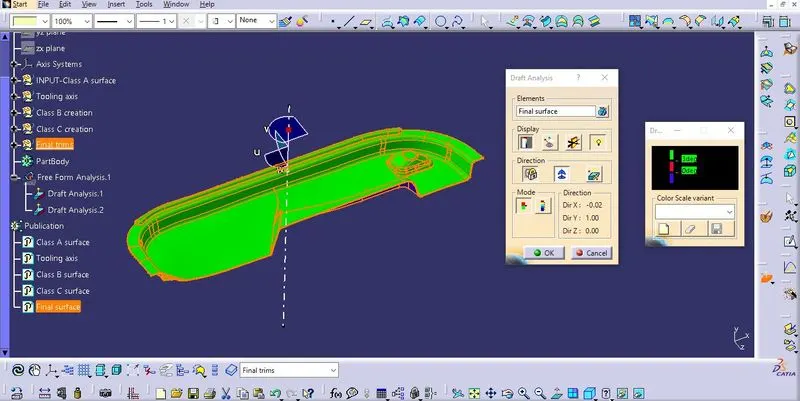
The nominal draft angle is - 3°
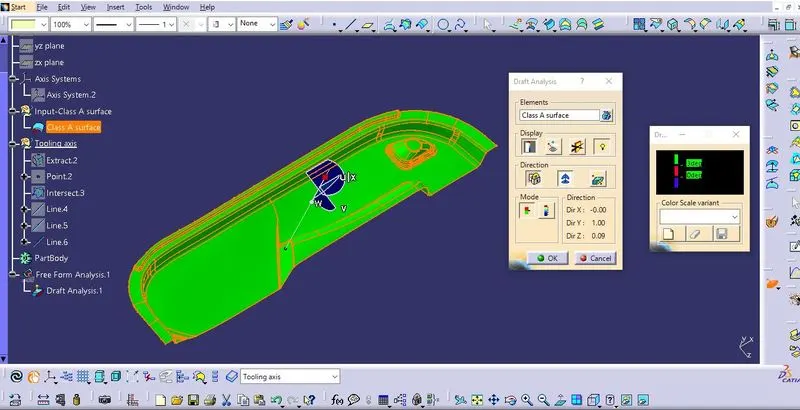
In some minor areas the class a surface should be modified.
4.) Creating class B surface:
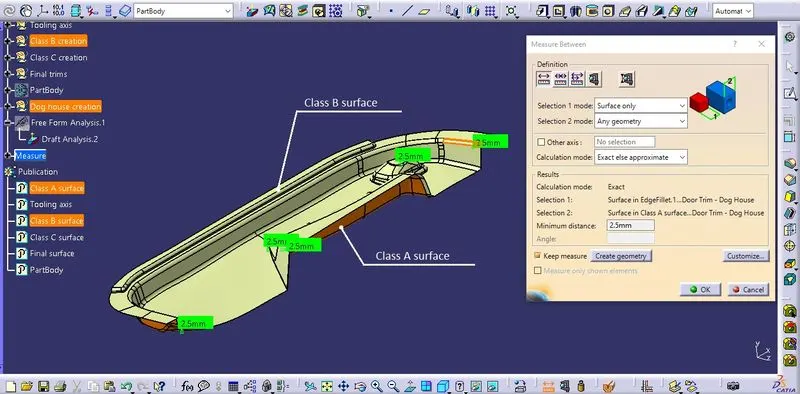
The thickness of the component is 2.5mm
The class B surface is created by offsetting class A surface and minor patches are modified by using multiple extract, extrapolate, trim, join.
5.) Creating class C surface:
The Class C surface is created by using tools like boundary, sweep, multiple extract, extrapolate, trim and join from the class A surface.
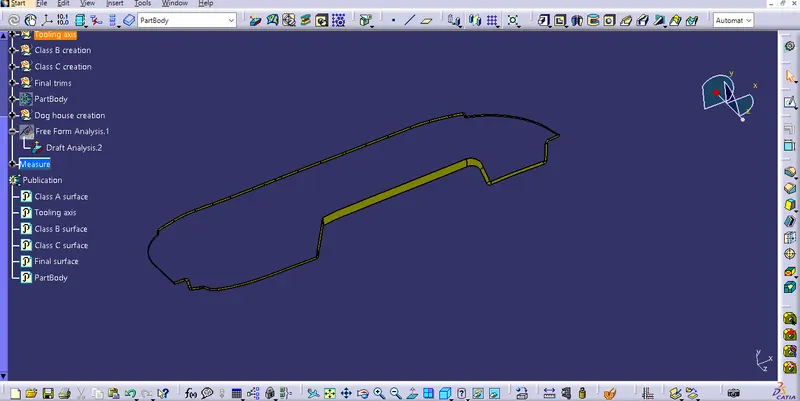
The class C surface is joined with class A surface and then trimmed with class B surface, the final product is formed. The final is checked for closed boundary condition.
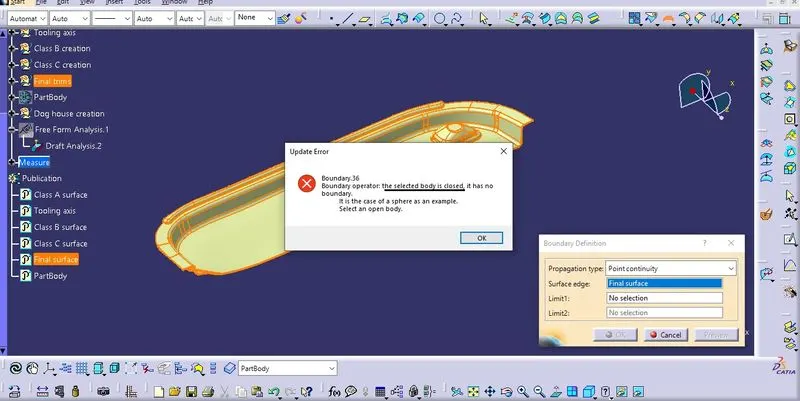
It is then converted to solid plastic component
6.) Draft analysis for final plastic component:
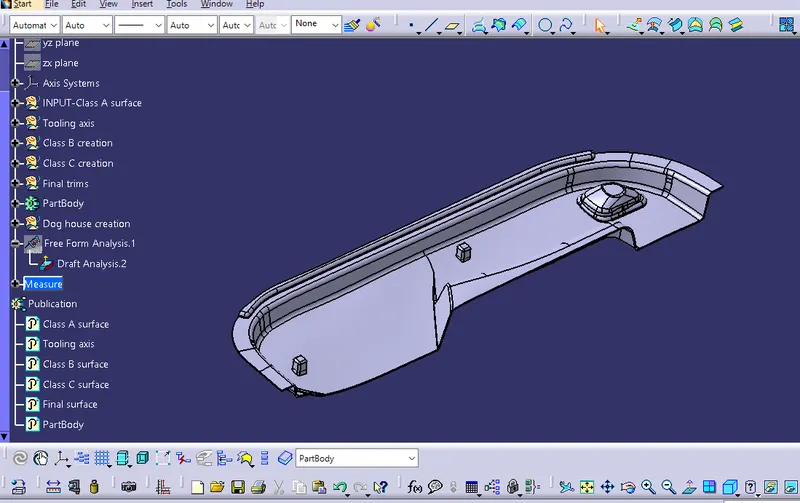
7.) Creating dog house engineering feature:
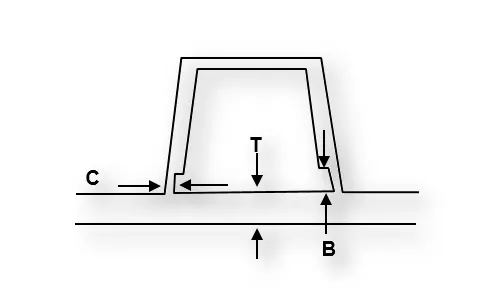
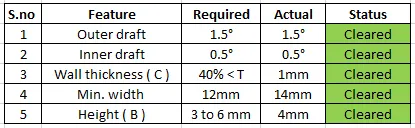
Design rules for creating dog house:
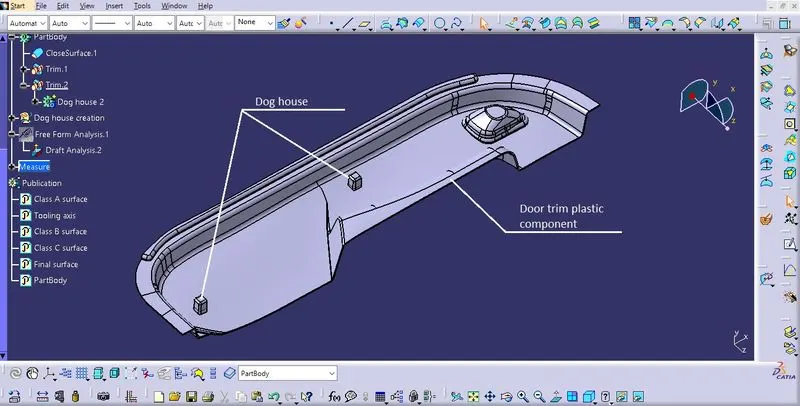
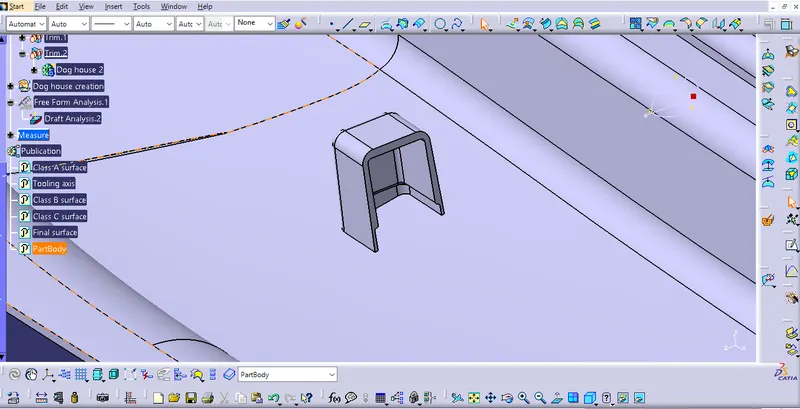
Isometric view:
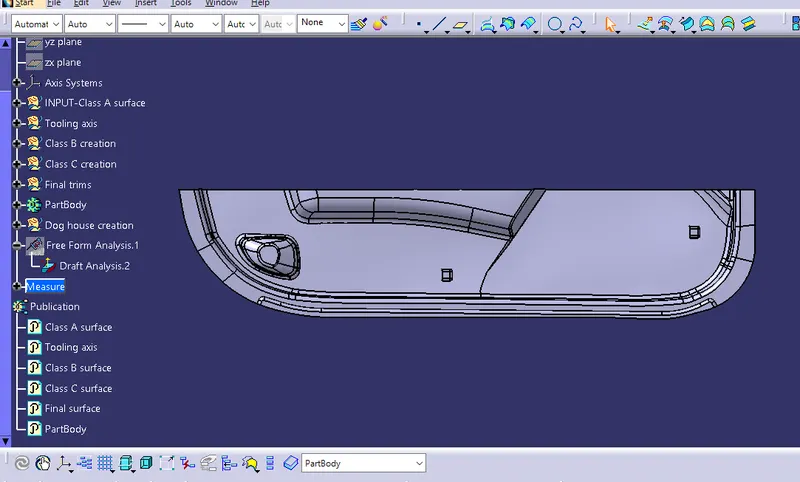
Top view:
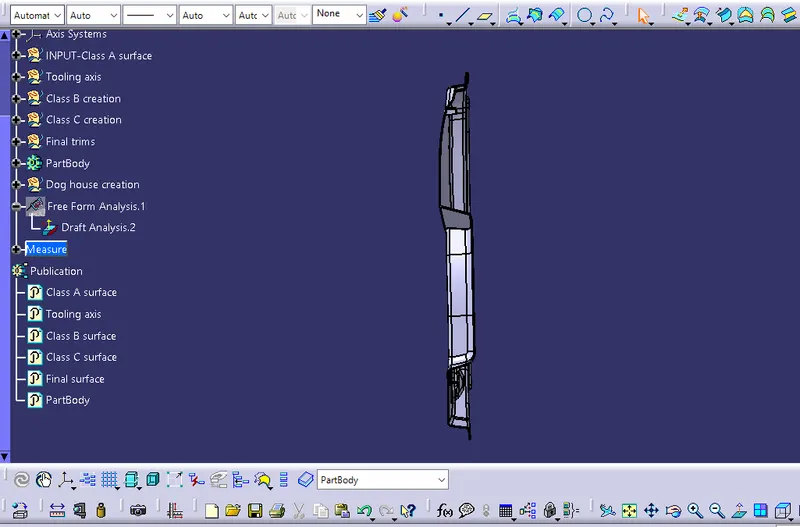
Side view:
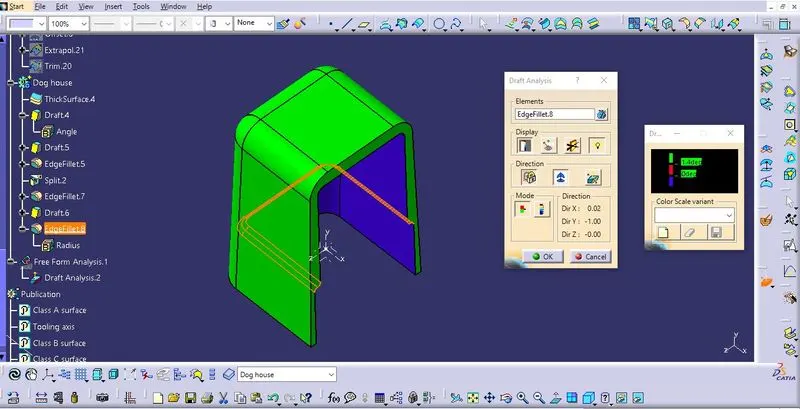
8.) Draft analysis for dog house feature:
Dog house inner with side tooling axis:
Dog house outer with main tooling axis:
CONCLUSION:
Thus the dog house feature is created on the door trim plastic component.