Week 9 - Project 1 - Door Applique Design with Engineering Features
AIM: To design the Door Applique with B Side Engineering Features such as Heat stakes and Locators through the given CLASS A surface as input by considering the Design rule and following the OEM standards.
OBJECTIVES
- To create the Tooling Axis in the best possible direction.
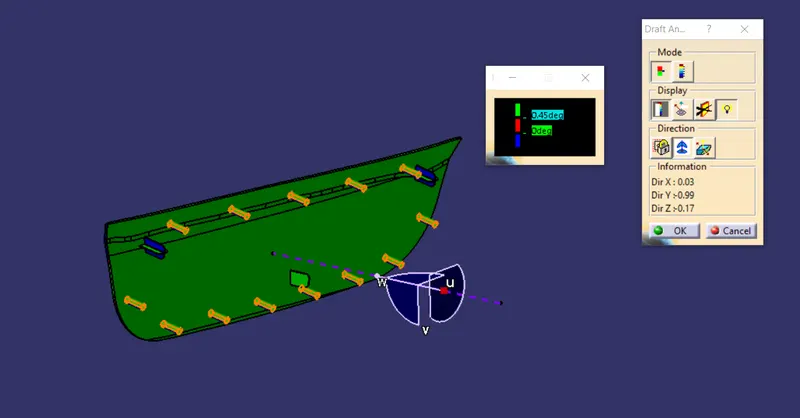
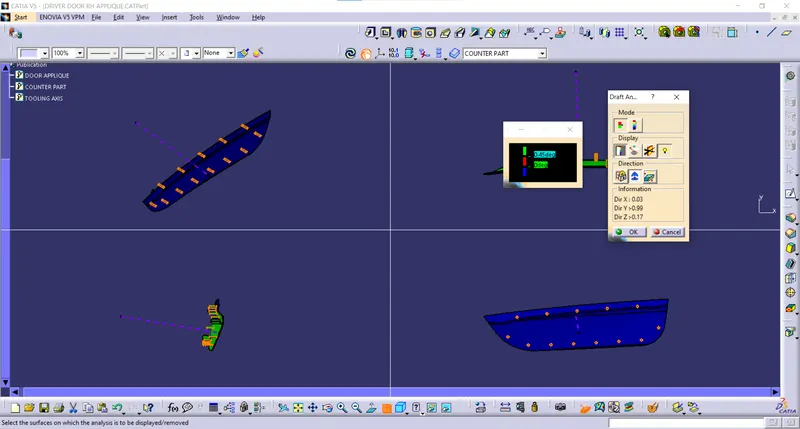
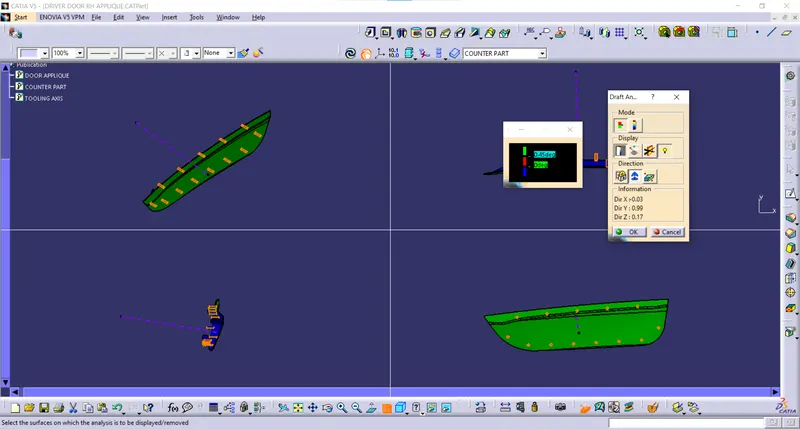
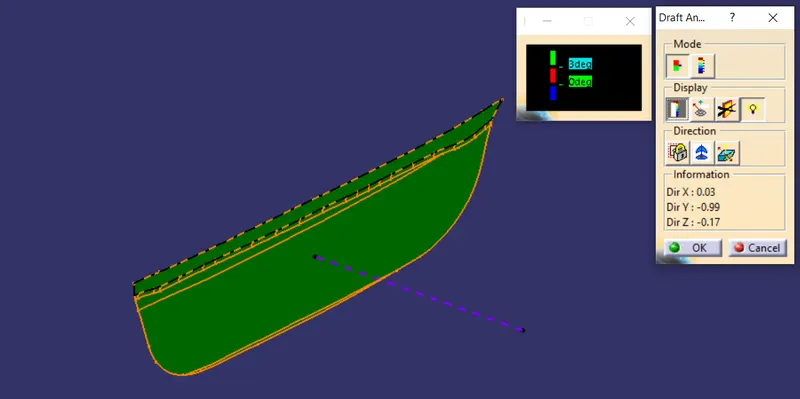
- Draft Analysis on the CLASS A Surface and the Final Plastic Component.
- Creation of CLASS B and CLASS C Surface.
- To make a closed surface with a thickness of 2.5mm.
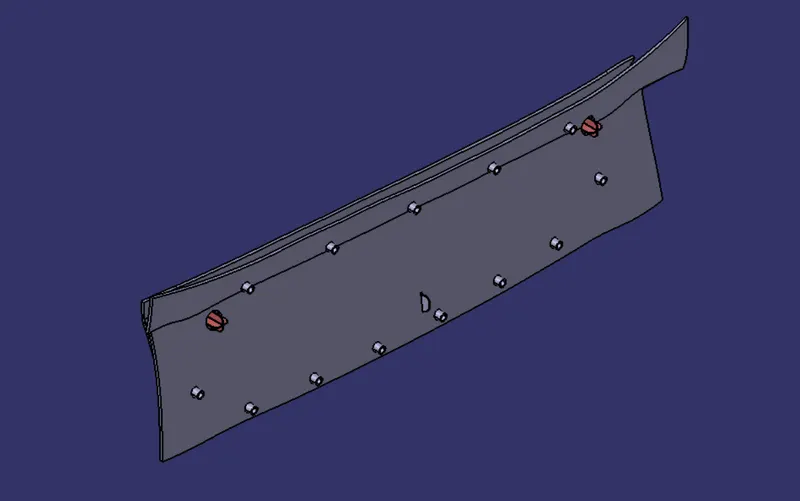
HEAT STAKES
Heat staking also known as thermoplastic staking is the process of joining two dissimilar materials together. In heat staking, we use local heating and cooling to raise the temperature of plastic components and allow plastic reforming to be carried out. The most commonly used application involves the attachment of metal to plastic. A hole in the metal part receives a pre-molded plastic boss. The thermal tip contacts the boss and creates localized heat. As the boss melts, the light pressure from the horn forms a head with a shape determined by the horn tip configuration. When the heat is terminated, the plastic materials solidify and the dissimilar materials are fastened together.
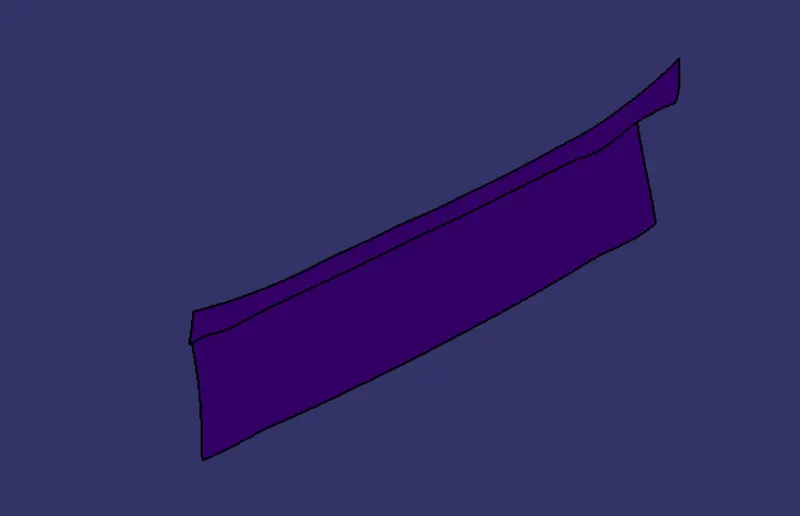
CLASS A Surface
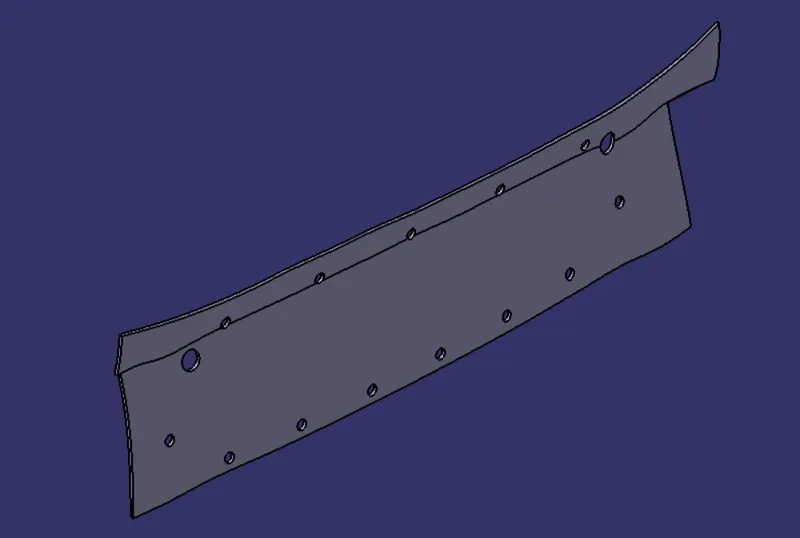
DOOR APPLIQUE
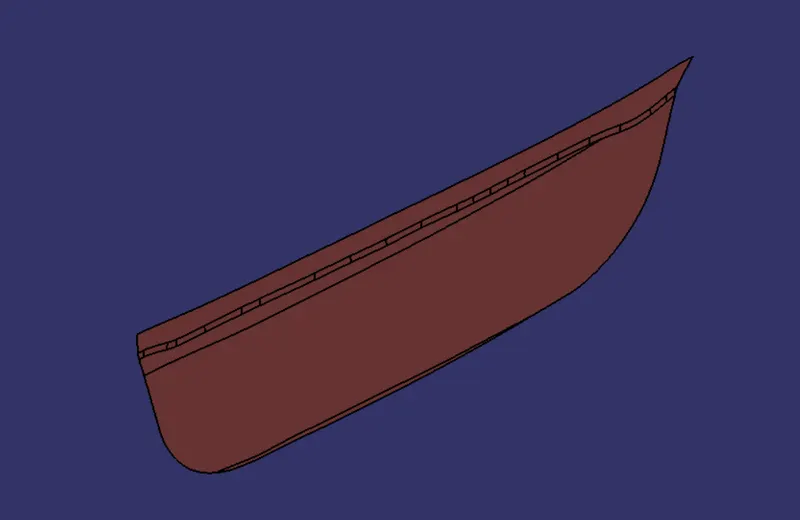
COUNTERPART
PROCEDURE FOR DRAFT ANALYSIS
- First check the connectivity of the given CLASS A Surface by using the Join or the Boundary command to ensure there is no gap in between.
- Analyze the best possible tooling axis for the given component.
- Created the main tooling axis, normal to the surfaces.
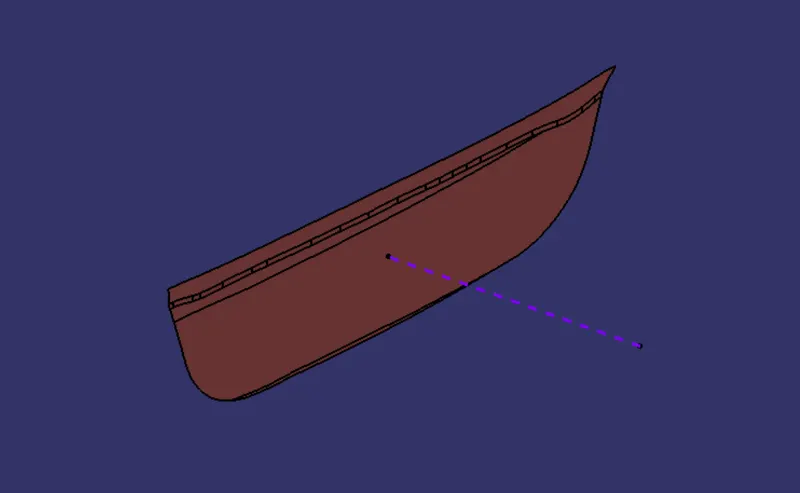
DRAFT ANALYSIS ON MAIN TOOLING AXIS
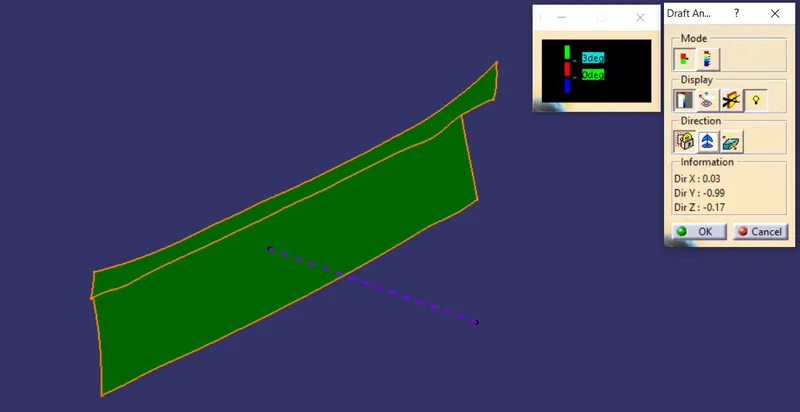
CREATION OF B SURFACE FOR APPLIQUE
- First extract the surface from the given CLASS A Surface and untrimmed them to obtain the Parent Surface
- Offset the untrimmed surfaces to the required thickness i.e 2.5mm
- At last trim the offset surfaces to obtain the required final trim.
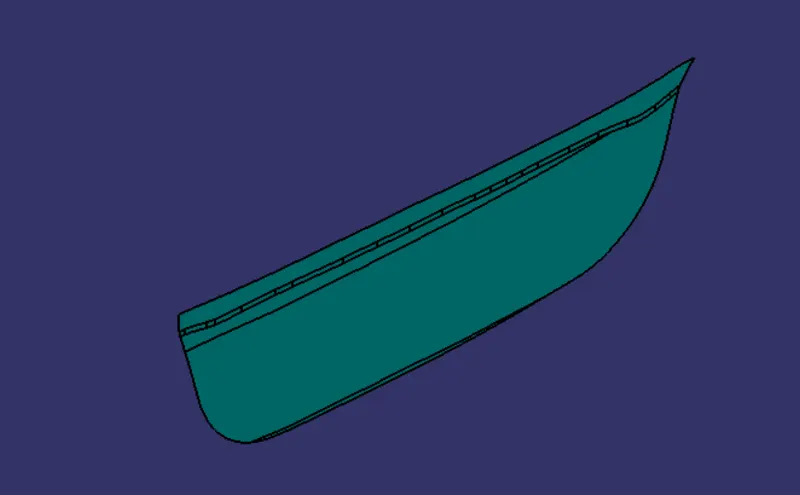
CREATION OF CLASS C
- For creating a CLASS C surface we extracted the boundaries of the CLASS A using Multiple Extract.
- These boundaries are then swept with CLASS A as reference and joined together.
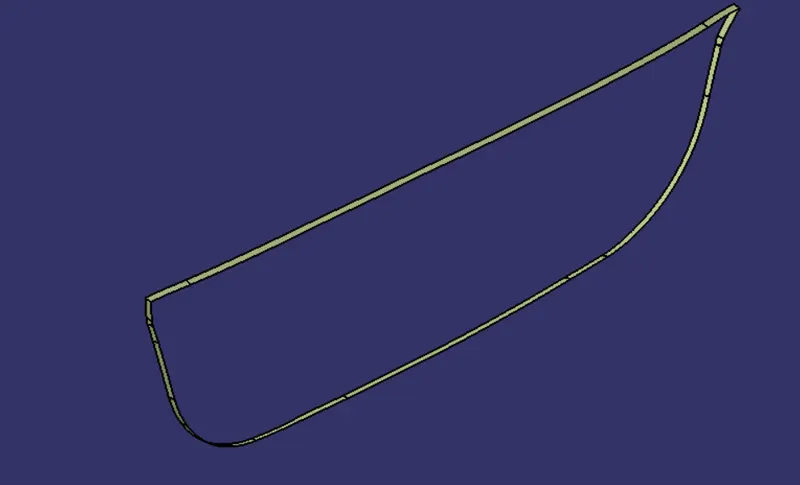
CLASS A +CLASS C
To ensure there is no gap between the CLASS A and CLASS C surface we have joined the two surfaces.
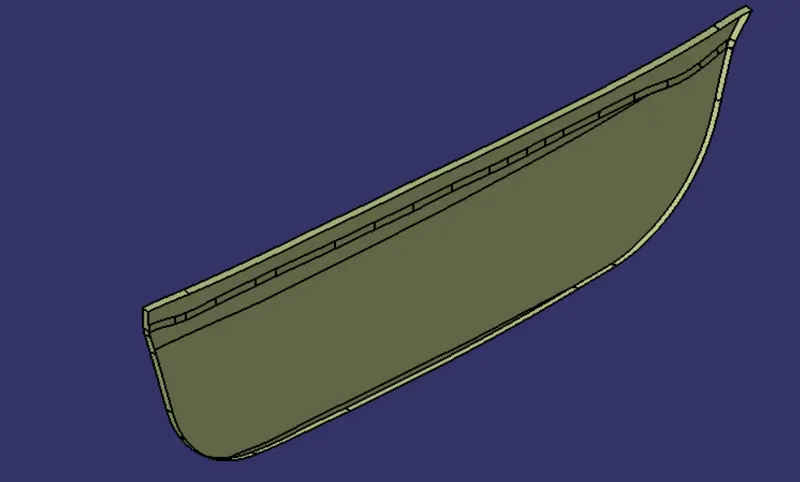
FINAL TRIMS
The joined CLASS C surface is now trimmed with the CLASS B Surface to obtain the final trim.
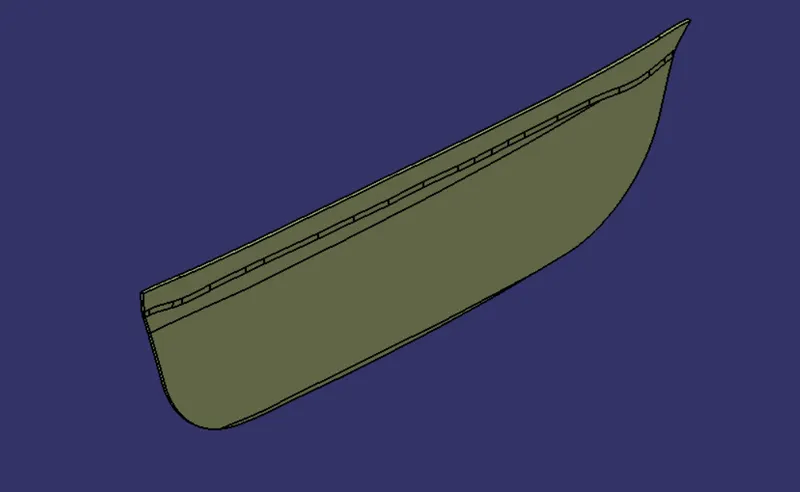
CLOSED SURFACE
The final trim is now closed using the closed surface command in the part workbench to obtain the final solid component.
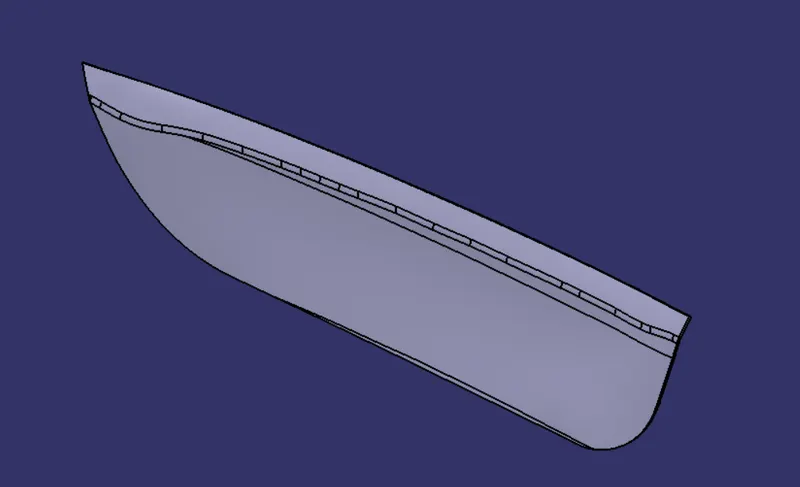
ENGINEERING FEATURES
4 Way and 2 Way Locators
For the creation of follow the design considerations as per ribs
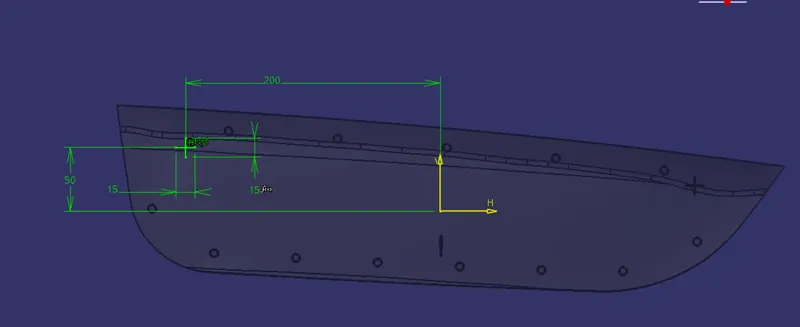
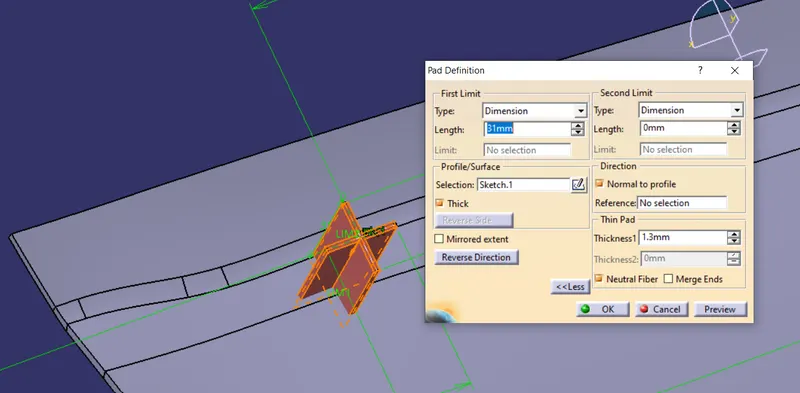
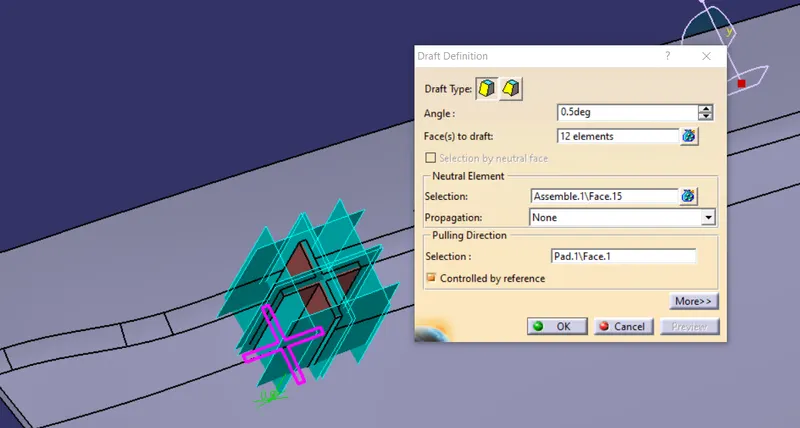
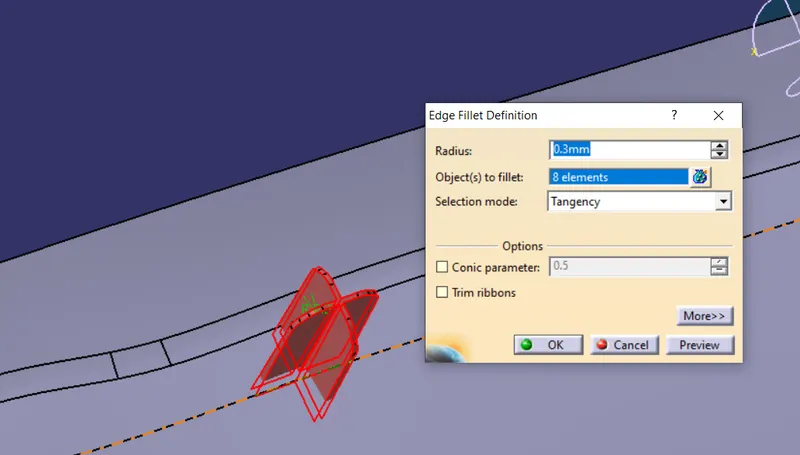
HEAT STAKES
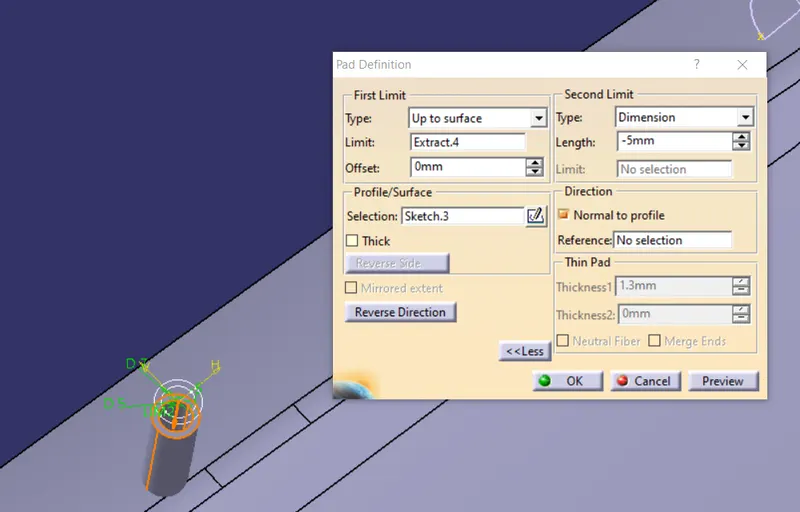
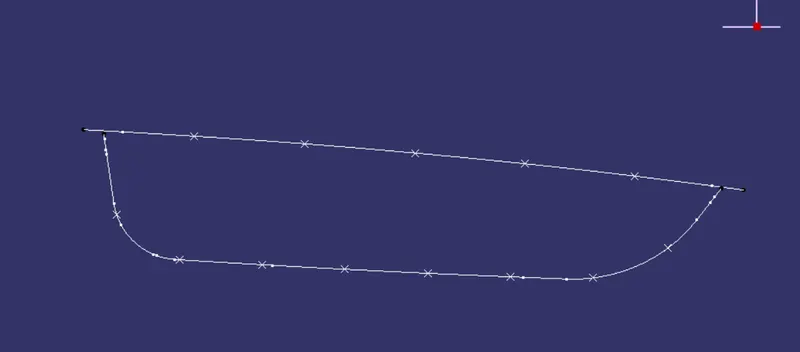
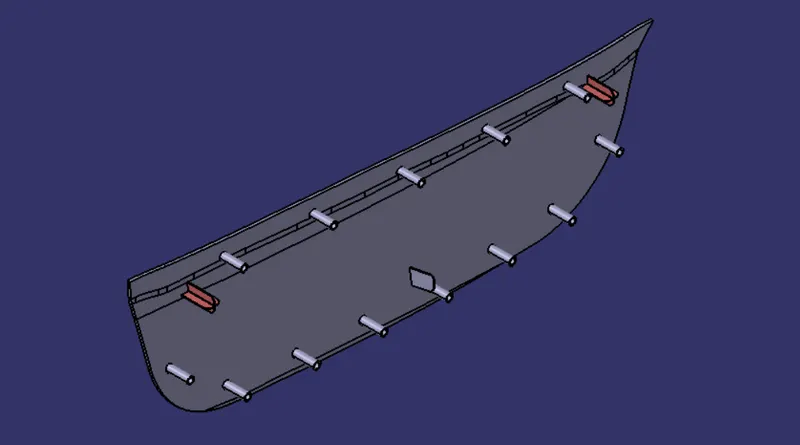
Creating The Holes On The Door Attachment
In order to fit the door applique on the door applique we need holes on the counterpart to arrest the position of locators and heat stakes.
DRAFT ANALYSIS