Section Modulus calculation and optimization
SECTION MODULUS OF HOOD
- Section modulus is defined as the ratio of moment of inertia of a section about the neutral axis to the distance of the outermost layer from the neutral axis.
- It is the direct measure of the strength of the shaft section or the beam section. Higher the section modulus of a structure, the more resistive it becomes to bending.
Mathematically it is expressed as
S=I/Y
Where, S= Section Modulus
I= Moment of inertia
Y= Distance from neutral axis to extreme end
Moment Of Inertia
- The moment of inertia (I) is the capacity of a cross-section to resist bending, when it is subjected to an external load.
- Higher the value of moment of inertia , higher will be the resistance to bend under the applied load.
- It is directly proportional to the strength of the material, which can be calculated through section modulus.
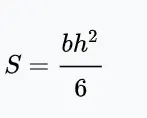
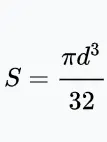
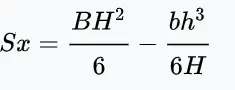
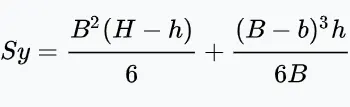
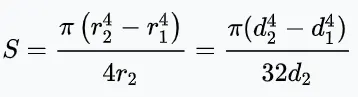
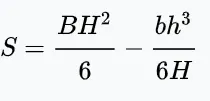
Section Modulus of the Various cross sections are given below in the following table:
|
Type |
Section |
Section Modulus S= I/Y |
|
Rectangle |
 |
 |
|
Circle |
 |
 |
|
Doubly symmetric I-section (major axis) |
 |
 |
|
Doubly symmetric I-section (minor axis) |
 |
 |
|
Circular hollow section |
 |
 |
|
Rectangular hollow section |
 |
 |
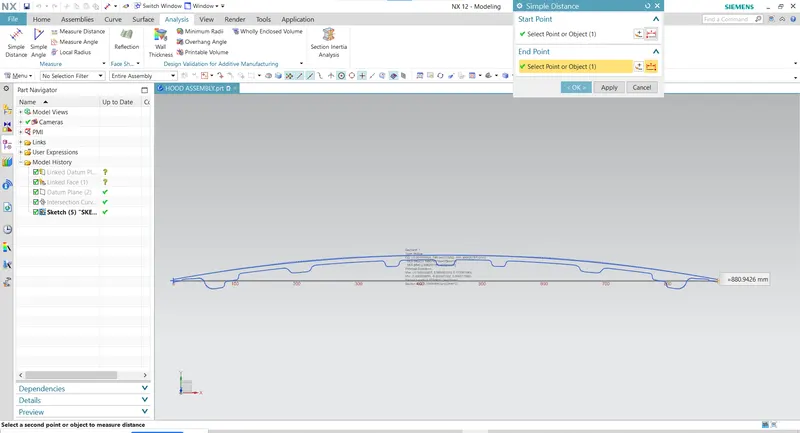
Section Modulus Calculation Of the Hood Design
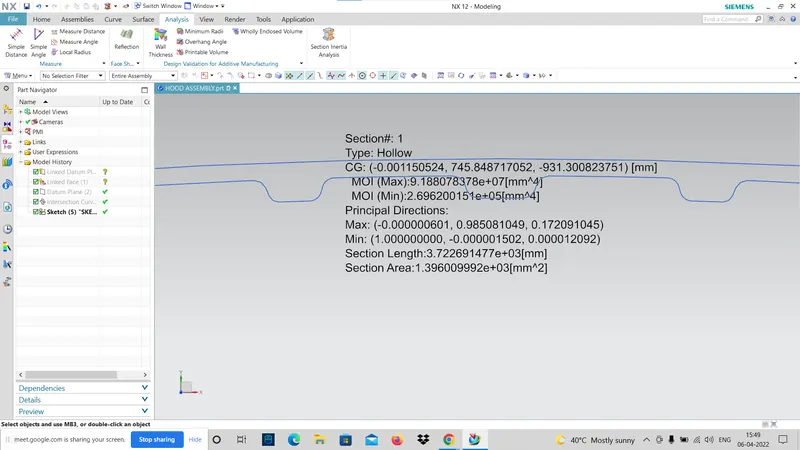
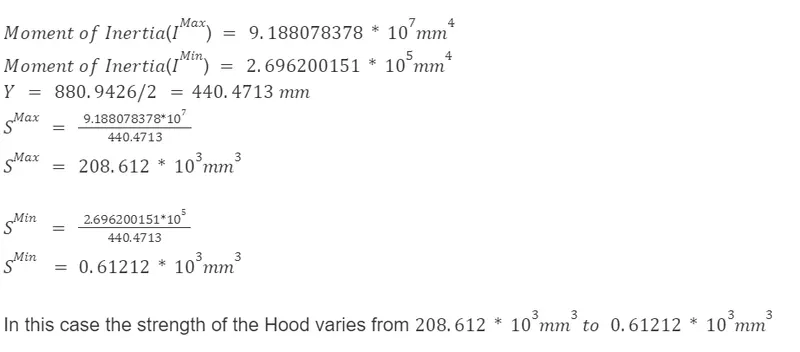
Case 1: Section Modulus For the Designed Hood
Here the section modulus is calculated by taking the intersection
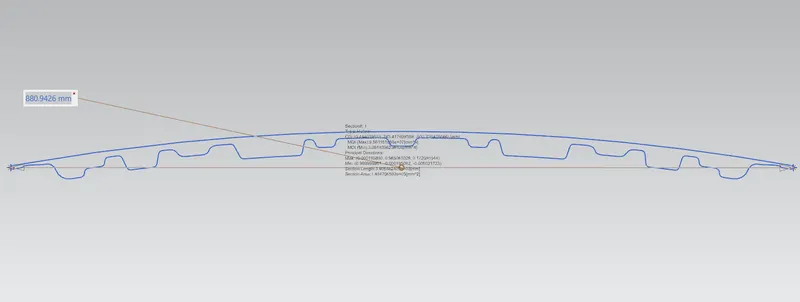
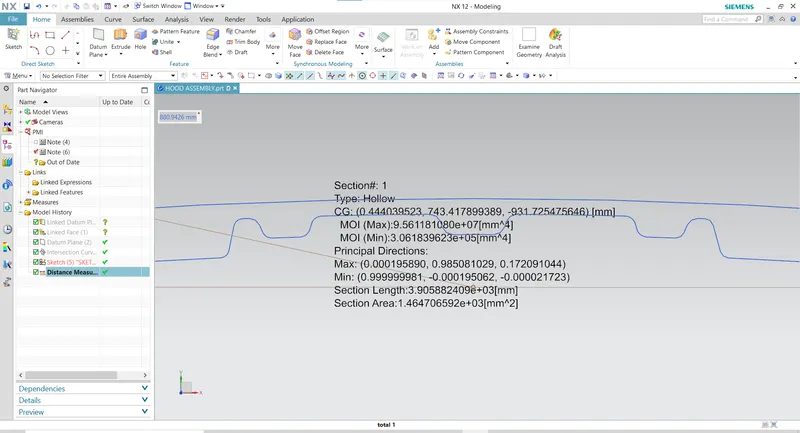
Case 2 : Section Modulus for the Modified Hood Design
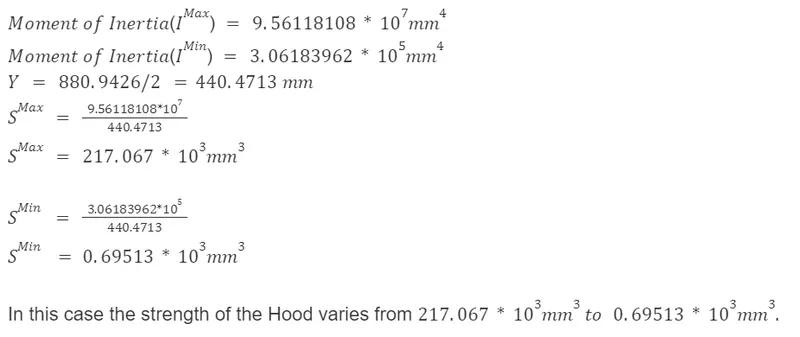
Here the some additional emboss structures were created to calculate the section modulus
Conclusions
- The strength of the section increases with increase in area in both maximum and minimum value.
- By evaluating the above cases , we can say that moment of inertia is directly proportional to the strength of the material.