Week 9 Challenge
Aim: To Create Sliders for the Undercuts present in the CPU Fan Case.
Undercuts: Any indentation or protrusion that prevents a part from being ejected from a mold is known as an undercut. It is a quality that the cavity and core by themselves are unable to capture. Because it is die-locked, the part cannot be ejected from the cavity.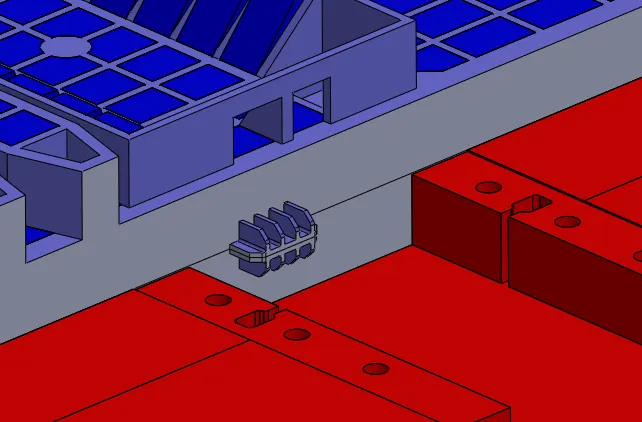
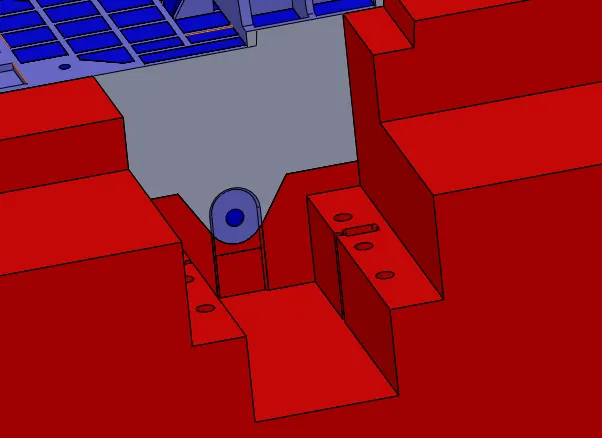
Undercut 1 Undercut 2
- Undercuts are provided by employing Sliders.
- The slider moves in from right to left and is positioned. The Injection mold cycle will start and the material is injected. Once the material is injected and solidified, the slider moves from left to right and the component is ejected.
Sliders: An action device may be necessary in the mold for a product design that has elements that are below but parallel to the principal parting line of the mold. This requires a technique for removing a portion of the mold so that the product can be ejected. When an entire portion needs to move, such a section is referred as a slide since it is said to "slide" out of the way.
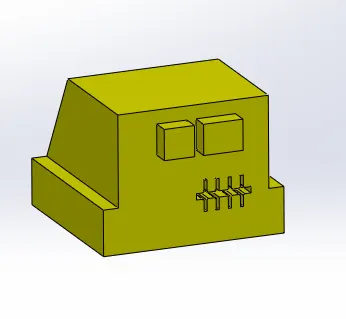
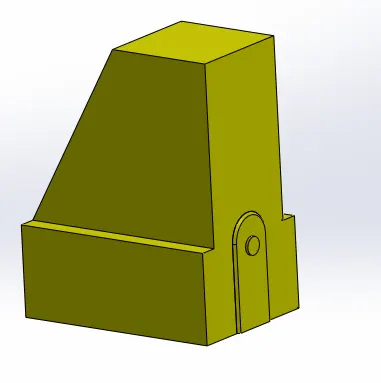
Slider 1 Slider 2
-
- When the slide is in the forward position, it shuts off against the rest of the cavity set and creates a sealing area to contain the incoming molten plastic.
- When the slide is in the back position, the face is moved out of the way so it will not interfere with the ejection of the molded part from the mold.
- The slide can be activated by various means including angled pins, hydraulic cylinders, and rack-and-pinion devices.
- A stop is added to the area at the rear of the slide travel to ensure the slide cannot move beyond the intended rearward travel.
- However, due to the side forces from the injection pressure used in the molding process, the slide actions are pushed slightly away from the cavity sections. This causes flash and dimensional discrepancies to occur on the molded part. To overcome those side forces, locking mechanisms are usually incorporated.
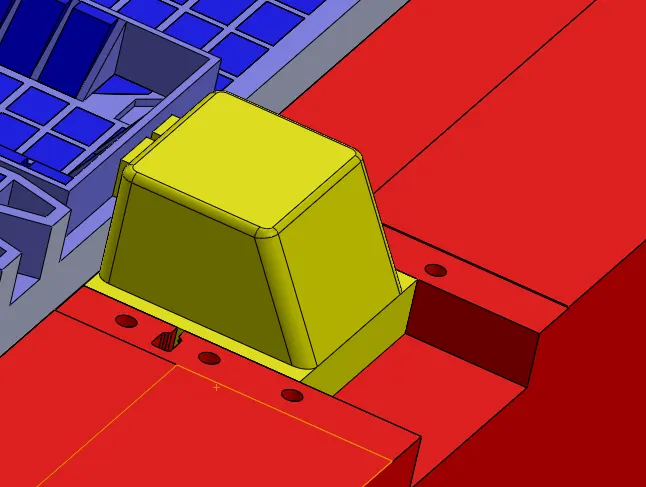
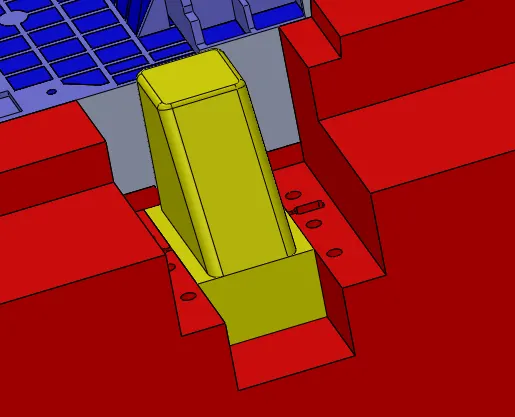
Sliders in core Block
Types of Slides
- Inclined Pin Slides: The inclined pin enters the holes of the slide. The mold closes. Through the sloping surface of the inclined pin the inner side of the pin pushes the slide in the mold in a resulting movement. When the mold opens, the pin’s outer side pulls the slide out from the mold. The inclined pin pulls until it is out of the slide again. This way is not random but is the calculated distance that the slide must move. It locks at this position so that the pin meets the hole again during the next closing.
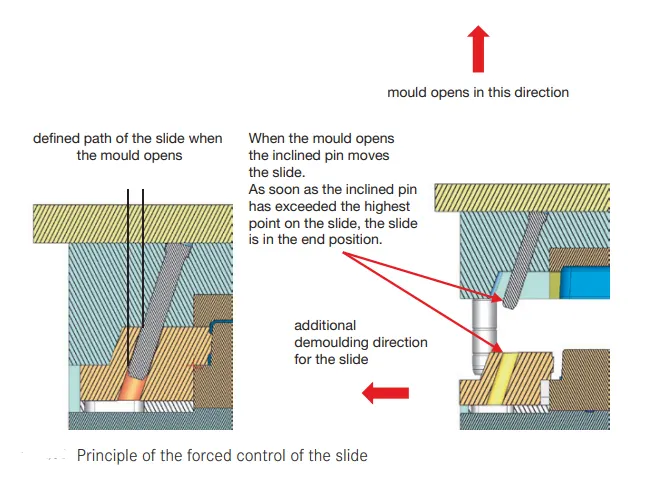
Advantages: - Inexpensive manufacturing through low effort and few additional parts which can be mostly purchased parts.
- For controlling, no additional aggregates or energy sources are needed. The inclined plane is the drive.
- This is completely independent of the equipment of the injection molding machine. All that is needed is the opening and closing movement of the machine.
Hydraulic Cylinder actuated Slide: After the inclined pin, the cylinder is the second type of movement of a slide. Hydraulic oil is used as operating medium for the cylinder. The pneumatic pressure is not sufficient for the movement. Oil is not compressed; the power of a hydraulic cylinder is much higher than with air. Despite its power, the hydraulic cylinder is used only to move the slide. For locking the mould, also in moulds with cylinders, a cotter is used. On the hydraulic cylinder or the slides, switches should be built on to monitor the position of the slide in the mould, both in the closed mould and at its end position in the open mould.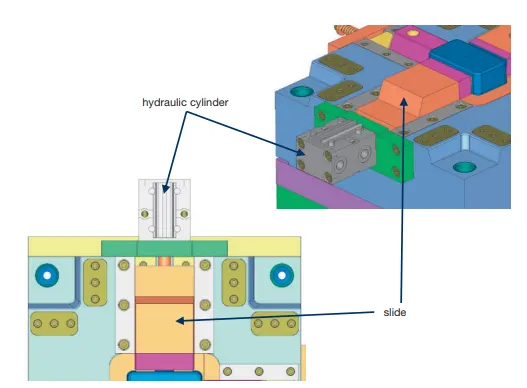
Advantages:
- With a hydraulic cylinder the purchasable length of the cylinder is the limit. For an injection mould there is therefore no limit.
- Through the high power of a hydraulic cylinder even very big and heavy slides can move easily.
- The slide with hydraulic cylinder does not need any locking in the end position. It moves up to the stop out of the mould and stops there without further measure.
Mould Inserts:
The mould contour for a plastic piece can be introduced in an injection mould in the cavity plate or in an insert which is installed in the cavity plate. The choice as to whether the mould contour is incorporated directly in the cavity plates or inserts are used is associated with several factors.
- Part Quantity: For moulds for samples, the mould contour, for financial reasons, is frequently directly incorporated in the cavity plates.
- Hardening: The inserts which are used for serial moulds are for example harde
- Flexible Machining: Several inserts can be simultaneously worked on or heat treated on several machines or at several stations.
- Attaching: Inserts usually have a cubic base by which they are precisely installed in the cavity plate. To fasten the mould inserts, mostly hexagon socket head cap screws are used. The size and number of screws depends on the geometry of the inserts.
- Cooling: There should be cooling in every insert. Both the inlet and the outlet of the cooling on an insert should be on the lower surface. The cooling passes through the cavity plate under the insert. Then it rises in the insert. The intersection between cavity plate and insert is sealed with an O-ring seal made from rubber.
- Maintenance and Service: If there are areas in the mould which are subjected to wear, these should be installed separately as inserts to enable easy exchanging. Several individual components are easier to maintain than a large block.
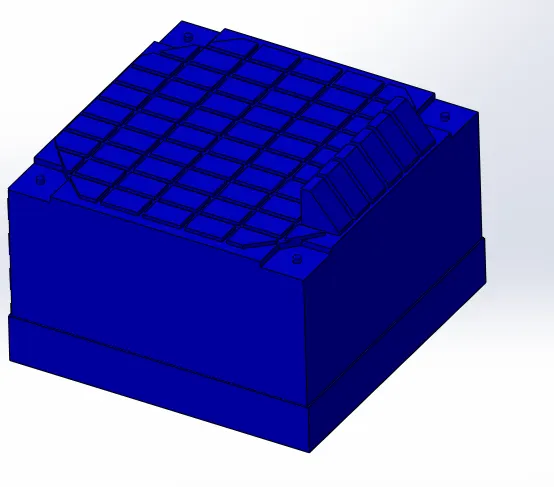
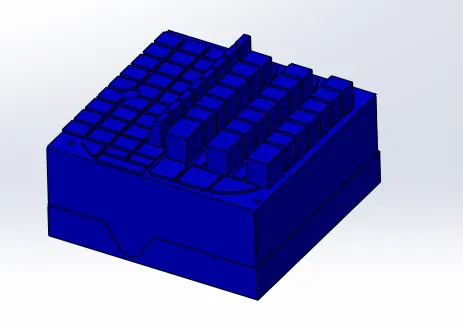
Insert 1 Insert 2
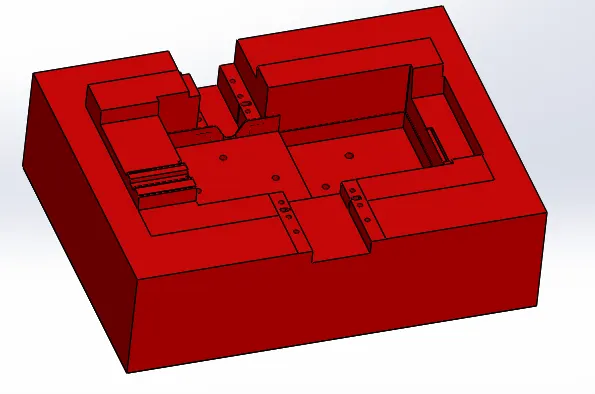
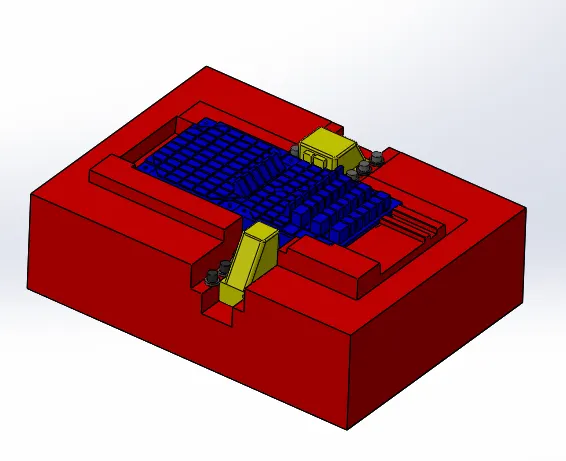
Core Block Without Inserts Core With Inserts and Sliders
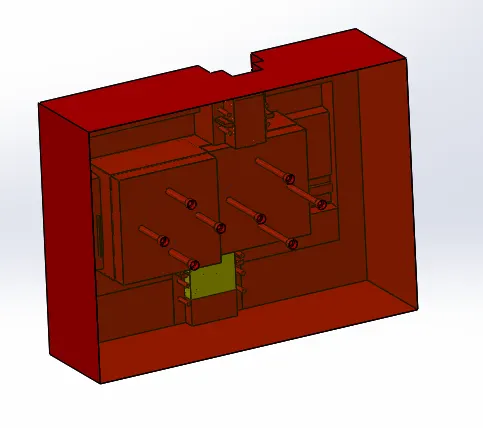
Fastening of Inserts using Hexagonal Bolts to the Core block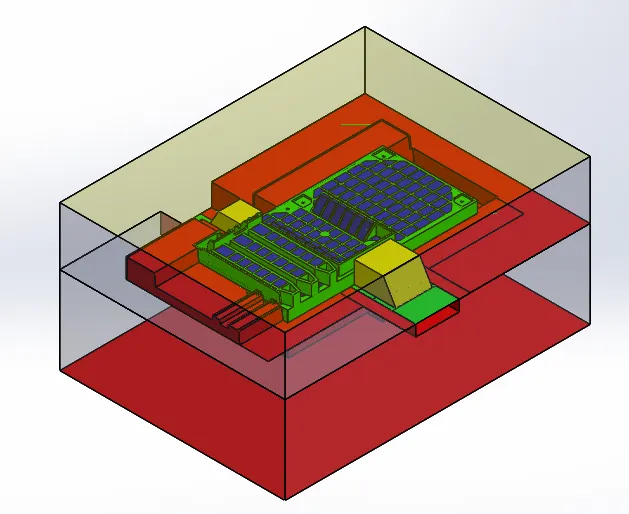
Final Assembly