Week 7-Long Piston With Cam
Aim:- To perform transient structural analysis on a piston and cam mechanism model and to find out the Equivalent stress, Directional deformation, and Equivalent elastic strain for three different cases 1) Frictionless contact 2)Frictional contact with a coefficient of 0.1 3) Frictional contact with a coefficient of 0.2.
Procedure:-
Case 1:- Frictionless contact
1.Open Transient structural and Import the geometry given.
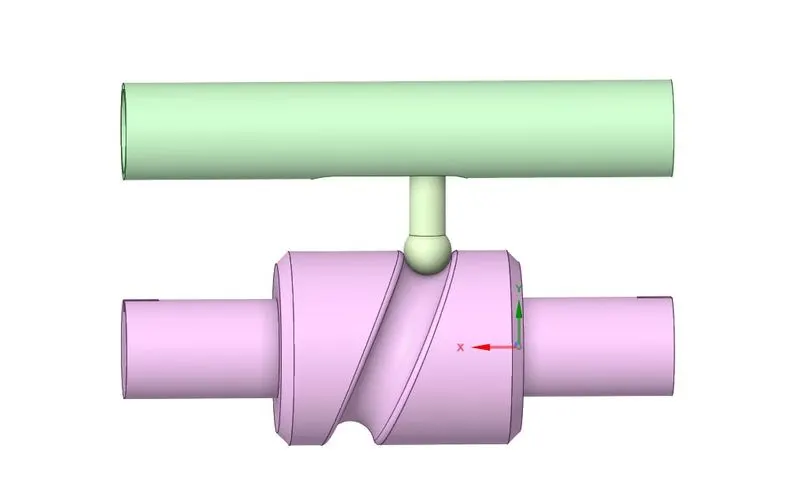
Fig 1.Given geometry
2. Rename the parts into Barrel, Barrel cam , Cam follower.
3. Make Barrel, and barrel cam as rigid bodies.
4. Change the contact type to Frictionless.
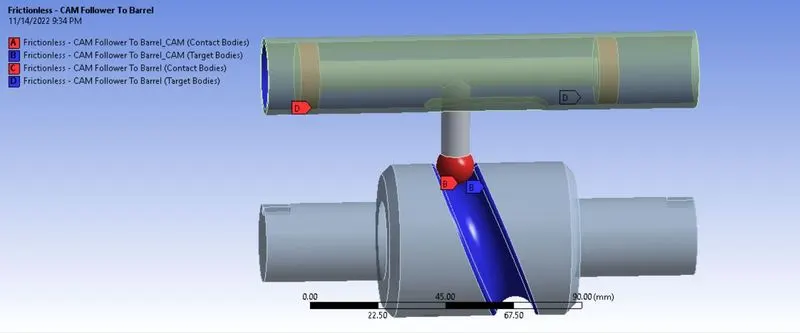
Fig 2. Frictionless contacts are given in geometry
5. Give a Fixed joint to the Barrel
6. Give revolute joint to Barrel cam and
7.Give Translational Joint to Piston.
8. In Meshing, give Face sizing in contact regions with an element size of 3mm.
9. In Analysis settings, give 9 steps, with an energy dissipation ratio of 0.1.
10.Insert Joint load ~ Rotation and Input the tabular data and solve.
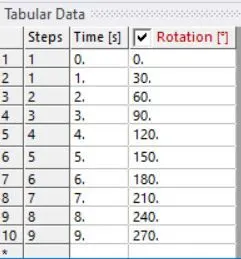
Fig 3.Given Input for the Joint load for the Barrel cam.
Results:-
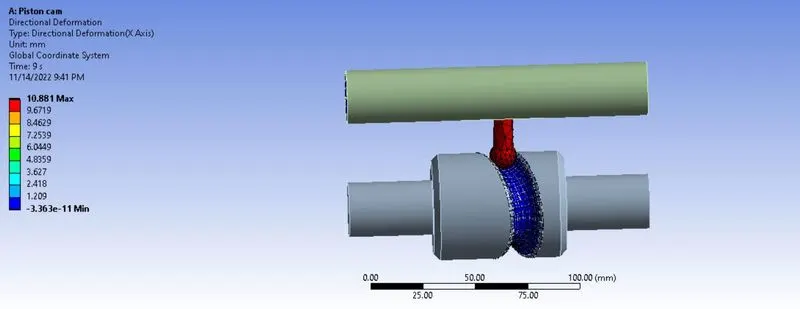
Fig 4.Directional deformation (Case 1)
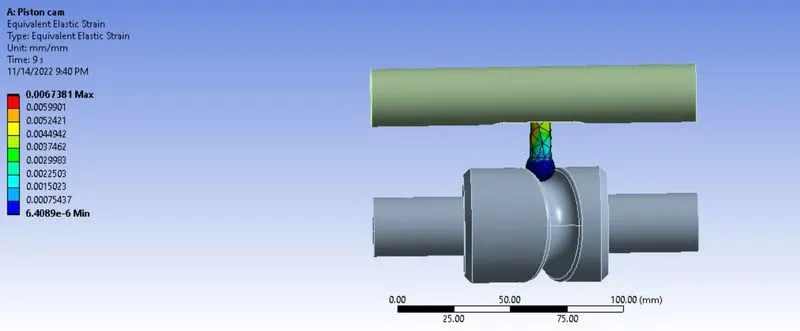
Fig 5.Equivalent elastic strain ( Case 1)
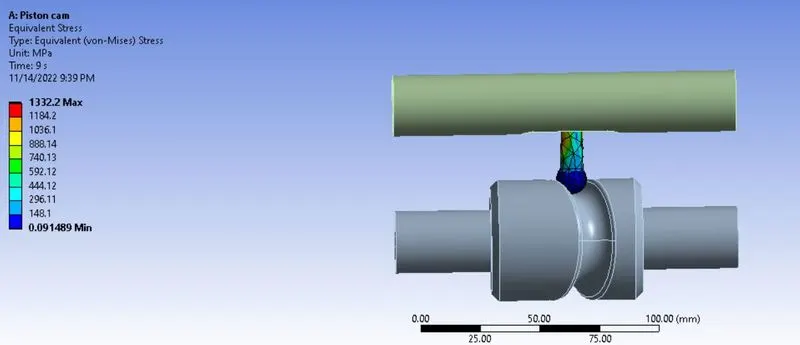
Fig 6.Equivalent stress ( Case 1)
Case 2:-
Following the same procedure as above and changing the contacts as Frictional with the coefficient of 0.1 and after solving, we get.
Results:-
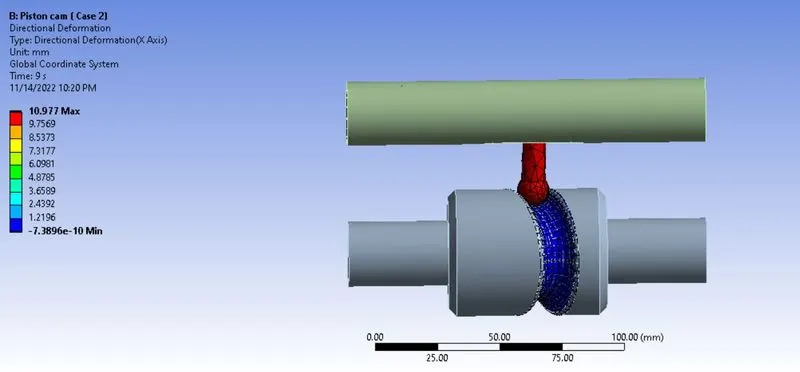
Fig 7.Directional deformation ( Case 2)
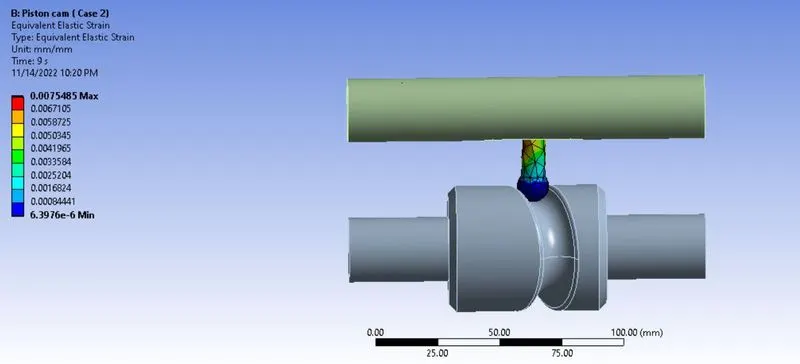
Fig 8. Equivalent elastic strain ( Case 2)
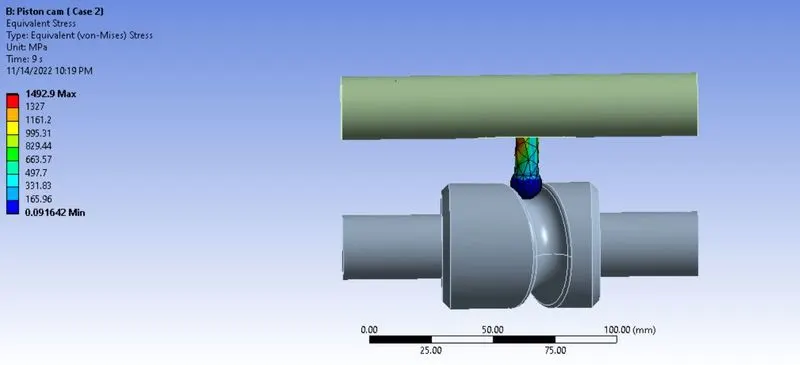
Fig 9. Equivalent stress ( Case 2)
Case 3:-
Following the same procedure as above and changing the contacts as Frictional with a Coefficient of 0.2 and after solving, we get.
Results:-
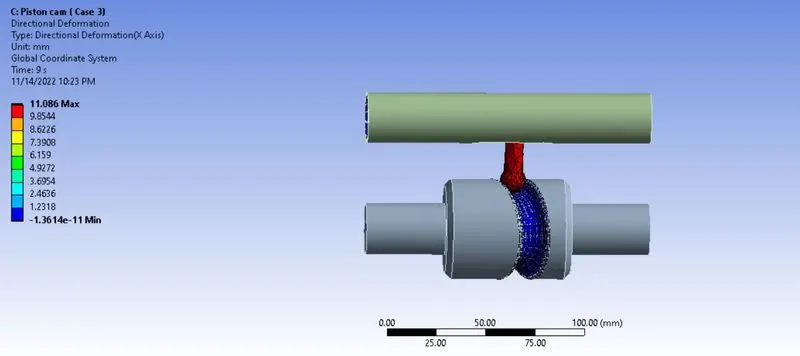
Fig 10.Directional deformation ( case 3)
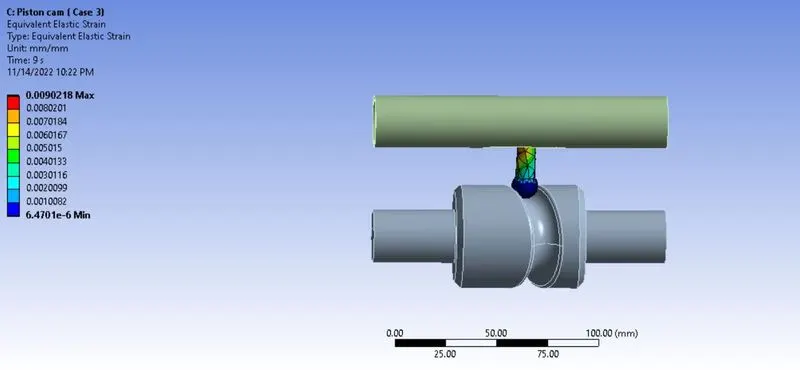
Fig 11.Equivalent elastic strain ( case 3)
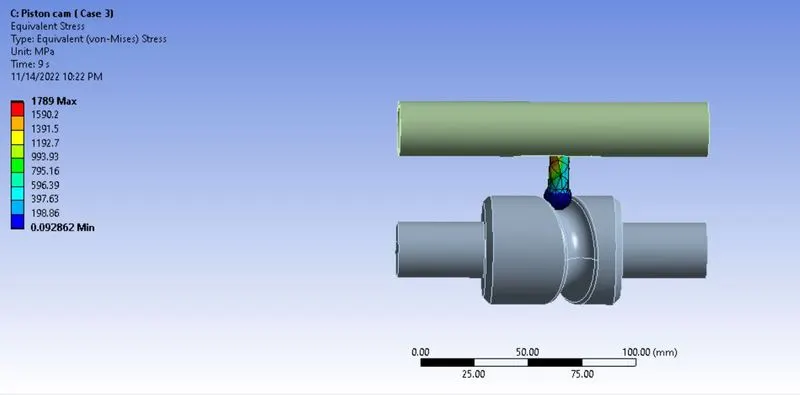
Fig 12.Equivalent stress ( Case 3 )
Conclusion:-
Comparison:- Directional Deformation Equivalent elastic strain Equivalent stress
Case 1 10.881 0.0067381 1332.2
Case 2 10.977 0.0075485 1492.9
Case 3 11.086 0.0090218 1789
Thus transient structural analysis was done for three different cases 1) Frictionless contact 2)Frictional contact with a coefficient of 0.1 and 3)Frictional contact with co efficient of 0.2 and equivalent stress, directional deformation, and Equivalent elastic strain were found out and results were compared.