Week 11 Car Crash simulation
Aim:-
To Perform parametric study using three different values of thickness for the car body, apply conditions and find out total deformation and equivalent stress.
Procedure:-
1.Import the geometry as given in the challenge.
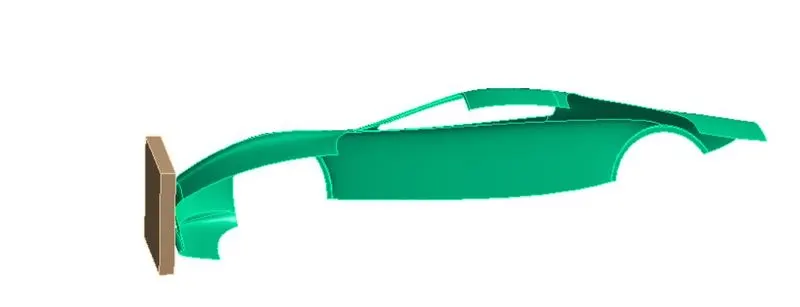
Fig 1.Given geometry
2.Rename the parts into car body and wall.
3.Provide thickness of the car body as 0.3 mm and make it as parametric.
4.Apply material stainless steel non-linear to the car body.
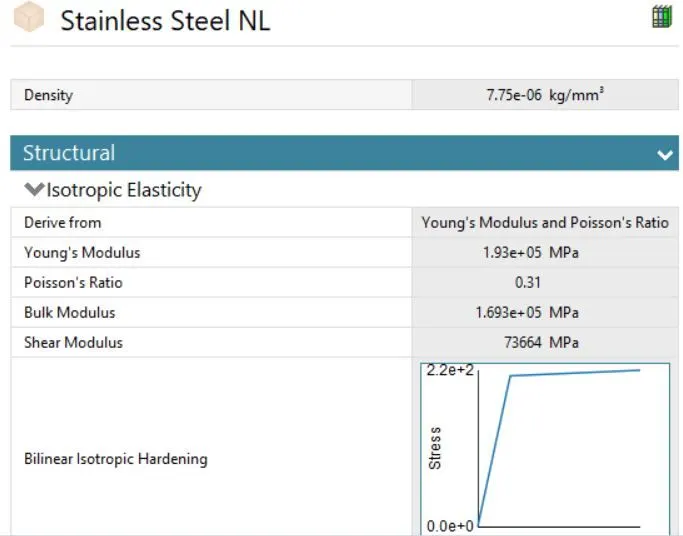
Fig 2.Stainless steel ( non -linear ) material properties
5.select the symmetry region and select the face of wall.
6.select the symmetry region and then select the edges of the car body.
7.select the body of the wall and mesh with tetrahedrons.
8.use face sizing,select the faces of the wall and mesh it with element size of 175mm.
9.select the car body and mesh it with triangles.
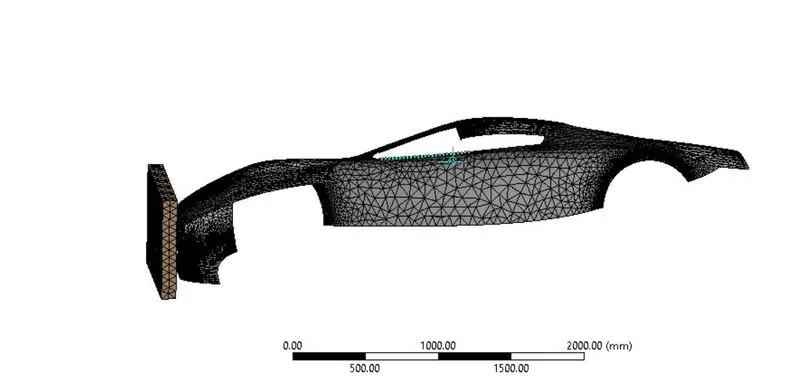
Fig 3.Meshed model
10.select faces of the car body and make it as fixed support.
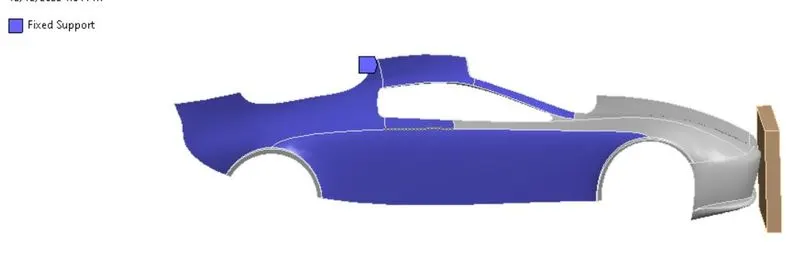
Fig 4.Fixed support given to the car body
11.select the face of the wall and give displacement of 500mm in the z-direction.
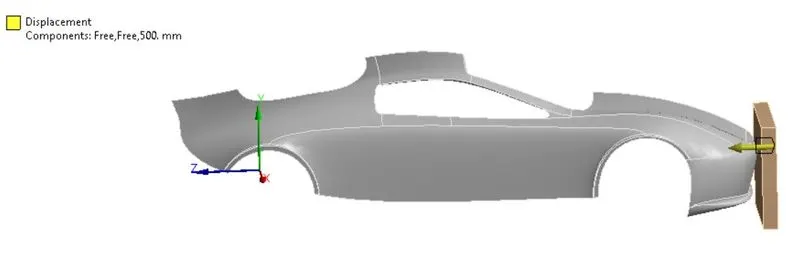
Fig 5.Displacement of 500 mm given to the wall in z-direction
Results:-
case 1:- car body thickness 0.3mm
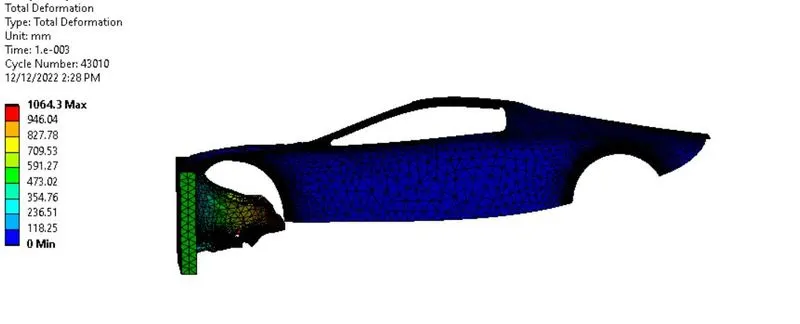
Fig 6.Total Deformation ( case 1)
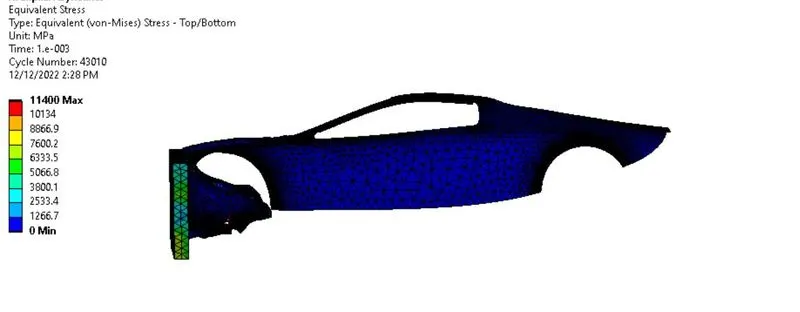
Fig 7.Equivalent stress ( case 1)
Case 2:- car body thickness 0.6mm
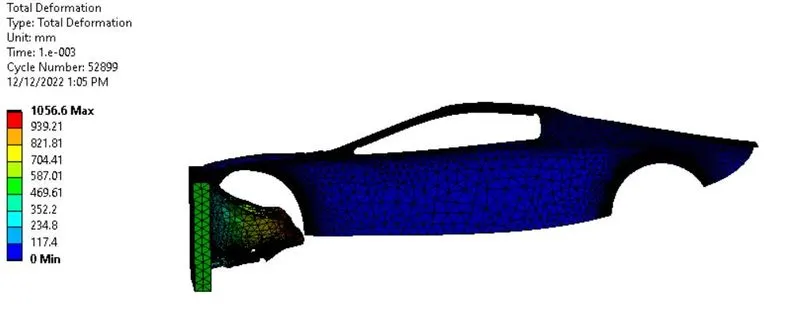
Fig 8.Total Deformation ( case 2)
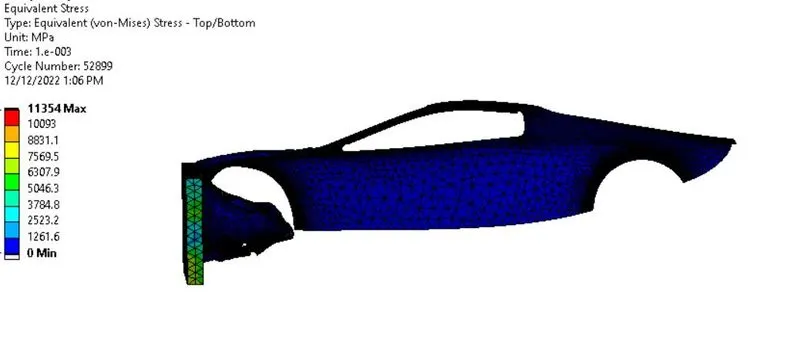
Fig 9.Equivalent stress ( case 2)
Case 3:-
Car body thickness 0.9mm
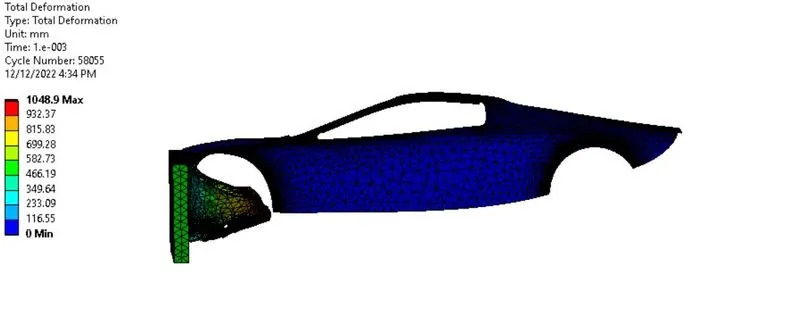
Fig 10.Total Deformation ( case 3)
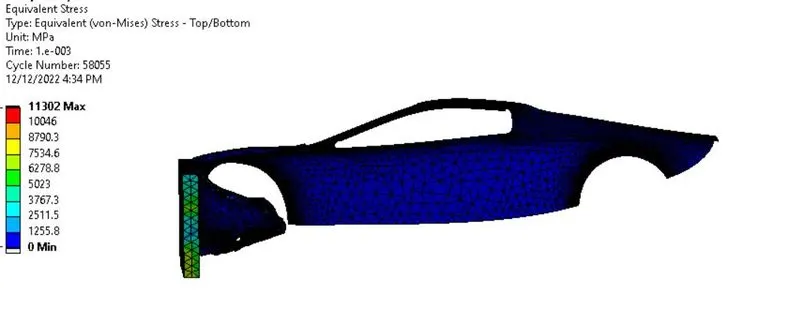
Fig 11.Equivalent stress ( case 3)
Comparison
Car body thickness Total Deformation Equivaent stress
0.3 mm 1064.3 mm 11,400 Mpa
0.6 mm 1056.6 mm 11,354 Mpa
0.9 mm 1048.9 mm 11,302 Mpa
Conclusion:-
Thus parametric study on different values of car body thickness,boundary conditions are applied,and the results were compared.Total deformation and equivalent stress is higher in case of 0.3mm car body thickness and lowest in the case of 0.9mm car body thickness.
Google drive link:-
https://drive.google.com/file/d/1RSI2Cs2LV5V6Do4JeQIR3xIFEmb1eIc5/view?usp=share_link