2D-Meshing on Plastic Bottle Cap Component
Objective: To examine the geometrical errors and extract the mid-surface for the given plastic bottle cap component and mesh it according to the given quality criteria without fail in the elements in ANSA.
Test case:
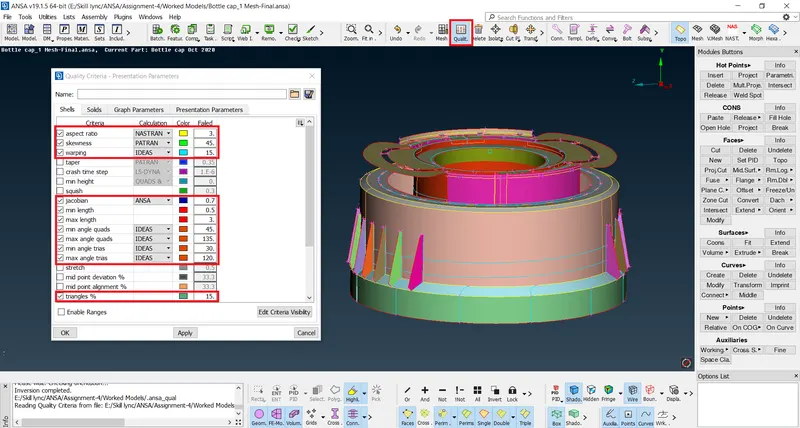
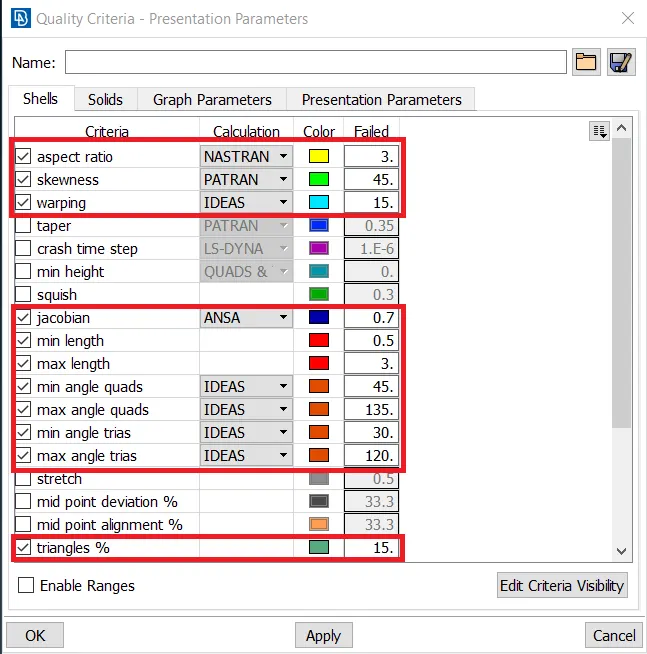
1) Target Average Length---------------> 01
2) Minimum Length--------------------> 0.5
3) Maximum Length-------------------> 3
4) Aspect Ratio------------------------> 3
5) Warpage---------------------------> 15
6) Skewness--------------------------> 45
7) Jacobian---------------------------> 0.7
8) Minimum Quad angle-------------> 45
9) Maximum Quad angle------------> 135
10) Minimum Tria angle-------------> 30
11) Maximum Tria angle------------> 30
12) Tria Percentage-----------------> 15
Procedure:
Import of the Geometrical Model
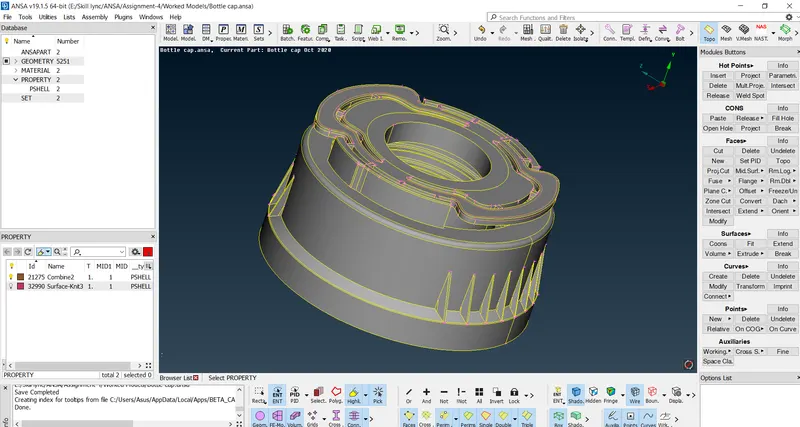
The above model represents the plastic bottle cap component which is imported in the ANSA interface.
Geometry Clean-up:
In order to check the geometrical errors in the ANSA interface for a particular component, we have an option called geometry in the checks bar which can bee seen in the below figure.
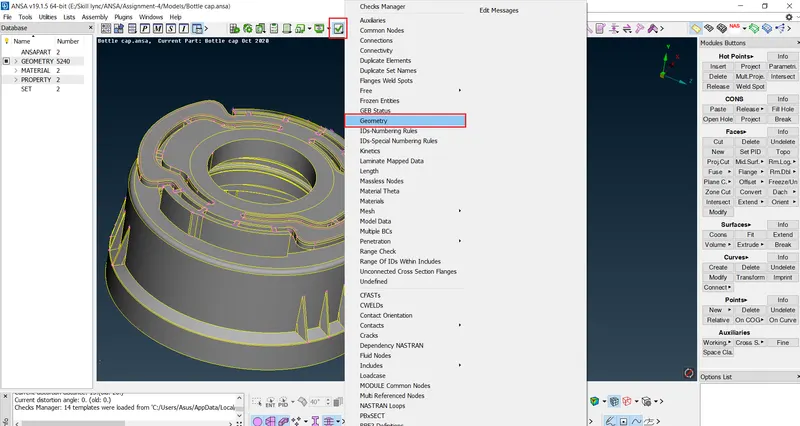
Now to point out the errors in the component we execute the geometry to show the errors in the component.
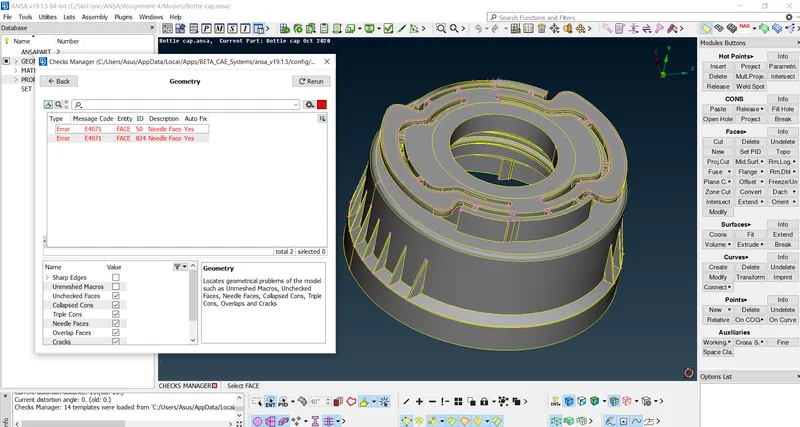
So here from the above figure we have obtained two geometrical errors in this plastic bottle cap component. which is known to be a Needle face error.
Now let us understand what is needle face error.
Needle face error is the unwanted face in the geometry which is required to be geometrically cleaned to get rid of this error in future components.
The above two-needle face errors are fixed manually by deleting the unwanted face in the geometrical area of the component.
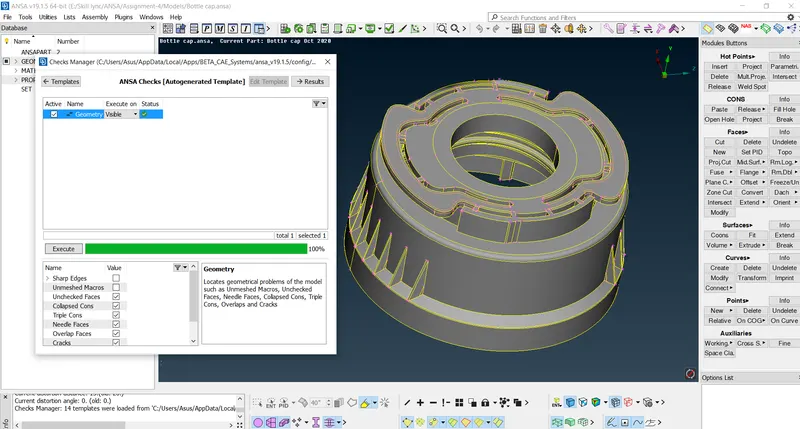
Now here in this case we can see that the above two-needle face errors which were facing earlier are fixed now and executed properly without any single error and set to extract mid-surface for this component.
Measurement for Mid-surface extraction:
In order to extract mid-surface for this plastic bottle cap component. manual mid-surface extraction is the best approach to extract mid-surface.
The first and foremost thing we do before extracting the mid surface is measuring the thickness and offsetting it by dividing it into 2.
Let us have a glance at the measurement that we have stored in the component.
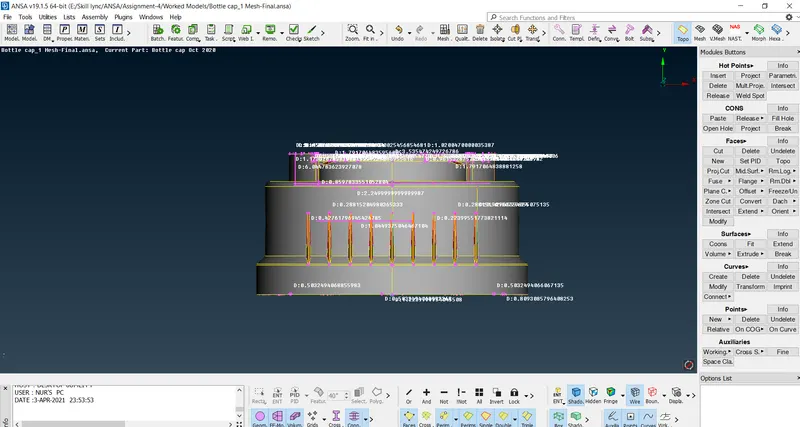
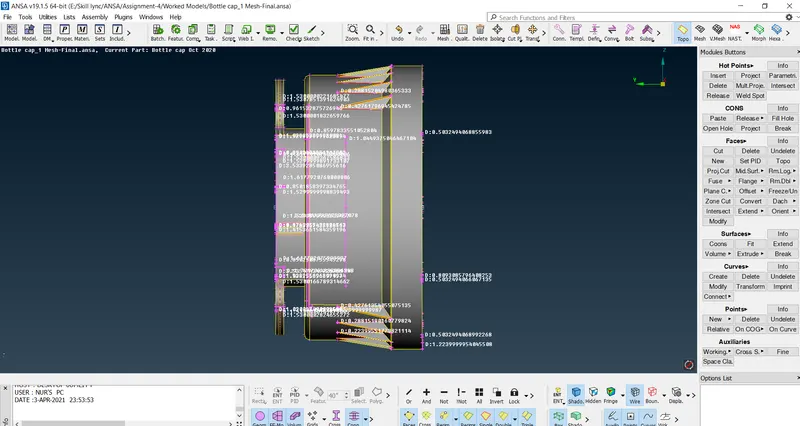
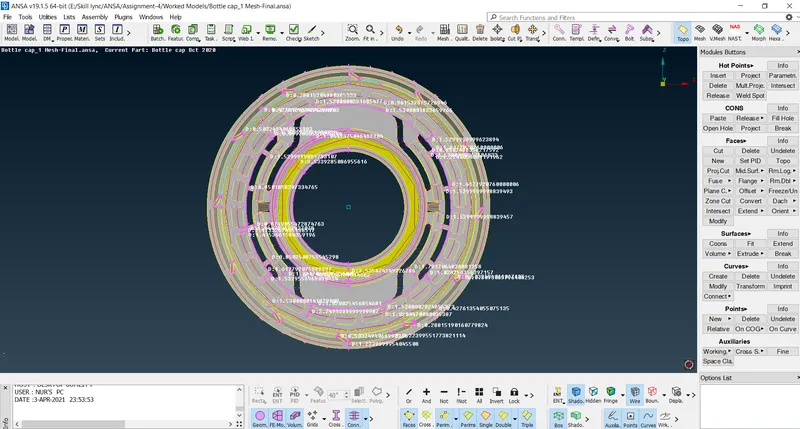
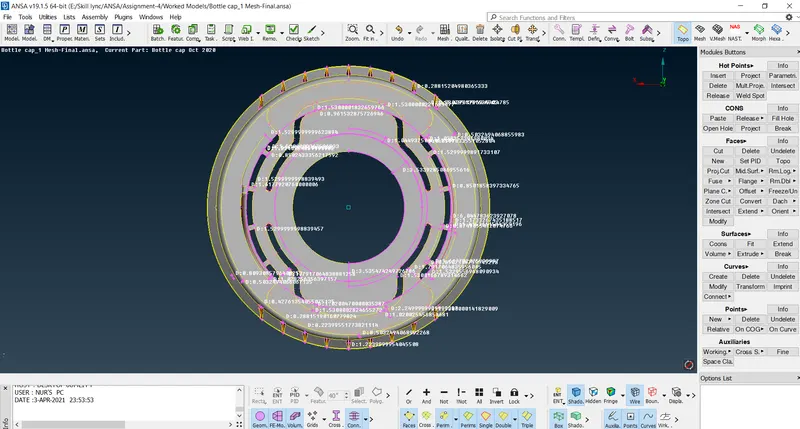
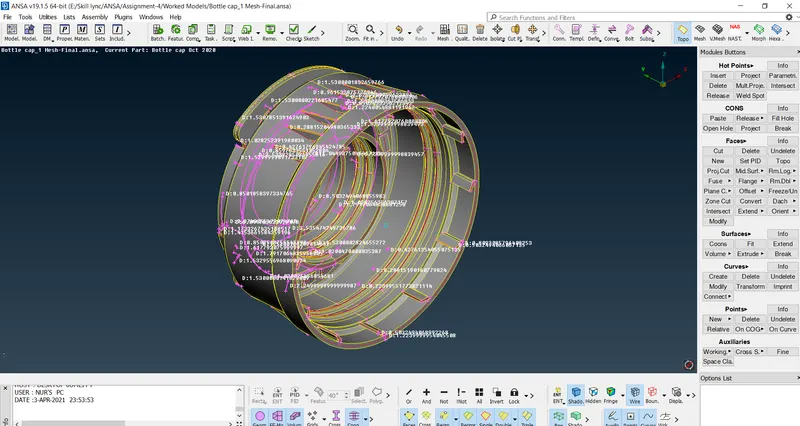
After measuring the thickness throughout the component we are set to extract the mid-surface manually with the different tools that are been used to extract mid-surface.
Mid-suraface extraction:
Now, here in this case we extract the mid-surface for the plastic bottle cap component with the different methods that are been used to extract mid-surface manually.
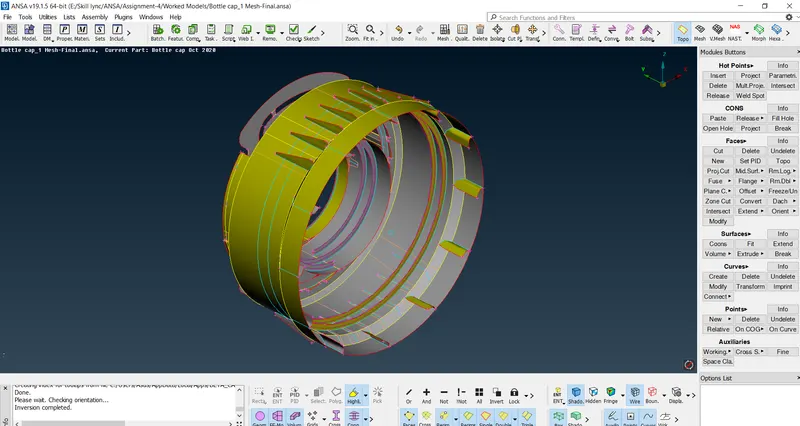
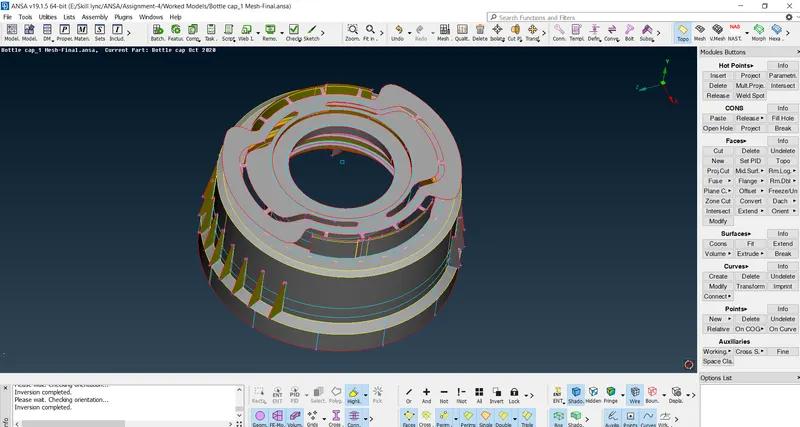
The above two pictures represent the manual mid-surface extraction of the plastic bottle cap component. The tools that were used to extract mid-surface for this component were offset by knowing the thickness of the region in a component, and the other tool was the middle option from the curves tab where this tool was useful in extracting the mid-surface in the curvy region of the component and we have also used tools like Transform, On COG, Rotate to transform the mid-surface extraction from one point to the other point and rotate the same blocks that were attached to the component in the circular manner attached to the cylindrical surface in this component.
Assigning PID to the Mid-surface Component:
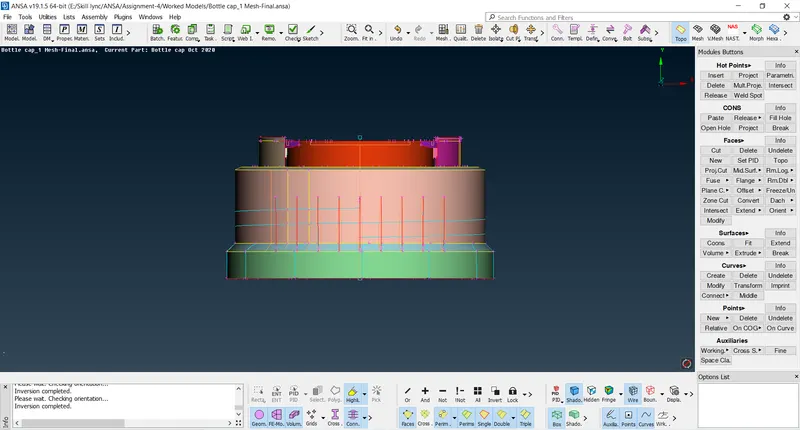
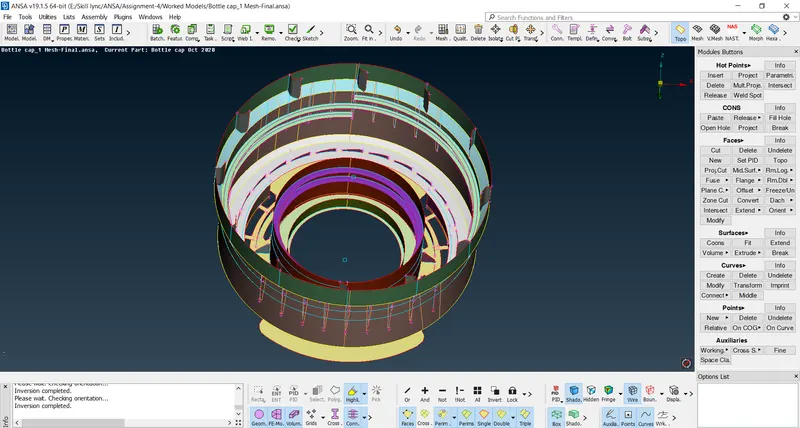
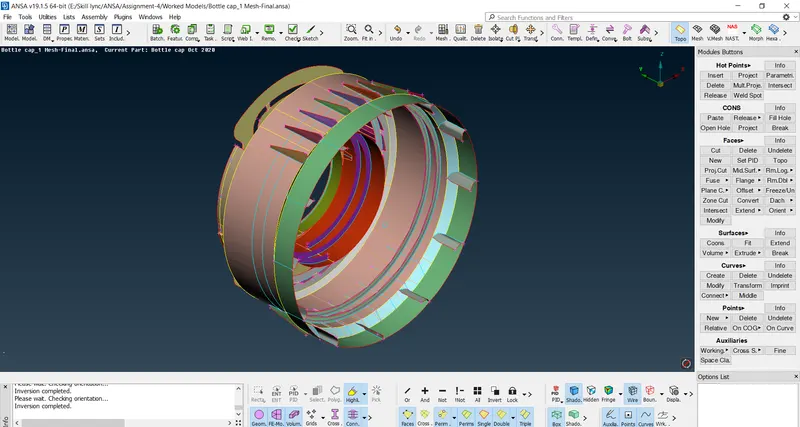
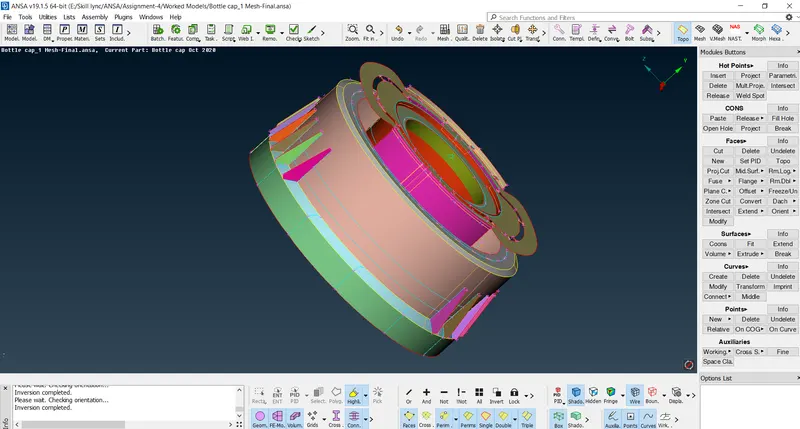
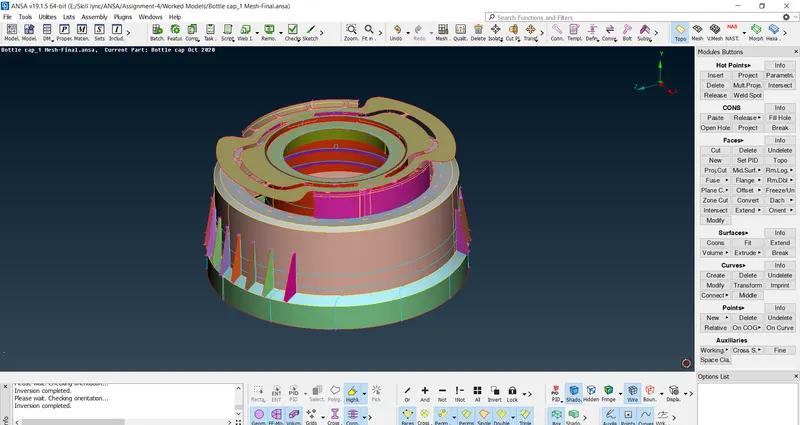
As we have extracted the mid-surface for the plastic bottle cap component, parallelly we have also created a PID for each surface that we have extracted mid-surface individually in the component by giving a thickness to the property of the mid-surface that we have extracted in the component. we get to know the different PIDs are created when it is indicated with the different colors on the component when we change from entity mode to PID mode. which can be seen below as a reference which we have worked on.
Assigning Quality criteria:
Quality plays the main role when it comes to meshing the component. So in order to get the mesh flow properly for this plastic bottle cap component, we will follow the quality parameters that are been given to us and then import it into the quality criteria card.
Meshing the Component:
A spot-mesh has been performed on the component surface by surface individually by following all the quality criteria parameters and meshed the component accordingly.
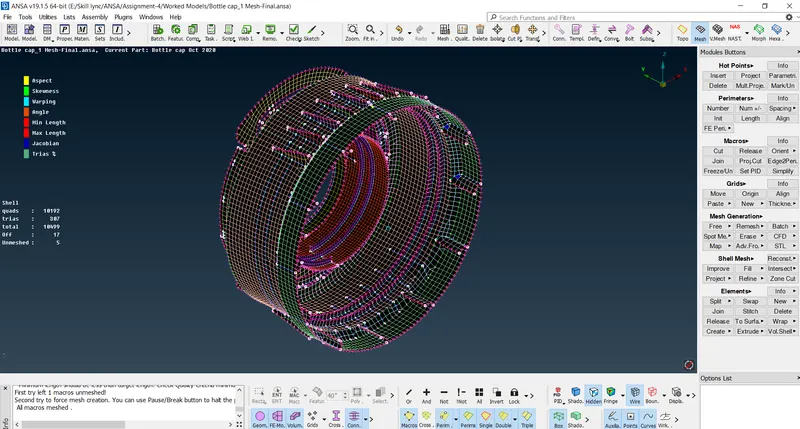
Here, The above picture represents the meshed component of the plastic bottle cap component which is been meshed appropriately with all the possible factors that are been involved in this component.
Assigning Thickness:
As we have extracted the mid-surface part to part separately by creating a part id individually. we have measured the thickness of the particular parts and stored them in the part id card. so the thickness will be assigned according to the property id card data that we have created and stored.
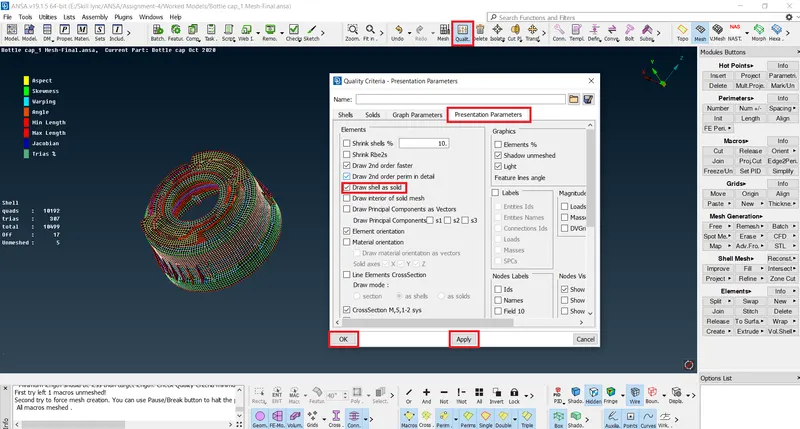
Here in this case the above figure representing the thickness assigning to the plastic bottle cap component.
Final Component:
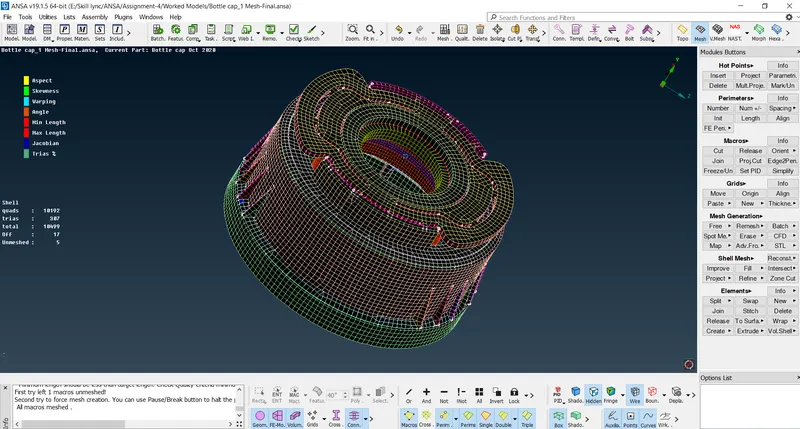
The above picture represents the thickness assigned to the component.
Learning Outcomes:
1) Fixing different geometrical errors manually.
2) Extracting the mid-surface manually with different tools.
3) Creating PIDs for each individual surface and storing the data of it.
4) Exposure to new tools like curve Middle, On COG, Transform, Rotate, Intersect, Extend for all the possibilities in the component.
5) Meshing the component and Re-constructing it for a better mesh flow.
Conclusion: Therefore, The given plastic bottle cap component is been examined properly and extracted the mid-surface appropriately, and meshed it by following the given quality criteria parameters by assigning its thickness in ANSA.