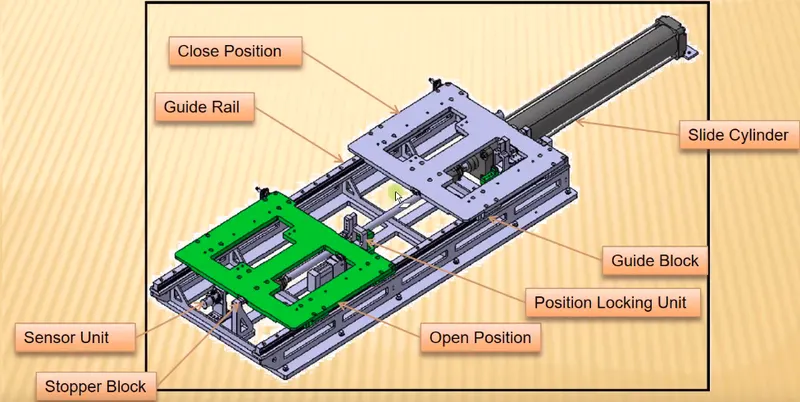
Week 3:- BiW Fixture Design Methodologies Challenges
1. what is design methodology ?
The design meethodology contains:
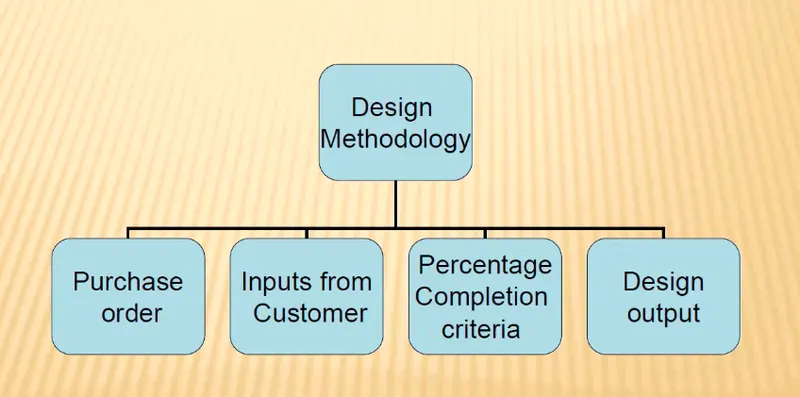
purchase order-
- In this the customer places the order to start the project.
Input from the customer-
- Functional requirment-
- Prefered standard component
- Car product
- Layout
- Ergo data
- Weld study
- Standard detaling templet
percentage completion criteria
- The percentage completion criteria tell how much amount of work will be completed by which date.
Design output
- The final output is given to the customer for approval
2. what are the inputs required from the customer ?
Functional requirment-
This tell the type of the use of the fixture
- Hemming fixture
- welding fixture
- checking fixture
- storage racks
Prefered standard component-
The preffered component by the customer. This components are standard. These standards are made by companies like ABB, NAAMS, DESTACO, ZYTRAN, TUNKERS
The customer also provides the standard parts that they want to use in the fixture.
What type of clamps, cylinders, etc.
Car product-
- GD&T
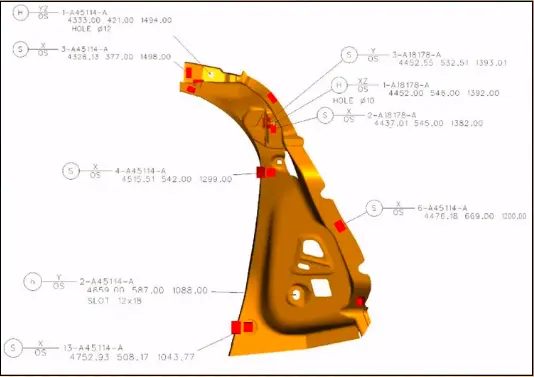
This tells about the location of parts, points, Datums,etc. Tells about the location of the clamp unit, Locating pins, Dump and slide information.
- part list
This contains the list of parts the fixture has, this also contains the list of assemblies the fixture has.
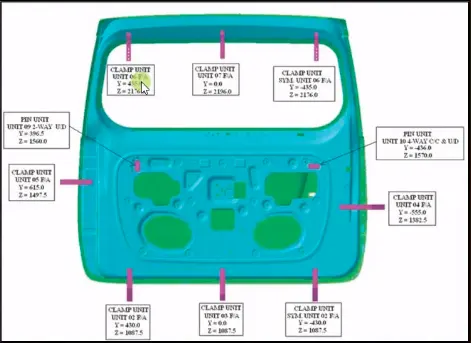
- clamp files
This files have the information related to the clamp placement. This gives the data where the clamps have to be placed.
- CAD files
This are the files which contain the CAD model of all the parts that are manufactured. This files contain the 3D and 2D files of the parts that are designed.
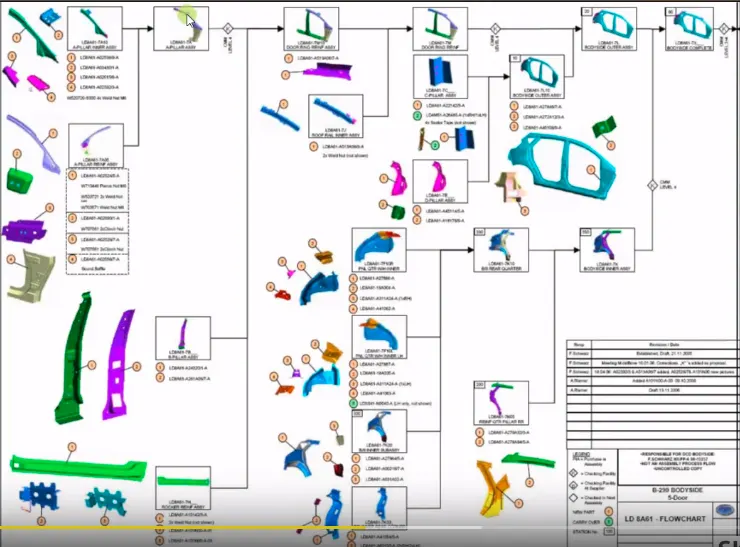
- product assembly Process sheet.
This sheet contains the steps to assemble the product.
Layout-
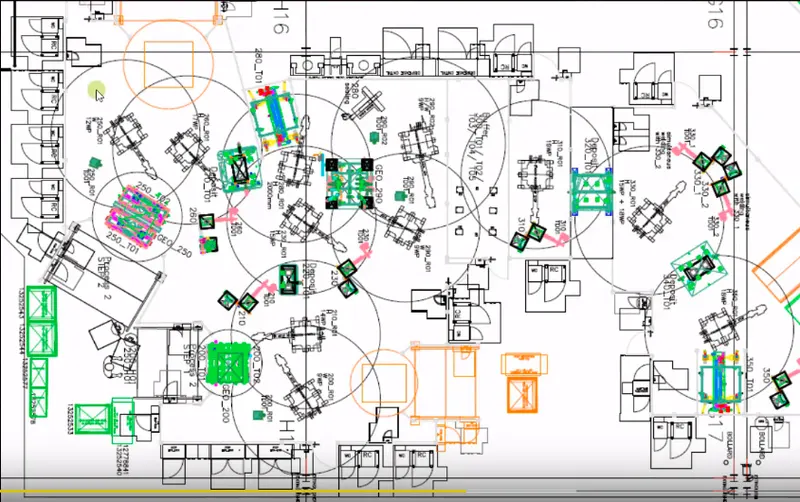
This is the layout of the plant which tells where and how the fixture has to be placed
- Flow of parts
- Robot station
- sub assembly links
- Loading and unloading sequence
- platform height.
Ergo data-
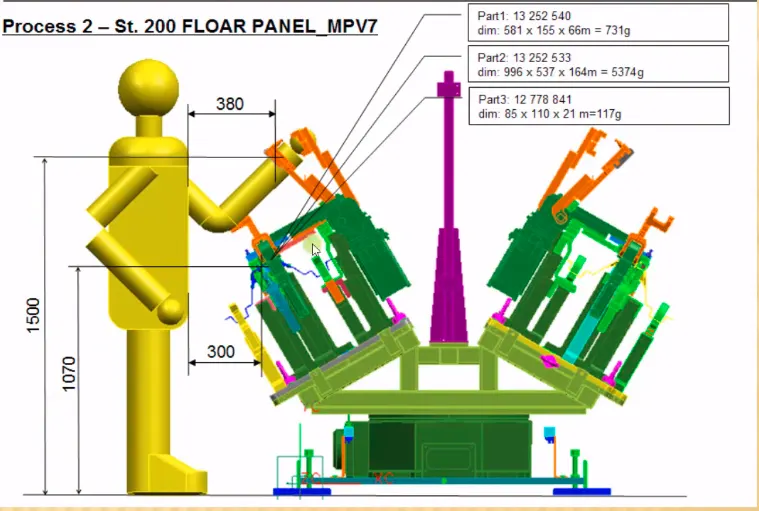
If the fixture is to be operated by a worker, the ergonomic data of the worker has to be provided. The fixture will be designed according to the saftey and comfort of the worker.
It provides the data of the height of the worker, what distance the worker will stand, angle at which his arm must bend, etc.
Weld study-
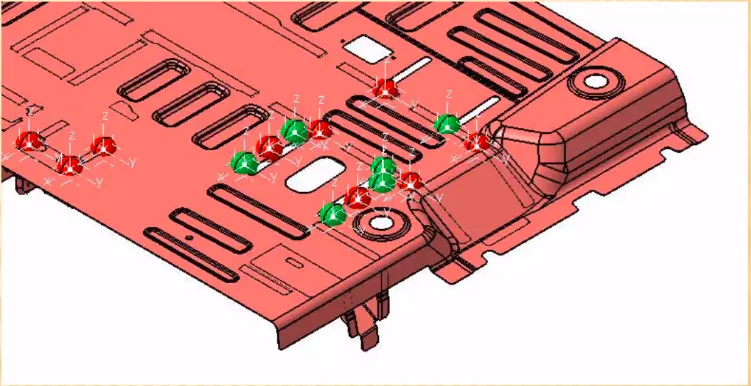
This study is done to map the welding points for the part.
This includes the weld gun details
Weld matrix detail.
spot weld points
re-spot weld points
3. What is the input we get from "car product" ?
Geometric Dimensioning and tolerancing
- This gives the input for the location of the pin and the parts.
Part list
- This tells all the parts that are available for the product.
CAD files of the car parts
- This are CAD files that are designed using the CAD software.
Clamp Plan
- This tells the clamp position of the clamp.
Product assembly process sheet
- This sheet contains the parts of the product. This tells how the product is to be assembled. This sheet provides the specific order in which the product needs to be assembled.
4. What is clamp plan ?
- The clamp plan provides the data of the clamp location.
- This is important as any change in the clamp position will damage the part.
5. What is the purpose of the layout ?
The layout provides the following data:
- Flow parts
- Pitch station
- Robot layout
- Tool changers and tip dressers
- Sub assemblies links
- Platform height
- Loading and unloading sequence
The layout is given in the layout sheet:
6. What is ergo data ?
The ergo data is the data provided for the saftey and the comfort of the worker who will operate the fixture manually.
This contains the data like height of the worker, distance that the worker will stand from the fixture, the angle at which his/her arms should bend.
7. What do you understand by weld study ?
The weld study provides the data related to the welding points, weld guns, re-spot welding, spot welding.
8. What are the criteria for percentage completion ?
The percentage completion completion criteria is how much percentage of work is completed.
This is followed in the design stages and the dispatch stages of the welding fixtures.
- 0-25% - Input and concept design
- 25-40% - Concept approval and simulation.
- 40-85% - Design freezing and detailing.
- 85-100% - Check and final dispatch.
9. Brief about "output" in design
The output is the 3D and 2D design of the tools and the parts.
It consists of:-
Unitized tools: This requires two types of drawing sheet
- Key sheet: This tells the index of the unit and its placement on the tool
- Layout sheet: This is the detailed drawing of all the units and all its components
Non-Unitized tools: This tools can stand on their own and can be detailed on the design sheet.
- The output is the final product that is given to the customer.
- The output design must have standard components.
- The design must be cost effective and simple.
- The design must comply with all the saftey standards.
- The design must be ergonomic.
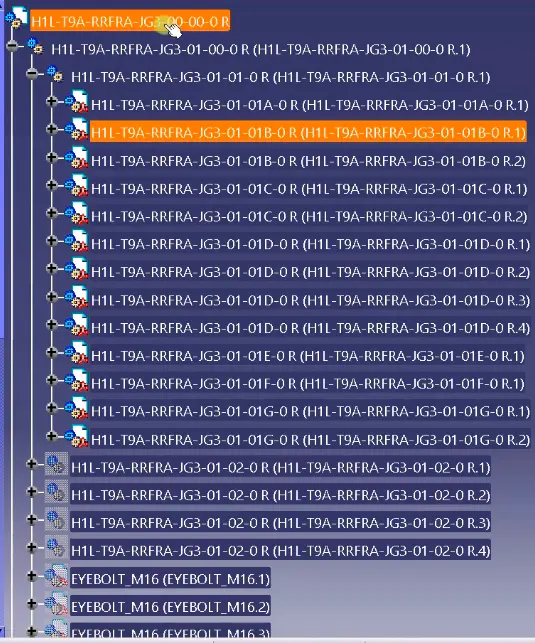
10. What do you understand by structuring a design tree ? How does this reduce error during design ?
- Structuring a design tree is a process where all the parts and assemblies are named in a specific standard and specific order.
- Design tree is important as the it helps to identify the components and assemblies as well as tools.
- The standard is provided by the company.
- By naming the parts properly helps to identify the part easily, this reduces the error.
- The design tree helps to identify the number of components whether different or same name.
11. What are units ? Mention 5 types of units.
A unit is a assembly of different components put together to make a useful part
- Fix pin unit
- Rest unit
- Dump unit
- Slide unit
- Rough locator unit
12. Describe Fix pin unit ? & Their purpose
- Pin units are used to mount the car panel using pin parts.
- Their purpose is to locate the part in the proper position and hold the part in the proper position as the work is being done on the part
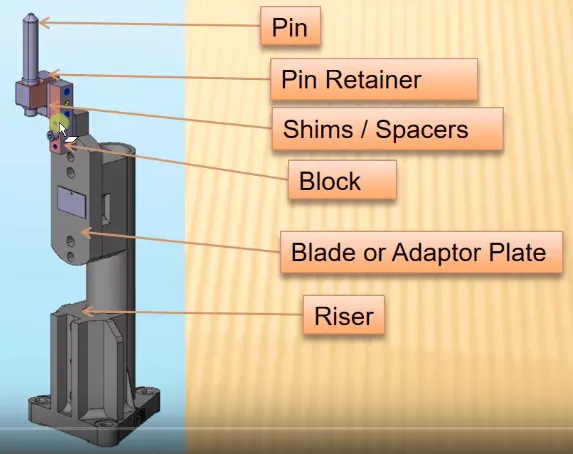
13. What are the different parts of the fixed pin units.
- Pin
- Pin retainer
- Shim/Spacer
- Block
- Blade
- Riser
14. What is the purpose of rest units and describe it's parts
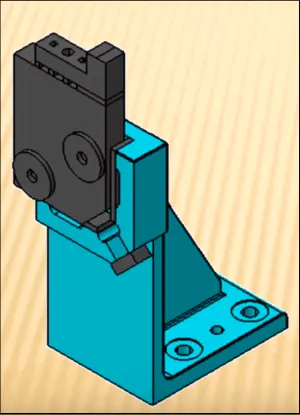
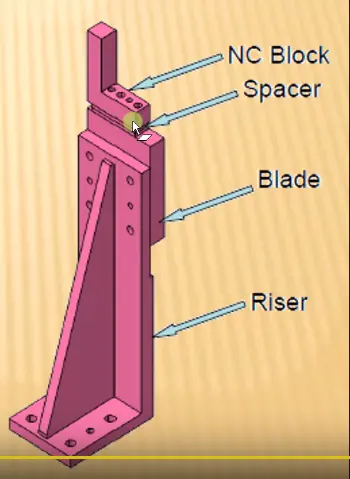
The rest unit is designed to rest/support the car panel using the NC blocks/Mylers/Rest parts
Parts:-
- NC part
- Spacer
- Blade
- Riser
15. What is the basic fundamentals to design a sensor unit ?
- All loose panel should be welded
- All the panels must be sensed by the sensors
- All the sensors must be placed in three direction
16. What is a rough locator unit and what is the basic fundamental to design it
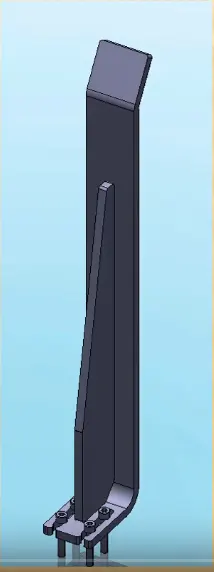
This part is the designed to guide the car panel to it's position. It helps the operator to locate the car panel easily.
- It should be placed at the edge of the car panel.
- It should be placed in same angle as the car part edge, with minimum distance of 2-5 mm.
- It should guide panel in the pin arresting direction.
- It should start guiding the part 10-15 mm before the pin
- It should be desiged with two slots for easy adjustmet
- The slot should be in the direction of the car part.
17. What is a base unit and describe it's parts
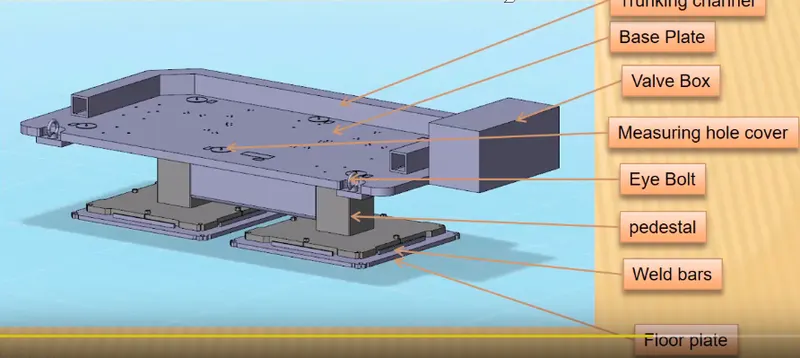
A base unit is used to mount all the other unit of the tool. It also mounts other parts like pneumatic cylinder, valve box, trunking channel.
Parts:-
- Trunking channel- For channeling the wires and the tubes for the hydraulic cylinder.
- Base plate - This is the plate that on which the entire fixture is assembled
- Valve box - This box contains all the valves necessary to operate the hydraulics of the fixture
- Measuring hole
- Eye bolt - This is used for lifting the entire fixture.
- Pedestal
- Weld bar - The weld bar is used
- Floor panel - This panel sit on the floor to support the fixture.
18. What is a dump unit and what are it's functions
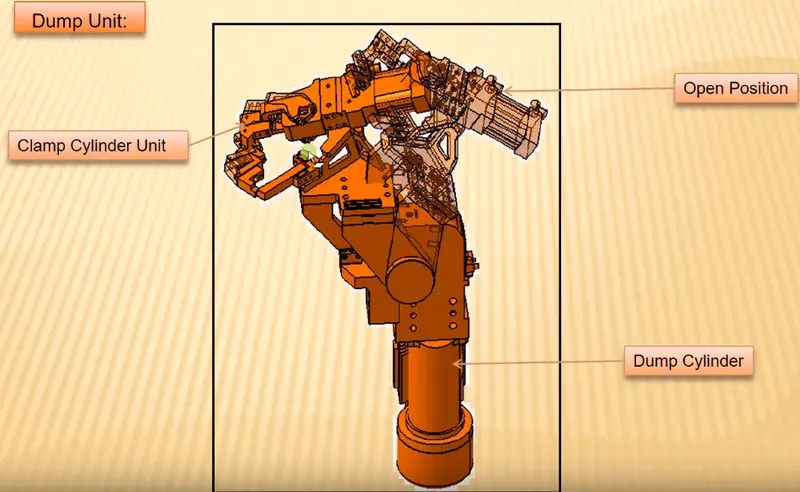
The unit is used when the panel has some constrain when assembling. Any geometrical constraint in the part the dump unit is used.
19. What is a slide unit and where is slide unit is commonly used
A slide unit is designed for sliding the parts in their position.