Design of backdoor
DESIGN OF CAR BACKDOOR USING NX CAD
Objective:
The main objective of this project is to design the backdoor using the engineering parameters and dimension criteria for the standard backdoor design.
Introduction:
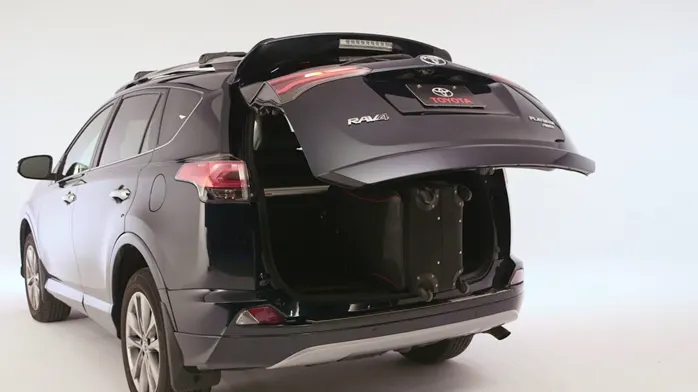
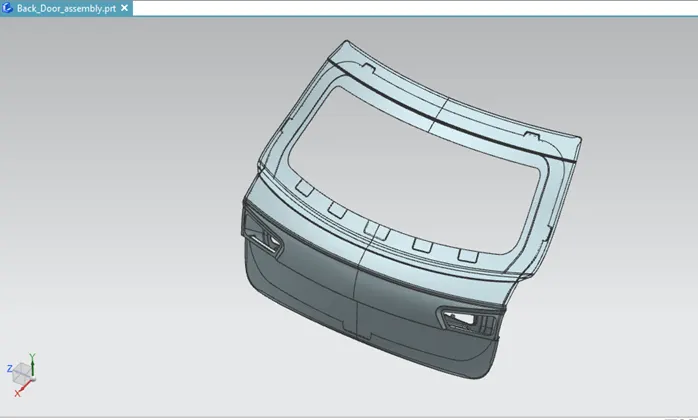
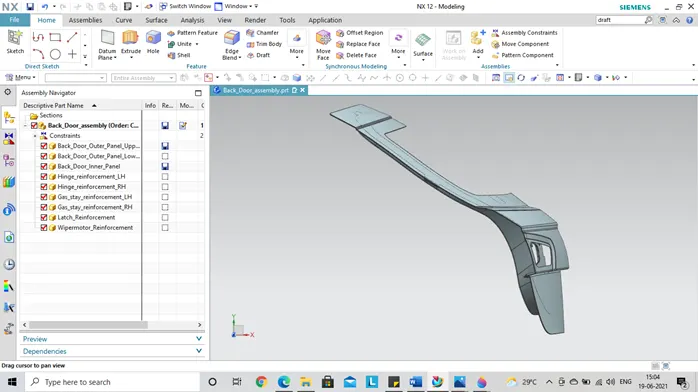
Back door assembly is the placed at the backside of the car, which is made up of steel or aluminum depending on the requirements, the backdoor design varies for different cars, each of its design is made in such a way that it has a smooth opening and closing, the different parts of the backdoor assembly are the outer panel, inner panel, the hinge assembly, the latch and striker and the reinforcements. These parts assembled together to form a backdoor assembly, further the hinge rotation is done with the help of gas stay which holds the door in open position.

Design methodology/approach:
Description:
Some of the important design considerations for the backdoor assembly are:
- Outer panel:
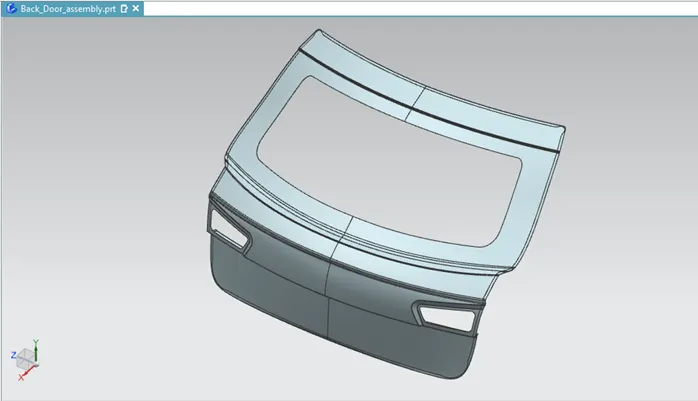
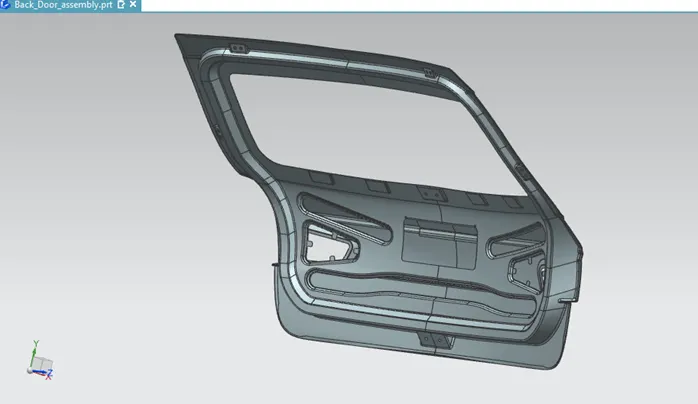
The outer panel has two main portions, one is the upper side and the lower side.
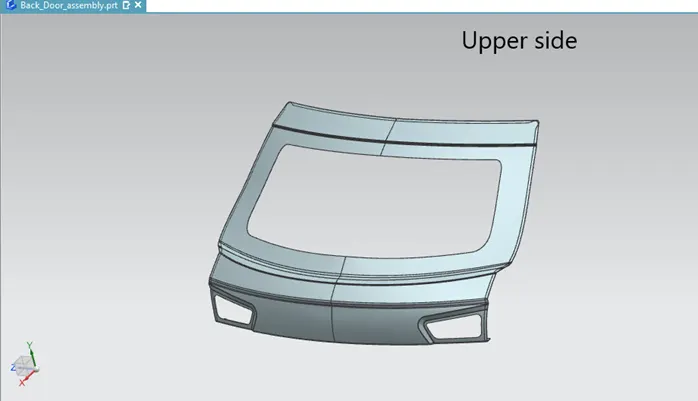
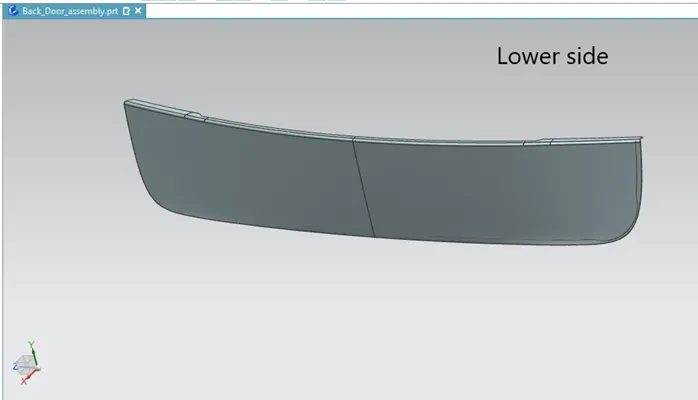
The main features used for the outer panel design are the hemming, corner relief and thickening of the surface.
Hemming is a process made in while manufacturing the part, by folding the edge of the surface with a supporting surface between it such that it locks the parts, this process is usually carried out with rollers which rolls on the end surface to get the hemming done.
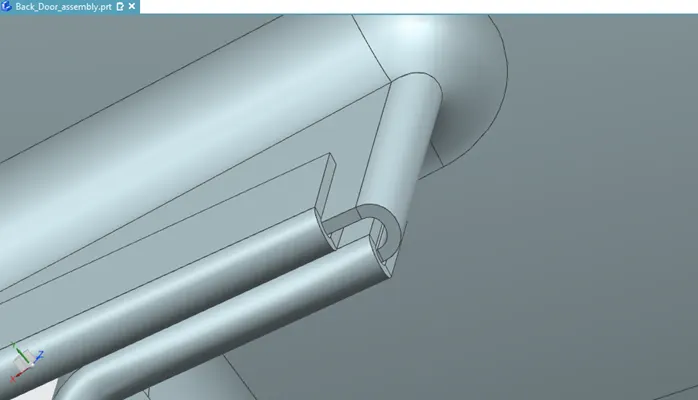
Corner relief is taken into consideration keeping the stress distribution while hemming process, such that to reduce the high stress in the material at that portion due to the corners, the corner relief is made
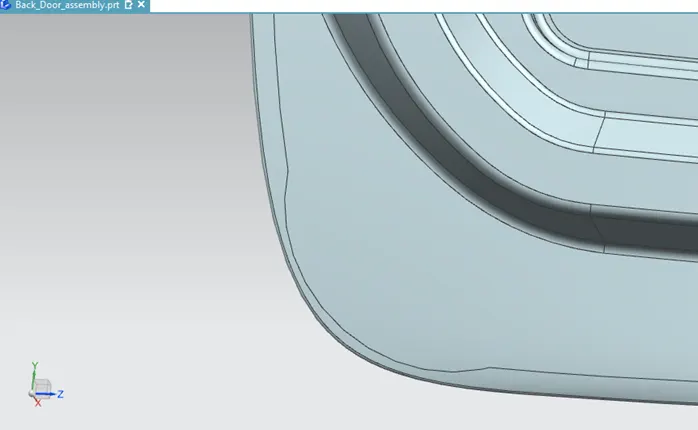
Thickening is usually done to get the required thickness of the whole outer panel so that the surface is converted to a sheet.
- Inner panel:
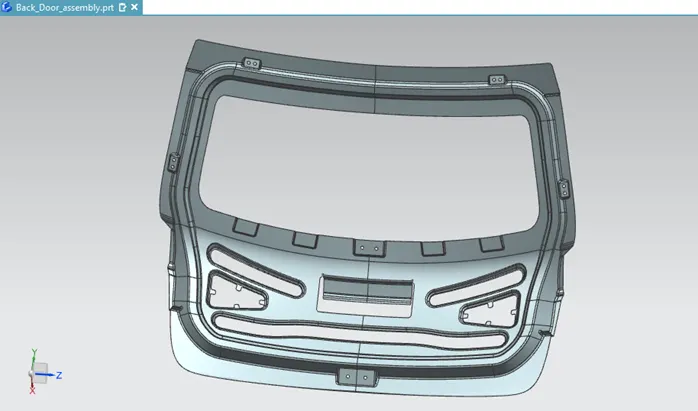
The inner panel is the main part of the backdoor assembly which consists of various features in it.
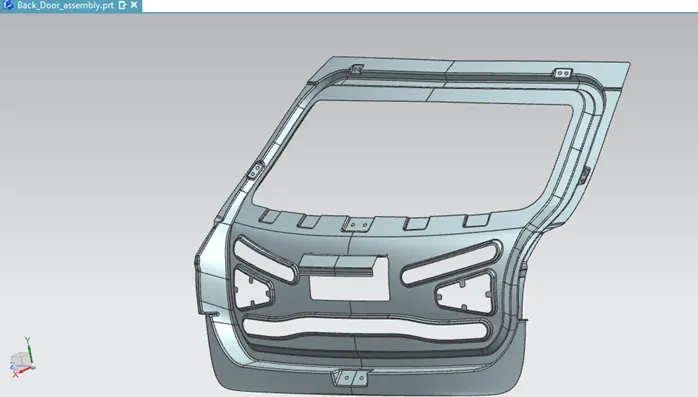
The inner panel has been designed with all the engineering aspects and as per the standard requirement, some of them are
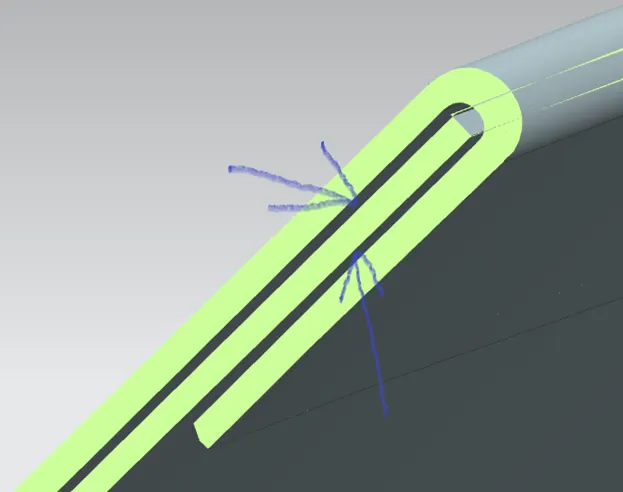
- The gap between the hem section
The outer panel is hemmed to the inner panel with the help of some sealants, the gap of 0.2mm is given for the sealant to ooze out completely under the hem sections.
- Sealing flange section
The sealing flange area is the portion where the rubber sealing touches and locks the door in closed position, so that there is complete closure of the back door and prevents the water particles from entering the cabin. The sealing flange surface should be smooth enough and no other features are created on that surface. 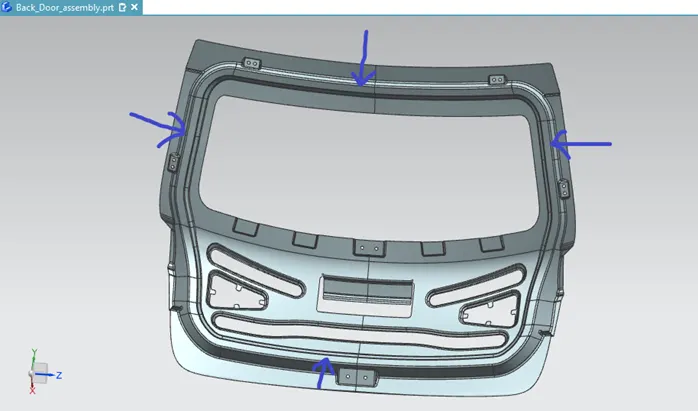
- Emboss features
Sheet metal embossing is a stamping process for producing raised or sunken designs or relief in sheet metal. This process can be made by means of matched male and female roller dies, or by-passing sheet or a strip of metal between rolls of the desired pattern. It is often combined with Foil Stamping to create a shiny, 3D effect.
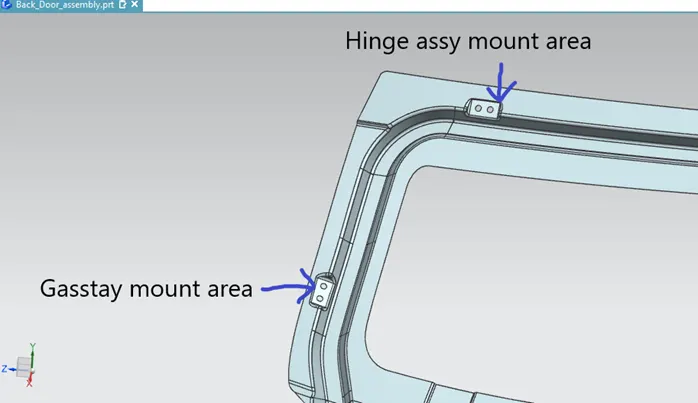
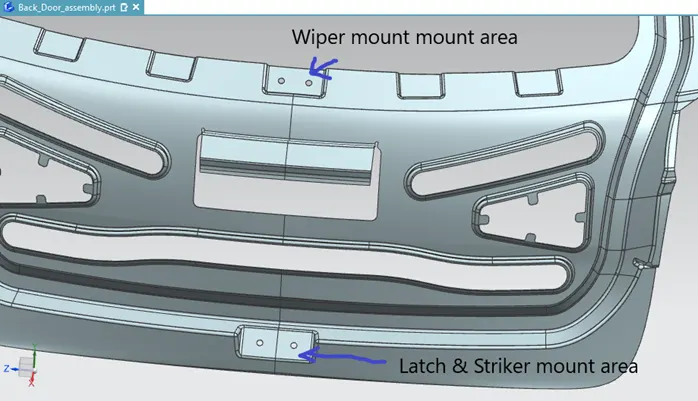
These emboss are even created to get the flat surface on one side to attach the striker, Gas stay, wiper motor and the hinge assembly.
Crash impact load distribution, this factor is followed to get the path of the load travelling, we such that avoid going it straight by setting the cuts at an angle to the right and left ends, and even there are more cutouts so that remove more materials, less weight is obtained, the design of the inner panel is shown above. Some of the emboss made in inner panel are shown below
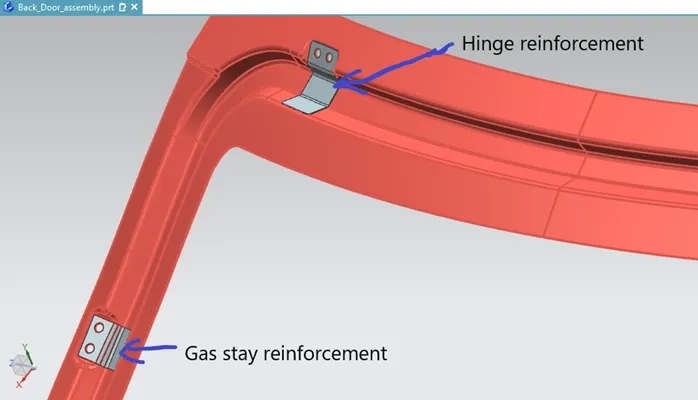
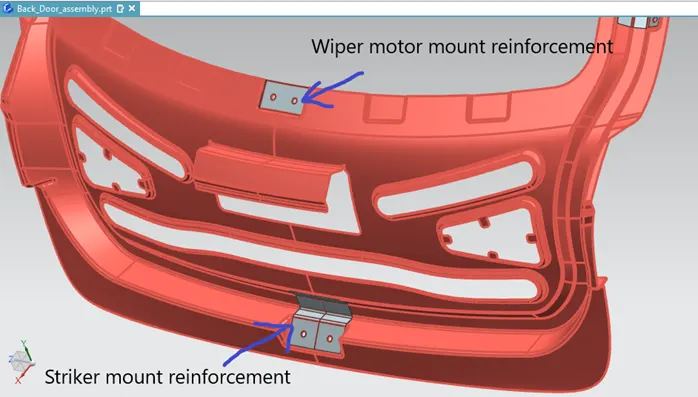
The gas stay, wiper motor, latch & striker and hinge assy placing area is embossed with a flat surface one one side to get the parts mounted onto the inner panel side, to improve the strength of that area the reinforcements are used, the reinforcements are welded to the inner panel.
- Mastic sealant
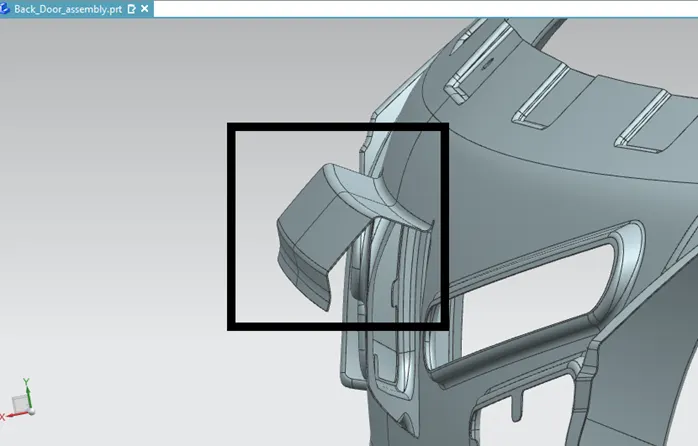
Mastic is the sealant used to seal the gap between the outer panel and the inner panel, this mastic is a type of rubber material and also acts as resistant, in the picture below shows the place where the mastic sealants are used.
The region where the mastic is added is the square region which is designed in such a way that it can be manufactured precisely, there is a standard gap of 5 mm maintained to obtain the mastic data at that region.
- Striker trajectory
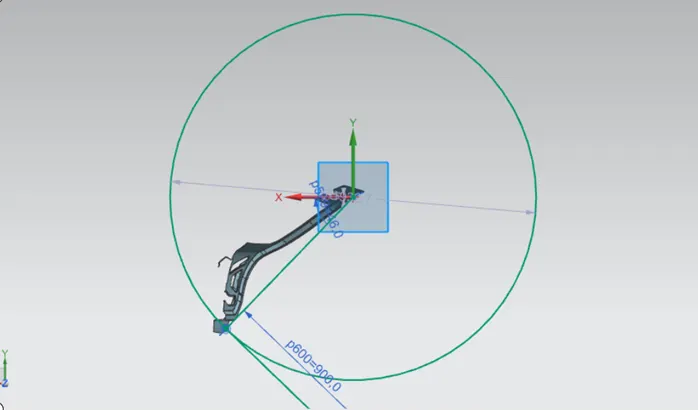
The hinge assembly and the striker have a relation between them to obtain a smooth closure and opening of the back door. The trajectory is formed by taking the hinge axis and revolving the striker around it, by this means the process becomes accurate.
- The reinforcements:
The reinforcements are used at the gas stay area, hinge mount area, wiper mount area and the striker mount area. These reinforcements give more strength to that region where it is used and withholds some stress. They are welded onto the inner panel and with closure of the outer panel.
- Draft analysis:
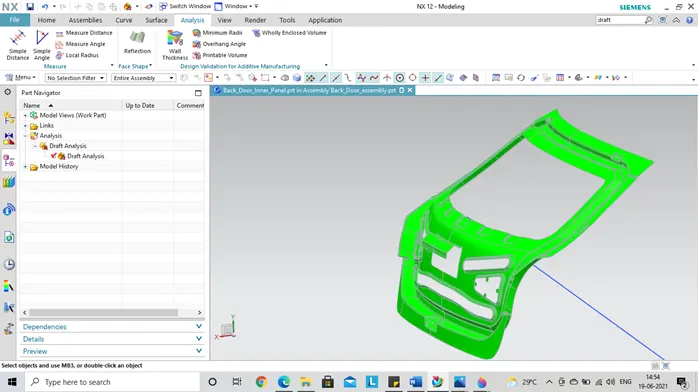
The Draft Analysis command enables you to detect if the part you drafted can be easily removed or not. This type of analysis is performed based on color ranges identifying zones on the analyzed element where the deviation from the draft direction at any point, corresponds to specified values.
Draft analysis performed on the Back door inner panel
Views of the backdoor assembly:
Front view:
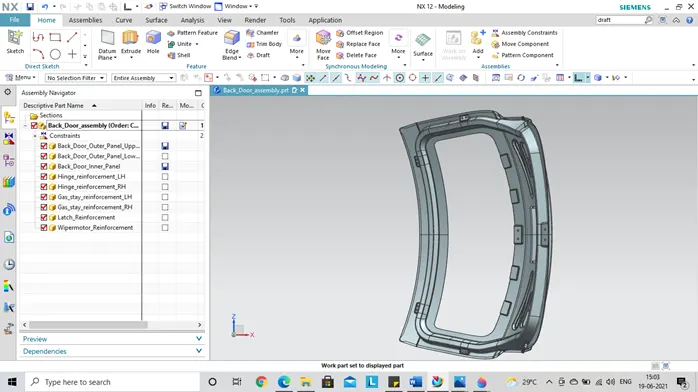
Left side view:
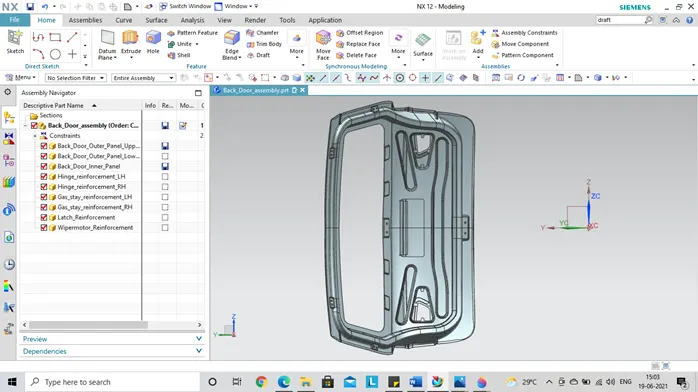
Right side view:
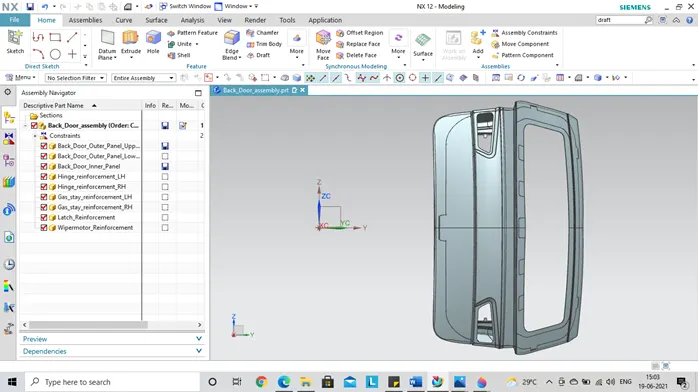
Isometric view:
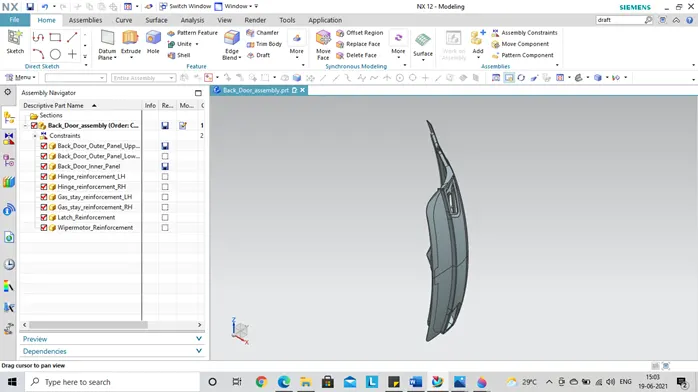
Top view:
Conclusion:
The backdoor assembly is designed with all the dimension factors and design criteria using NX CAD, by this we get to know what are all the factors to be considered for the backdoor to be designed and even the manufacturing process of that design.