Section Modulus calculation and optimization
Calculation of section modulus for the hood design
What is section modulus?
- Section modulus is geometric property for a given cross section used in design of beams or flexural members. In simple it is the ratio of total moment resisted by the section to the stress in the extreme fiber, it is totally determined to find out the strength of the cross section, by getting the section modulus increased the moment of resistance also increases giving a high load bearing capacity.
Importance:
- It is significant for beam and flexural member design.
- More the section modulus, more the member is resistant to bending of the beam.
- It is easier to calculate stresses in beam and an exact measure of strength of steel.
- If two beams are made of same material and comparing the “section modulus” of two beams, the beam with bigger section modulus will be tougher and more capable to withstand larger loads
Formula for calculating the Section modulus (S)
Here, S=I/y
Where, S= Section modulus
I = Moment of inertia value from the inertia analysis
y = Distance from neutral axis to outermost fiber
Here we have taken two sections into consideration one is the existing design and other one is the modified section
- For the designed cross section (Without modification)
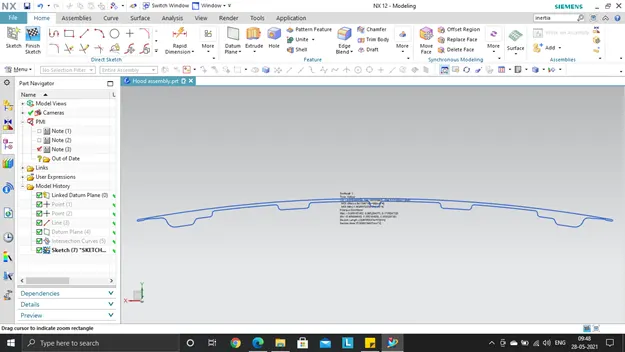
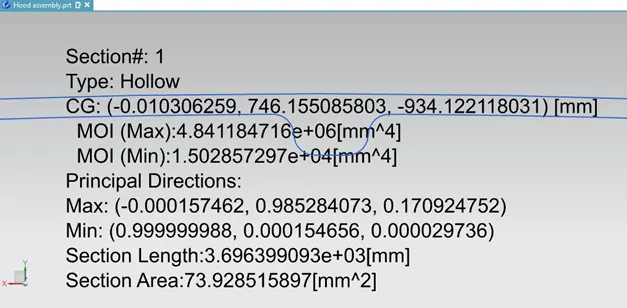
For this design the values are determined:
I = 1.502857297e+04[mm^4]
y = 440.40535 mm
So, S=1.502857297/440.40535
S=0.00341244 mm^3
- For the modified cross section (With modification)
In the modified cross section, the emboss area has been increased to get the more surface with less distance to the outer panel.
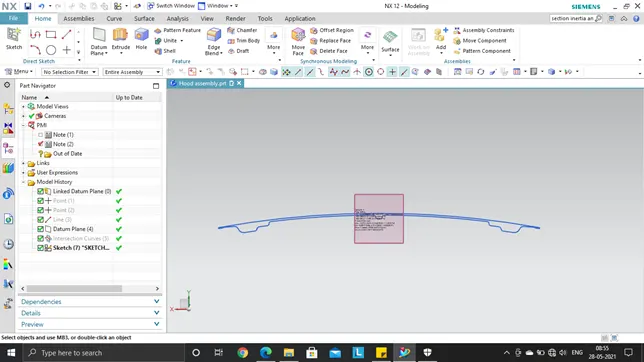
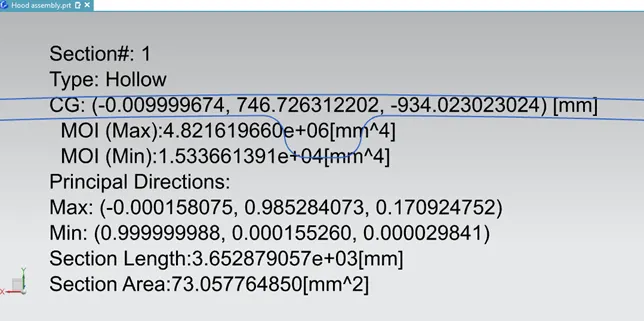
For this design the values are determined:
I = 1.533661391e+04[mm^4]
y = 440.40535 mm
So, S=1. 533661391/440.40535
S=0.00348238 mm^3
Conclusion:
Here by considering these two calculations we can prefer to choose the modified cross section, the modifications in the cross section can be observed in the above pictures, since it has some improvements in section modulus and moment of inertia.