Simulating Combustion of Natural Gas.
AIMS AND OBJECTIVES
- To perform a combustion simulation for a given model of the combustor.
- Plot the variation of the mass fraction of different species involved in the simulation.
- To check the effect of adding water content in the fuel in controlling the formation of NOx and soot. Also, plot necessary line plots and contour.
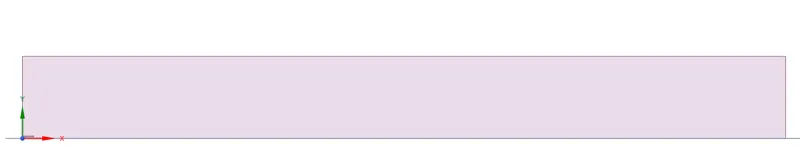
Geometry: Combustor Model
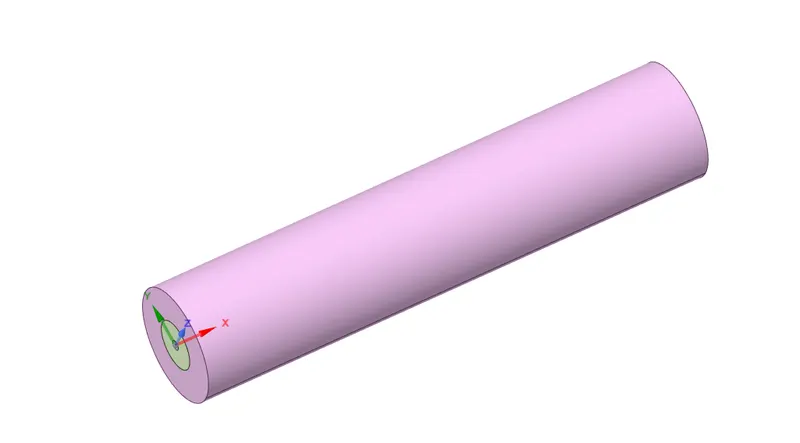
2D Model of the geometry
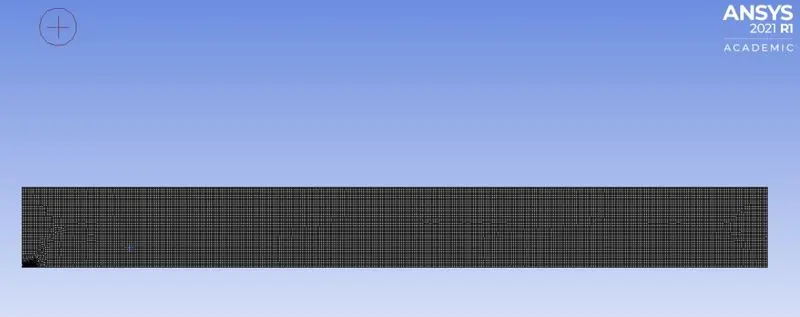
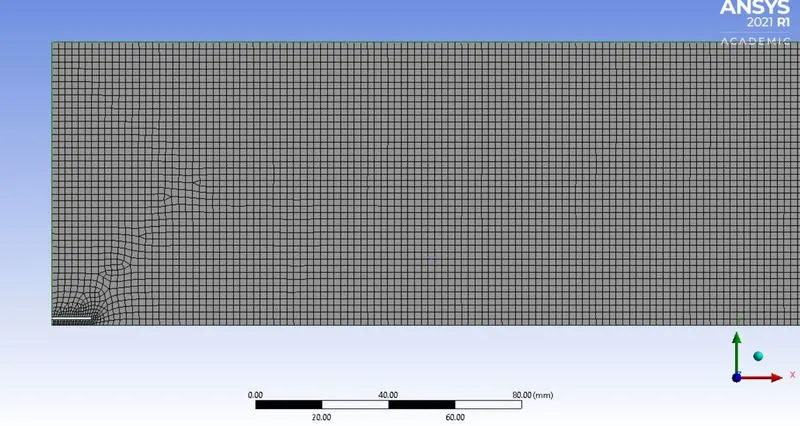
Mesh:
Element Size chosen = 2 mm
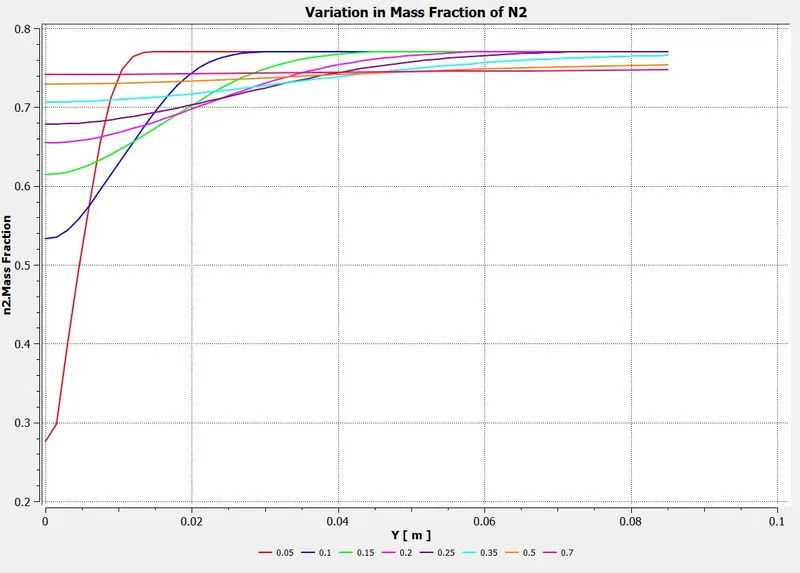
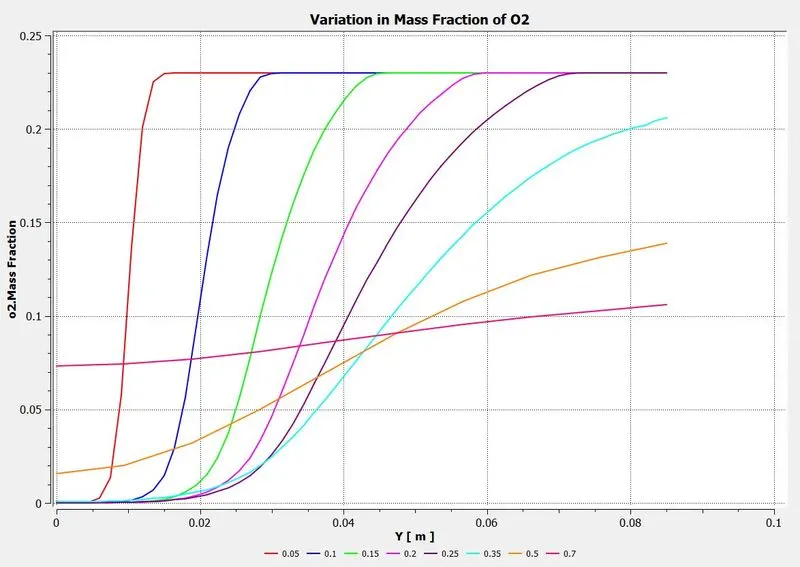
Here we are interested in performing the steady-state simulation. Since the geometry is 2D and the properties are constant radially, we opted for Axisymmetric. Also, the viscous model is a standard K-epsilon with a standard wall function. The species model is selected as Species Transport and the reaction is checked as volumetric. The mixture material is methane-air-2step and the turbulence-chemistry interaction is set as eddy-dissipation. NO pollutant and soot models are enabled. The velocity of the air is fixed at 0.5 m/s for air-inlet boundary conditions and 80 m/s for fuel-inlet. The mass fraction of O2 at the air-inlet is initialized as 0.23 and 1 for methane for the initial condition when water is not mixed. Subsequently, water is added to the fuel from 5% to 80% by mole and the parametric study is conducted. The effect of adding water on the NOx and soot formation at the outlet is analyzed.
- Case 1: Baseline Mesh (without adding water)
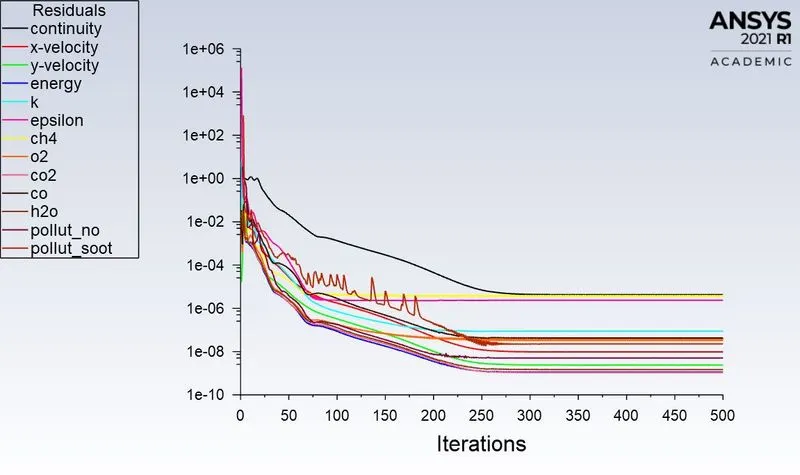
Convergence Plot:
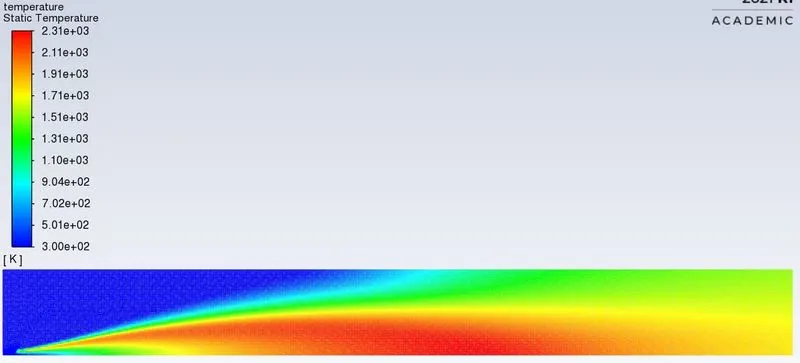
Temperature Plot:
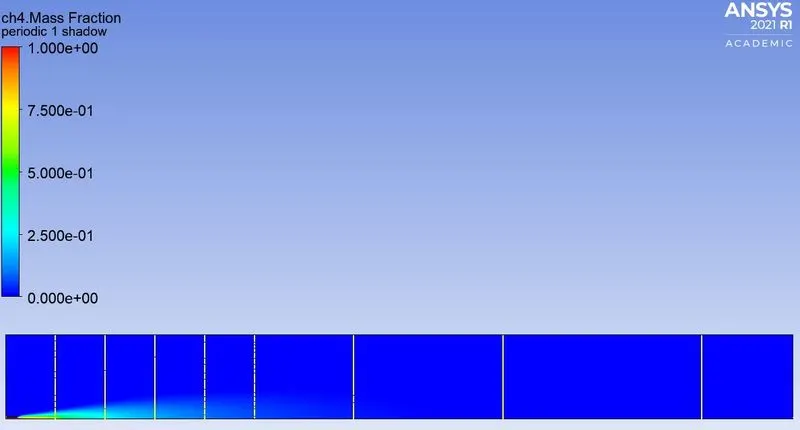
Contour: CH4 Mass Fraction:
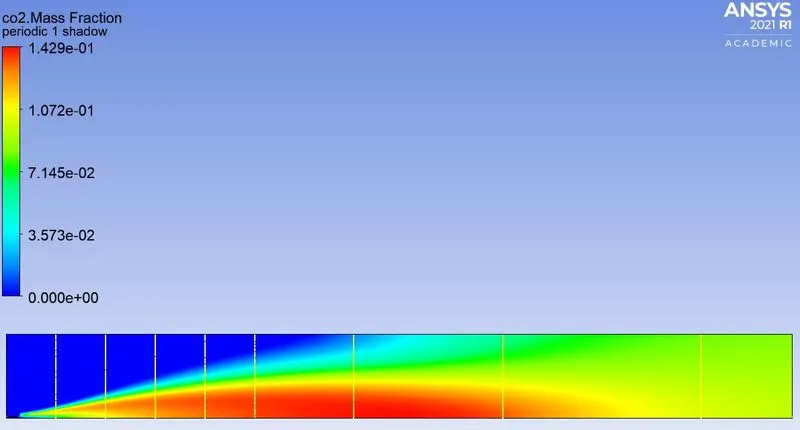
Contour: CO2 Mass Fraction
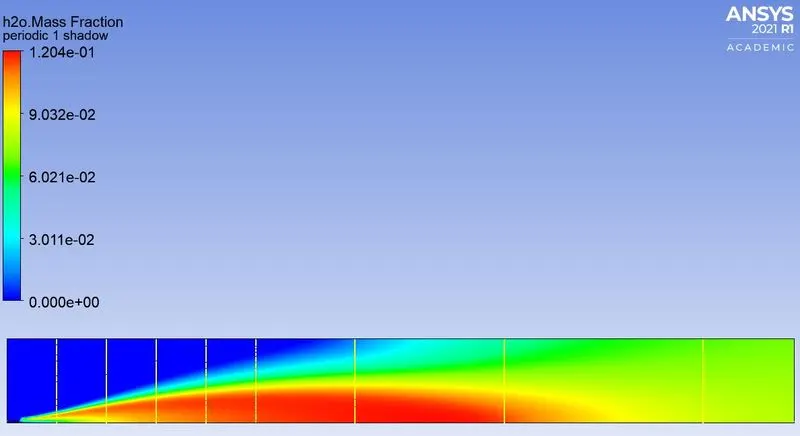
Contour: h2O Mass Fraction
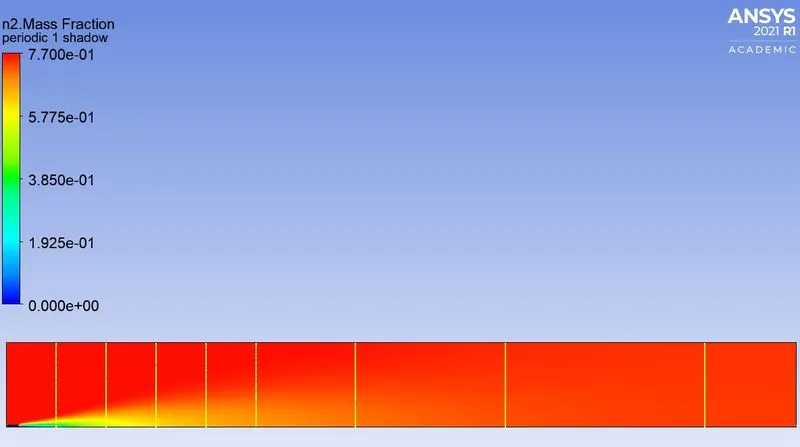
Contour: N2 Mass Fraction
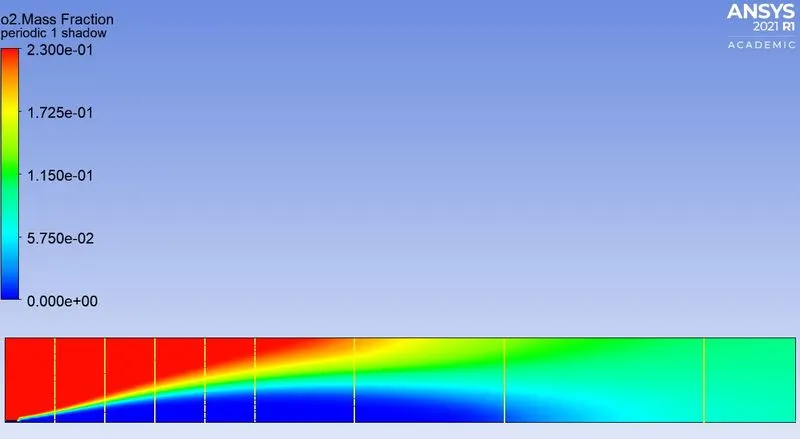
Contour: O2 Mass Fraction
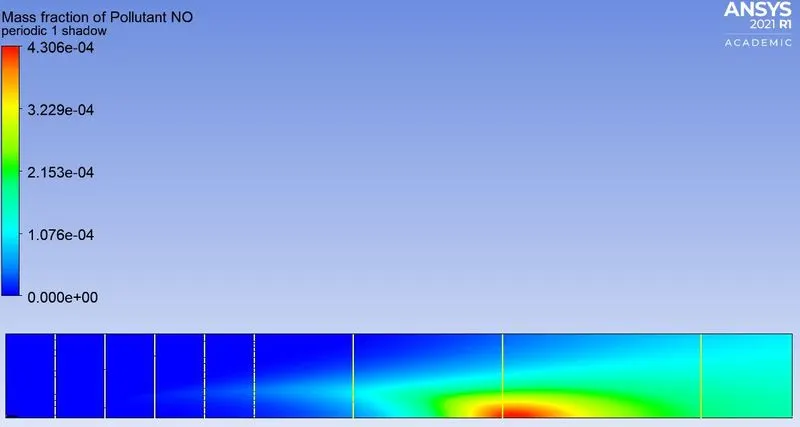
Contour: NOx Mass Fraction
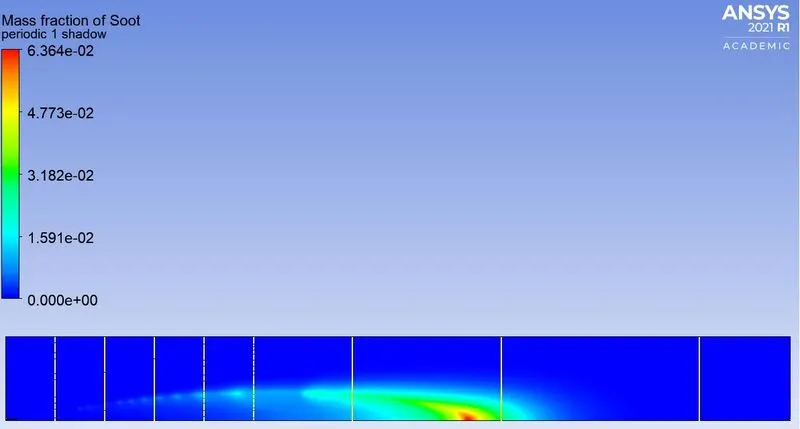
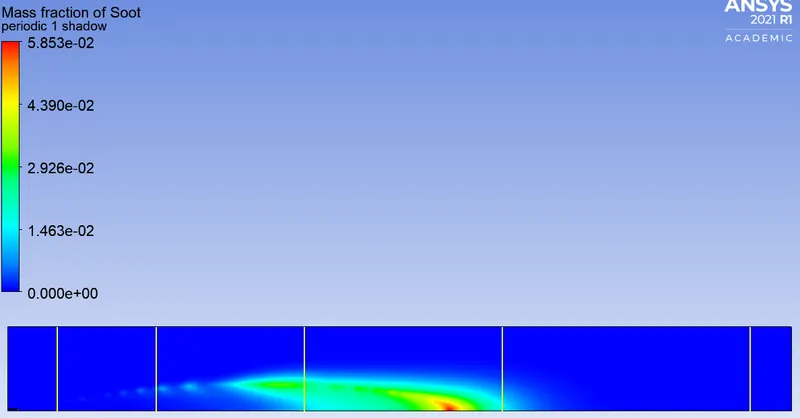
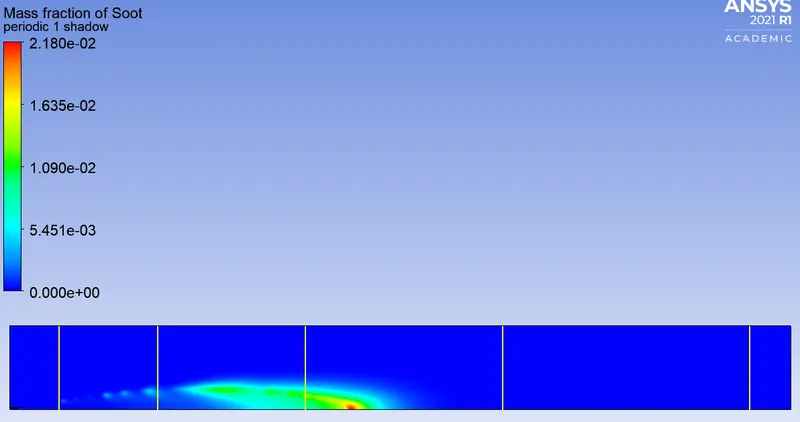
Contour: Soot Mass Fraction
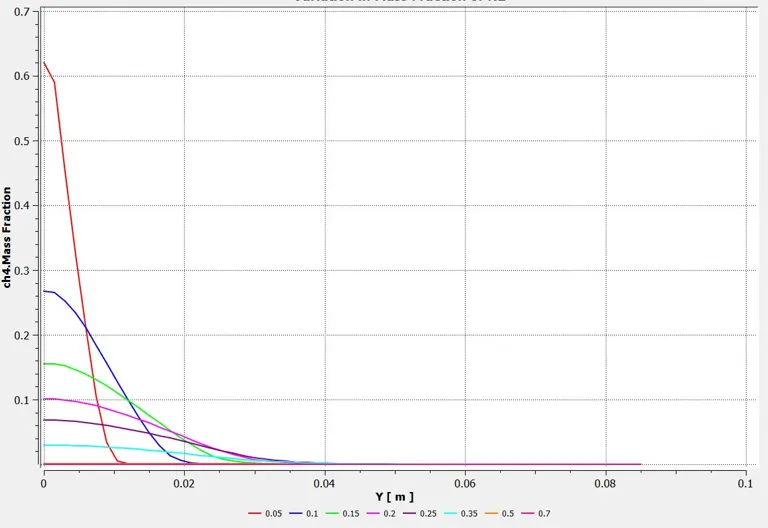
Line Plot: CH4
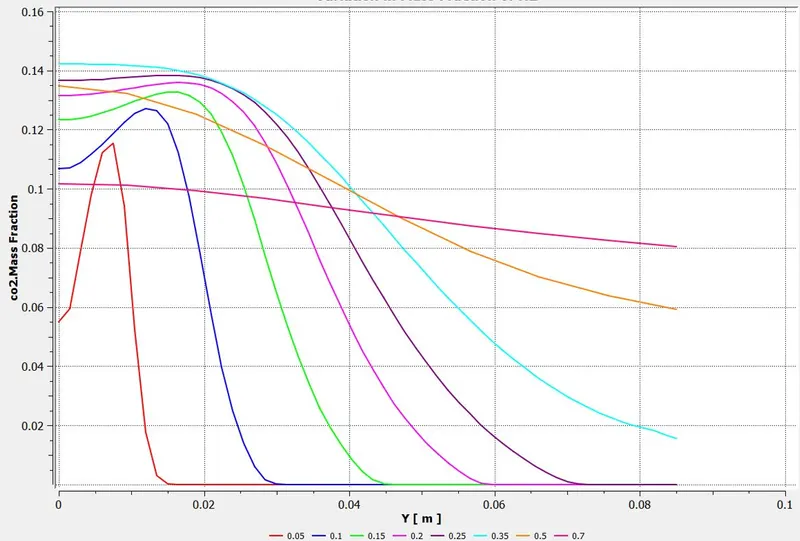
Line Plot: CO2
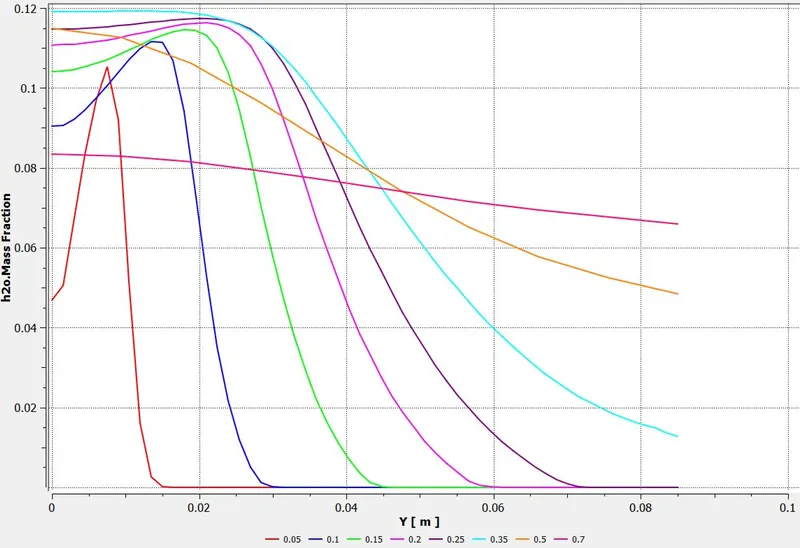
Line Plot: h2O
Line Plot: N2
Line Plot: O2
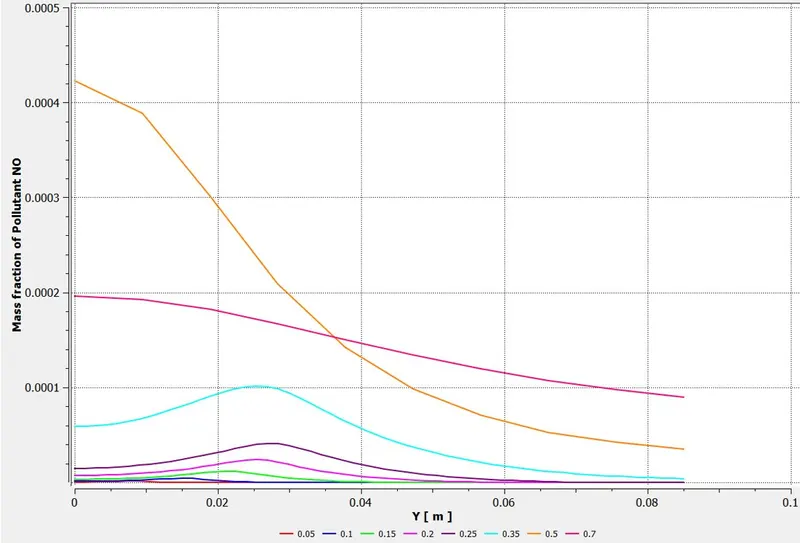
Line Plot: NOx
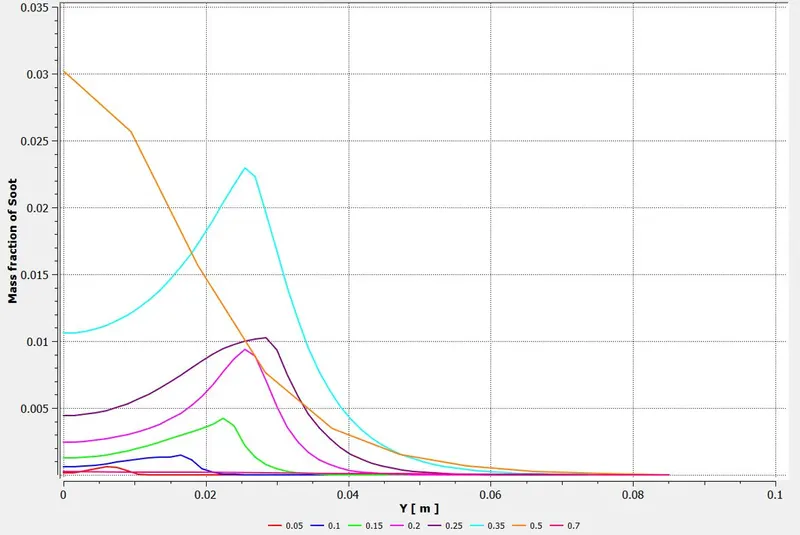
Line Plot: Soot
- Case 2: adding 5 % water
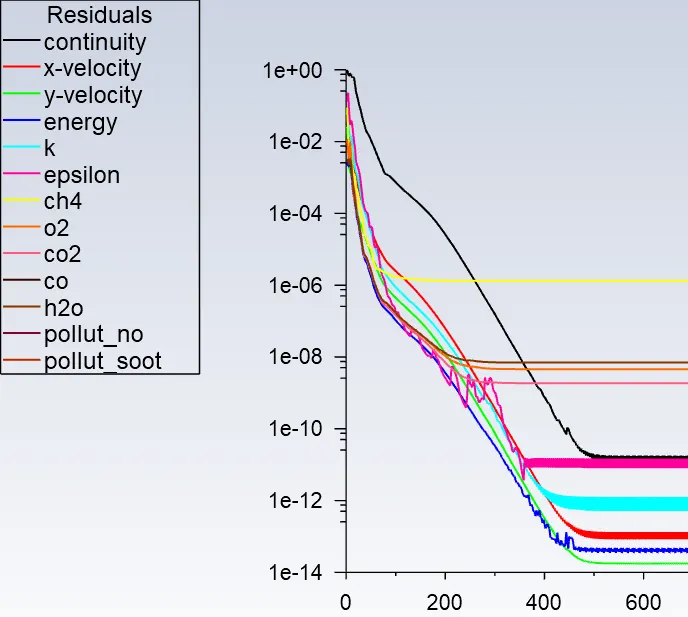
Convergence Plot:
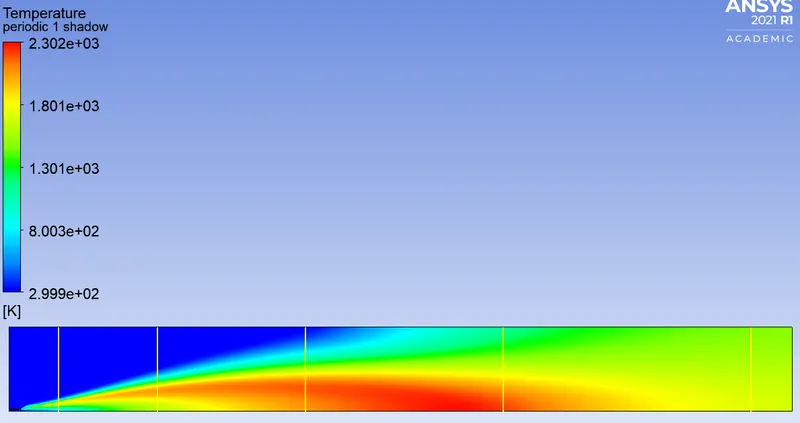
Temperature Plot:
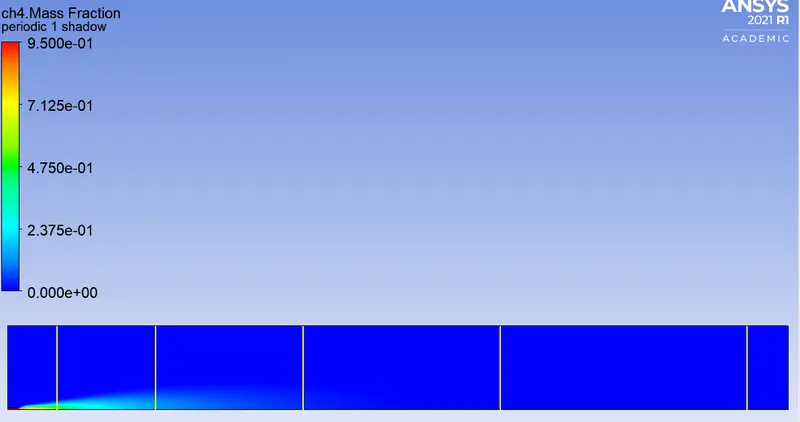
Contour: CH4 Mass Fraction:
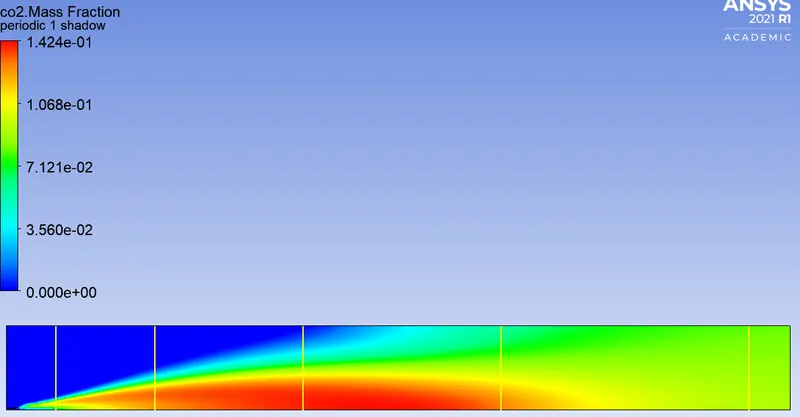
Contour: CO2 Mass Fraction
Contour: h2O Mass Fraction
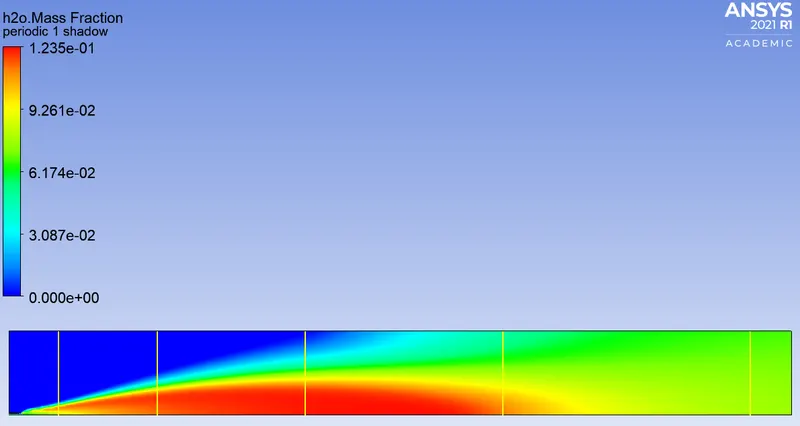
Contour: N2 Mass Fraction
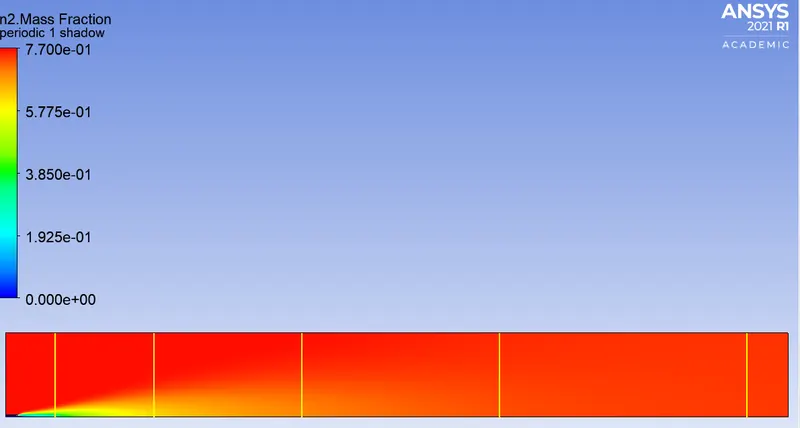
Contour: O2 Mass Fraction
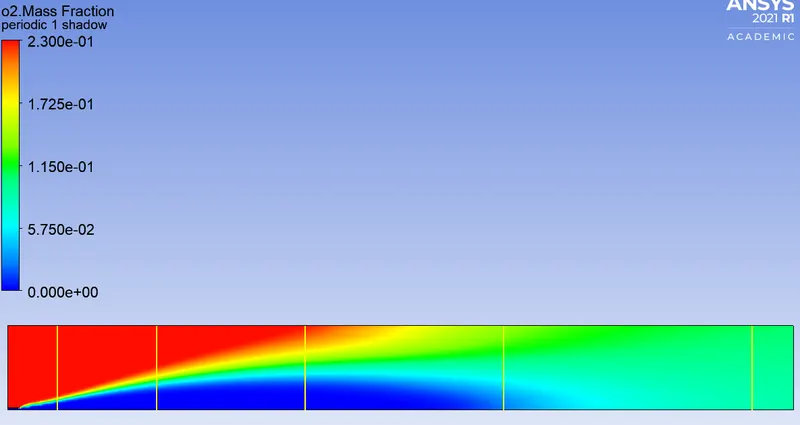
Contour: NOx Mass Fraction
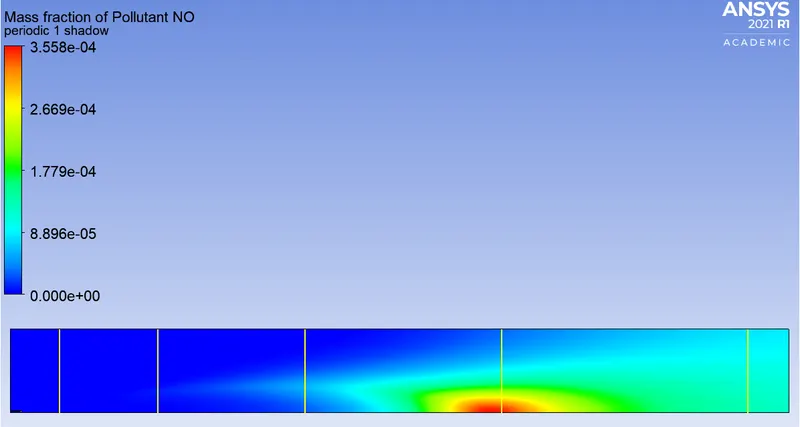
Contour: Soot Mass Fraction
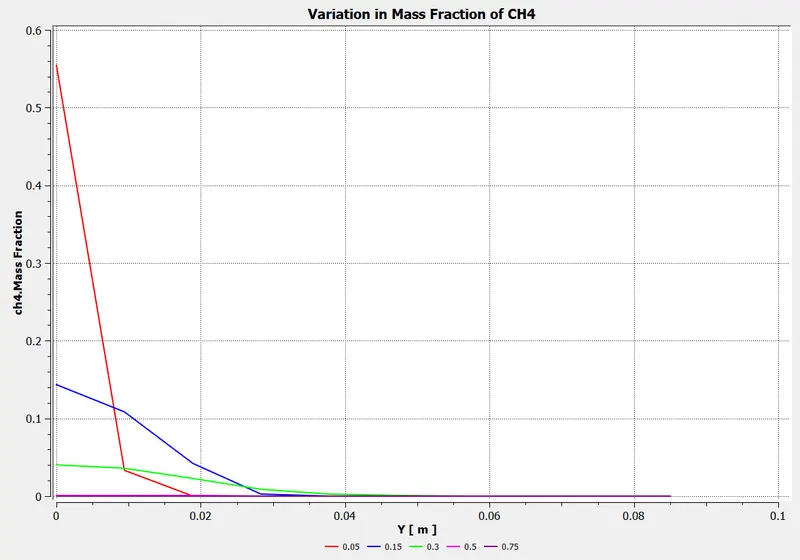
Line Plot: CH4
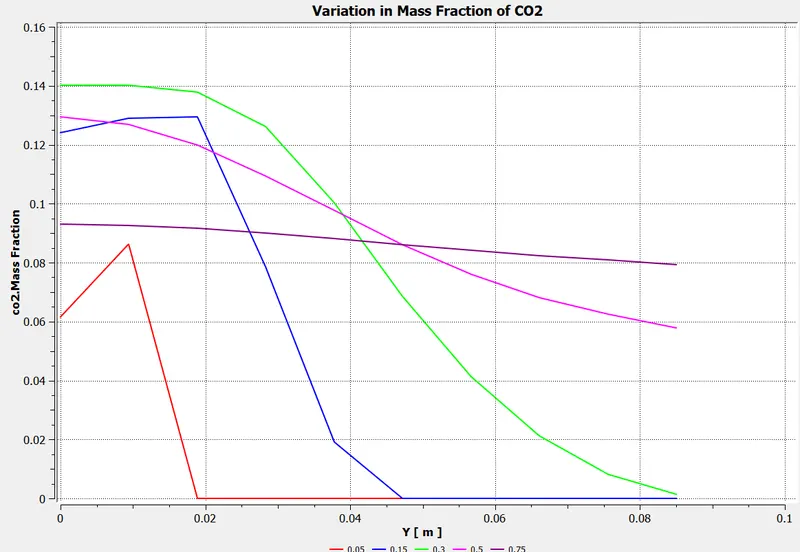
Line Plot: CO2
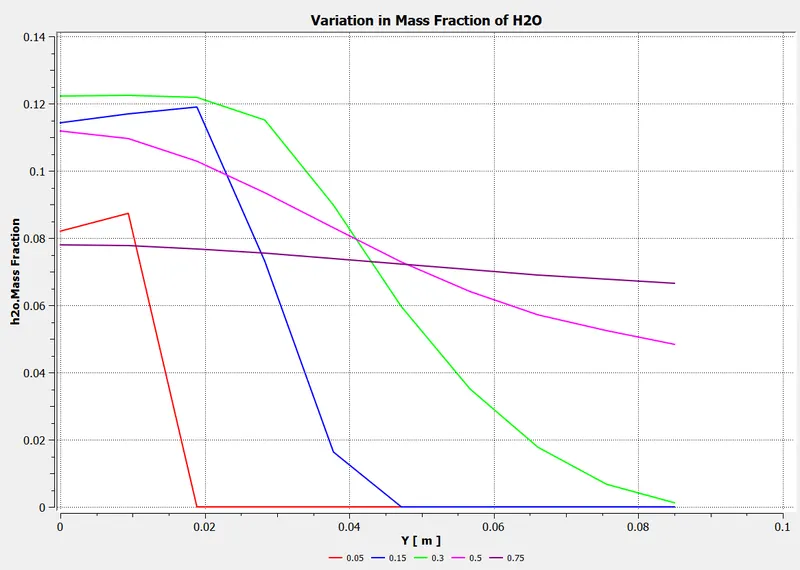
Line Plot: h2O
Line Plot: N2
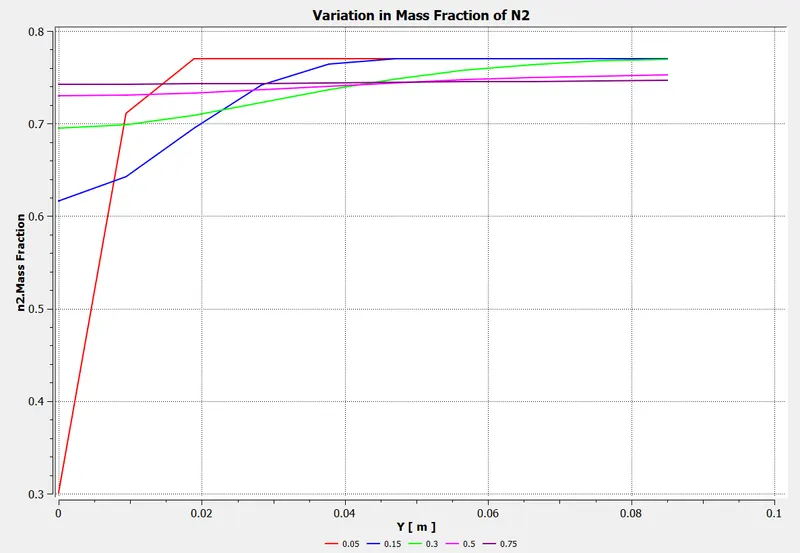
Line Plot: O2
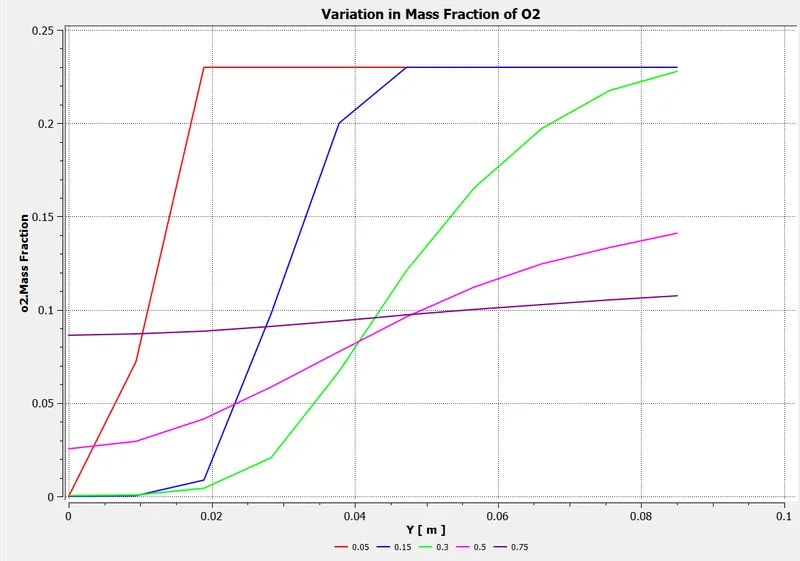
Line Plot: NOx
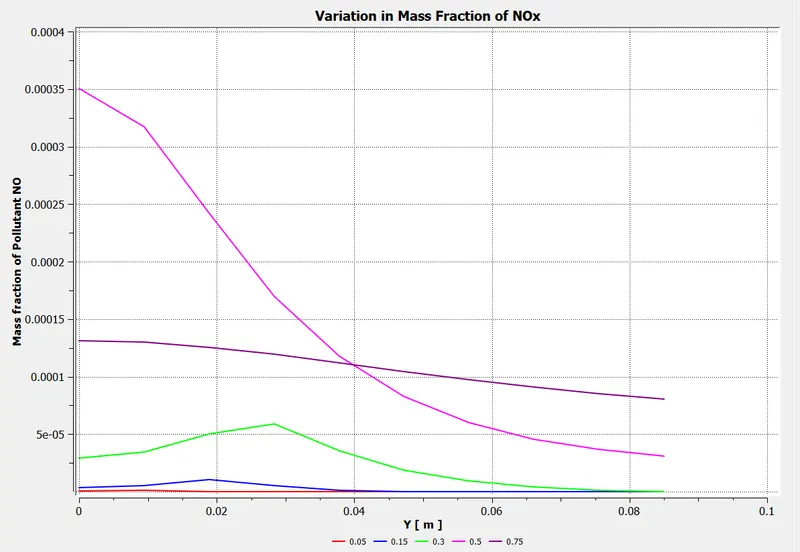
Line Plot: Soot
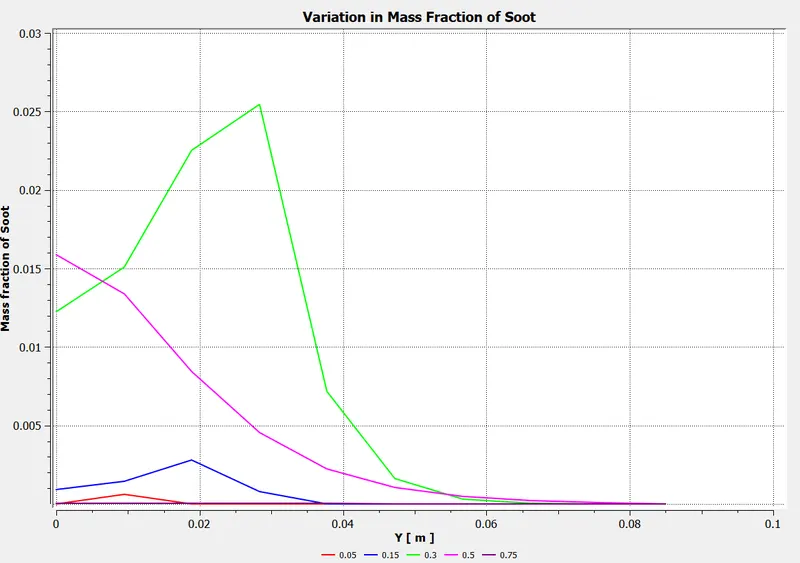
- Case 3: adding 10 % water
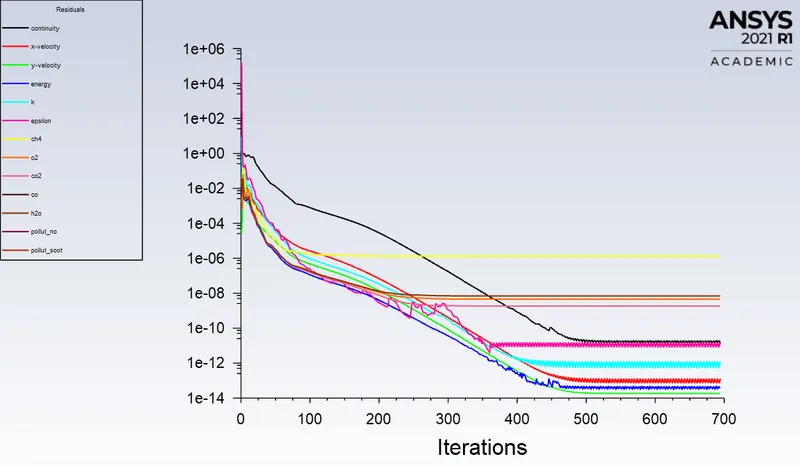
Convergence Plot:
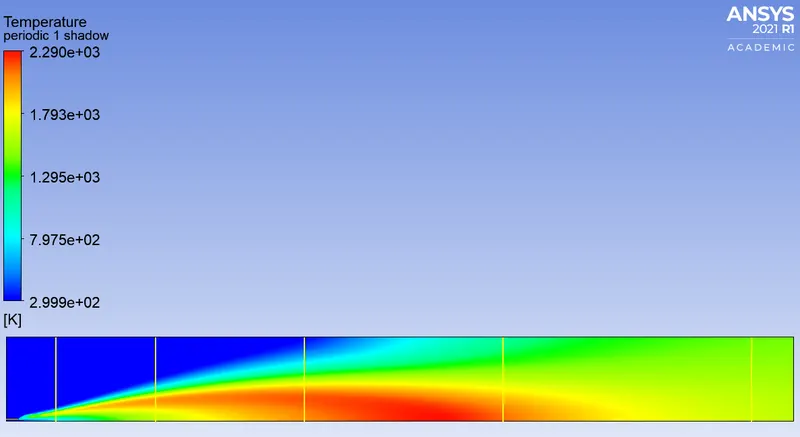
Temperature Contour:
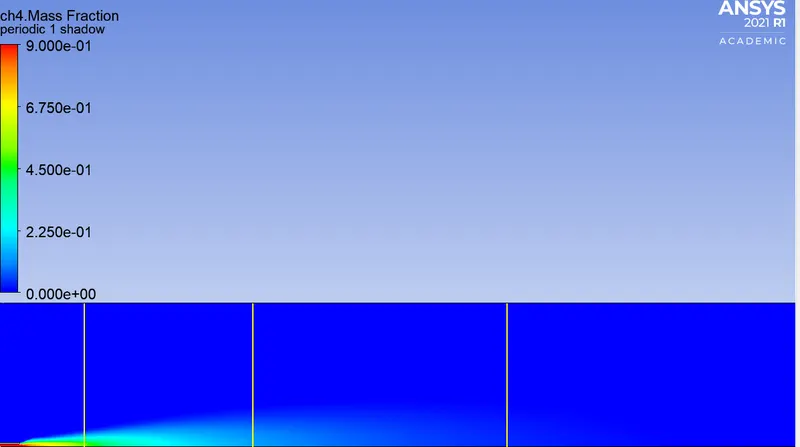
Contour: CH4 Mass Fraction
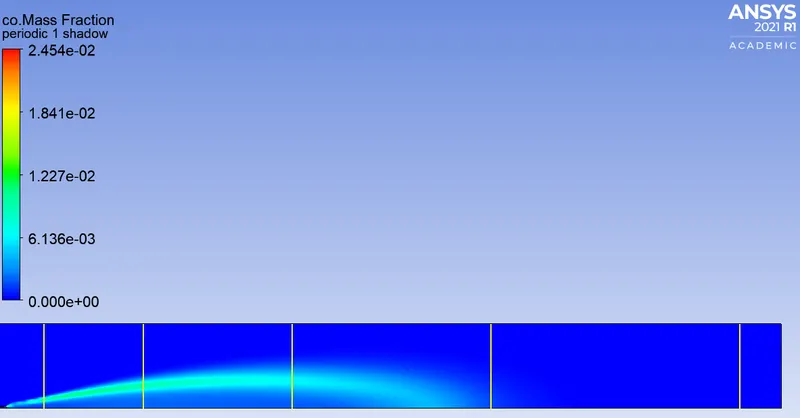
Contour: CO Mass Fraction
Contour: CO2 Mass Fraction
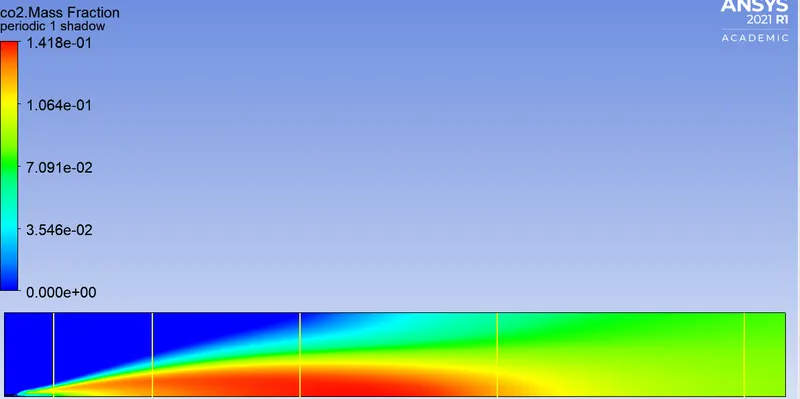
Contour: H2O Mass Fraction
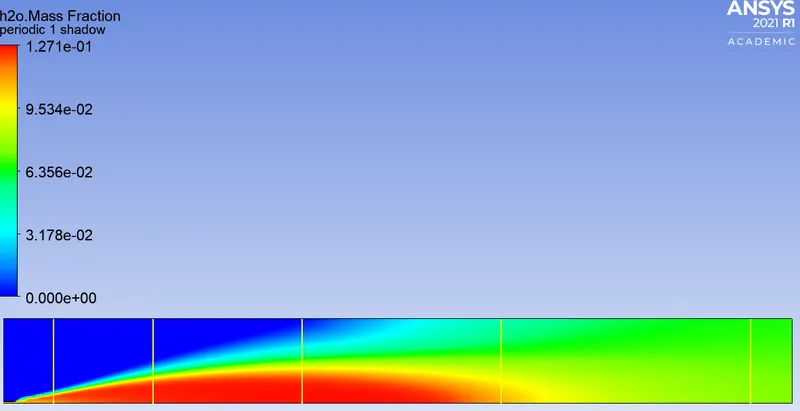
Contour: N2 Mass Fraction
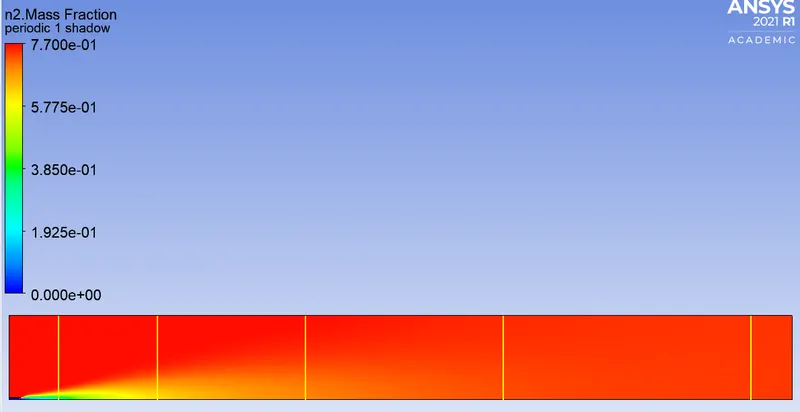
Contour: O2 Mass Fraction
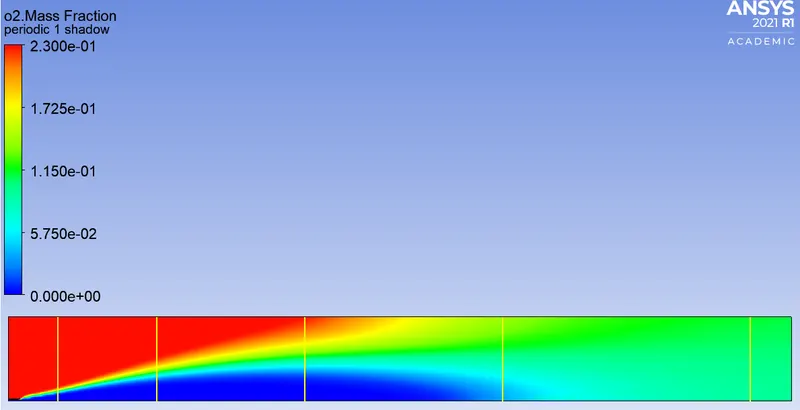
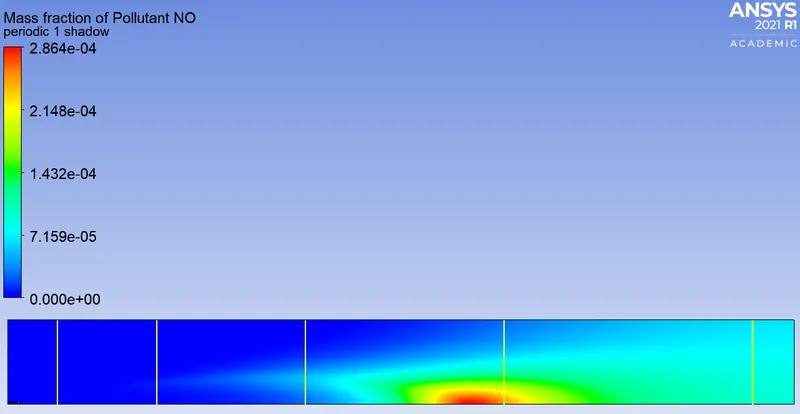
Contour: NOx Mass Fraction
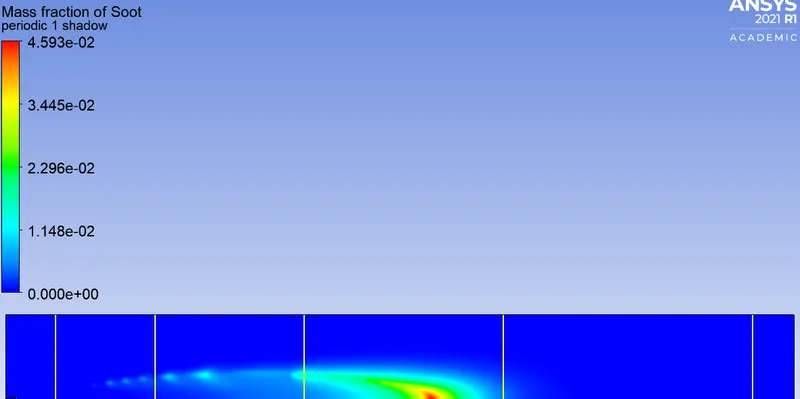
Contour: Soot Mass Fraction
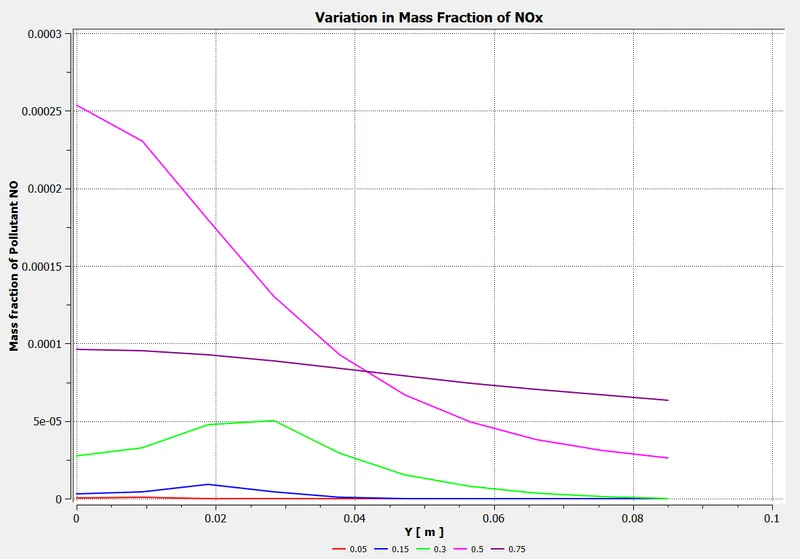
Line Plot: NOx Pollutants
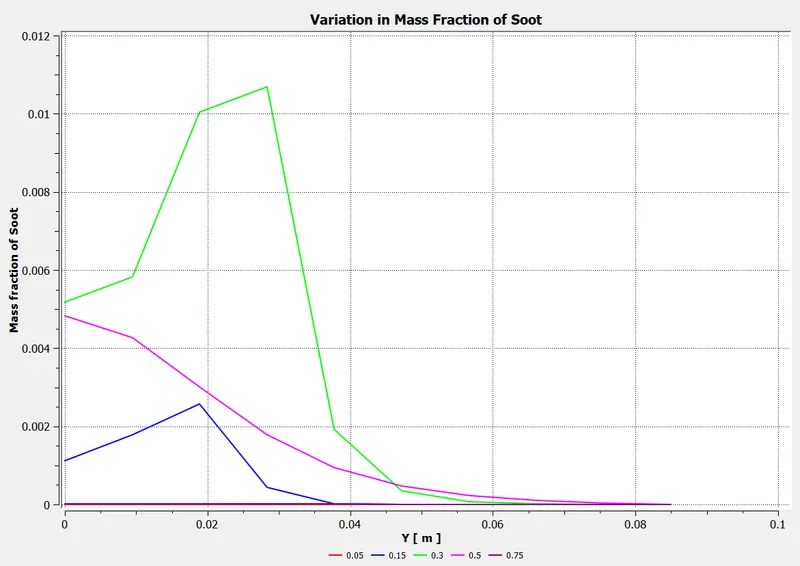
Line Plot: Soot
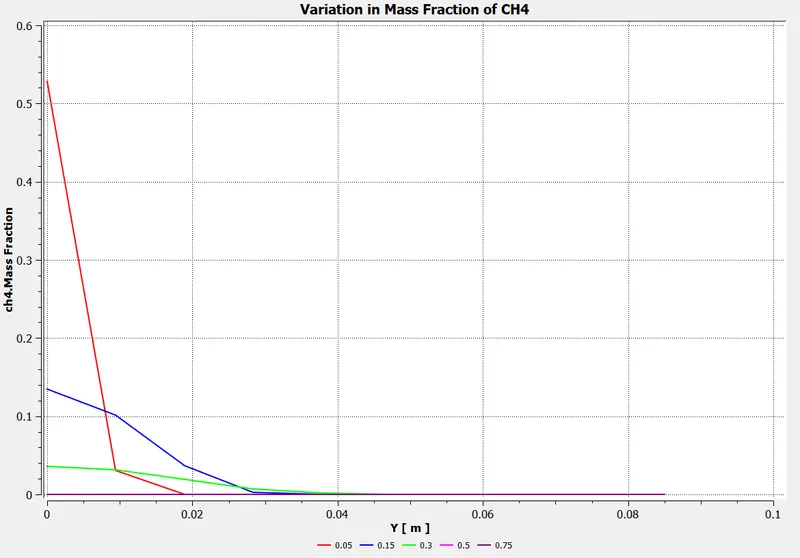
Line Plot: CH4
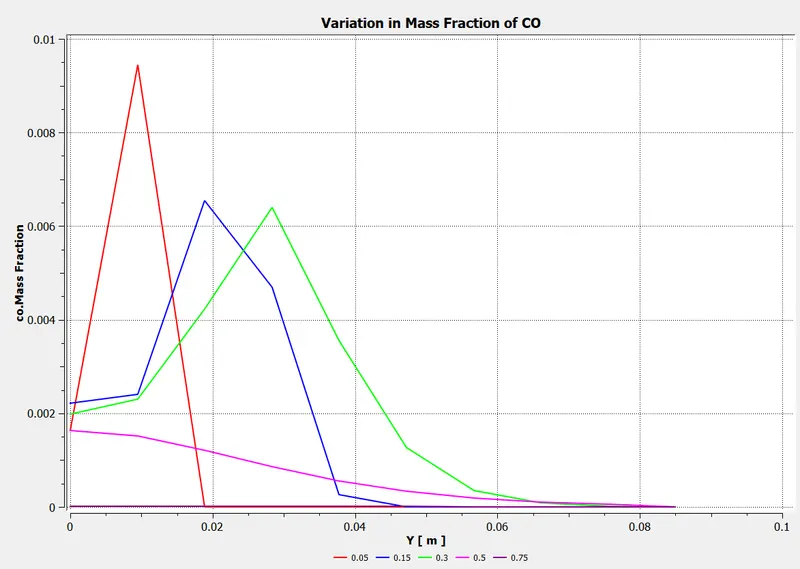
Line Plot: CO
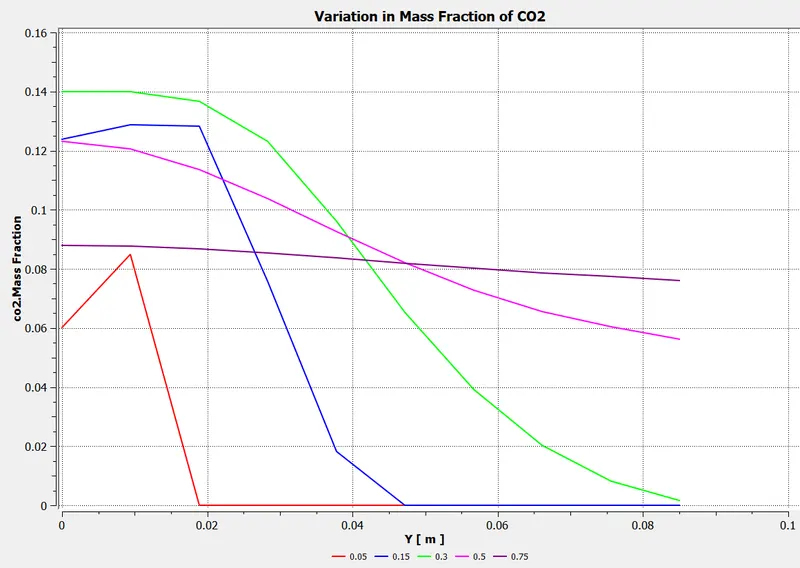
Line Plot: CO2
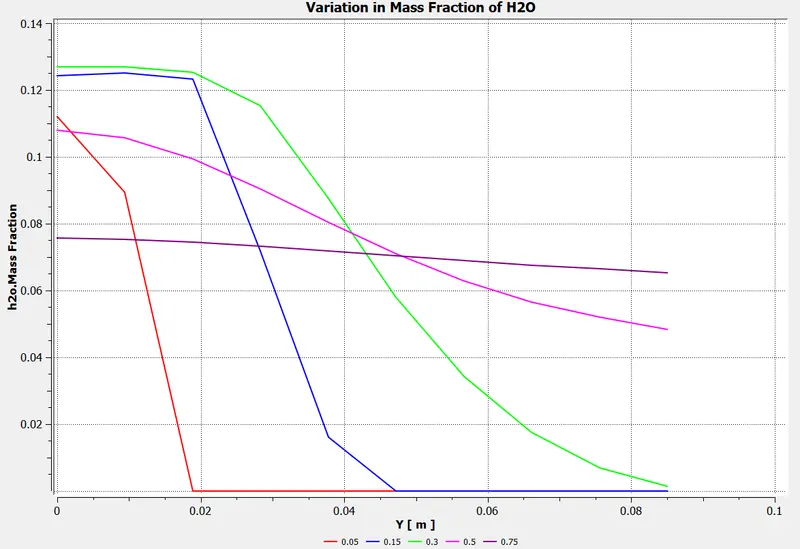
Line Plot: H2O
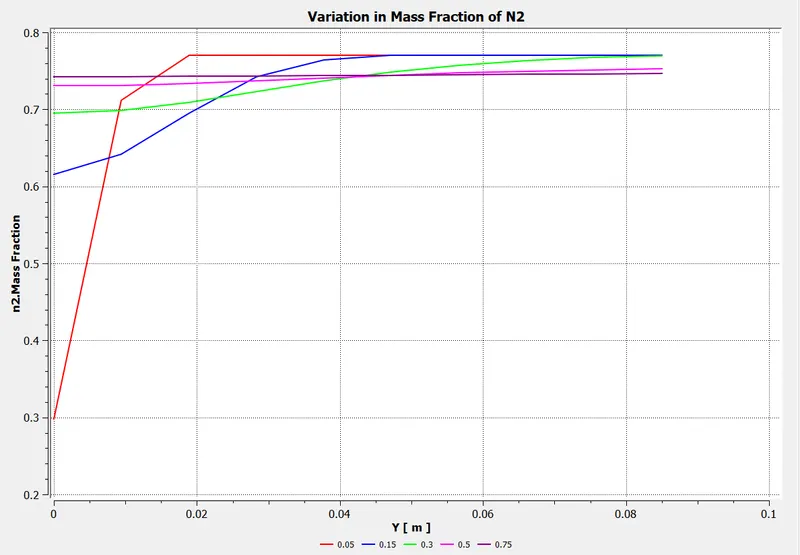
Line Plot: N2
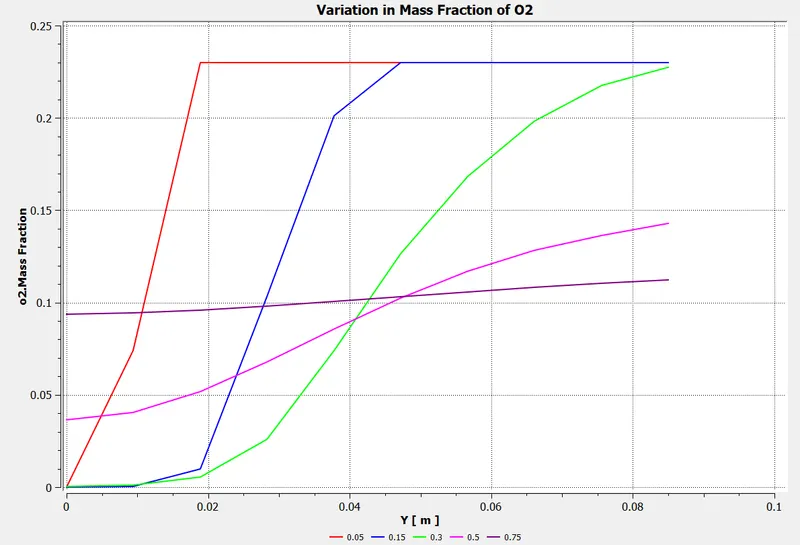
Line Plot: O2
- Case 4: adding 20 % water
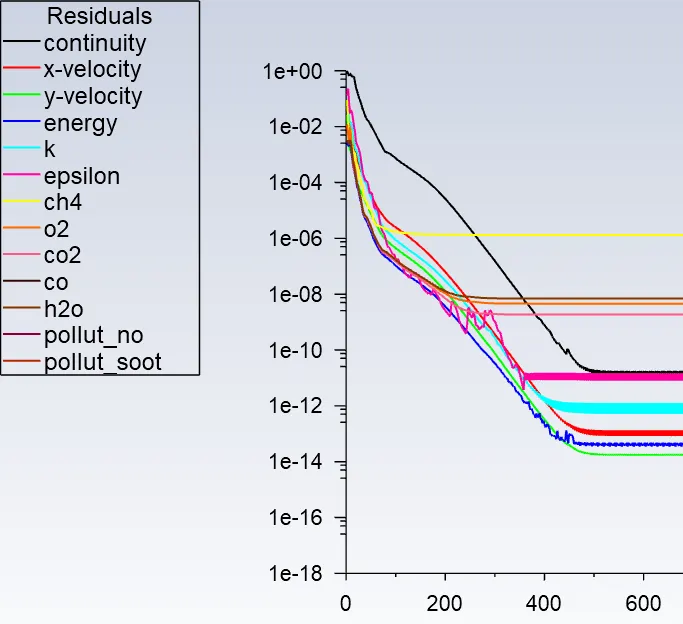
Convergence Plot:
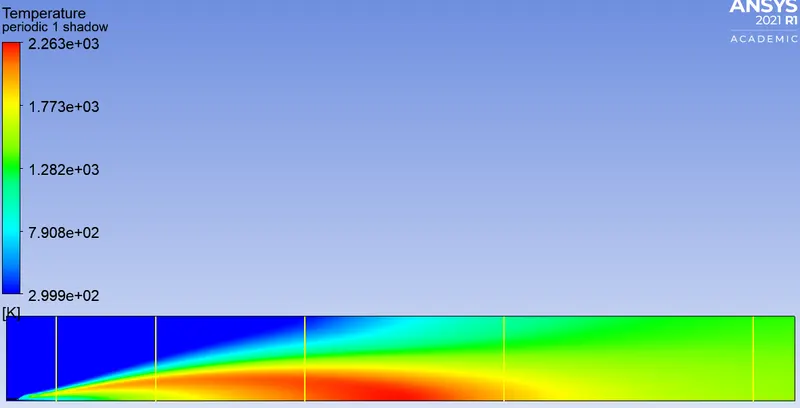
Temperature Plot:
Contour: CH4 Mass Fraction:
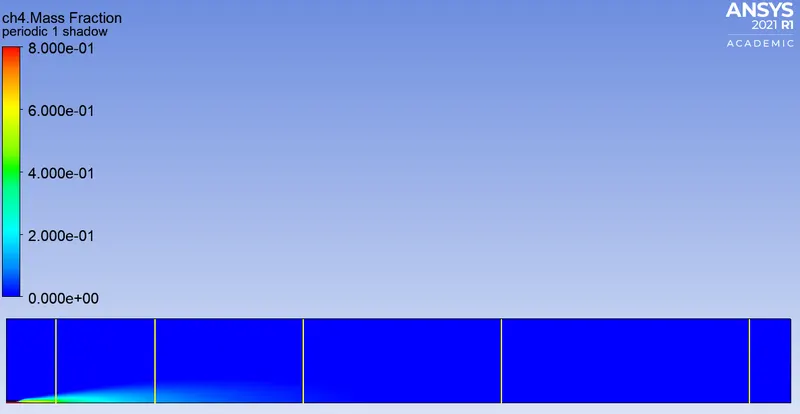
Contour: CO Mass Fraction
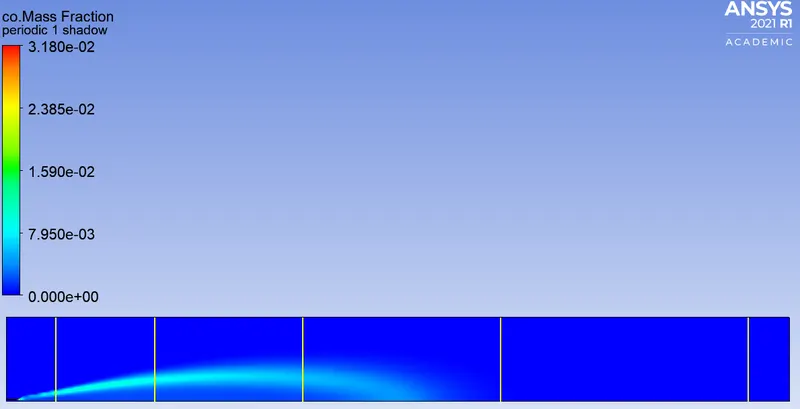
Contour: CO2 Mass Fraction
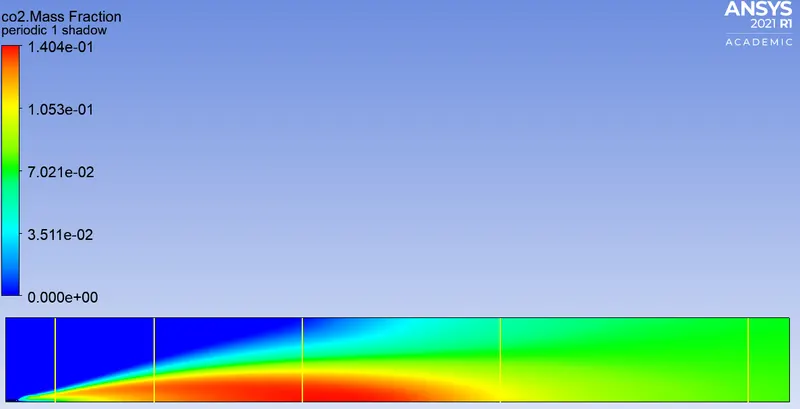
Contour: h2O Mass Fraction
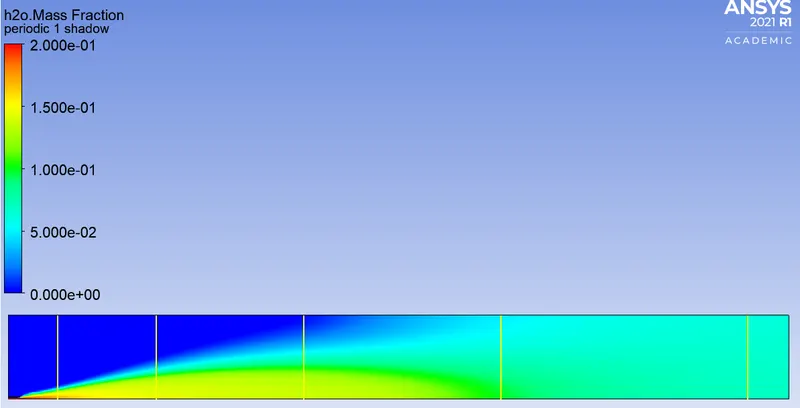
Contour: N2 Mass Fraction
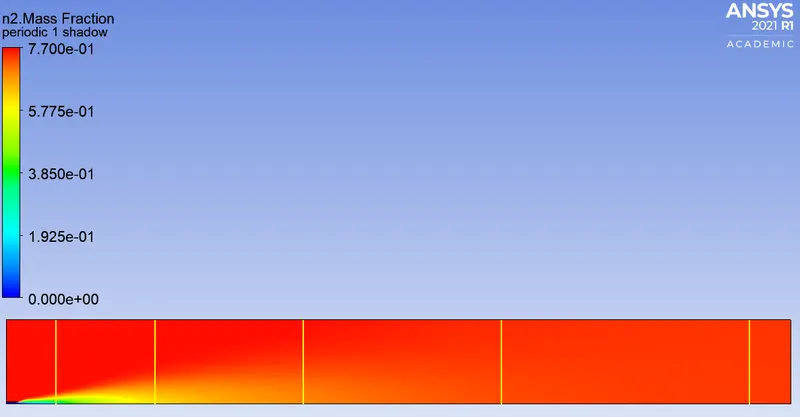
Contour: O2 Mass Fraction
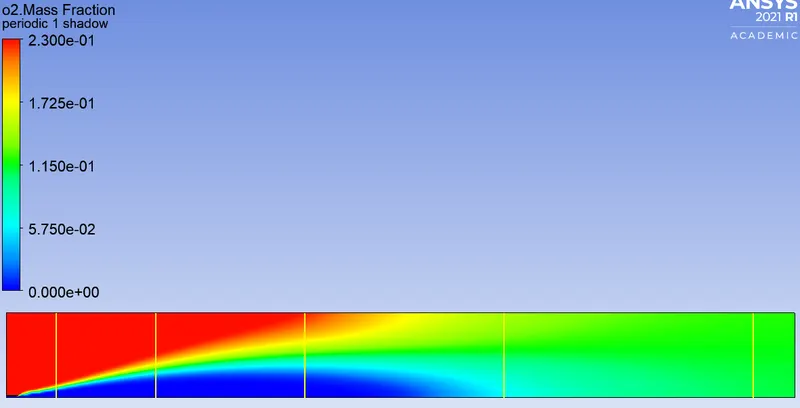
Contour: NOx Mass Fraction
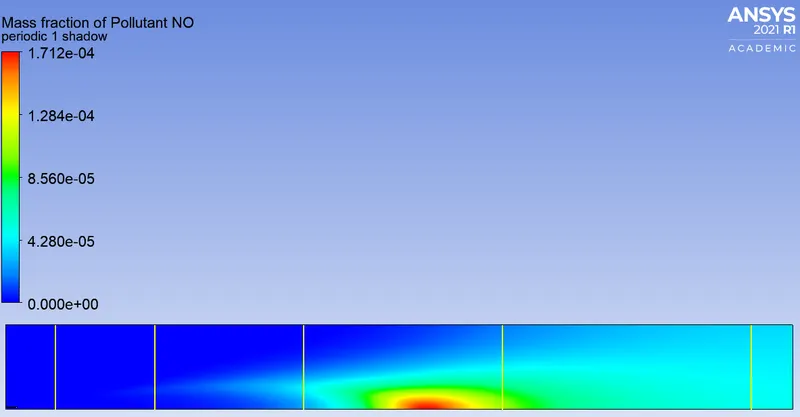
Contour: Soot Mass Fraction
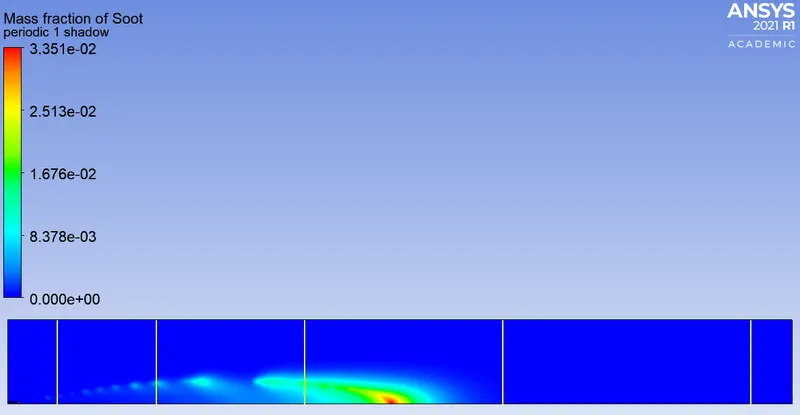
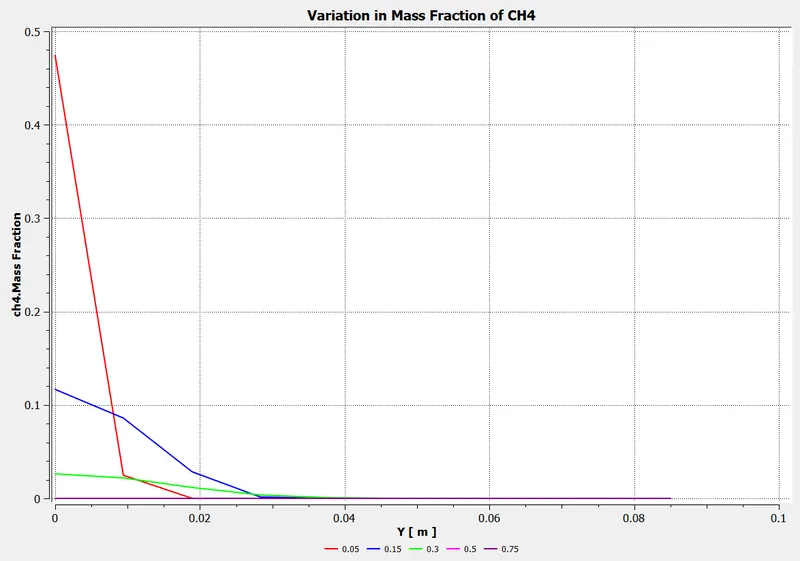
Line Plot: CH4
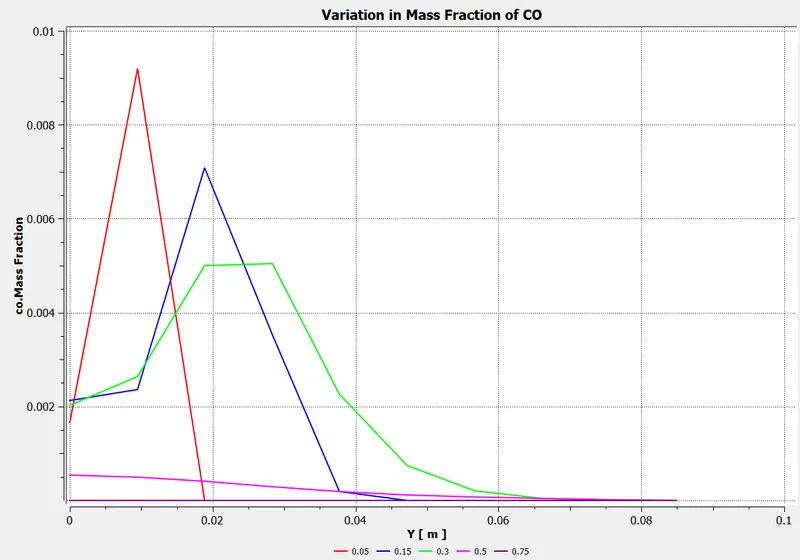
Line Plot: CO
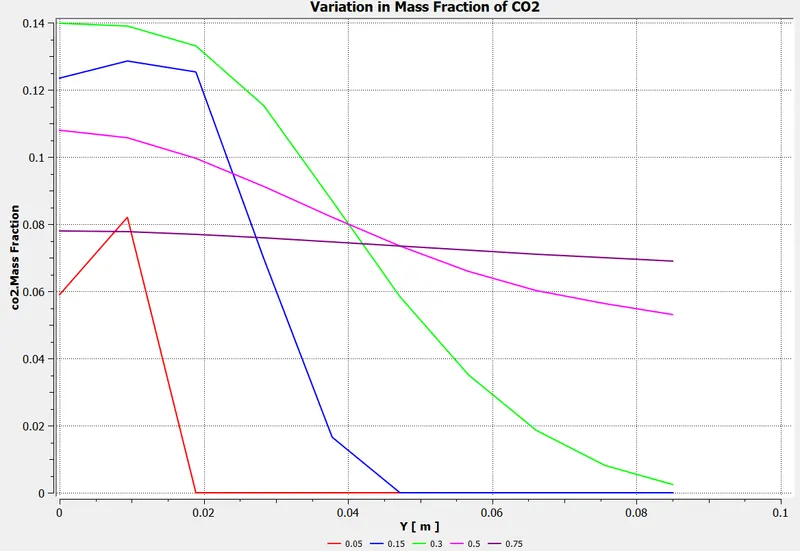
Line Plot: CO2
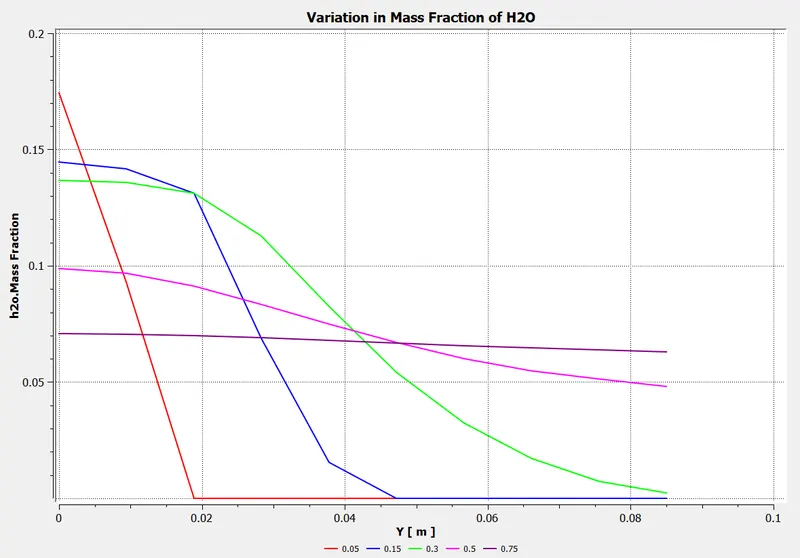
Line Plot: h2O
Line Plot: N2
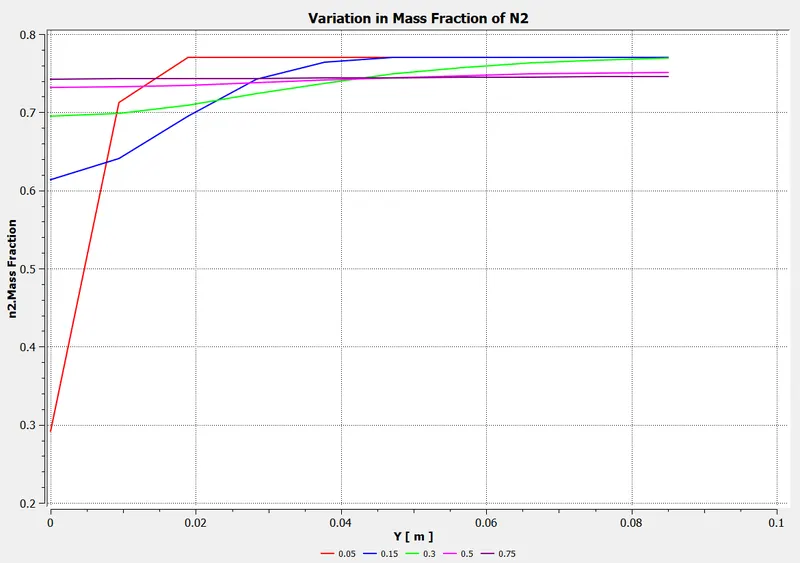
Line Plot: O2
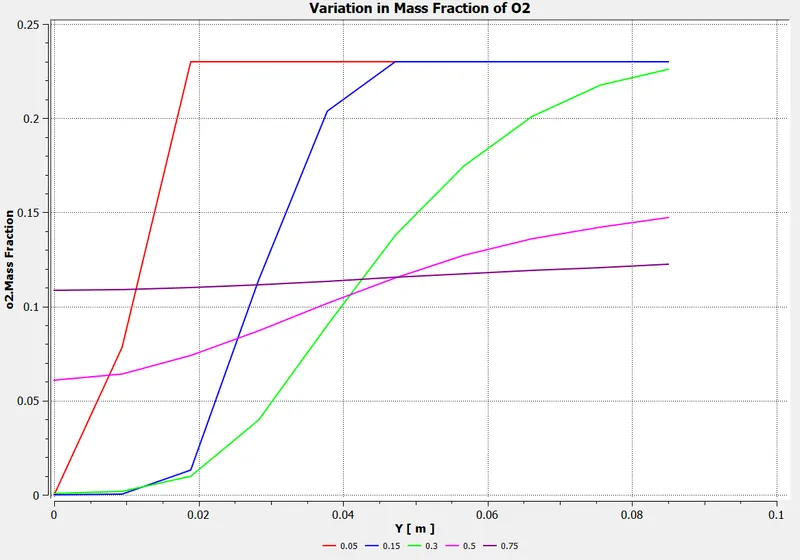
Line Plot: NOx
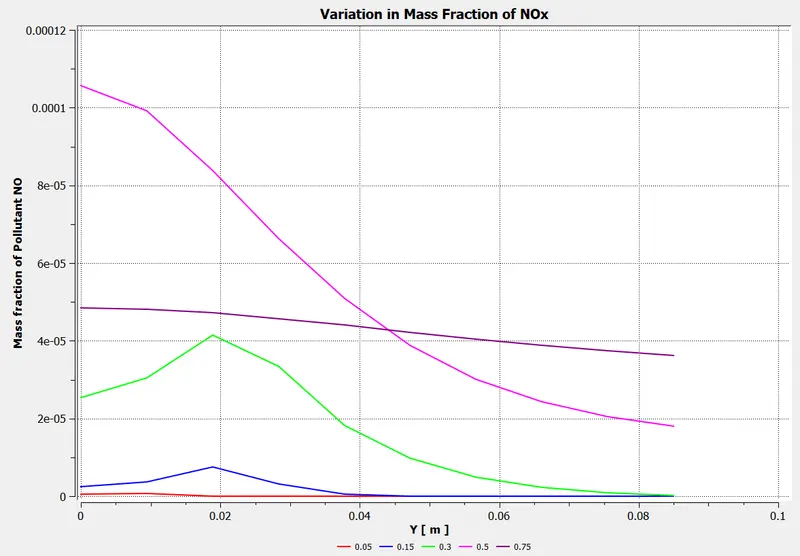
Line Plot: Soot
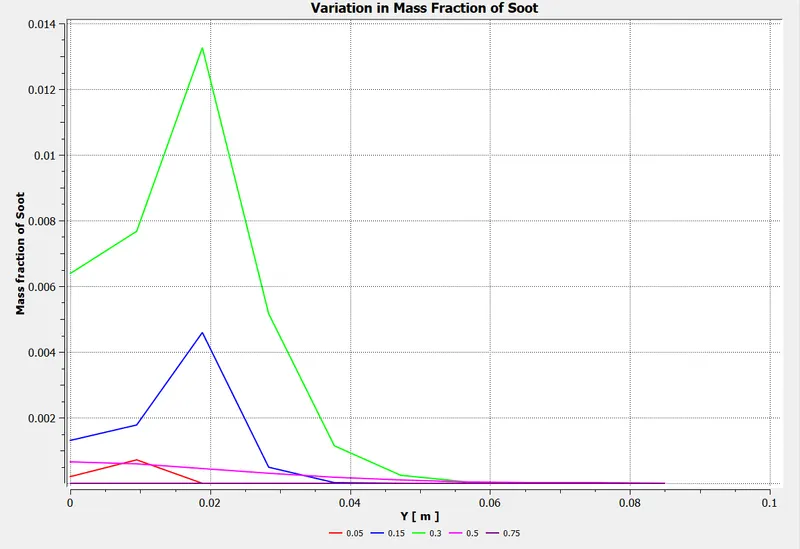
- Case 5: adding 30 % water
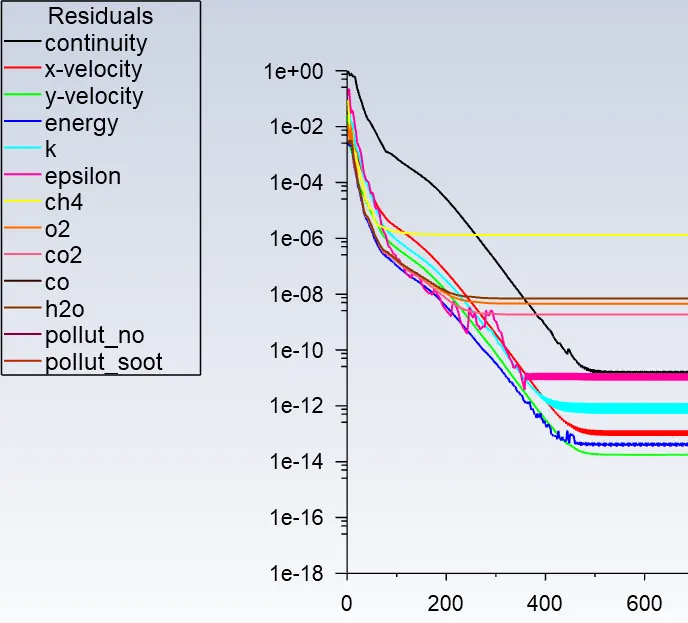
Convergence Plot:
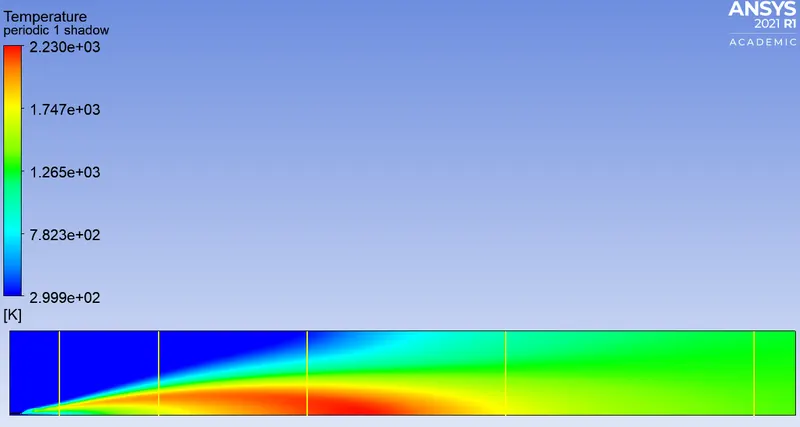
Temperature Plot:
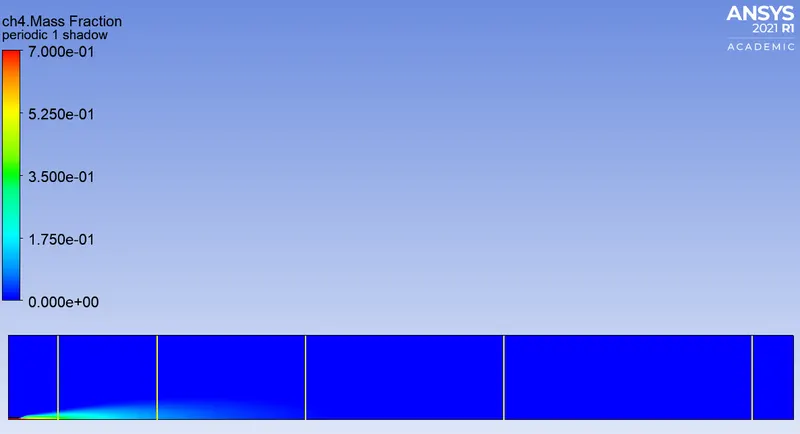
Contour: CH4 Mass Fraction:
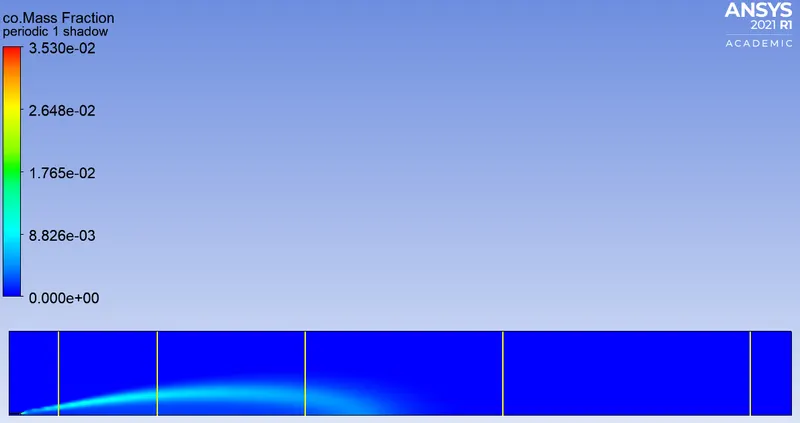
Contour: CO Mass Fraction
Contour: CO2 Mass Fraction
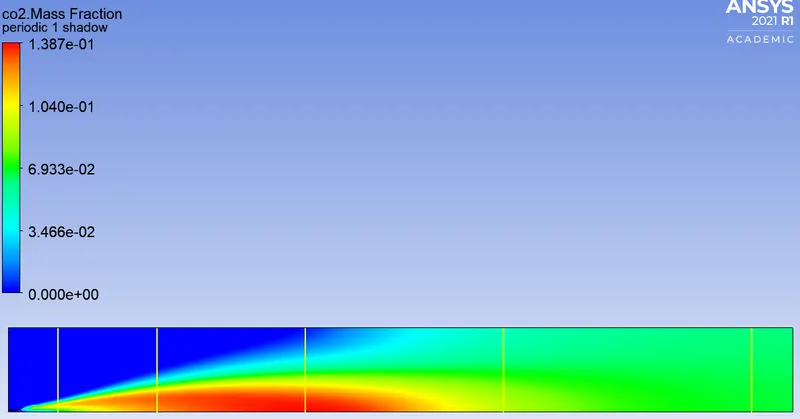
Contour: h2O Mass Fraction
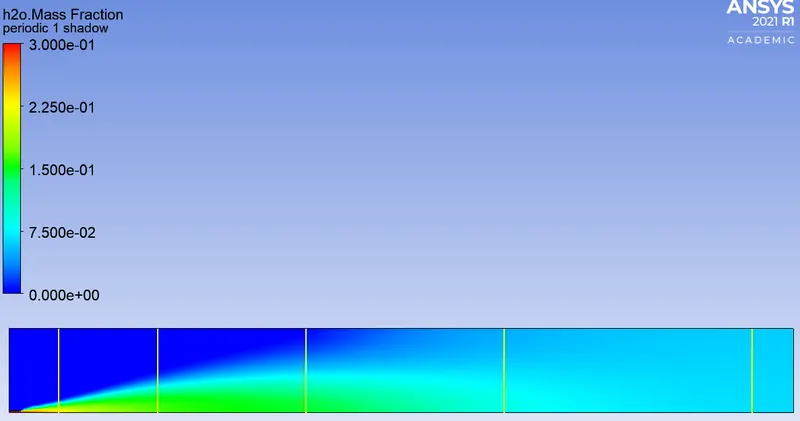
Contour: N2 Mass Fraction
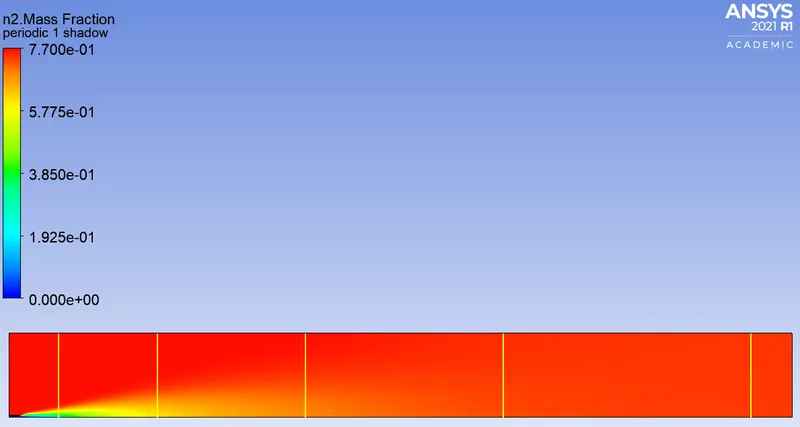
Contour: O2 Mass Fraction
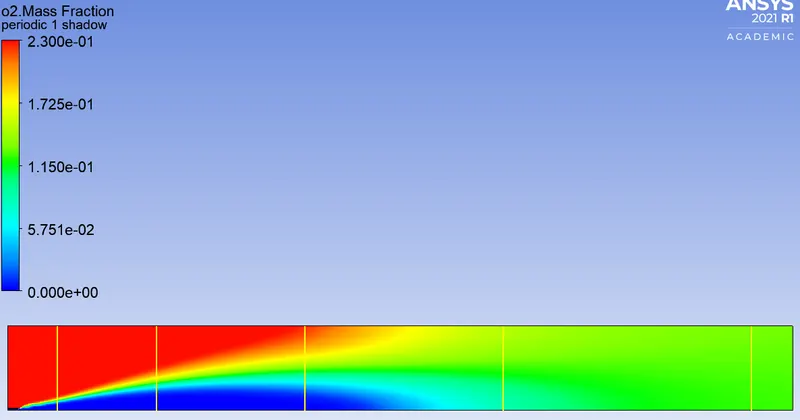
Contour: NOx Mass Fraction
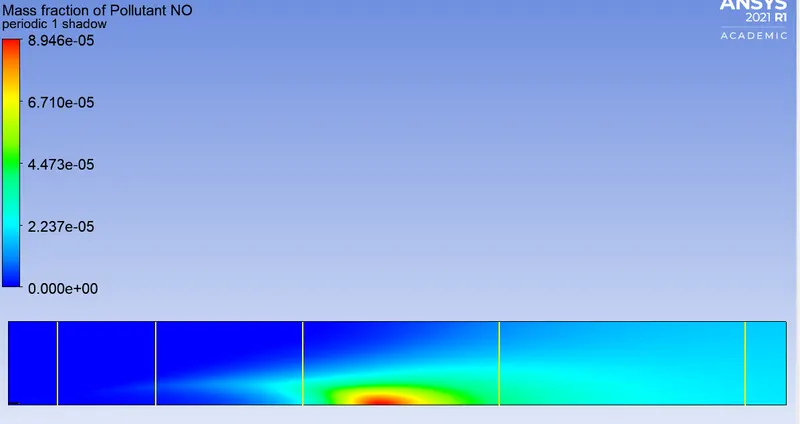
Contour: Soot Mass Fraction
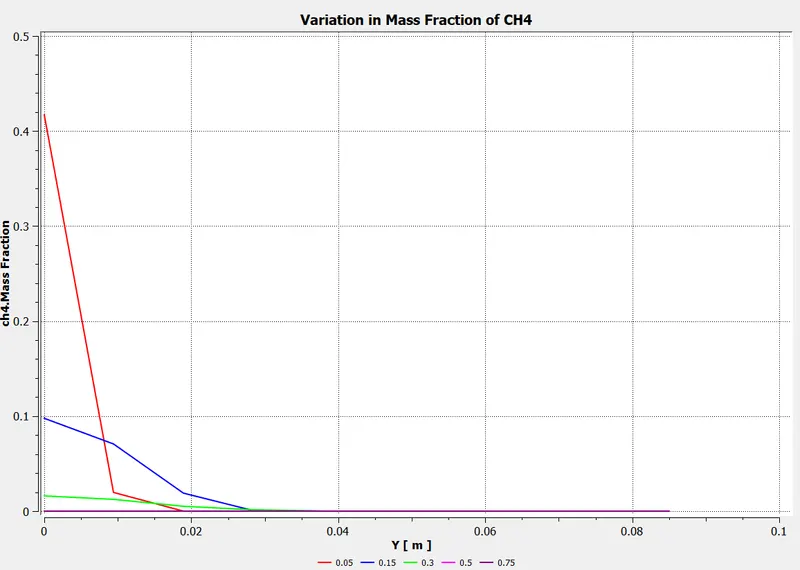
Line Plot: CH4
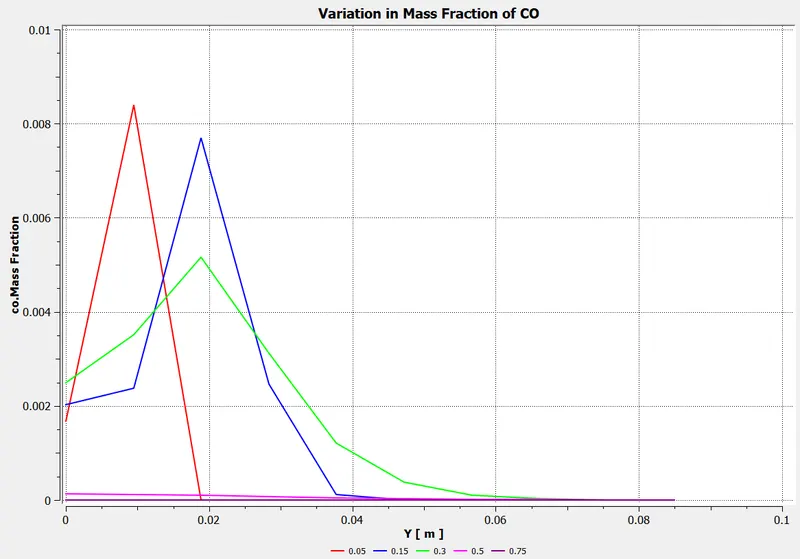
Line Plot: CO
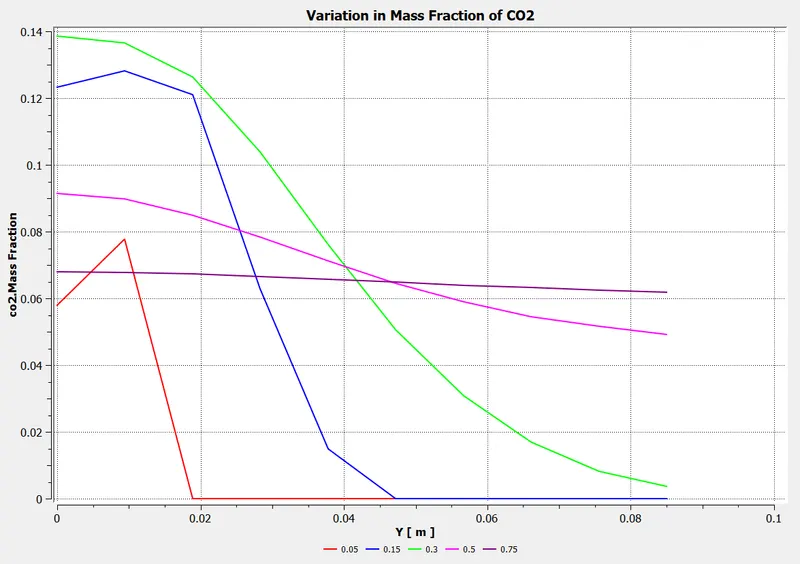
Line Plot: CO2
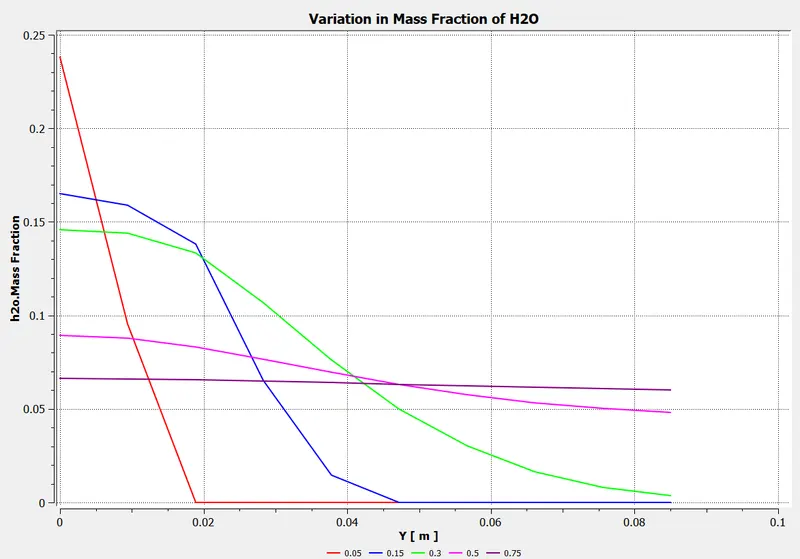
Line Plot: h2O
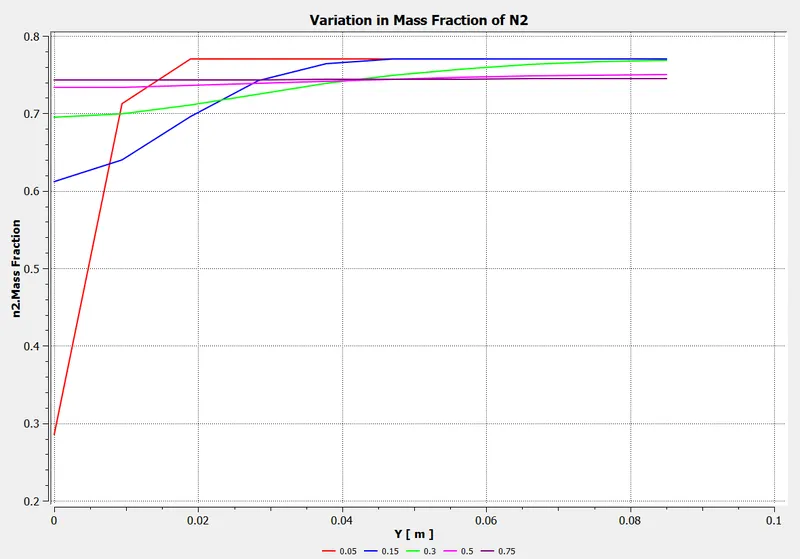
Line Plot: N2
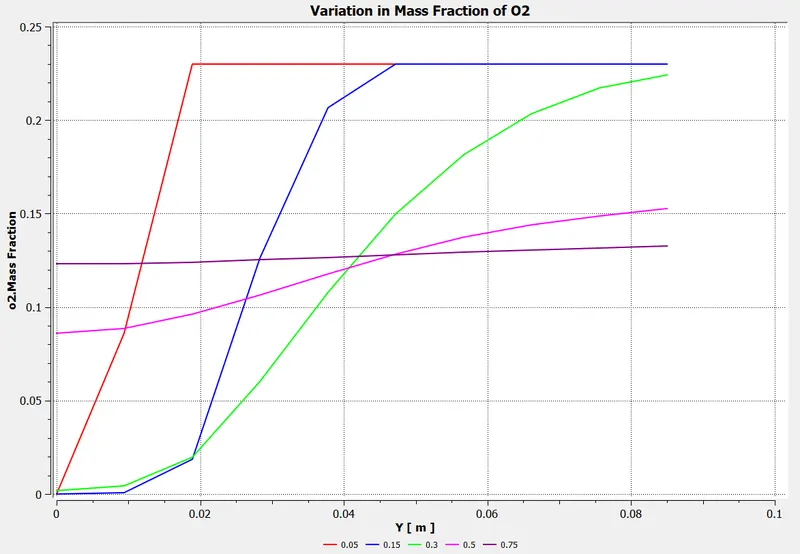
Line Plot: O2
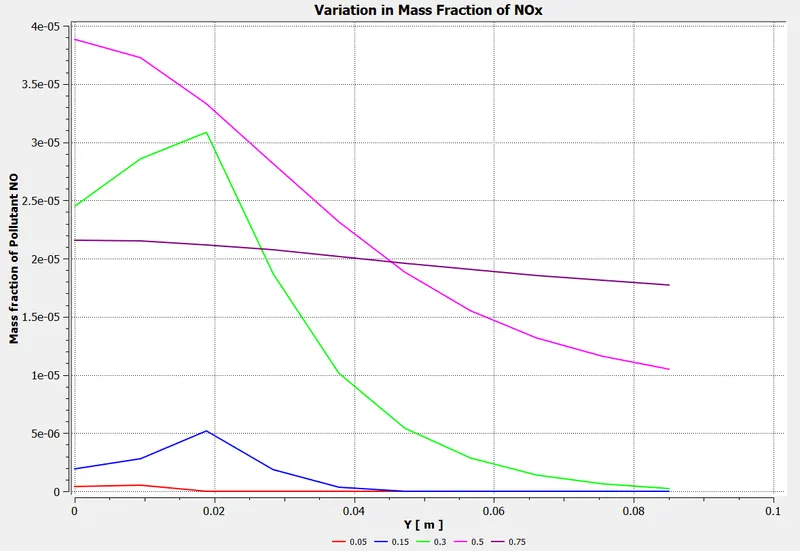
Line Plot: NOx
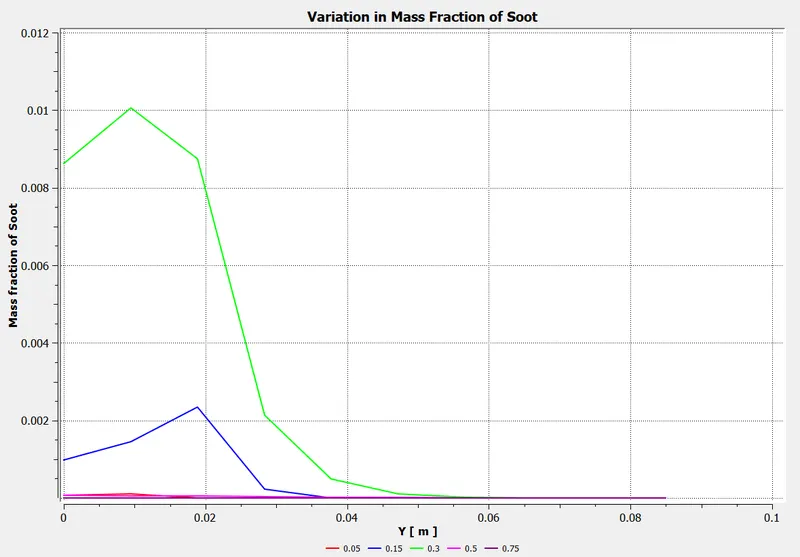
Line Plot: Soot
Result and Conclusion:
| CASE | Percentage of H2O | Mass Fraction Of NOx | Mass Fraction of Soot |
| 1 | 0 | 12.733e-5 | 1.918e-5 |
| 2 | 5 | 9.877e-5 | 8.819e-6 |
| 3 | 10 | 7.553e-5 | 3.006e-6 |
| 4 | 20 | 4.078e-5 | 4.278e-7 |
| 5 | 30 | 1.917e-5 | 4.122e-8 |
- In the first case, no water has been added to the fuel and the resultant formation of NO pollutant and soot is more among all the cases.
- In the subsequent cases, water has been added to the fuel 5% to 30% by mole and the result shows that the mass fraction of NOx and soot formation decrease with the increase in the addition of water.
- The addition of water in the combustion chamber is not significantly affecting the overall temperature of the combustion chamber. But at the outlet, the temperature slightly drops as water percentage increases, nevertheless, not to a notable extent.
- The fuel is also observed to be completely burnt in all the cases as there is zero mass fraction of CH4 at the outlet shows no unburnt fuel at the outlet.
- Hence, it can well be noted that the addition of water to the fuel can cause the NO pollutant and soot formation at the outlet of the combustor to be reduced.