Week 2 - Flow over a Cylinder.
AIMS AND OBJECTIVES
- To simulate the flow over a cylinder for steady and transient solvers. Also, to explain the Karman Vortex Street.
- To calculate the effect of Reynold's number on the coefficient of drag. Also, to find the coefficient of lift and drag for different values of Reynolds number for the steady solver.
- Plots to show convergence, coefficient of lift & drag, and vortex shedding over the cylinder are to be attached.
Given: a rectangular computational domain with a cylinder inside of diameter 2 m
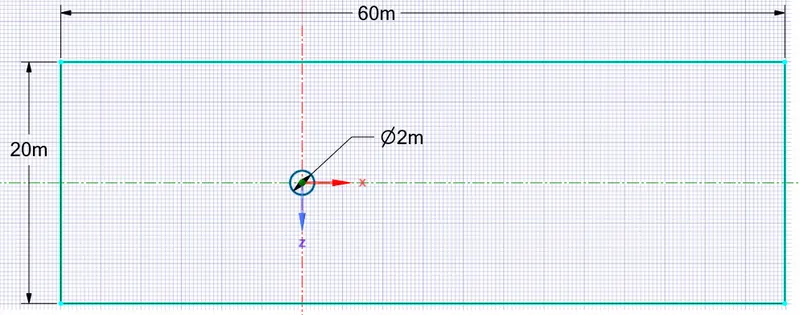
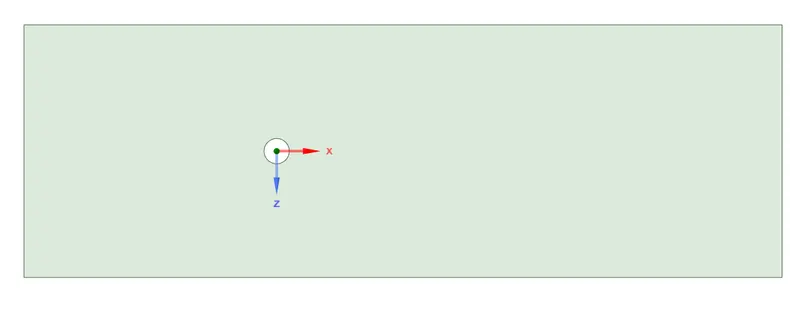
The above geometry is converted into a surface using the 'pull tool' in SpaceClaim so that we get the required domain of flow over a cylinder.
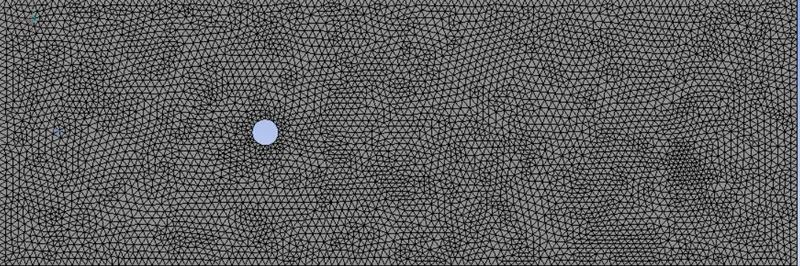
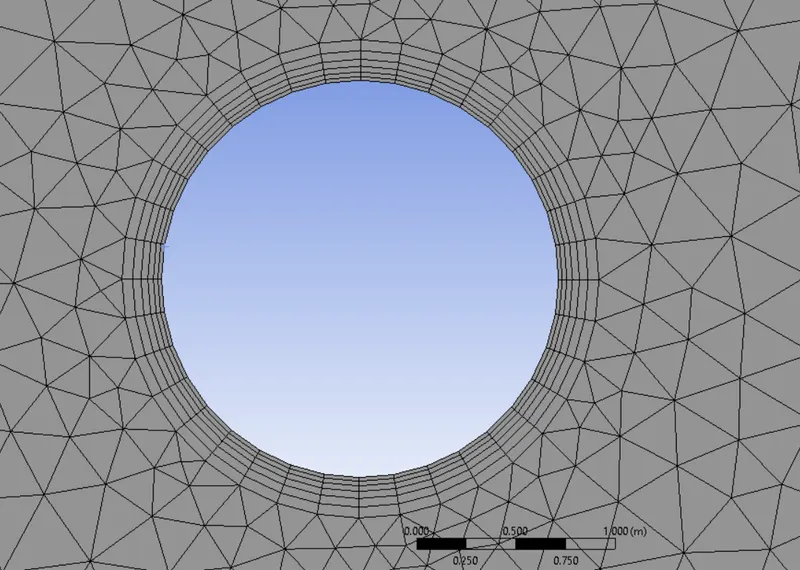
The mesh is made with triangular grids and proper sizing and inflation layers are given for body-fitted mesh.
(I)
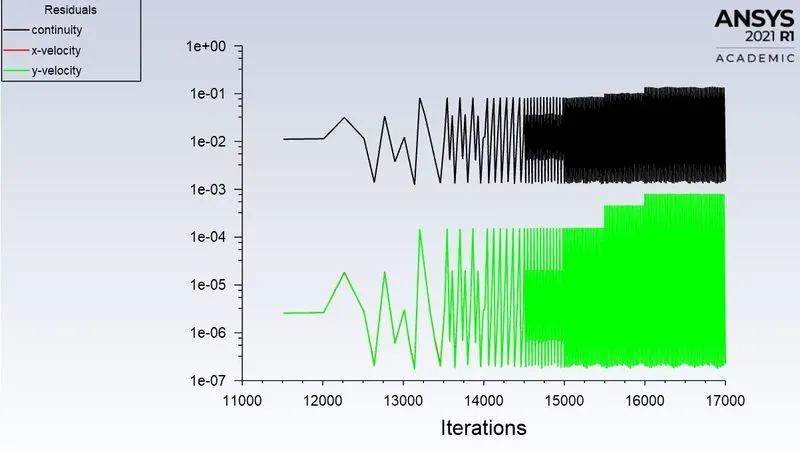
- Here, we are interested in doing the simulation for Re = 100 in both steady and transient solvers. In both cases, the viscous model is chosen 'laminar' as Re 100 is a laminar flow, and the velocity at the inlet is 1 m/s.
- The viscosity and density are set constant at 0.02 kg/m-s and 1 kg/m³ respectively.
- The y+ value is kept at 1 and can choose any values under 5 accordingly.
- The solution method is chosen SIMPLE.
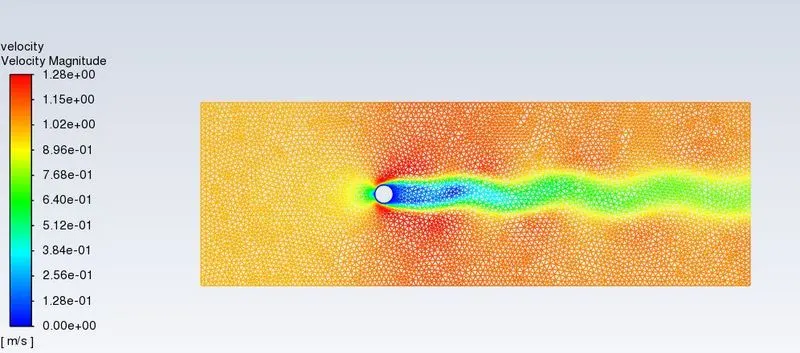
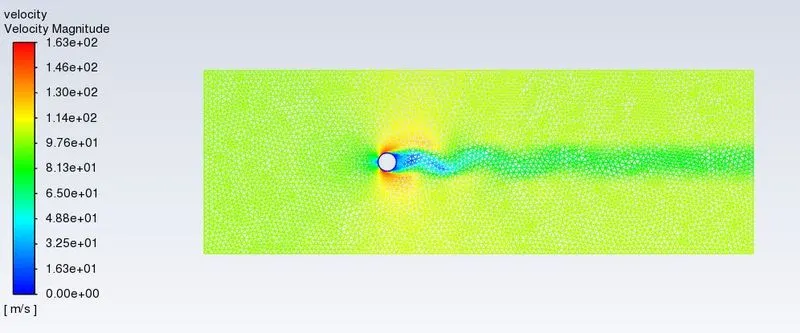
Vortex is specific patterns created by shear flow. It is a rotational flow about an axis without a radial velocity component and has a low pressure at its core. Steady flow results from trapped vortices and free vertices cause unsteady flow. When a fluid flows past a bluff object of specific shape and size at a certain velocity, oscillations take place in the wake region of the body periodically with alternate low-pressure vortices. These oscillations are termed Vortex shedding. The engineer and fluid dynamicist Theodore von Karman studied a flow around a circular cylinder which is an inviscid flow and found a vortex shedding phenomenon for flow over Re = 40. This periodic pattern of swirling vortices formed from the separated boundary layers from the upper and lower sides of the object at the back of the body is called Karman Vortex Street.
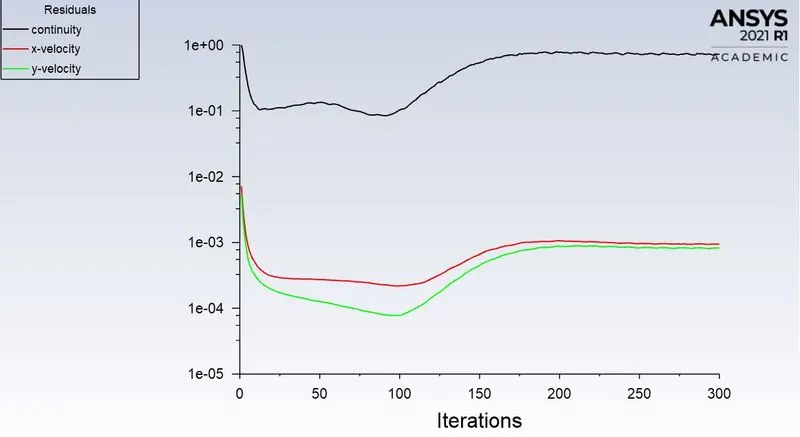
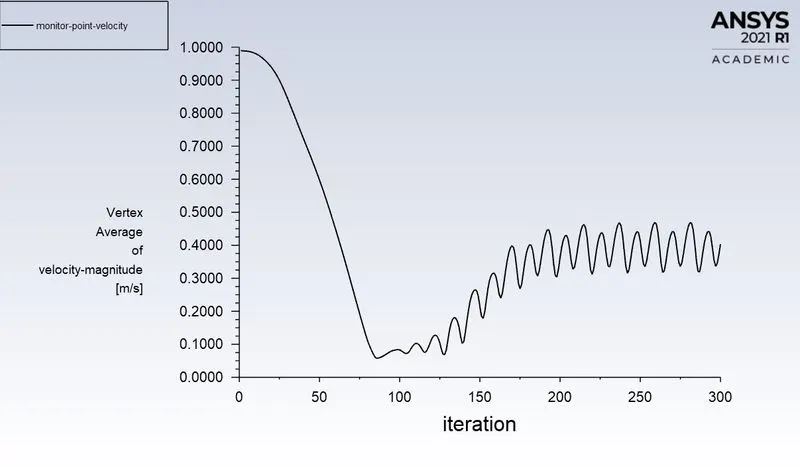
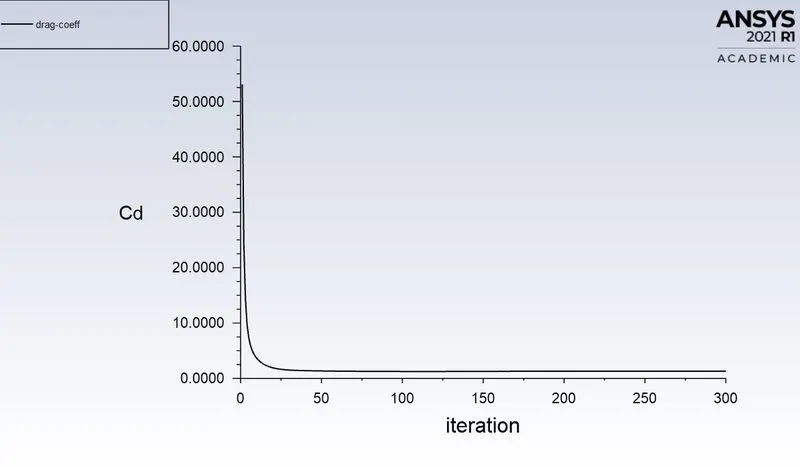
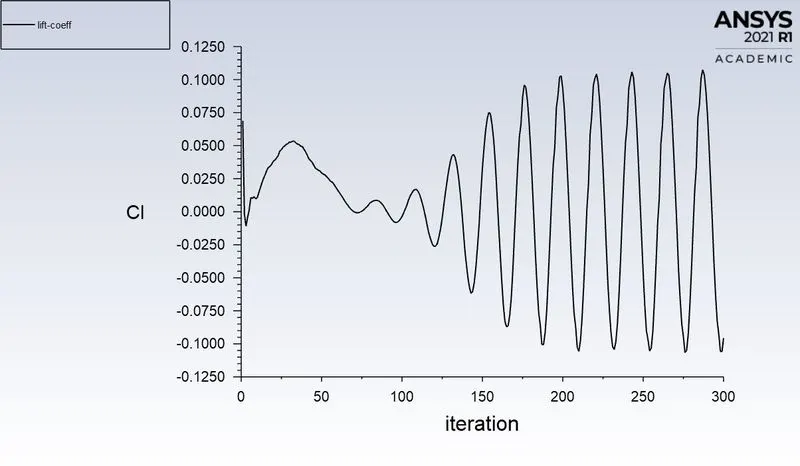
For Reynolds Number, Re = 100;
Steady-state simulation
Residual Plot:
Velocity at the monitor point:
Coefficient of Drag:
Coefficient of Lift:
FFT plot on the coefficient of lift:
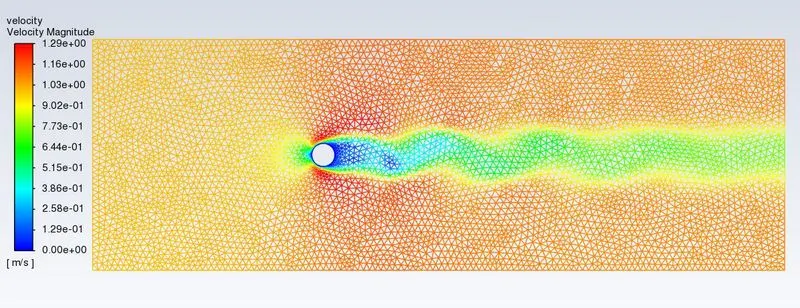
Contour plot on Velocity:
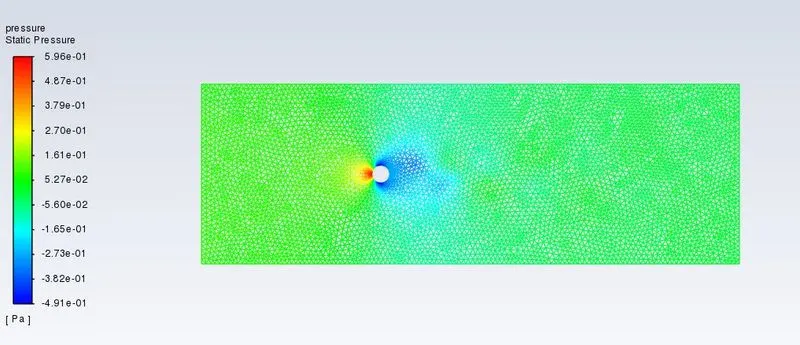
Contour plot on Pressure:
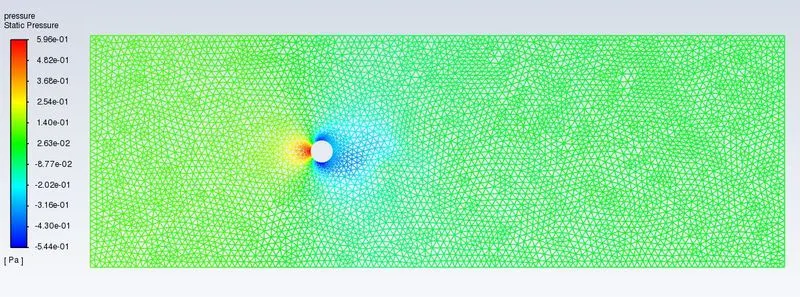
- From the results obtained above it can be seen that a steady-state is useful only to analyze the end result properly. We get vortex shedding with refined mesh settings but the results we get are not time accurate. Here, we can determine the velocity for a particular iteration but that does not give us for what specific time that velocity corresponds to. Hence, it is difficult for us to calculate vortex frequency since there is no time parameter.
- This shows us the importance of running the simulation with a transient solver for getting the results accurate with respect to time.
Transient simulation
- In transient cases, equations are solved for every cell in the mesh for each time step accurately to get a time-accurate answer. Here, we use 'transient solver' instead of steady-state like in the earlier case. A time step of 0.2 is taken here and is run for around 850-time steps.
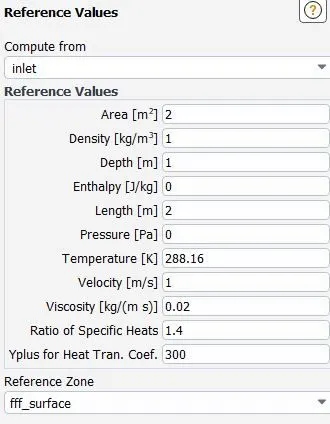
Residual Plot:
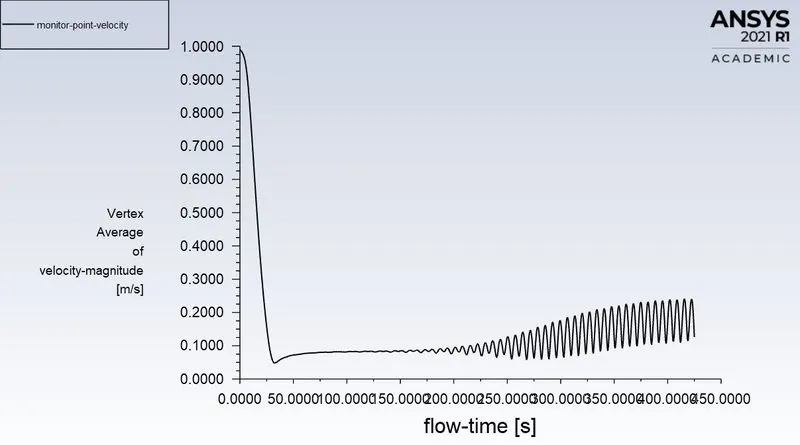
Velocity at the monitor point:
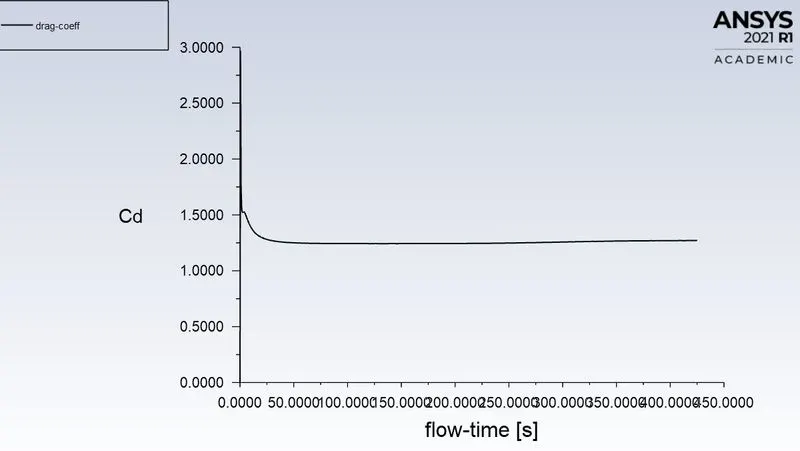
Coefficient of Drag:
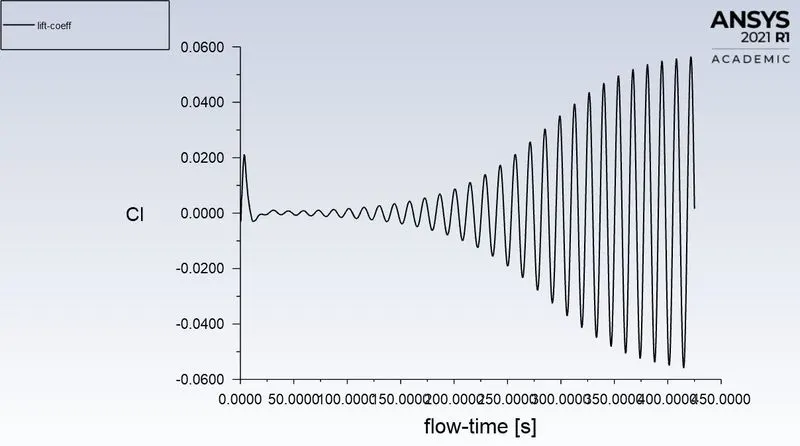
Coefficient of Lift:
Contour plot on Velocity:
Contour plot on Pressure:
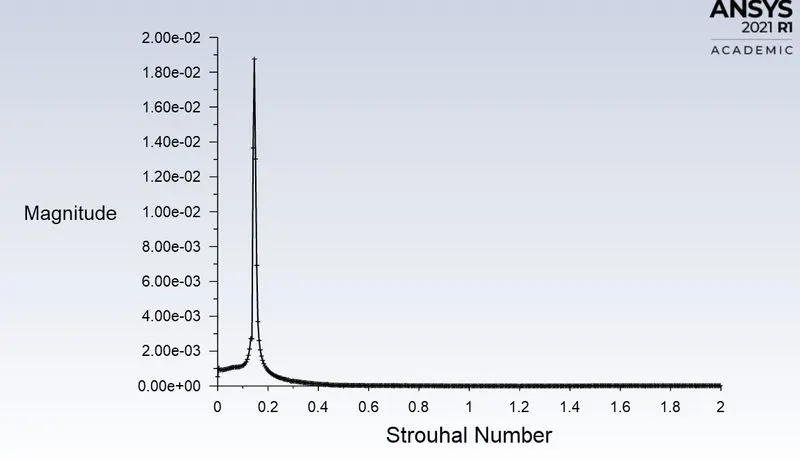
FFT plot on the coefficient of lift:
- Proper physics is simulated in this condition with the transient solver for the Re = 100. The simulation is believably converged and a coefficient of drag of about 1.3 is obtained.
- A monitor point at a distance of 8 m from the object in the wake region has been made to measure the time-wise variation of velocity. After the simulation, it can be inferred that the plot of vertex average of velocity clearly shows the vortex shedding, the flipping of velocity during the vortex street.
- Strouhal number is the non-dimensional parameter that shows us variation in vortex frequency. For example, a reduction in Strouhal number tells us a reduction in vortex frequency.
- Strouhal number, St = (f·D)/U where f is the frequency of oscillations, D is the characteristic length and U is the mean flow velocity.
- St value for a particular bluff body is dependant on the characteristics of flow separation. Wider wakes cause in low vortex shedding frequency.
- The transient simulation is needed to calculate the Strouhal number as the frequency is time-variant.
- The Strouhal number can be determined from the magnitude-St plot. The same can be plotted from the FFT option under the plot section in FLUENT. The x-axis is the magnitude of the coefficient of lift we got from running the simulation and the y-axis corresponds to the Strouhal number. The St value corresponding to the maximum value of magnitude is chosen. In this simulation for Re = 100, we got a Strouhal number of around 0.146.
(II)
Steady-state simulation over the cylinder is done for different values of Re and the coefficient of lift and drag are calculated in each case.
For Re = 10
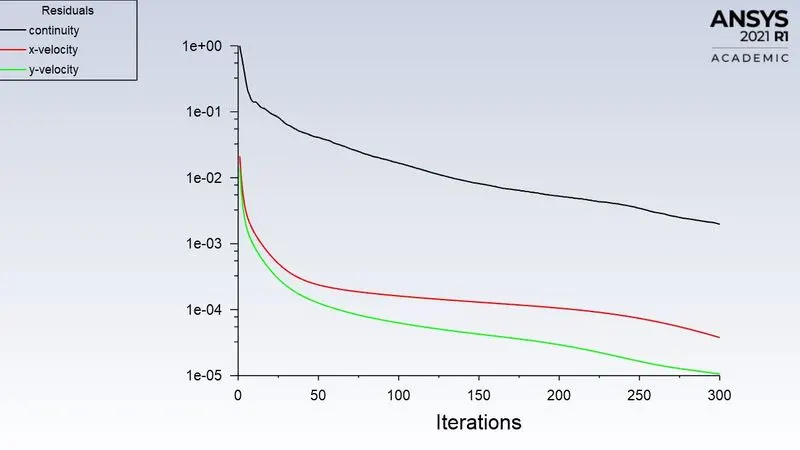
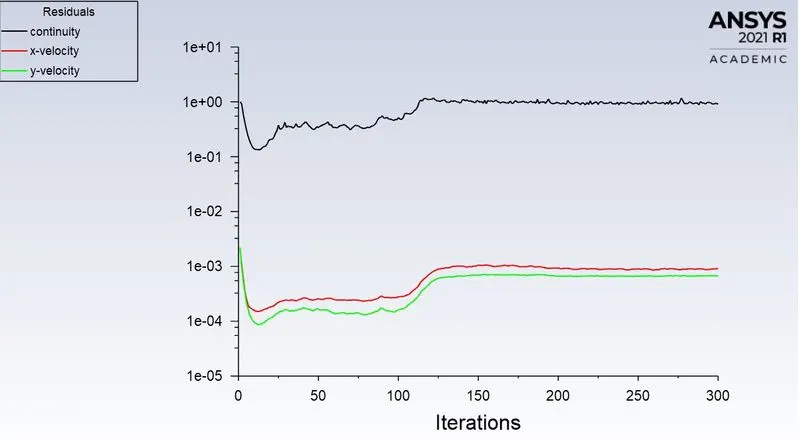
Residual Plot:
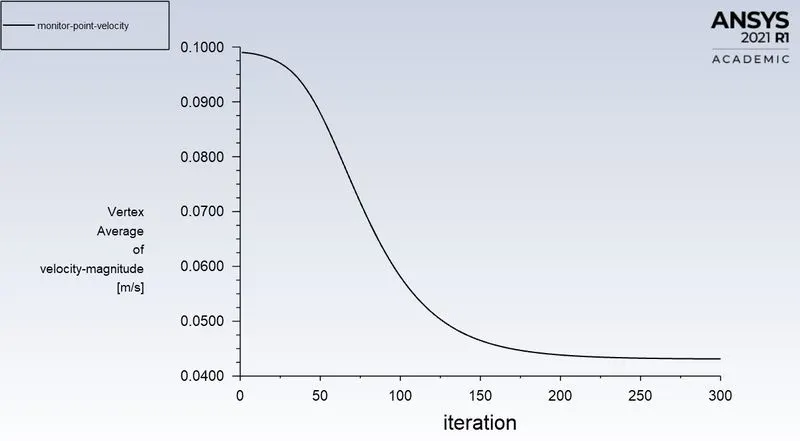
Velocity at the monitor point:
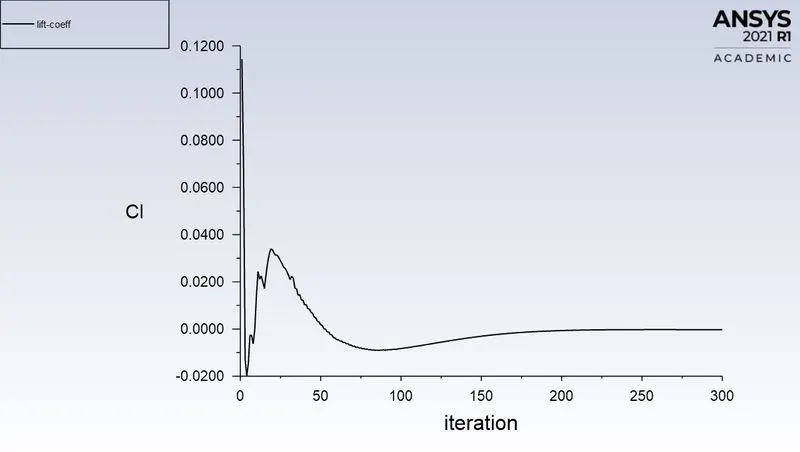
Coefficient of Lift:
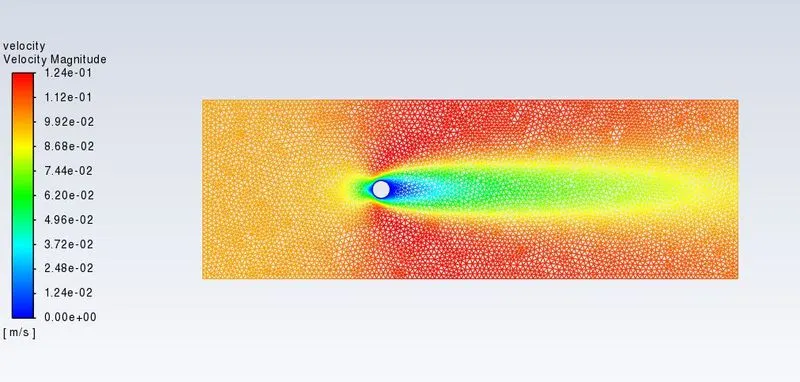
Contour plot on Velocity:
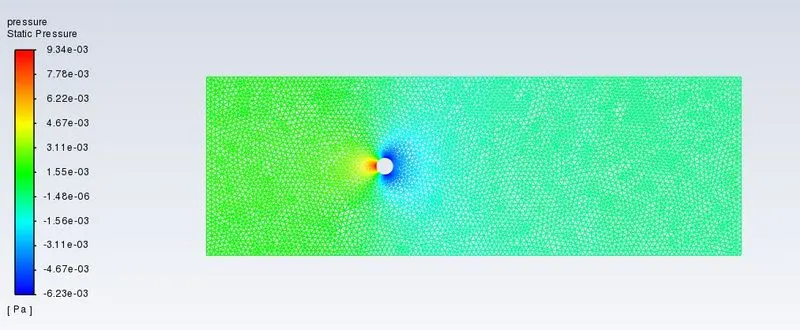
Contour plot on Pressure:
For Re = 1000
Residual Plot:
Velocity at the monitor point:
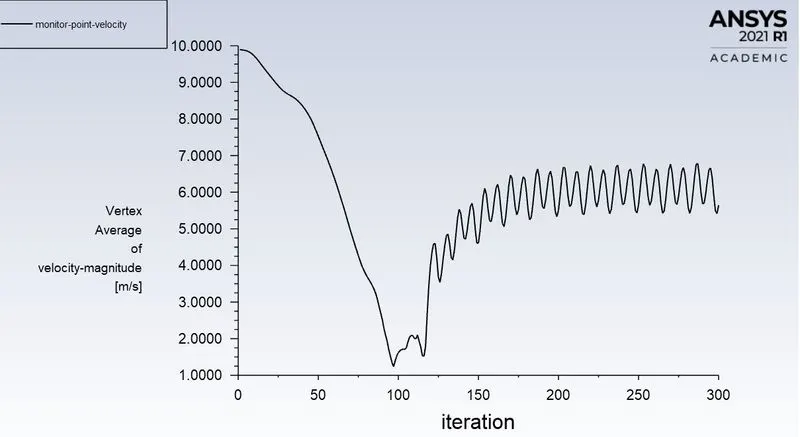
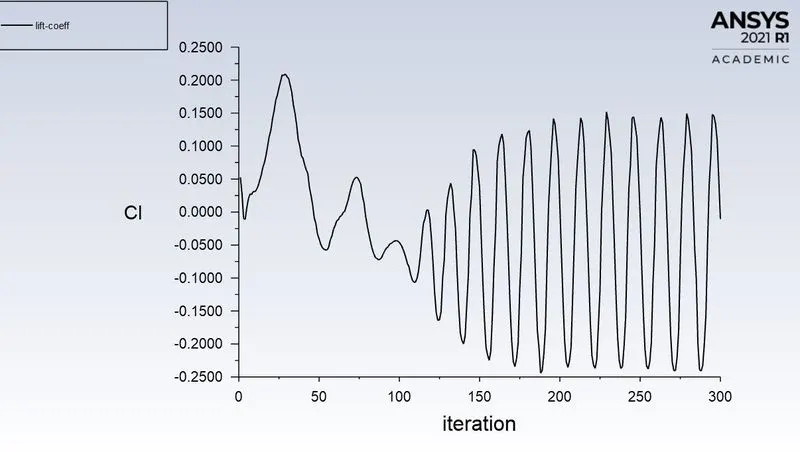
Coefficient of Lift:
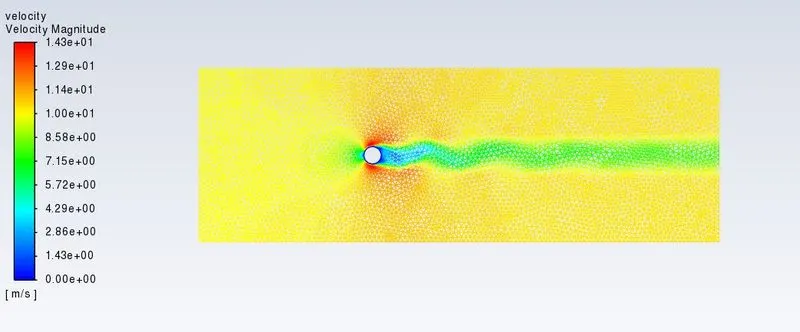
Contour plot on Velocity:
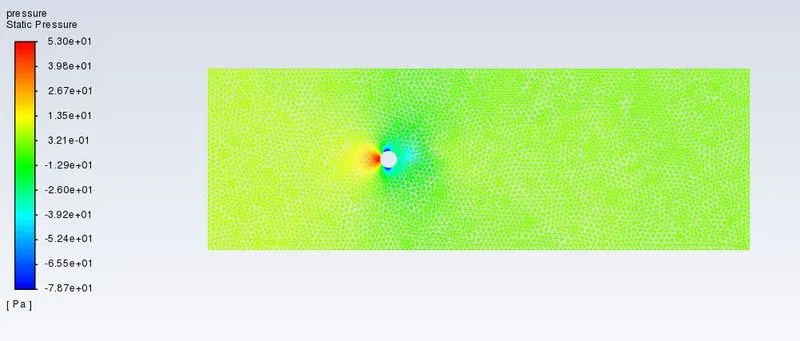
Contour plot on Pressure:
For Re = 10000
Residual Plot:
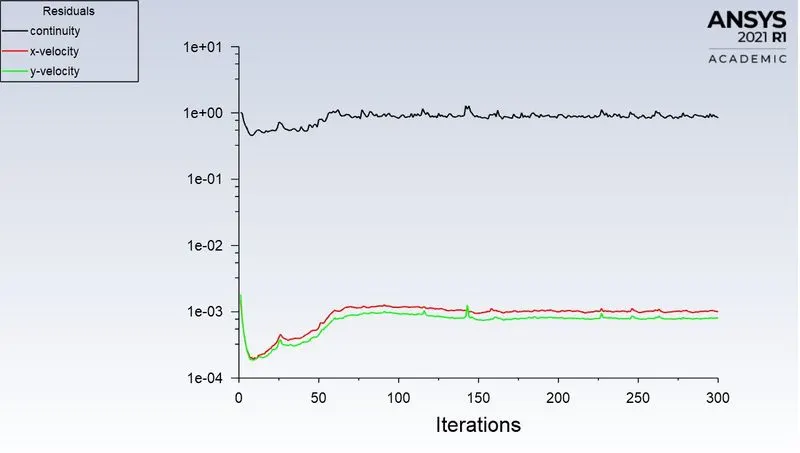
Velocity at the monitor point:
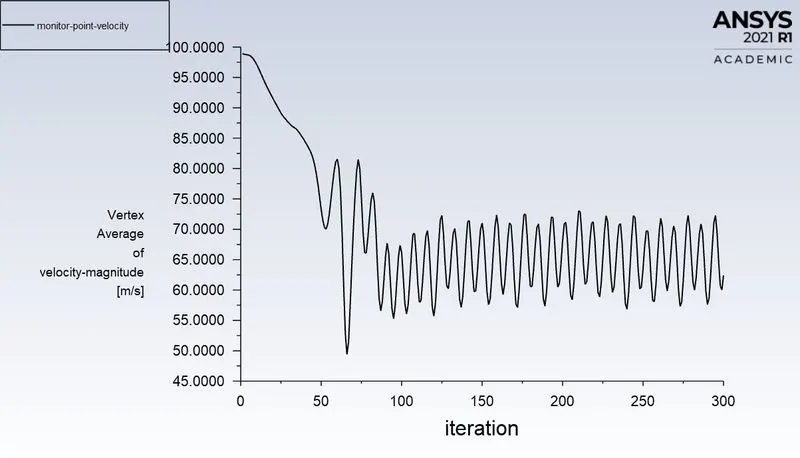
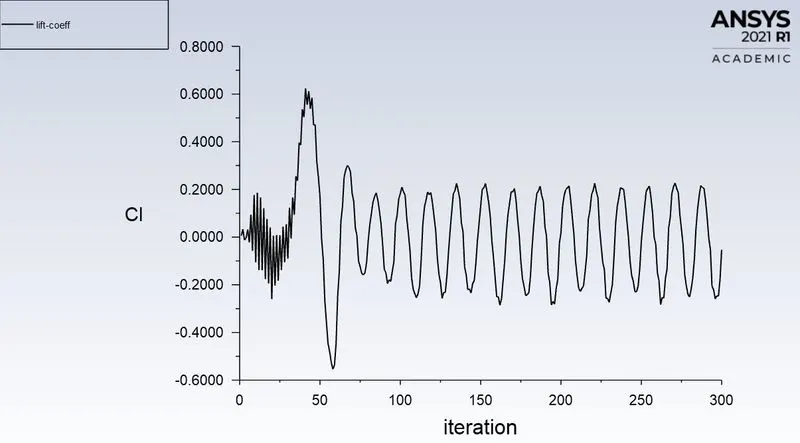
Coefficient of Lift:
Contour plot on Velocity:
Contour plot on Pressure:
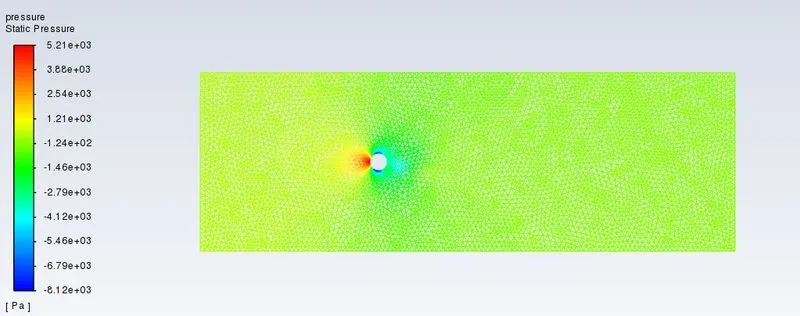
For Re = 100000
Residual Plot:
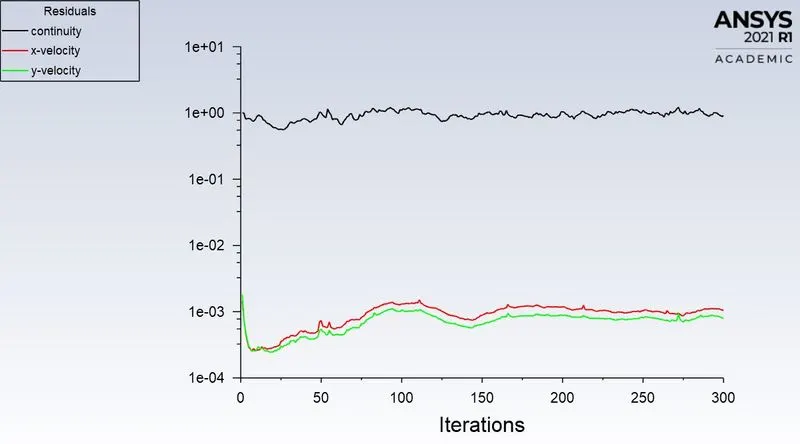
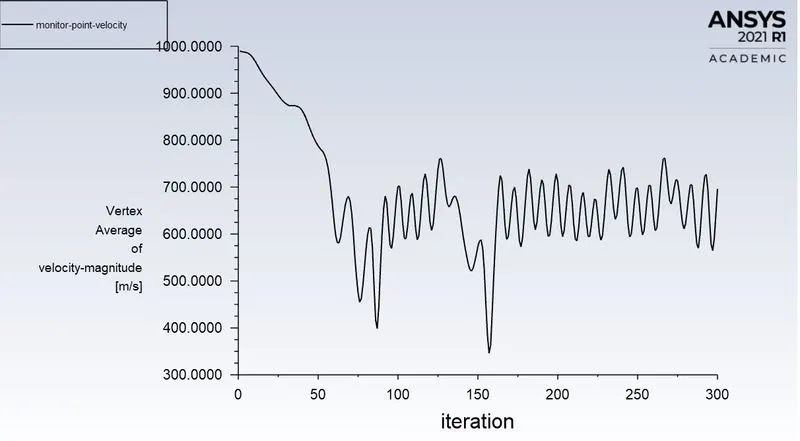
Velocity at the monitor point:
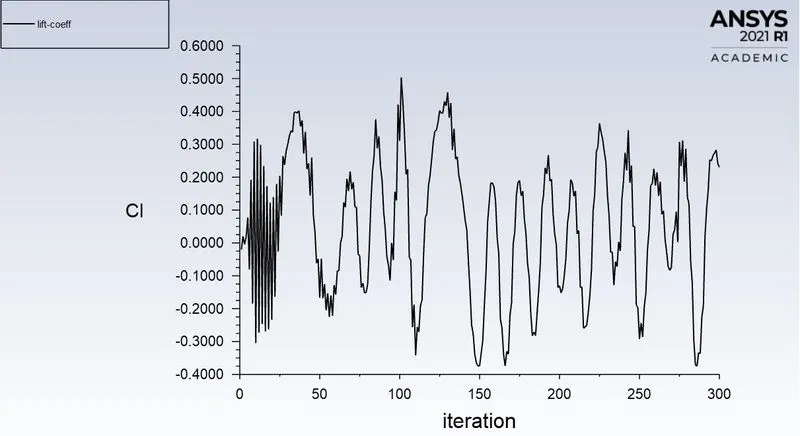
Coefficient of Lift:
Contour plot on Velocity:
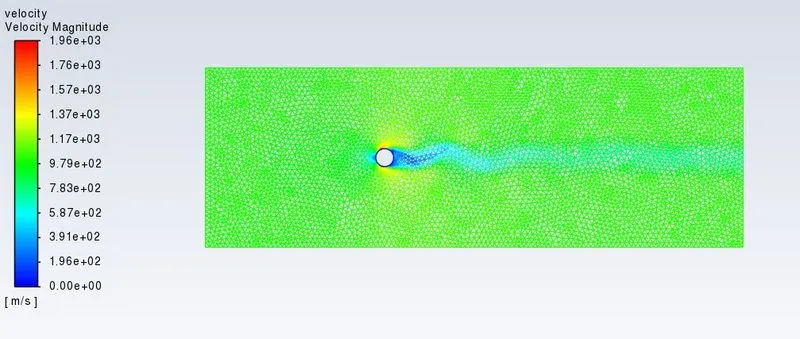
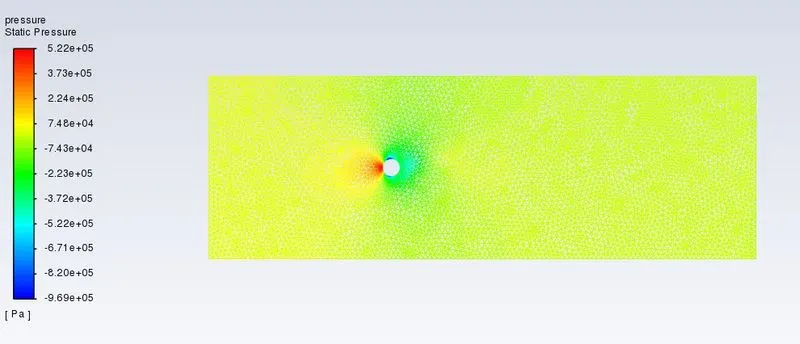
Contour plot on Pressure:
| Reynolds Number | Coefficient of Drag | Coefficient of Lift (approx) |
| 10 | 3.314 | 0.03 |
| 100 | 1.307 | 0.06 |
| 1000 | 0.769 | 0.15 |
| 10000 | 0.717 | 0.3 |
| 100000 | 0.663 | 0.5 |
Effect of Reynolds Number on Coefficient of Drag:
For Re = 10
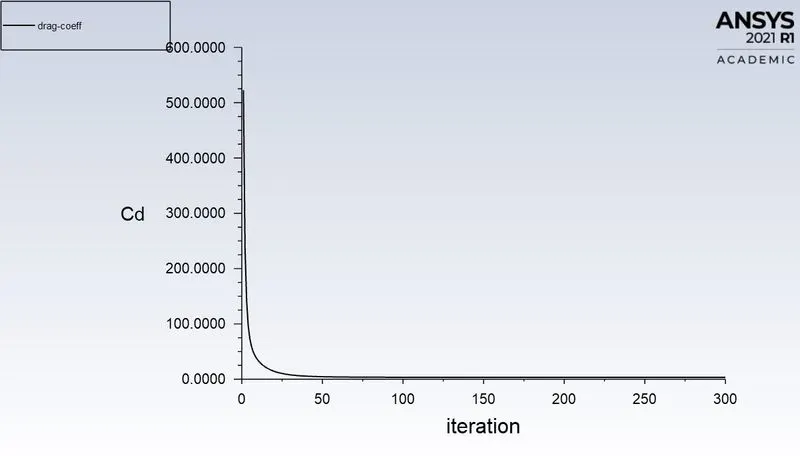
For Re = 100
For Re = 1000
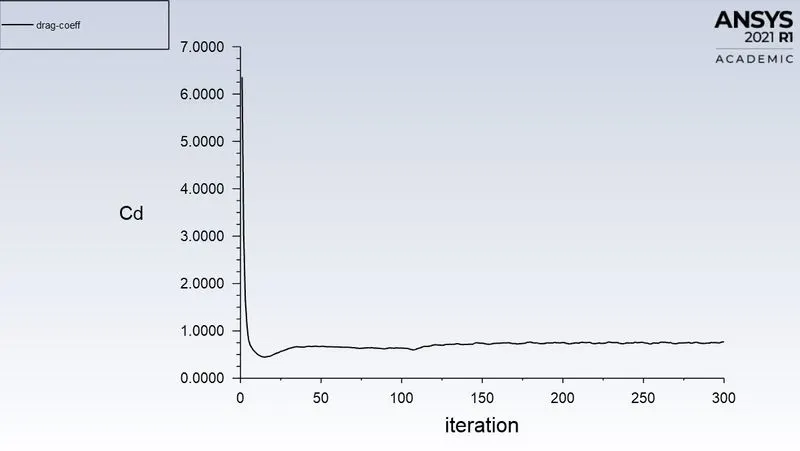
For Re = 10000
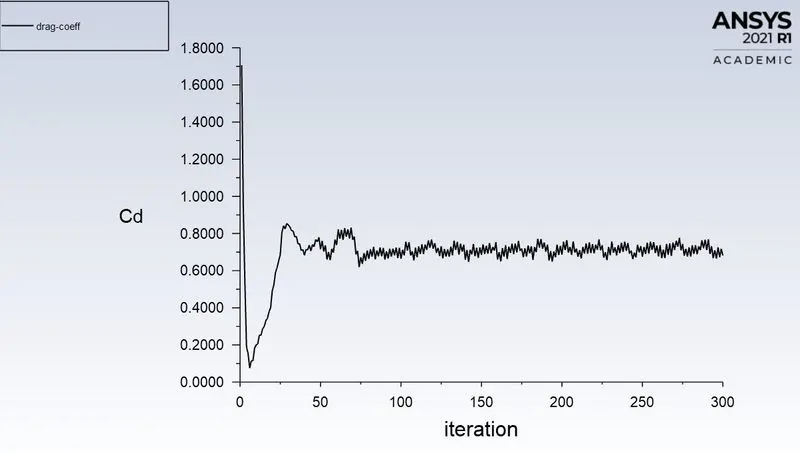
For Re = 100000
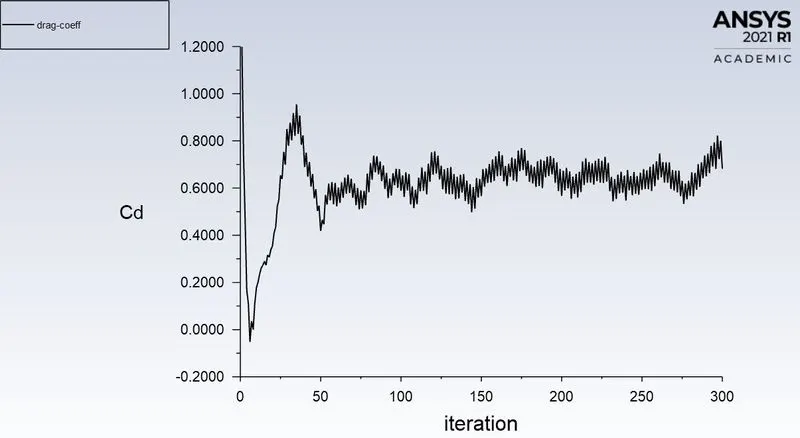
- It can be observed from the plots that as the Reynolds number increases, the coefficient of Drag drops significantly.
The results obtained are compared with a journal 'Numerical simulation of laminar flow past a circular cylinder' by BN Rajani/A Kandasamy/Shekhar Majumder.
This project gives an insight into the importance of inflation layers on capturing effective physics on vortex shedding, the variation of coefficient of drag on Reynolds number. Also, the importance of transient solver to get the time accurate solution.