Project 1
CAR BACK DOOR WIRING HARNESS DESIGN- PROJECT 2
AIM
To route the Wiring harness on given car body front door and prepare flatten view drawing in CATIA V5.
INTRODUCTION
A wire harness, also commonly referred to as a wiring harness, is an exterior sheath used to cover some types of electronic wires. Generally, wiring harnesses are made of thermoplastic or thermoset materials that can help protect the cables from the environment.
Automobiles today come with some great features. Their design, though, calls for deft wiring considerations. An automotive wiring harness is an assembly of wires, connectors, and other electrical parts. You use it in a vehicle for the transmission of signals.
There are three types of engine wire harnesses based on the vehicle part you are looking at. The engine wire harness is a set of wires, connectors, and terminals to relay the signal to and from the engine. It also communicates messages from all sensors within the engine.

Door Wiring Harness
Door locks and latches
Most vehicle doors are secured closed to the vehicle body with latches that may be locked to prevent unauthorized access from the exterior. There are a variety of car door locking systems. Door locks may be manually, or automatically operated, and may be centrally or individually operated. Also, they may be operated by remote control, with the transmitter often integrated into the main vehicle access and a key for the ignition.
Additionally, rear passenger doors are frequently fitted with child safety locks to prevent children from exiting the vehicle unless the door is opened from the exterior. These are also frequently used on police cars, to prevent suspect criminals from escaping whilst in police custody.
Vehicle door latches on practically all vehicles today are usually operated by use of a handle which requires the user to pull, lift, or tug - with some force towards themselves rather than push. There is a reason for this. As late as the 1970s, some vehicles used exposed push buttons to operate the door latch, such as certain opel models. The unfortunate side effect of this design was that external objects which touched a vehicle during a spinout could trigger the latch; the door would pop open and eject the vehicle occupants.
Door switch
Door switches are simple on/off mechanisms connected to the interior light (dome light), and may also be connected to a warning light, speaker, or other devices, to inform the driver when the door is not closed. The door light is standard equipment on all cars. In American cars from the 1950s-1990s, they had buzzers or "door dingers" that sounded, along with the check light, whenever any door is open.
Windows
Most vehicle doors have windows and most of these may be opened to various extents. Most car door windows retract downwards into the body of the doors and are opened either with a manual crank, or switchable electrical motor (electric car windows other than the driver's window can usually be controlled at both the door itself and centrally by an additional control at the driver's position). In the past, certain retracting windows were operated by direct (up or down) pressure, and were held in the up position by friction instead of by an internal lift mechanism.
Other cars, particularly older US-manufactured vans have hinged windows with a folded lever mechanism to push and hold the window out from its closed position.
Door brakes or stays
Vehicle doors often include brakes, or 'stays', that slow the door down just before it closes, and also prevent the door from opening further than its design specification. The current trend is to have a three-stage door brake.
Door brakes exist because the doors on the first vehicles were heavy, so they had to be pushed hard to make them close. Soon after,automotive manufactures managed to construct lighter doors, but users were used to closing doors with significant force; therefore doors could become damaged. Door brakes were then introduced to slow down the door just before the door closed to prevent damage; these soon became standard
OBJECTIVE
- Define all the mechanical connectors electrically and save it in the Catalogue.
- Place required Connecters on the Back door CAD data.
- Place Fir Tree clips at the required position by following the packaging rules.
- Create the Wiring Harness Routing with all the electrically defined connectors and mounting equipments.
- Create branching points at required locations to create sub branches and connect to various connectors in the geometrical bundle.
- Apply Protection coverings as required.
- Create Wiring harness flattening for the final geometrical bundle.
- Using the drafting workbench, create a drawing sheet with the flattened wiring harness.
DESIGN METHODOLOGY
Some important packaging rules and best practices to be considered during wire harness routing and placing of the clips and clamps
Distance between two clamps on a straight branch should be maximum of 200mm.
- The minimum branch length should be 50mm.
- Minimum distance between clip and nearest branching point should be 25mm.
- The minimum distance between two straight connection points should be 200mm.
- The minimum distance between two breakout points should be 50mm.
- To limit the number of branches from a single branch point to 4.
- Enough clips clamps shall be provided to ensure positive clearance with surroundings and safety of wiring harness.
- Fir tree clips and other clips can be added to the Geometric bundle as they are electrically defined and are part of the Wire harness routing and should be provided with the Wire bundle package.
- Enough slack should be provided to the wiring harness which help not to get damaged during the opening and closing of Back Door.
- Easy manufacturing, installation, removal and maintenance have to be considered while designing the wire harness.
- The wire routing should be done keeping in mind the cost effectiveness of the bundle package.
- To avoid the harness routing and clipping in blind zones of the operator during the assembly and the service.
- To provide proper slack at end connectors so that there will be no tension on the wire bundle.
- To avoid sharp edges on the sheet metal parts and if it is not possible then provide protection parts to prevent damage of the wire bundle.
- Routing through small structural holes and openings shall be avoided. To minimize chaffing and handling of the wiring harness during installation.
- To provide separate branch points for separate connectors to ensure Poka-Yoke.
- The bend ratio for all the bundle segment is considered to be 1.4
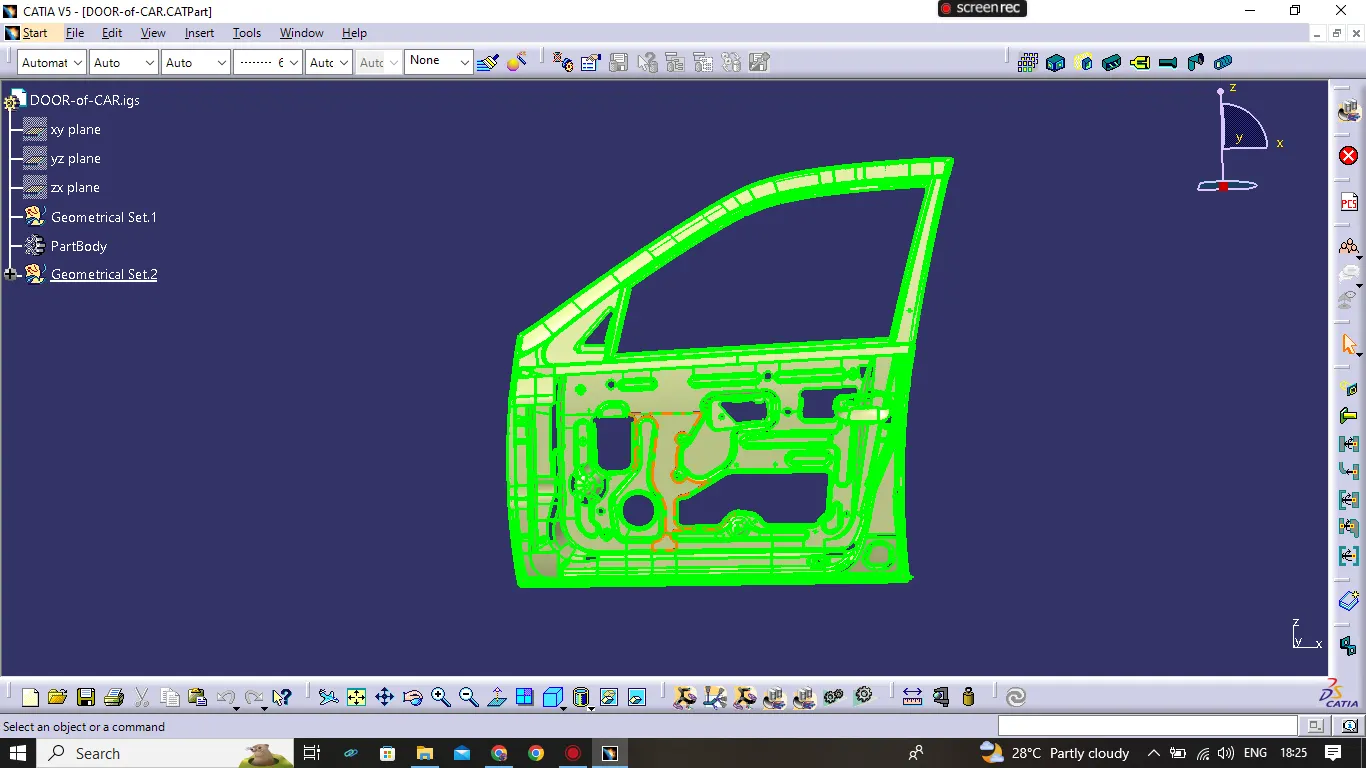
Step 1- download the front Door CAD data from the given source.
STEP 2 – Creating the context assembly
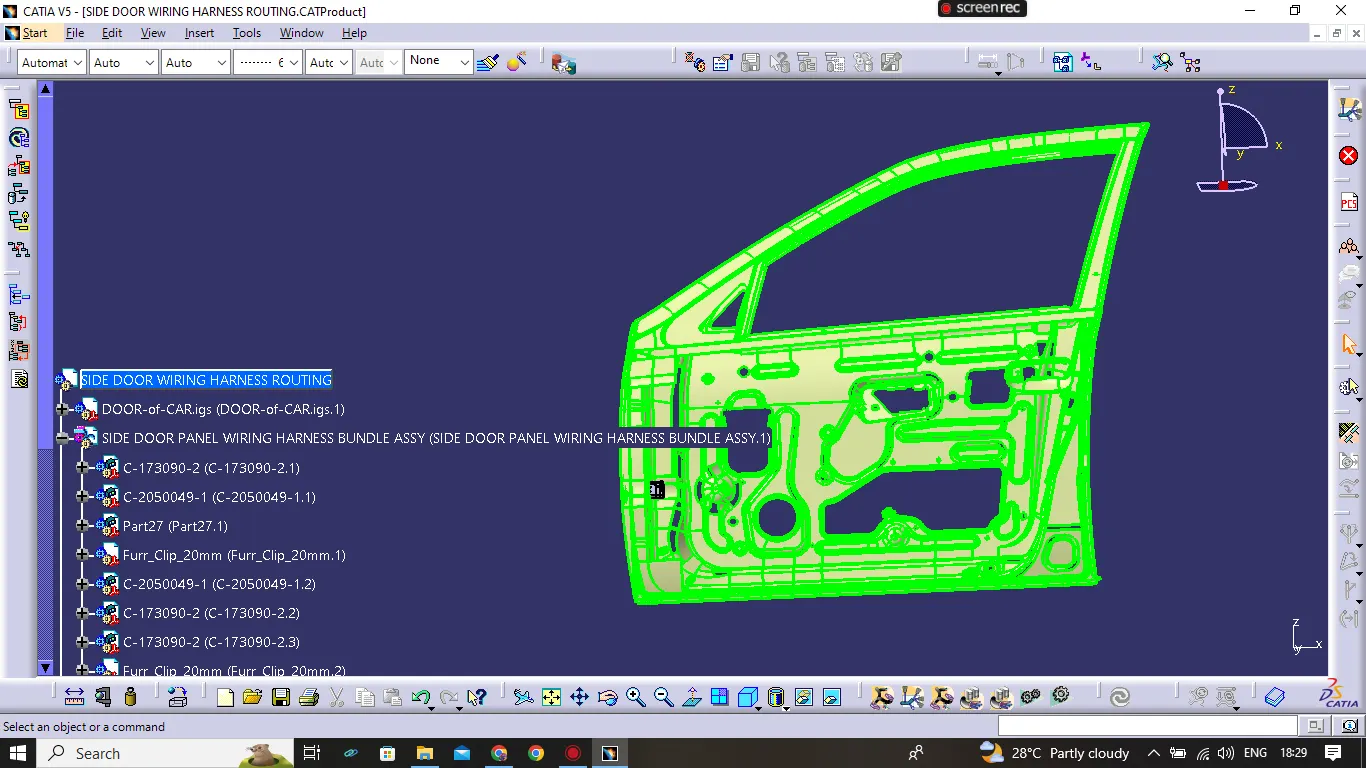
Context assembly is nothing but the product file which contains the back door 3D-CAD data and the back door geometrical bundle. Here the geometrical bundle product contains all the connectors and clips which are electrically defined for the assembly
Create new product file and rename it as Back door harness assembly context.
-
Now add the back door CAD data into the context assembly and also creating the geometrical bundle product file inside the context assembly.
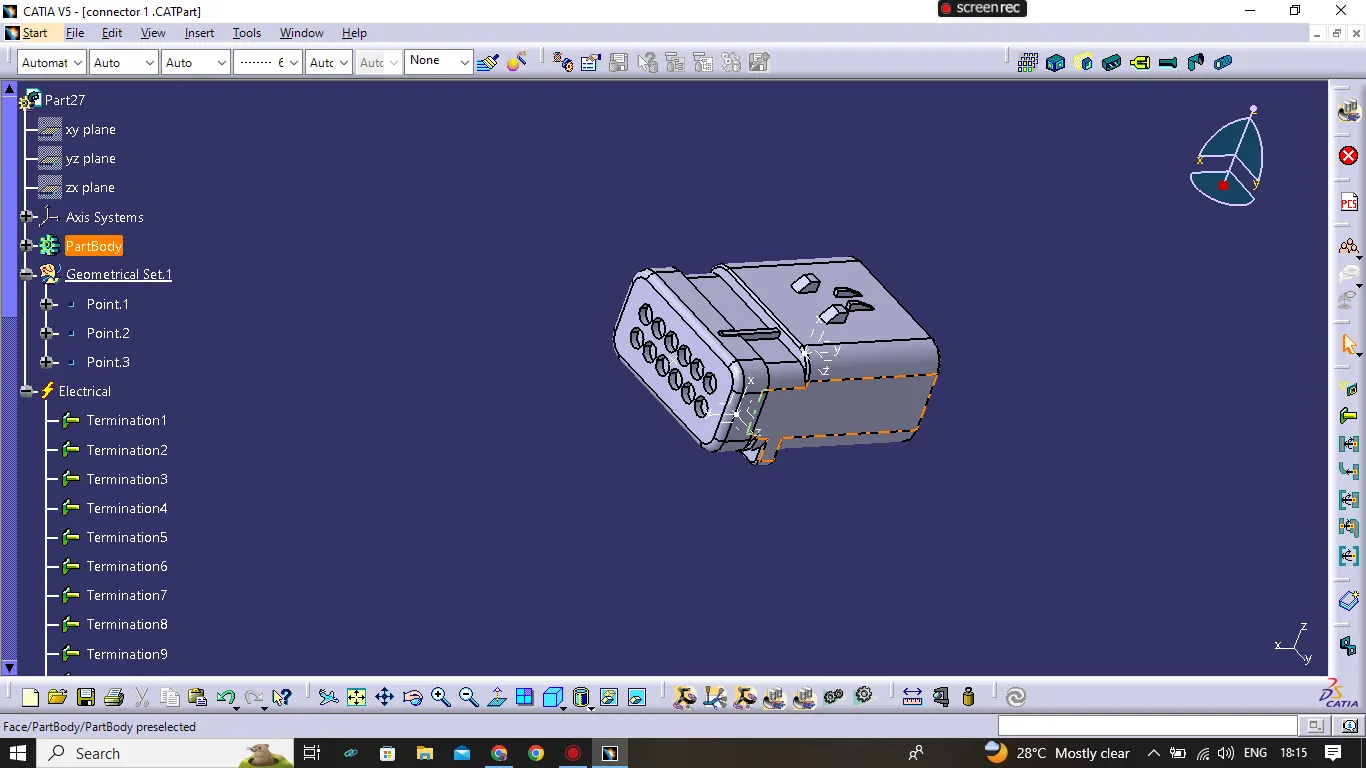
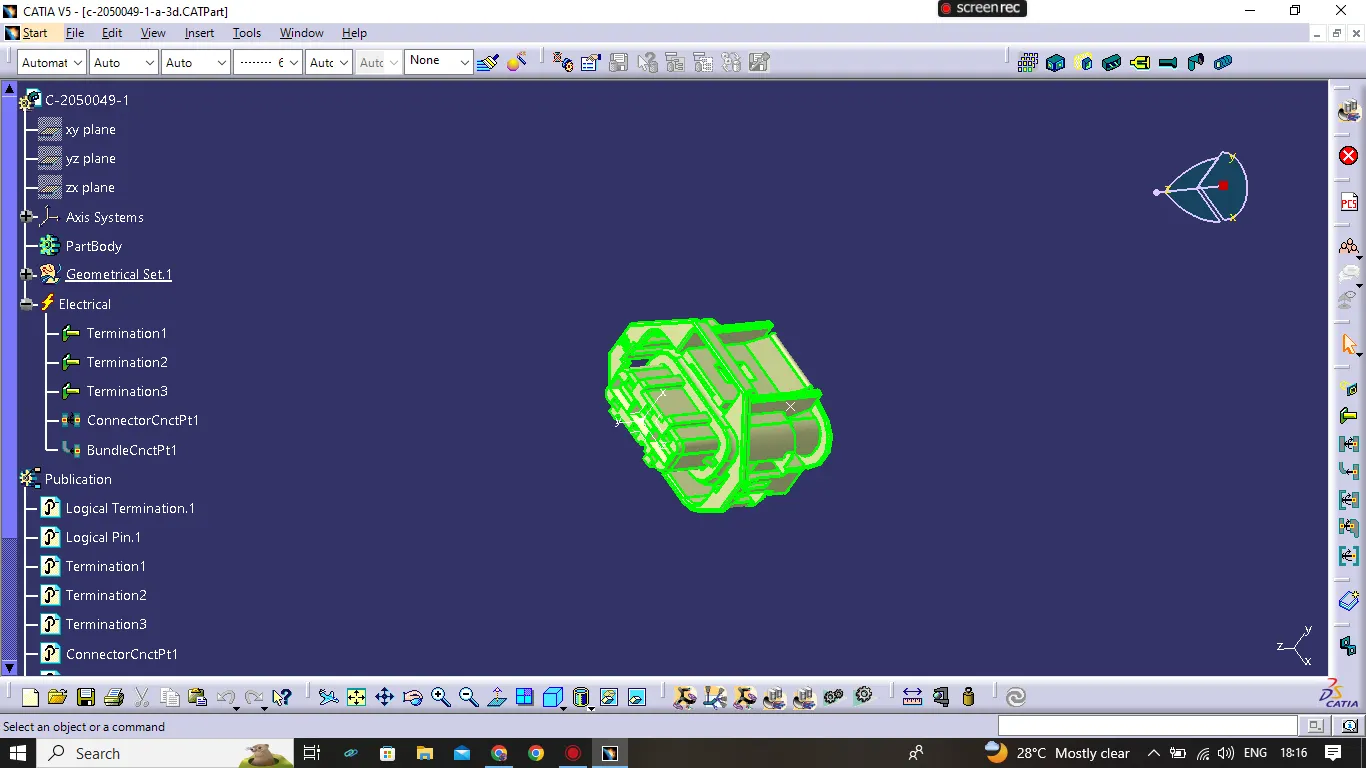
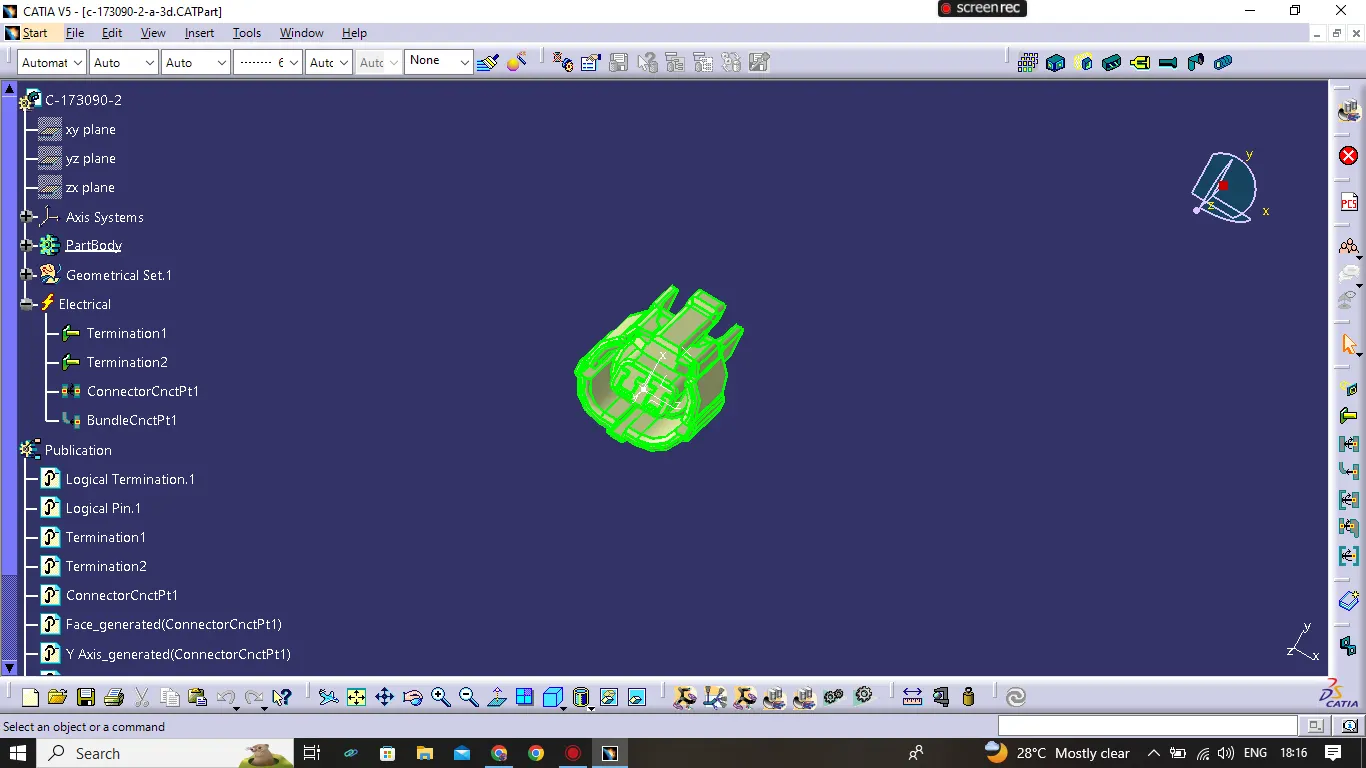
STEP 3 – Add required suitable Connectors from the Connectors Catalogue.
Back Door Harness Assembly requires the following connection connectors
- Inter connection Connector – 1
- Speaker system connector – 1
- Window winding motor connector – 1
- Door lock sensor Connector – 1
- Puddle lamp Connector – 1
- Door control switch connector - 1
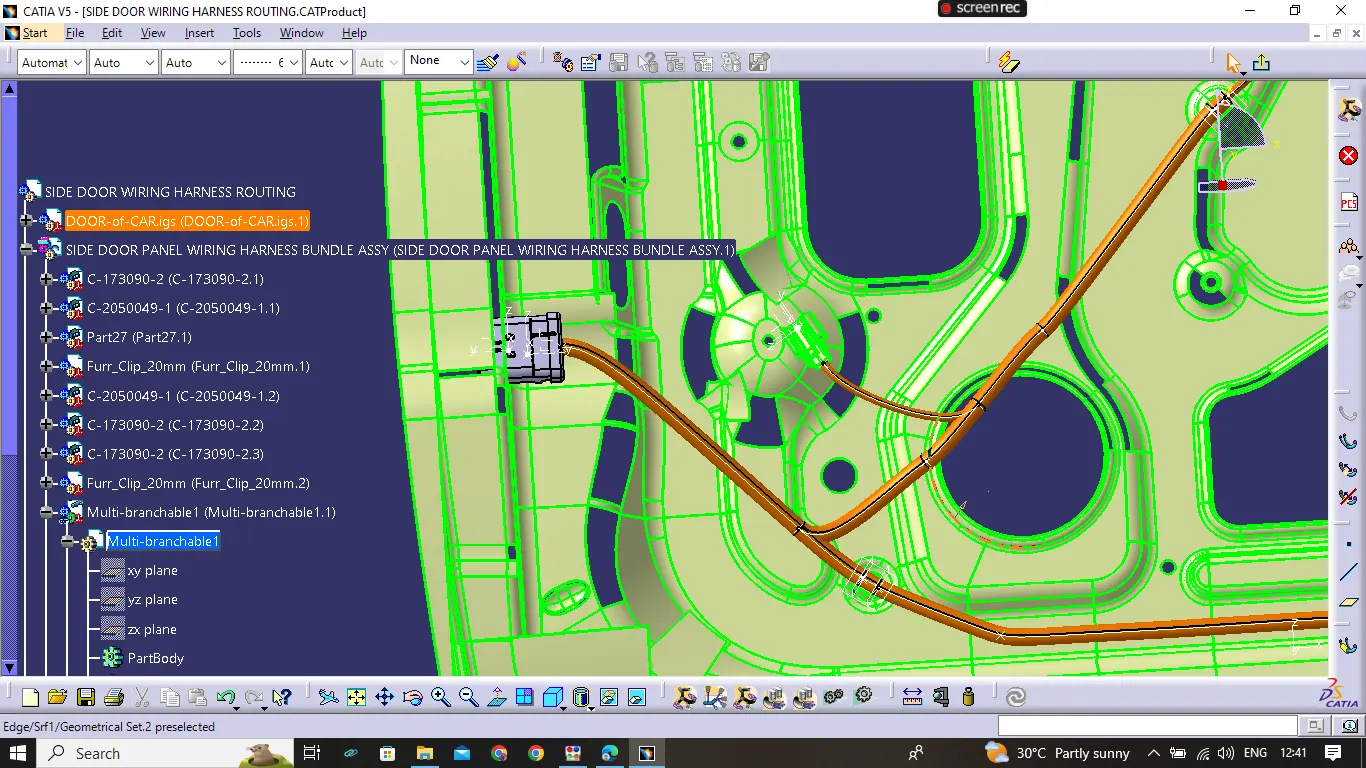
STEP 4– Placing fir tree clips to the required locations
to ensure proper harness routing throughout the Assembly.
Ensure no fouling of harness to the back door sheet metal components.
- Enough clamps shall be provided to ensure the positive clearance with surrounding and safety of wiring harness. Distance between two clamps/clips on a straight branch should be maximum of 200mm. However clamping requirements should be decided based on the harness bending and mounting arrangements.
STEP 5 - Wiring Harness Routing
- Add branch points at minimum of 25mm distance from clips and clamps to create new sub branches connecting various connectors.
- Minimum length of bundle should be 50mm.
- Now, the car tail gate assembly is ready for the bundle routing as shown in below image
- We have activated Geometrical bundle product file from the context assembly to create new multi-branchables.
- First, we have started bundle routing from interconnection connector to the nearest Mounting clip available and the continue to add multibranchabe bundles to achieve the required harness bundle. Main bundle harness diameter is considered as 10mm.
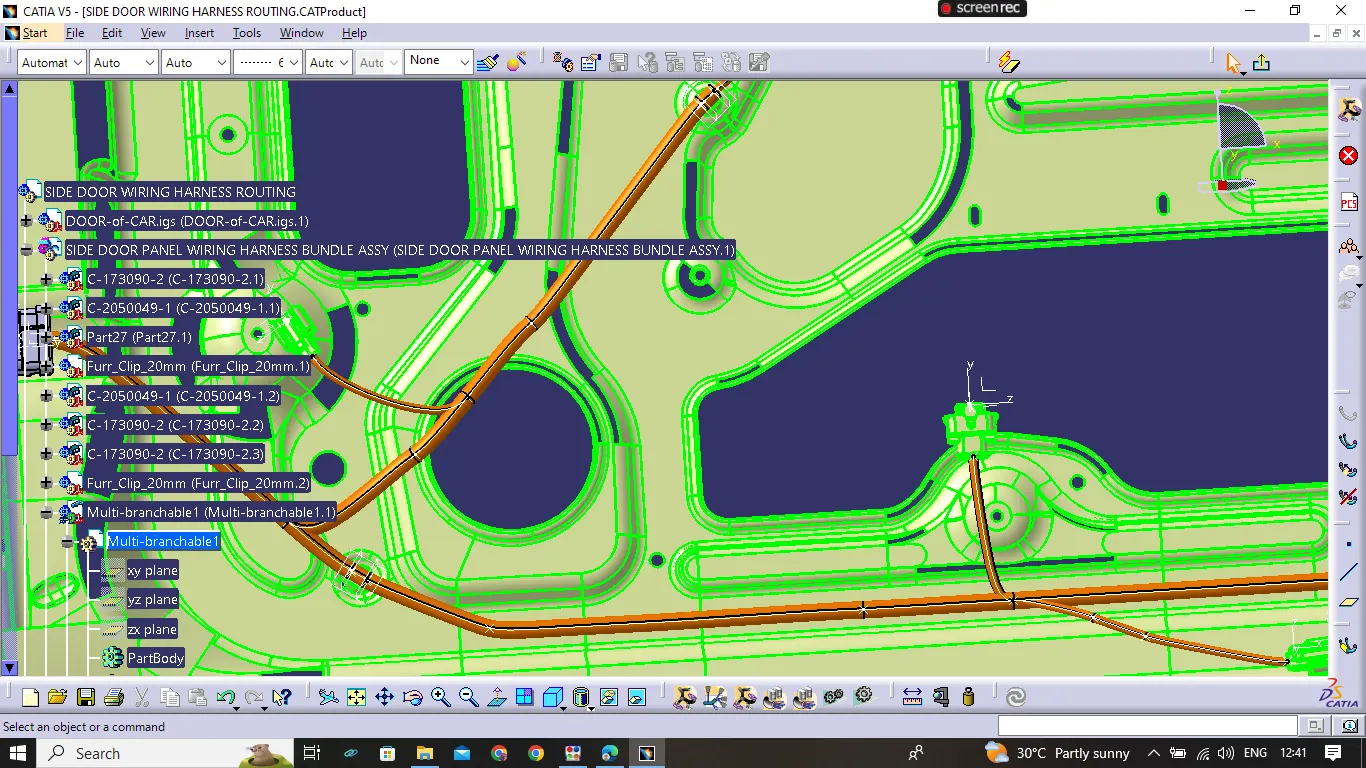
- Now create branch point to route sub bundle to the door lock sensor connector. Fir tree clips are added in between the branch point and door control switch connector to ensure proper and safe routing. Bundle diameters considered as 5 mm.
- Add sub bundle segments with bundle diameter 5 mm.
STEP 6 – Applying Protective Cover
After bundle routing, we have to add protective covering to the harness bundle so that it will get protected from the damage.
- Harness bundle should be protected with flexible rubber cover at the interconnection region where it is a critical place and subjected to opening and closing of door. There are more possibilities to damage the wiring harness if no proper protection covering is provided.
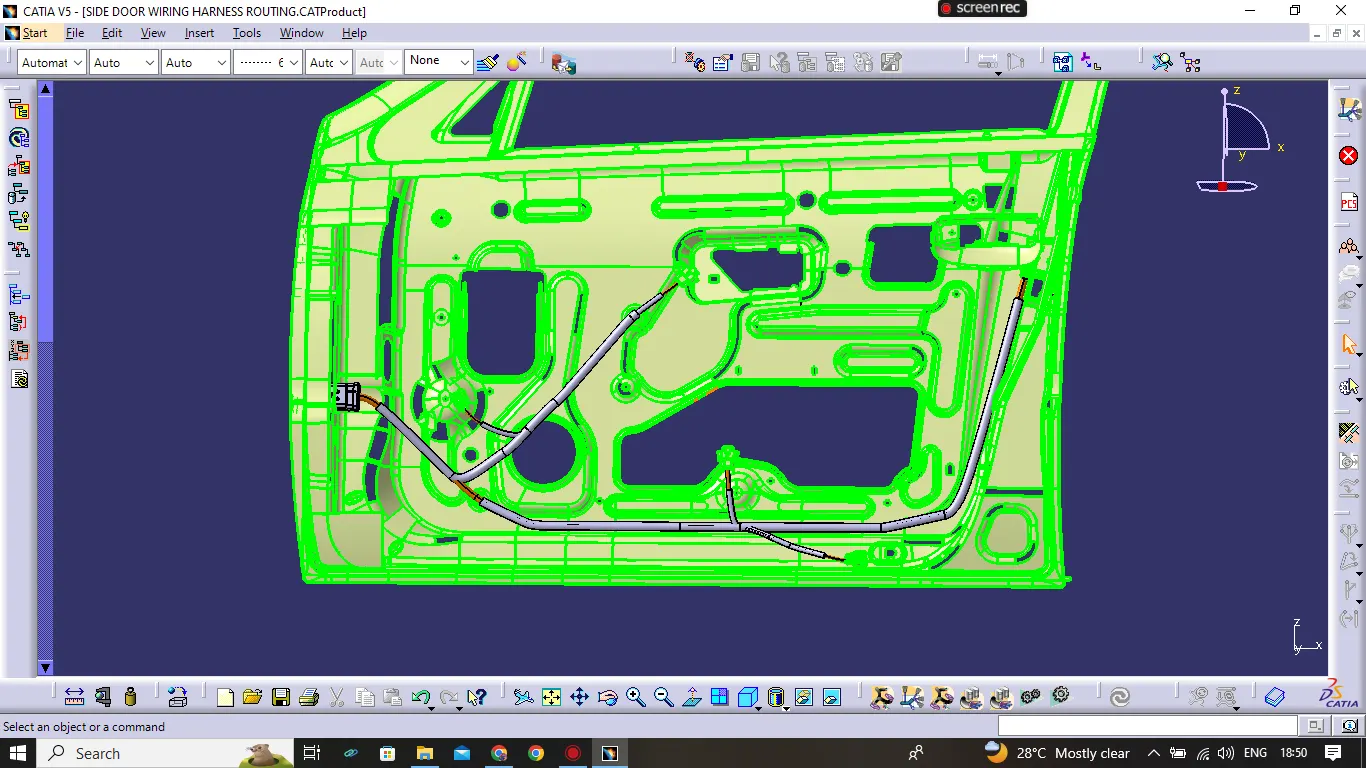
- Corrugated conduits and protective hoses with various properties, from heat resistance through abrasion protection and impact strength to noise reduction, protect valuable cables against all unfavourable external influences.
- Slit COT tubes are provided for protecting the harness from physical and other environmental damages that can occur in the long run.
- End Extrimities at the Connector bundle entry side should be given a gap of 30mm
- Selection of corrugated tubes are mainly driven by the wiring harness bundle diameter and temperature resistance requirements.


Step 7 - WIRING HARNESS FLATTENING
Wiring harness Bundle packaging process is done. Now we need to convert the geometrical bundle into a flattened wiring harness in the Electrical Harness Flattening Workbench.
- To create theFlattened Harness, we need to create a new product file and switch into the electrical harness flattening workbench.
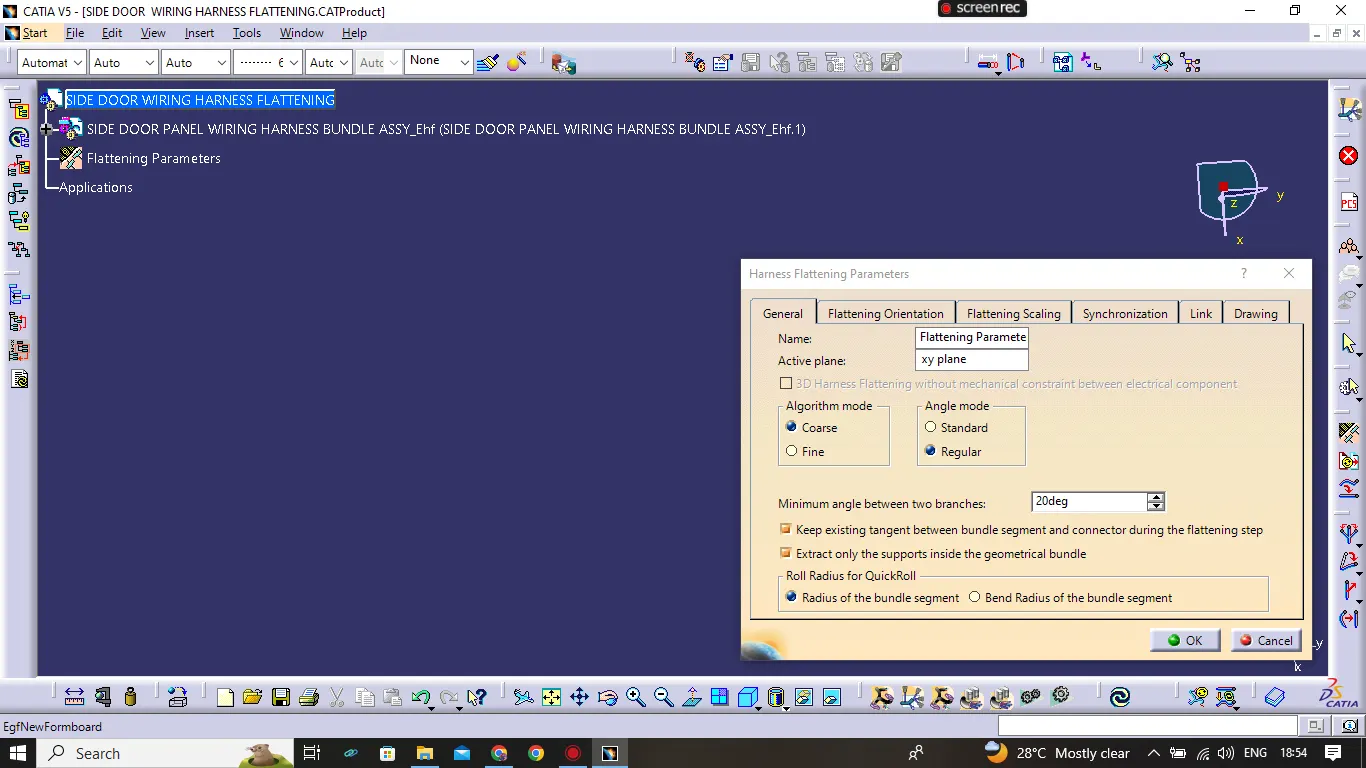
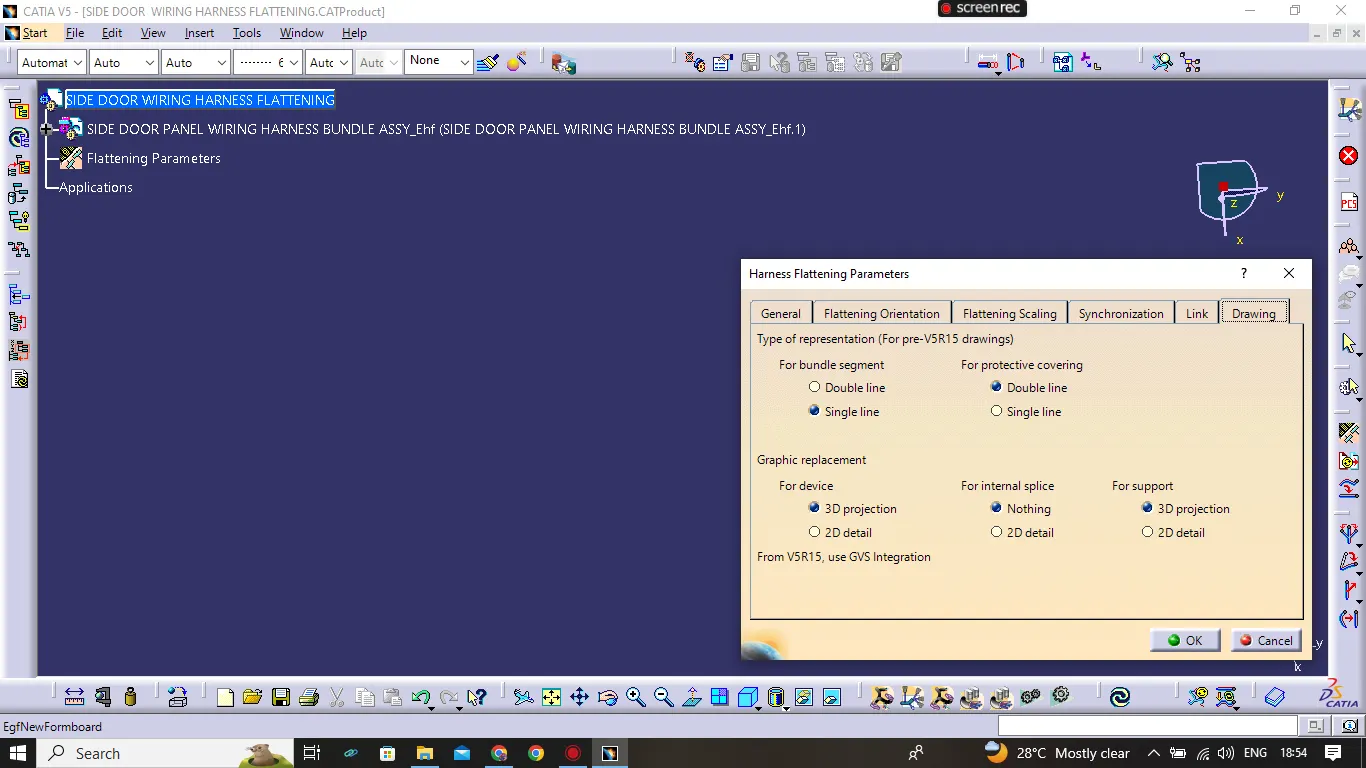
- Now we need to define the Harness Flattening Parameters, save it in the same folder with all other files of back door harness project and then Extract the geometric bundle from the wiring harness context product file.
Final Flattened Harness
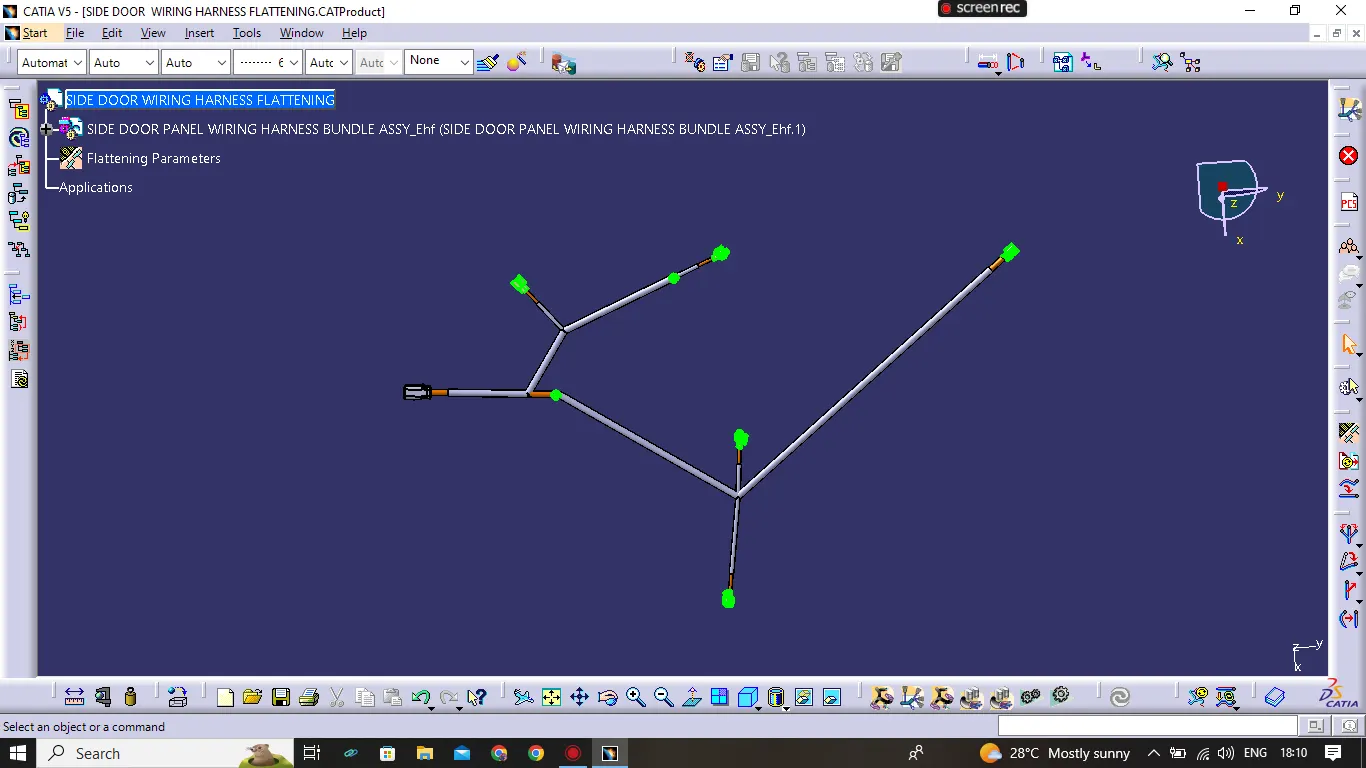
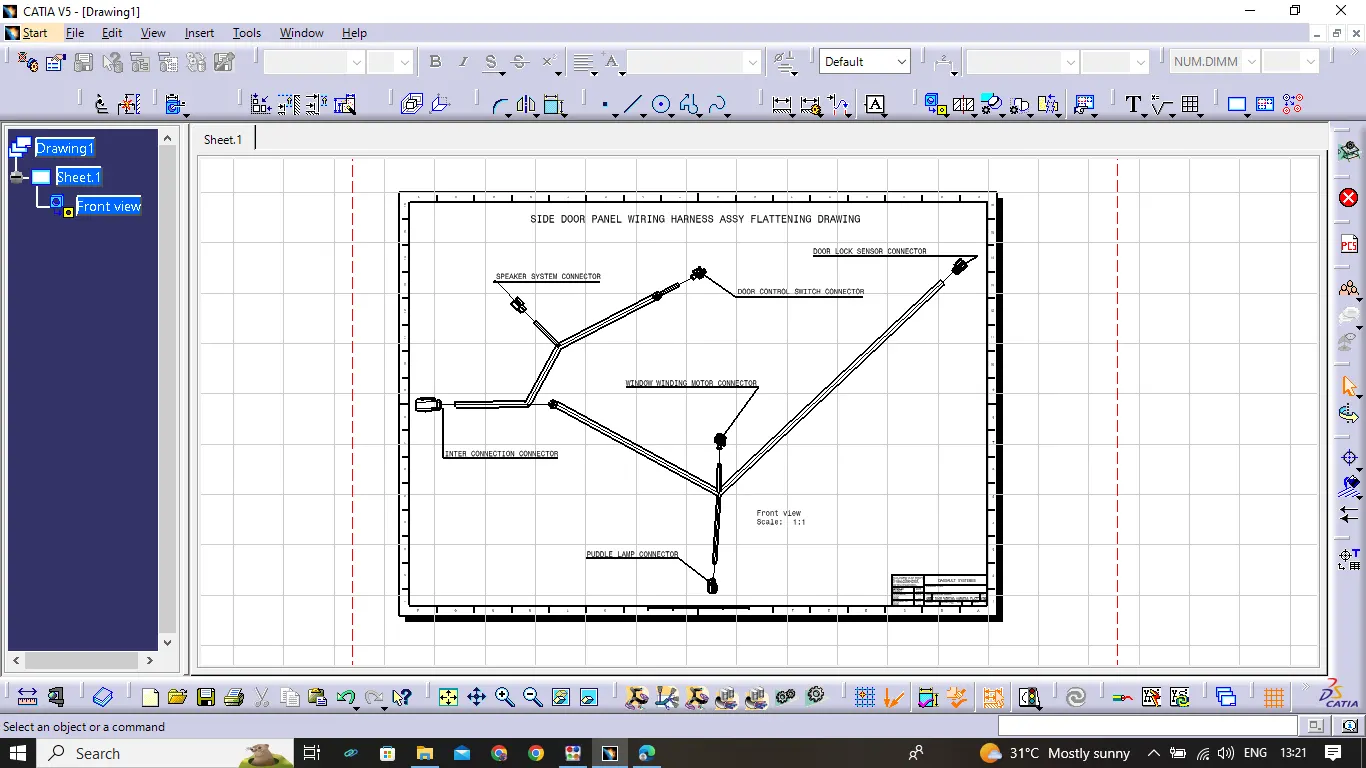
Final Back Door Flattened Harness Drawing
Insert the flattened harness product into the drawing sheet using view option and selecting the front view command.
- Modify the drawing sheet view with required parameters.
Conclusion
CAR front door wiring harness assembly has been successfully completed considering all the packaging rules and industry standards, Wiring harness flattening and Flattened view drawing preparations are also done using CATIA v5 software.