BIW HOOD DESIGN
HOOD DESIGN
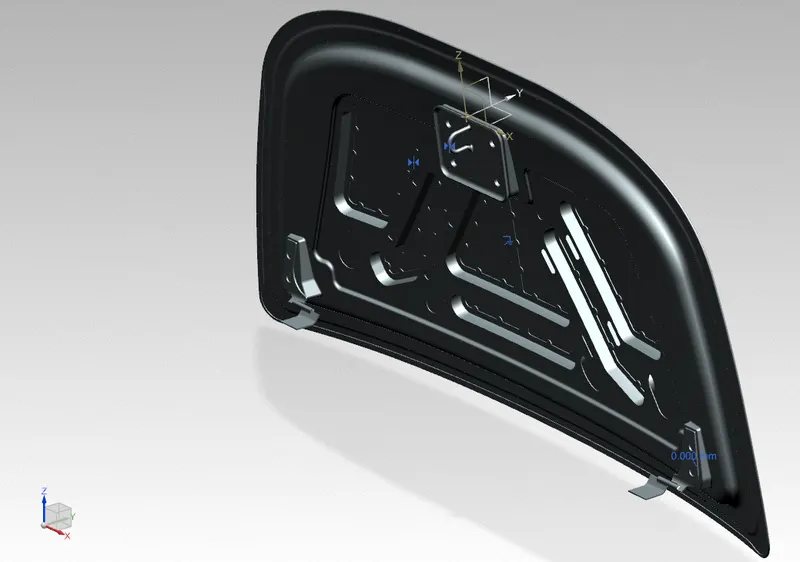
FIG. 1.1
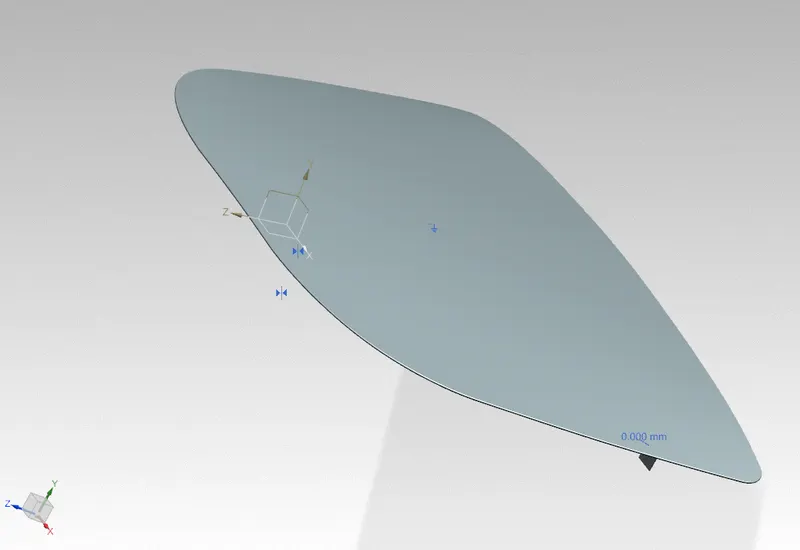
FIG.1.2
HOOD INTRO
A car hood is also referred to as a bonnet in some other countries. generally, it is used to cover the engine and its accessories. hood also considered as another door which is used to repair and helped to maintenance engine.

FIG.2.1
COMPONENTS OF HOOD
the components of a basic hood are given below
OUTER PANEL
INNER PANEL
STRIKER
HINGE ASSEMBLY
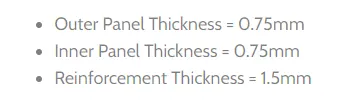
the thickness that I have followed for designing a hood.
DESIGN METHODOLOGY
I have used a top-down method to designing a hood. With the help of a master sketch. the master sketch is nothing but a design principle of sketch workflow.
MASTER SKETCH
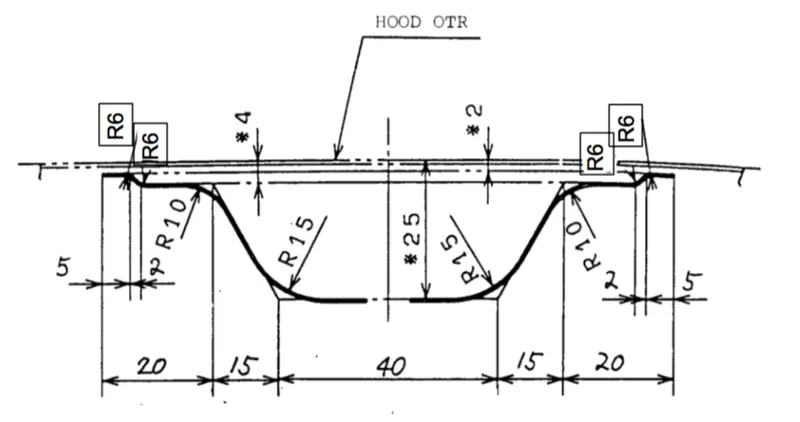
FIG. 3.1
DESIGN CONSIDERATIONS
pedestrian rating
force distribution
ensuring DFM (sheet metal process)
hood standards
pedestrian rating
the most important thing is a safety regardless of anything. so there are times that pedestrians will be hit by the hood of a car. while the head is laid on the hood that specific portion should absorb the energy instead of resisting. to prevent causes.
the hitting zone will be different because of so many factors like ages, country, etc.
wrap around distance
when a car crashes on a pedestrian the whole body wraps around the front shape of the car. and the head impact on the windscreen.
the distance on which the head impacts the car from the ground is called (WAD).
child's head impact zone=1000mm to 1700 mm (3.5 kg)
adult head impact zone = 1700mm to 2100mm (4.5 kg)
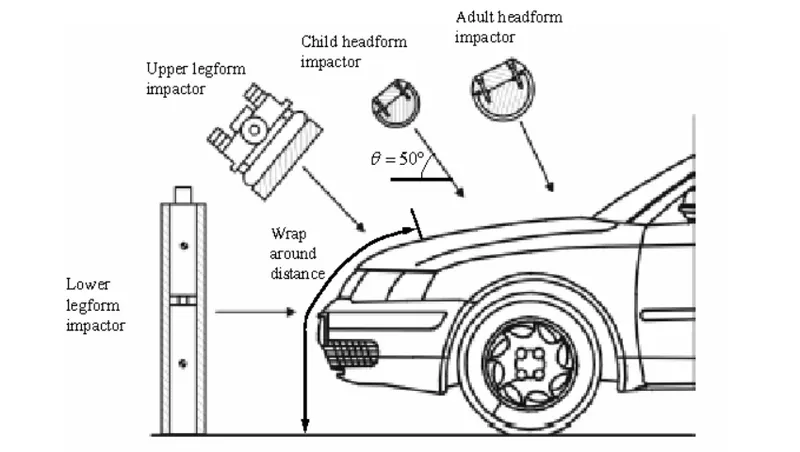
FIG.4.1
FIG.4.2
force distribution
when the force is acting on the center of the hood. the force should be spread like a wave instead of a single direction. it will drastically reduce the impact on the passengers.
by adding emboss we can achieve this
force distribution image
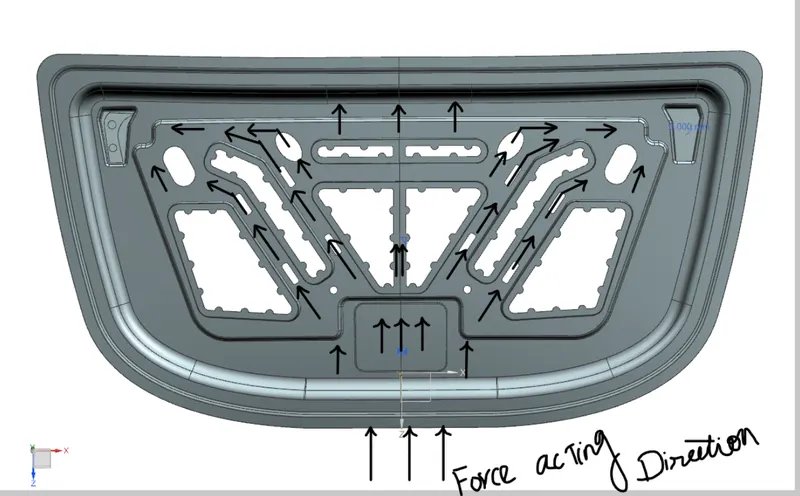
FIG.4.3
sheet metal process
generally, sheet metal parts are produced by pressing, stamping, forming, etc. during the design phase, I designed respect with to DFM.
strength-enhancing process
here we have used some processes to enhance the strength of the sheet metal. those are reinforcement, hemming process let's take a brief look.
reinforcement
which is adding an extra material to increase the strength of the material (or) to compensate the strength of the material on the particular region.
the area that I'm going to attach my hinge assembly and striker those will lose their strength to compensate I'm gonna attach a reinforcement of 1.5 mm thickness
relevant pics are given below
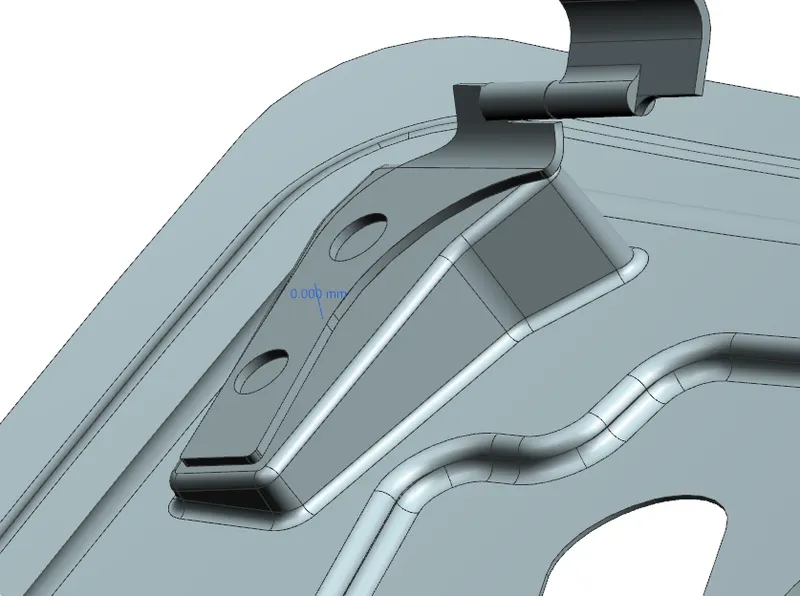
FIG.4.4
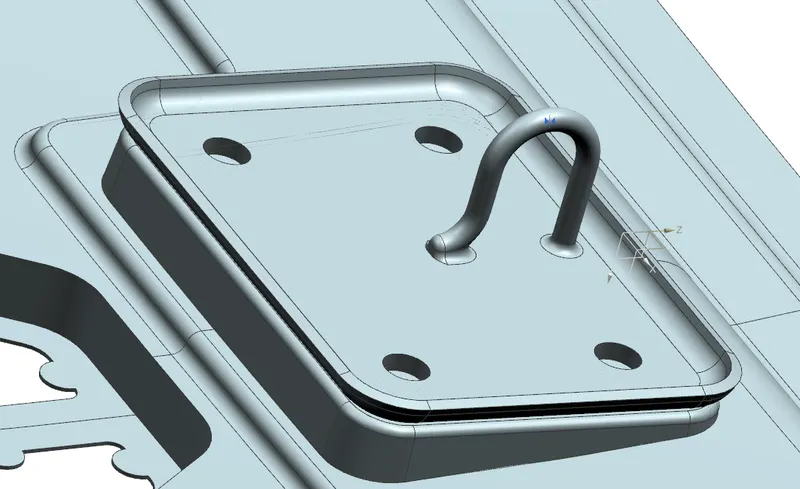
FIG.4.5
hemming
Hemming is a forming operation in which the edges of the sheet are folded or folded over another part to achieve a tight fit. Normally hemming operations are used to connect two different sheets.
FIG.4.6
In the manufacturing process, rollers are used 3 to 4 times to get a final result. while hemming the sheet metal it is necessary to give a relief area in the corners to reduce the internal stress.
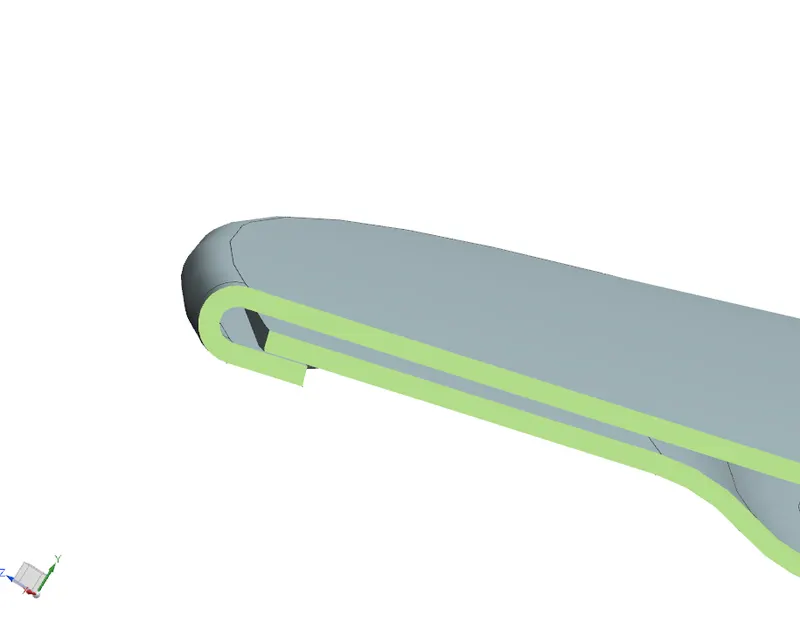
FIG.4.7
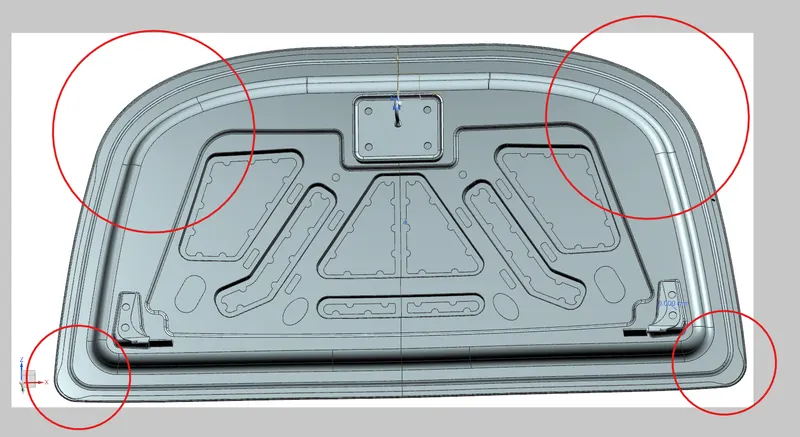
FIG.4.8
mastic data
mastic seals are used as a bond between the inner and outer panels.it is also used to improve the stiffness of the area. it plays a vital role which is reducing the NVH.
the gap between the inner and outer panel is 4.5 mm. mastic seal will occupy the 4.5 mm gap.
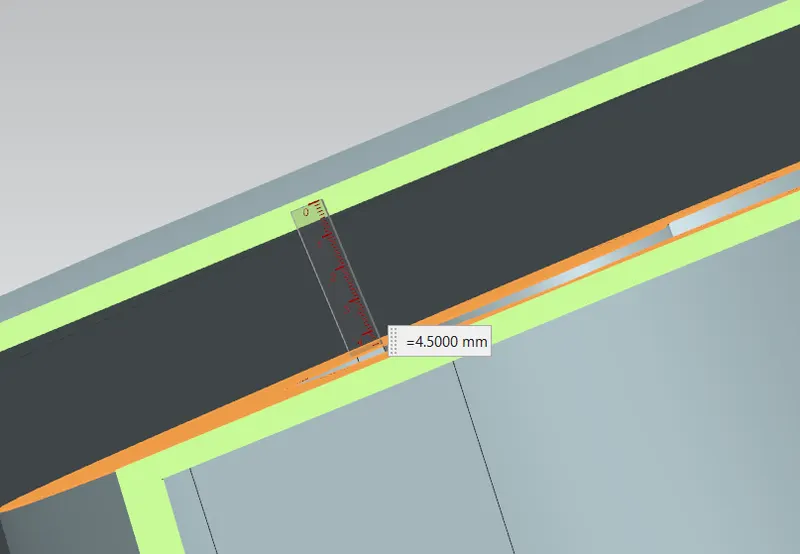
FIG.5.1
mastic seal will cover the 80 mm diameter area from the center of the mastic point. stiffness will be increased in the dia zone.
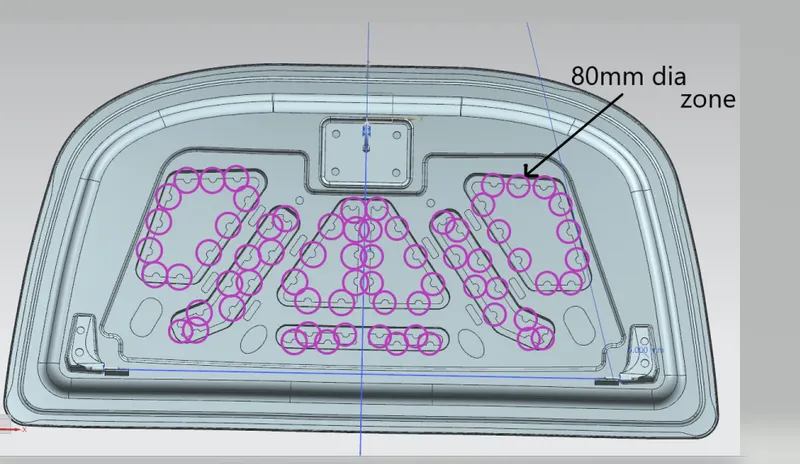
FIG.5.2
latch trajectory
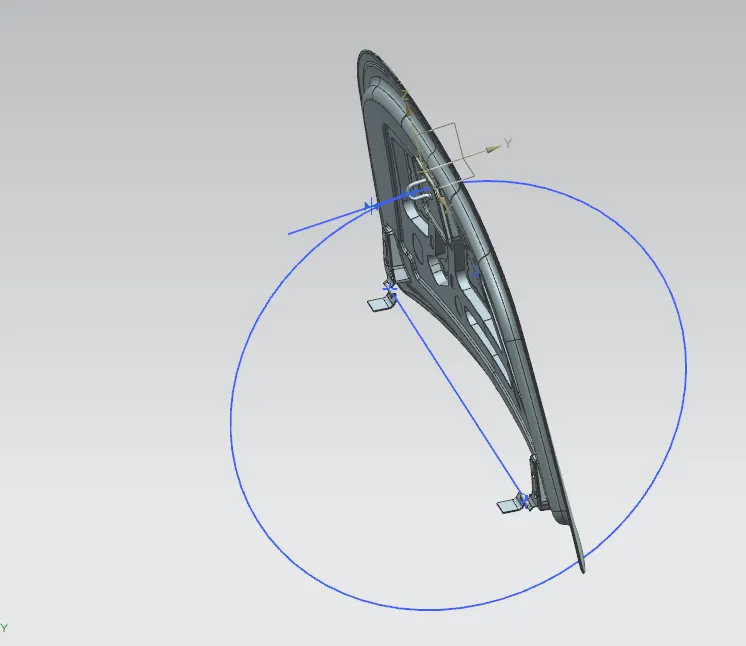
FIG.6.1
the hinges should be placed in this way. which is the two hinge axis will share the same axis. from the center of the axis, if we draw a circle from the center of two henge axis to the striker lock point. center of striker lock point should be perpendicular to the hinge axis. so the hood will be open and close perfectly.
if we use the support rod. the rod should be lesser than 35mm. this number comes from the study.
SECTION MODULUS
Intro
section modulus is a geometric property for a given cross-section used in the design of beam and flexural members. by finding the section modulus we can find the resistance to remain unchanged when the force is applying to the object or substances.
S= I / Y
S - section modulus
I - the moment of inertia
y - the distance between the neutral axis and the end of the object.
Moment of inertia
here we are considering the area moment of inertia also known as the second moment of inertia. it is used in a sectional mechanical application, usually involving a section of any structure. the shape of the object and the plane of the section will give us the 2d part it is called the section.
when the area of the section increases the moment of inertia also increases. so the final result which is the section modulus also increases.
so we could say section modulus is proportional to the moment of inertia.
objective
to find a section modulus of the hood, and optimizing the section modulus value using NX_cad.
section modulus of the hood 1
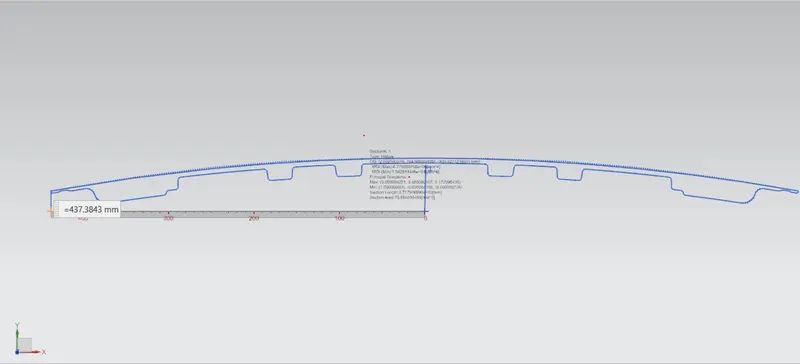
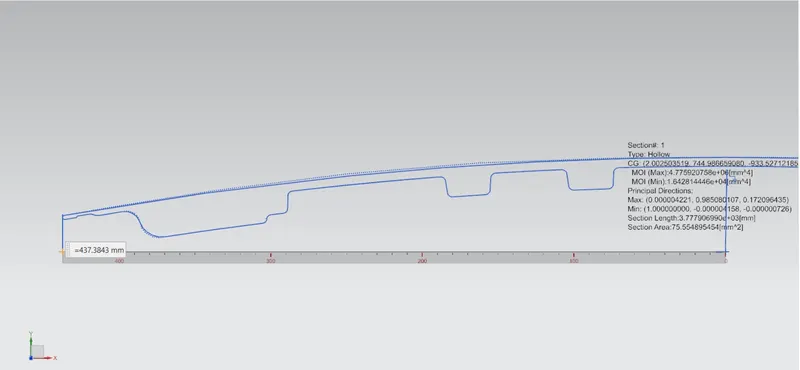
calculation
S=I/Y, where I = 1.642814e4 mm4
y = 437.3843 mm
= 1.642814e4/437.3843
S =37.5599mm3 - this is the section modulus value for the hood section.
we have to consider the minimum value because from the point only the substance starts to change from its original shape.
optimized section modulus-2
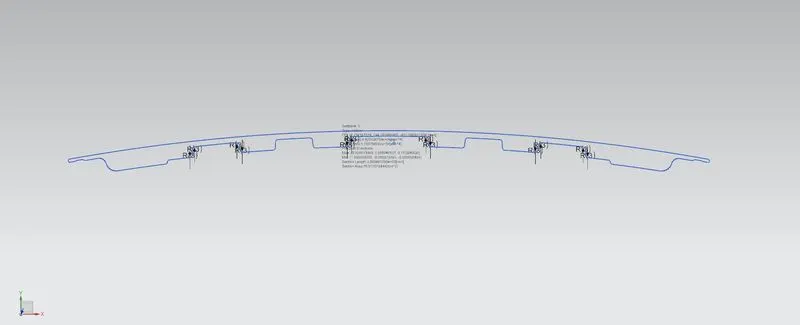
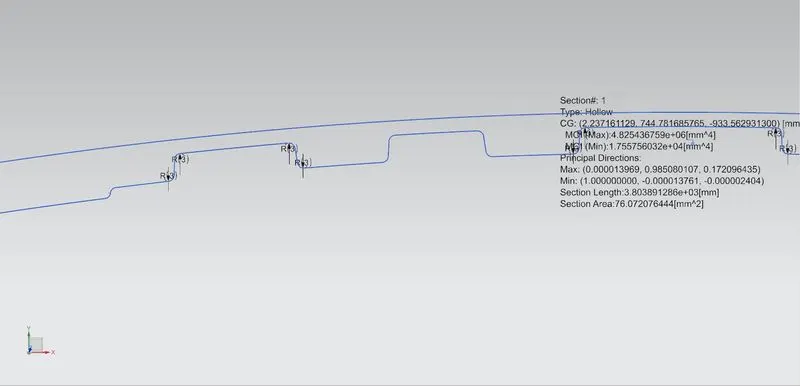
calculation
S=I/Y
MOImin=1.755756e4mm4,y =437.3843mm
=1.755756e4/437.3843
S= 40.1421mm3
how optimization accomplished
#i have increased the distance between outer and inner panel by 2mm compared to the existing one. and also I have reduced the cutout area, so the the total sectional area increased.

difference =S =40.1421-37.5599 =2.5822mm3
RESULT
section modulus was successfully determined and improvised by increasing the section area.
HOOD VIEWS
front view
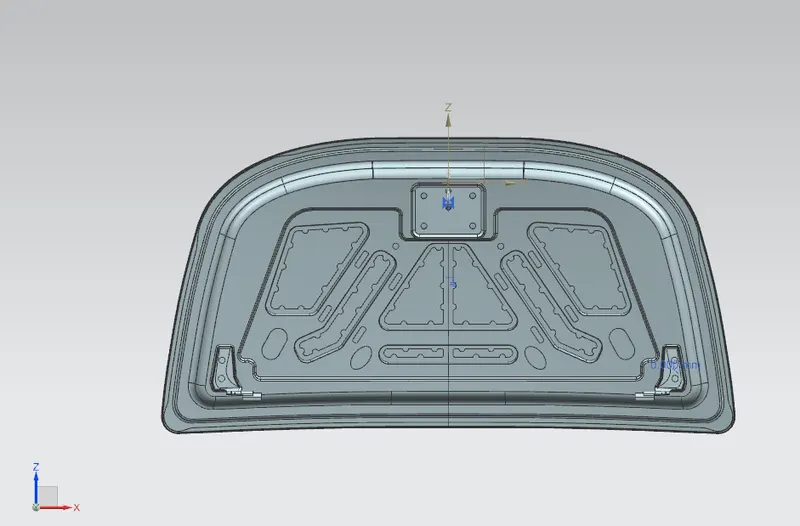
FIG.7.1
right side view
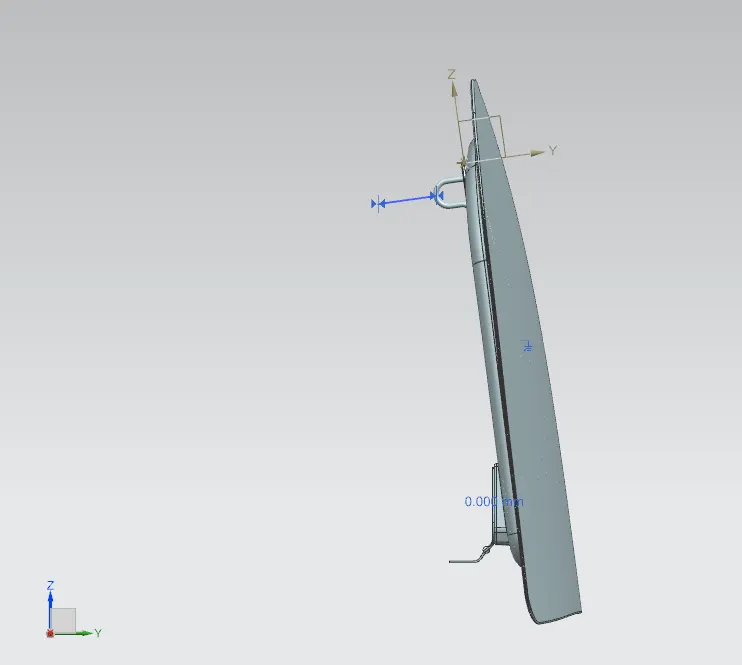
FIG.7.2
top view
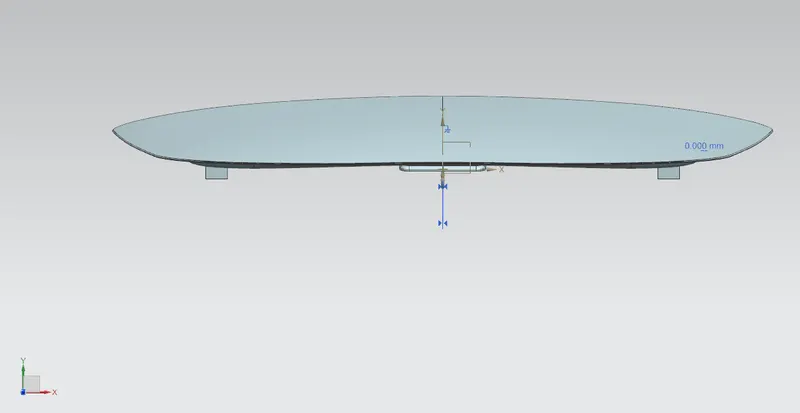
FIG.7.3
isometric view
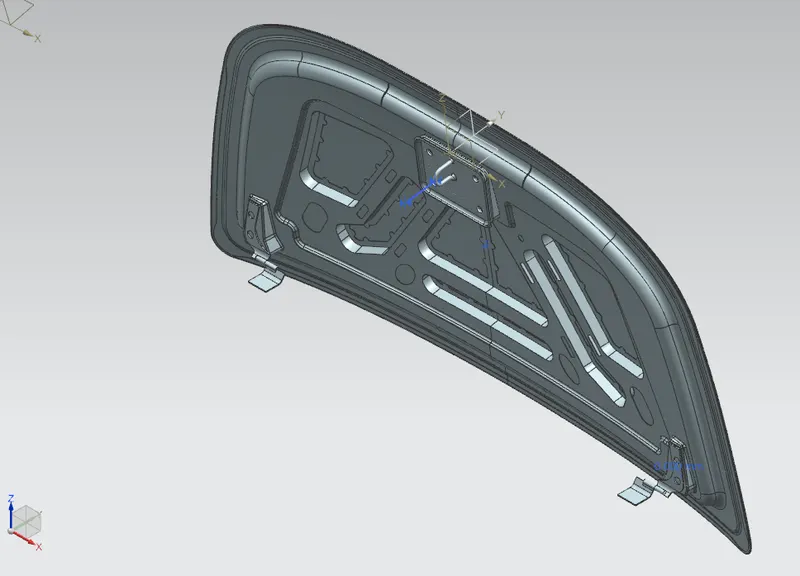
FIG.7.4
CONCLUSION
- Thus the hood was designed by considering all the master sections, design standards, and Draft analysis was conducted.