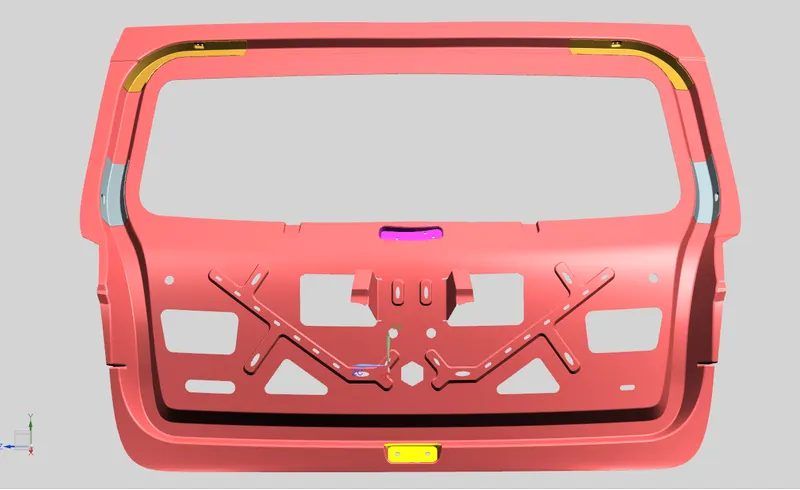
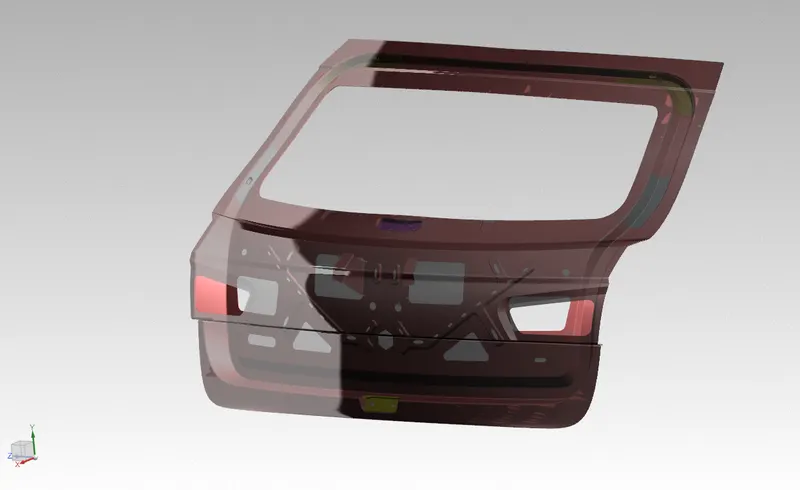
Design of backdoor
OBJECTIVE
To design the complete BIW sheet metal back door from the given styling data. the back door will have a back door outer, and inner panel, embossed faces, and reinforcement. with considering engineering principles so the back door will be manufacturable.
Introduction to backdoor
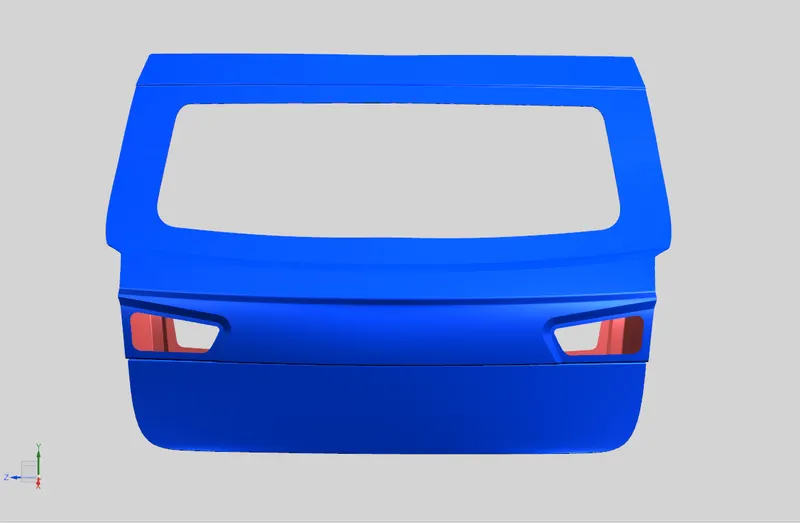
FIG.NO:1 (BACK DOOR OUTER)
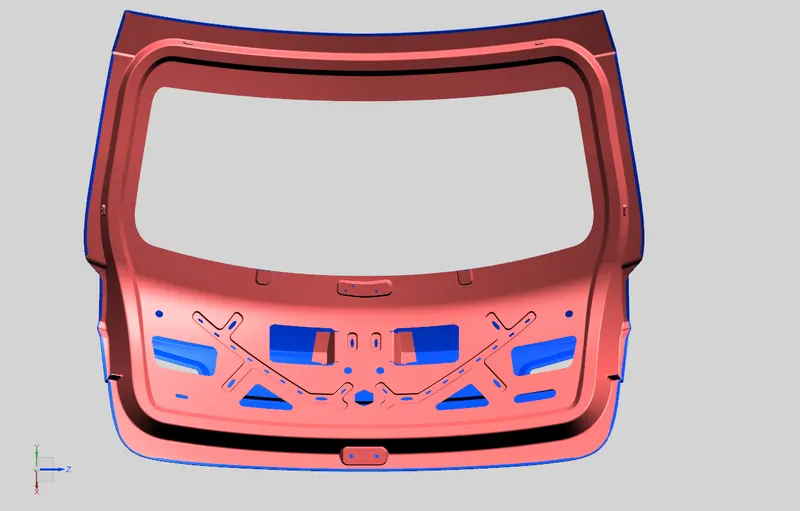
FIG.NO:2 (BACK DOOR INNER)
# The back door is also called trunks or boots in America. in India, the storage area is called a dickey. or generally often called a tailgate.
# The back door compartment was used to carry the luggage and Stepney wheel in the early days. but right now it is the most important area which defines the overall look of the cars.
# The back door shape will be different for the different types of cars.
# There are three possibilities for the car opening which are given below
hinged at
1. Top
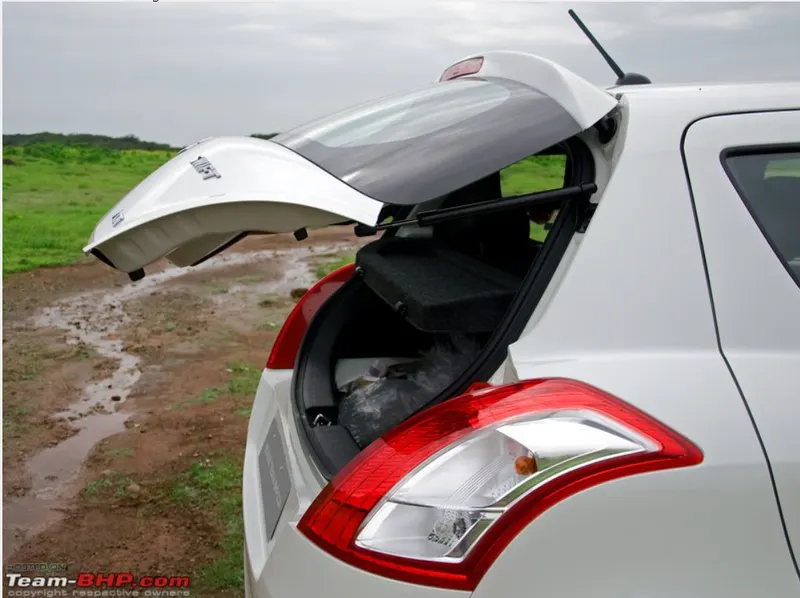
FIG.NO:3 (TOP HINGED PIC SURFACE)
2.side
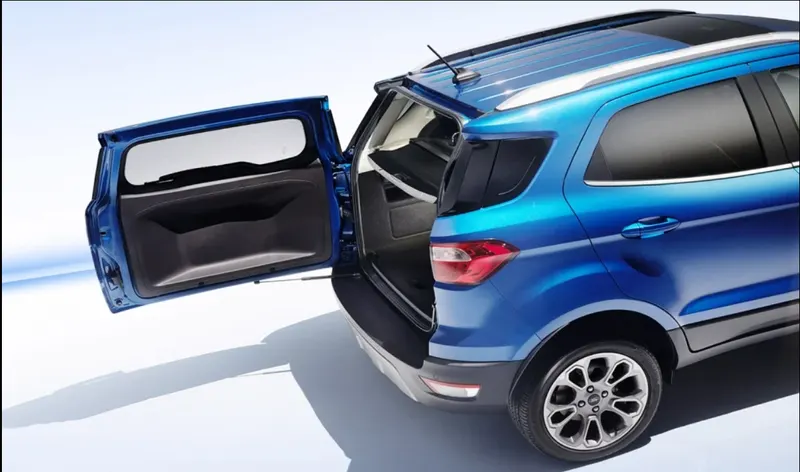
FIG.NO:4 (SIDE HINGED PIC SURFACE)
3.bottom
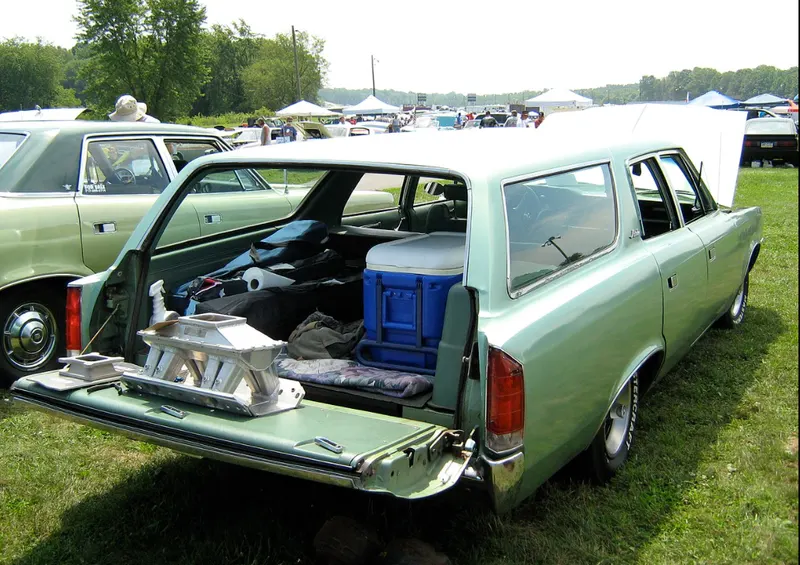
FIG.NO:5 (SIDE HINGED PIC SURFACE)
# The locking of the car may be achieved together with the passenger compartment. nowadays cars also have a function to remotely open the trunks.
# Trunks are also working as a guard when the car is hit by a vehicle on the rear side.
# This is some general info about the Trunks.
A standard back door will have sub-parts of
1.back door outer
2.Back door inner
3.Reinforcements
Design Approach
I follow the bottom-top approaches to design the back door effectively.
Design procedure and steps
# The first step is to create a Hinge axis and sticker point because as we know back door is a swinging commodity once we find out the trajectory of the back door then we are good to go with designing a mater section of the back door.
# The thinner our backdoor higher the boot area (luggage space) also the lighter the back door higher the performance.
# Providing some curvatures in the back door drastically improves the strength of the car.
# Once I got the styling surface part from the styling team I have to clean up the surface. clean up means ensuring the single surface body.
# Followed by that given below I attached the rough way of how I designed the back door BIW part.
# The design of the back door should satisfy some terms in order to be fit in the working area.
# Rear clearance is the driver and the passenger can see what's going on the rear side of the car by a mirror (or) directly.
# Before we begin with the back door design it is important to have valid data such as roof, Piller information. so we can design the flanges accordingly or first designing the flange according to that we can design roof and pillar areas.
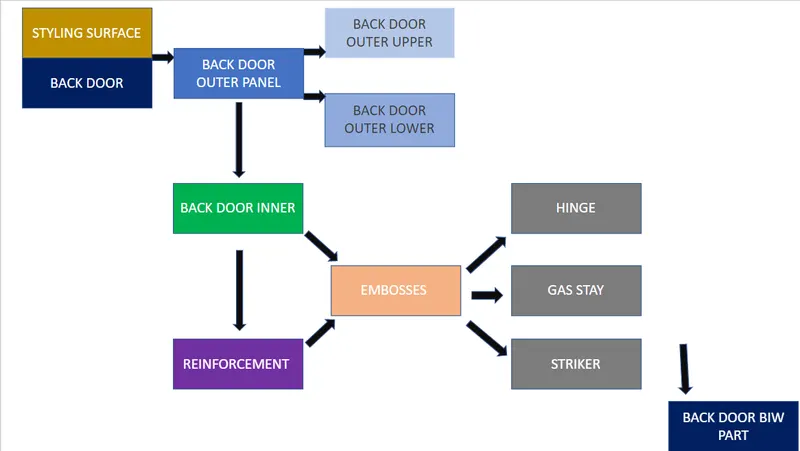
FIG.NO:6 ( DESIGN STEPS FLOW DIAGRAM)
Styling surface and cleaning
Once I got the styling surface I had to make sure that the surface can be sewed together. I got the IGES file then I worked on surfaces so the whole surface can be sewed.
Then I Extracted the upper and lower surfaces of the back door separately as a part file.
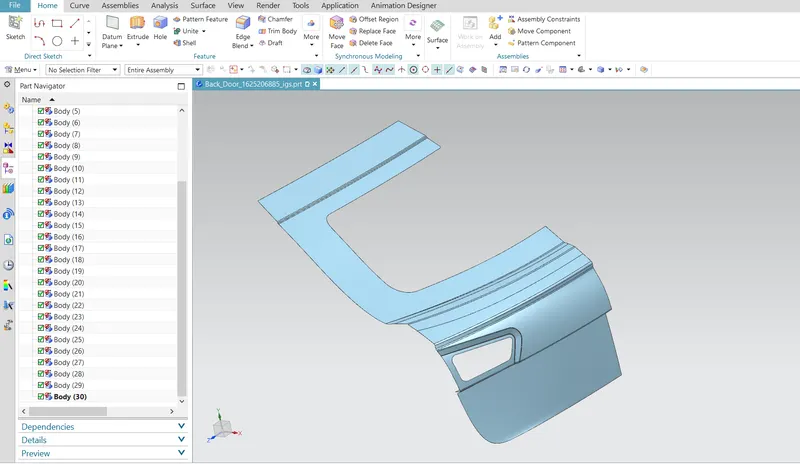
FIG.NO:7 ( STYLING DATA)
Back door outer panel upper
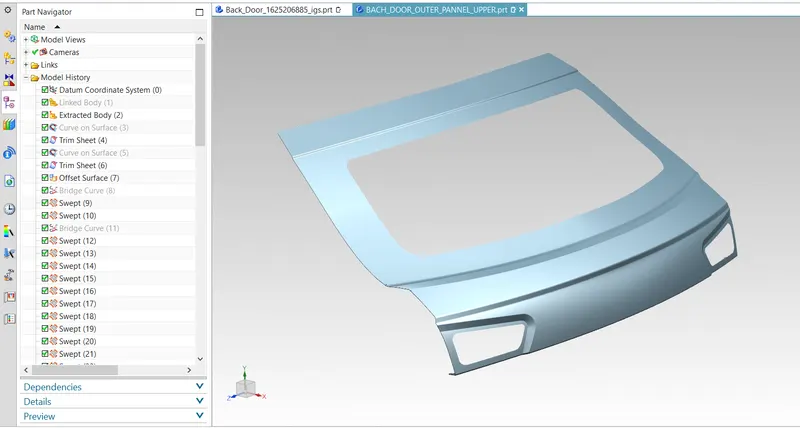
FIG.NO:8 ( OUTER PANEL UPPER)
Back door outer panel lower
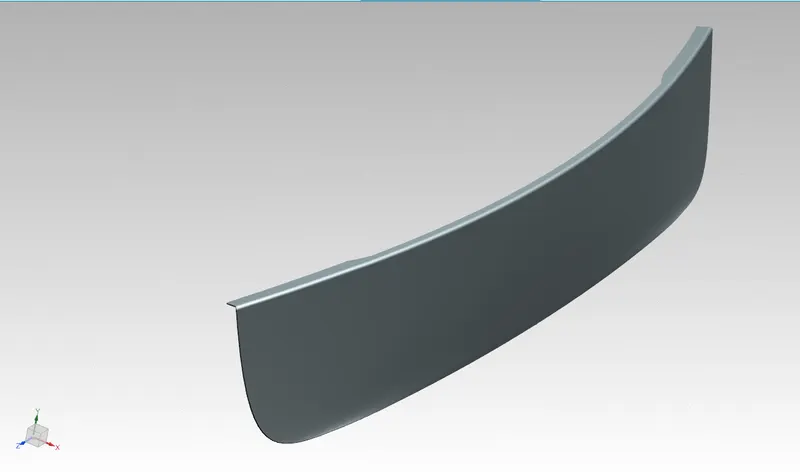
FIG.NO:9 ( OUTER PANNEL LOWER)
The back door outer panel upper and back door outer panel lower will be joined by spot welding on the flanges. for that, both panels should have a clearance of 0.2 mm.
So while designing we have to make sure that we follow these criteria.
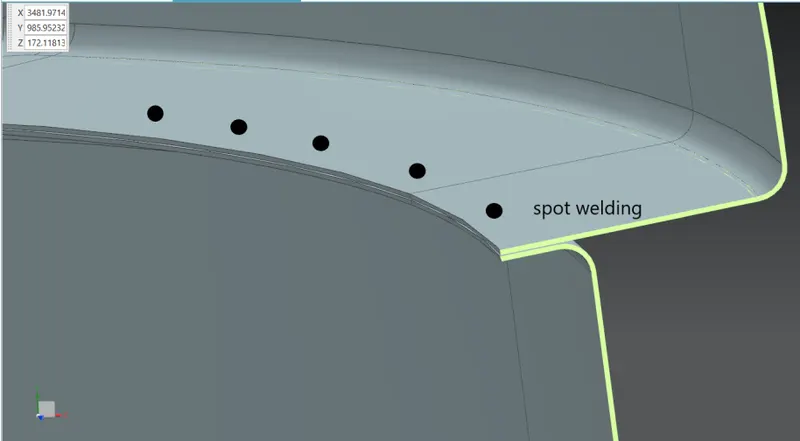
FIG.NO:10 (SPOT WELDING)
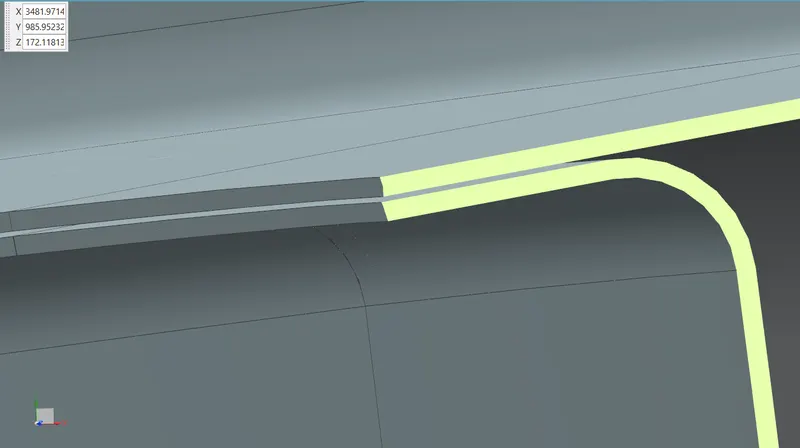
FIG.NO:11 (CLEARANCE)
Back door inner panel
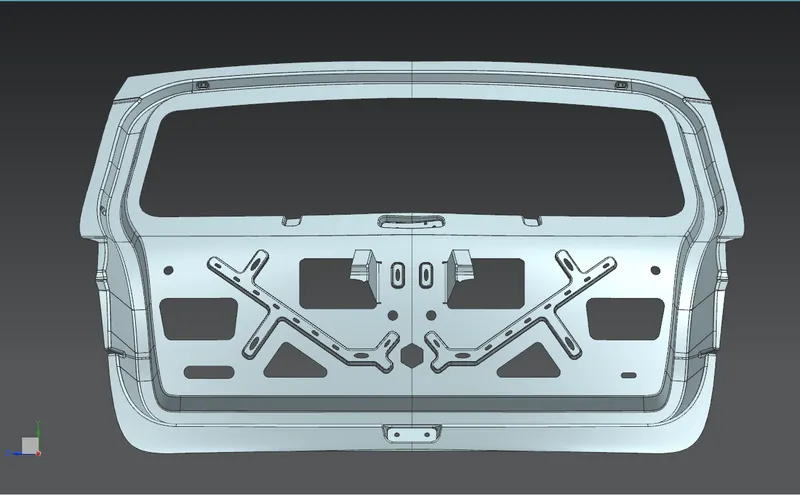
FIG.NO:12 (INNER PANEL)
Unlike the outer panel of the back door, the inner panel is a single BIW part. with some reinforcement and embossed faces.
Sealing flange area
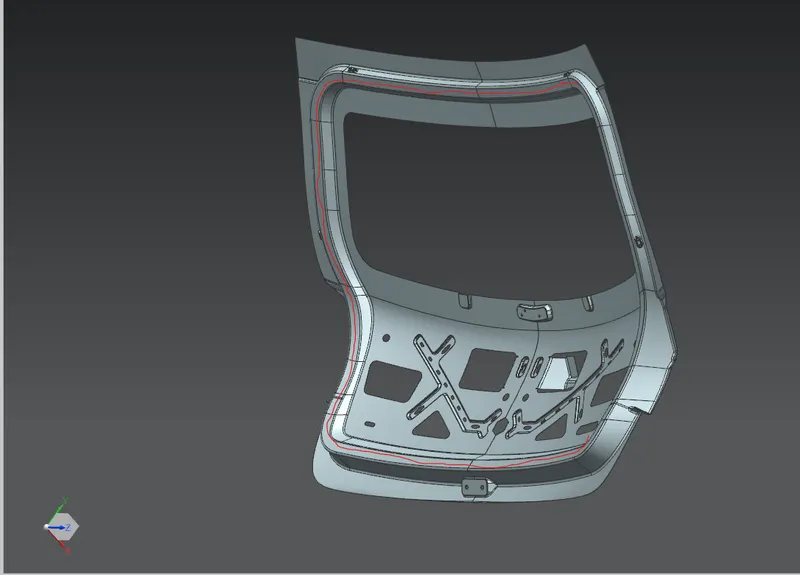
FIG.NO:13 ( INNER PANEL 2 )
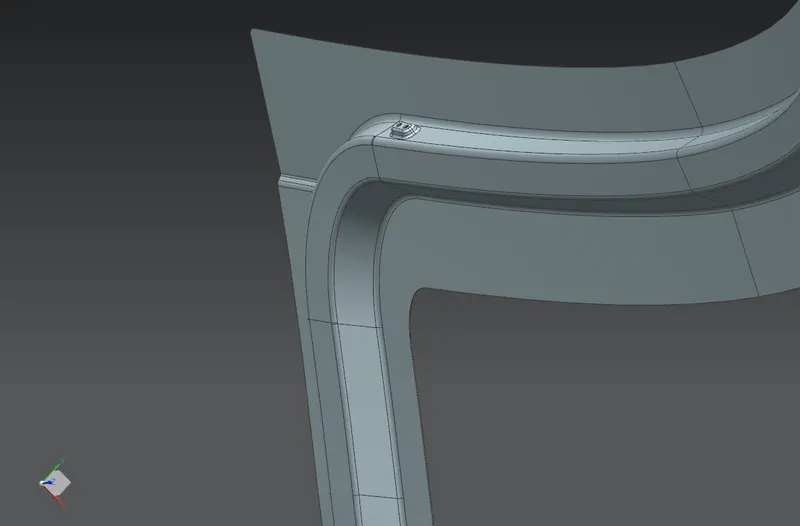
FIG.NO:14 ( SEALING FLANGE )
The marked area is called the sealing flange area which is probably going to contact with a body side of the car. since we do not have body-side data we are going to design the flange by ourselves.
The sealing flange area was extracted from the styling data input.
Inner panel Emboss
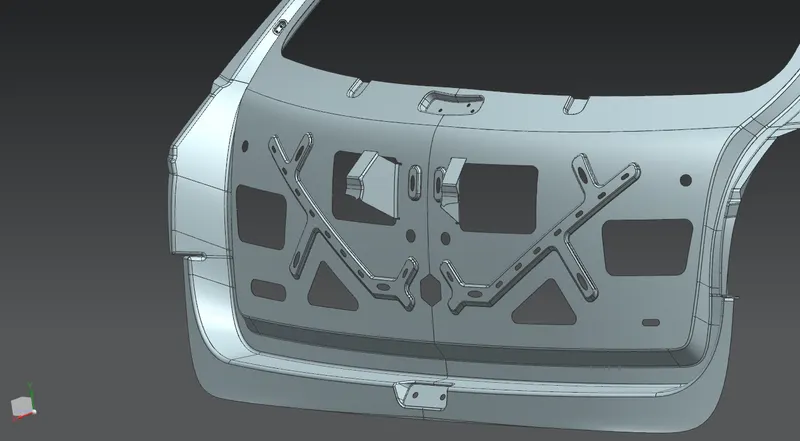
FIG.NO:15 (EMBOSS)
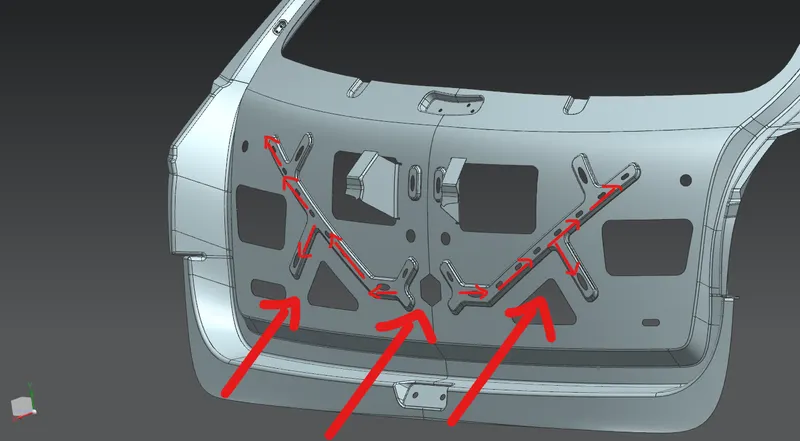
FIG.NO:16 (EMBOSS WITH FORCE ACTING DIRECTION)
The reason we added this kind of embosses when the car undergoes a collision these V and Y-shaped emboss helped to distribute the forces to the maximum area. hence the safety of passengers is increased.
Stricker Trajectory
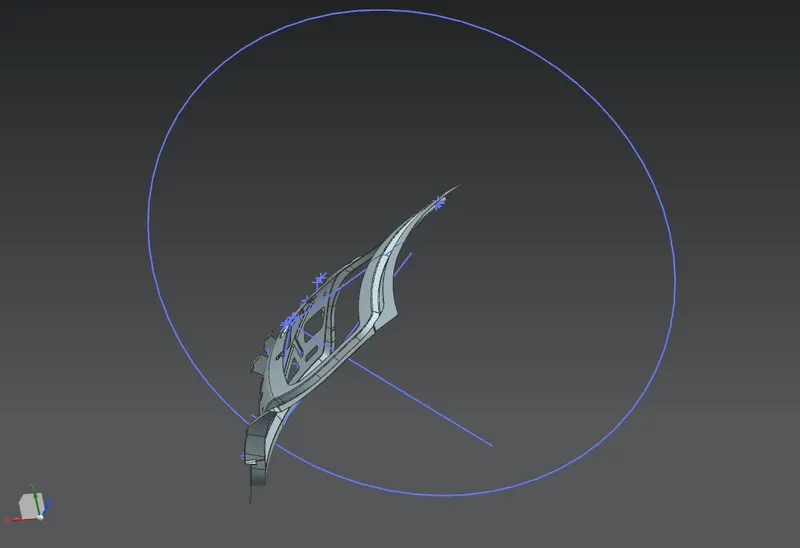
FIG.NO:17 (STRICKER TRAJECTORY)
From the hinge axis, we can define the sticker point sticker axis must be perpendicular hinge axis. and a sticker must be in the center of the panel(0-x Direction). so now we made a trajectory circle.
Hinge emboss
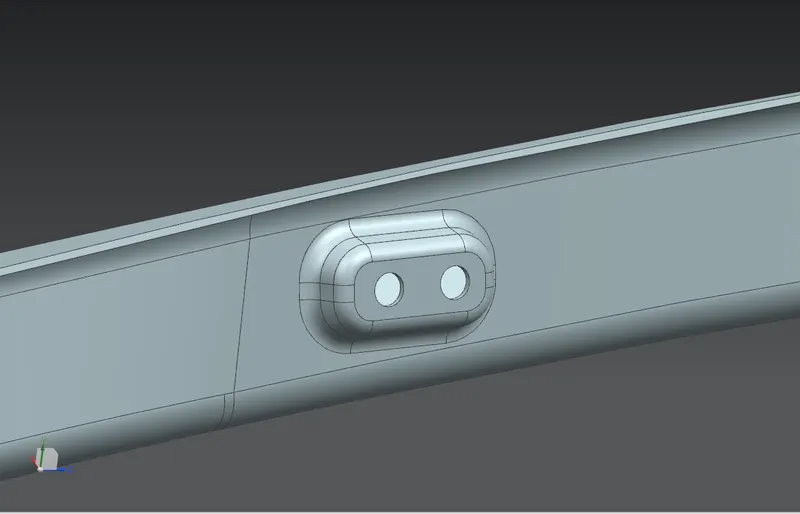
FIG.NO:18 ( H-EMBOSS)
The reason we have designed this kind of embossing is to attach with hinges.
We cannot mate a flat surface part to a curvature part.
By creating the emboss faces we can achieve it. it can be applied to the rest of the emboss.
Gas stay Emboss
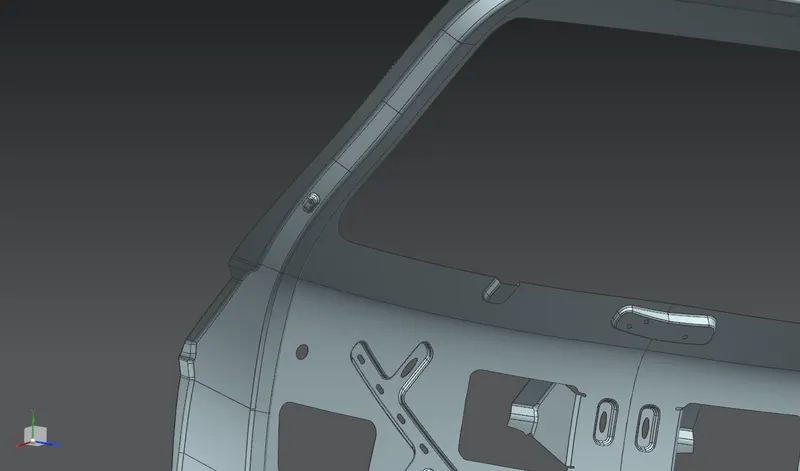
FIG.NO:19 ( G S EMBOSS 1)
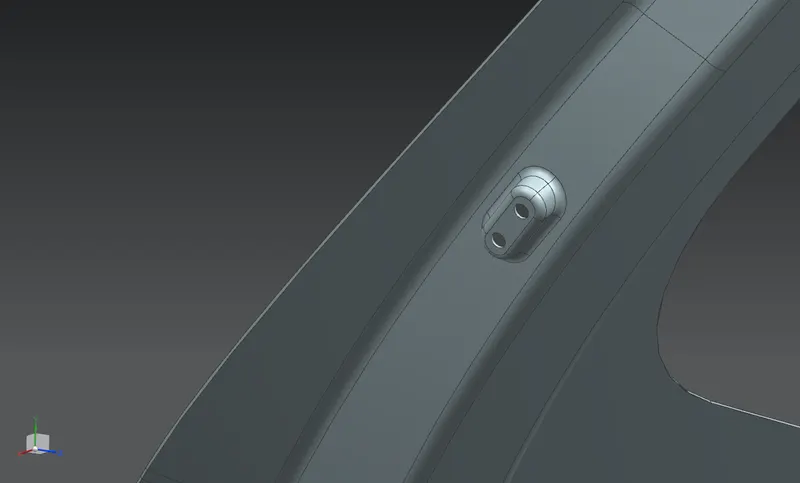
FIG.NO:20 ( G S EMBOSS 2)
The gas stay will help us to open and close the back door easily. it can be achieved by fully automated or manual.
Gas stays one end is pivoted in the body side and another end is pivoted with the back door.
We have chosen the right location to place a gas stay pivoted point.
Stricker Embos
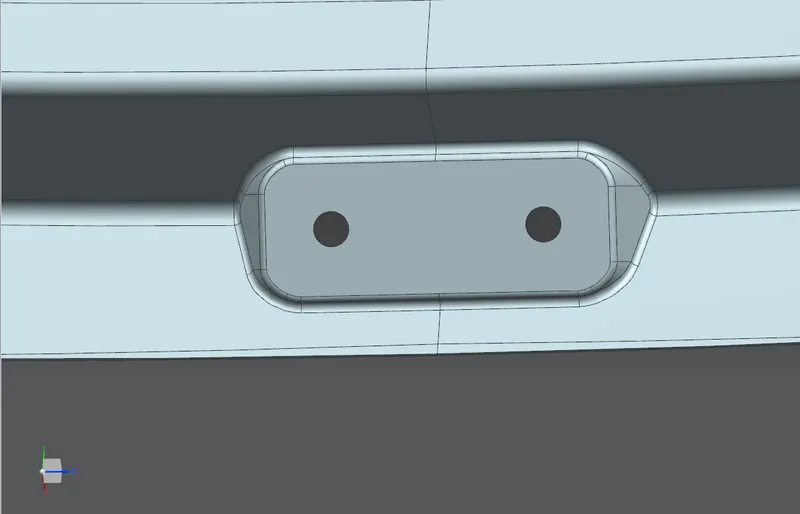
FIG.NO:21 ( STRICKER EMBOSS )
Wiper motor Emboss
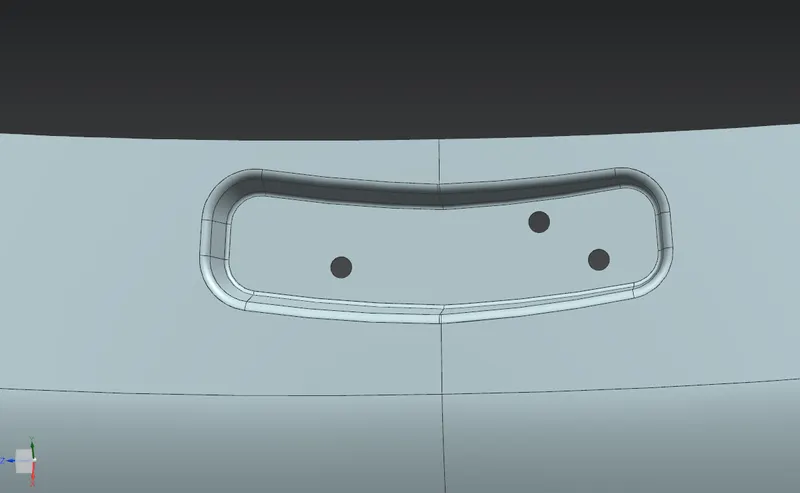
FIG.NO:22 (WIPER MOTOR EMBOSS)
Inner panel reinforcement
# Since we are attaching different parts to the inner panel we had to create some reinforcement to compensate for the loss which will be added after attaching the parts such as hinge, sticker, wiper, and gas stay.
# We had to make these differently because it can't be achieved by deep-drawing for steel.
# But if we use aluminum it can be possible to make a sheet metal part with varying thicknesses. the reason is it can be manufactured by casting operation.
# Given below I have attached different reinforcement I designed.
Hinge reinforcement
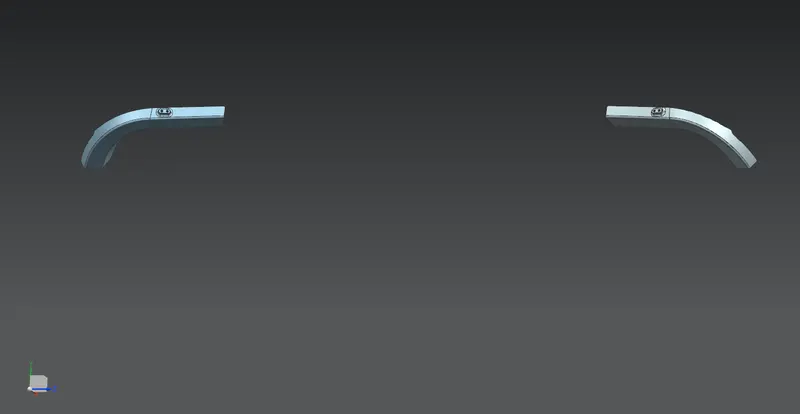
FIG.NO:23 (H -REINFORCEMENT)
Gas stays reinforcement
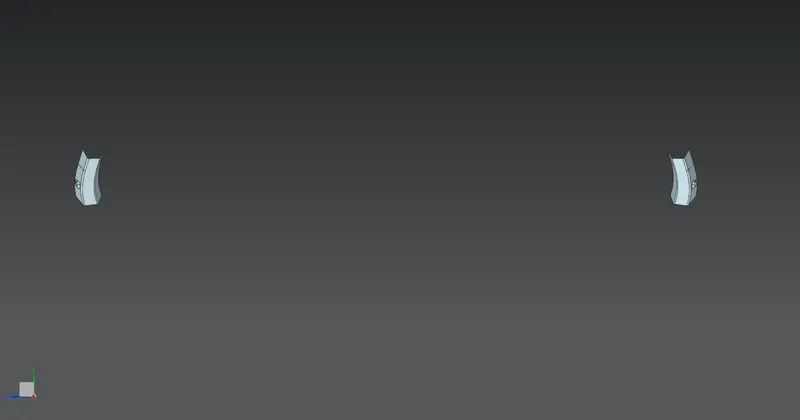
FIG.NO:24 (G-S-REINFORCEMENT)
Wiper motor reinforcement
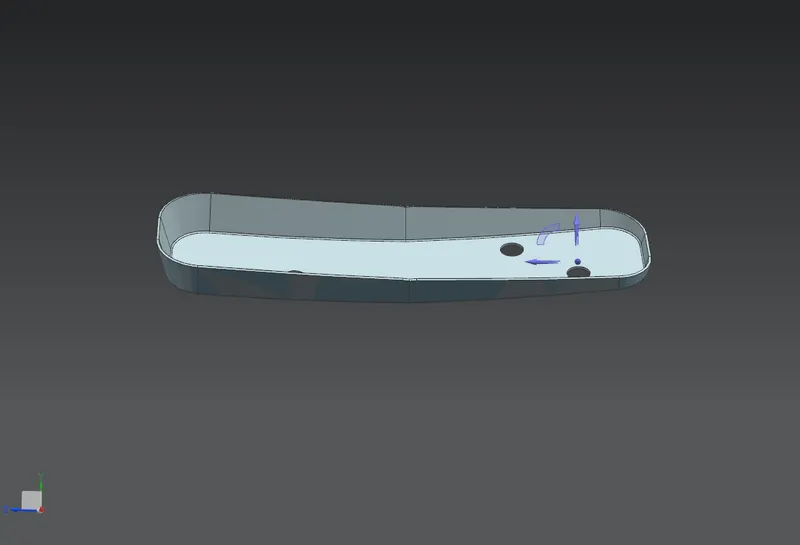
FIG.NO:25 (WIPER M-REINFORCEMENT)
Stricker reinforcement
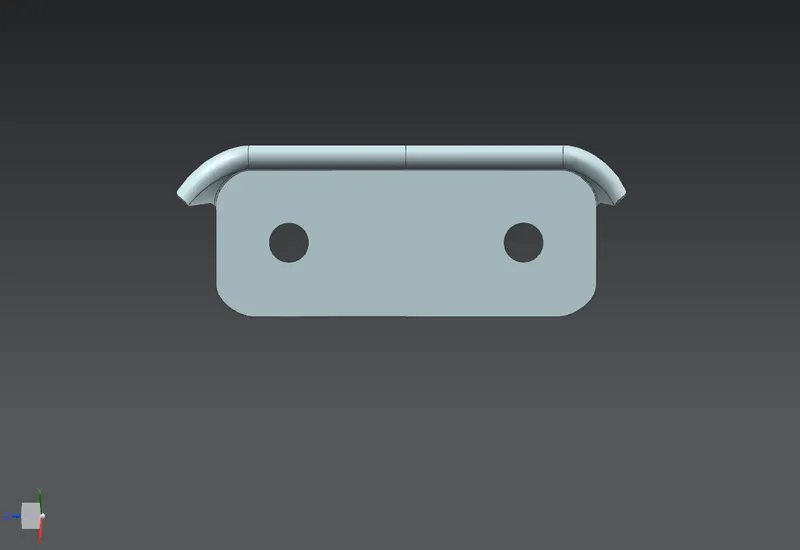
FIG.NO:26 (STRICKER-REINFORCEMENT)
Inner panel cutouts
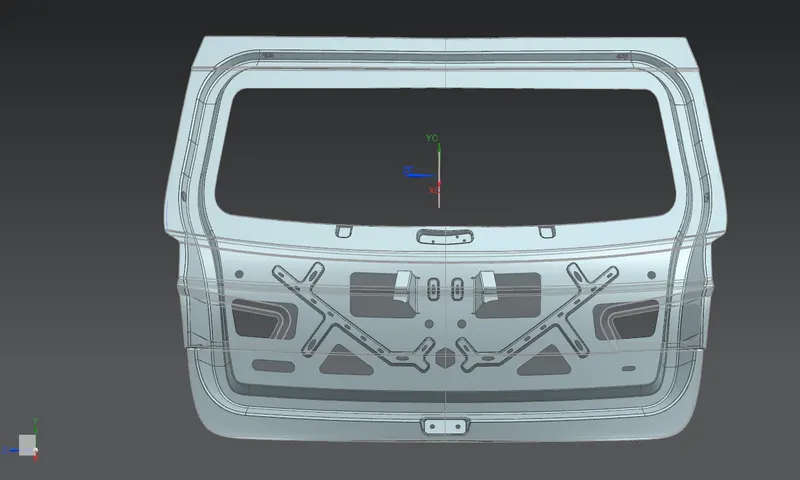
FIG.NO:27 ( CUTOUT INNER)
# The reason behind these kinds of cutouts is to reducing the material weight.
# To assemble the lights after the back door production. for that, we must need some gaps so we can assemble the light and other purposes.
# These small cutouts are also even helpful for wiring.
# To fix the part with the table to proceed with the process.
# These are the reason behind the cutouts.
Hemming
Hemming is the process which is the extra material coming from the edge of the outer panel and wrap around the inner panel.
The purpose is to join the inner panel with the outer panel.
We must give some relaxation to the curve areas and also maintain 0.2mm clearance between parts.
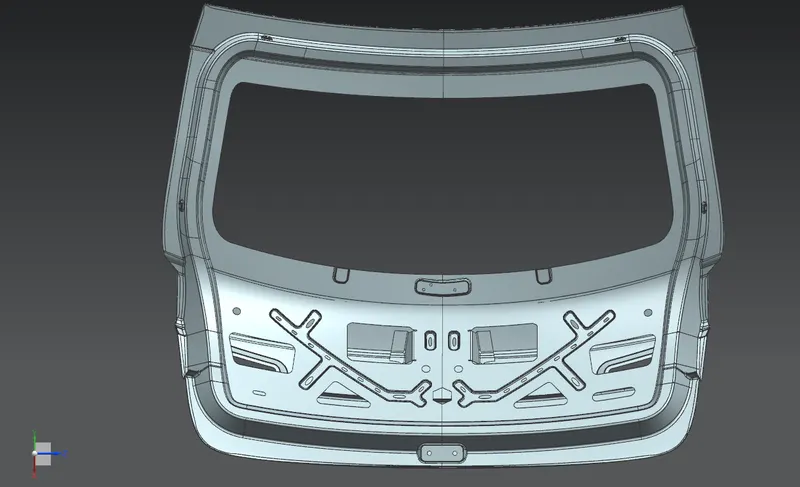
FIG.NO:28 ( HEMMING)
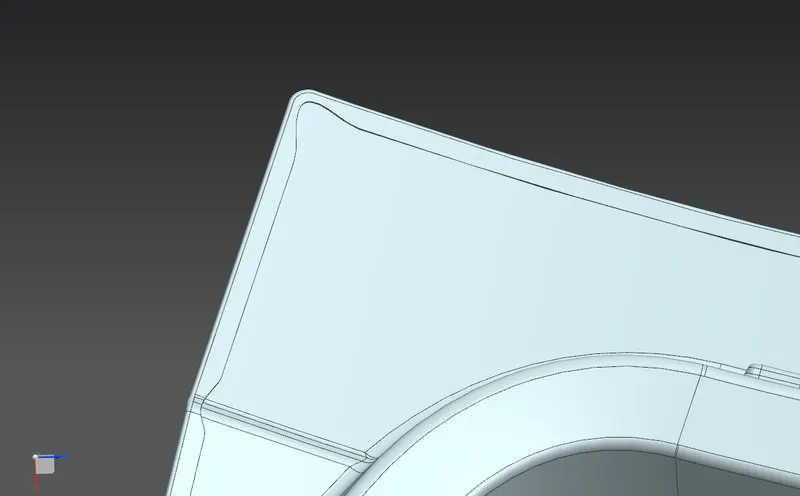
FIG.NO:29 (HEMMING DETAILED VIEW)
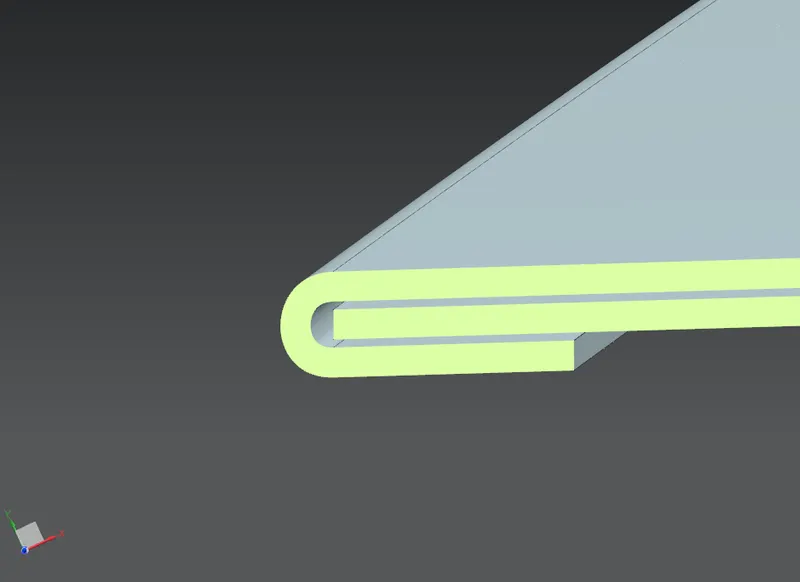
FIG.NO:30 (HEMMING CROSS-SESCTION)
Mastic area
The Hemming process will take care outer boundaries of the back door. in the middle to reduce the NVH we place mastics which is a kind of synthetic material that can absorb the shocks. and also improving the stability of the outer and inner panels.
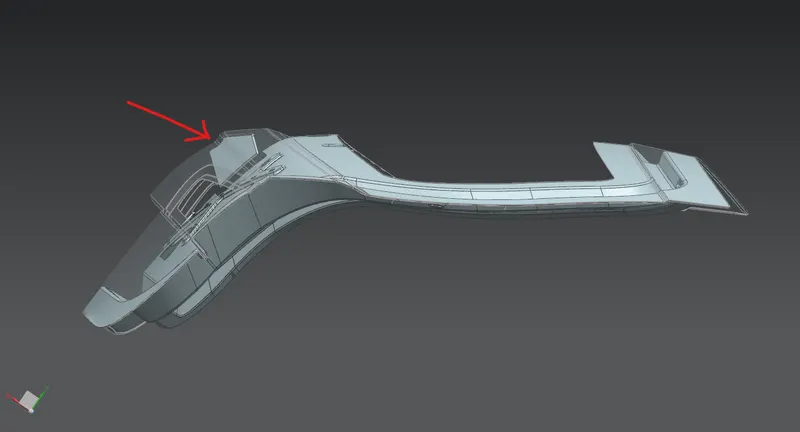
FIG.NO:31 (MASTIC AREA SIDE VIEW)
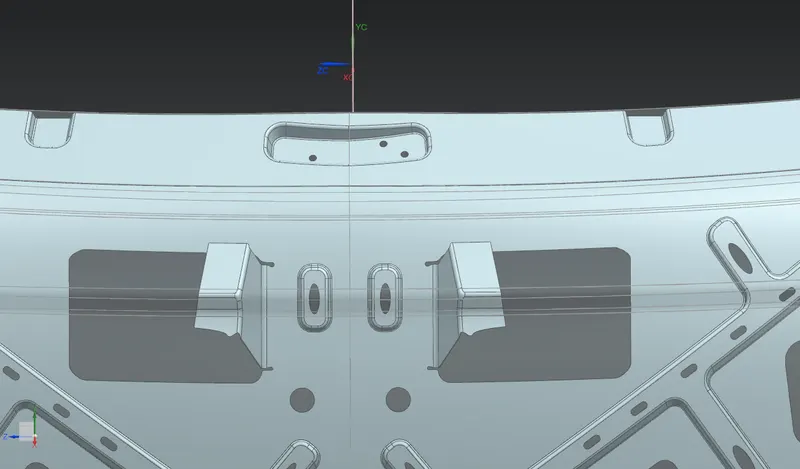
FIG.NO:32 ( MASTIC AREA)
DRAFT ANALYSIS
# Sheet metal parts are generated from a press tool or some forming tools, maybe the plastic parts which generally come out from the plastic molds and maybe the casting parts, all such kinds of parts required some face on the surfaces which are parallel to the tooling direction.
# if we don't provide a draft on the surface then the tool will not come out and tool motion will destroy the surfaces or also reduced the finishing of surfaces.
# The draft is used for providing angles or tapers on product features such as walls, ribs, posts, and bosses that lie parallel to the direction of release from the mold eases part injection.
# Draught angles are designed in such a way that they will assist depart rejection. By doing so we have a reduced cycle time and improved productivity.
# Draft value for a particular part is mostly decided by the material used for making it.
# 3 degrees is a minimum for sheet metal when it's come to the draft angle.
Draft analysis for the inner panel
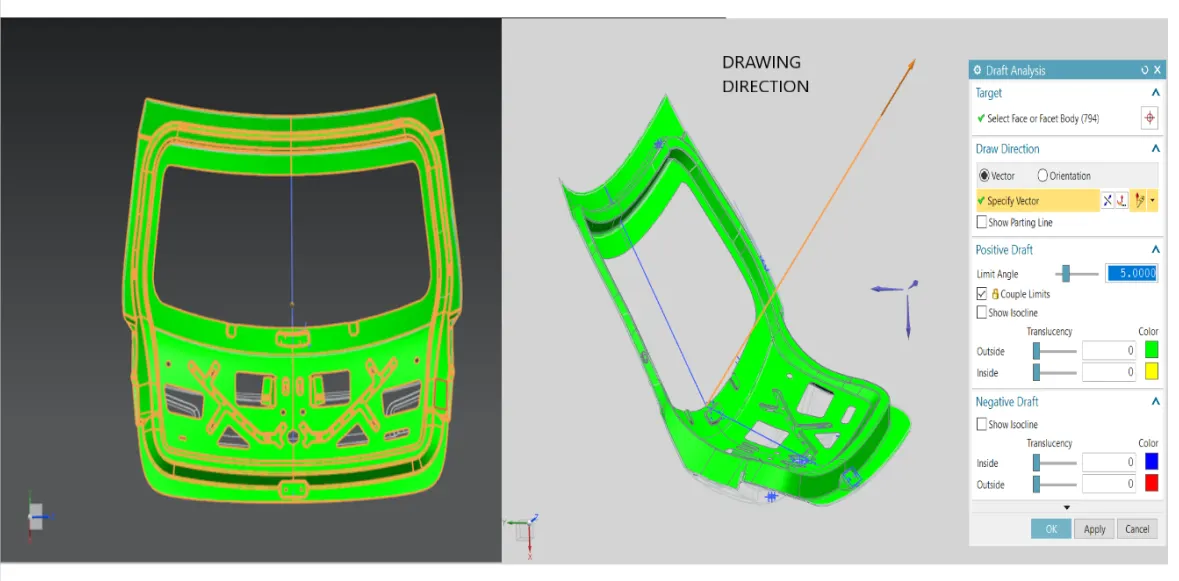
FIG.NO:33 (DRAFT ANALYSIS)
MATERIAL DETAILS
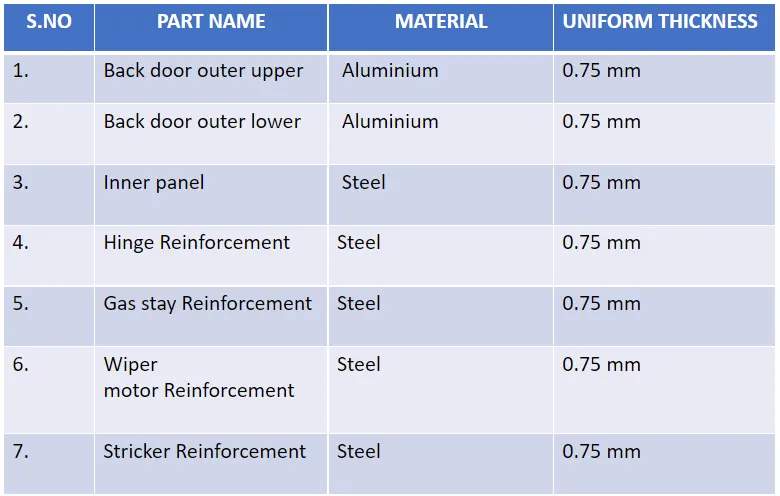
TABLE NO. 1
Back door
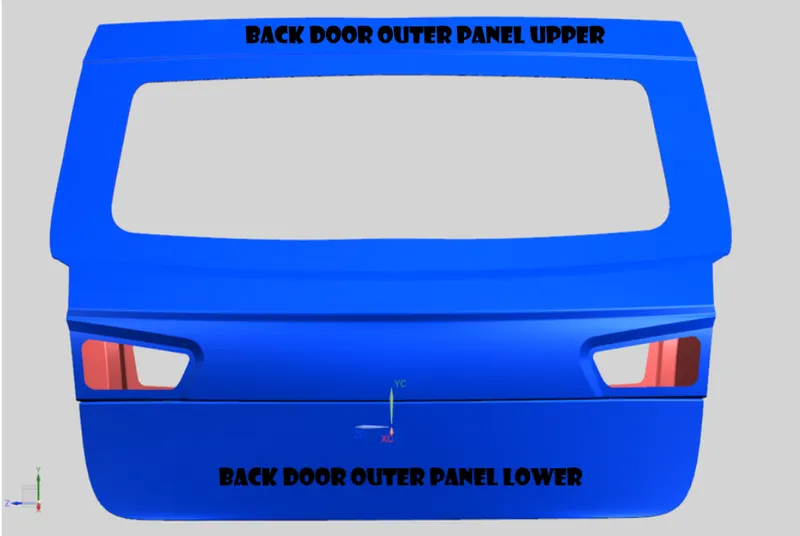
FIG.NO:34 (BACK DOORMWITH NAME TAG)
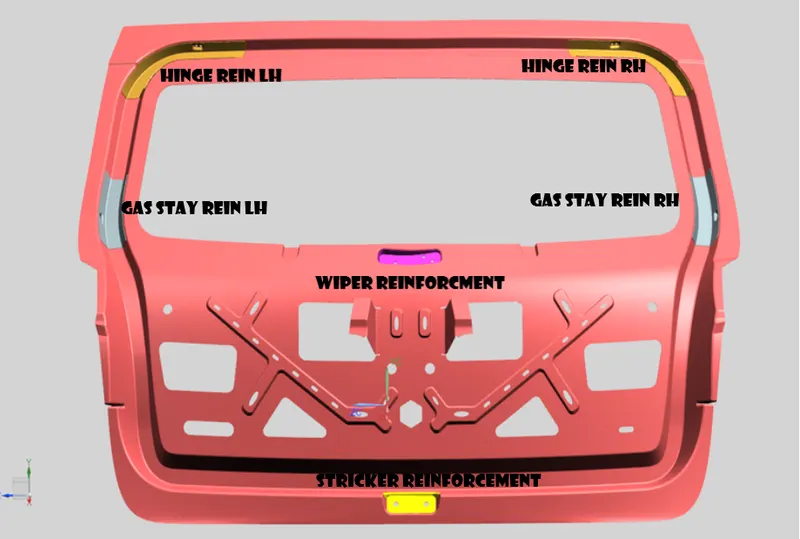
FIG.NO:35 ( BACK DOOR INNER WITH NAME TAG)
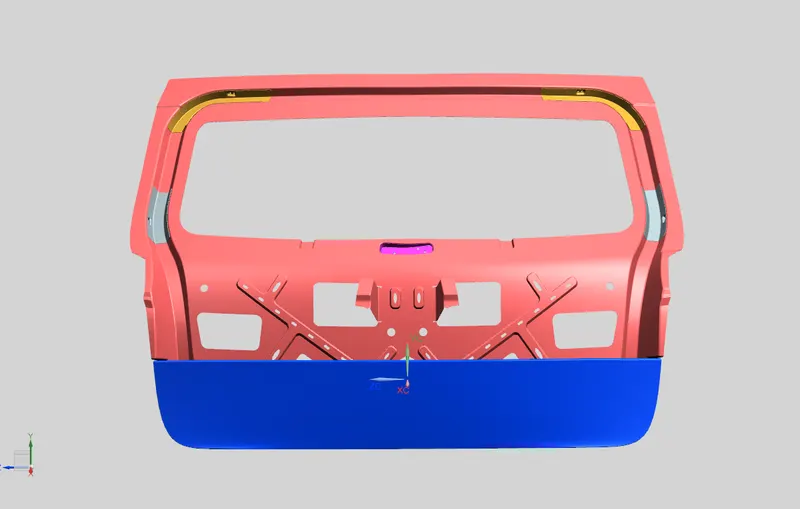
FIG.NO:36 (BACK DOOR 2)