Fender Design
Fender Design
Automotive fenders are a vital component in the vehicle. It is a metal covering provided to the front and the rear wheels of the vehicle. The fenders are panels that extend from the front bumper to the vehicle’s doors.
Major role of Automotive fenders
1 - Automotive fenders play a major role in safety of vehicle as it shields the vehicle from unwanted body damage and provide safety to the driver and the passengers at the time of accidents.
2 - It protects the body of vehicle from scratches and damages. Also, it prevents sand, mud, rocks, and liquids from being thrown into the air by the rotating tire, fenders provide protection against liquid spills.
3 - Additionally, fenders ensure that body and engine have minimal contact with corrosive elements.
4 - Also increase overall beauty of car.
5 - And avoid wind resistance and enhance the aerodynamics of the car.
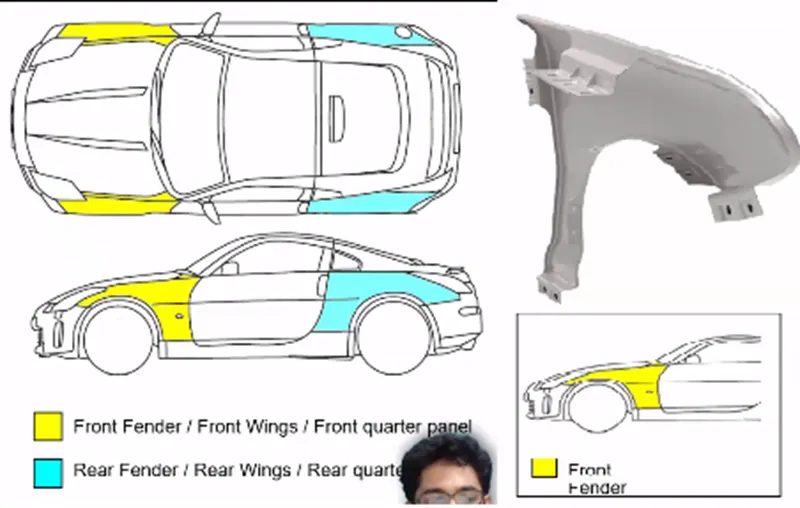
Types Of Fenders
1 - Full Bumper Type 2 - Half Bumper type
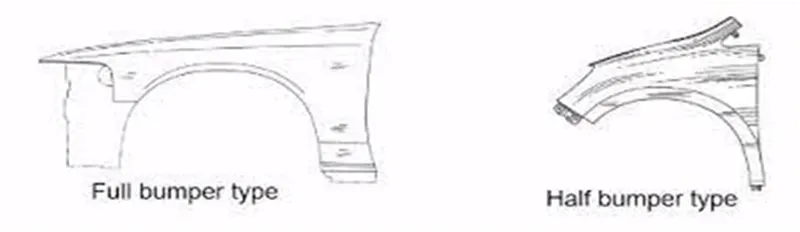 “Presently conventional methodology why we are using half bumper type.”
Reason - Because for full bumper type the blank, we are using is really big and lot of wastage. But in the case of half bumper type, we have a high possibility to reduce the scrap. which means slightly increasing the blank we can produce two fenders at the same time so we also reduce the production cost and also production time this is called scrap management.
Also allow to use lot of plastic on the bumper which means reduce weight so also increase the performance of the vehicle.
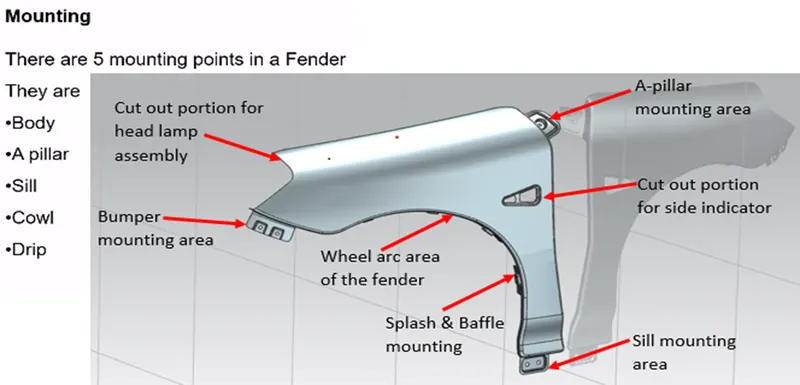
Mounting Reason
Manufacturing process for car fender
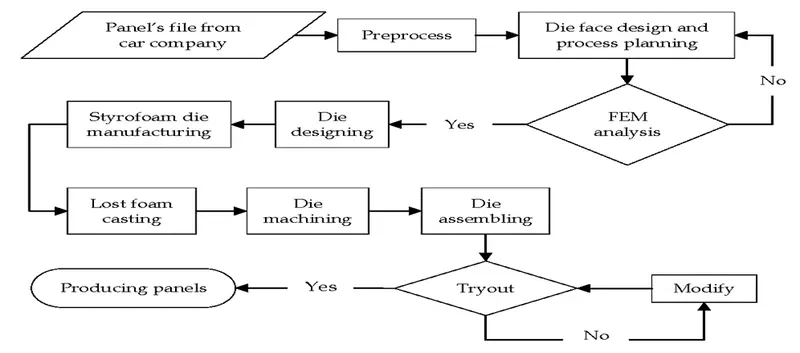
The manufacturing process includes the following steps
1 - Firstly, unfolding and shearing are carried out on a plate, wherein a proper cold roll specification is selected at first, a cold roll is unfolded, and then the unfolded cold roll is sheared to an iron plate of the corresponding size according to production material specifications.
2 - Secondly, oil pressing and punching are carried out, wherein the iron plate is extended at first, then side shearing and punching are conducted on the iron plate, folding and shaping are carried out on the iron plate, and finally reshaping is carried out on the iron plate.
3 -Thirdly, small first parts of the fender are machined, first of all, the iron plate is punched to a needed outer contour blank, then the iron plate completing the outer contour blank is further shaped, and the iron plate is punched at last.
4- Fourthly, installation and welding of a metal plate are conducted.
(Embossing, Bending, Cutting and Blanking)
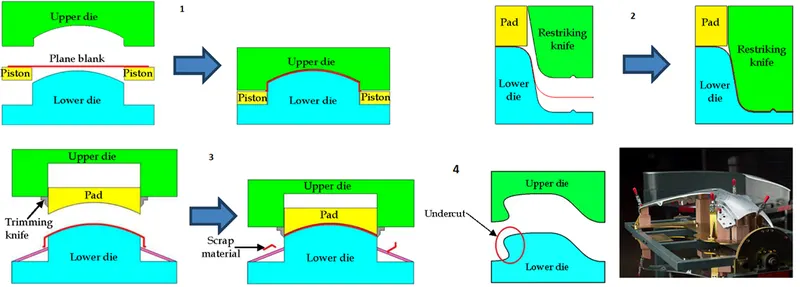

Today materials use for manufacturing automobile fender are Steel, Fiberglass, Carbon Fiber,
Rise of injection molded fender
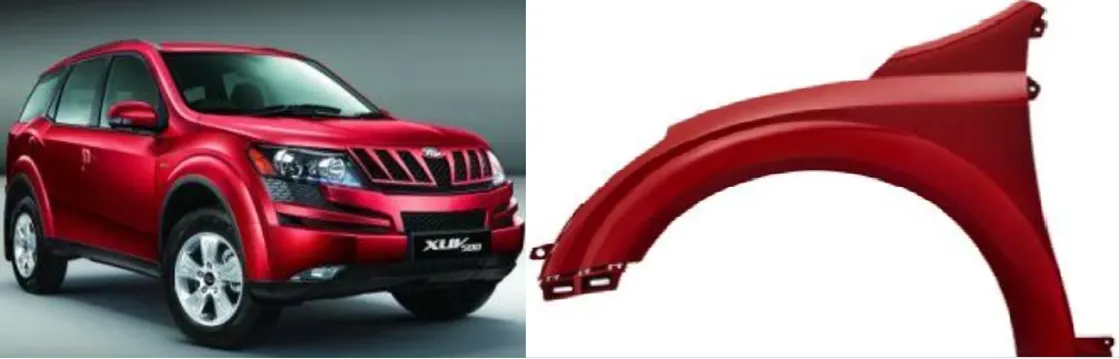
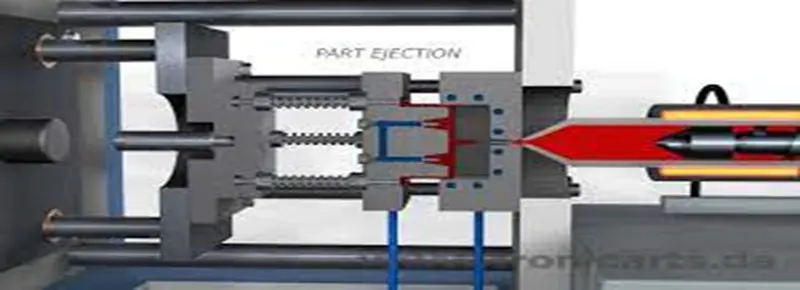
Energy efficiency is an essential consideration in sustainable manufacturing. Injection molded fenders offer better energy efficiency, high manufacturability and offer a high-quality product at a same time. Injection molding includes 4 stages viz., filling, packing, cooling, and ejection. The defects caused during manufacturing are comparatively less. As a result, the OEMs are installing injection molded fenders in vehicles. For instance, in 2012, Mahindra & Mahindra with support of Noryl GTX resin to adopted injection molded fender for XUV500.
Fender Evaluation
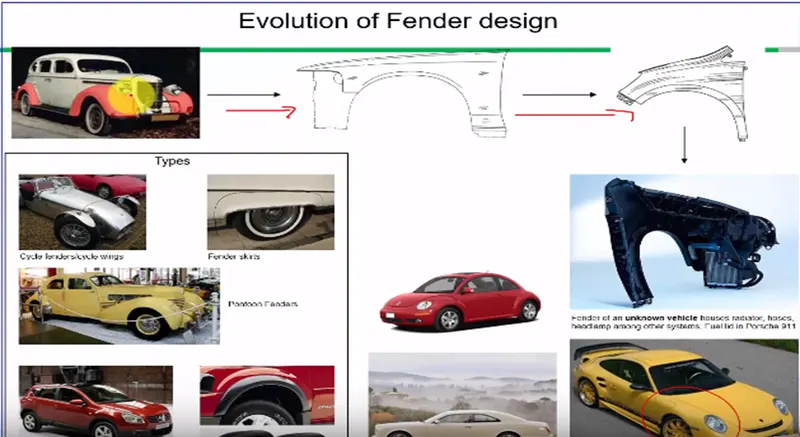
1 - First level fender then we went in to full bumper type and then thinking of weight reduction and proper blank we come in to half bumper type.
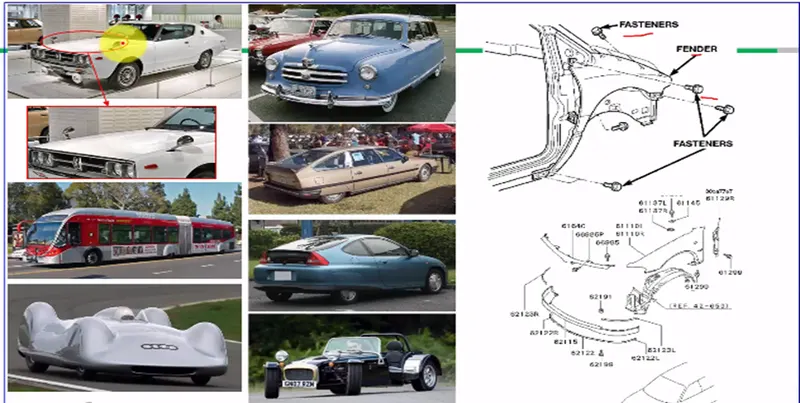
2 - Some cars also have the radiator housing into the fender.
3 - Some cars have indicator in the fender and some have ORVM, when we use ORVM so we don't use indicator in the fender.
Design Of Fender By NX-CAD
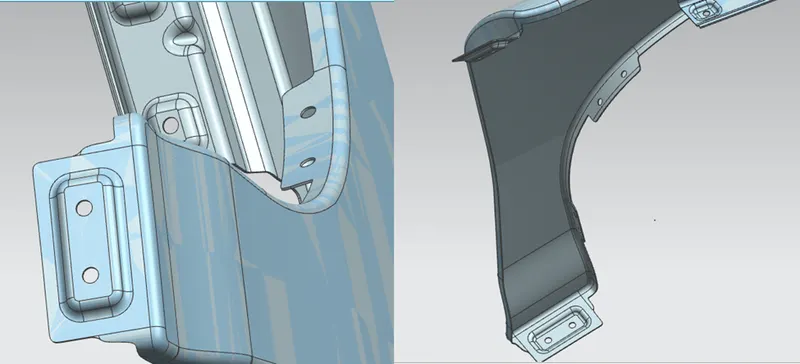
Design Fender Mounting areas by following the Master Section mentioned with the Design parameters. and Sill, Bumper, Baffle (Splash), and A-Pillar mount create your own design according to the Engineering standard.
Data to be used:
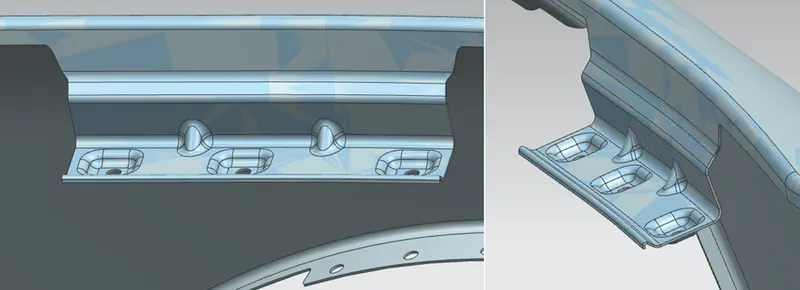
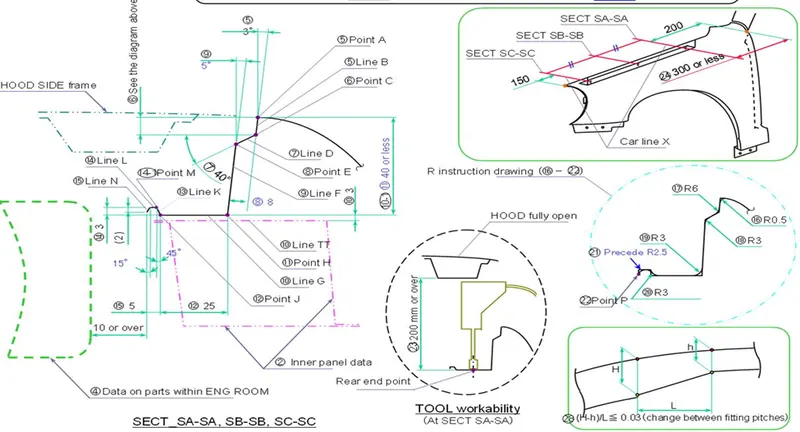 Drip Area
It is the area which the fender is to be attached to engine housing through Fasteners.
Standards to design the drip area
From the backside of the fender, we provide 200mm clearance for cowl mounting,
From the front the side we provide 150mm clearance for the head lamp.
We provide 3* and 5*angle and 9mm length for Engine components should not be visible from outside
Darts are added on the drip area to provide the stiffness and add strength to the part. This helps the fender to not to vibrate.
Embosses are provided on the drip area for strengthen the fastening area.
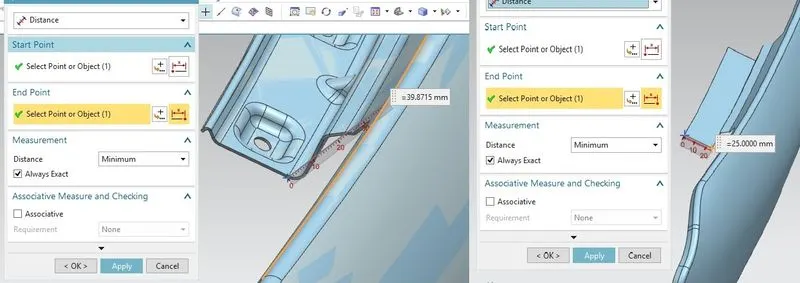
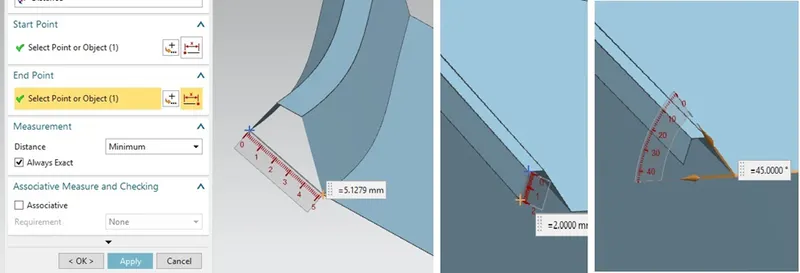
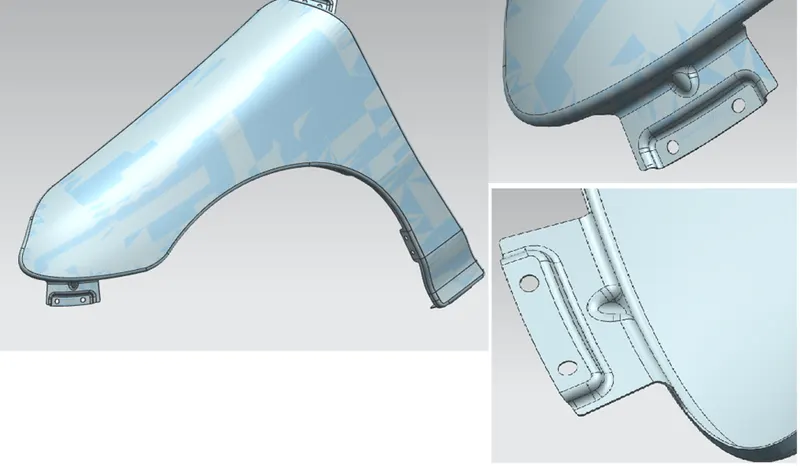
Bumper Mounting
A mounting area of the fender to bumper. Bumpers are usually made of plastic which covers the front of the car, Emboss & holes are given to attach the fender to Bumper.
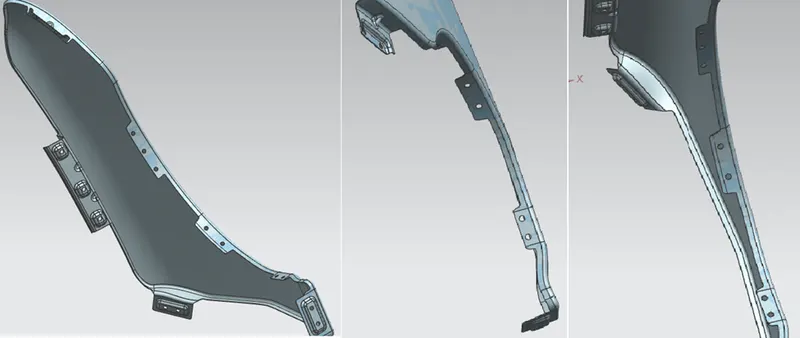
 Baffle Mounting
Baffle mounting are clip fit type of mounting on the inner side of the fender arch over the Tire. it protects the car engine compartment and pedestrians from causing injuries from chip out debris on the road when the car is in motion. they are mounted on the fender using a special type of locking clips which are made up of plastics.
A-Pillar Mounting
This mounting position is created for attaching the fender to A Pillar of the vehicle.
The mounting has to be created by taking the reference from the A-pillar of the vehicle.
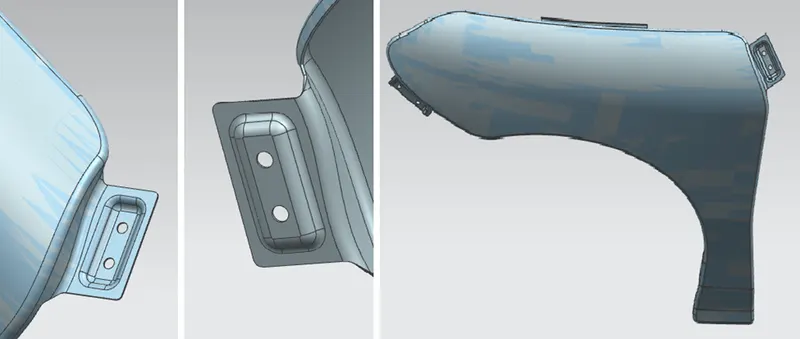
Sill Mounting
The sill mounting is use to attaching the fender with the sill of the car. Emboss & holes are given to attach the fender to sill.
Draft Analysis
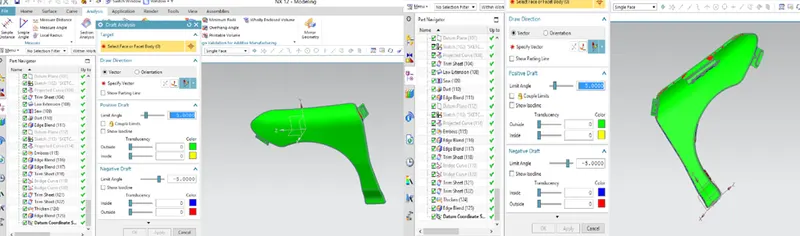
Once the design was ready, the Fender was analyzed for manufacturability. here draft analysis shows that all parts are clearing when core is removed from cavity.
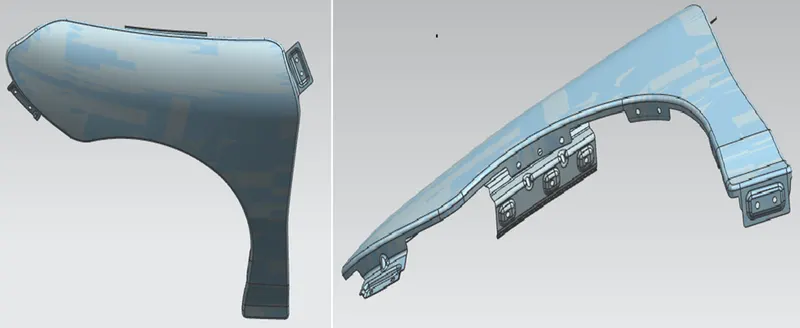
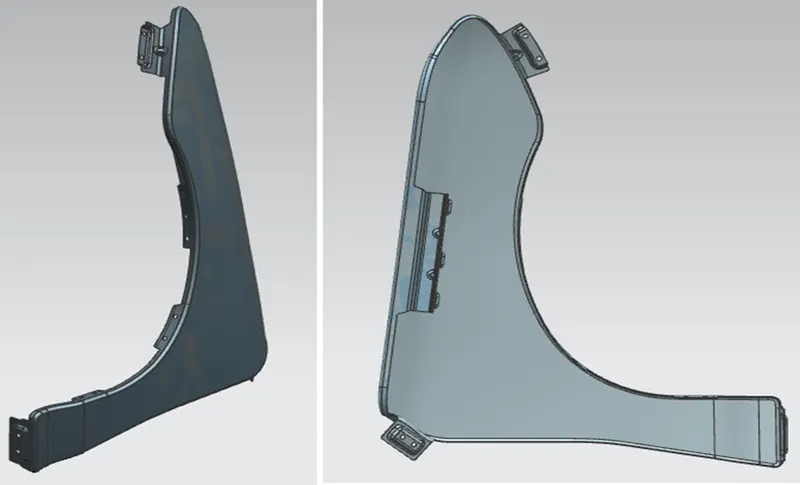
Commands used from NX CAD
1 - Offset in face
2 - Curve on surface
3 - Law extension
4 - Datum plane
5 - Sketch
6 - Projected curve
7 - Trim sheet
8 - Intersection curves
9 - Face blend
10 - Edge blend
11 - Bridge curve
12 - Emboss
13 - Sew
14 - Dart
15 - Thicken
Conclusion
All mounting areas for the fender designed from skin data and master section is done by following all design rules.
Basic Design Consideration
Embossed are provided to increase the strength.
Smooth curves are designed for easy manufacturing of panel.
Ribs are provided to drip area mount to give structural support and extra strength.
Maintain extra 10mm from the flat surface for the fastener holes.
All fillets should maintain 3mm and more then 3mm radius in most regions.
Thickness of fender is 0.75mm.
NEERAJ SINGH