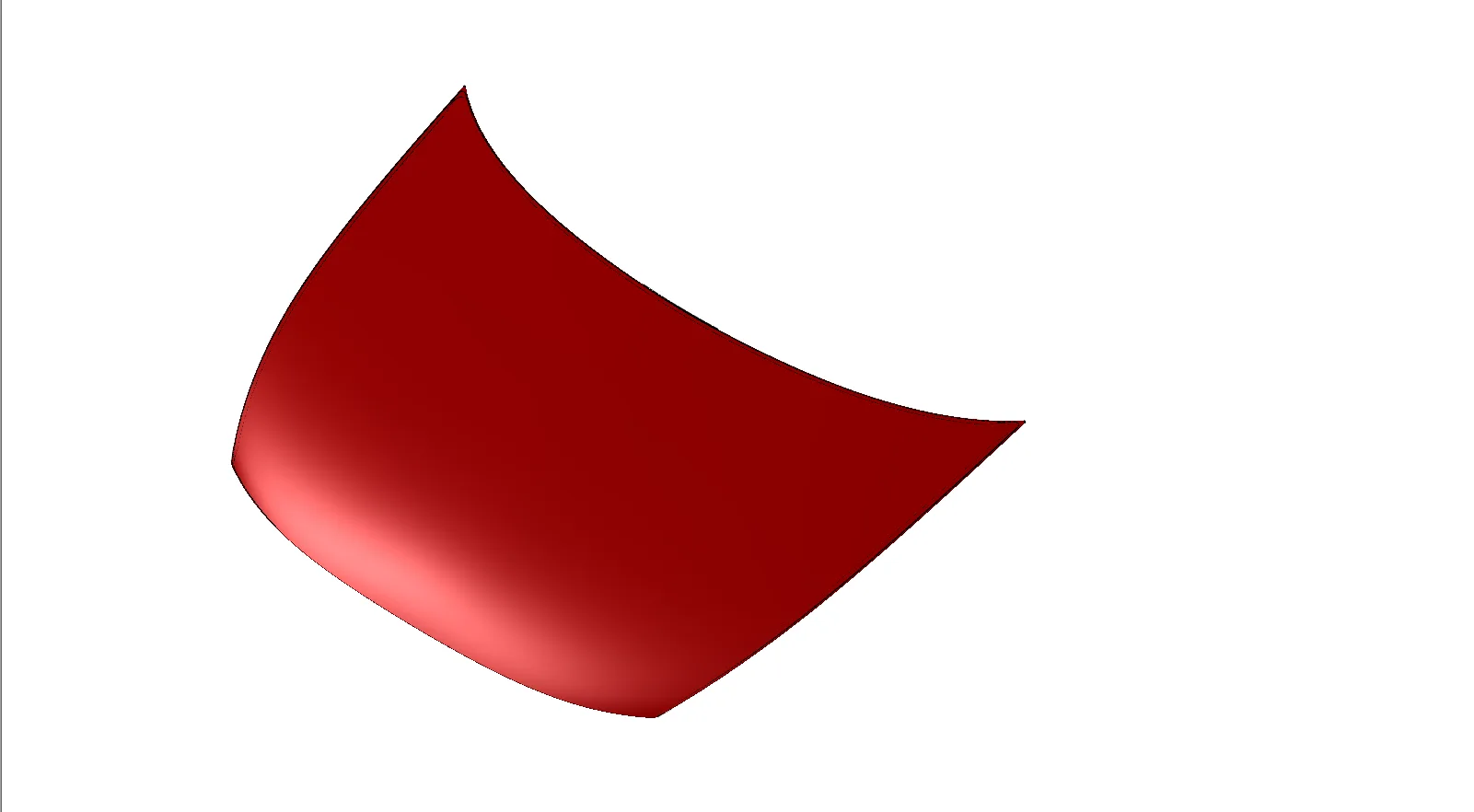
Design of Hood
During this project work, the students will design the inner and outer panels of the hood, as well as the necessary reinforcements, in accordance with the master sections provided …
Black FridayUpgrade your career this Black Friday. Get up to ₹60,000 Scholarship on IIT programsUp to ₹60K Black Friday Scholarship52 seats leftOffer ends Fri, 27 Nov, 11:59 pm IST.
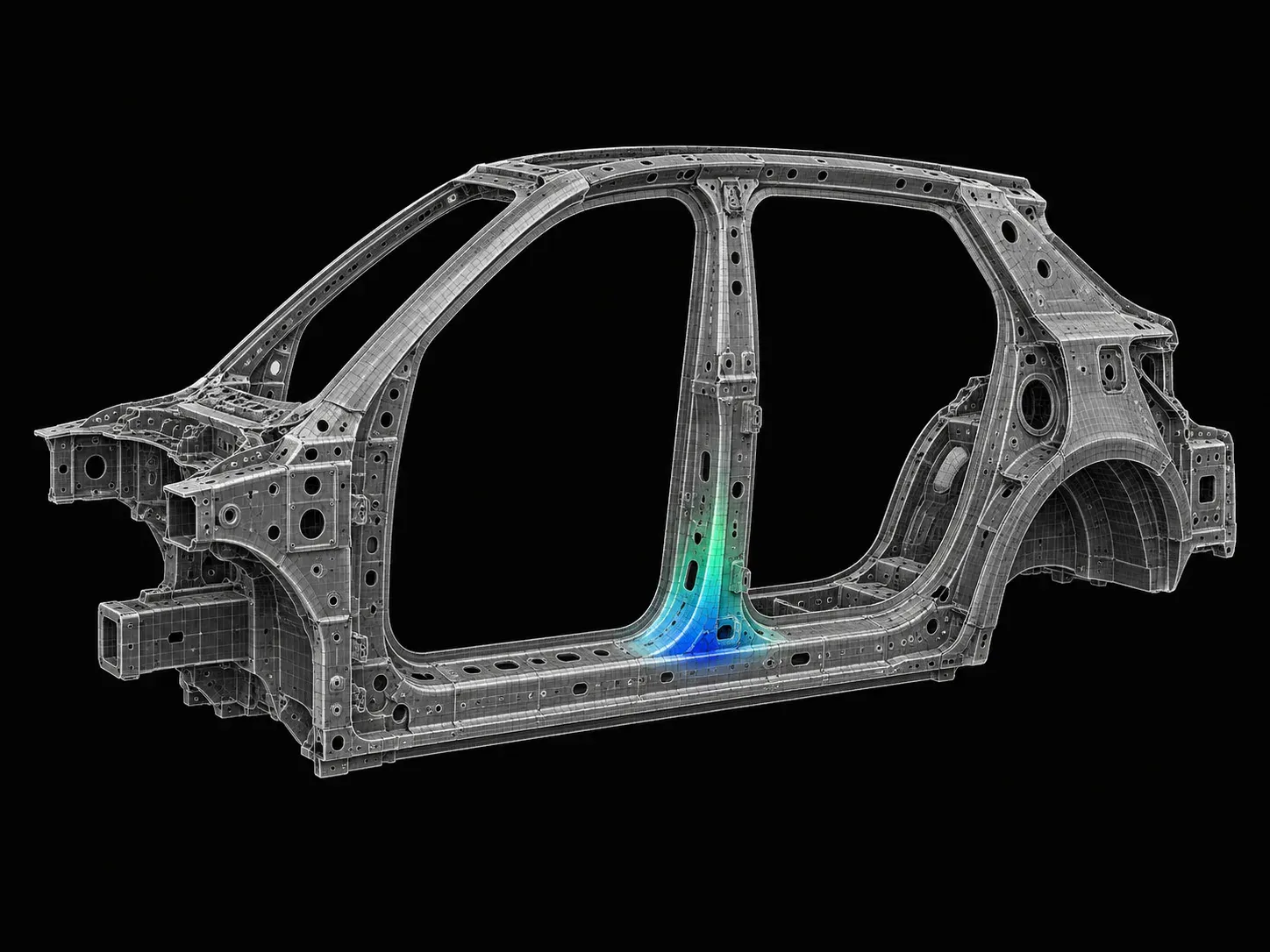
A comprehensive course on Automotive BIW using NX-CAD Software. This course is highly suited for beginners
Automotive BIW Design and Development Part 1 using NXCAD is an online course from Skill-Lync: 8 weeks, 8 hours of content and 2 industry projects.
39 min of this course's own recorded sessions, with transcripts, on Grow by Skill-Lync:
Our projects are designed by experts in the industry to reflect industry standards. By working through our projects, Learners will gain a practical understanding of what they will take on at a larger-scale in the industry. In total, there are 2 Projects that are available in this program.
During this project work, the students will design the inner and outer panels of the hood, as well as the necessary reinforcements, in accordance with the master sections provided …
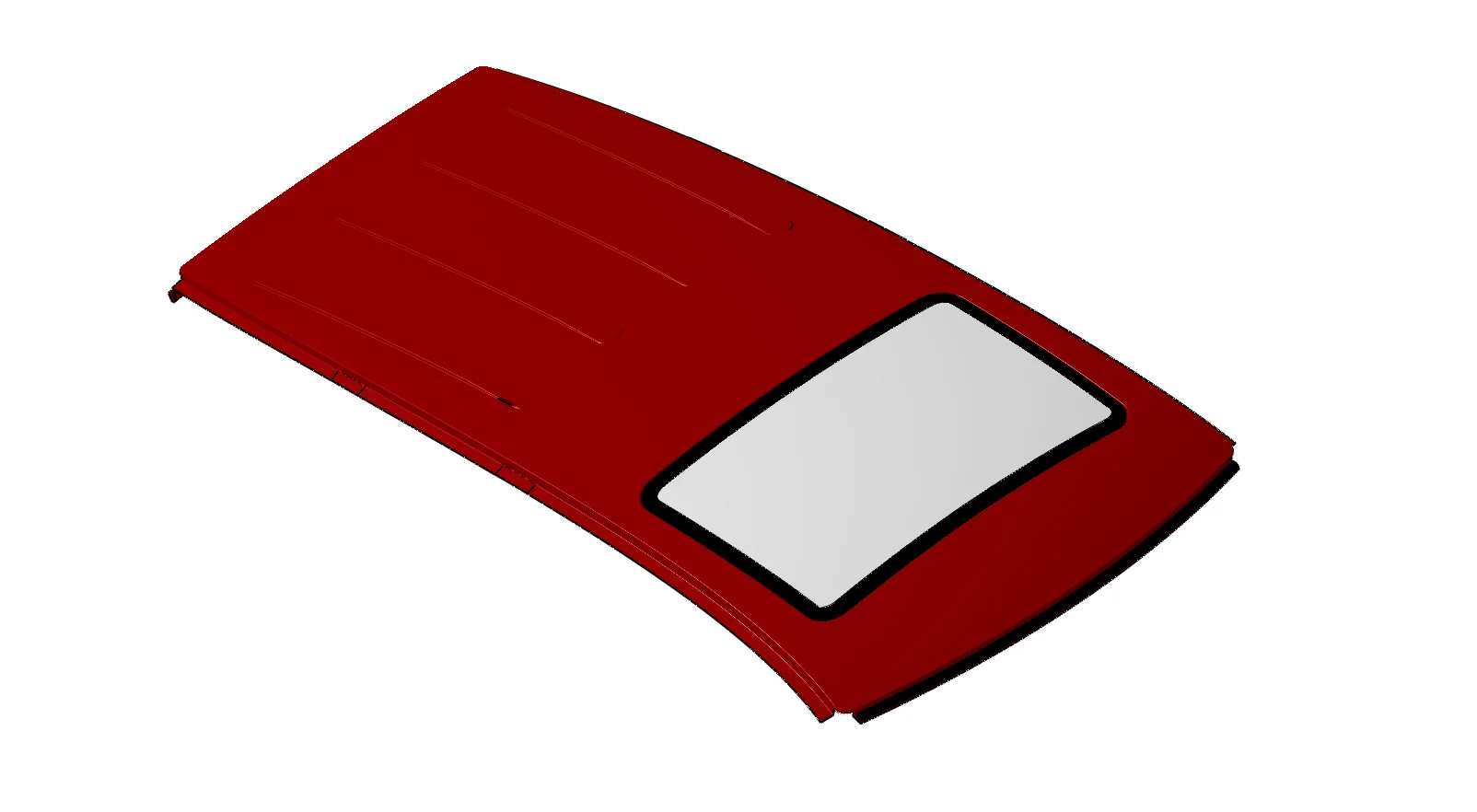
In this project, the students will learn how to design the roof using NX CAD. They will design the roof based on the safety criteria followed in the industry.
Video stories from learners of related mechanical programs, from Skill-Lync's YouTube channel.
by the Skill-Lync team
It teaches how a car body is planned before anyone draws it, then how three outer panels are designed in Siemens NX. Weeks 1 to 4 cover vehicle architecture, body materials, the vehicle development process and benchmarking. Week 5 covers stamping and forming. Weeks 6 to 8 design the hood, the fender and the roof.
BIW (body in white) is the welded sheet-metal shell of a car before it is painted and before the engine, trim and glass go in. The syllabus on this page, in order:
The recorded course is 25 lessons, about 8.5 hours of video. Lesson titles include "NXcad Basics-1", "Curves and Surfaces", "Hood section modulus", "Fender Regulations", "Windshield Design", "Draft analysis" and "Sheet-metal Forming". There are two projects. In the hood project you design the inner and outer panels and the reinforcements to the master sections you are given (master sections are the fixed reference cross-sections of the car). In the roof project you design the roof to industry safety criteria. The first three lessons are free on Grow. This is the first of four courses in the PG Program in Automotive BIW Design and Development.
A car body has three zones: a crumple zone at the front, a rigid safety cell around the passengers, and a second crumple zone at the rear. The ends are designed to fold in a controlled way. That stretches the stop over more distance and time, so the cabin, and the people in it, slow down less violently.
The free vehicle architecture lesson explains it with Newton's second law. Force is mass times deceleration, so a longer, slower stop means a smaller force on the occupants. Think of catching a cricket ball: you pull your hands back with it so the ball stops over a longer distance. The lesson says the crumple zones use lower-strength steel, aluminium, carbon-reinforced plastic or foam, while the safety cell uses high-strength steel and more beams so that it does not deform.
Worked example, from a real crash test. NHTSA (the US road-safety agency) runs its NCAP frontal test into a rigid barrier at 56.3 km/h (35 mph). In its April 2025 test of a 2025 Nissan Murano, the car hit at 56.66 km/h, weighed 2,144.0 kg as tested, and its front was crushed by up to 447 mm. If the car slowed evenly over that crush distance :
With m/s and m, the average deceleration is 277 m/s², or 28.3 g, and the stop takes = 57 ms. The front absorbs 266 kJ of kinetic energy. Now make the front stiff, so it crushes only 0.10 m (an assumed value): the average jumps to 126 g in 12.7 ms, 4.47 times harsher.
v = 56.66 / 3.6          # NCAP impact speed, m/s
s = 0.447                # maximum crush, m
m = 2144.0               # test weight, kg
g = 9.80665
a = v**2 / (2 * s)
a_stiff = v**2 / (2 * 0.10)   # assumed stiff front
print(round(a / g, 1), round(2 * s / v * 1000), round(0.5 * m * v**2 / 1000), round(a_stiff / g))
# 28.3 57 266 126
Treat this as a rough check, not a test result. The 447 mm was measured after the crash. During the crash the front crushes further and then springs back, so the true average is lower than 28.3 g, while the peaks are higher than the average. The occupants also ride down in their belts and airbags, which spreads their stop further. The design point holds: crush space belongs in the front and rear, not in the cabin.
A platform is the shared base of several models: the floor, the engine bay and the main mounting points. A top hat is the body that sits on top of it. One platform can carry a hatchback, a sedan and an SUV, each with its own top hat, so most of the expensive engineering is done once.
The free development process lesson splits a car into the chassis (powertrain, steering, suspension), the underbody (front and rear sections, floor pan, seat cross members) and the upper body. A platform fixes the engine and its position, the powertrain and the underbody for a whole series of cars. The lesson's example is a Nissan platform shared by an SUV, a minivan, a hatchback and a sedan.
Volkswagen's MQB (modular transverse matrix) is a well-documented case. In its 2022 tenth-anniversary release, Volkswagen says:
The lesson lists the trade-offs. Platforms cut development cost, raise quality through standard parts, and keep inventory and purchase costs low. But the designer has less freedom, because the platform cannot be changed easily. Similar-looking models can bore buyers. And a fault in the platform reaches every model built on it. For a BIW designer this means your panel must fit hard points (fixed mounting and package points) that you did not choose.
The four stages are pre-design and development, design engineering, development engineering, and start of production, sales and marketing. Benchmarking, a structured comparison with competing cars, sits in the first stage. It runs twice: once to read the market before a concept exists, and again to compare components once the concept is rough.
What happens in each stage, as the free development process lesson explains it:
The free benchmarking lesson works two cases. In the first, five low-cost automatic cars are compared from a buyer's point of view: price, mileage, pros and cons. In the second, you act as a design engineer comparing two unnamed bodies, X and Y. Body X has 490 stamped parts against 436 for Y, 54 more. Its A-pillar (the front roof pillar) weighs about 16 kg against under 7 kg, because it adds reinforcement parts. Its B-pillar (the centre pillar) has the same number of parts but is made of thicker sheet. The lesson's conclusion is that neither is wrong: X chose crash rating, Y chose low weight and mileage.
Thickness alone moves mass a lot, because a panel weighs area × thickness × density. A 0.4 m² steel panel (assumed size) weighs kg at 1.4 mm and 6.28 kg at 2.0 mm, 1.88 kg more for 0.6 mm. A pillar is built from several such layers, so a few tenths of a millimetre on each soon adds up to kilograms.
Most car bodies are still steel: mild steel, high-strength steel and, in crash-critical parts, advanced and ultra high-strength steels. Aluminium, magnesium and carbon composites appear where weight matters most. An aluminium hood panel can be about half the mass of a steel one with the same stiffness, but it must be about 40% thicker.
Week 2 of the course covers these materials and their pros and cons. Volkswagen says many MQB body parts use high-strength and ultra high-strength steels and sheets of variable thickness, which made the new MQB models about 50 kg lighter on average than the cars they replaced.
Worked example: a steel hood outer panel against an aluminium one with the same bending stiffness. The bending stiffness of a thin panel grows with , where is the material's stiffness (Young's modulus) and the sheet thickness. Doubling the thickness makes the panel eight times stiffer. So for equal stiffness:
Inputs: steel = 200,000 MPa and 7,850 kg/m³ (IS 800:2007, clause 2.2.4.1); aluminium = 70,000 MPa (European Aluminium's Aluminium Automotive Manual, which calls it one third of steel) and 2,700 kg/m³ (specific gravity 2.7, per Kobe Steel). Assumed: a 0.7 mm steel outer panel of 1.6 m².
E_st, E_al = 200e3, 70e3       # MPa
rho_st, rho_al = 7850, 2700    # kg/m3
t_st = 0.7                     # mm, assumed steel outer panel
A = 1.6                        # m2, assumed panel area
t_al = t_st * (E_st / E_al) ** (1 / 3)
m_st = A * t_st / 1000 * rho_st
m_al = A * t_al / 1000 * rho_al
print(round(t_al, 2), round(m_st, 2), round(m_al, 2), round(100 * (1 - m_al / m_st)))
# 0.99 8.79 4.29 51
The aluminium panel must be 0.99 mm thick, 1.42 times the steel, and it weighs 4.29 kg against 8.79 kg, 51% lighter. Including Poisson's ratio (0.3 for steel, 0.33 for aluminium) changes the thickness by under 1%. At the same 0.7 mm, the aluminium panel would bend 2.86 times as much. Stiffness is only one check. The hood week also lists Euro NCAP, gap-and-flushness and manufacturing requirements. The PG program guide works a different case: a cast aluminium tailgate inner panel converted to pressed steel.
You design each panel in Siemens NX against four sets of rules: design and functional requirements, gap and flushness to its neighbours, manufacturability, and a safety rule for that panel. For the hood that is Euro NCAP pedestrian protection, for the fender the wheel arch, and for the roof the positions of the roof bows that stiffen it.
The terms, in plain words:
Euro NCAP tests the hood with a headform, an instrumented impactor that stands in for a head. Under its 2026 protocol (version 1.2, July 2026), the headform hits at 11.1 m/s, which is 40 km/h, at 50 degrees to the ground. A child or small adult headform is used on the front of the hood and an adult headform further back. The hood must leave room to deform above hard parts underneath, such as the engine. The LS-DYNA course guide works the head injury criterion (HIC) for a headform hitting a hood. Part 1's lessons also cover windshield design. The side body, doors, floor and engine compartment are in Part 2.
Yes, but our data on them is small. As of 21 Nov 2026, 16 Skill-Lync placement records have BIW in the role or the job title. The 15 that give a salary have a median of ₹2.4 LPA. No record names this course or its PG program, so this is not a placement rate for Part 1.
The details, from our placement records (n = 3,905; a self-reported learner sample, mostly 2021 to 2023 starting offers):
BIW work is usually advertised as automotive design or sheet-metal design. For a wider sample, see design engineer salaries. Skill-Lync does not promise a job for this course.
| Course | Length | Projects | Tools | Fee |
|---|---|---|---|---|
| Automotive BIW Design and Development Part 1 using NXCAD (this page)Vehicle architecture, then hood, fender and roof in NX | 8 weeks, 8 h | 2 | Siemens NX CAD | ₹40,000 |
| Automotive BIW Design and Development Part 2 using NXCADTailgate, side body, doors, floor, engine bay in NX | 8 weeks, 24 h | 4 | Siemens NX CAD | ₹40,000 |
| Post Graduate Program on Automotive BIW Design and DevelopmentParts 1 and 2, fixture design and crash, in one PG | 24 weeks, 92 h | 11 | CATIA V5, HyperMesh, Radioss, Siemens NX CAD | ₹2,75,000 |
| Automotive Sheet Metal Design using Siemens NX CAD / CATIA V5Hood, fender, roof and door methods in NX; overlaps Part 1 | 12 weeks, 18 h | 4 | Siemens NX CAD | ₹40,000 |
| Automotive BIW Fixture Design using CATIA V5Welding fixtures for BIW panels in CATIA V5 | 12 weeks, 17 h | 2 | CATIA V5 | ₹40,000 |
| Crashworthiness Analysis using HyperMesh and RadiossCrash models of BIW structures in HyperMesh and Radioss | 12 weeks, 25 h | 3 | HyperMesh, Radioss | ₹40,000 |
Lengths, projects and fees are taken from each course page on 21 Nov 2026; fees are the Premium plan in INR, including all charges.
Become job ready with our comprehensive industry focused curriculum for freshers & early career professionals
A counsellor will walk you through the syllabus, projects and fee options — and tell you honestly if another course suits you better.