Week 8 - Challenge 5 - Core & Cavity Design
DESIGNING CORE AND CAVITY FOR SWITCH BEZEL
OBJECTIVE
Create the Core and cavity for the switch bezel
INTRODUCTION
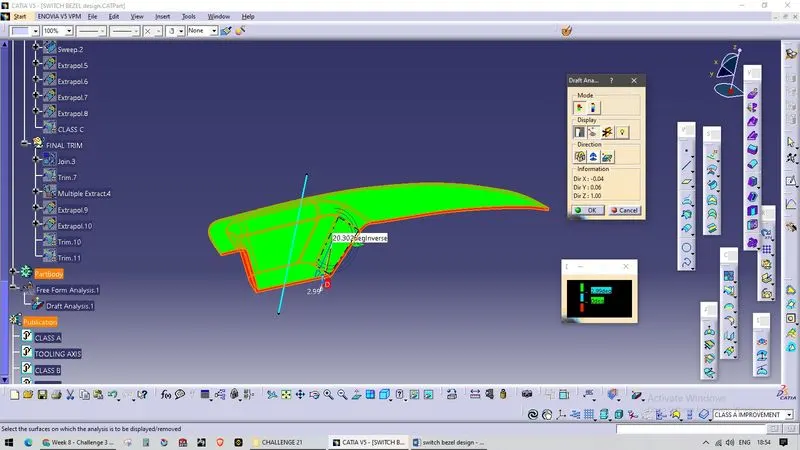
The Draft allows the part to easily eject from the mold. The draft angle is to reduce friction between the core, cavity and part and it also avoid the damages. The minimum draft angle is 0.5 degree and the most common draft angle used in the plastic design is 3 degrees.
In CATIA the draft analysis is performed based on colour ranges identifying zones on the analysed element where the deviation from the draft direction at any point, corresponds to specified values.
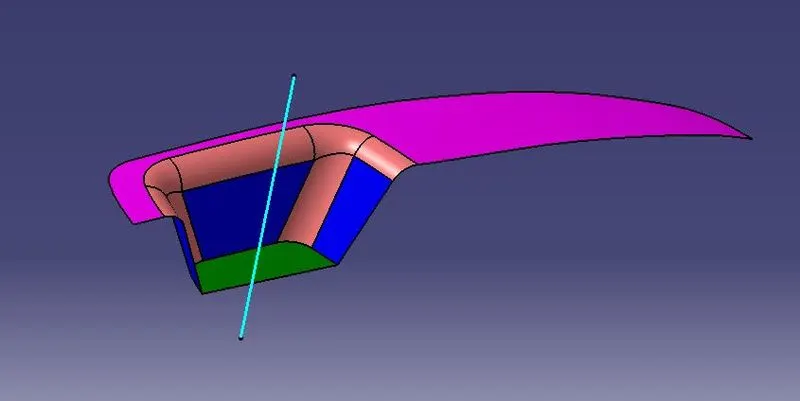
Tooling direction is the main element that to be consider while designing a plastic component. In moulding machine the arrangement is given to open the mould along the direction. It is the direction in which the core and cavity opens.
Parting lines
A ‘parting line’ is the line of separation on the plastic part where the two halves of the plastic injection mold meet. The line actually indicates the parting ‘plane’ that passes through the part. Within more basic plastic part design plans this plane can be a simple, flat surface, but it is often a complex form that traces the perimeter of the part around the various features that make up the part’s outer ‘silhouette’.
Part lines can also occur where any two pieces of a mold meet. This can include side action pins, tool inserts and shutoffs. Parting lines cannot be avoided; every part has them. Keep in mind when considering plastic part design that the melt will always flow towards the parting line because it is the easiest place for the displaced air to escape, or ‘vent’.
Parting Lines can be split into two broad categories: Straight/Flat and Stepped/Curved.
During the injection molding process, the two surfaces come in contact with each other. The surface that is in contact with both the blocks is known as the parting surface of the mold.
Types of Parting Surface
The shape of the parting surface changes depending on the profiles or contours of the paths. They can be split into four different types:
- Flat or straight parting surface
- Stepped parting surface
- Angled parting surface
- Complex or profiled parting surface
Generally, injection mold has two major components: the movable halve and the fixed halve, during injection moulding process, these two halves are pressed tightly and form a sealed hollow to avoid the melt flow leakage and maintain certain holding pressure, the pressed surface are called parting surface, usually parting surface are the biggest projection outline of the part.
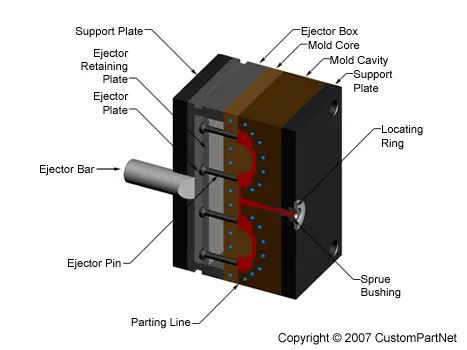
DESIGN PRINCIPLES OF PARTING SURFACE
- The parting surface should be located at the largest section a plastic part
- The selection of the parting surface should be helpful for mold release / product ejection
- The parting surface should be selected to meet the appearance requirements of the plastic product
- The parting surface should ensure the precision requirements of the plastic product
- The parting surface should facilitate mold making
- The parting surface should be helpful for mold venting
METHODOLOGY
TOOLING AXIS OF SWITCH BEZEL COMPONENT
DRAFT ANALYSIS ON SWITCH BEZEL COMPONENT
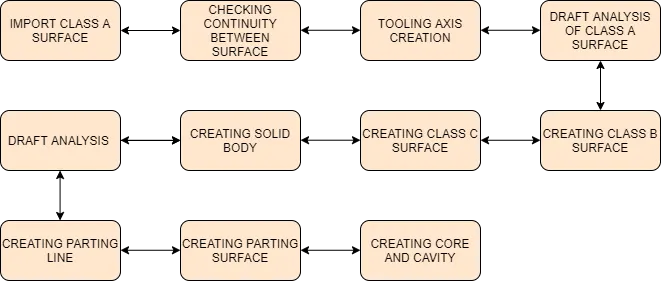
PROCEDURE
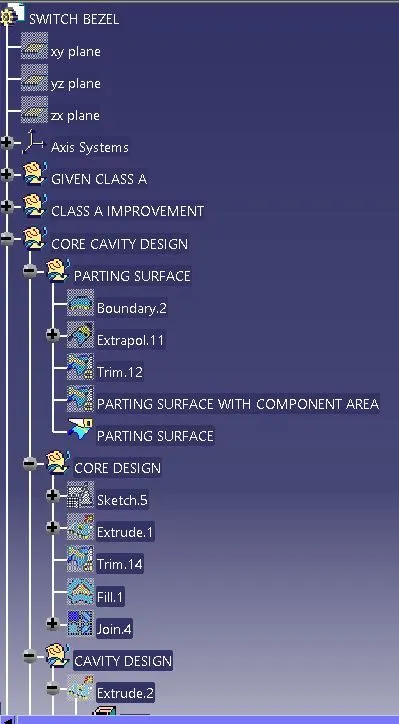
- First create the parting line. To create the parting take the intersection of the class B surface and Class A+C surface.
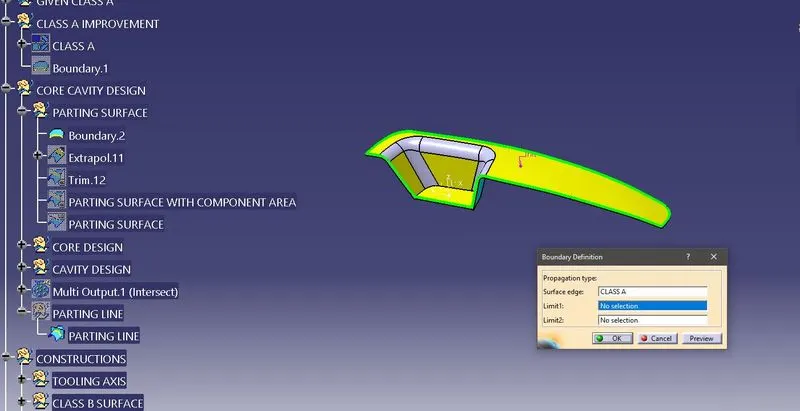
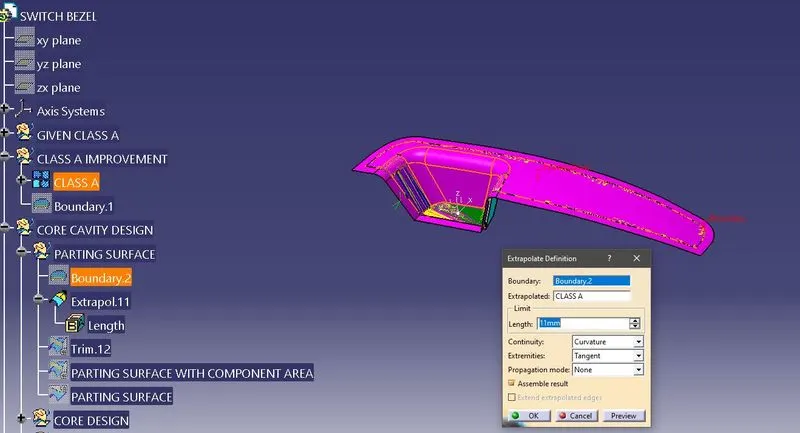
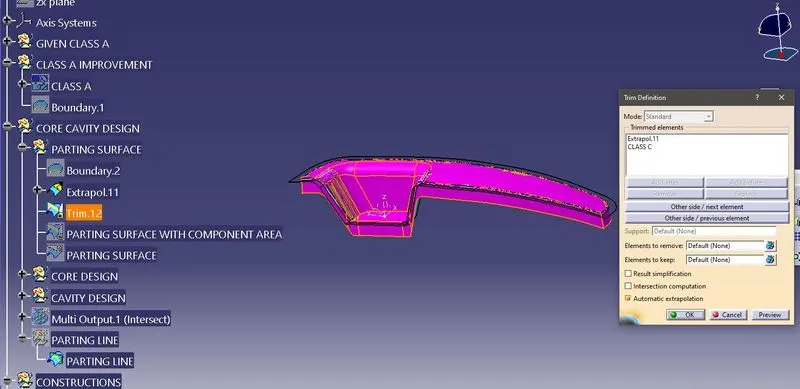
- For parting surface extract the boundary of the class A surface. Extrapolate the class a surface. Trim the extrapolated class A surface with class C surface.
- Trim the previous trimmed surface with the Class B to get the parting surface with the part area
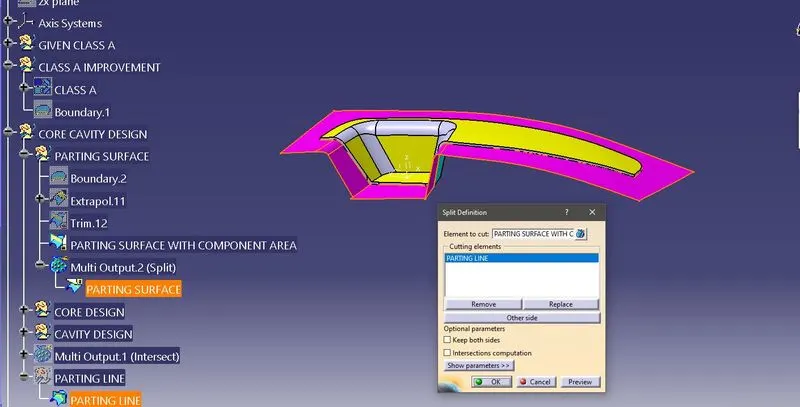
- Split the parting surface with part area and the parting line we get the final parting surface
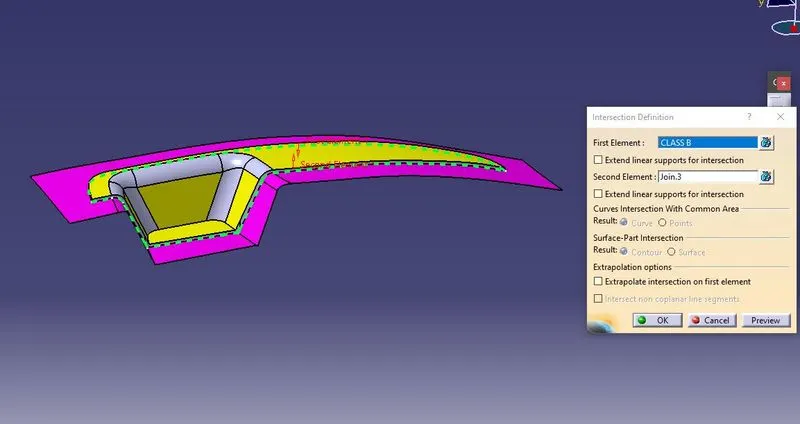
DESIGNING OF CORE AND CAVITY
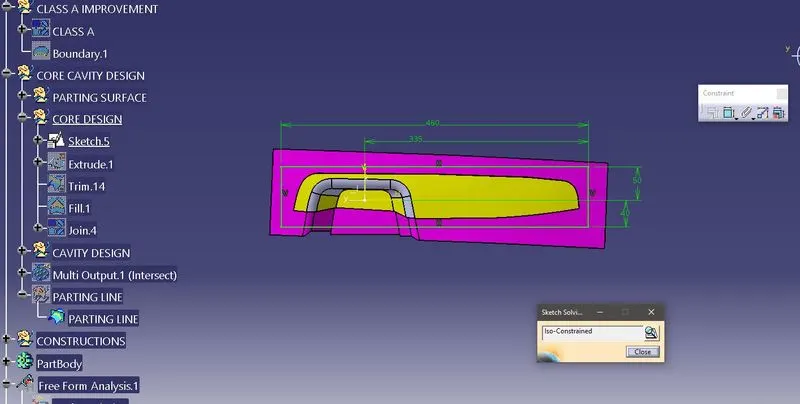
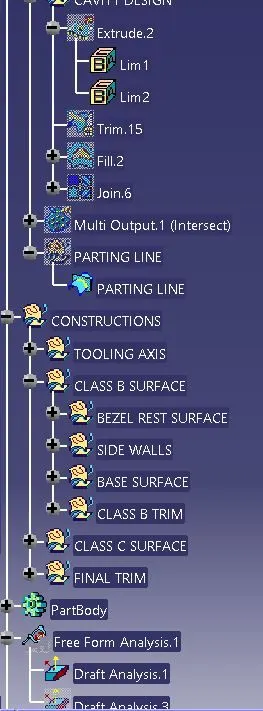
- Draw a rectangular block on the parting surface. make sure the boundaries of the rectangular block are inside the parting surface
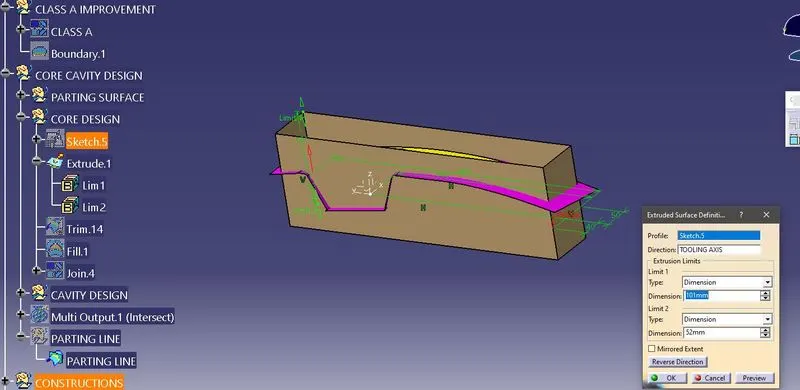
- Perform extrude surface in both the sides along the tooling axis
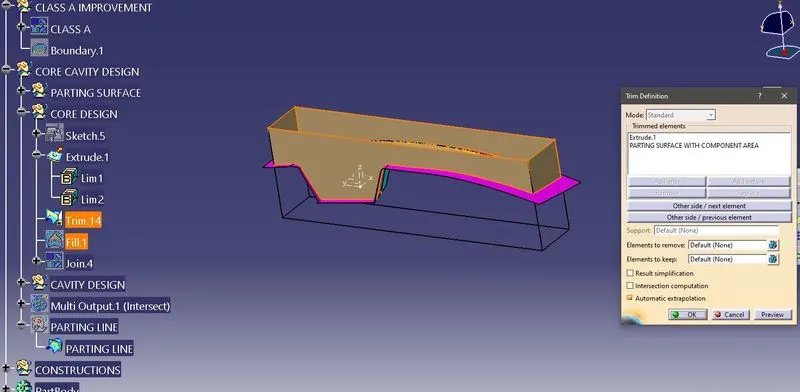
- Trim the extruded rectangular surface with the parting surface
- Fill the top of the trimmed surface by creating boundary option join both the fill and the trimmed surface together.
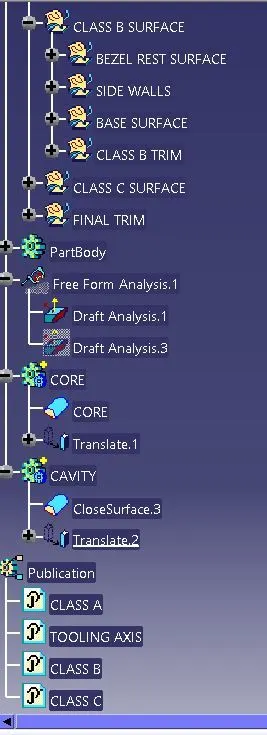
- Convert the block into solid body using closed surface option
- Repeat the same procedures for core design
- Translate the core and cavity for the easy understanding
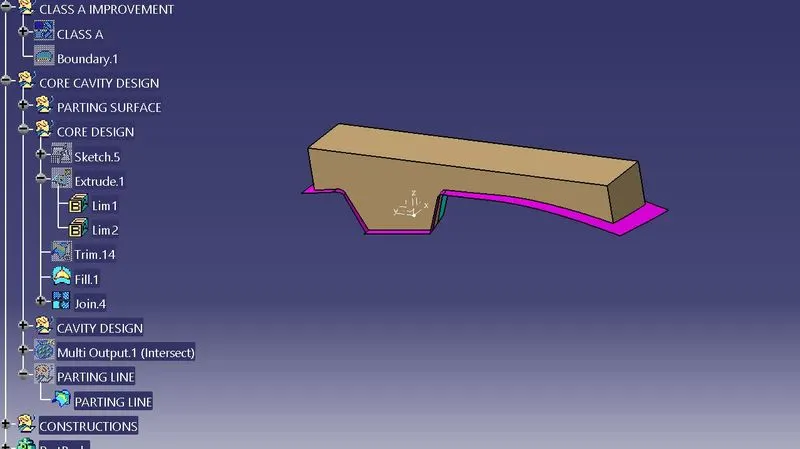
core side
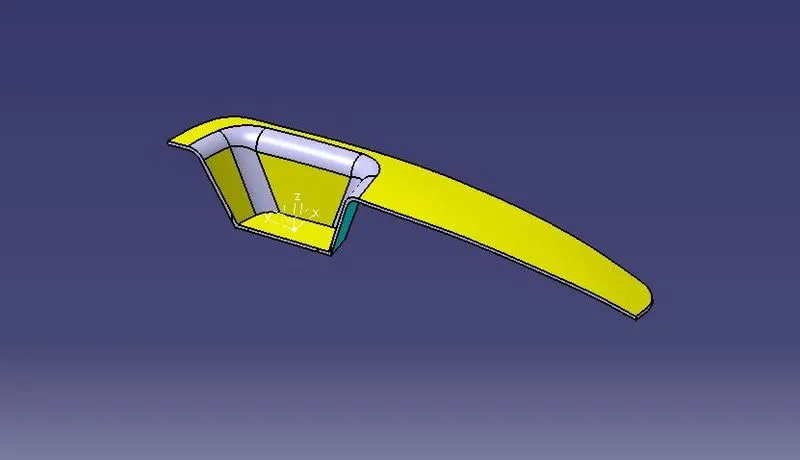
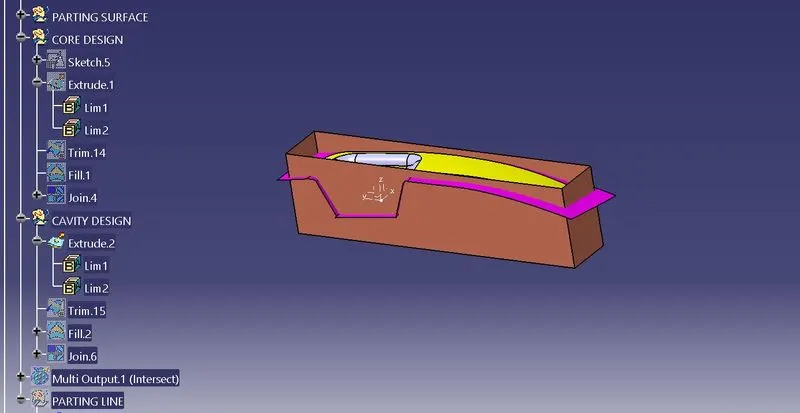
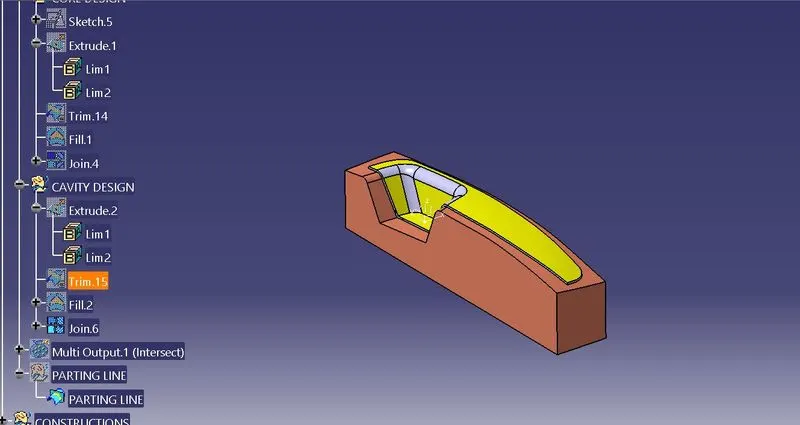
cavity side
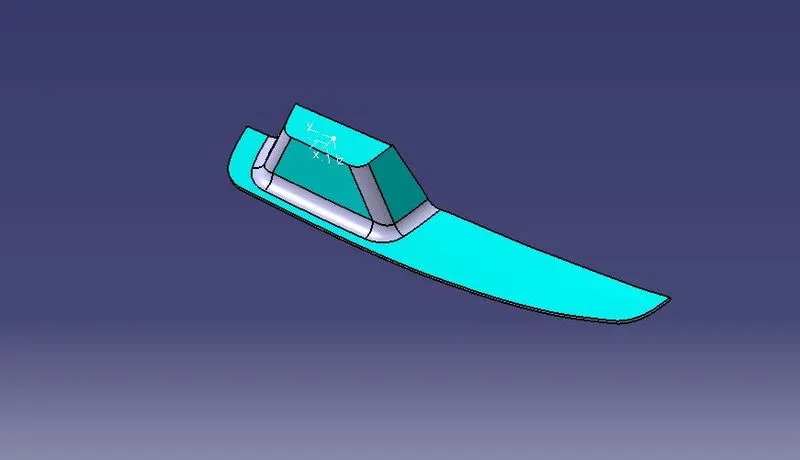
core
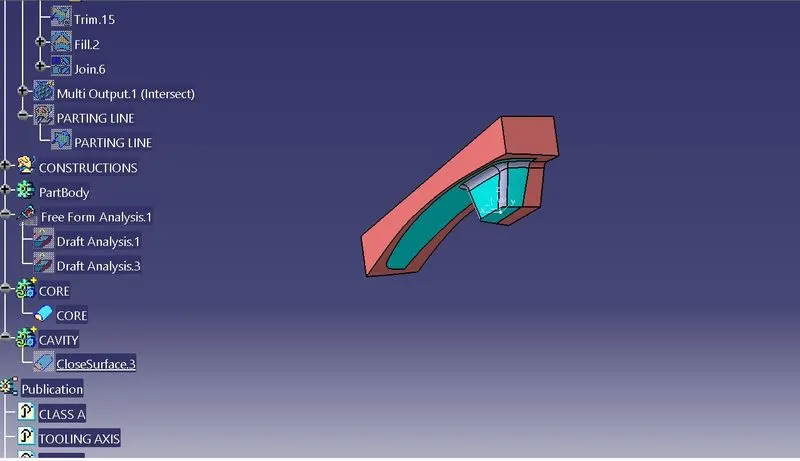
cavity
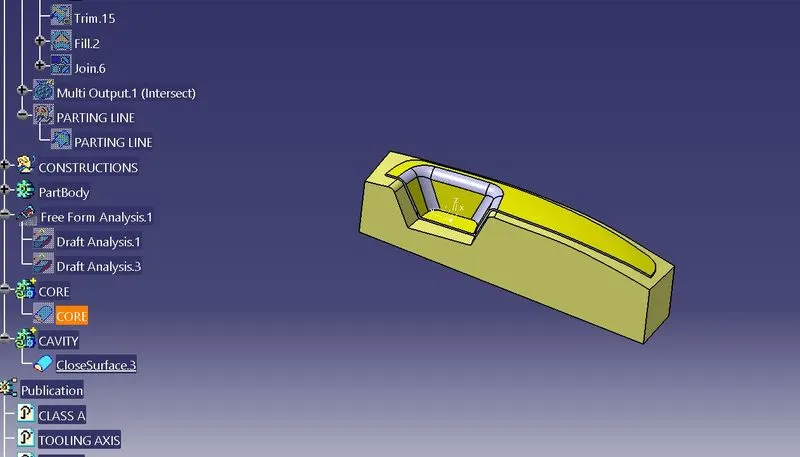
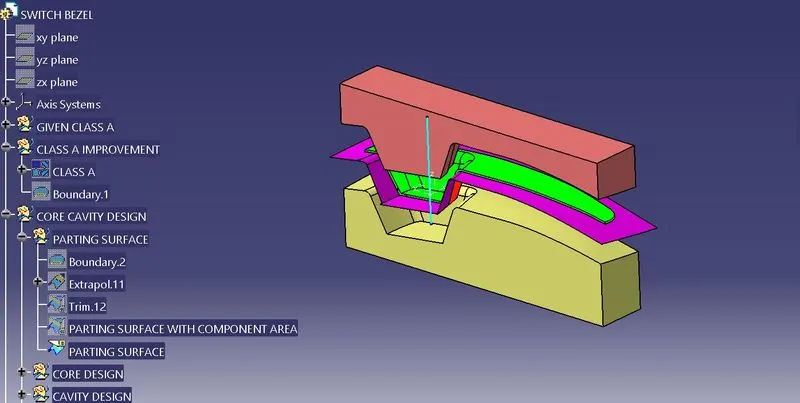
Feature tree
Conclusion
The parting line , parting surface are identified and created
The core and cavity are created for switch bezel component.