Week 8 - Challenge 4 - Coin Holder Design
AIM:
To make a model from the provided class-A surface.
INTRODUCTION:
CLASS-A SURFACE: A surface made by the designer which is given as an input to the plastic modeller to work on. It is an aesthetic surface and the outermost surface.
CLASS-B SURFACE: A surface after a certain thickness from the class-A surface is a class-B surface. This is the surface that contains engineering aspects of a model.
CLASS-C SURFACE: A surface that joins class-A and class-B surfaces is a class-C surface.
METHODOLOGY: In this model, we have focused on the following things:
1. Tooling axis
2. Draft analysis
3. Class-B surface
4. Class-C surface
5. Making a solid model from the surface.
CLASS-A surface:
Surface gave by the Styling team to Design Engineer.
1. Check the given class A surface for any surface openings neglecting the feature opening using the boundary feature. Fix the openings using the Join feature if needed.
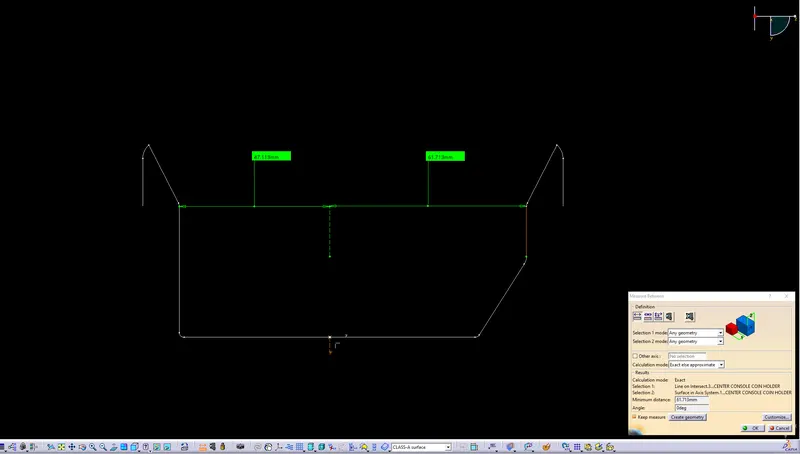
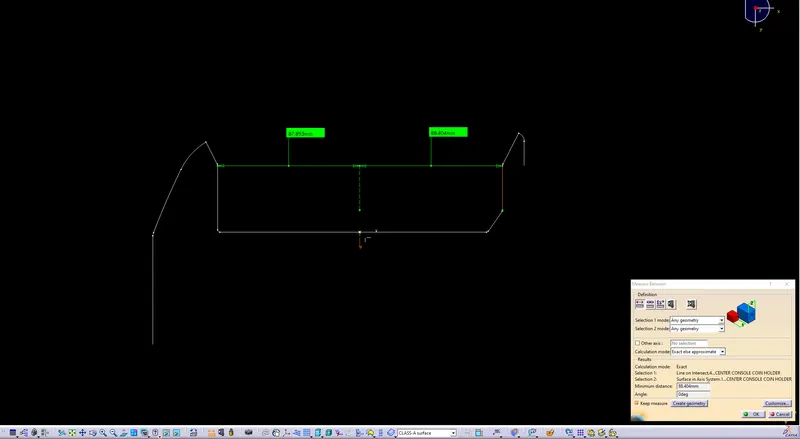
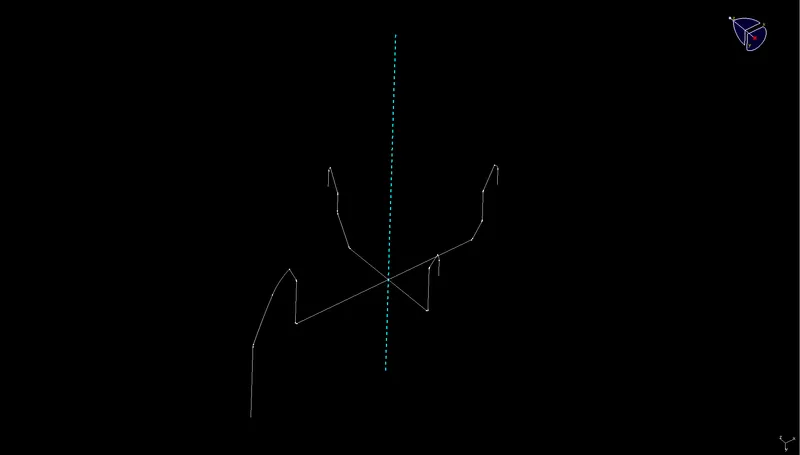
2. Create a tooling axis exactly at the centre of the pocket feature, by extracting the base surface of the pocket, creating a centre point on the extracted surface and create a line from the point facing the Z direction at 90 degrees from the base as shown below.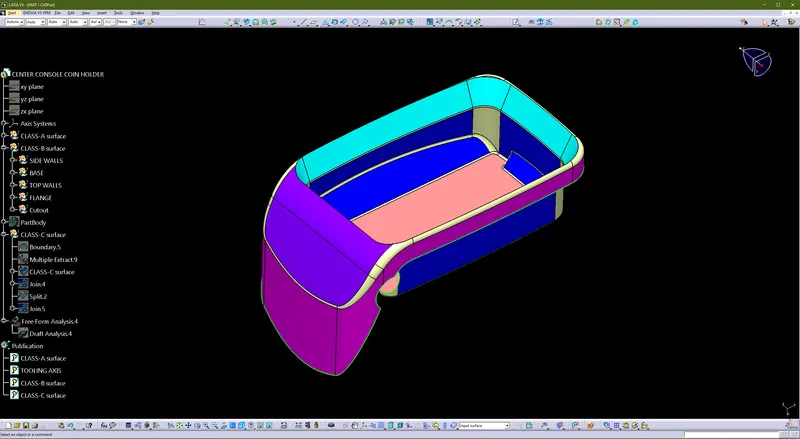
TOOLING AXIS:
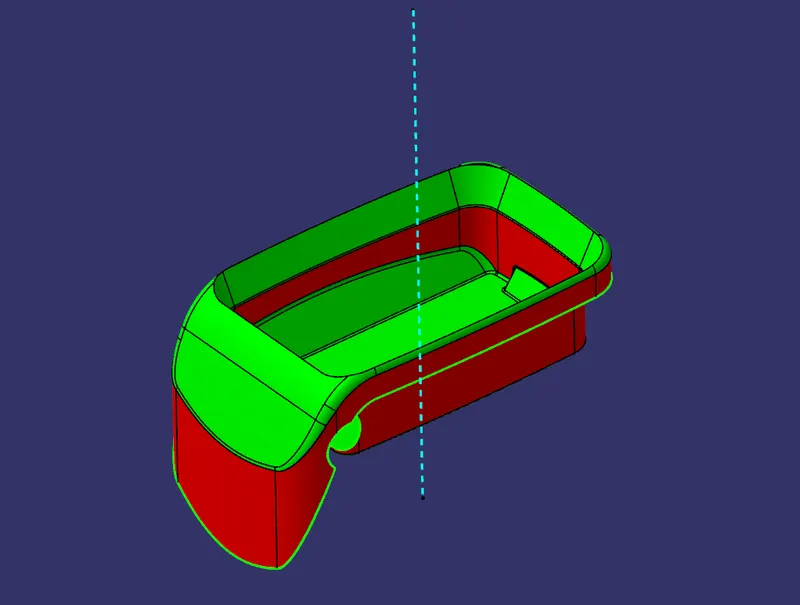
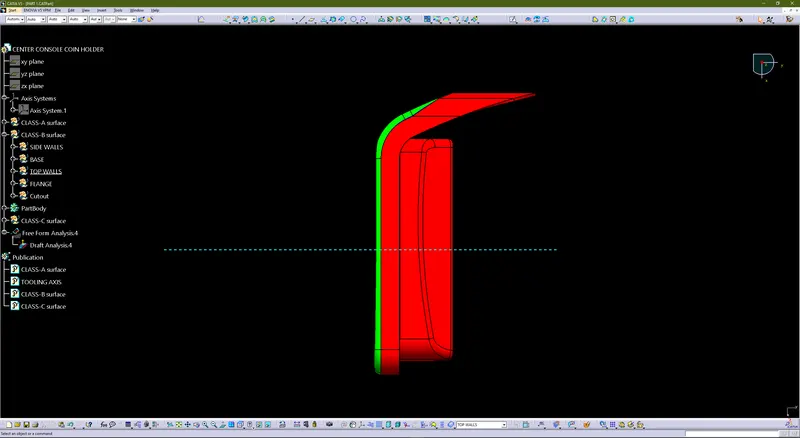
DRAFT ANALYSIS ON CLASS-A surface
The styling team has not given any draft to sidewalls, the flange that's why it's not Green because the Red is considered a Negative Draft.
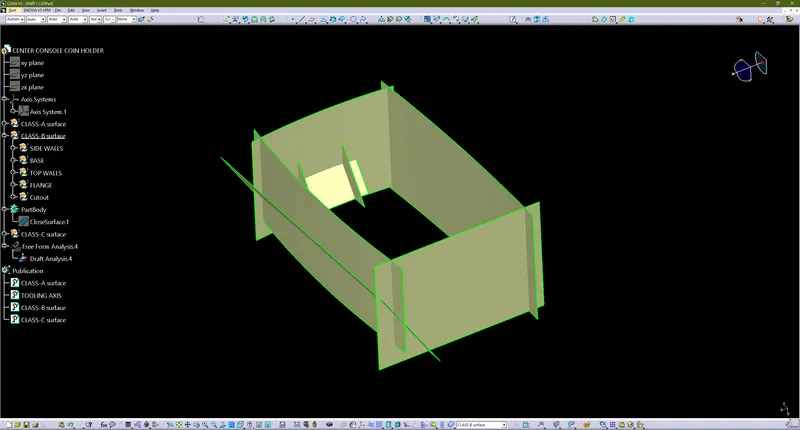
CLASS-B surface
A surface after a certain thickness from the class-A surface is a class-B surface. This is the surface that contains engineering aspects of a model.
Sidewalls
Sidewall Trims
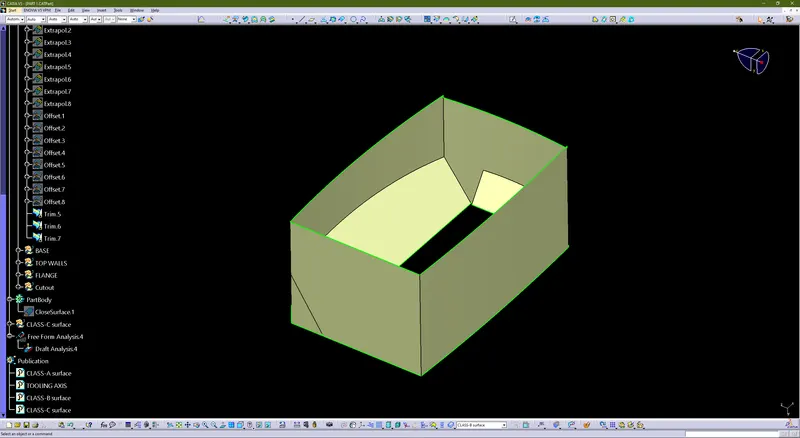
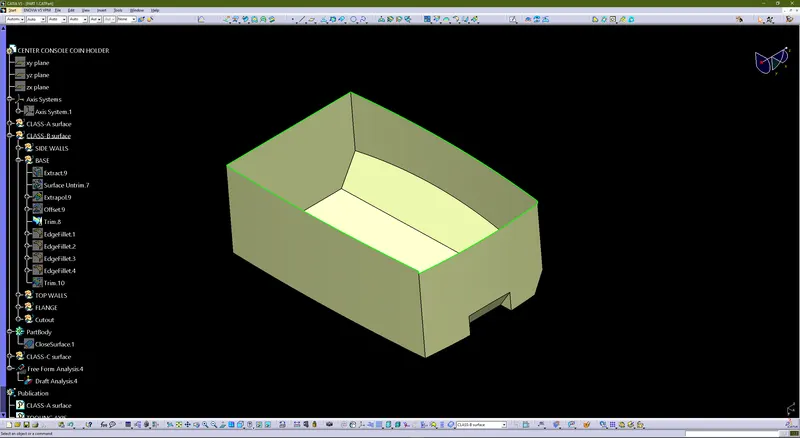
Base
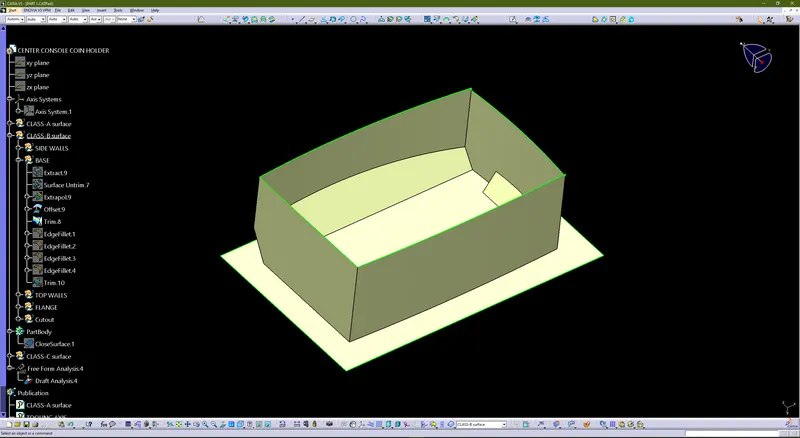
trim
TOP WALL
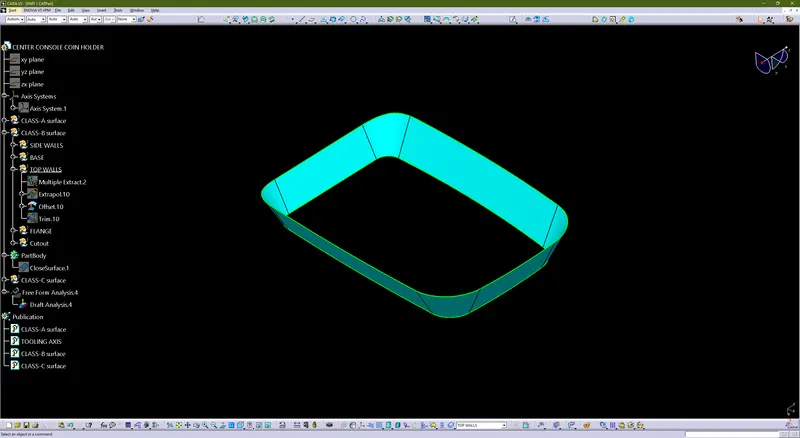
TRIMS
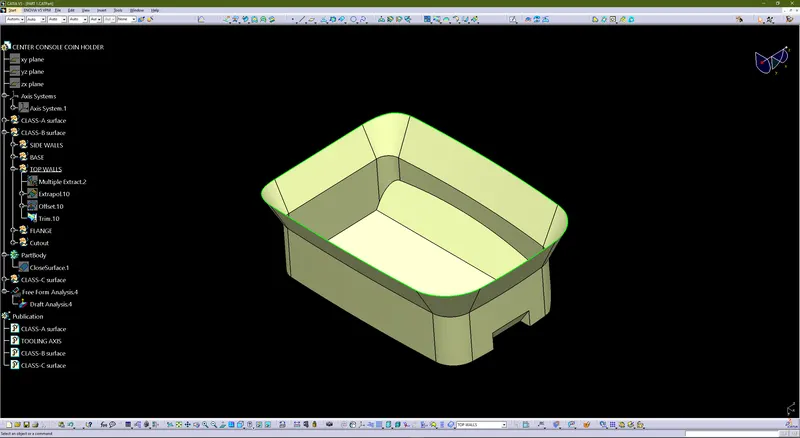
FLANGE
TRIM
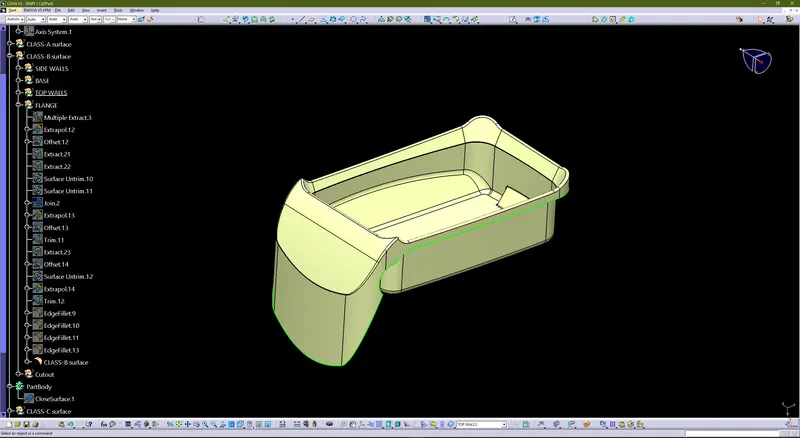
CLASS-C surface
Now Join the class A surface with class B using another surface call CLASS-C surface.
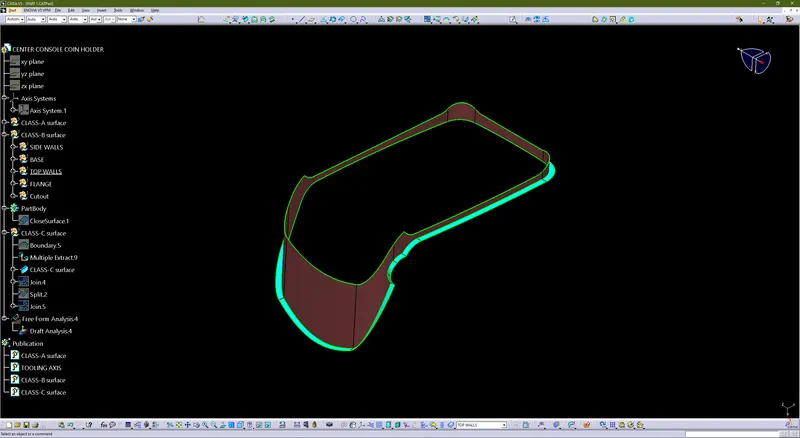
Closed Surface
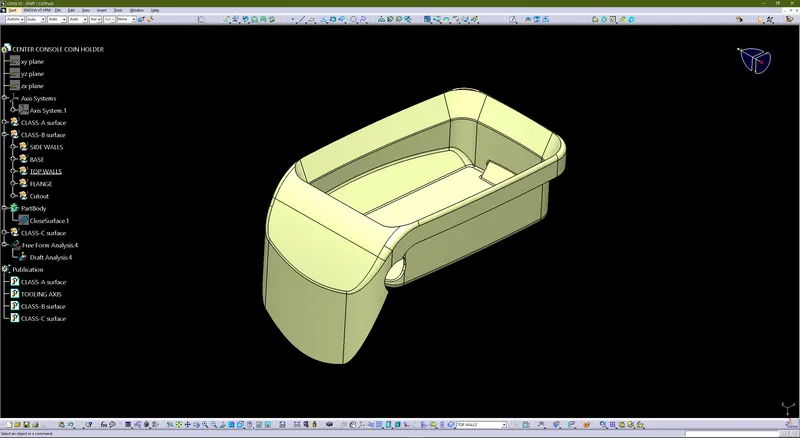
Solid Body
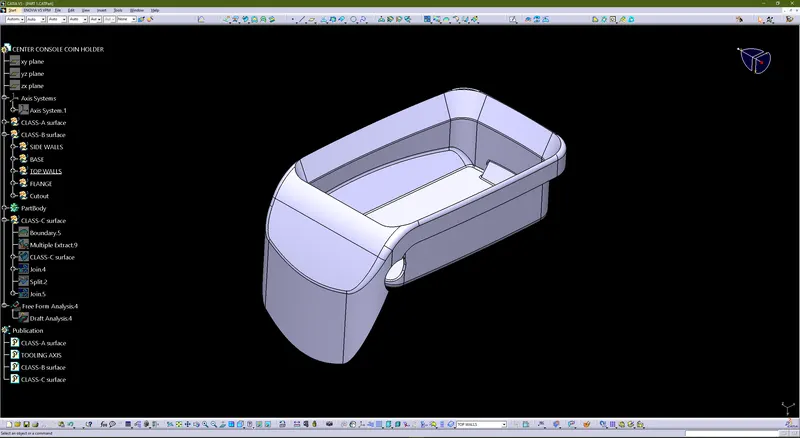
DRAFT ANALYSIS on Solid Body
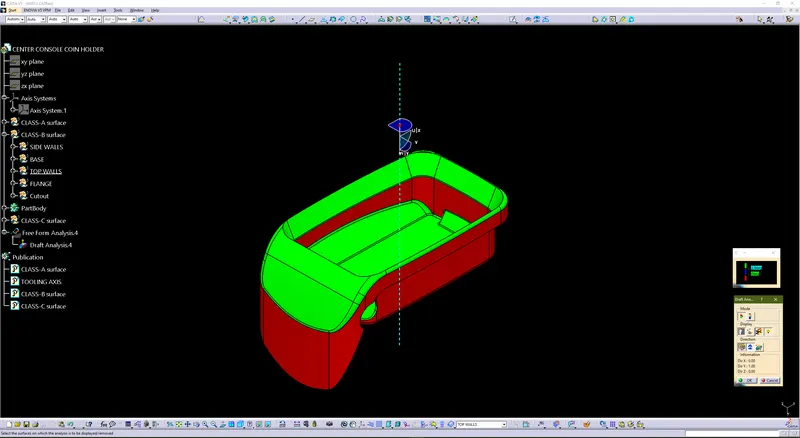
Views
ISOMETRIC VIEW
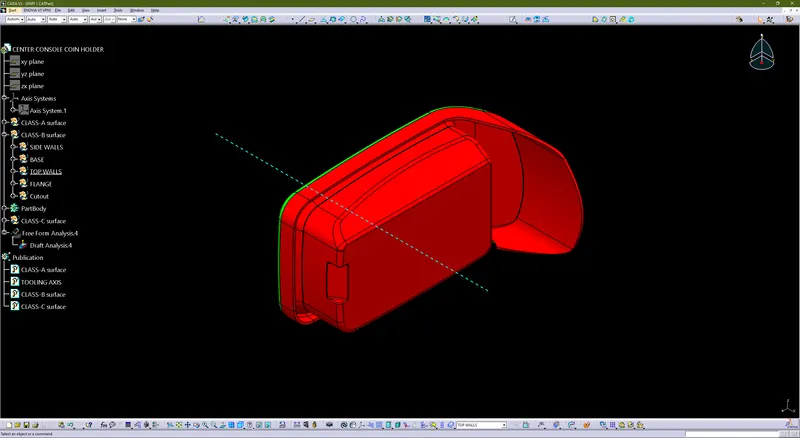
FRONT VIEW
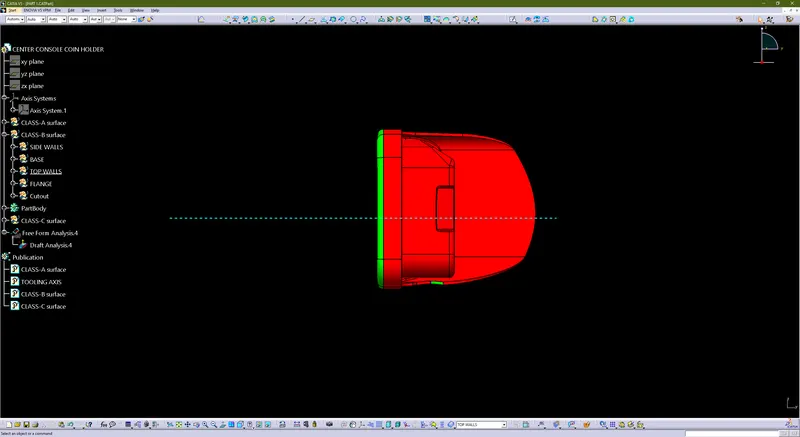
SIDE VIEW
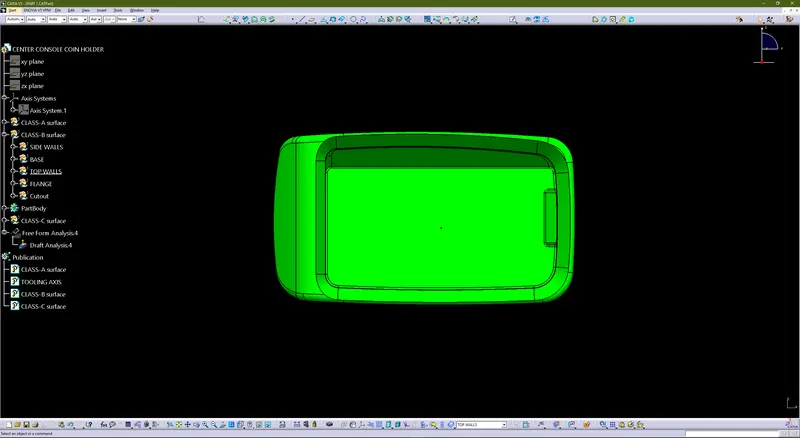
TOP VIEW
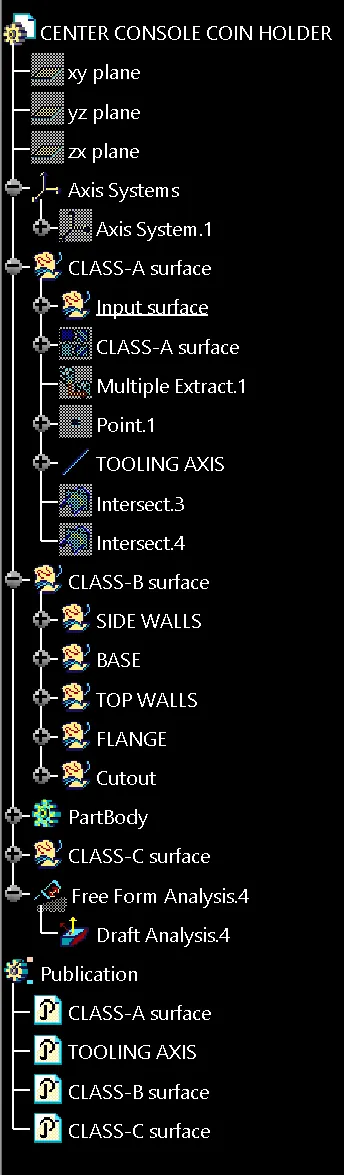
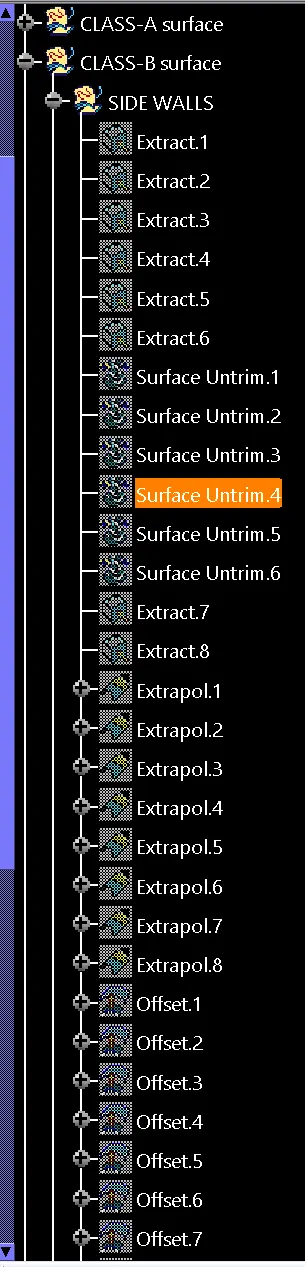
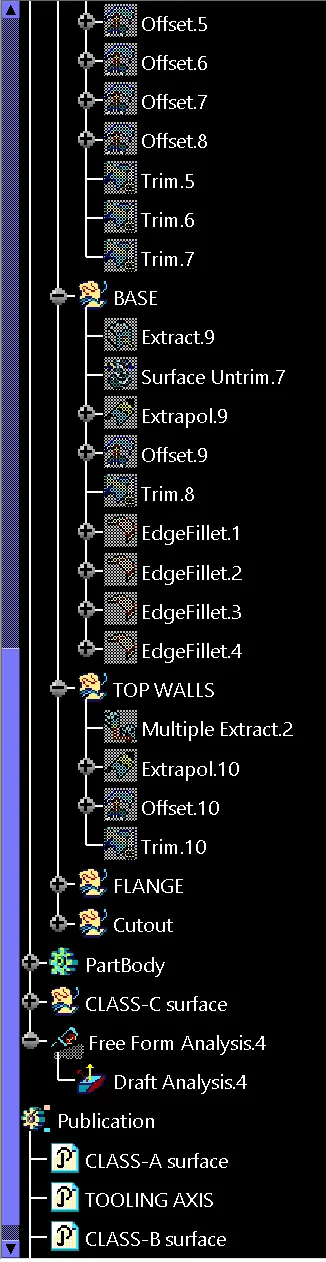
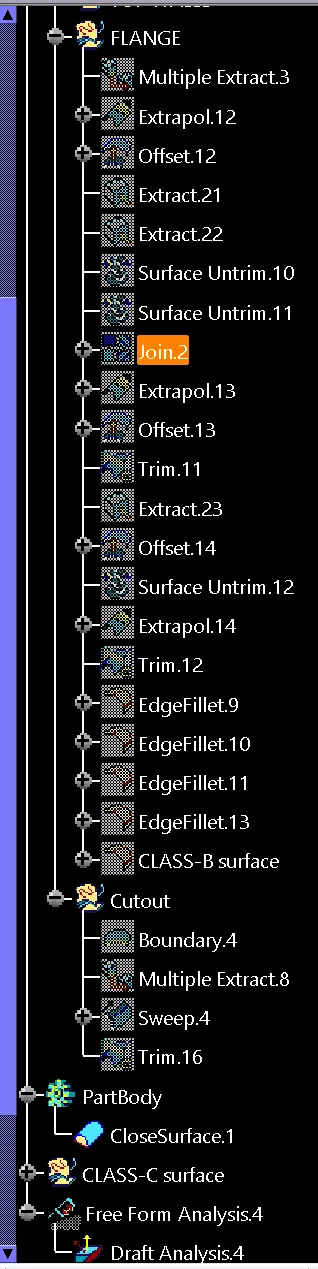
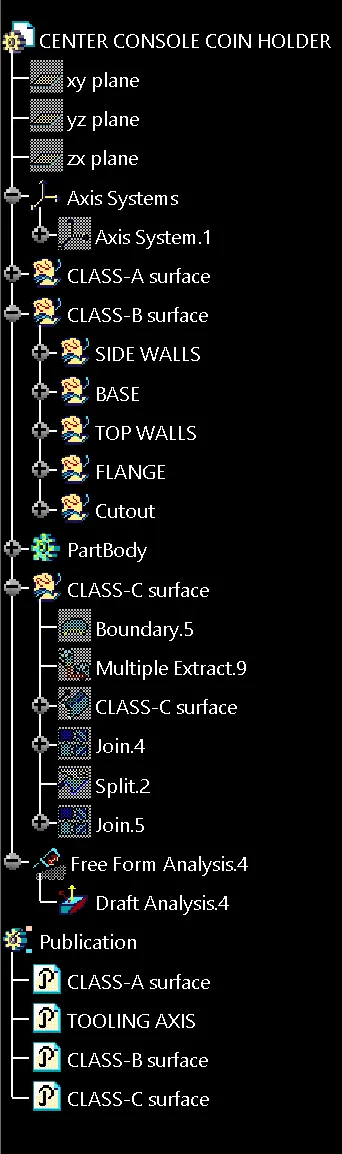
TREE STRUCTURE