Pipe flow Simulation with line probes in SolidWorks
Aim: To do the simulation of pipe flow using line probes in SolidWorks Flow Simulation
Objective:
- Run a pipe flow simulation with an inlet Reynolds number of 100,1000 and 10000.
- For each of these cases do the following:
- Place line probes at 95%, 90% and 85% of the pipe length.
- Compare the normalized velocity profile at each of these locations.
- Normalize the velocity profile by the inlet velocity.
Introduction:
Laminar flow:
- Laminar flow occurs when the fluid flows in infinitesimal parallel layers with no disruption between them.
- In Laminar flows, fluid layers slide in parallel with no eddies, swirls or currents normal to the flow itself.
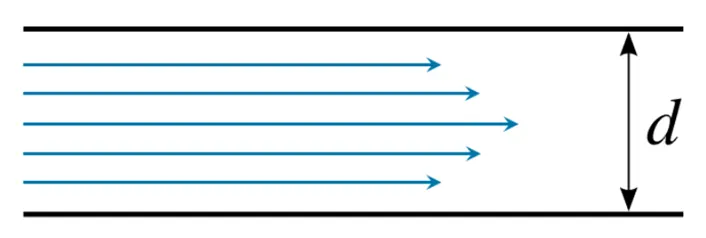
Fig. Laminar flow in closed pipe
Turbulent flow:
- In fluid dynamics, a turbulent means irregular flows in which eddies, swirls, and other flow instabilities occur.
- Turbulence is commonly observed in everyday phenomena such as fast flowing rivers, smoke from chimney, etc.
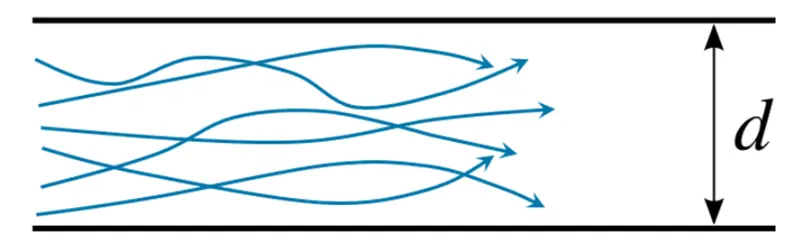
Fig. Turbulent flow in closed pipe
Reynold’s number:
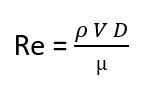
- The Reynold’s number (Re) is a dimensionless number expressing the ratio between inertial force and viscous force.
- The Reynold’s number is a mathematically defined as:
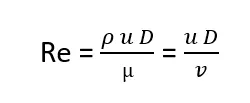
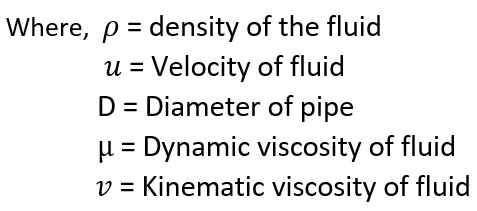
- At low values of Re, the flow is Laminar. But when Re exceeds a certain threshold, semi-developed turbulence occurs in the flow, this regime is referred to as Transition regime and occurs for a certain range of the Reynold’s number.
- Finally, over a certain value of Re, the flow becomes fully
Viscosity:
- The resistance of a fluid to flow when subjected to a force is called Viscosity.
Dynamic Viscosity

- The unit of measurement of Dynamic Viscosity is Pa s or N s/m2
- Dynamic Viscosity is also known as Absolute viscosity.
Kinematic Viscosity

- The unit of measurement of Kinematic Viscosity is m2/s
- Kinematic Viscosity is also known as Diffusivity of Momentum.
_______________________________________________________________________________
Specification of problem:
Diameter of pipe = 0.04m
Thickness of pipe = 0.001m
At 25° C
µ = 0.00089 Pa s or 0.00089 N s/m2
= 1000 kg/m3
Length of pipe L = 1m
________________________________________________________________________________
Calculations:
For Reynold’s number Re =100
Therefore,
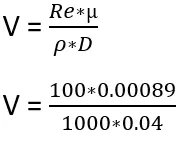
V = 0.00223 m/s ------------------------------(CASE 1)
Similarly, for Re = 1000
V = 0.0223 m/s------------------------------- (CASE 2)
And for, Re = 10000
V = 0.223 m/s--------------------------------- (CASE 3)
|
Reynold’s number (Re) |
Flow velocity V (m/s) |
|
100 |
0.00223 |
|
1000 |
0.0223 |
|
10000 |
0.223 |
Procedure for Simulation for all the 3 cases:
- Modelling of pipe in SolidWorks
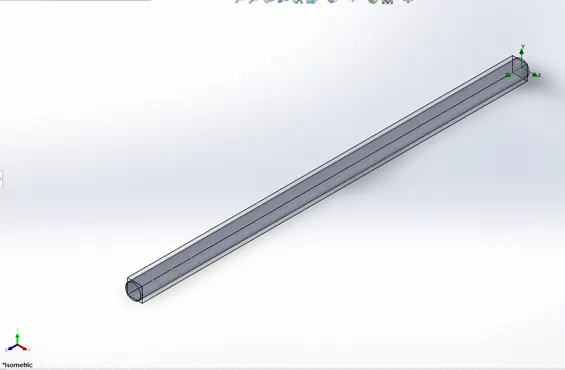
- Place the line probes at 85%, 90% and 95% of the pipe length by using the sketch command.
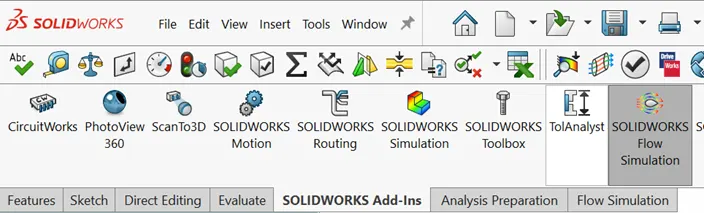
- Go to the Flow Simulation from SolidWorks Add-ins
- Create a new project in Flow Simulation

- Create the lids at the end faces of the pipe for watertight enclosed volume which is mandatory for CFD analysis.
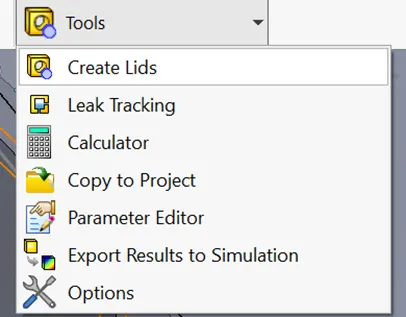
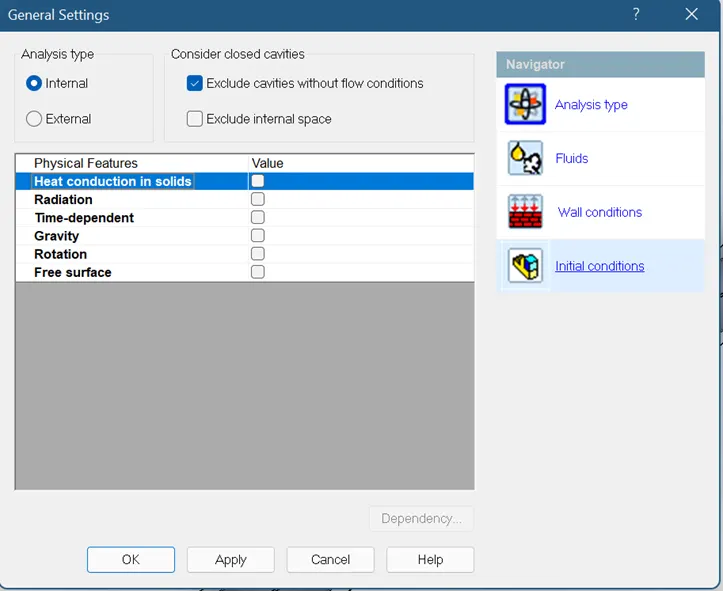
- Now form general settings set the analysis type as shown in the following figure:
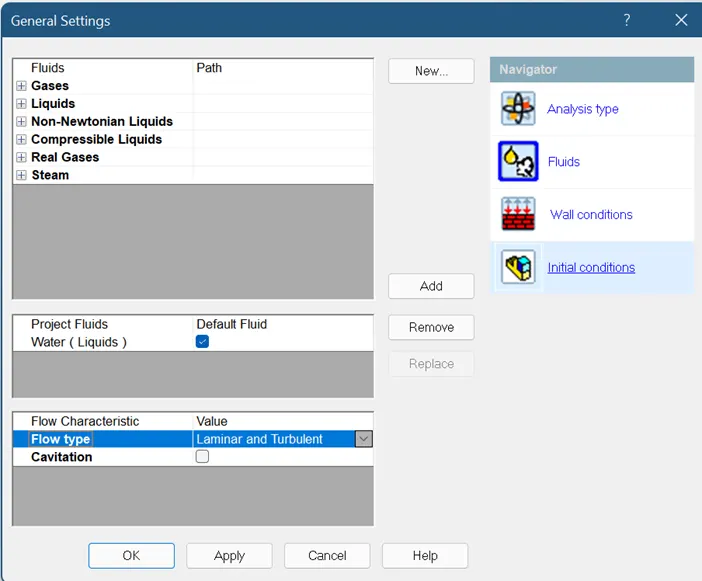
- In this project we will consider water as fluid for all the 3 cases and the flow characteristic be Laminar and Turbulent.
- Wall Condition is set as below:
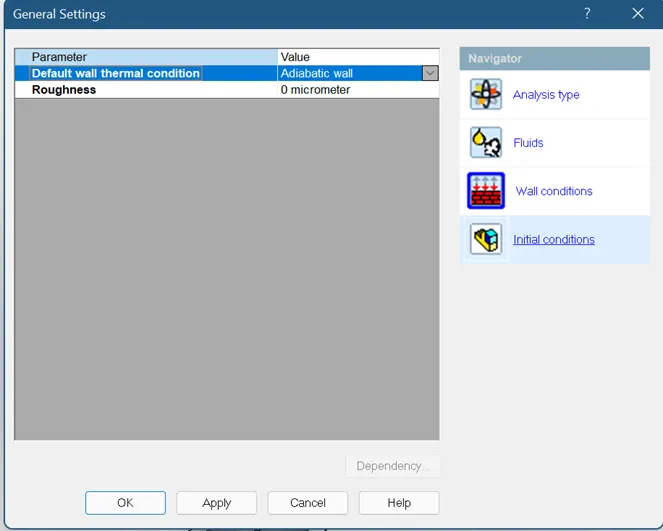
- Initial condition parameters are set as below:
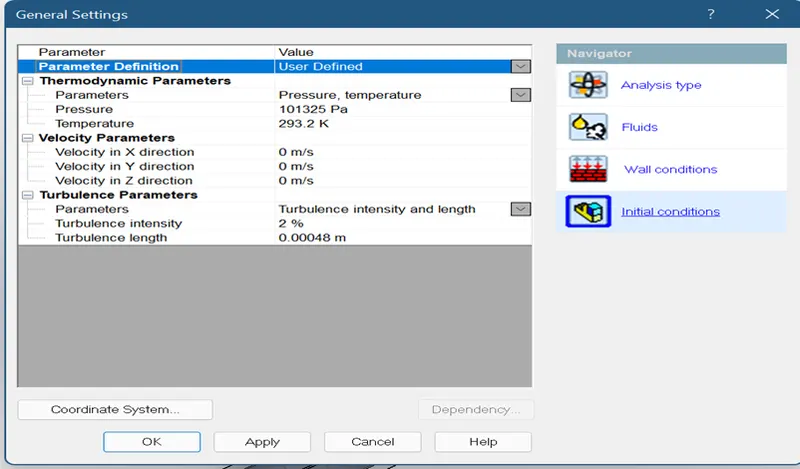
- Set boundary conditions at inlet, outlet and inner wall of the pipe.
- Insert XY plots for all the 3 cases
- Insert Cut plots for all the 3 cases
____________________________________________________________________________
Case No: 1 (Re= 100)
For inlet boundary condition:
Inlet velocity = 0.0023 m/s
For outlet boundary condition:
Static pressure= 101325 Pa
Temperature = 293.2 K
Third Boundary condition:
Real wall
Results for Case No : 1 (Re = 100)
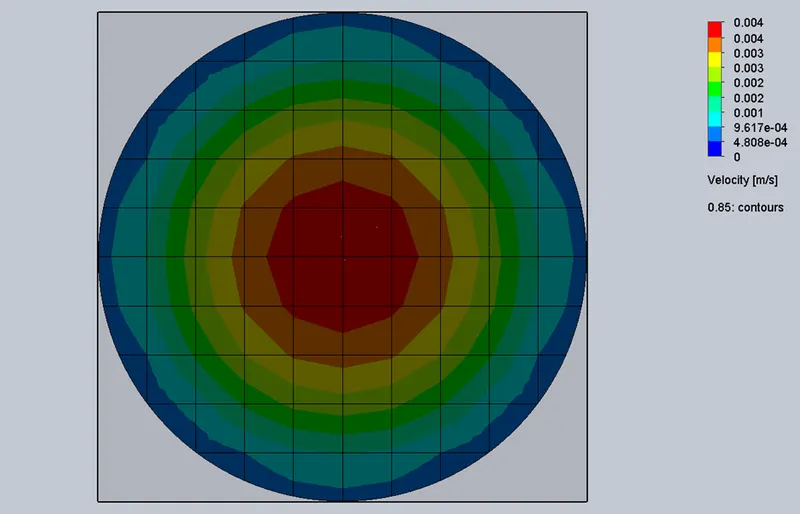
Cut plot for 85% pipe length
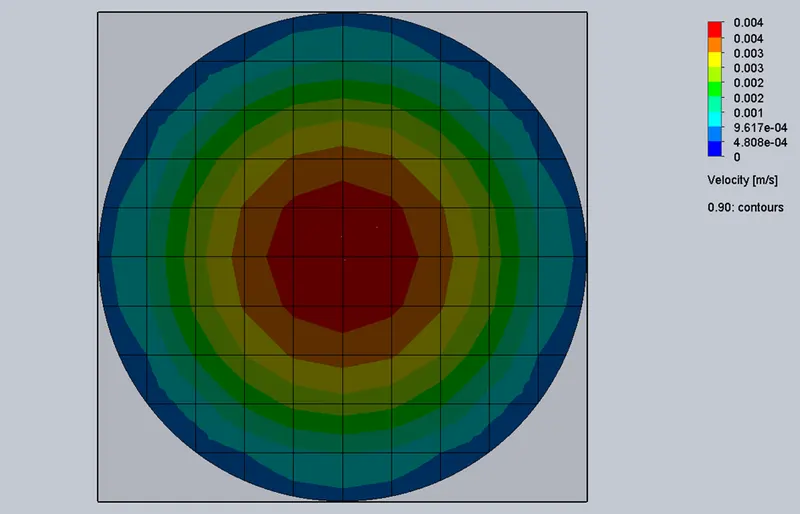
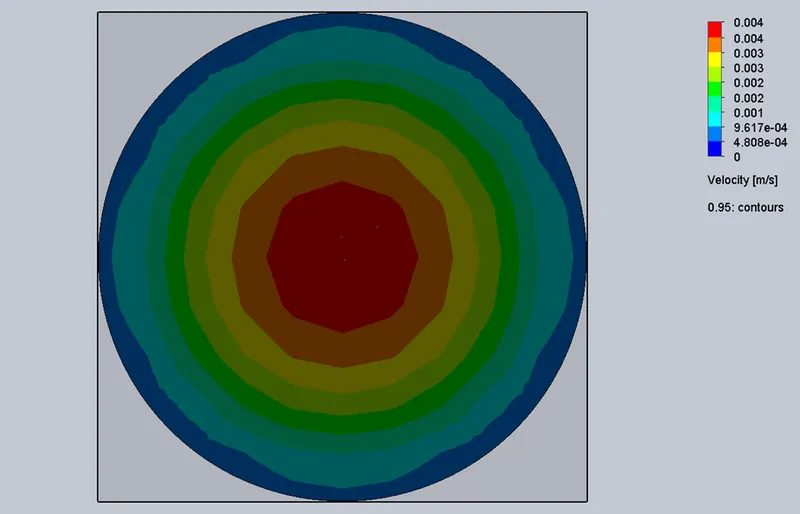
Cut plot for 90% of pipe length Cut plot at 95% of pipe length
Velocity plots for Case : 1
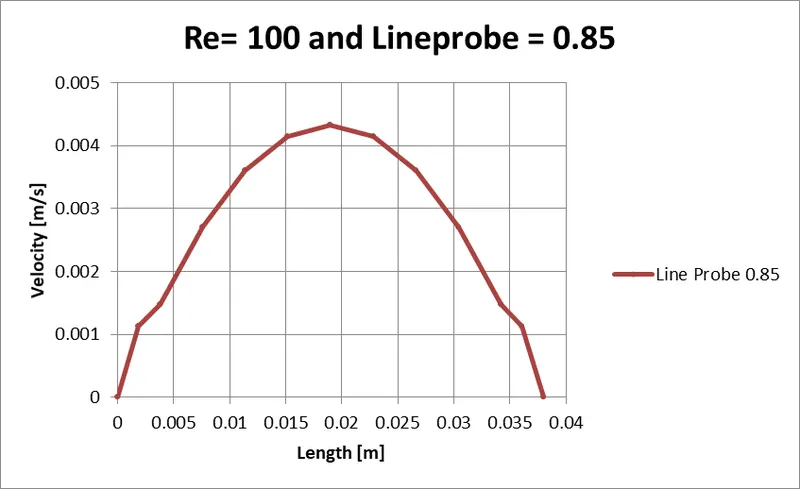
Fig. Shows the Velocity plot for Case:1 Re=100, v = 0.0023 m/s
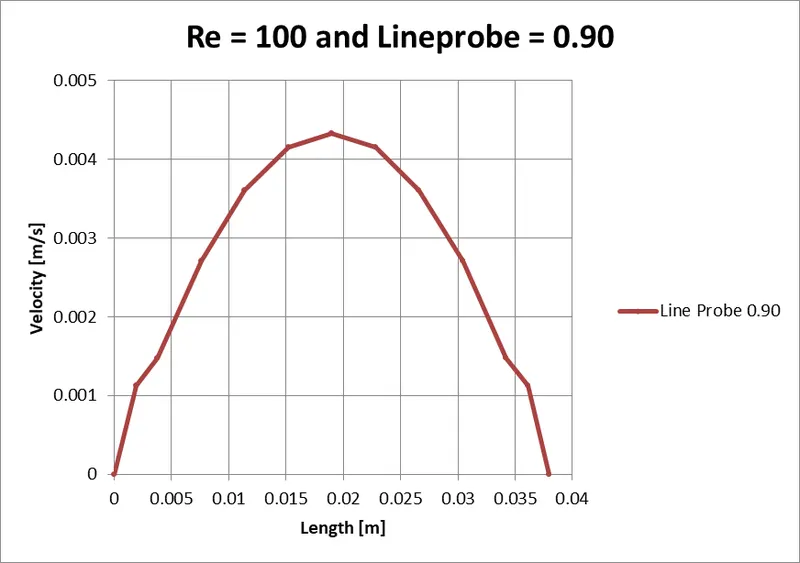
Fig. Shows the Velocity plot for Case:1 Re=100, v = 0.023 m/s
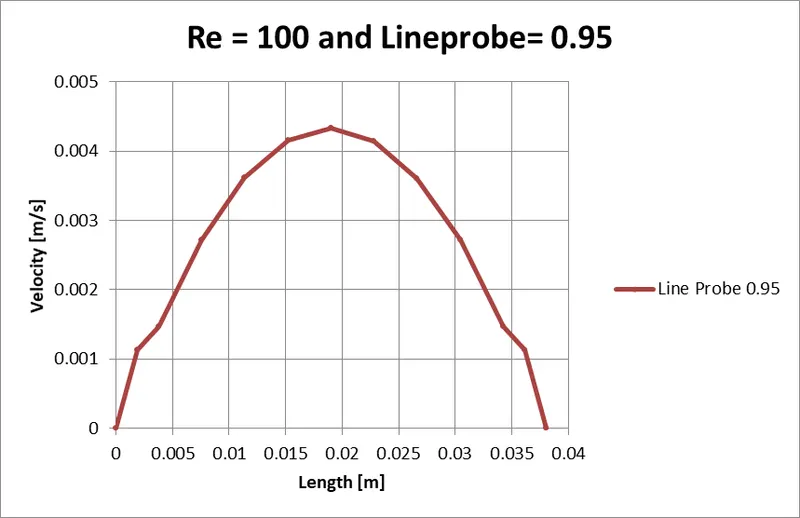
Fig. Shows the Velocity plot for Case : 1 Re = 100, v = 0.23 m/s
Velocity Comparison plot for Case:1
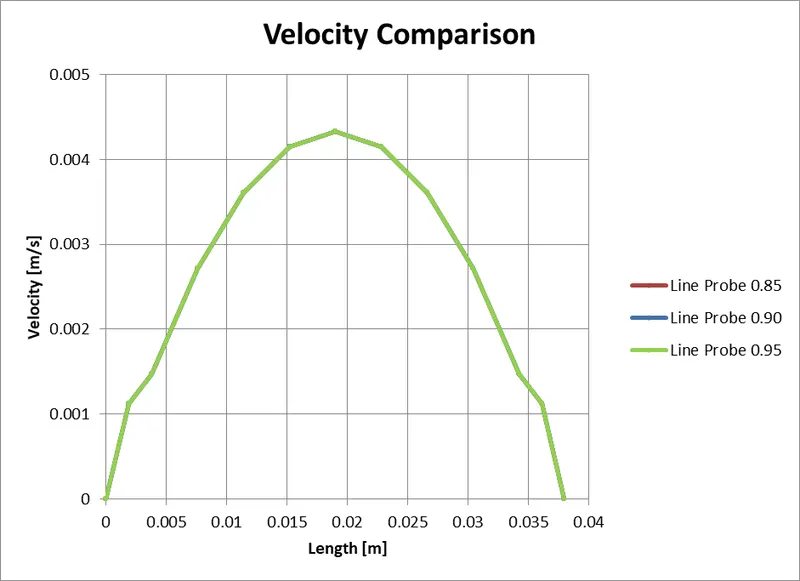
Fig. Shows the Comparison of velocity plots for Case:1
Case : 2 (Re =1000)
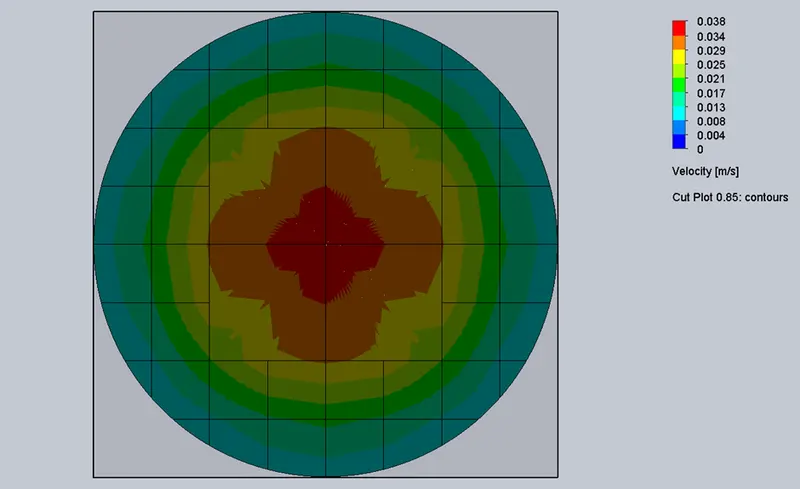
Cut plot at 85% of pipe length
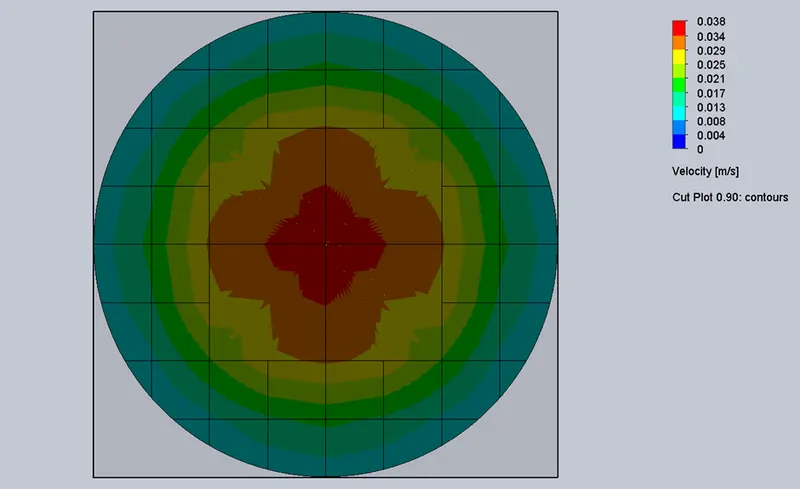
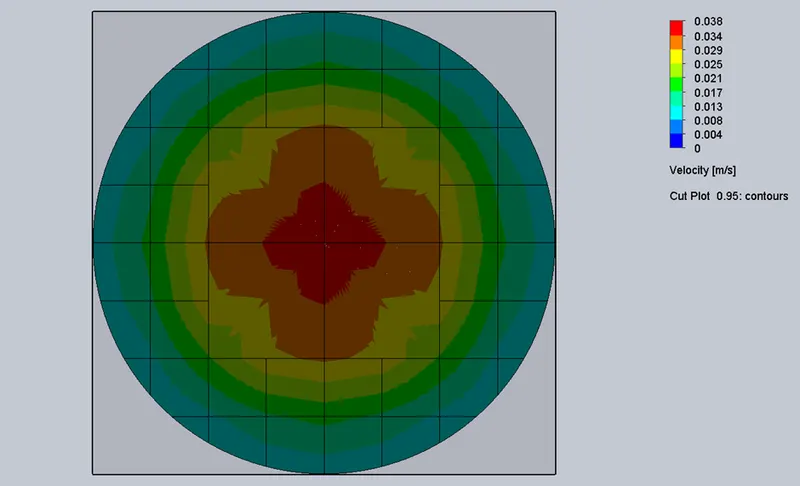
Cut plot at 90% of pipe length Cut plot at 95% of pipe length
Velocity Plots for Case : 2
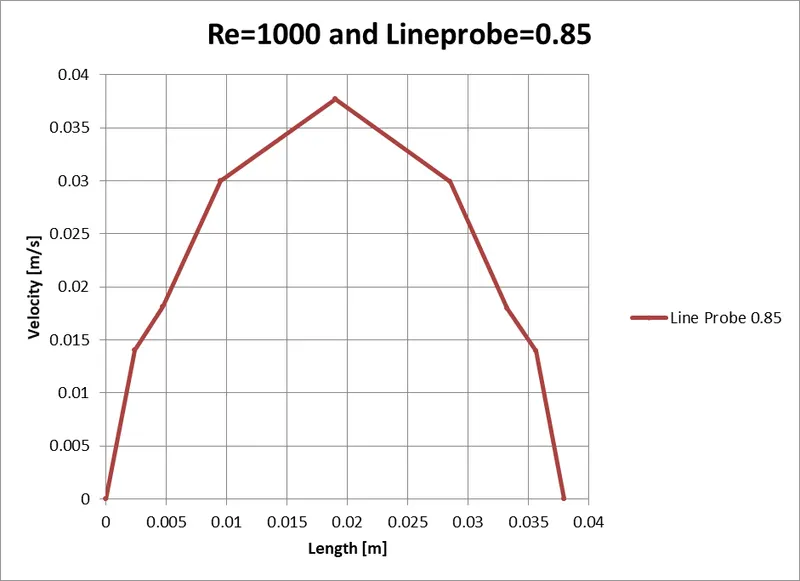
Fig. Shows the Velocity plot for Case:2 at Re= 1000 and v=0.0023 m/s
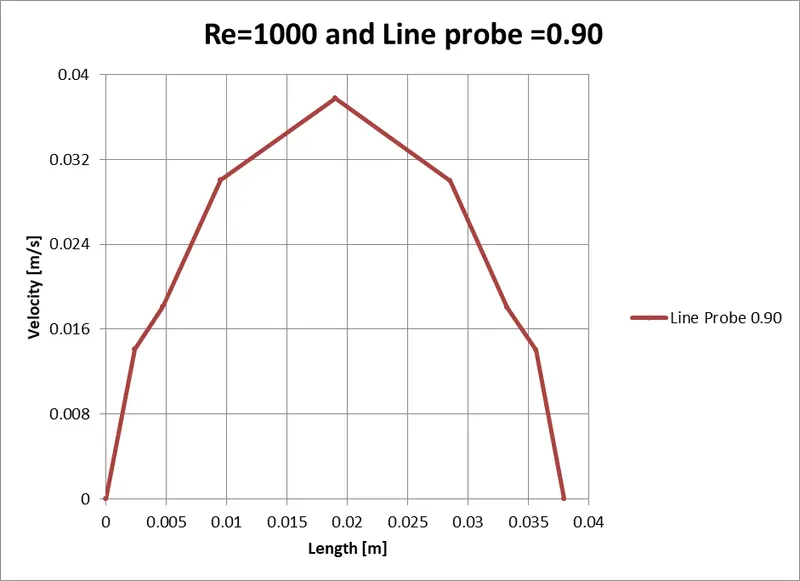
Fig. Shows the Velocity plot for Case:2 at Re= 1000 and v=0.023 m/s
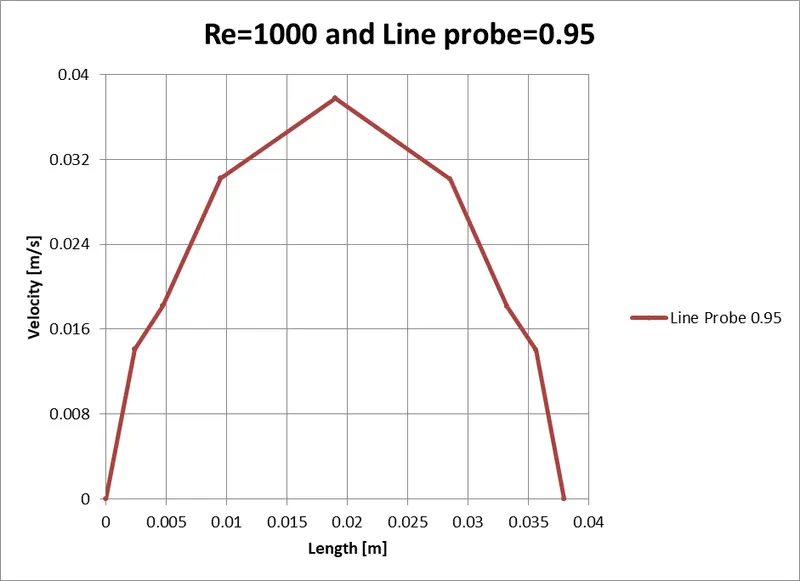
Fig. Shows the Velocity plot for Case:2 at Re= 1000 and v=0.23 m/s
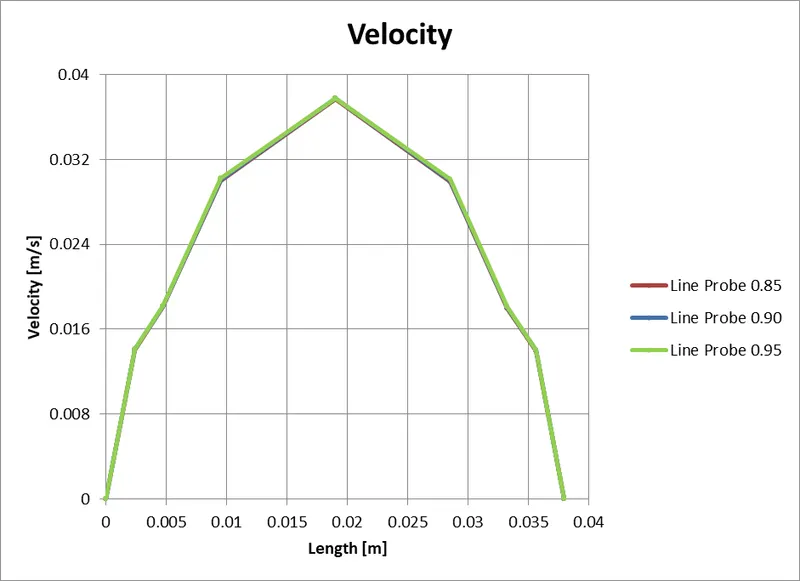
Fig. Shows the Comparison of velocity plots for Case:2
Case : 3 (Re =10000)
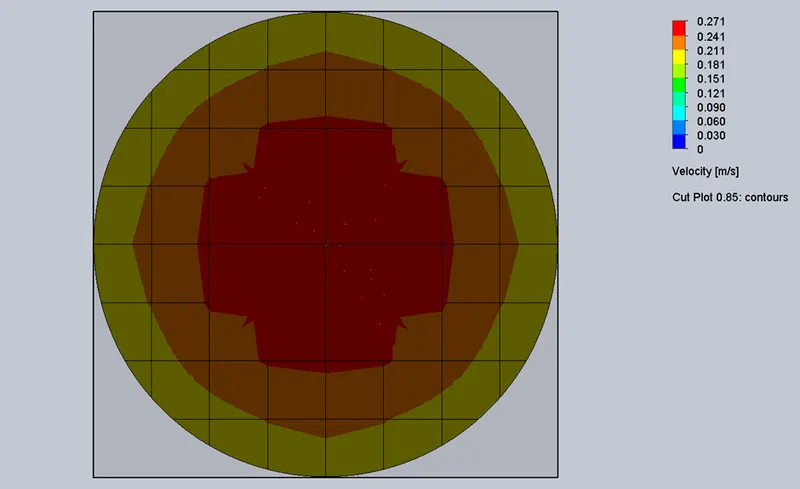
Cut plot at 85% of pipe length
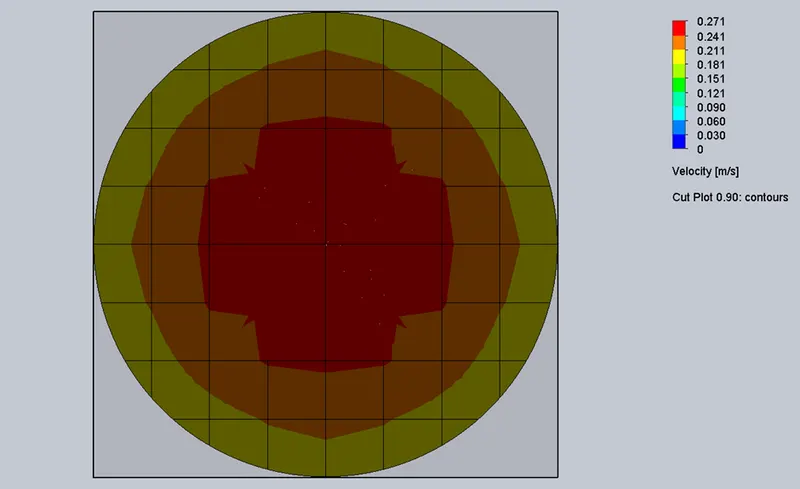
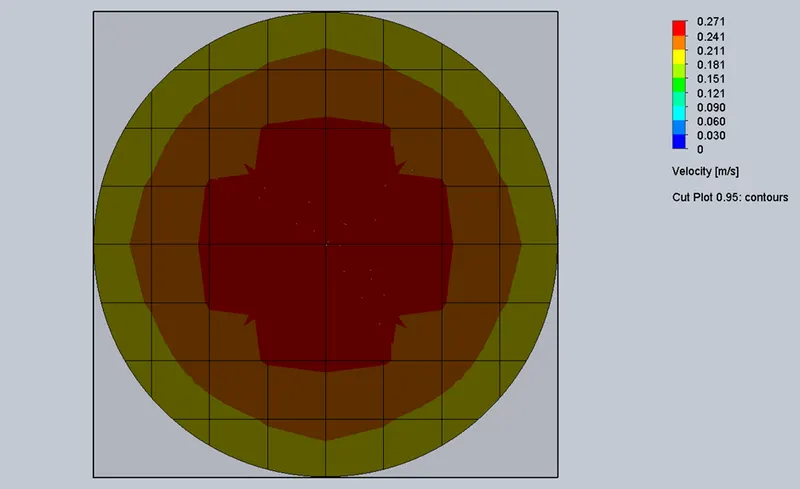
Cutplot at 90% of pipe length Cut plot at 95% of pipe length
Velocity Plots for Case:3
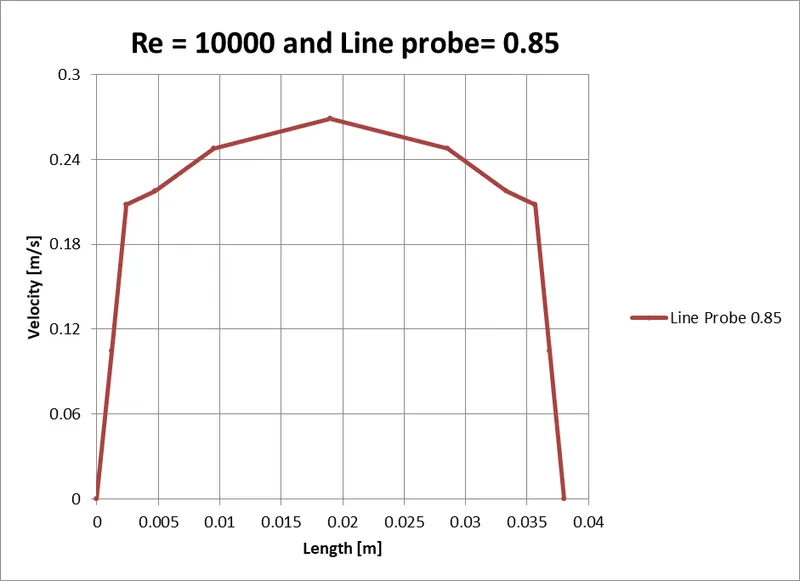
Fig. Shows the Velocity plot for Case:3 at Re= 10000 and v=0.0023 m/s
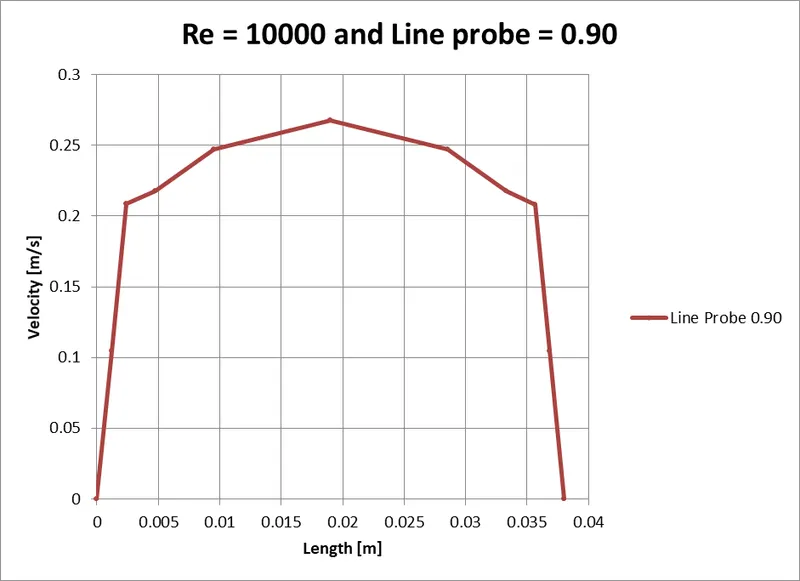
Fig. Shows the Velocity plot for Case:3 at Re= 10000 and v=0.023 m/s
Fig. Shows the Velocity plot for Case:3 at Re= 10000 and v=0.23 m/s
Velocity Comparison plot for Case : 3
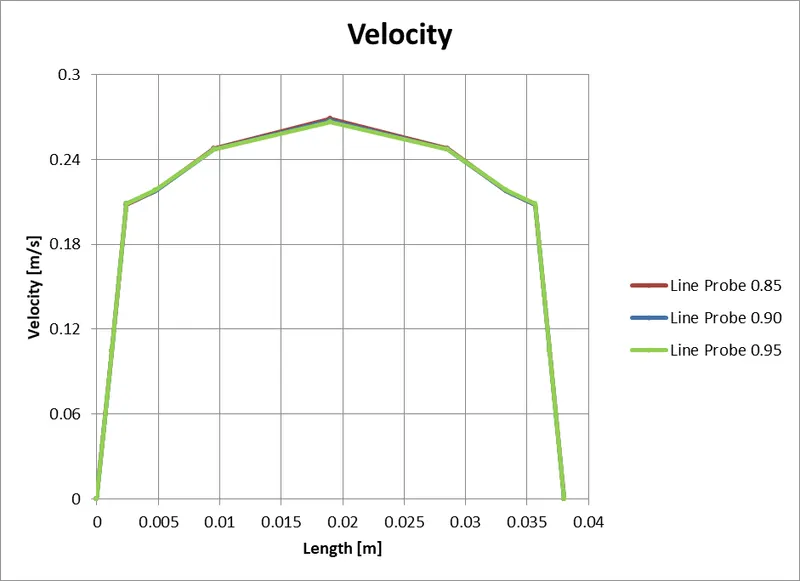
Fig. Shows the Comparison of velocity plots for Case:3
Conclusion:
- We can observe from the above plots that for Case:1 the velocity profile is parabolic in nature.
- The flow is laminar in Case:1 and in Case:2) as the Reynold’s number is lower in both the cases (i.e., Case:1 = 100 and Case:2 = 1000)
- As the Reynold’s number is high Re= 10000 so the flow is turbulent, the Velocity plot of Case:3 at different velocities not parabolic.
- We can finally conclude that as the Reynold’s number increases, the flow changes from laminar to turbulent.