MBD Simulation on IC Engine Valve Train
Aim:- To carry out the motion analysis on IC engine valve train.
THEORY:- The valve train of an internal combustion engine includes components required to control the flow of gases into and out of the combustion chamber. This includes valves and related components required to allow the air-fuel mixture to enter the combustion chamber, seal the combustion chamber during compression and combustion, and evacuate exhaust gases when combustion is complete. The type of valve train used for a reciprocating engine depends on the engine design and whether the engine is a four-stroke cycle or two-stroke cycle unit.
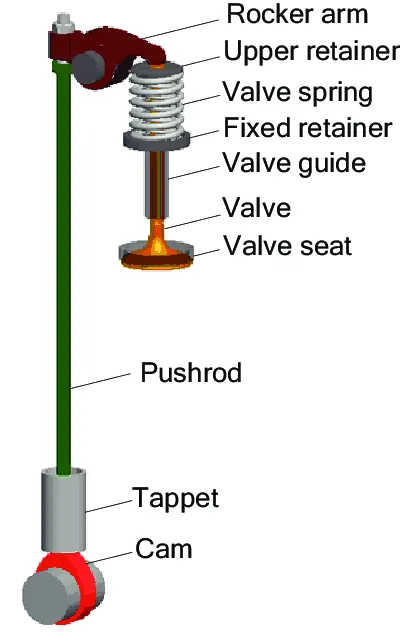
The valve train typically includes the camshaft, valves, valve springs, retainers, rocker arms and shafts. On engines with traditional mounting of the camshaft in the cylinder block, the valve train also includes lifters and pushrods. Overhead cam engines may use more than one camshaft per cylinder head. Engines use different valve configurations, such as two, three, four or five valves per cylinder. These various valve arrangements are used for different engine breathing requirements. Some engines also use variable valve timing, which allows the engine to change breathing characteristics under different operating conditions.
The cylinder head's valves, when synchronized with the crankshaft of the cylinder block, allow the engine to "breathe". In an engine, this means pulling the air and fuel mixture into the cylinder, then pushing the burned exhaust gases out. The better an engine breathes, the more efficient it becomes.
OBJECTIVE:- To perform multi-body dynamics of valve train mechanism and obtain the valve lift and contact force between the components for the following cases-
|
Sr no. |
CAM Lift (mm) |
Speed (RPM) |
Material |
|
1 |
3.5 |
1500 |
Cast Carbon Steel |
|
2 |
6 |
1500 |
Cast Carbon Steel |
INPUT PARAMETERS
- The cam is rotated with a constant speed of 1500 rpm for the given cases.
- The material used for the components is cast carbon steel.
- A spring with a stiffness of 12 N/mm is applied between the top face of valve mount and the lower face of valve head.
CALCULATIONS
Cam profile calculations
CASE 1
Cam lift = (L-R1)+R2
3.5 = (L-12.5)+5
L = 11
CASE 2
Cam lift = (L-R1)+R2
6 = (L-12.5)+5
L = 13.5
3D MODELLING
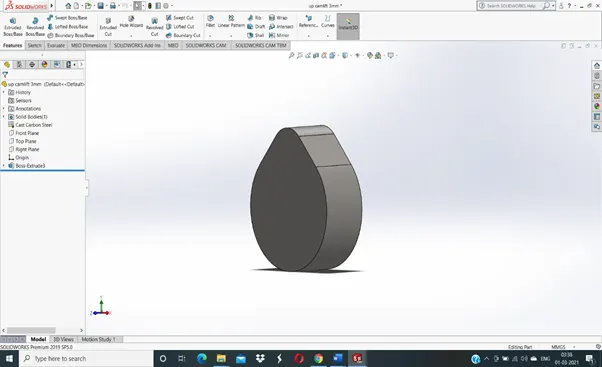
CAM WITH CAM LIFT 3.5MM
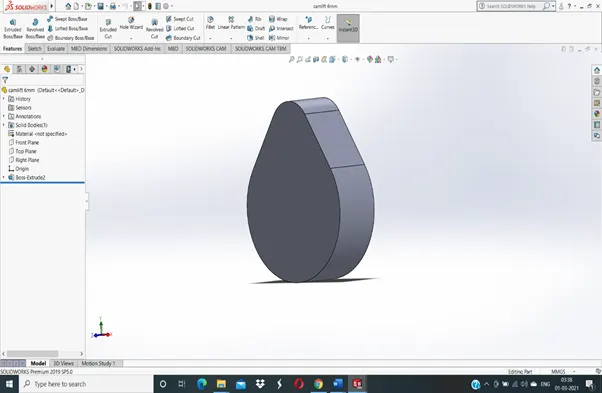
CAM WITH CAM LIFT 6 MM
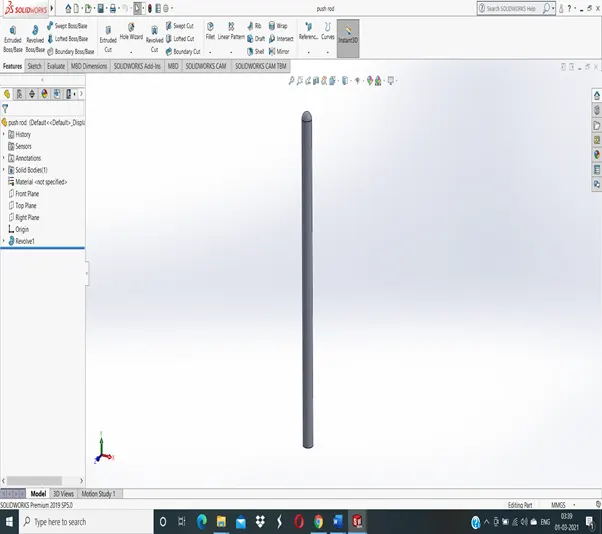
PUSH ROD
ROCKER ARM
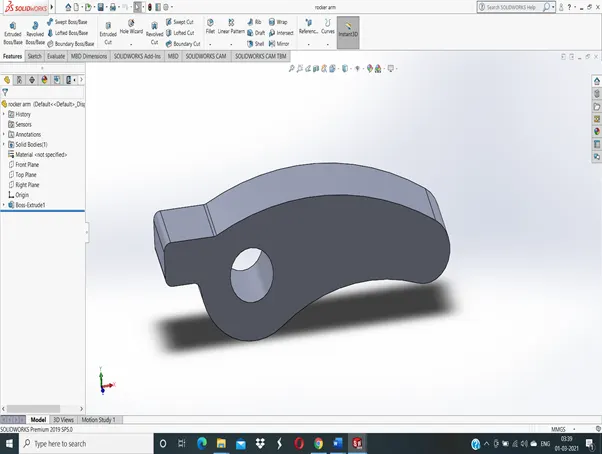
VALVE MOUNT
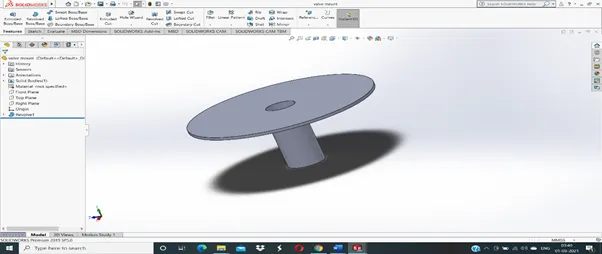
VALVE
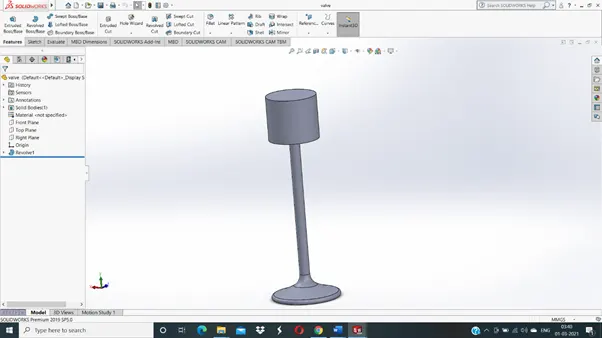
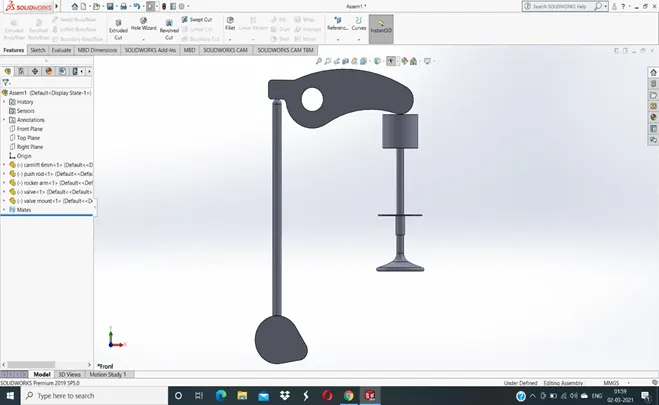
ASSEMBLY WITH 3.5 MM CAMLIFT
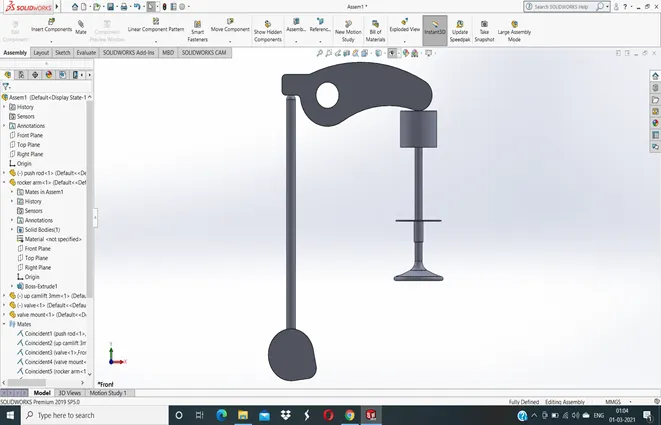
RESULTS AND PLOTS (case 1)
VALVE LIFT
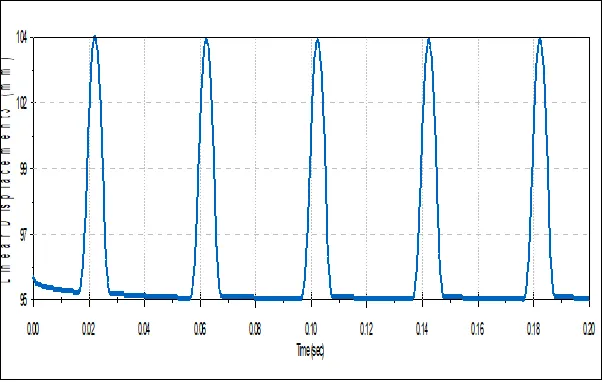
The maximum valve lift in this case is 104mm
Contact force between cam and pushrod
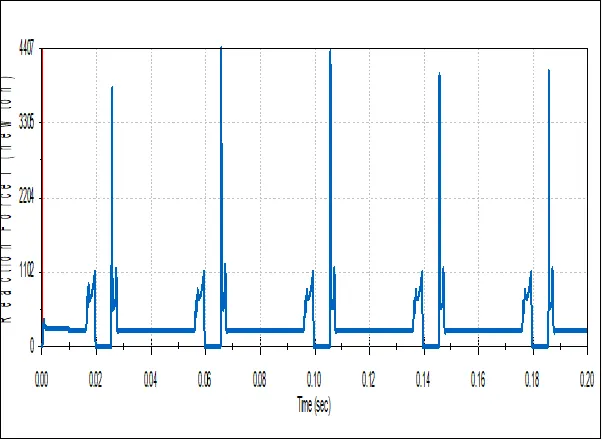
The maximum contact force between cam and pushrod is 4407 N
CONTACT FORCE BETWEEN PUSHROD AND ROCKER ARM
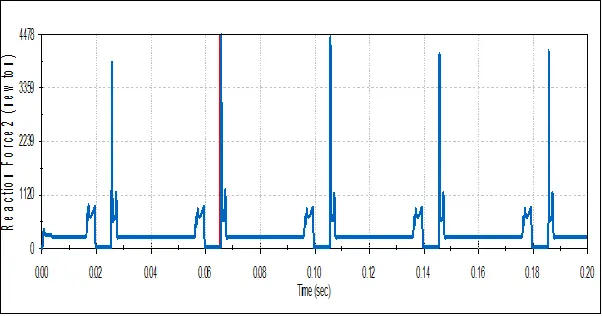
The maximum contact force between pushrod and rocker arm is 4478 N
CONTACT FORCE BETWEEN ROCKER ARM AND VALVE
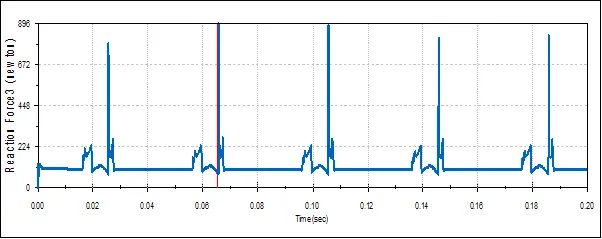
The maximum contact force between rocker arm and valve is 896 N.
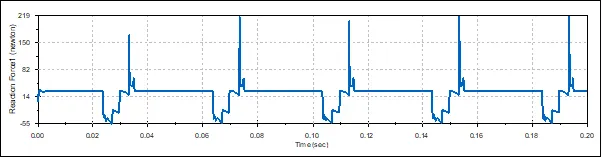
CONTACT FORCE BETWEEN ROCKER ARM AND VALVE WRT X-DIRECTION
ASSEMBLY WITH 6 MM CAM LIFT
RESULTS AND PLOTS (case 2)
VALVE LIFT
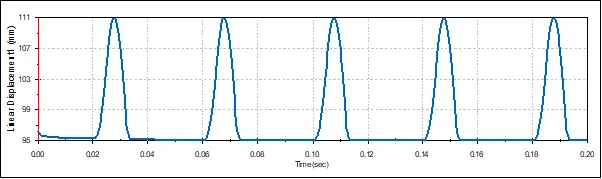
The maximum valve lift in this case is 111mm.
CONTACT FORCE
CAM AND PUSHROD
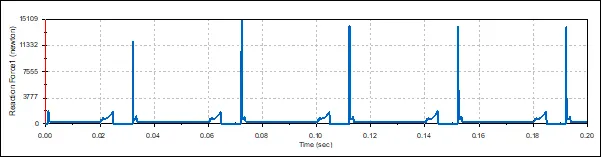
The maximum contact force between cam and pushrod is 15109 N
PUSHROD & ROCKER
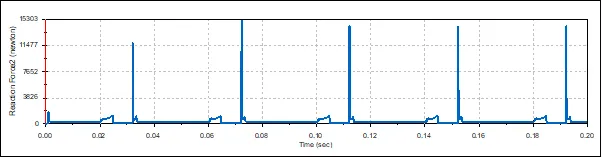
The maximum contact force between pushrod and rocker arm is 15303 N
ROCKER & VALVE
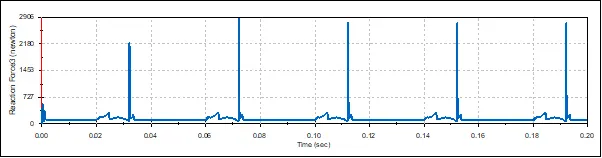
The maximum contact force between rocker arm and valve is 2906 N.
CONTACT FORCE BETWEEN ROCKER & VALVE WRT X-DIRECTION
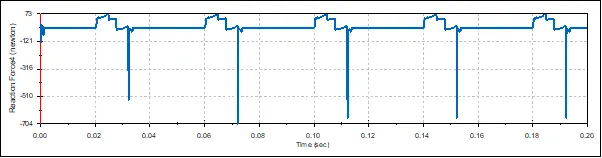
The maximum contact force between rocker arm and valve is 73 N.
CONCLUSION FOR CONTACT FORCE BETWEEN ROCKER ARM AND VALVE WRT X-DIRECTION
The magnitude presents the net contact force between the parts, while the contact force along the x direction is the frictional force between the bodies that arise due to rocker arm sliding over the surface of the valve head. The change in direction of the force is because he rocker arm first slides towards origin giving the positive friction force and then slides away from the origin giving rise to friction in the negative X-direction. Therefore the plots are opposite to each other.