DussehraFestive scholarship on Skill-Lync courses, this week onlyFestive scholarship is openOffer ends Wed, 21 Oct, 11:59 pm IST.
Dussehra 2026

Start your next chapter this Dussehra

Tell us where you want to work. A counsellor will match you to the right course and confirm the festive scholarship you qualify for.

  • Festive scholarship on course fees, confirmed on your call
  • Free 20-minute call to map the right course to your goal
  • Real industry projects and placement support with every course

Offer ends Wed, 21 Oct, 11:59 pm IST

3,905 engineers placed since 2019 · 1,277 hiring companies

By submitting you agree to our Terms and Privacy Policy.

You're on the list

Browse courses
Mechanical · PG program

Post Graduate Program inInternal Combustion Engine Analyst course using Python and Cantera

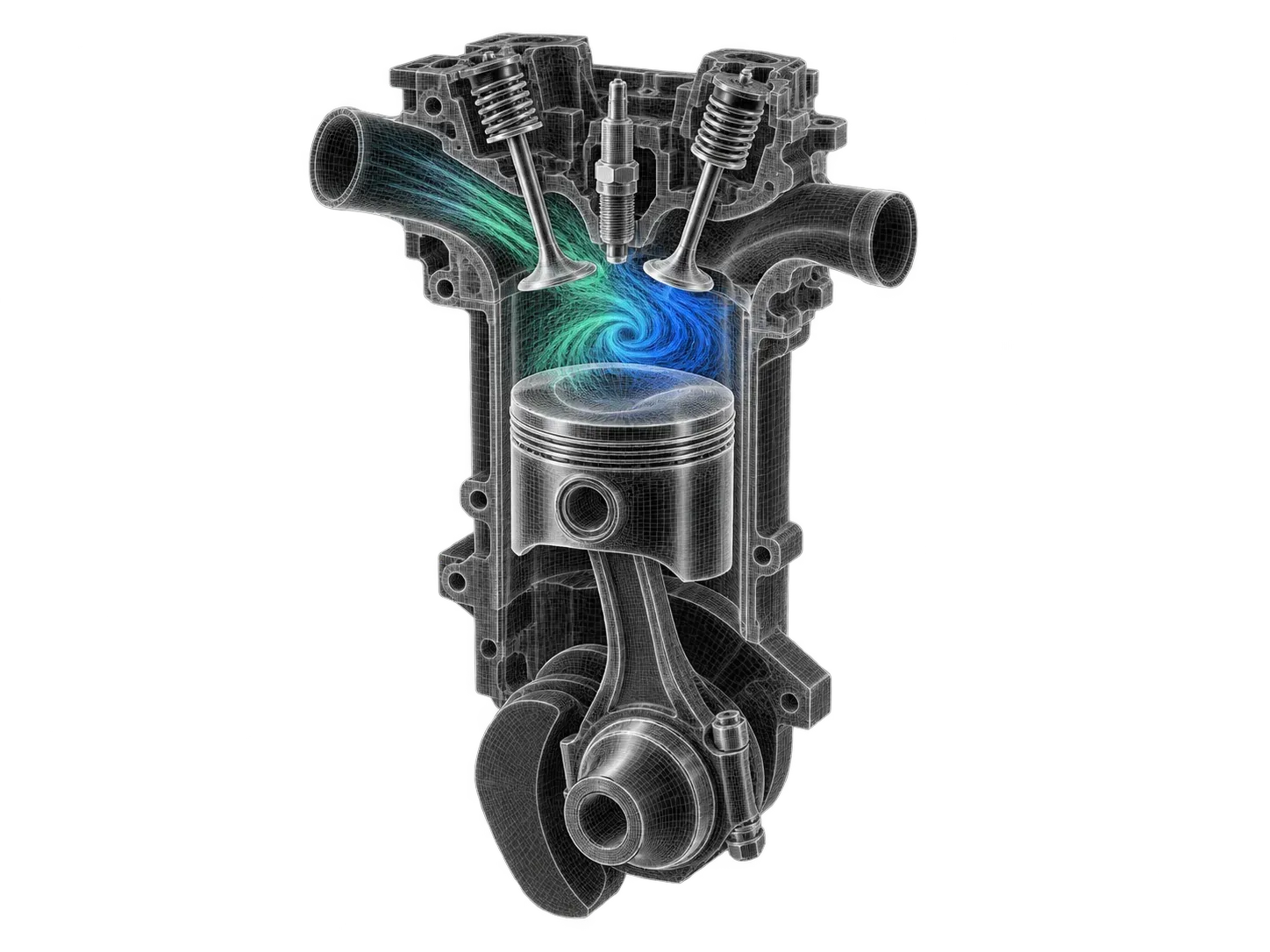
A comprehensive course on IC Engine CFD and Combustion using Python and Cantera. This course is highly suited for beginners

Duration
12 weeks
Content
22 hours
Courses
2
Projects
5
Mode
Online
Overview

What you'll
be able to do.

  • The students will learn the application of Computational Fluid Dynamics (CFD) theory on internal flows with a special focus on simulating the Engines (S.I Engines and C.I Engines).
  • In this course, the students will be introduced to the fundamental concepts of Combustion and Object-Oriented Programming
  • Working on CONVERGE STUDIO will help the students study the inside workings of an engine, from fuel injection, compression, spark ignition to combustion and flame propagation
  • Students shall gain insights into how combustion modeling can be done using Python- Cantera interface for various combustion phenomena.
  • The students will be able to set up a 4 stroke port fuel injection Internal Combustion Engine using CONVERGE CFD
  • By the end of the course, the student will have the technical know-how to solve Combustion CFD problems using Cantera.

Why this program

  • The students will learn the application of Computational Fluid Dynamics (CFD) theory on internal flows with a special focus on simulating the Engines (S.I Engines and C.I Engines).
  • The students will have an edge over their peers by working extensively on industry-relevant projects, practice tools, and software that will set you apart and help you in getting ahead of the competition.
  • For Freshers seeking exciting job opportunities as an Application Engineer, especially in the field of Computational Fluid Dynamics.
  • For working professionals in R&D and seeking to perform CFD simulations on Engines.
  • Hands-on experience in Cantera simulations using Python interface
  • Basic understanding of various combustion modeling approaches for analyzing the combustion parameters such as auto-ignition, sensitivity analysis, flame speed analysis, and Mechanism reduction
  • Job Opportunities
    • Combustion and Detonation Engineer
    • Thermal Engineer
    • Computational Thermal Analyst
  • Higher Education
    • Computational Fluid Dynamics
    • Combustion Dynamics
    • Reacting Gas Chamber
Tools you'll use
PythonCanteraCONVERGEParaview
Curriculum

2 courses,
15 modules.

Get the full syllabus ↓
  1. 01Computational Combustion Using Python and Cantera9 modules
    1. Fundamental of ChemistryW01
      • In this module, you will learn about different fuel types, species nomenclature, and concepts such as:
        • Molecular weight
        • Moles
        • Density
        • Mass Fraction, Mole Fraction, and PPM
        • Vapour pressure
        • Equation of State
        • The air-to-fuel ratio
        • Equivalence ratio
      • This module covers the various properties of thermodynamics as well as combustion, which is very useful in modeling combustion. The relationship between various properties helps you make the right decision, and the results are compared with the numerical data of those properties. The module also covers the units of the above entities and their significance.
    2. Intermediary ThermodynamicsW02
      • This module provides the opportunity to refresh your basics in thermodynamics and learn several intermediary concepts such as:
        • Enthalpy of reaction
        • Adiabatic flame temperature
        • Lower and higher heating values
      • This module will cover concepts that are helpful in understanding the derived properties of chemical kinetics and will help understand the rate of reactions and their impact on reactor systems.
      • The above parameters can be a good starting point for optimizing the reactor system. The theoretical calculation of the above parameters will help you understand the practicality of the system we are designing.
    3. Equilibrium ChemistryW03
      • Equilibrium chemistry models are very commonly used to construct simplified combustion models. In this module, you will learn the following:
        • Full Equilibrium
        • Water Gas Equilibrium
        • Pressure effects
        • Understanding NASA's thermodynamic data files
      • This module will teach the difference between homogeneous and heterogeneous equilibrium. Understanding equilibrium will allow you to understand if a chemical reaction is at equilibrium and in which direction the chemical reaction must proceed to attain equilibrium.
      • It helps you to understand the new equilibrium attained when a change in concentration of either a reactant or a product is made to a system initially at equilibrium. Besides, this module will also teach you to read NASA or any other standard data that helps design the reactor system.
    4. Elementary ReactionsW04
      • This module will introduce you to chemical kinetics and you will learn the following topics:
        • Global and elementary reactions
        • Rate of a reaction
        • Forward rate and backward rate
        • CHEMKIN formatted mechanism file
      • In this module, we define the reaction rate and a few associated terms and introduce the simplest type of chemical reaction, which is a single-step reaction known as an elementary reaction. We will investigate the various factors that determine the rate of an elementary reaction, which allows you to calculate rate constants and explain their temperature dependence.
    5. Introduction to Python and CanteraW05
      • In this module, you will study Python, an extremely popular programming language.
      • You will learn Python by writing programs related to chemical kinetics.
      • Once you can write simple programs in Python, we will introduce you to Cantera.
      • With Cantera, you will be able to simulate different types of combustion systems.
      • Cantera is an extremely popular tool that is used in several universities and organizations for research and industrial purposes.
    6. Ignition Delay CalculationW06
      • Ignition delay is the time lag between the start of injection and the start of combustion when the air-fuel mixture is ignited. It is one of the major factors that helps in determining the performance of an IC engine. In this module, we will teach you to build several zero-dimensional reactors. These types of simulations will be used to predict the ignition delay and flame speeds of popular fuels.
        The objective of the module is to study the dependence of ignition delay time on
        • Cylinder ambient gas temperature
        • Cylinder ambient gas pressure
        • Injection pressure
        • Injector nozzle orifice diameter
    7. Flame Speed CalculationW07
      • While designing combustion systems, flame speed plays an important role in determining their performance.
      • In this module, you will learn how to calculate flame speeds.
      • Note that this parameter depends upon the type of reaction mechanism that is being employed and the thermodynamic conditions in the combustion chamber.
      • You will also perform a sensitivity analysis that helps you determine which of the elementary reactions is going to affect the flame speed the most.
    8. Advanced Topics in CombustionW08
      • In this module, you will learn the following topics:
        • Perfectly stirred reactor
        • Steady-state combustion and its relevance for gas turbine applications
        • Extinction and blow-off limits
        • Premixed, diffusion, and partially premixed flames
    9. Introduction to 3D CombustionW09
      • In this module, you will be trained in the core concepts that are used while simulating combustion in complex 3D geometry.
      • Here, you will learn about the current trends along with the cutting-edge tools that are used in the industry.
  2. 02Advanced CFD for IC Engine Applications using CONVERGE6 modules
    1. CONVERGE Studio ModuleW01
      • In this module, you will learn how to set up a CFD simulation using CONVERGE CFD. You will be provided with step-by-step instructions on how to do the following:
        • CAD import and cleanup
        • Decomposing the model into boundaries and volumetric regions
        • Inputting valve timing
        • Choosing turbulence and combustion models
        • Running the case in a parallel environment
        • Post-processing
    2. Surface PreparationW02
      • In this module, you will learn surface preparation in complete detail. Specifically,
        • Setting up the piston motion profile
        • Boundary flagging
        • Setting up the intake and exhaust valves
    3. Region Initialization and Valve Motion SetupW03
      • In this module, you will learn the following concepts:
        • Initializing pressure, temperature, and species concentration in the intake, exhaust, and fire deck regions.
        • Disconnect triangles
        • Valve timing and the concept of minimum lift
        • Valve profile input
    4. Turbulence ModellingW04
      • In this module, you will learn how turbulence is modelled and simulated in a state-of-the-art CFD solver. You will learn about the different classes of turbulence models and understand their merits and demerits. In this module, you will also learn about,
        • RANS approach to model turbulence
        • The math involved behind RANS and its derivations
      • Learn the theory behind the various types of turbulence models available (RNG k-, k- SST, and so on) and recognise which model is appropriate for which type of application.
    5. Combustion ModellingW05
      • In this module, you will learn how the SAGE detailed chemical kinetics solver works.
      • In addition to this, you will also learn how to use the Shell CTC combustion model.
    6. Emissions ModellingW06
      • To design efficient engines, one needs to have a firm grasp of emissions modelling.
      • You will learn about the Hiroyasu soot model and the Zeldovich nox model and apply them in engine simulations.
Industry projects

5 projects
you'll ship.

Our projects are designed by experts in the industry to reflect industry standards. By working through our projects, Learners will gain a practical understanding of what they will take on at a larger-scale in the industry. In total, there are 5 Projects that are available in this program.

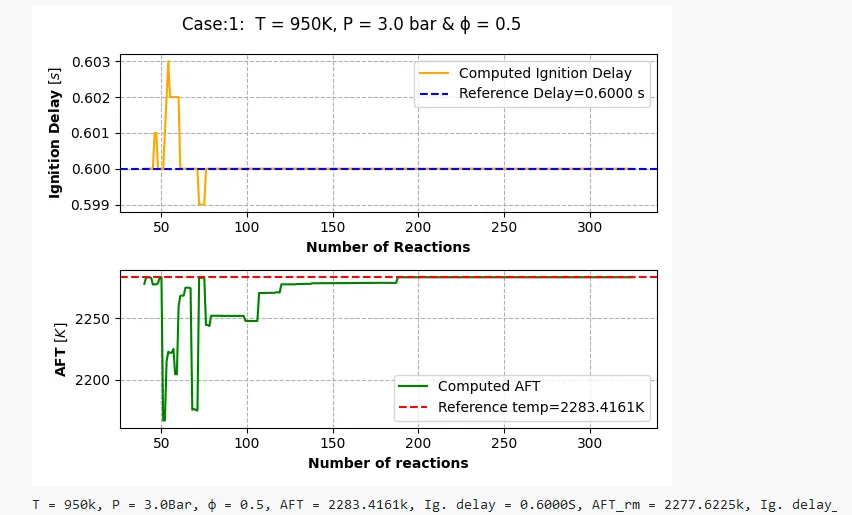
Reaction Mechanism Reduction
Computational Combustion Using Python and Cantera

Reaction Mechanism Reduction

In this project, the students will be asked to perform a mechanism reduction technique. They will also be asked to capture the aspects of the combustion process.
Sensitivity Analysis on GRI Mechanism with respect to Temperature using Cantera
Computational Combustion Using Python and Cantera

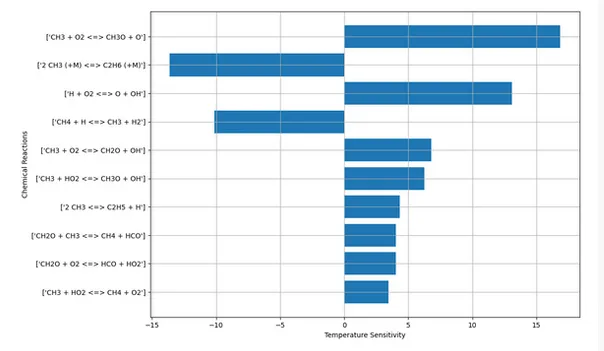
Sensitivity Analysis on GRI Mechanism with respect to Temperature using Cantera

In this project, the students will be asked to perform sensitivity analysis using Cantera. They will be capturing the time-wise variation of thermodynamic variables.
Steady and Transient Flow over a Throttle Body
Advanced CFD for IC Engine Applications using CONVERGE

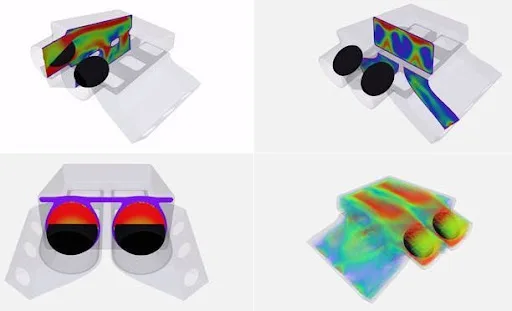
Steady and Transient Flow over a Throttle Body

In this project, the students will simulate airflow through a throttle body under different conditions. They will also study the effect of valve dynamics.
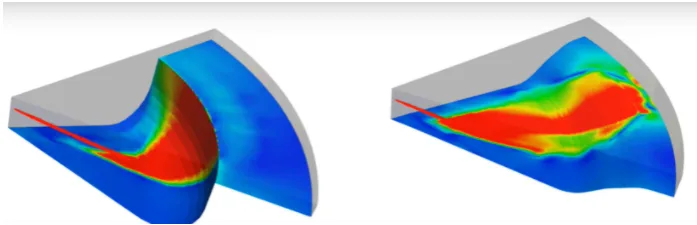
Diesel Engine Characterization
Advanced CFD for IC Engine Applications using CONVERGE

Diesel Engine Characterization

In this project, the students will run simulations of the CAT3410 engine using different piston bowls. They will also understand the effects due to changes in piston bowl shapes.
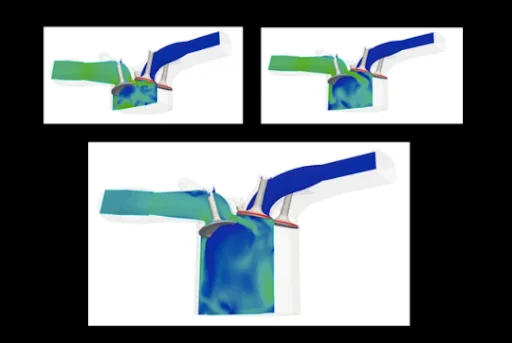
Port Fuel Injection Simulation
Advanced CFD for IC Engine Applications using CONVERGE

Port Fuel Injection Simulation

In this project, the students will perform the simulations of port fuel injection. They will analyse the data from the plots obtained.

Fee

One fee.
Everything included.

Become job ready with our comprehensive industry focused curriculum for freshers & early career professionals

Premium
₹2,75,000
Inclusive of all chargesEMI from ₹14,375/month
  • Career Service Assurance
  • Personalized Career Services Mentorship
  • 1 Year Access
  • Personalized Page
  • Live Individual & Group Sessions
  • Personalized & Hands-On
  • Job-Oriented Industry Relevant Curriculum
Check eligibility →
FAQ

Questions,
answered.

Is it useful to enrol in this course if I want to get a job?

A: There are many real-world applications of the course content taught to you. The course teaches you industry-relevant skills which will help you perform efficiently at a job.

Will I be able to get an e-verification after completing the course?

A: Yes, you will get an e-verified profile after completing the course, which you can share on relevant websites such as LinkedIn.

Will I get any support if I have doubts?

A: Yes, you can approach a skilled expert through email support, group video support, forum support, and telephone support to get your doubts cleared.

What will be the mode of delivery of the course?

A: The course will be delivered to you through online mode.

Does the course involve any project work?

A: Yes, you will be working on several projects during the course, including flame temperature, combustion efficiency, auto ignition, and more.

Do students get to work on any software during this course?

A: Yes, you will work on several software and tools during the interim of the course, including CONVERGE CFD, Python, and Cantera.

Who will be teaching the course?

A: You can expect to gain academic learning from industry experts who have extensive knowledge in their field.

Next step

Not sure it's
the right fit?

A counsellor will walk you through the syllabus, projects and fee options — and tell you honestly if another course suits you better.

Get the syllabus + a call back

We'll email the full syllabus and call within one working day.

By submitting you agree to our Terms and Privacy Policy.

Call usEnquire

Talk to a career counsellor

Free 20-minute call. We'll map the right course to where you want to work.

By submitting you agree to our Terms and Privacy Policy.