Final Project: Electric Rickshaw modelling
AIM:
Projcet:1- ELECTRIC RICKSHAW MODELLING
Objective:
Create a detailed MATLAB model of an electric rickshaw (three wheel passenger vehicle) as per details below:
Rear wheels driven by PM brushed type motor
Assume efficiency points of motor controller and motor
Make an excel sheet of all input and assumed data
Results: For any three standard driving cycles show energy consumption, temperature rise of motor and controller for 100 km constant speed driving at 45 kmph.
Introduction & matlab simulink:
Theory of e-rickshaw:
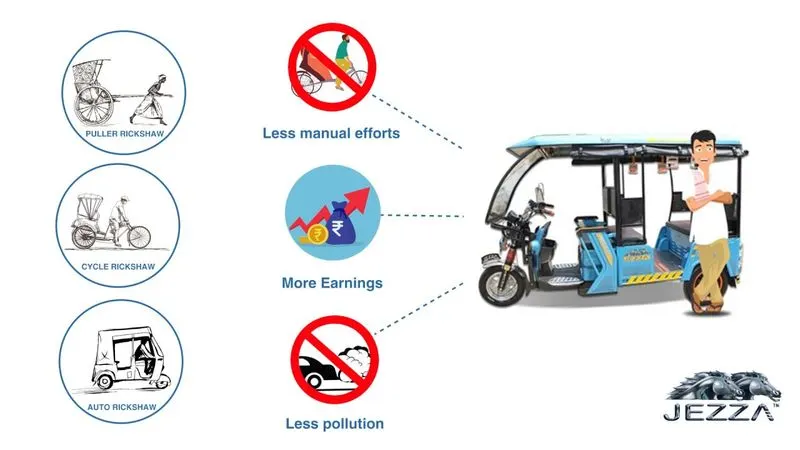
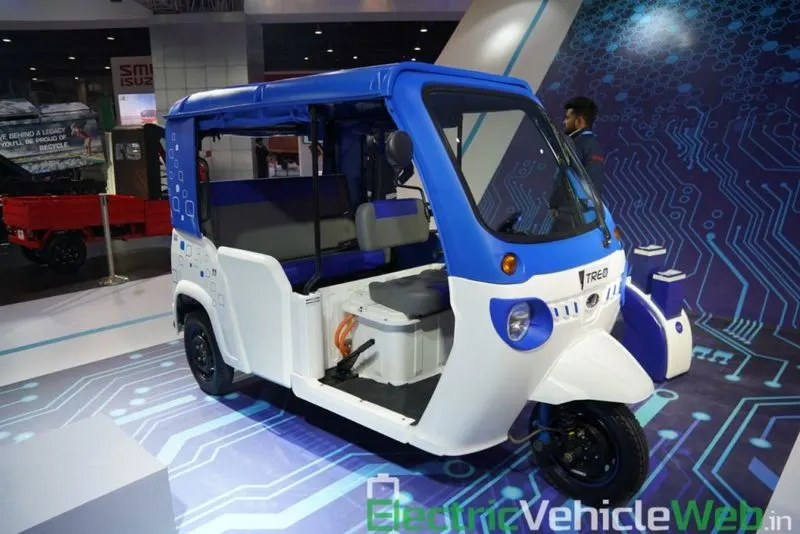
Electric rickshaws (also known as electric tuk-tuks or e-rickshaws or auto) have been becoming more popular in some cities since 2008 as an alternative to auto rickshaws and pulled
rickshaws because of their low fuel cost, and less human effort compared to pulled rickshaws. They are being widely accepted as an alternative petrol/diesel/CNG auto rickshaws.They are
wheelers pulled by an electric motor ranging from 650-1400 Watts. They are mostly manufactured in India & China, only a few other countries manufacture these vehicles. They are mostly
manufactured in India and China, only a few other countries manufacture these vehicles. Battery-run rickshaws could be a low-emitter complementary transport for the low-income people,
who suffer most from a lack of transport facility, if introduced in a systematic manner according to experts.
E-Rickshaw's have now transitioned from being a market entrant in the automobile segment of the country to evolve as a leading short-distance transport solution. This segment has
gained spurt in last three years and the growth has been phenomenal. Although, this segment is dominated by a host of unorganized players the established names have also identified
the growth beacon and are expected to foray into the segment.The share of production for e-rickshaws for now is indicated.
These are load carrying versions of these rickshaws differ in their upper body, load carrying capacity, motor power, controller and other structural aspects, sometimes motor power is also
increased in order to carry loads up to 500–1000 kg.
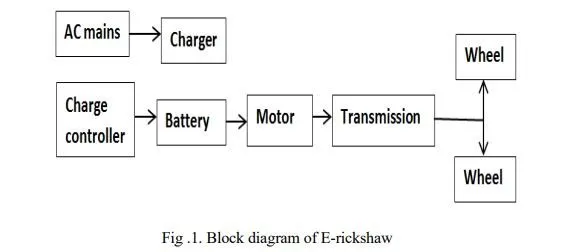
Block Diagram:
Maximum load capacity 300-450 kg
Vehicle weight(approximate) 215 kg(with battery)
Maximum speed 33 kmph
Charging time 4-8Hrs
Seating capacity 4+1 people
Ground clearance 180-300 mm
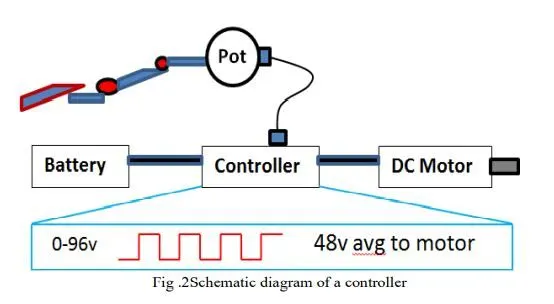
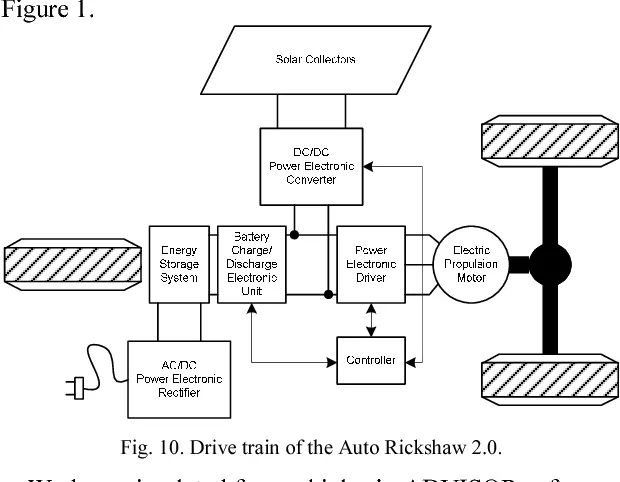
Electronic Motor Controller:The controller includes a manual or automatic switch turning the motor on/off, selecting forward or reverse motion, selecting and regulating speed,
Battery: Set of four 12V deep cycle lead acid/Li-ion batteries are used since the required voltage is 48V. These batteries are connected in series to the controller unit.
Differential: Chinese manufactured differential is used in eRickshaws which is connected to the electric motor and rear wheels.
Front Shock Absorbers: Helical Spring with dampener with hydraulic telescopic shock absorbers are used.
Brakes: Drum brakes, actuated internally, expanding shoe type are used. Brakes are mounted on the chassis (Pedalbrakes), so on pressing the pedal, the brakes will engage stopping the
Speedometer/Indicator: Speedometer generally used have analog dials. The one the left side indicates vehicle speed and one on the right side indicate battery charge level. It is
Steering: Handle bar type steering is used.
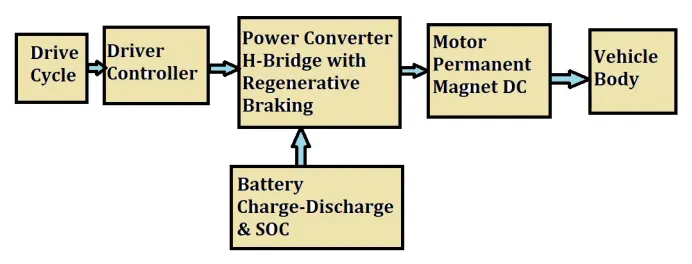
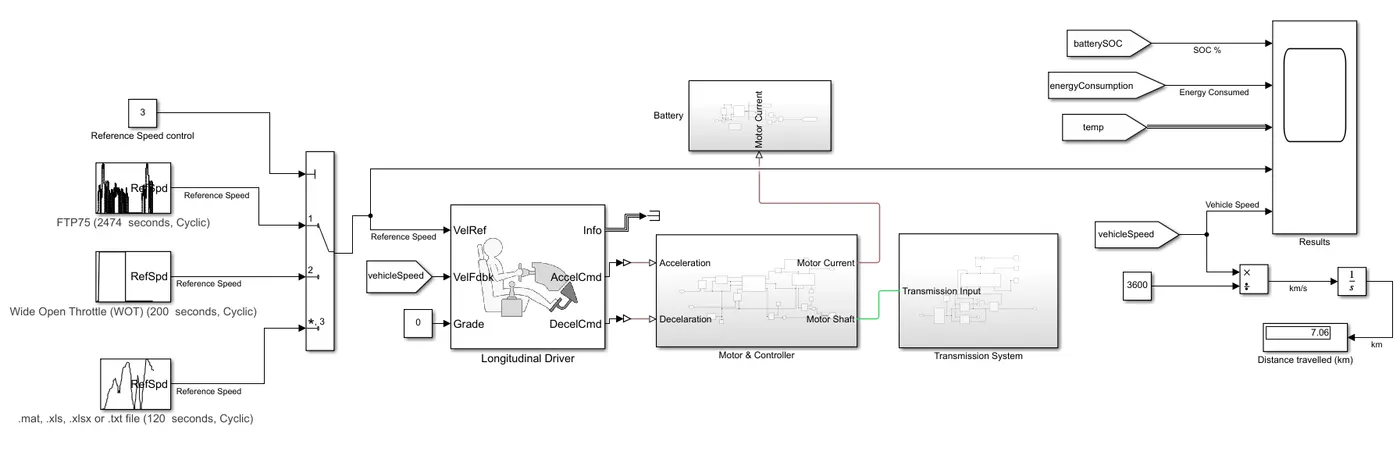
Initially the current flows to DC Motor from the battery through the DC-DC power converter to drive the motor. The required voltage will be controlled in the controller. The Controller
will follow the given drive cycle reference and run the motor in the required rpm. Then the motor power is transmitted to the wheels of a vehicle through the gear box. and the controller
will take the vehicle speed and compare and controlled.
Drive Cycle:
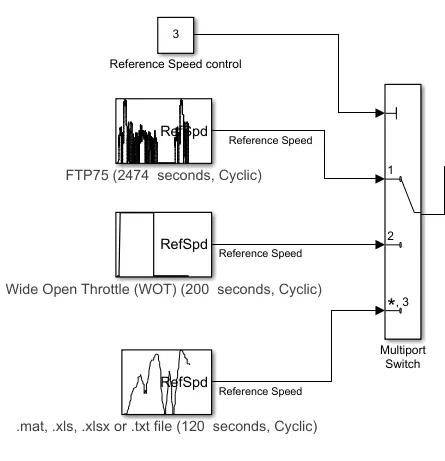
Drive cycle is assumed as the driver's input of a vehicle, it replaced how a driver will drive a vehicle. Here I have used three drive cycles which is used to test the vehicle performances.
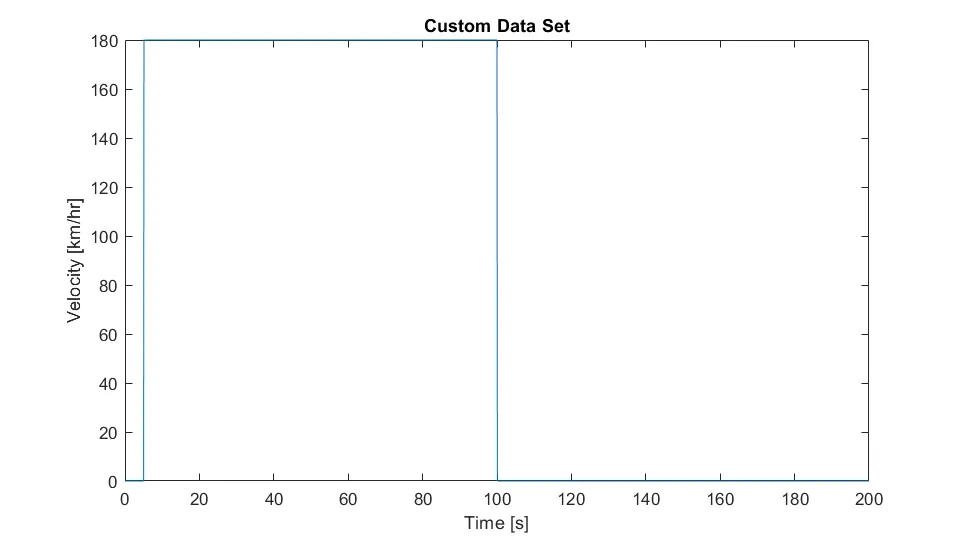
These drive cycle will have high speed, low speed, braking conditions in it. There are different drive cycles like WOT, FTP75 etc..Here in this model I have used FTP75, WOT & Manually
prepared in excel Drive Cycle source.
FTP 75:
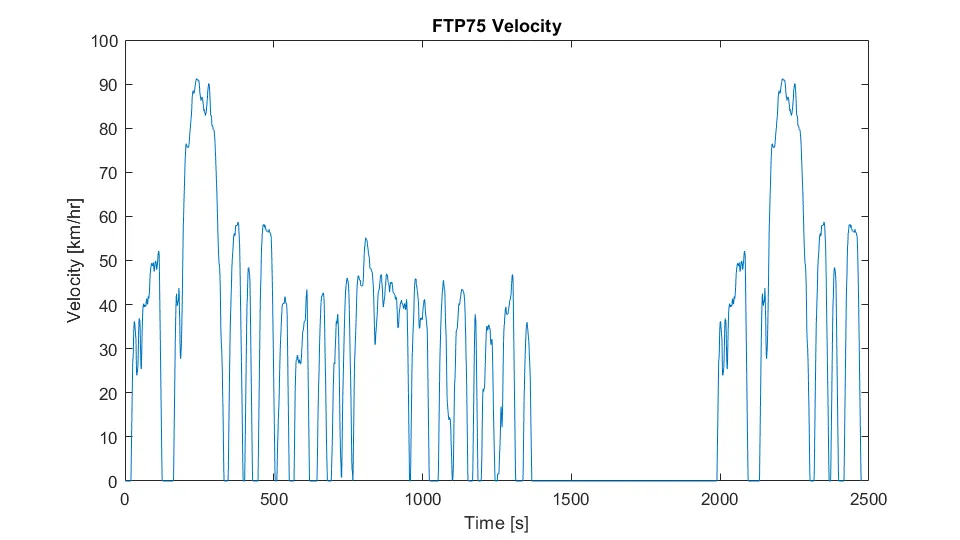
Generates a standard or user-specified longitudinal drive cycle. The block output is the vehicle longitudinal speed. You can import drive cycles from:
Predefined sources
Workspace variables, including arrays and time series objects
mat, xls, xlsx, or txt files
Use the fault tracking parameters to identify drive cycle faults within specified speed and time tolerances.
Wide Open Throttle (WOT):
Manually prepared Drive Cycle:
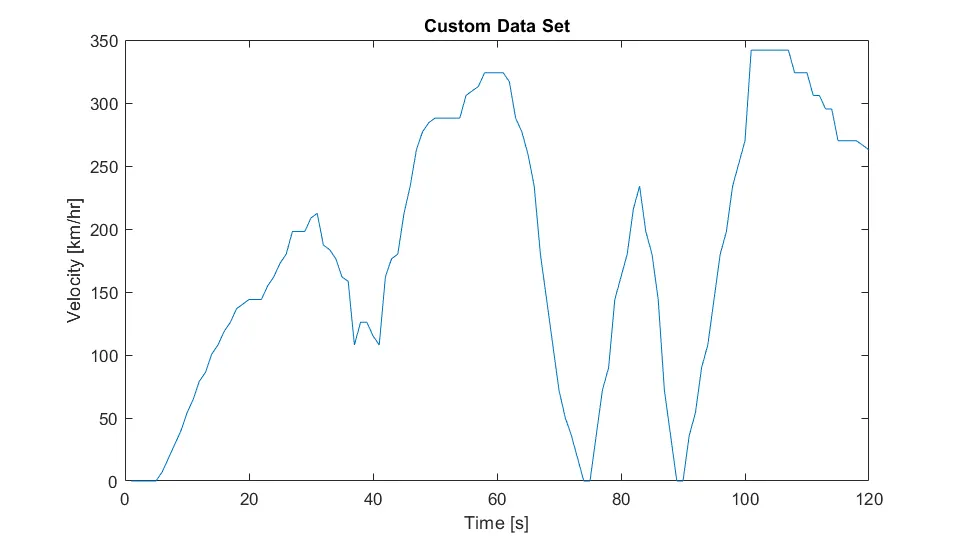
All 3 Drive cycles are controlled by the controller provided above by constant through Multi-port switch.
Driver Controller:
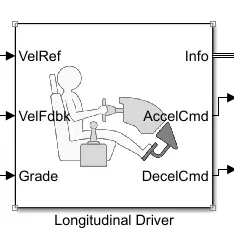
A parametric longitudinal speed tracking controller for generating normalized acceleration and braking commands based on reference and feedback velocities.
Use the external actions to input signals that can disable, hold, or override the closed-loop commands determined by the block. The block uses this priority for the input commands:
disable, hold, override.
Drive cycle is connected to a longitudinal driver, it has six ports namely velocity reference, velocity feedback, grade, info, Acceleration, Deceleration.
VelRef is given by the drive cycle data and VelFdbk is given by the output of the motor. These two will get compare and the acceleration or deceleration output will be given to the motor
controller. Accelcmd is given the PWM generator block and deccelcmd is given to the regenerative port of the h-bridge which uses to generate regenerative braking. Info is used to get any
other data from a longitudinal driver block. The grade is to give the input of gradeability to the driver block. This block helps to generate regerate the driver's conditions of the vehicle using
the driver cycle block.
I used default parameters and control type PI
Motor & Controller Simulation:
Motor type: DC Motor (PM brushed type motor)
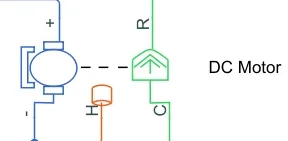
This block represents the electrical and torque characteristics of a DC motor includes Thermal port to sence the temperature of Motor.
The block assumes that no electromagnetic energy is lost, and hence the back-emf and torque constants have the same numerical value when in SI units. Motor parameters can either
be specified directly, or derived from no-load speed and stall torque. If no information is available on armature inductance, this parameter can be set to some small non-zero value.
When a positive current flow from the electrical + to - ports, a positive torque acts from the mechanical C to R ports. Motor torque direction can be changed by altering the sign of the
back-emf or torque constants.
Motor Parameters:
| Armature Inductance | 12e-6 |
| No-load speed | 3000 rpm |
| Rated speed | 1500 rpm |
| Rated load | 1 kw |
| Rated DC supply voltage | 48 V |
| Rotor Inertia | 0.01 |
| Thermal Mass | 20 KJ/K |
| Initial Temperature | `25°C` |
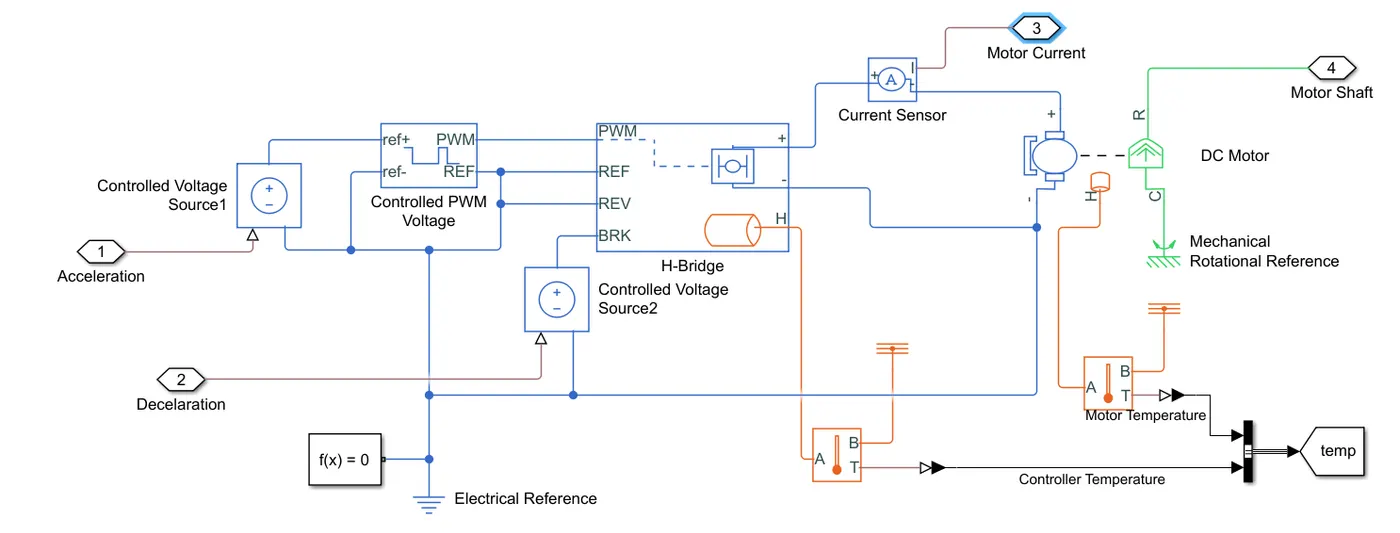
TheMotor controller will get input from the longitudinal driver. Its tasks are to control the speed of the motor and drive according to the input of the driver. Majorly motor controlled we
designed had two main parts named PWM voltage generator and H-Bridge.
Input1 is getting from the accelmd of a longitudinal driver and it is given to a controlled voltage source block where it is input to the controlled PWM voltage. Controlled PWM voltage will
generate a PWM signal in such a way that H-bridge will generate the required voltage to operate the DC motor for the given driver input. PWM voltage block negative reference and REF
are grounded and REF of H-bridge respectively. H-bridge is a motor controller that has IGBT components aligned in the shape of H and will operate only two at a time respectively to the
input of the signal from the PWM block. When deceleration occur this H-bridge will give an output from the positive and negative terminals of it. These negative & positive terminals are
later connected to the DC motor and battery. All these components are the simscape electrical components so they need a connection to the solver configuration block which helps to
solve the simulation.
Controlled PWM Voltage source:
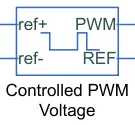
This block creates a Pulse-Width Modulated (PWM) voltage across the PWM and REF ports. The output voltage is zero when the pulse is low, and is equal to the Output voltage amplitude
parameter when high. Duty cycle is set by the input value. Right-click the block and select Simscape->Block choices to switch between electrical +ref/-ref ports and PS input u to specify
the input value.
At time zero, the pulse is initialized as high unless the duty cycle is set to zero or the Pulse delay time is greater than zero.
The Simulation mode can be set to PWM or Averaged. In PWM mode, the output is a PWM signal. In Averaged mode, the output is constant with value equal to the averaged PWM signal.
Select Simulation mode as Averaged.
Power Converter:
H-Bridge is used as a DC-DC converter:
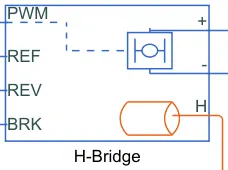
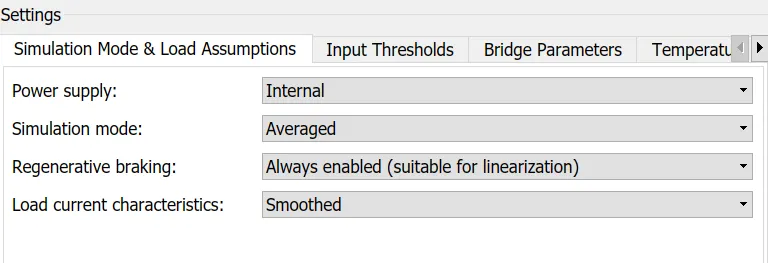
This block represents an H-bridge motor drive. The block can be driven by the Controlled PWM Voltage block in PWM or Averaged mode. In PWM mode, the motor is powered if the
PWM port voltage is above the Enable threshold voltage. In Averaged mode, the PWM port voltage divided by the PWM signal amplitude parameter defines the ratio of the on-time to
the PWM period. Using this ratio and assumptions about the load, the block applies an average voltage to the load that achieves the correct average load current. The Simulation mode
parameter value must be the same for the Controlled PWM Voltage and H-Bridge blocks.
If the REV port voltage is greater than the Reverse threshold voltage, then the output voltage polarity is reversed. If the BRK port voltage is greater than the Braking threshold voltage,
then the output terminals are short circuited via one bridge arm in series with the parallel combination of a second bridge arm and a freewheeling diode. Voltages at ports PWM, REV and
BRK are defined relative to the REF port.
If exposing the power supply connections, the block only supports PWM mode.
Motor controller Parameters:
| Threshold Voltage | 2.5 V |
| PWM Amplitude | 5V |
| Reverse Threshold | 2.5 V |
| Braking Voltage | 2.5 V |
| Output Voltage | 200 V |
Temperature Sensor is used to mesure the temperature of H-Bridge and Motor.
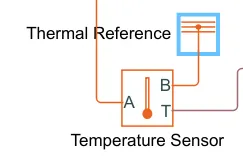
This block measures temperature in a thermal network. There is no heat flow through the sensor. The physical signal port T reports the temperature difference across the sensor.
The measurement is positive when the temperature at port A is greater than the temperature at port B.
Solver Configuration:
Defines solver settings to use for simulation.
Reference:
Electrical Reference: Used to ground the all the electrical connections.
Mechanical Rotational Reference: Used to ground all the mechanical rotational parts.
Thermal Reference: Used to ground the thermal sensor.
Battery Simulation:
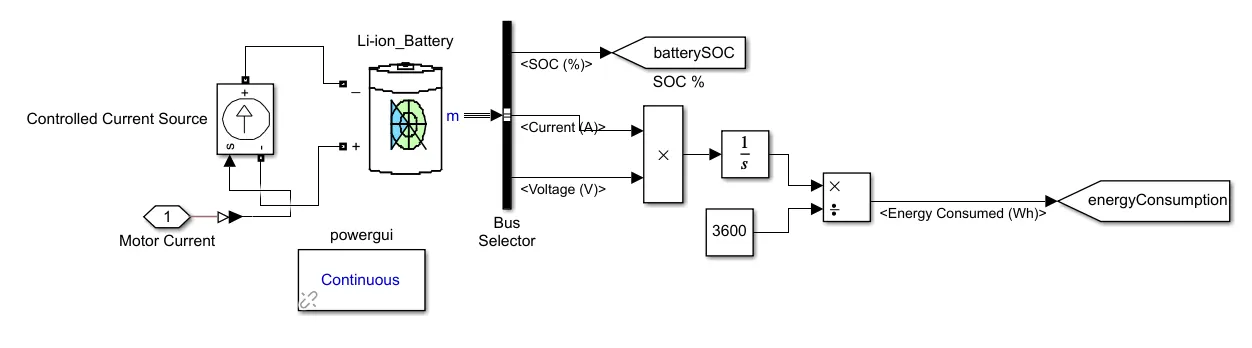
Battery Parameters:
| Battery Type | Lithium ion |
| Nominal Voltage | 330V |
| Rated capacity | 75 Ah |
| Initial SoC% | 100 |
| Internal Resistance | 0.0012 ohm |
The battery is required to power the controller and motor. The controller uses the battery power according to produce the input given by the motor to obtain maximum speed.
The battery is also used to power every electrical component in the vehicle. The battery has two stage one is charging and another one is discharging state.
The battery is of 75Ah capacity.
The Nominal voltage of battery is 330 V
Initial SoC is of 100%
State of charge (SoC):
SoC is the percentage or level of battery presents after certain travel or consumption of battery charge by the vehicle. In the designed vehicle battery charge or SOC is calculated by the
giving it to the rate transition and then to gain where 1/(nominal battery capacity) then to a discrete-time integrator and it will get minus from the 1 as it is considered a 100% of battery
and it is multiplied with 100 to get percentage of battery.
The majority of blocks are simscape blocks where physical to simulink converter is used to convert the physical signal from simscape block to simulink signal.
Vehicle Body & Transmission:
Motor will produce the rotational output which will give to the vehicle body and transmission system. The rotational output is taken by the gear system here to maintain the constant
speed throughout the transmission without any loss in speed from the motor to tires. Below is a diagram that is how it is how it inside the vehicle body and transmission system and in
the main design, it is referred just only as a transmission system.
Here I created a Rear wheel drive transmission system.
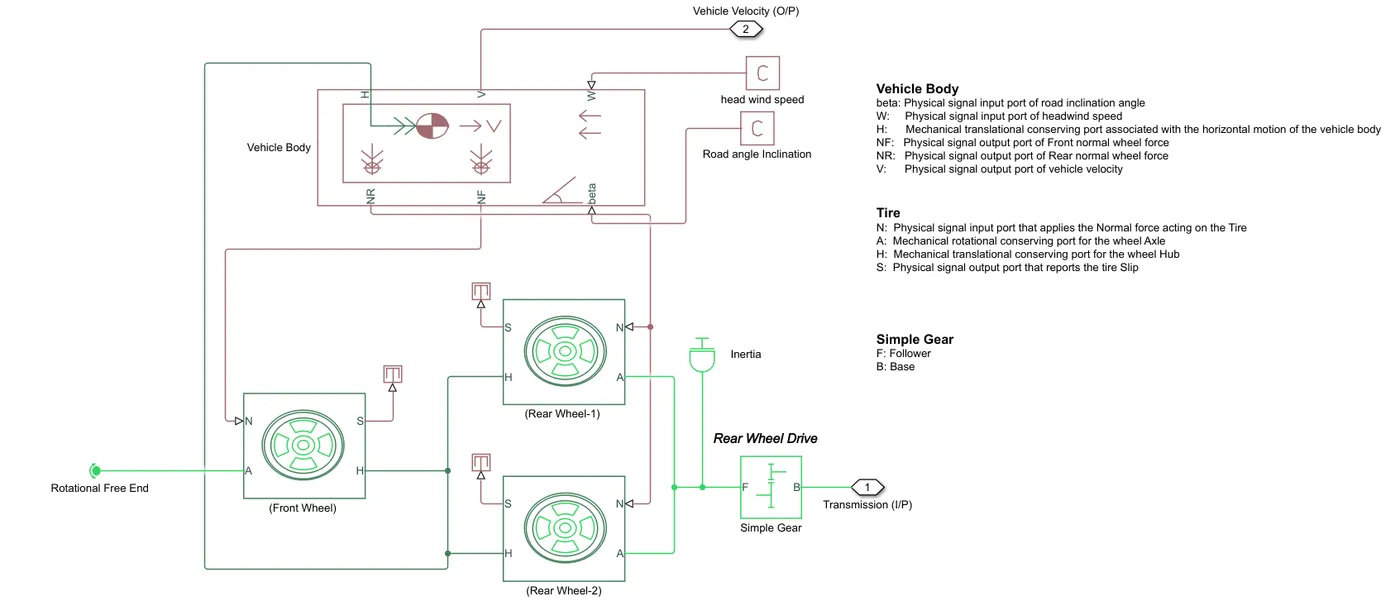
The gear output is given to axels of Rear tires, in the circuit it is shown that gear is connected to Rear wheels and front tire is free to rotational motion, thus vehicle moves forward.
N is the normal force caused by the tires and it is given to the vehicle body normal force port. The vehicle body has an H-Hub, S- Tire slip, N- Normal force, A- axel connection, wind
velocity, inclination angle. The tires hub is connected as a common node to the vehicle body. The vehicle body wind velocity is connected to a constant block and the beta-inclination
angle is connected to another constant block where we can assign wind velocity and inclination angle as per requirement. Velocity is the output port where we can get at which speed
the vehicle is moving. The velocity is taken out to the get the distance travelled and state of charge.
Vehicle Body:
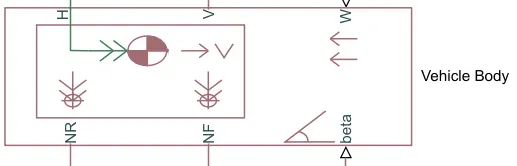
Parameters of the Vehicle Body:
| Mass | 615kg |
| No. of Wheels per axle | 2 |
| Frontal Area | 1.48m^2 |
| Drag coefficient | 0.5 |
| Air Density | 1.18 kg/m^3 |
Inertia:
|
Inertia |
0.01kgm^2 |
The block represents an ideal mechanical rotational inertia.
The block has one mechanical rotational conserving port. The block positive direction is from its port to the reference point. This means that the inertia torque is positive if the inertia
is accelerated in the positive direction.
Wheels:
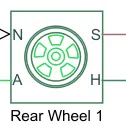
Represents the longitudinal behavior of a highway tire characterized by the tire Magic Formula. The block is built from Tire-Road Interaction (Magic Formula) and Simscape Foundation
Library Wheel and Axle blocks. Optionally, the effects of tire inertia, stiffness, and damping can be included.
Connection A is the mechanical rotational conserving port for the wheel axle. Connection H is the mechanical translational conserving port for the wheel hub through which the thrust
developed by the tire is applied to the vehicle. Connection N is a physical signal input port that applies the normal force acting on the tire. The force is considered positive if it acts
downwards. Connection S is a physical signal output port that reports the tire slip. Optionally expose physical signal port M by setting Parameterize by to Physical signal Magic Formula
coefficients. Physical signal port M accepts a four element vector corresponding to the B, C, D, and E Magic Formula coefficients.
Parameters of Wheels:
| Wheel Radius | 0.306m |
| Vertical load | 3000N |
| Peak longitudinal force at rated load | 3500N |
| Slip | 10 |
Simple Gear box:
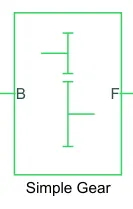
| Gear Ratio | 10 |
Represents a fixed-ratio gear or gear box. No inertia or compliance is modeled in this block. You can optionally include gear meshing and viscous bearing losses.
Connections B (base) and F (follower) are mechanical rotational conserving ports. Specify the relation between base and follower rotation directions with the Output shaft rotates
parameter. Optionally include thermal effects and expose thermal conserving port H by right-clicking on the block and selecting Simscape block choices to switch between variants.
Output shaft rotates in in same direction of input shaft.
Base is connected to the Motor shaft and the follower is connected to the Rear wheel derive.
Output plot:
FTP75 Drive Cycle:
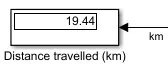
By running the Vehicle with FTP75 Drive cycle for 2474 sec. the distance travelled is 19.44 km
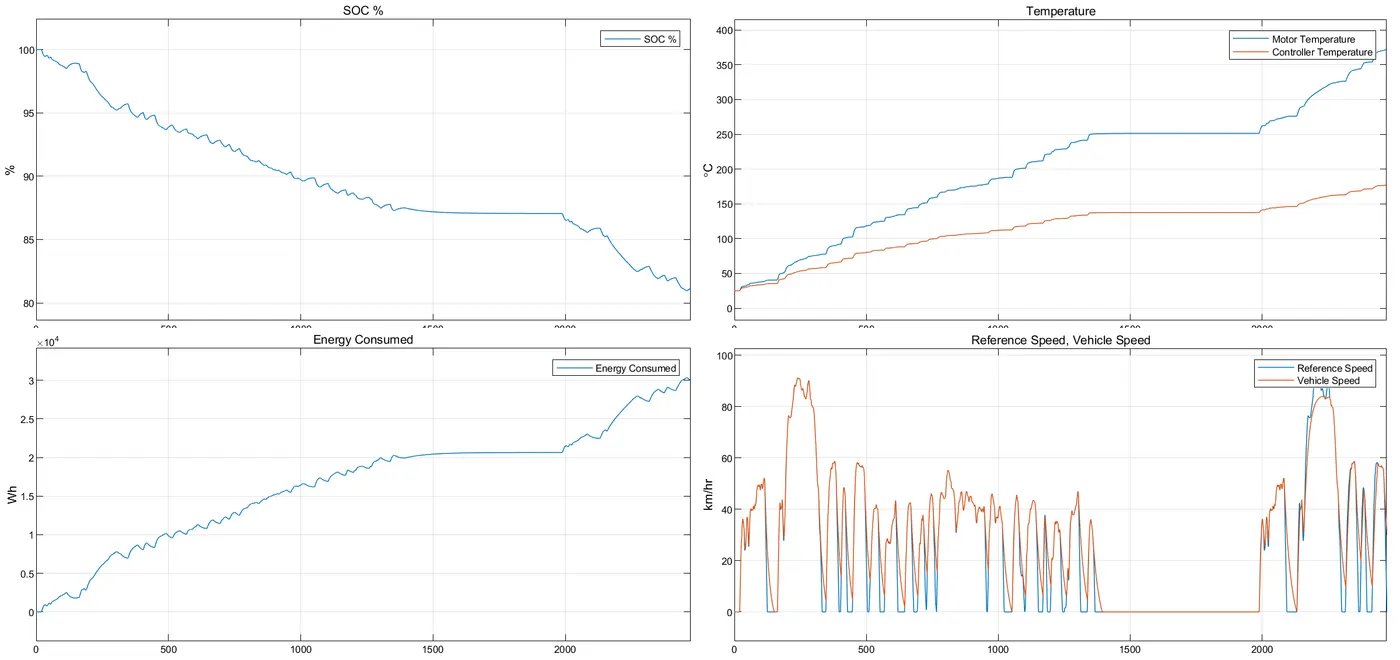
The actual Speed is approximately followed the 90% of reference Drive cycle.
Energy consumed by the battery is `≈ 3 ⋅ 10 4 Wh` at the end of the cycle.
The SoC% of the battery is reduced to`≈ 83 %`
The Temperature of Motor is increased to 370°C
The Temperature of Controller is ≈180°C
WOT Drive cycle:
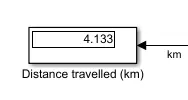
By running the Vehicle with WOT Drive cycle for 200 sec. the distance travelled is 4.133km
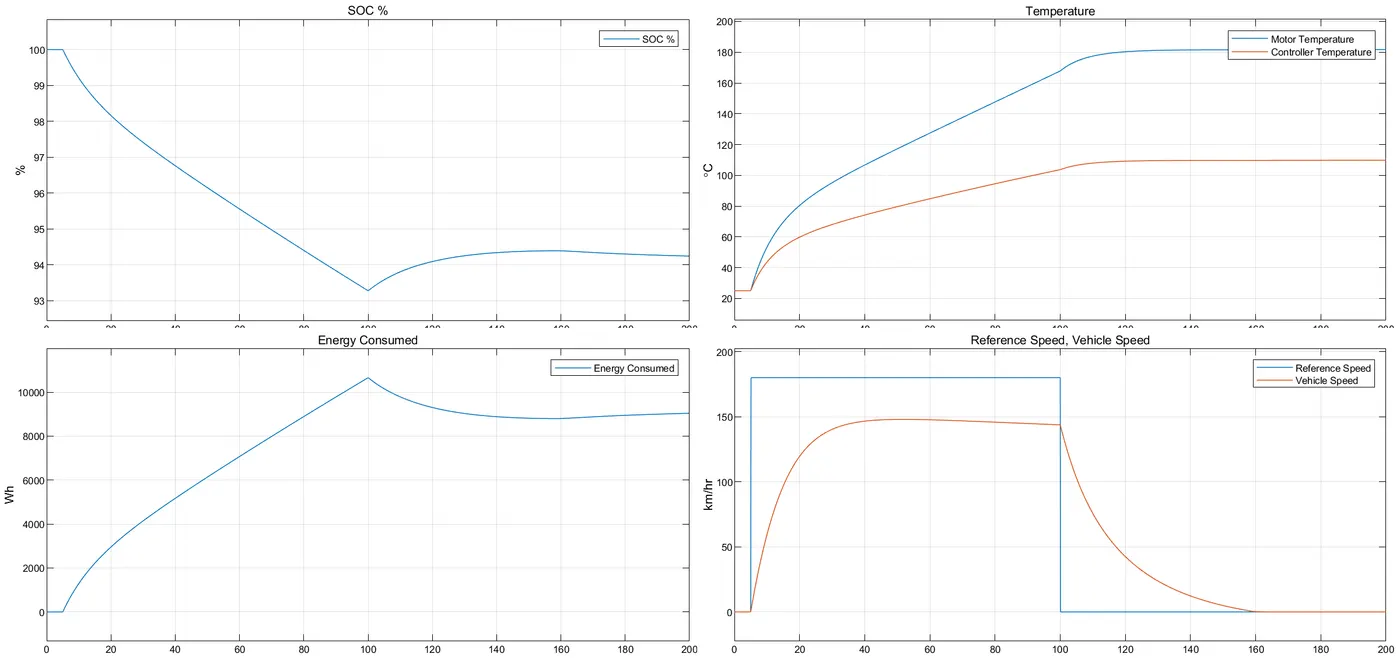
The actual Speed is approximately followed the 85% of reference Drive cycle.
Energy consumed by the battery is increased linearly till 100 sec. to approx. 1050 Wh and then reduced gradually due to back EMF and finally at the end of the cycle, energy
consumption is reached to 900 Wh.
The SoC% of the battery is reduced to ≈91% at 100th sec and after that 100 to 200 sec.the battery get charged by by back EMF. Finally at the end of the 400 sec. the SoC is of ≈94.2%.
The Temperature of Motor is increased to 180°C
The Temperature of Controller ≈ 110°C
Manually prepared Drive cycle:
To increase the speed of the vehicle, the output voltage amplitude is applied to 400 V
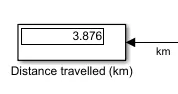
By running the Vehicle with Manually prepared Drive cycle for 120 sec. the distance travelled is 3.876 km
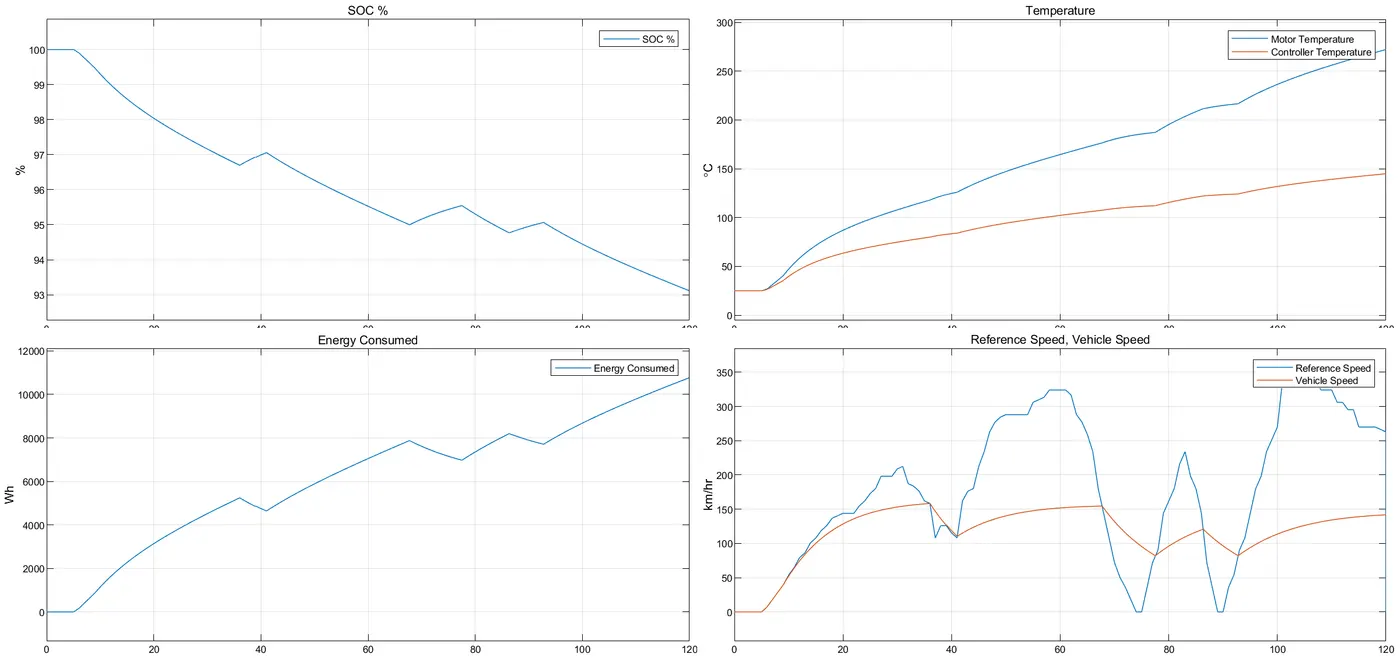
The actual path of the speed is approximately followed the of reference Drive cycle as above.
Energy consumed by the battery is varied with respect to time and distance `≈ 10500 W h`at the end of the cycle
The SoC% of the battery is reduced to`≈94.2%`
The Temperature of Motor is increased to `≈ 260°C`
The Temperature of Controller is`≈ 145°C`
Conclusion:
The Parameters that can be changed / Improved:
1.Optimization of Battery pack for increased mileage and peak performance
2.Optimization in the vehicle parameters such as vehicle mass, Front Area, Drag, Tire design etc
3.Better Motor characteristics or Motor such as BLDC motor, which reduces the losses produced from brushes and better efficiency. Hence Better motor power and Torque can be achieved
4.Use of actual PID Controller system rather than basic PWM signal generator block. This enables us to tune the system accordingly and brings down the error.
5.Provide better cooling arrangement to avoid losses.