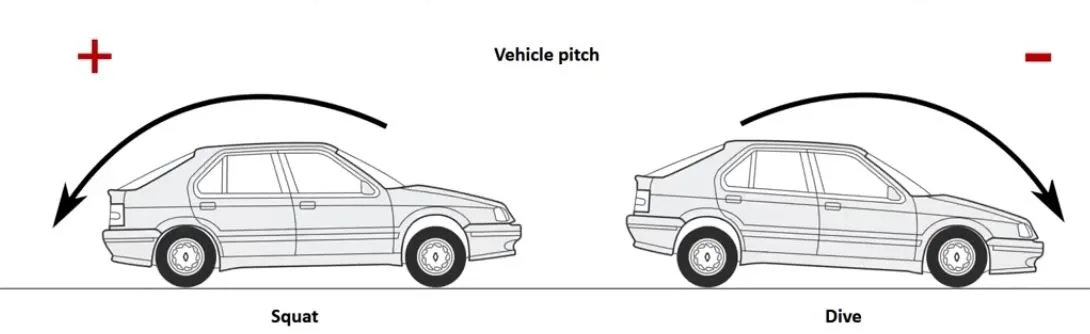
Spring and Anti-Roll bar Selection based on Vehicle Targets
In this project, you will be doing calculations to select the spring and anti-roll bar based on a 4WD sedan with a McPherson strut in the front and Multilink in the rear.
Black FridayUpgrade your career this Black Friday. Get up to ₹60,000 Scholarship on IIT programsUp to ₹60K Black Friday Scholarship52 seats leftOffer ends Fri, 27 Nov, 11:59 pm IST.
Understand the various industrial applications of automobile designing through project-based learning in an expert-led MATLAB course. Learn how to leverage fundamentals of engineering dynamics and vehicle design in a simulated environment with industry-oriented EV technology courses
Vehicle Dynamics using MATLAB is an online course from Skill-Lync: 4 weeks, 37 hours of content and 2 industry projects.
Vehicle Dynamics: 25 chapters mapped to the Anna University, VTU, SPPU, Mumbai University and KTU syllabi, with interactives and worked examples.
Our projects are designed by experts in the industry to reflect industry standards. By working through our projects, Learners will gain a practical understanding of what they will take on at a larger-scale in the industry. In total, there are 2 Projects that are available in this program.
In this project, you will be doing calculations to select the spring and anti-roll bar based on a 4WD sedan with a McPherson strut in the front and Multilink in the rear.
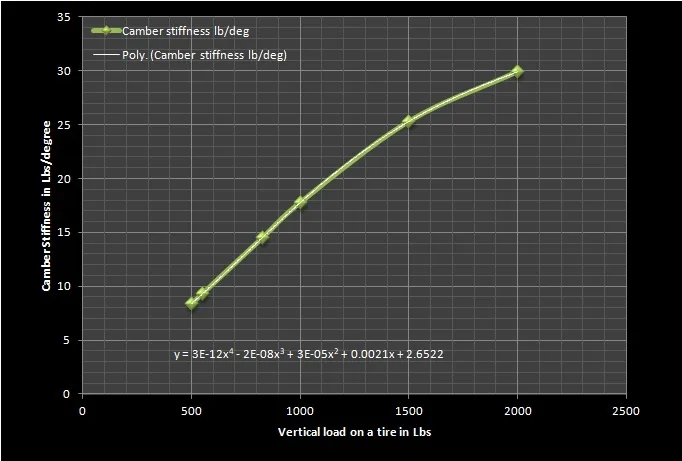
In this project, you are being assigned a task to select a suitable rollbar for a light sports vehicle and come up with an understeer budget. The rollbar diameter selection and the…
1 from Vehicle Dynamics using MATLAB itself, the rest from related mechanical programs. Videos from Skill-Lync's YouTube channel.
by the Skill-Lync team
Vehicle dynamics is the study of how a car moves in response to the road and to the driver: how it rides over bumps, how it brakes, and how it turns. Almost every topic falls into one of two jobs: isolation (keeping road and engine disturbances away from the people inside) and control (making the car respond predictably to steering, braking and throttle).
That is how the first recorded class of this course frames the subject. Think of a pickup truck crossing a desert: the suspension soaks up the hits, and that is isolation. A sports car sliding through a corner with the tyres at their limit is control.
The four weeks follow the parts that decide both. Week 1 is the suspension: how the wheel moves as the spring compresses (kinematics), steering geometry, load transfer and compliance (how much rubber bushes let the wheel shift under load). Week 2 is the tyre, because every force on the car passes through four contact patches, each about the size of a hand. Week 3 is ride: road profiles, the quarter-car and bounce-pitch models, and ISO limits for human vibration. Week 4 is handling: the bicycle model, understeer and rollover.
Ride frequency is how many times per second the car body would bounce on its springs if there were no dampers. It is the natural frequency of a mass on a spring, so a softer spring or a heavier body gives a lower, more comfortable frequency. OptimumG gives 0.5 to 1.5 Hz as the ballpark for passenger cars.
The quarter-car model in week 3 takes one corner of the car: the body mass sits on the suspension, which sits on the wheel mass , which sits on the tyre. The spring rarely sits at the wheel. On a wishbone it is partway along the arm, so it moves less than the wheel. The motion ratio (spring travel per unit wheel travel) enters twice, once for travel and once for force:
The tyre is a second, stiffer spring in series, like two springs hung end to end. Together they give the ride rate :
Here it is for the front corner of an assumed 1,500 kg sedan with 60% of its weight on the front axle: 450 kg per front corner, of which 40 kg is wheel, brake and knuckle. The spring, motion ratio and tyre values are also assumed.
ms = 410;     % sprung mass on one front corner, kg
mu = 40;      % unsprung mass, kg
ks = 30000;   % coil spring rate, N/m
MR = 0.9;     % spring travel / wheel travel
kt = 200000;  % tyre vertical stiffness, N/m
kw = ks*MR^2;                    % wheel rate
kr = kw*kt/(kw + kt);            % ride rate
fb = sqrt(kr/ms)/(2*pi);         % body frequency
fh = sqrt((kw + kt)/mu)/(2*pi);  % wheel hop
zc = 2*sqrt(kr*ms);              % critical damping
fprintf('body %.2f Hz, hop %.1f Hz, c = %.0f N*s/m\n', fb, fh, 0.25*zc)
It prints body 1.16 Hz, hop 11.9 Hz, c = 1490 N*s/m. The wheel rate is 24,300 N/m and the tyre brings the ride rate down to about 21,700 N/m. Without the tyre the frequency would read 1.23 Hz, so leaving the tyre out overstates it. Wheel hop is the light wheel bouncing between the spring and the tyre, about ten times faster than the body.
The last number is damping. The damping ratio compares the damper with "critical" damping, the least damping that stops the body without any overshoot. OptimumG puts passenger cars at about 0.25, for comfort, so this corner needs about 1,490 N·s/m at the wheel. The free ride frequency calculator does the same sums for the front and rear together.
When a car brakes, the tyres pull backwards at road level while the car's mass acts at its centre of gravity, higher up. That pair of forces tips load onto the front axle. The amount depends only on the mass , the deceleration , the height of the centre of gravity and the wheelbase :
For the same assumed sedan (1,500 kg, = 0.55 m, = 2.7 m) braking hard at 0.8 g:
The same sum works sideways, with the track width in place of the wheelbase. In a 0.5 g corner with a 1.55 m track, 1,500 × 0.5 × 9.81 × 0.55 / 1.55 = 2,611 N moves from the inside wheels to the outside wheels. Springs and anti-roll bars cannot change that total. What they change is how it is split between the front and rear axles, and that split is one of the main tools for tuning understeer. Both course projects size springs and anti-roll bars against targets of this kind.
Suspension geometry can also carry part of the load through the links instead of the springs, so the nose dives less. That is anti-dive (and anti-squat under acceleration), covered with load transfer in week 1.
A tyre only makes force when it slips a little. Under braking, the tread at the contact patch moves slightly slower than the road. The slip ratio measures that: the wheel's surface speed minus the car's speed, divided by the car's speed. If the car does 20 m/s and the tyre surface 18 m/s, = −0.10, 10% slip. In a corner, the same idea is the slip angle: the angle between where the wheel points and where it actually travels.
Force rises steeply with slip, peaks, then falls off as the patch starts to slide. The Magic Formula of Hans Pacejka is a curve fitted to measured tyre data. In the form MathWorks uses for its Simscape Driveline tyre block:
is the load on the tyre. MathWorks lists B = 10, C = 1.9, D = 1 and E = 0.97 as typical for dry tarmac. With those values:
Put this together with the braking example: at 0.8 g each front tyre carries about 5,600 N, so it can make up to about 5.6 kN of braking force on dry tarmac, but only about 5.1 kN once locked. The same values list D = 0.3 for snow and 0.1 for ice, a tenth of the dry grip. Week 2 builds tyre models of this kind in MATLAB.
The understeer gradient says how much more steering a car needs for every extra 1 g of cornering. A positive is understeer: the front tyres slip more than the rear, so you add steering as you go faster. Negative is oversteer, where the rear slips more and the car tends to turn in further. Most road cars are set up with mild understeer because it is stable.
The bicycle model in week 4 merges the two front tyres into one and the two rear tyres into one. In a steady turn of radius , the road-wheel angle is the low-speed (Ackermann) angle plus the understeer term:
is the load on each axle and is the axle's cornering stiffness, the side force per degree of slip angle. For the same assumed sedan with 1,200 N/deg per tyre at all four corners: = 8,829/2,400 − 5,886/2,400 = 1.23 deg/g.
Now the yaw rate, how fast the car turns in degrees per second. Per degree of road-wheel angle it is:
with in radians (1.23 deg = 0.0214 rad). For this car:
The course then adds the transient (time-dependent) response with a state-space version of the same model, and an understeer budget: how much of comes from the tyres, roll steer, compliance and load transfer. The second project builds that budget for a light sports vehicle. The steering-angle side of the same example is on our vehicle dynamics courses page.
Four weekly modules: suspension design, with kinematics, steering, load transfer and compliance (1); tyre structure, coordinate systems, force generation and tyre models in MATLAB (2); ride, with excitation sources, road profiles to ISO roughness classes, quarter-car and bounce-pitch models and ISO vibration limits (3); handling, with steady-state cornering, understeer and its measurement, the 2-DOF bicycle model, four-wheel steering and rollover (4). The 2 projects pick springs and anti-roll bars for a 4WD sedan to meet vehicle targets, and build an understeer budget for a light sports vehicle.
The recordings are live classes, about 35 hours in total, and the assignment videos run to week 6, so give it more time than the 4 weeks on this page. In the recorded classes:
The recorded classes use GNU Octave, a free tool that runs the same scripts as MATLAB, so you can practise without a MATLAB licence. SAE or BAJA experience helps but is not required. Basic mechanics and maths are enough.
For the same suspension work in a multibody tool, see Suspension Design using ADAMS. All the options, with fees and other providers, are compared on best vehicle dynamics courses in India.
Our own records show a narrow route, so be realistic. As of 19 Nov 2026, Skill-Lync's placement records (n = 3,905) have only 5 learners whose job title names vehicle dynamics, multibody, suspension, chassis or tyres, all placed in 2021 to 2023. The 4 who disclosed pay started at ₹3.0 to ₹7.0 LPA. They came from the longer PG programs: 2 from CAE, 2 from Hybrid Electric Vehicle Design and 1 from CAD. None of the records name this course.
Watch out for one trap in job titles: "MBD engineer" usually means model-based development in Simulink, not multibody dynamics. 124 of our placement titles use MBD that way.
These are self-reported starting offers, so ask for recent placements before you decide. In practice, vehicle dynamics knowledge helps most alongside a simulation role, so see CAE engineer salaries for a larger sample.
| Course | Length | Projects | Tools | Fee |
|---|---|---|---|---|
| Vehicle Dynamics using MATLAB (this page)Suspension, tyres, ride and handling worked in MATLAB | 4 weeks, 37 h | 2 | MATLAB | ₹40,000 |
| Suspension Design using ADAMSSuspension kinematics and compliance in Adams Car | 16 weeks, 14 h | 2 | Adams | ₹40,000 |
| Multibody Dynamics for Automotive Applications using Motionview and MotionsolveMultibody models in MotionView and MotionSolve | 12 weeks, 8 h | 3 | Motionview/Motionsolve(Altair Hyperworks) | ₹40,000 |
| Multibody Dynamics using SolidWorksMechanism simulation in SOLIDWORKS | 5 weeks, 3 h | 3 | SOLIDWORKS | ₹40,000 |
| MATLAB for Mechanical EngineersMATLAB basics for mechanical problems first | 4 weeks, 5 h | 2 | MATLAB | ₹40,000 |
| PG Program in Hybrid Electric Vehicle Design and AnalysisPG program: HEV design, longitudinal dynamics | 48 weeks, 343 h | 48 | MATLAB, LS-DYNA, LS-PREPOST, ANSYS Fluent, SpaceClaim, CFD Post, HyperMesh, Radioss, ANSA, Simulink, CONVERGE, Paraview, OpenFOAM, Octave, CATIA V5, Python, Siemens NX CAD, Simscape, ANSYS Workbench | ₹2,75,000 |
Lengths, projects and fees are taken from each course page on 19 Nov 2026; fees are the Premium plan in INR, including all charges.
Become job ready with our comprehensive industry focused curriculum for freshers & early career professionals
Skill-Lync's own records are too small to give a typical figure. As of 19 Nov 2026, 5 of our 3,905 placement records have vehicle dynamics, multibody, suspension, chassis or tyres in the job title, all from 2021 to 2023. The 4 who disclosed pay started at ₹3.0 to ₹7.0 LPA. These are self-reported starting offers, not a ceiling. For a larger sample, see CAE engineer salaries.
An online vehicle dynamics course can be helpful for upskilling and certification purposes.
The scope of the automotive industry is extensive. With emerging technologies, the field has a lot to explore.
Degree in Mechanical Engineering or Mathematics or equivalent years of experience.
You can request a call on Skill-Lync’s website by submitting your phone and email contact. The team will contact you shortly after.
The fee is shown in the fee section of this page. No instalment (EMI) plan is listed for this course, so ask our team about payment options when you request a call.
No internship is listed in the plan on this page. The plan includes 1 year of access to the learning platform, live individual and group sessions, and support over mail and phone.
Yes, you will get a Skill-Lync certificate upon course completion.
A counsellor will walk you through the syllabus, projects and fee options — and tell you honestly if another course suits you better.