Radar Mast & Final Assembly of Yacht
Aim:
Radar Mast & Final Assembly of Yacht
objective:
1.Radar Mast
2.Final Assembly Of Yacht
Design in 3D part of Modelling of Yacht Assembly:
INTRODUCTION:
A yacht is a sail or power vessel used for pleasure, cruising, or racing. There is no standard definition, so the term applies to such vessels that have a cabin with amenities that
accommodate overnight use. To be termed a yacht, as opposed to a boat, such a pleasure vessel is likely to be at least 33 feet (10 m) in length and have been judged to have good
aesthetic qualities. The Commercial Yacht Code classifies yachts 79 ft (24 m) and over as large Such yachts typically require a hired crew and have higher construction standards.
Further classifications for large yachts are: commercial, private—solely for the pleasure of the owner and guests, or by flag the country under which it is registered.
A superyacht generally refers to any yacht (sail or power) longer than 131 ft (40 m). Here we are going to design, assembly, rendering a yacht with the using of SolidWorks CADD
Software.
OBJECTIVES
- Understanding user interference in solidworks.
- Draw the sketches with fully defined and Understanding and implementing shell feature sketch blocks and Linear pattern in Solidworks
- Application of relations to the entities.
- Design all parts of the yacht with the reference of planes and saving parts in separate part file, for final assembly.
- Understanding the utility of solidwork tools like Extrude, Extrude cut, Pattering, Revolving, Revolve cut, Trimming, Extend, projected curves, Composite curves, Make pierce features etc.
- Understanding the full pledged surface feature and its uses to model the yacht.
- Assembling all parts using assembly interference.
- Understanding of mating systems.
- Understanding of photo realistic rendering.
EXPLANATIONS OF PARTS:
- Propeller
- Radar
- Blue Print Setup
- Hull
- Garage Door
- Front Seat
- Middle Seat
- Rear Seat
- SuperStructure
- RadarMast
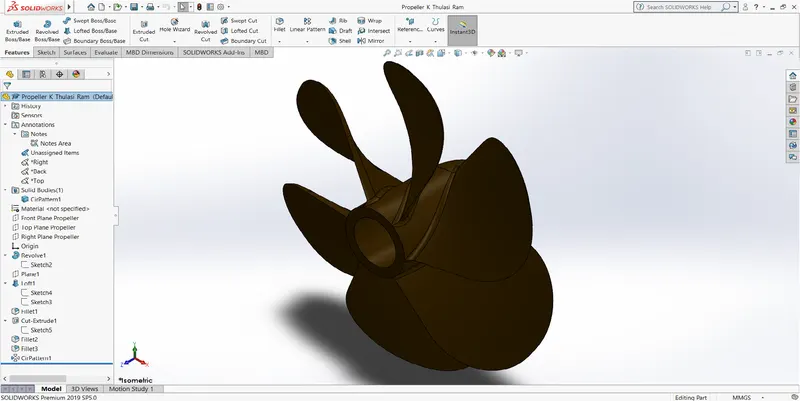
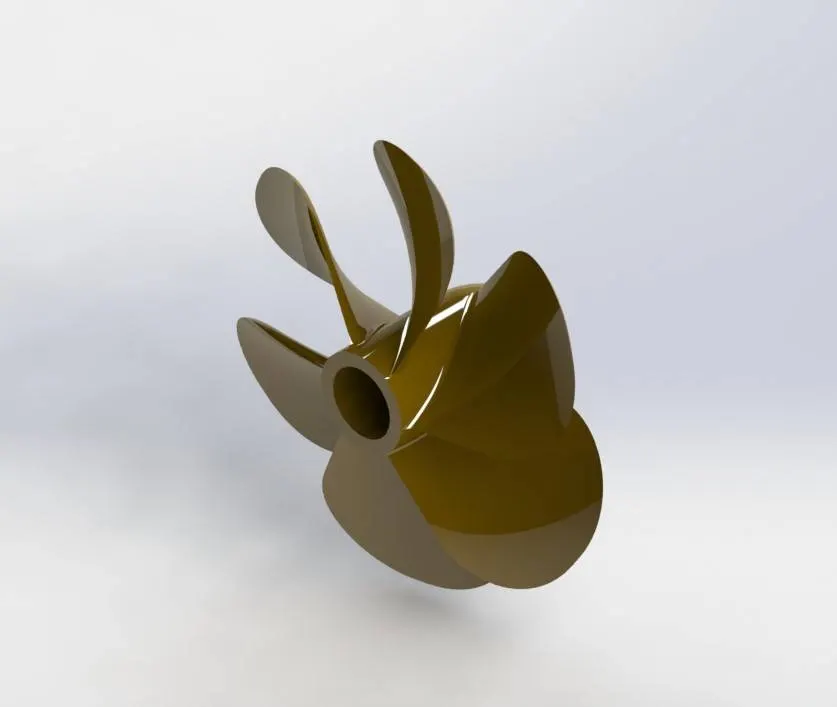
1.PROPELLER
A Propeller is a device with a rotating hub and radiating blades that are set at a pitch to form a helical spiral, that, when rotated, performs an action which is similar to
Archimedes' screw. It transforms rotational power into linear thrust by acting upon a working fluid, such as water or air. The rotational motion of the blades is converted into thrust by
creating a pressure difference between the two surfaces. A given mass of working fluid is accelerated in one direction and the craft moves in the opposite direction.
Propeller dynamics, like those of aircraft wings, can be modelled by Bernoulli's principle and Newton's third law. Most marine propellers are screw propellers with helical blades
rotating on a propeller shaft with an approximately horizontal axis.
Modeling of the Propeller:
Rendering of Propeller:
2.RADAR
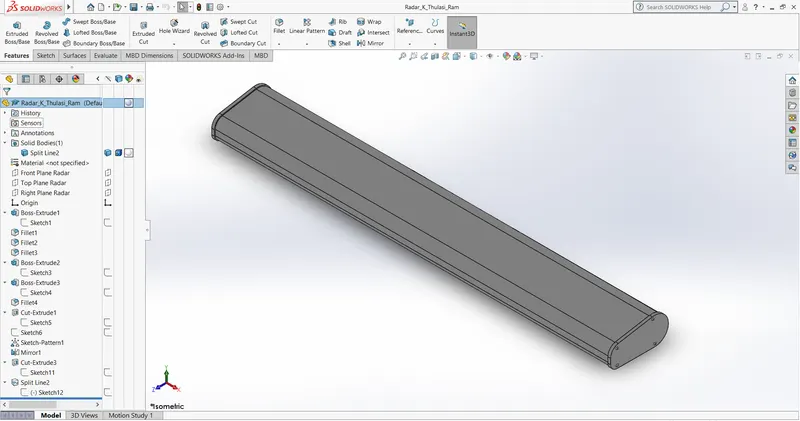
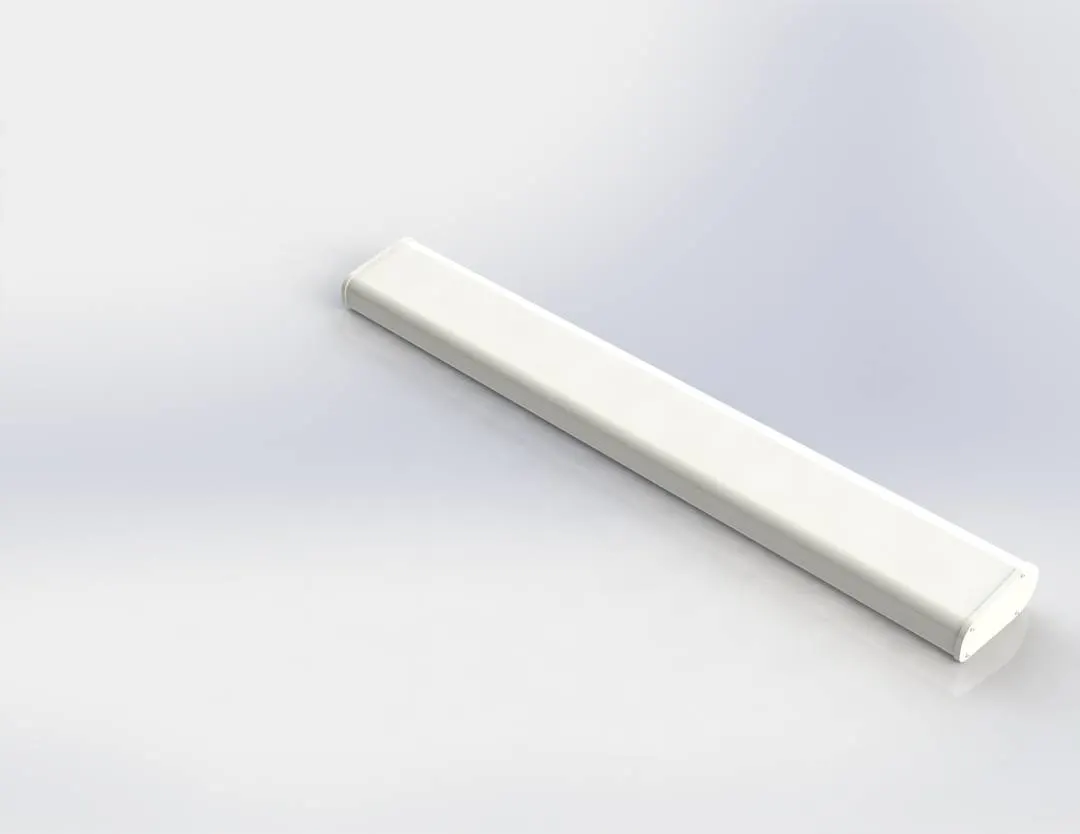
Radars are X band or S band radars on ships, used to detect other ships and land obstacles, to provide bearing and distance for collision avoidance and navigation at sea.
They are electronic navigation instruments that use a rotating antenna to sweep a narrow beam of microwaves around the water surface surrounding the ship to the horizon, detecting
targets by microwaves reflected from them, generating a picture of the ship's surroundings on a display screen.
Modeling of the Radar
Rendering of Radar
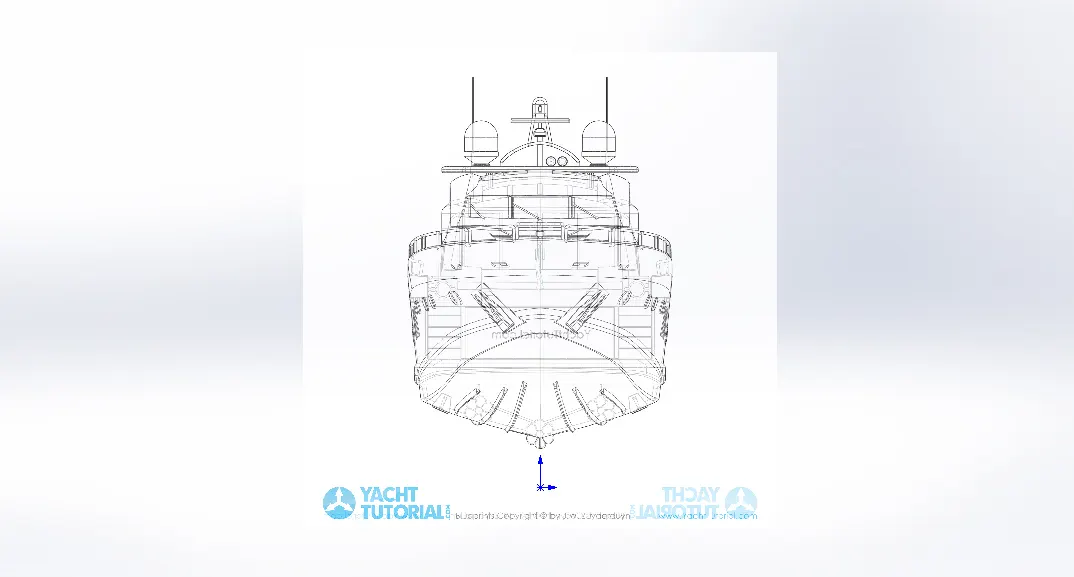
3.BLUE PRINT SETUP
Blueprint setup is used to trace to the approximate location to sketching the yacht.
4.HULL:
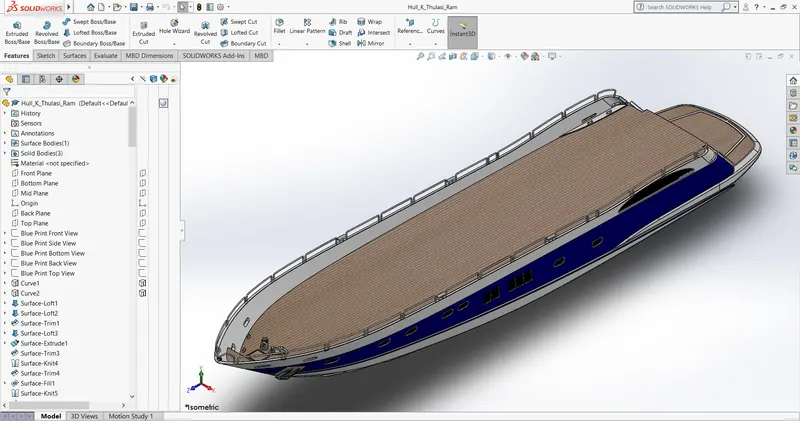
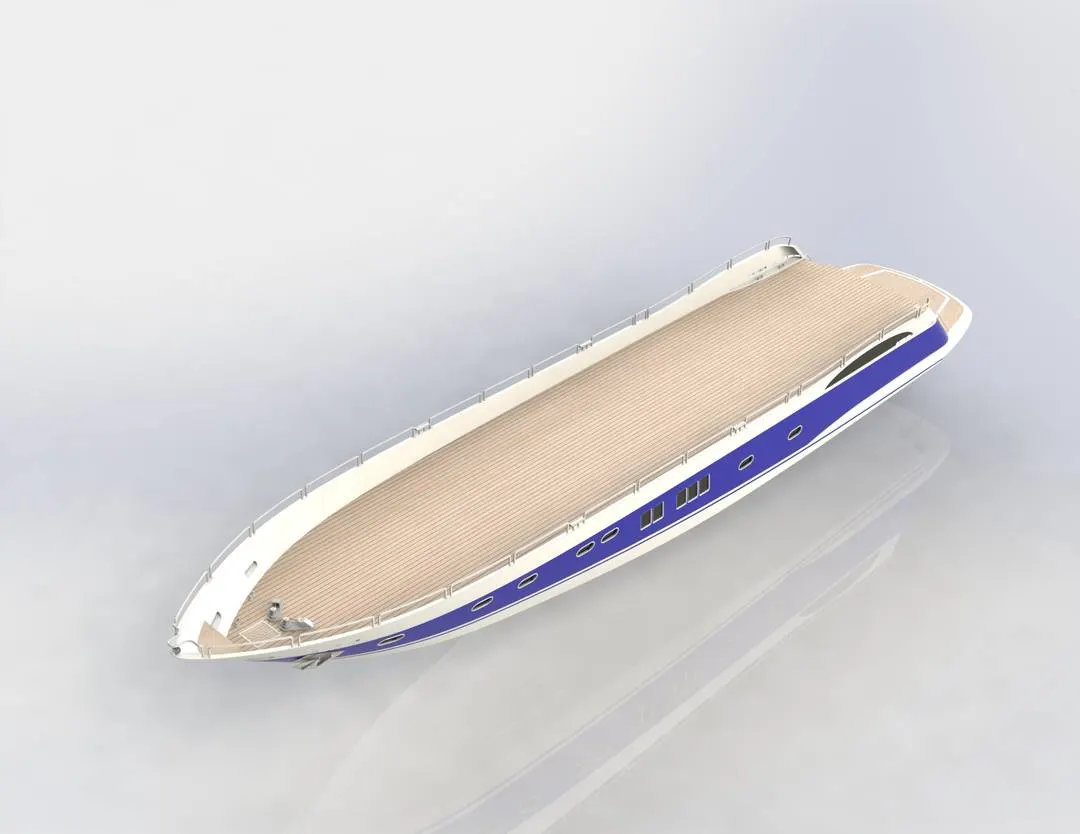
A hull is the watertight body of a ship or boat. The hull may open at the top (such as a dinghy), or it may be fully or partially covered with a deck. Atop the deck may be a
deckhouse and other superstructures, such as a funnel, derrick, or mast. The line where the hull meets the water surface is called the waterline.
Modeling of the Hull:
Rendering of Hull:
5.GARAGE DOOR:
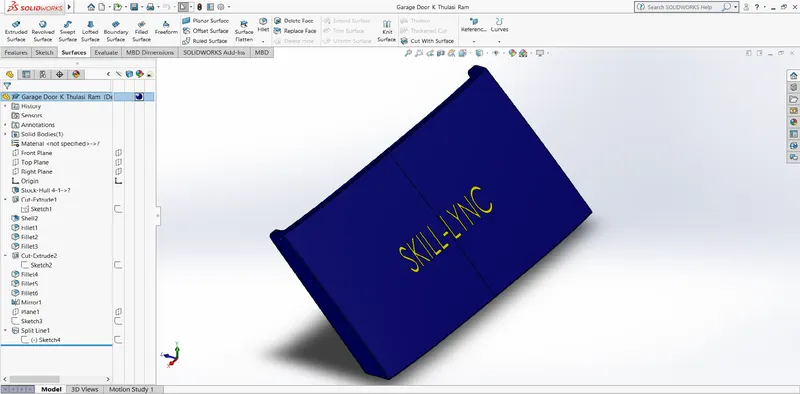
It’s a door for the Garage. A garage door is a large door on a garage that opens either manually or by an electric motor (a garage door opener).
Garage doors are frequently large enough to accommodate automobiles and other vehicles. Small garage doors may be made in a single panel that tilts up and back
across the garage ceiling.
Modeling of the Garage door
Rendering of the Garage door
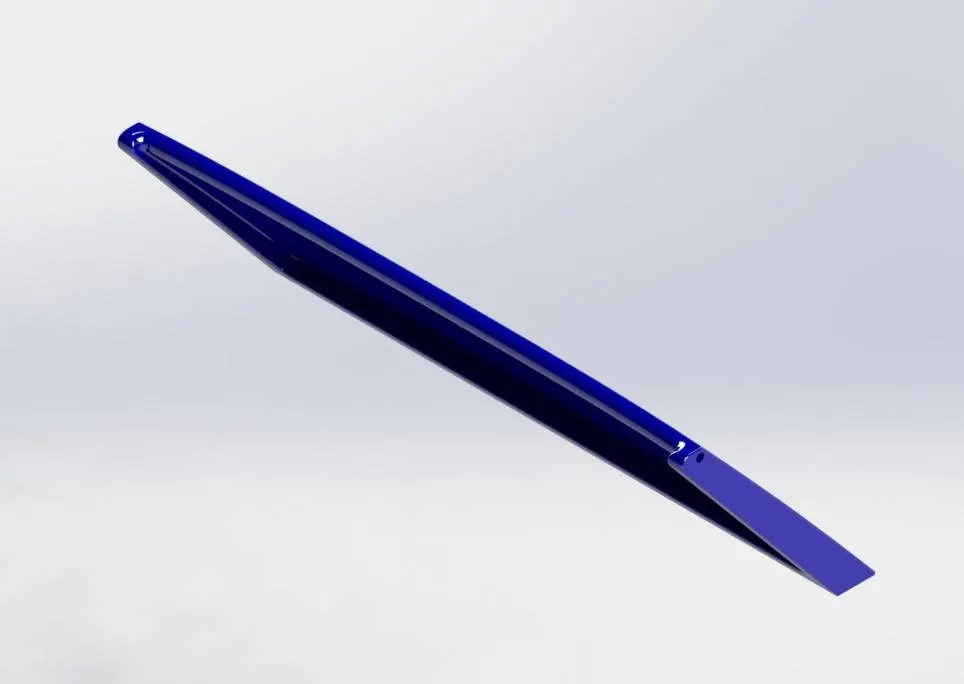
6.FRONT SEAT
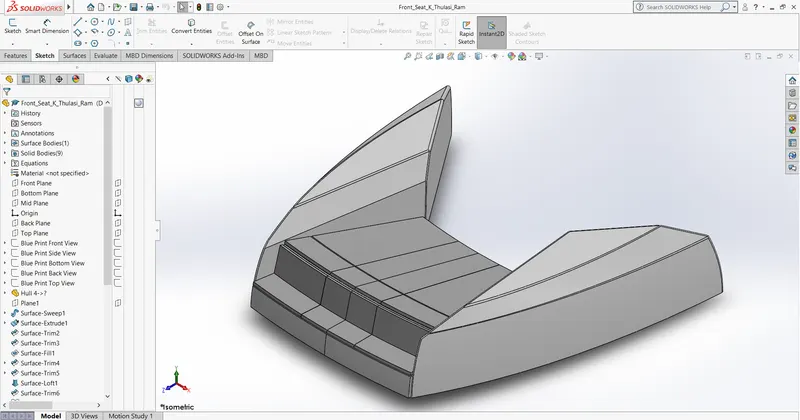
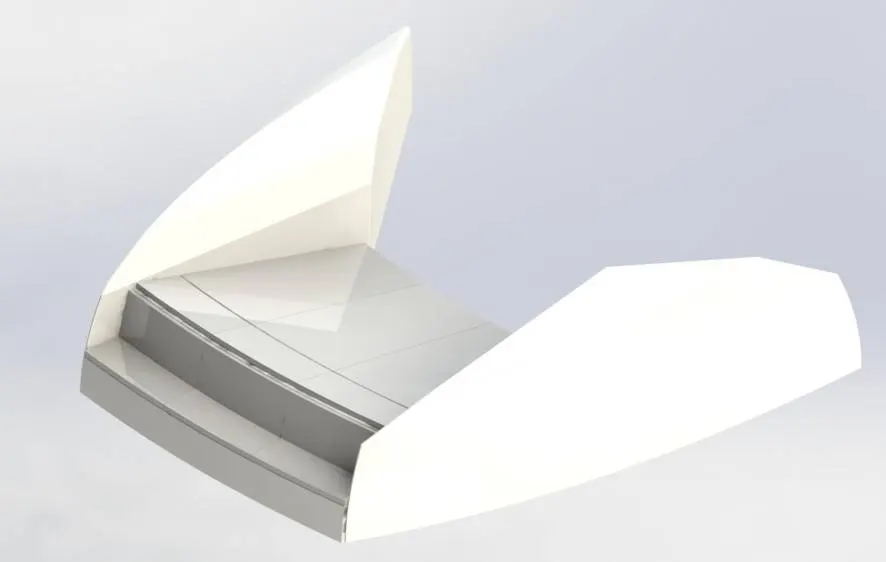
A seat is a place to sit. The term may encompass additional features, such as back, armrest, head restraint but also headquarters in a wider sense.
It may also comes under luxuries, materials uses for the seat etc. here, this seat position on front side of the yacht.
MIDDLE SEAT
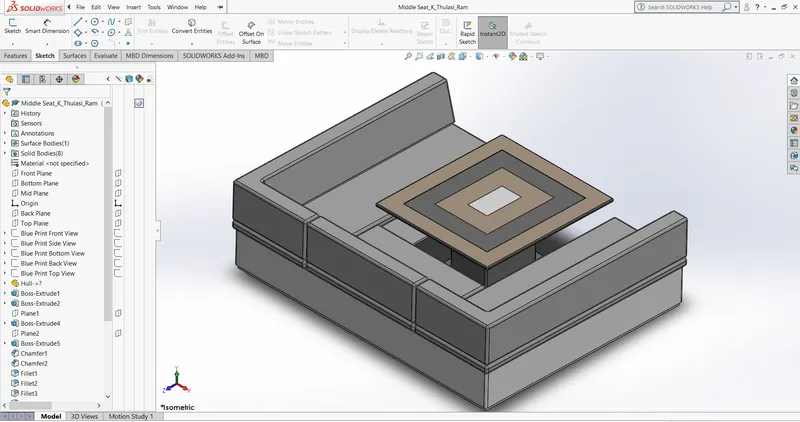
A seat is a place to sit. The term may encompass additional features, such as back, armrest, head restraint but also headquarters in a wider sense.
It may also comes under luxuries, materials uses for the seat etc. here, this seat position on centre of the yacht.
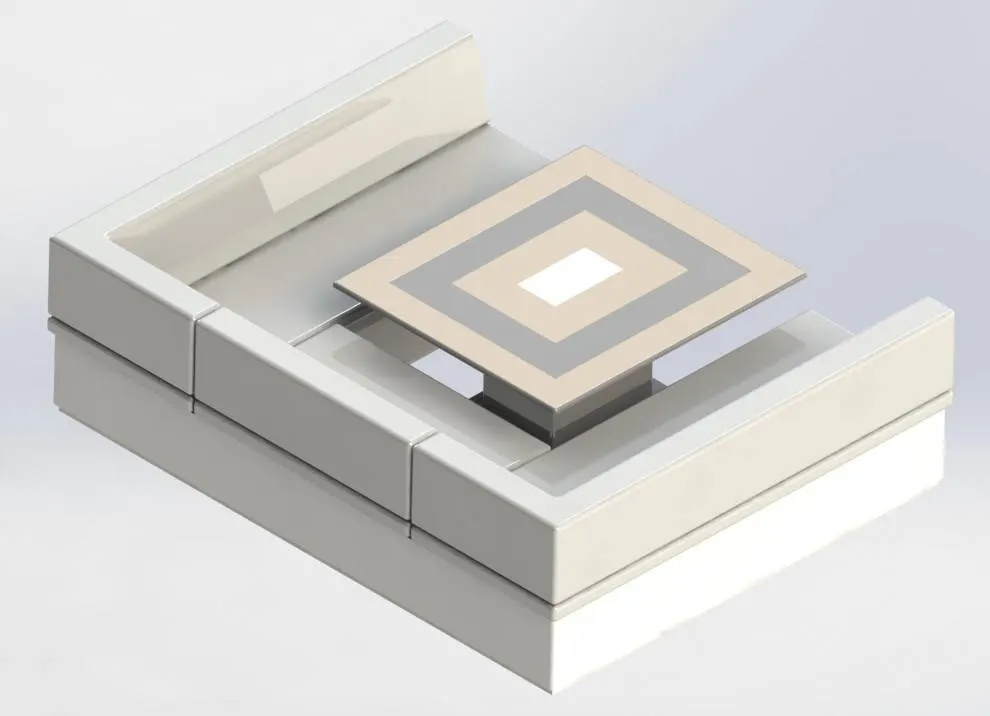
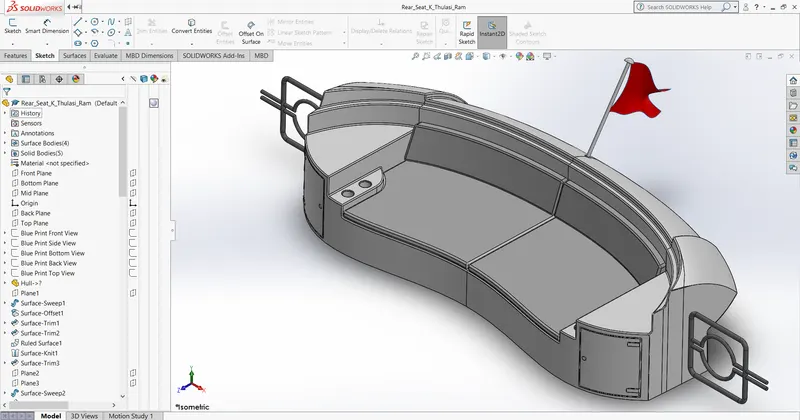
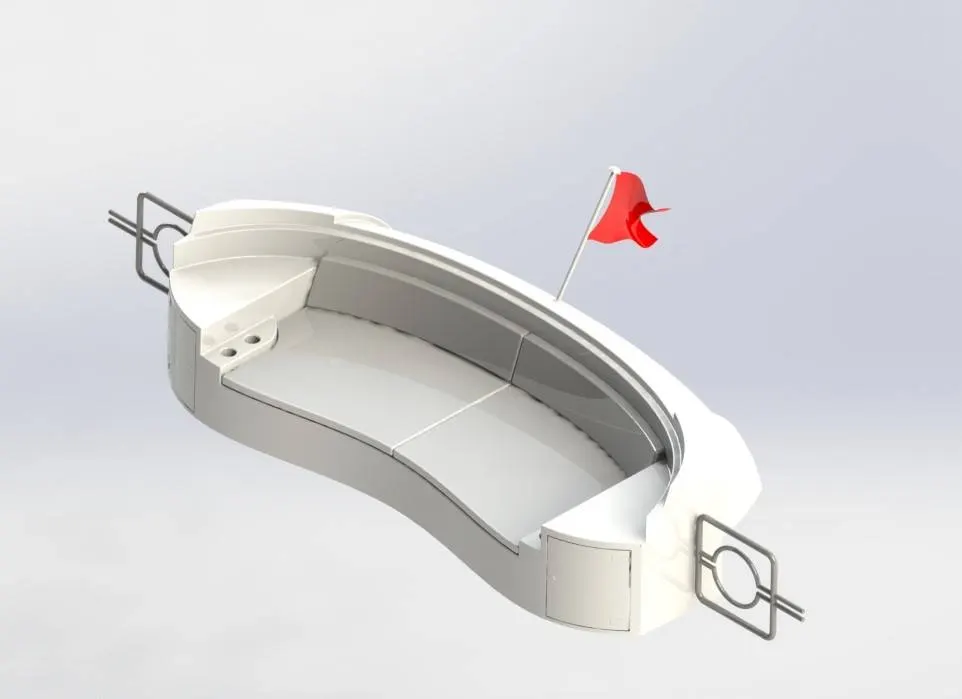
REAR SEAT
A seat is a place to sit. The term may encompass additional features, such as back, armrest, head restraint but also headquarters in a wider sense.
It may also comes under luxuries, materials uses for the seat etc. here, this seat position on back side of the yacht.
Modeling of the Front seat
Rendering of Front Seat
Modeling of the Middle seat
Rendering of Middle seat
Modeling of the Rear seat
Rendering of Rear seat
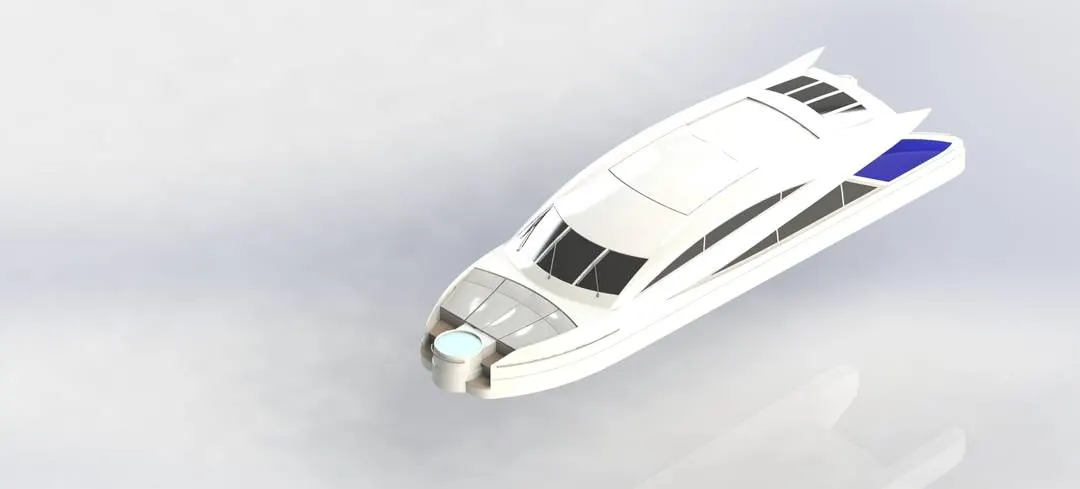
7.SUPERSTRUCTURE
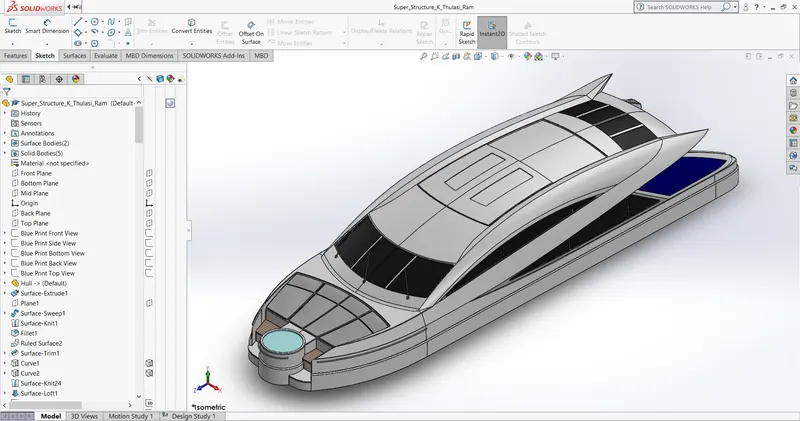
A superstructure is an extended construction of any building or platform that rises above the rest of the building or platform in a distinct manner.
The word comes from a combination of two Latin words, the Latin prefix ‘super’ means in addition or above or in excess of, whereas the stem word ‘structure’ means
to build or to heap up. Thus, superstructure means to add a construction to an already existing structure.
In ships this is the name given to the part of the ship that emerges from the deck. However any mast, sails, any armaments or arsenal are not included in this category.
The size of the superstructure has a great influence on the mobility of the vessels.
Modeling of the Superstructure
Rendering of the Superstructure
8.RADARMAST
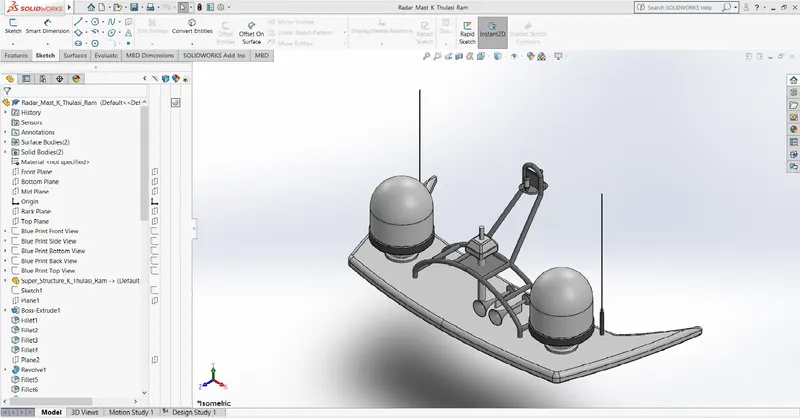
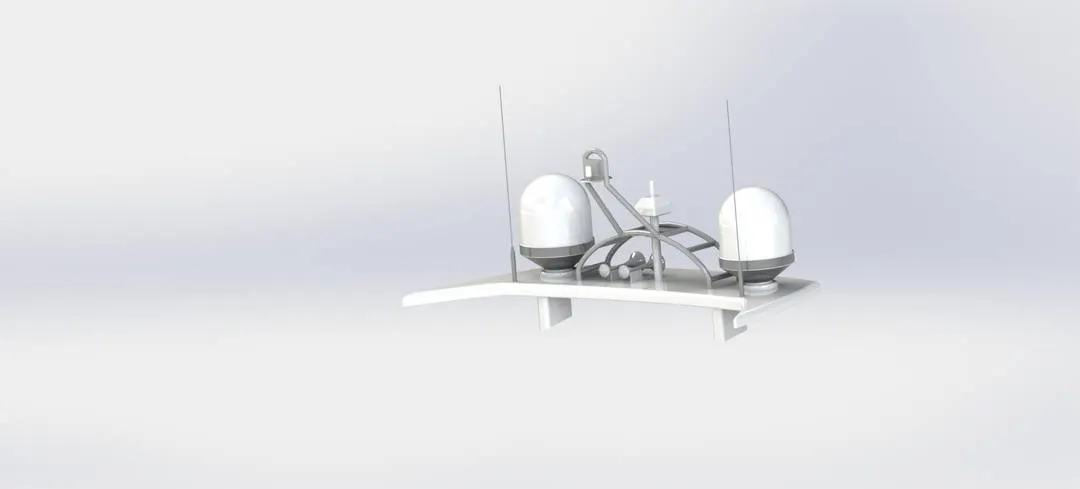
The RadarMast consists of a housing that accommodates all major radars, sensors and antennas of a naval vessel. It will change the appearance of naval vessels.
Gone are the dozens of antennas and sensors found on practically every flat topside surface of a modern naval vessel. The presence of all these systems, however sophisticated and
advanced they individually may be, on one ship creates several problems.
Modeling of the Radar Mast
Rendering of the Radar Mast
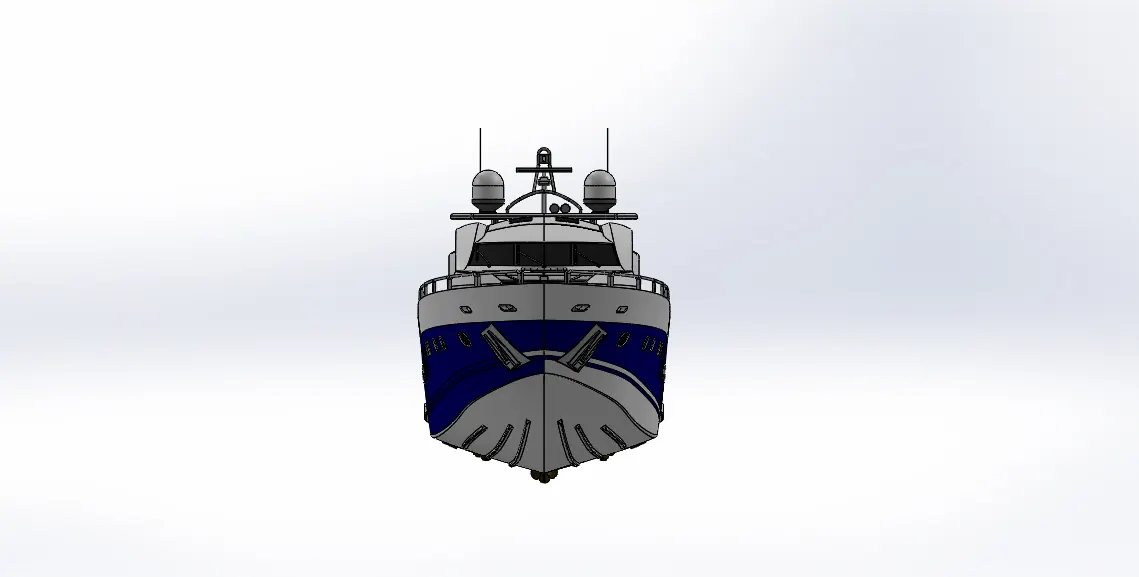
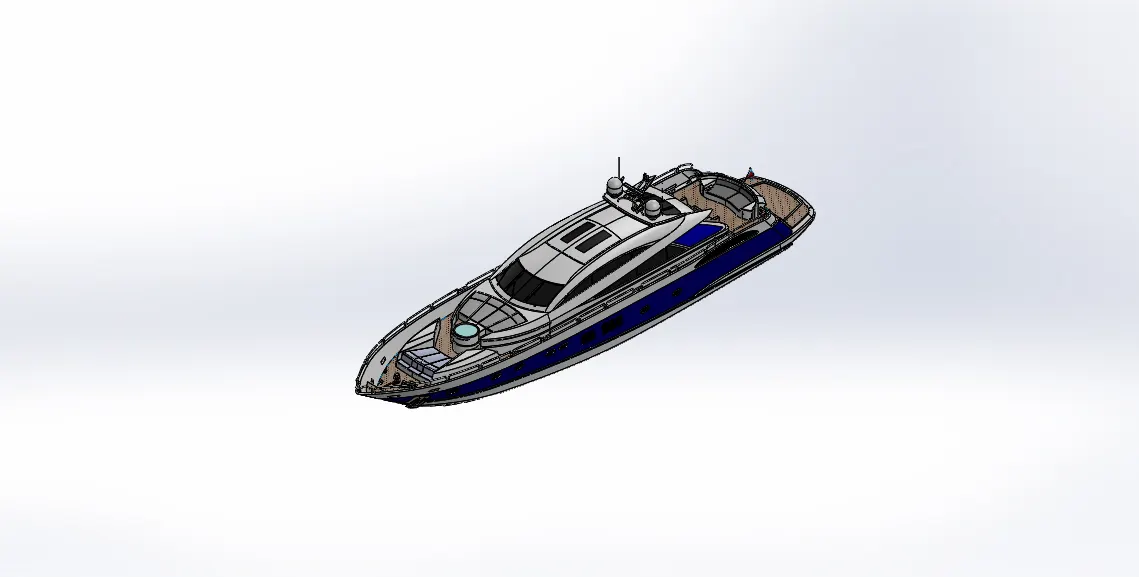
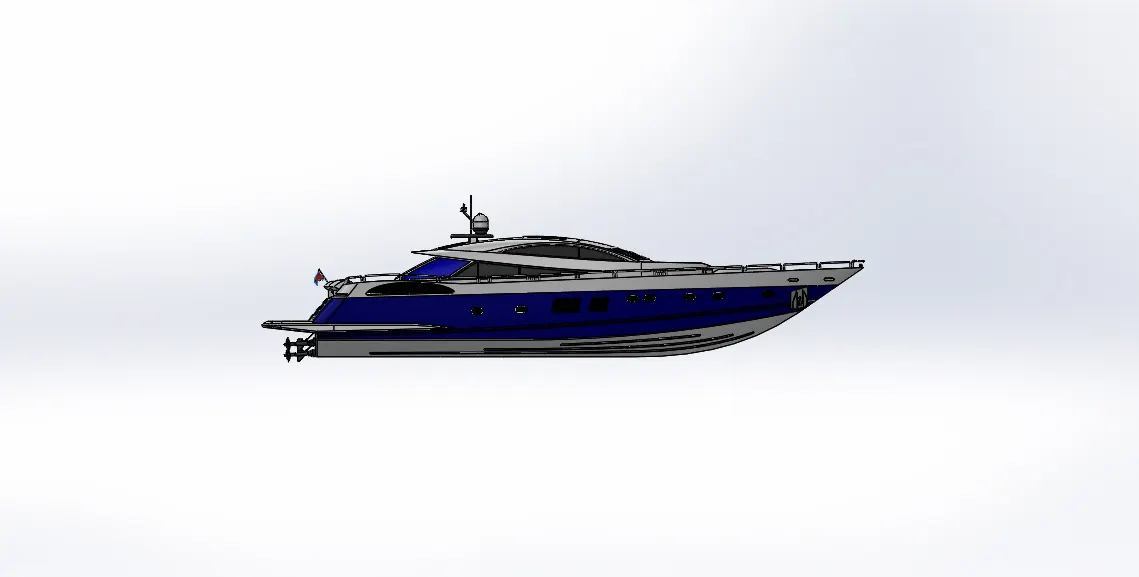
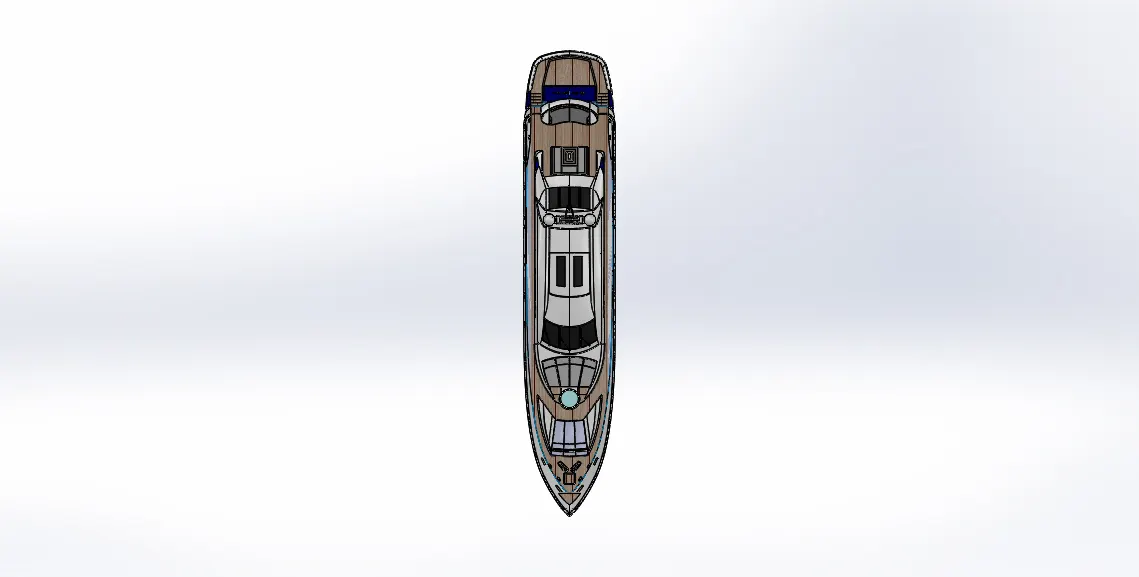
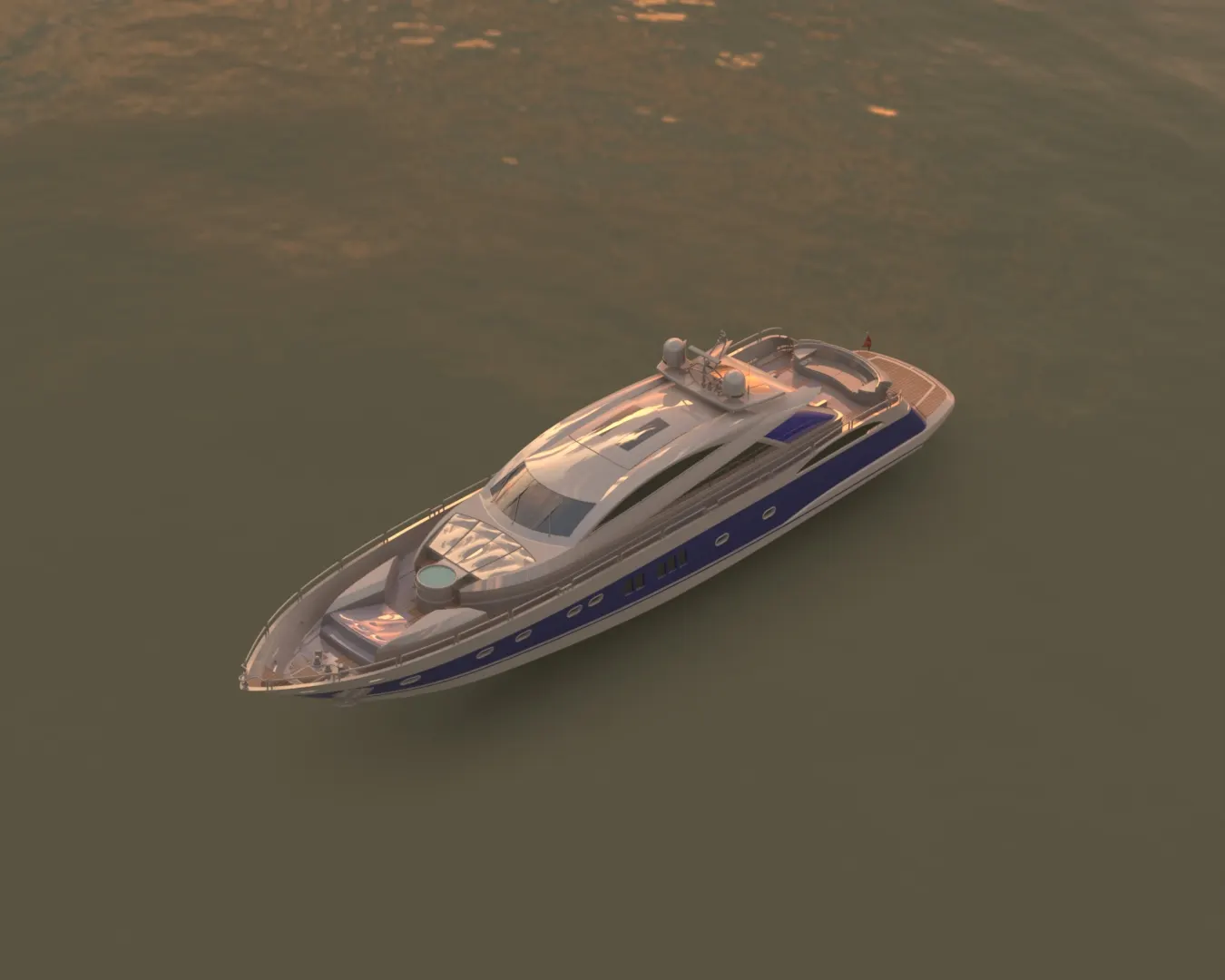
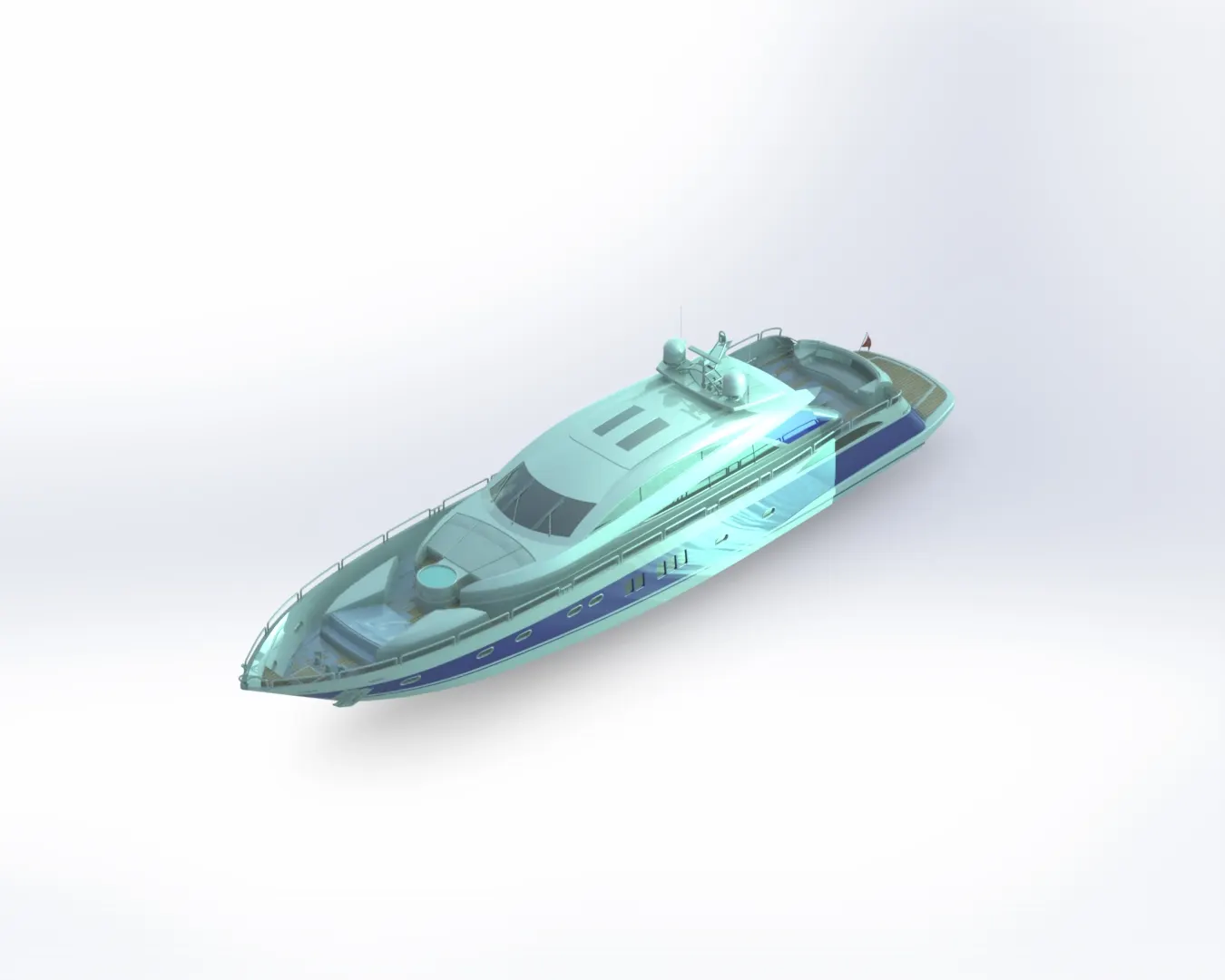
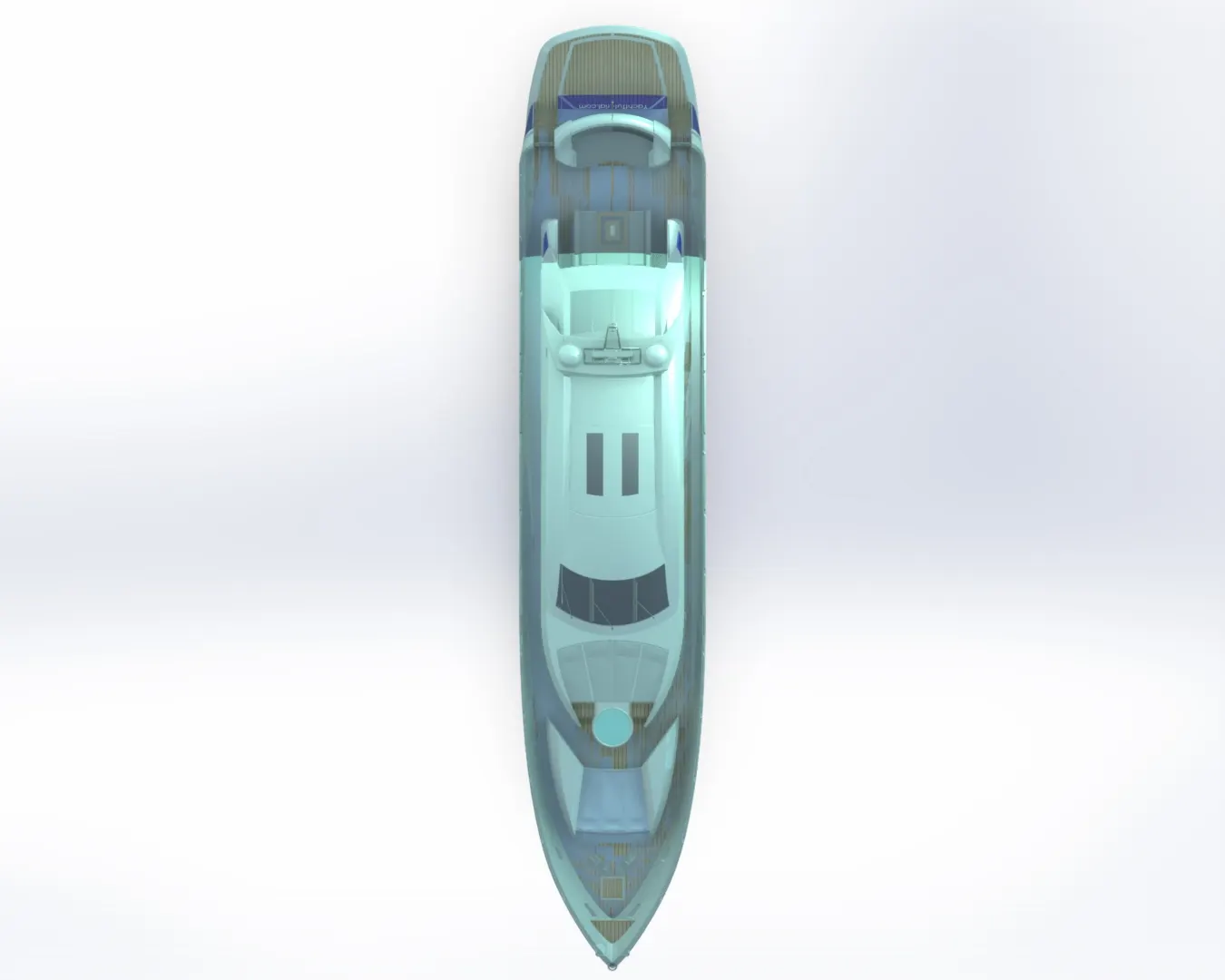
ASSEMBLY:
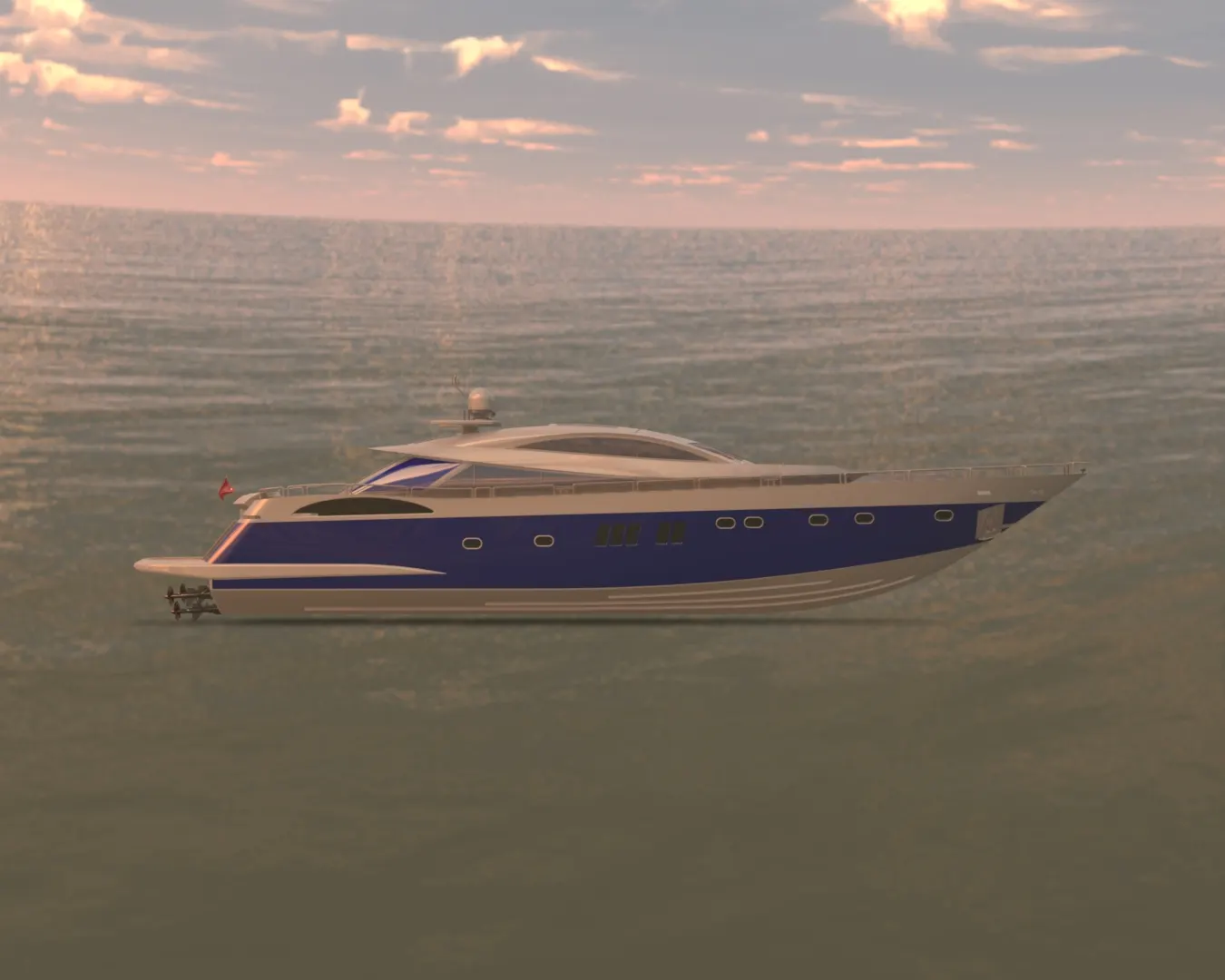
RENDERED IMAGES
CONCLUSION:
These are the tools in the solidworks are used to complete the design model of prediator yacht.