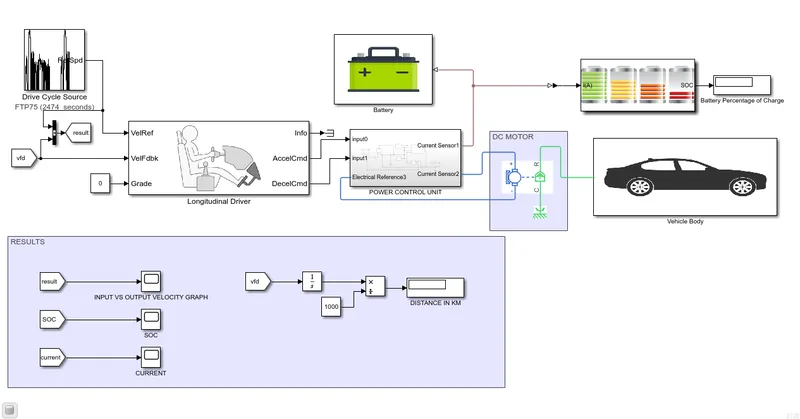
Modelling of Electric Vehicle Using DC Motor Drive
In this project, the students will model an electric car using MATLAB. The MATLAB model of the car uses a lithium-ion battery and a DC motor. Students will use suitable blocks from…
Black FridayUpgrade your career this Black Friday. Get up to ₹60,000 Scholarship on IIT programsUp to ₹60K Black Friday Scholarship52 seats leftOffer ends Fri, 27 Nov, 11:59 pm IST.
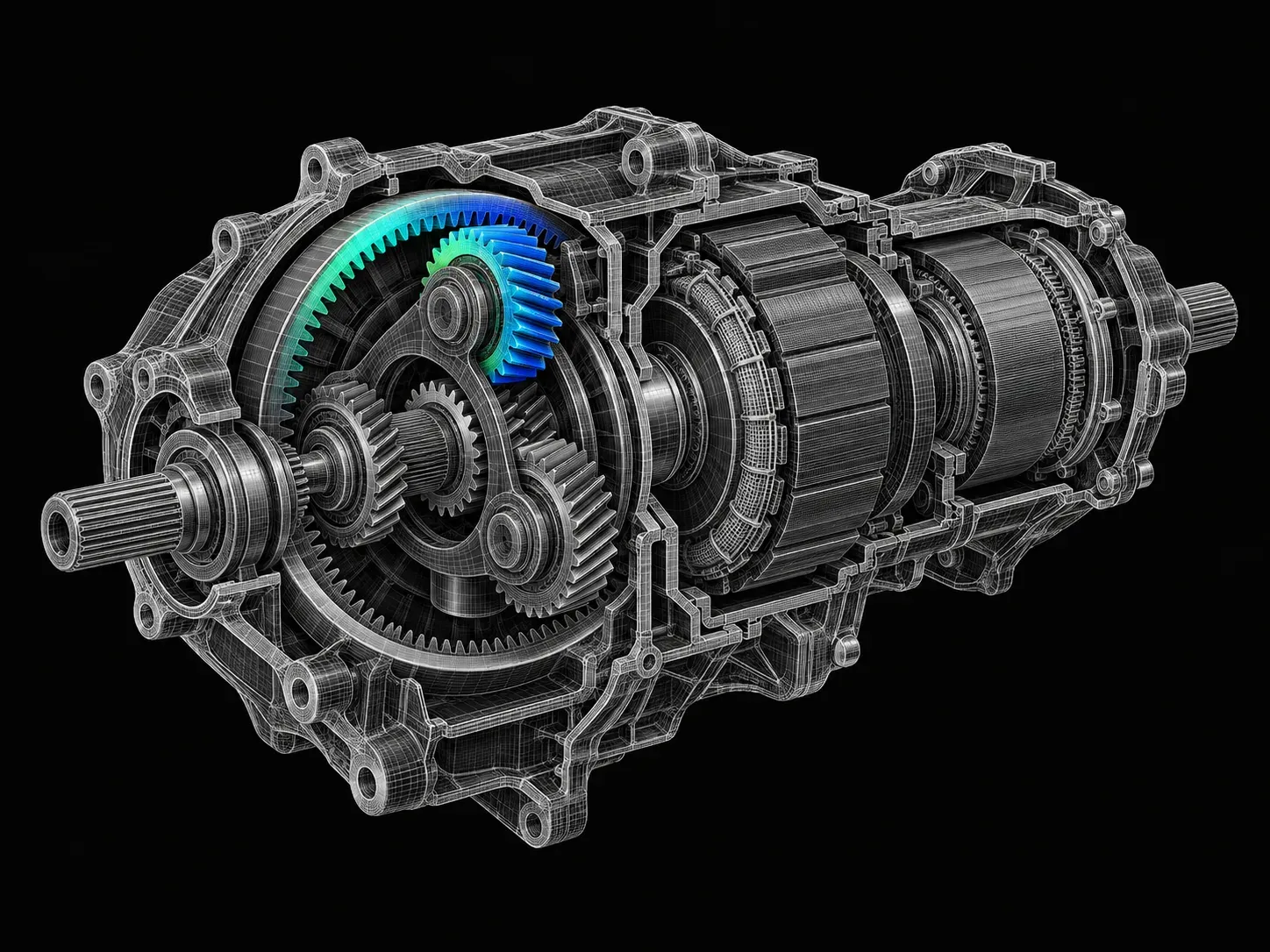
Introduction to HEV using MATLAB & Simulink
Introduction to Hybrid Electric Vehicle using MATLAB and Simulink is an online course from Skill-Lync: 4 weeks, 23 hours of content and 2 industry projects.
Our projects are designed by experts in the industry to reflect industry standards. By working through our projects, Learners will gain a practical understanding of what they will take on at a larger-scale in the industry. In total, there are 2 Projects that are available in this program.
In this project, the students will model an electric car using MATLAB. The MATLAB model of the car uses a lithium-ion battery and a DC motor. Students will use suitable blocks from…
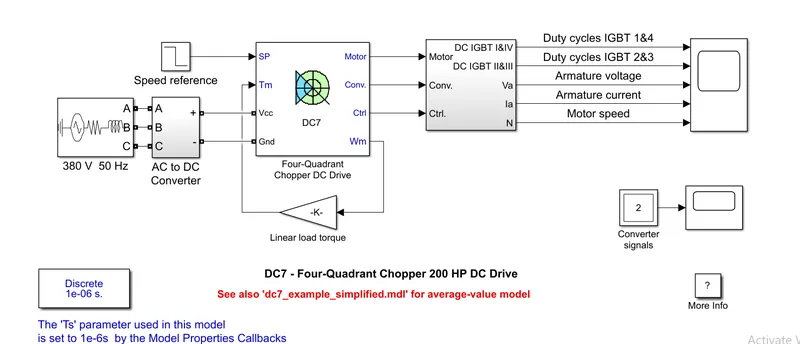
The project objective is to design an electric powertrain that is capable of towing an aircraft. Here, the students will design an Electric Powertrain with a type of motor, its pow…
Video stories from learners of related electrical programs, from Skill-Lync's YouTube channel.
by the Skill-Lync team
A hybrid electric vehicle (HEV) has an engine and an electric motor, with a small battery between them. A full hybrid never plugs in, so all of its energy comes from fuel. The battery is a buffer: it stores energy when the car brakes and gives it back when the car pulls away. A battery electric vehicle (BEV) has no engine and charges from the grid.
Think of the battery as a wallet, not a salary. Fuel is the only income. The wallet just moves energy from moments when there is too much to moments when it is needed.
How the engine reaches the wheels sets the architecture, which week 2 covers:
Four forces: rolling resistance from the tyres, air drag, the slope, and the inertia you overcome to speed up. Their sum is the tractive force, and force times speed is the power the wheels need. Week 1 starts here, and four lessons are titled "Forces on vehicle" (three parts) and "power calculations".
is the rolling-resistance coefficient, roughly the share of the car's weight lost to tyre flexing. is the drag coefficient, a number for how cleanly the body cuts through air, and is the frontal area. is the slope angle.
Take a hatchback with these assumed values: mass = 1,300 kg with the driver, = 0.010, = 0.30, = 2.2 m², air density = 1.2 kg/m³, on a flat road.
That gap is where a hybrid earns its keep. A conventional engine is sized for the peaks, so in town it spends most of its time working far below the load where it burns fuel most efficiently. For hills, try the gradeability calculator.
A drive cycle is a fixed speed-against-time trace that a car follows on a rolling road (a chassis dynamometer) in a lab. Every car drives the same trace, so fuel economy, emissions and range can be compared fairly. Week 1 covers driving patterns, testing standards and drive-cycle terms, and two lessons are titled "Drive Cycle" and "REAL TIME DRIVE CYCLE".
The published numbers for the cycles you will meet most (DieselNet summaries of the regulations):
Lab cycles are smooth and repeatable. Real traffic is not, so engineers also log speed traces from real vehicles and run the same models on them.
Add up force times speed, second by second. Positive power is energy the powertrain must supply. Negative power is energy the car must get rid of, and a conventional car turns it into heat in the brakes. Week 1 lists this as the energy expenditure calculation.
Here is one city block for the same assumed 1,300 kg car: 0 to 50 km/h in 10 s, 20 s at 50 km/h, a stop in 8 s, then 10 s at a red light. The same steps work in MATLAB or Octave.
m, g, crr, cd, A, rho = 1300, 9.81, 0.010, 0.30, 2.2, 1.2  # assumed car
v = [5*t/3.6 for t in range(11)]           # 0 to 50 km/h in 10 s, m/s
v += [50/3.6]*20 + [50/3.6*(1 - k/8) for k in range(1, 9)] + [0]*10
trac = brake = dist = 0.0
for v0, v1 in zip(v, v[1:]):               # 1 s steps
    vm, a = (v0 + v1)/2, v1 - v0
    F = m*a + (m*g*crr if vm > 0 else 0) + 0.5*rho*cd*A*vm**2
    P = F*vm                               # power at the wheels, W
    if P > 0: trac += P
    else: brake -= P
    dist += vm
print(f"{dist:.0f} m, wheels {trac/3600:.1f} Wh, brakes {brake/3600:.1f} Wh ({100*brake/trac:.0f}%)")
It prints 403 m, wheels 53.8 Wh, brakes 32.3 Wh (60%). That is 133 Wh/km at the wheels, against 57 Wh/km at a steady 50 km/h. Most of the braking energy is the kinetic energy the car built up, = 34.8 Wh at 50 km/h. Rolling resistance and drag absorb the rest during the stop.
Run the same loop on the US EPA's published speed files and real cycles show the same pattern. On the city schedule (UDDS: 1,369 s, 11.99 km, 241 s standing) about 43% of the energy delivered to the wheels ends up in the brakes. On the highway test (HWFET: 765 s, 16.51 km) only 9% does. The wheels need about the same energy per kilometre on both, 104 and 102 Wh/km, but in the city almost half of it is thrown away as heat.
Because city driving wastes energy in exactly the places a hybrid can win it back: braking, standing at lights and crawling along at light load. On the highway there is little of each, so the saving shrinks. Using the numbers from the two examples above:
Toyota claimed "nearly twice the fuel efficiency of conventional gasoline engine cars", about 28 km/L on Japan's 10-15 mode test, by its own measurement. On the highway the picture is different. With few stops and little braking, a hybrid mostly carries the extra mass of its motor and battery, and the gain is small.
Week 4 covers the braking side: regenerative and dynamic braking, how electric and mechanical brakes share the work, and braking control strategies.
It is a short introduction in 4 syllabus modules: traction power and drive cycles; HEV architectures and simulation; electric motors and power converters; and braking with motor efficiency plots. The recording is 53 lessons, about 23 hours of video, and the first lesson is a guide to installing the MATLAB and Simulink 2020 trial.
The 2 projects are an electric car modelled with a lithium-ion battery and a DC motor from Powertrain Blockset blocks, with a report, and an electric powertrain sized to tow an aircraft, where you choose the motor type, power rating and energy from the forces on the aircraft and its tyres. Both projects are electric drives, not hybrids. If you are new to EVs, the free EV basics masterclass is a gentle start, and the Electric Vehicles book has chapters on drive cycles and hybrid energy management. For other providers, see the EV course comparison.
They do, but in our records these jobs are titled "EV" or "powertrain" rather than "hybrid", and they came through longer PG programs. As of 19 Nov 2026, Skill-Lync's placement records (n = 3,905) have no job title containing "hybrid" or "HEV", and only one record names this course, a CAE role in 2022.
Counts are by job title, not by course. The records are self-reported starting offers, mostly from 2021 to 2023. For wider pay data see EV engineer salaries, and for fees and other courses see electric vehicle courses.
| Course | Length | Projects | Tools | Fee |
|---|---|---|---|---|
| Introduction to Hybrid Electric Vehicle using MATLAB and Simulink (this page)Road load, HEV architectures, motors and braking | 4 weeks, 23 h | 2 | MATLAB, Simulink | ₹40,000 |
| Development of Hybrid Drives using MATLAB & SimulinkNext step: engines, transmissions, energy management | 12 weeks, 21 h | 2 | MATLAB, Simulink | ₹40,000 |
| Hybrid Electric Vehicle Simulation Using GT-SUITEBuild P0 to P4 hybrid models in GT-SUITE | 2 weeks, 2 h | 1 | GT POWER | ₹40,000 |
| EV FundamentalsThe whole EV powertrain in 5 weeks | 5 weeks, 13 h | 5 | MATLAB, Simulink | ₹40,000 |
| Introduction to Control of Electric VehicleControl theory for converters, motors and vehicles | 12 weeks, 16 h | 2 | MATLAB, Simulink | ₹40,000 |
| Pre-Graduate Program in Electric MobilityProgram: Simscape, this course, batteries, converters | 16 weeks, 72 h | 9 | Simulink, MATLAB | ₹1,50,000 |
Lengths, projects and fees are taken from each course page on 19 Nov 2026; fees are the Premium plan in INR, including all charges.
Become job ready with our comprehensive industry focused curriculum for freshers & early career professionals
This is a short individual course, and the plan on this page does not list placement support. As of 19 Nov 2026, one of Skill-Lync's 3,905 placement records names this course. Most EV and powertrain placements in those records came through the longer PG programs. Ask the team what career support comes with your plan.
The syllabus has 4 modules, and the recorded course is 53 lessons, about 23 hours of video. The current plan includes 1 year of access, so you can study at your own pace within that year.
They are used to size and simulate hybrid and electric powertrains: working out the power and energy a vehicle needs over a drive cycle, choosing a hybrid architecture and control strategy, selecting and controlling traction motors and converters, and designing regenerative braking.
Students can always connect with the support team and expert mentors for doubt solving.
The plan on this page does not list instalment (EMI) options, so ask the team about payment options when you apply.
Yes, every student gets a certificate after they complete their online course.
There are four modules: traction power equations and drive cycles; hybrid electric vehicle architecture; electric motors and power converters for propulsion; and braking of electric motors with motor efficiency plots.
A counsellor will walk you through the syllabus, projects and fee options — and tell you honestly if another course suits you better.