Design and simulation of Boost converter using a SPICE based simulation tool
1- A group of engineers and entrepreneurs decided to design a solar laptop charger. The charger should be capable of charging an 18 V battery using the sun irradiation. They decided to use a semiconductor power electronic circuit to interface between the solar sheet and the laptop. Their financial budget would allow them to use a MOSFET that can be switched up to 200 kHz switching frequency. They tested the amount of power that they can extract from the sun using a laptop case wrapped in solar sheets and they found that the average power they are extracting from the sun is 30 W (based on which they will design the circuit). However, they are getting that power at 8-12 V range. Help them in designing their laptop charger through the following steps: (Hint: the solar sheets can be represented as a DC voltage source).
a) Draw a schematic diagram that you suggest them to use in this application and simulate
b) Find the duty ratio range of the converter.
c) Design the switching inductor such that the current is continuous in the worst case scenario.
d) Design an output capacitor such that the output voltage ripple is less than 10 %
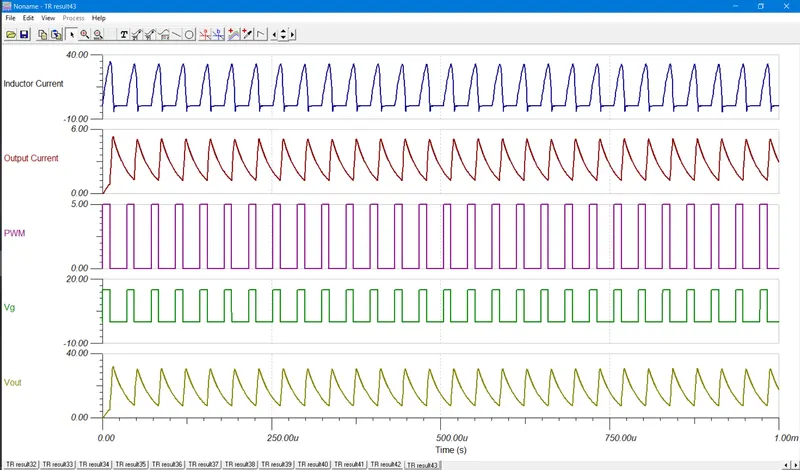
2- Simulate the designed DC/DC converter in problem 1 using a SPICE based simulation tool ( TINA) while using a real gate driver for your MOSFET. Explain the reason for your gate driver choice and then show the following waveforms from your individual simulation with your comments.
a) Input voltage and current.
b) Output voltage and current.
c) Converter duty ratio and inductor current.
d) Mosfet and diode voltage waveforms.
e) PWM and Vgs signals.
Your Answers
Solution:
given,
Vin = 8-12V
Vin avg = (8+12)/2 = 10V
P = 30W
Vout = 18V
fs= 200kHz
output voltage ripple of the capacitor is less than 10%.
Step of Designing:
Step 1: Draw a circuit Schematic diagram of the boost converter
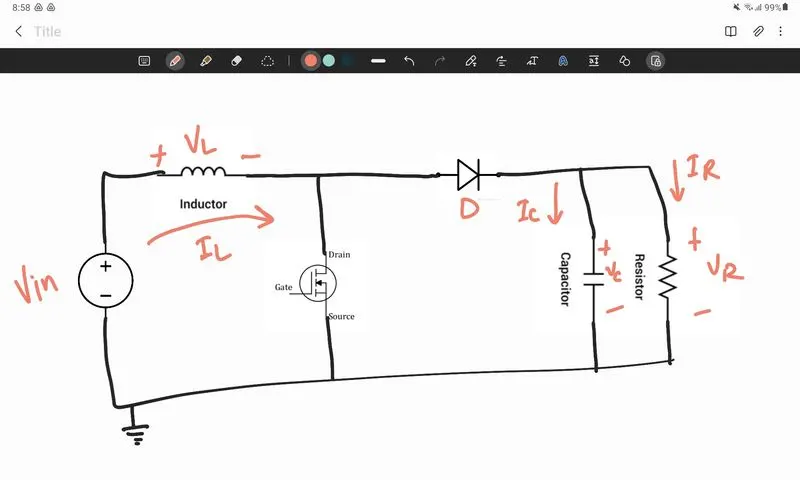
Step 2: Draw the Converter Circuit in ON & OFF mode.
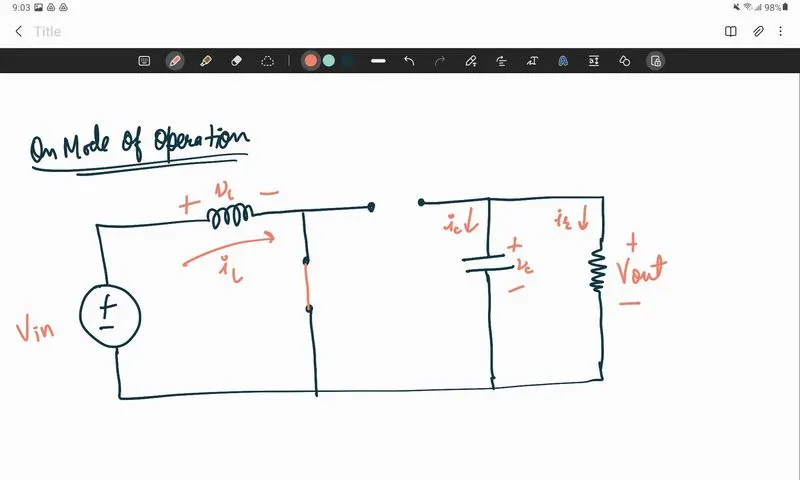
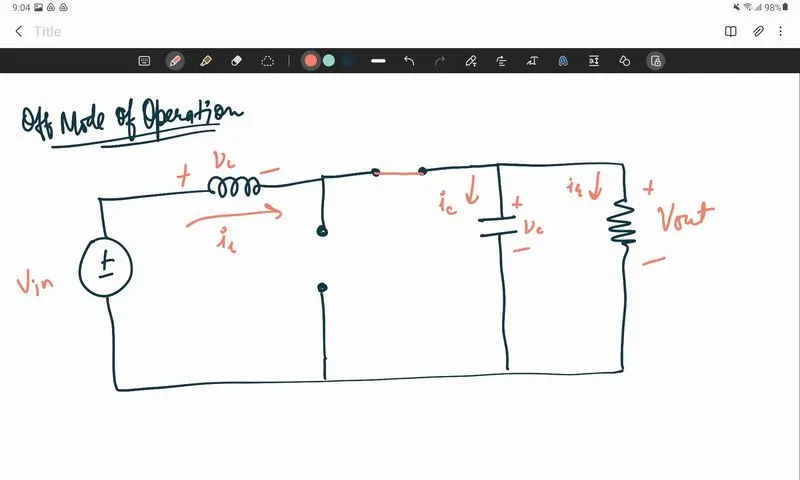
Step3: Calculation
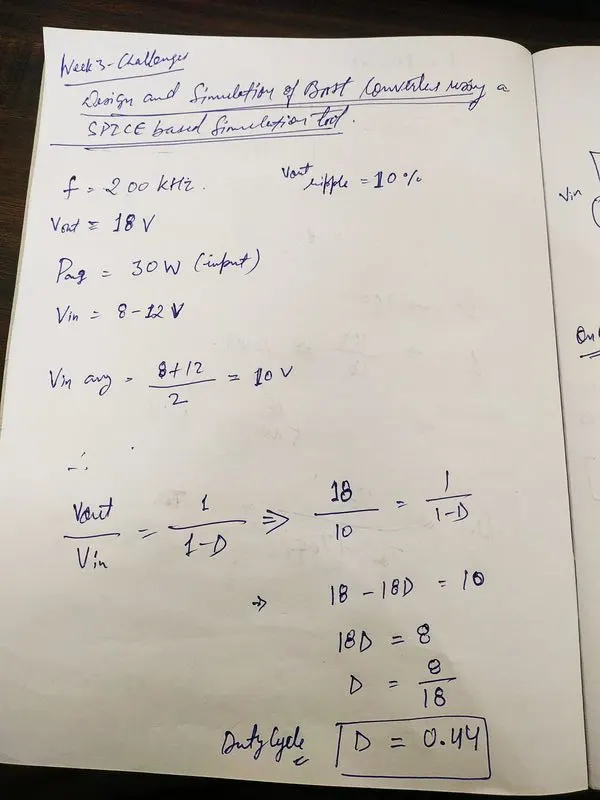
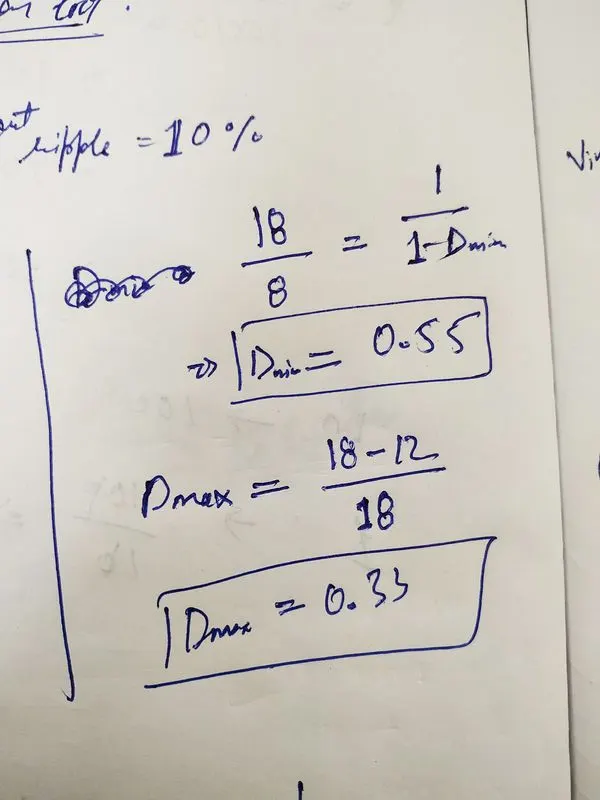
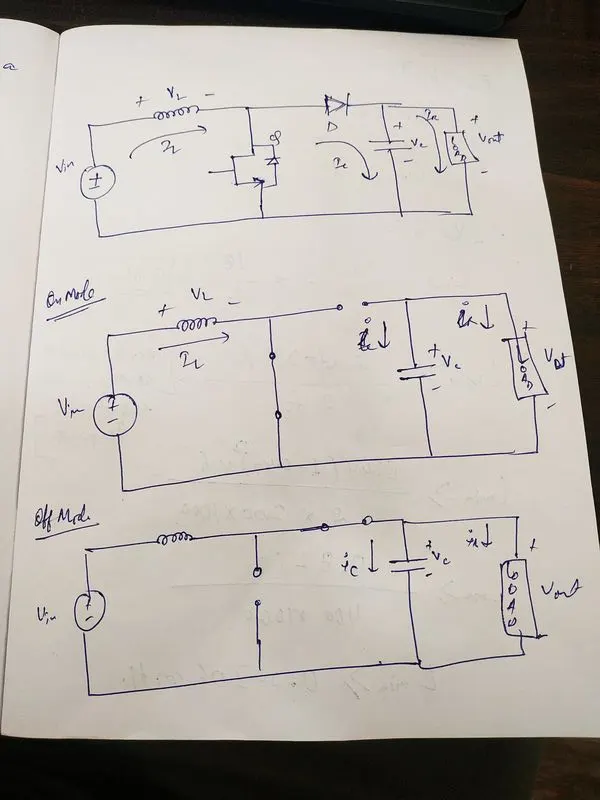
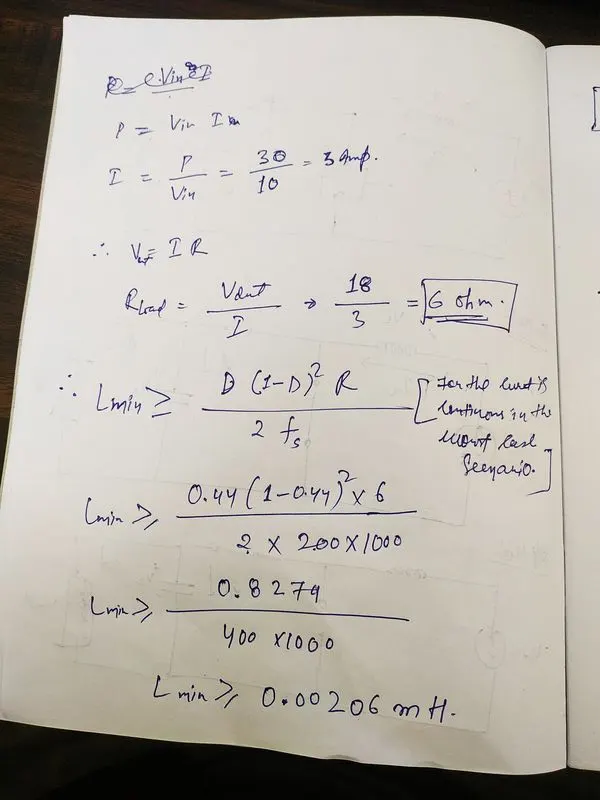
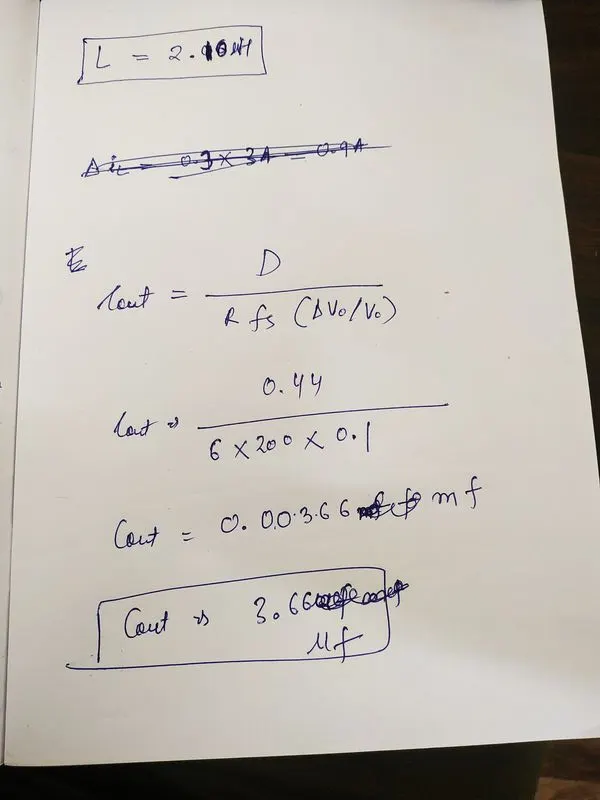
So, we got the values of,
R = 6ohm
L = 2.10uH
C = 3.66uf
Duty Cycle range from 33% to 55%
so I am taking the Average Value of the Duty Cycle,
D = 44%
I= 3A
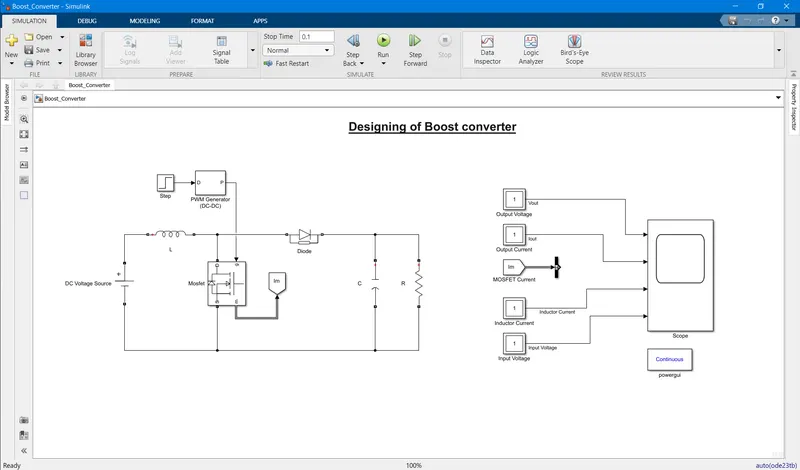
Step4: Now we have to design the circuit in MATLAB Simulink software to know the peak voltage and current values of my switches (Mosfet and Diode).
Open MATLAB and click on
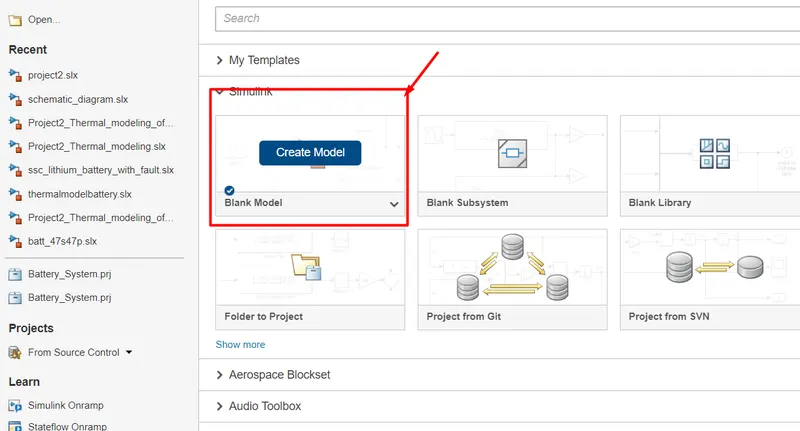
Click on the Create Model.
Select all the required components like:
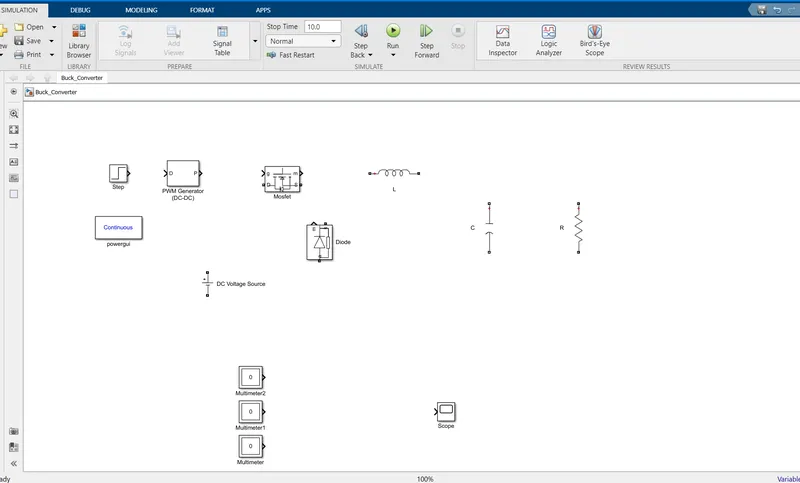
Step signal block, PWM Generator DC-DC, MOSFET, Diode, Voltage source, L, C, R, Scope, etc.
Now Configure each element according to our requirements.
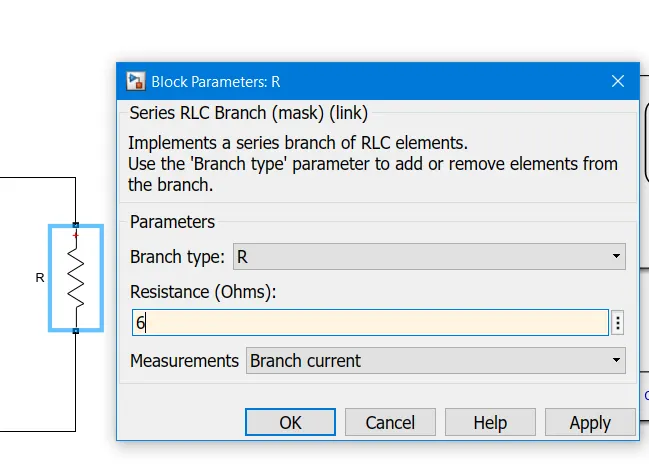
Set R = 6ohm
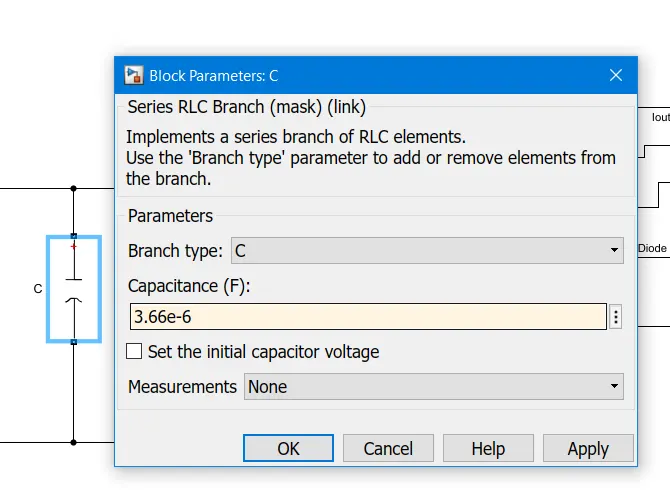
Set Capacitance Value as calculated 3.66uf.
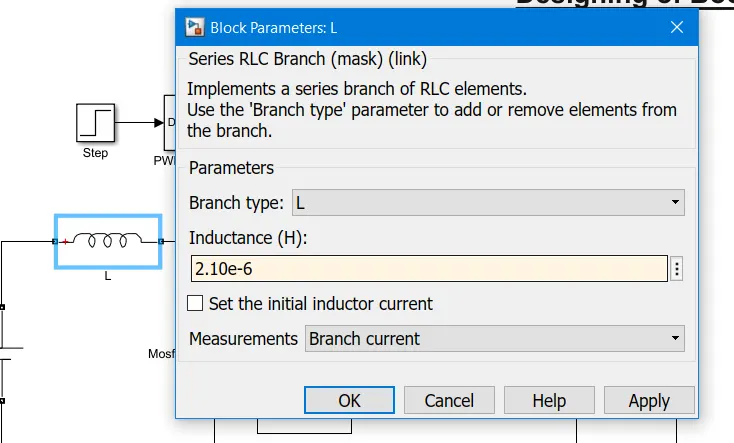
Set Inductance Value as Calculated 2.10uH with Measurement Enable for branch current.
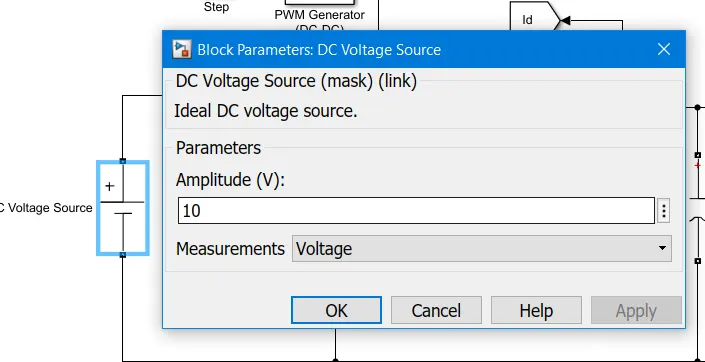
Set Input Voltage 10V
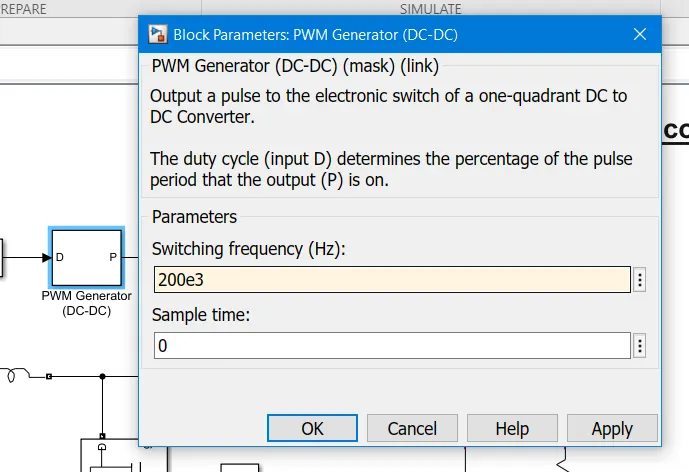
Set Frequency to 200kHz.
Now Connect everything according to the circuit diagram.
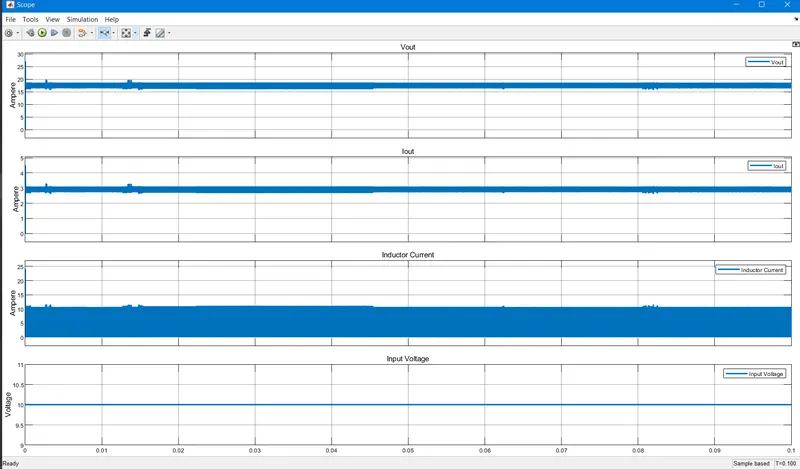
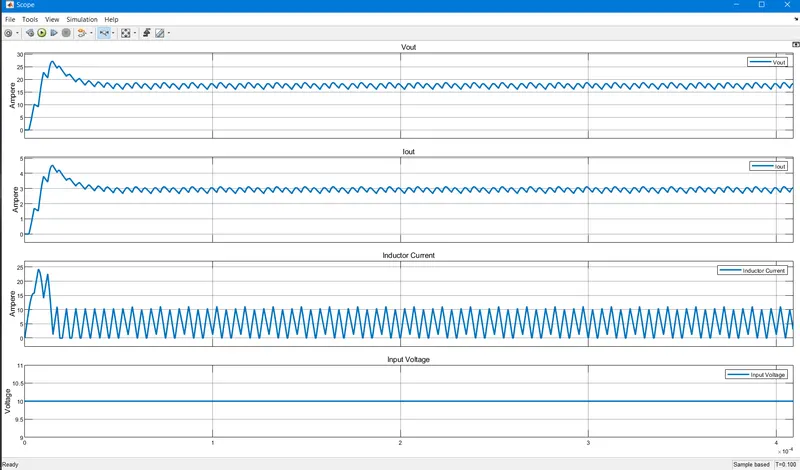
Zoomed Out and Zoomed In output graph.
2- Simulate the designed DC/DC converter in problem 1 using a SPICE-based simulation tool ( TINA) while using a real gate driver for your MOSFET. Explain the reason for your gate driver choice and then show the following waveforms from your individual simulation with your comments.
a) Input voltage and current.
b) Output voltage and current.
c) Converter duty ratio and inductor current.
d) Mosfet and diode voltage waveforms.
e) PWM and Vgs signals.
For TINA TI:
open TINA TI
To design a boost converter we need components,
1. Gate Driver:
for the gate drivers go to the TI website: https://www.ti.com/power-management/gate-drivers/overview.html
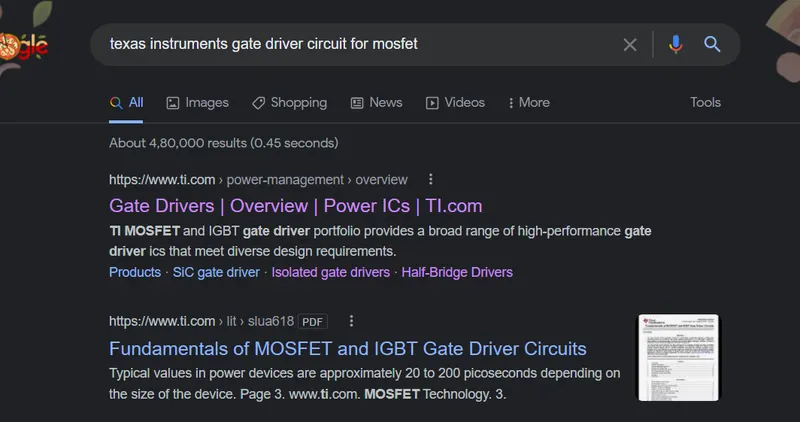
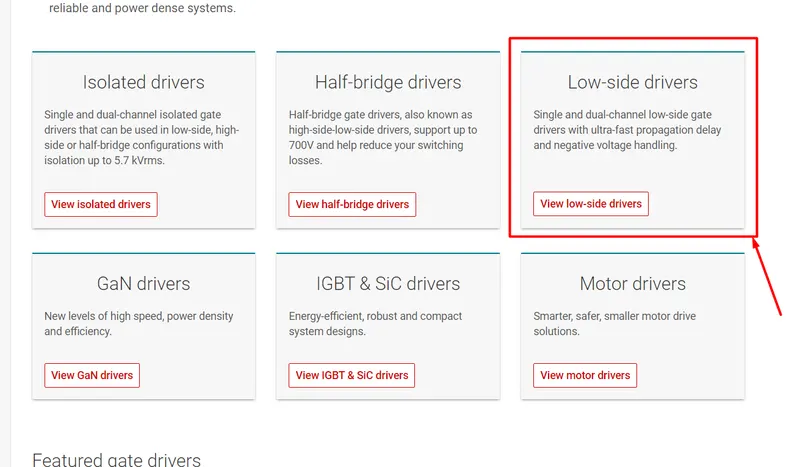
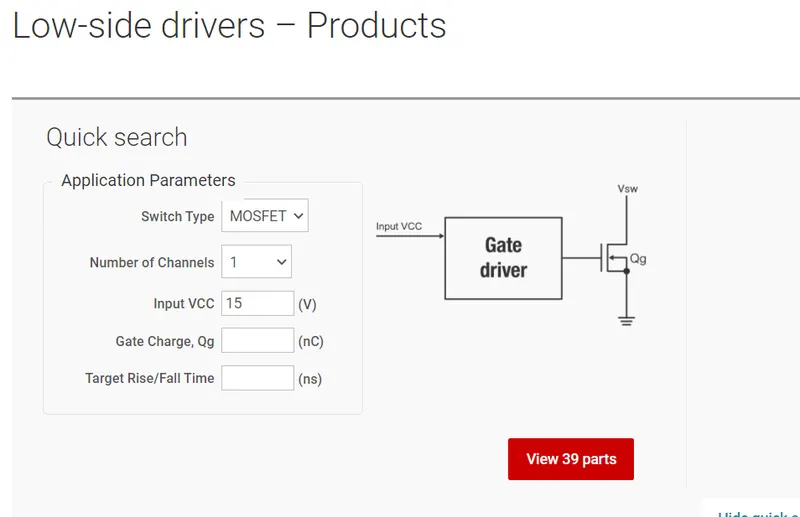
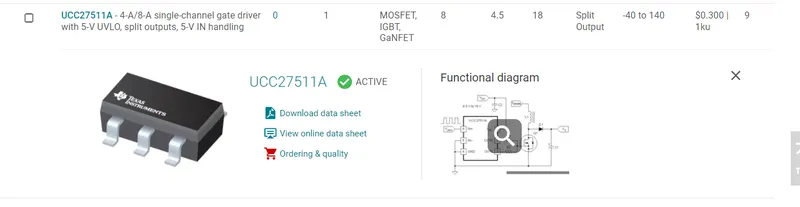
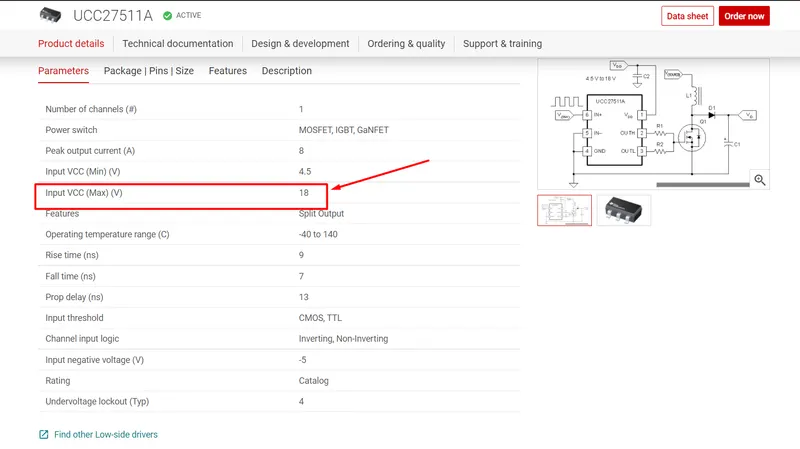
I Choose the Gate Driver UCC27511A Because as per the requirement the gate driver should be in the Voltage range of 15V -20V which is greater than the voltage we are getting from the solar energy.
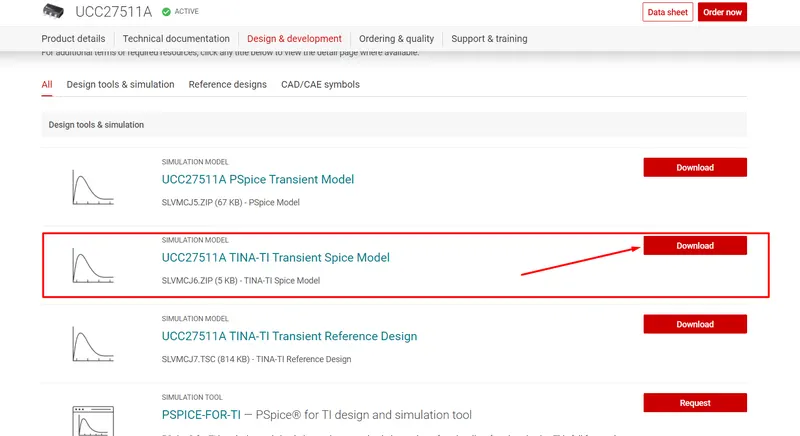
Download TINA-TI Transient Spicec Model
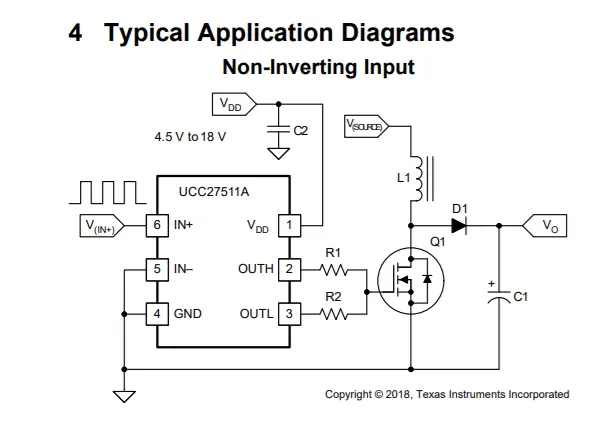
according to the datasheet below is the circuit diagram to trigger the MOSFET
Circuit Diagram:
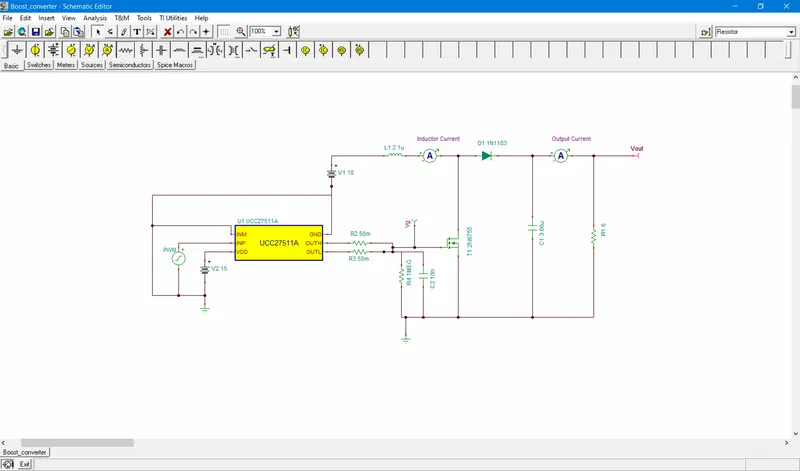
Output Waveform:
---------------------------------------------------------------------------------------------------------------------------------------------------------------------------------------------------------------------END-------------------------------------------------------------------------------------------------------------------------------------------------------------------------------------------------------------------------------------