Analog Control Systems
1. Answer the following:
a.) Compare analog control system with digital one with respect to electric vehicle motor.
Analog deals, processes, and outputs continuous signals in a certain range. It is always progressively changing, whereas digital uses binary language for all sorts of computations, and thus it is either on or off with no in-betweens
- Digital control systems are more efficient overall and have duty cycle control to reduce/increase the circulating current in the case of change in load
- Easy to switch between linear and non-linear control
- Lesser fluctuations in load current and output voltage as digital control has a higher speed response to adjust and control accordingly.
- Various converter topologies can be supported - to implement a 4 quadrant DC/DC converter the entire circuit would need to be changed with analog control, but with digital it only requires change in the program
- Analog circuits age over time, along with components such as chemically filled capacitors. With digital, control systems are more reliable as the only things need to be checked/maintained are actuators and sensors.
- Higher switching frequency possible with digital controllers
- Digital controllers are intelligent and can make decisions in real-time using logic
b.) Explain callback and over the air update events by automotive companies.
'Callback' was used until a few years ago, where if there's a problem with the car, the servicing/after sales part of the company will call the customer to bring the car back and fix it in person.
Over the air (OTA) is a new approach which allows companies to fix the problem remotely. Updating software, fixing bugs, security fixes, etc can be done digitally. Vehicles nowadays are essentially computers on wheels, so all these updates can be done computer-to-computer.
These days, components are controlled through softwares instead of via mechanical components. The vehicle has become intelligent and smart, and the Electronic Control Unit (ECU) has become one of the most important components in the vehicle today. The things that can be controlled remotely today as opposed to a decade ago are:
- Engine transmission can be turned on/off
- Passengers or the drivers can be locked inside the car
- Blowing the horn continuously
- Controlling the steering system
- Car braking system
- Speeding the car beyond road regulation.
- Controlling the navigation, audio or infotainment system
- False alarm in the cockpit
These can be extremely helpful and provide protection to the consumer in the event of the car being stolen for instance. It also helps to make driving a much more safe activity.
2. Using MATLAB, plot bode diagram of a transfer function (second and third order transfer functions to be considered) in s-domain and z-domain. Comment on the results.
G1 =

     3 s + 2
  -------------
  s^2 + 7 s + 6

Continuous-time transfer function.


G1z =

   0.02907 z - 0.02888
  ----------------------
  z^2 - 1.932 z + 0.9324

Sample time: 0.01 seconds
Discrete-time transfer function.


G2 =

           s + 1
  -----------------------
  s^3 + 3 s^2 + 12 s - 16

Continuous-time transfer function.


G2z =

  4.966e-05 z^2 + 1.641e-07 z - 4.884e-05
  ---------------------------------------
     z^3 - 2.969 z^2 + 2.94 z - 0.9704

Sample time: 0.01 seconds
Discrete-time transfer function.
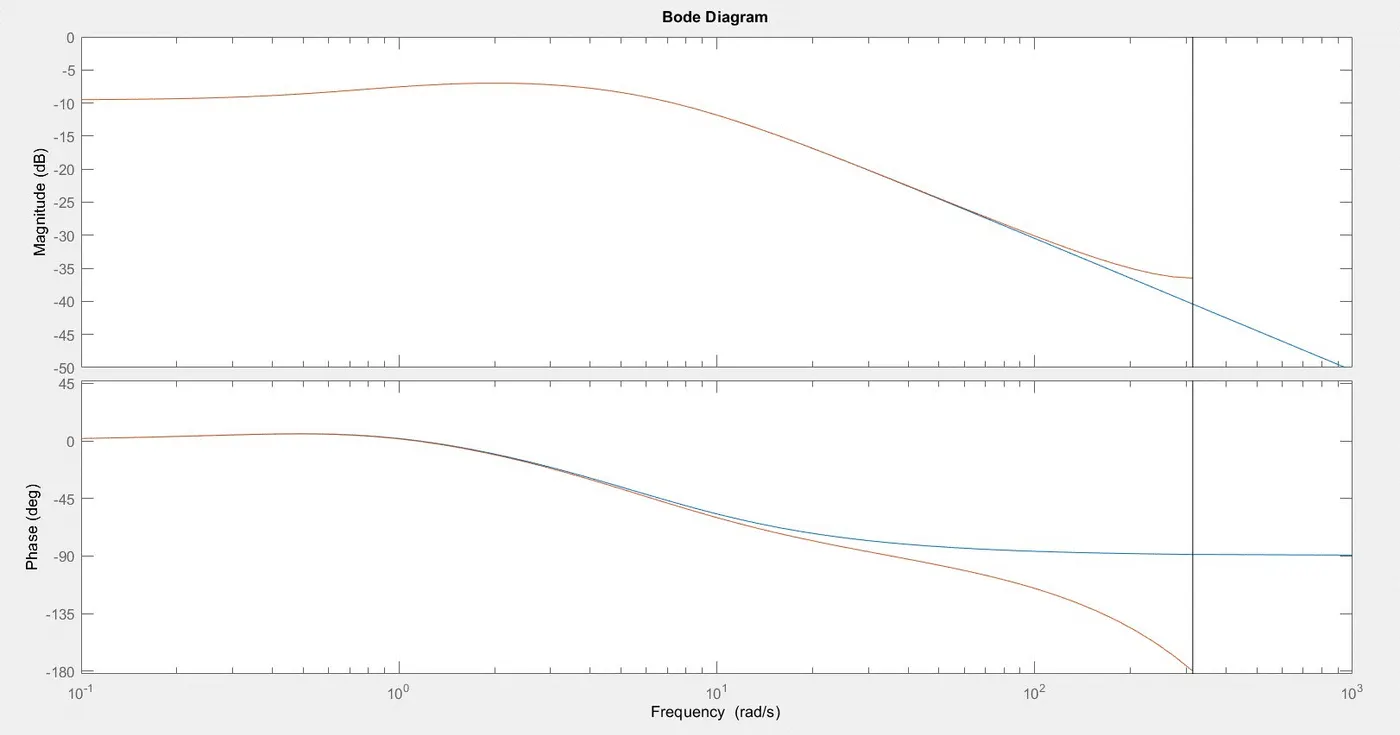
G1, G1z: Second order TF
G2, G2z: Third order TF
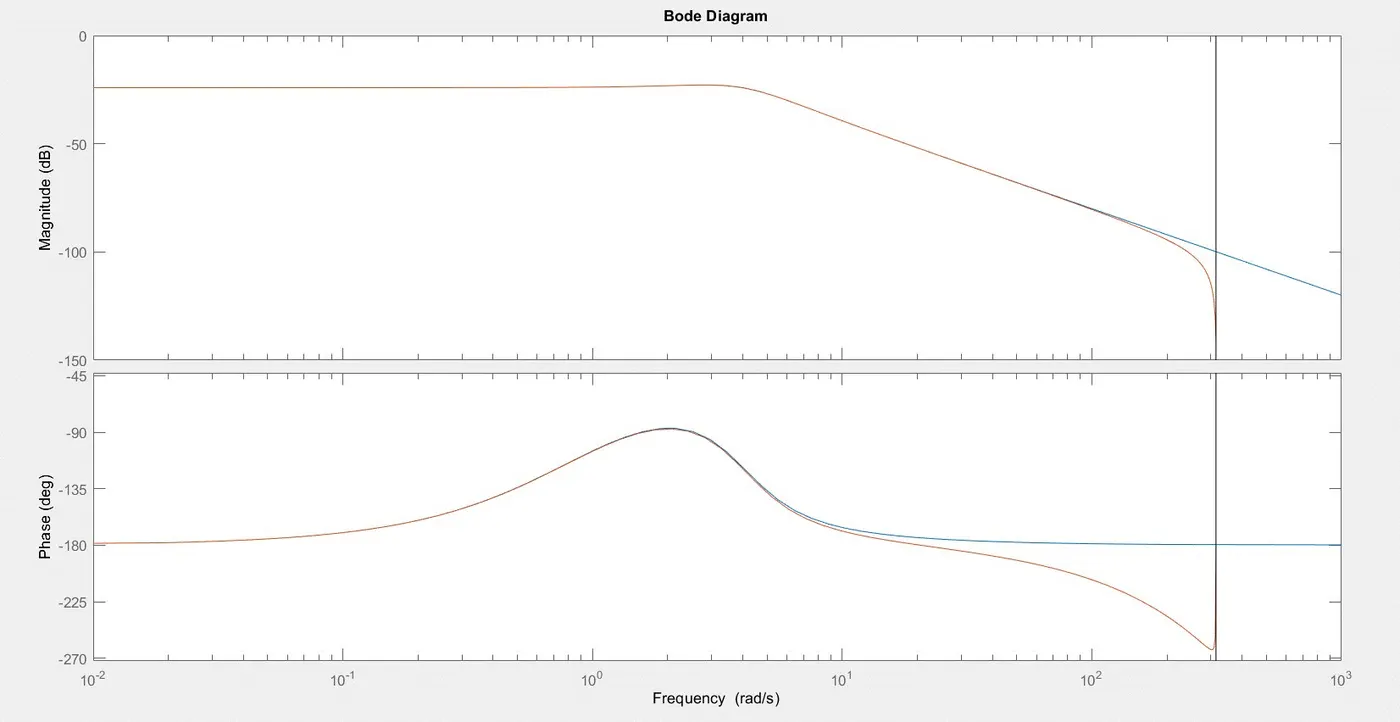
- Blue represents s-domain, orange represents z-domain
- In both functions it is evident that until a certain frequency, s and z domain completely overlap each other and give almost identical results.
- However, at higher frequencies there is a clear difference in their responses. This is due to the conversion from continuous (s-domain) signal to discrete (z-domain), where a low sampling time is crucial. The current sampling time is 0.01, but the frequency to take samples must be higher (which means sampling time should become lower) to enable accurate conversion to z-domain.
Lowering sampling time from 0.01 to 0.001:
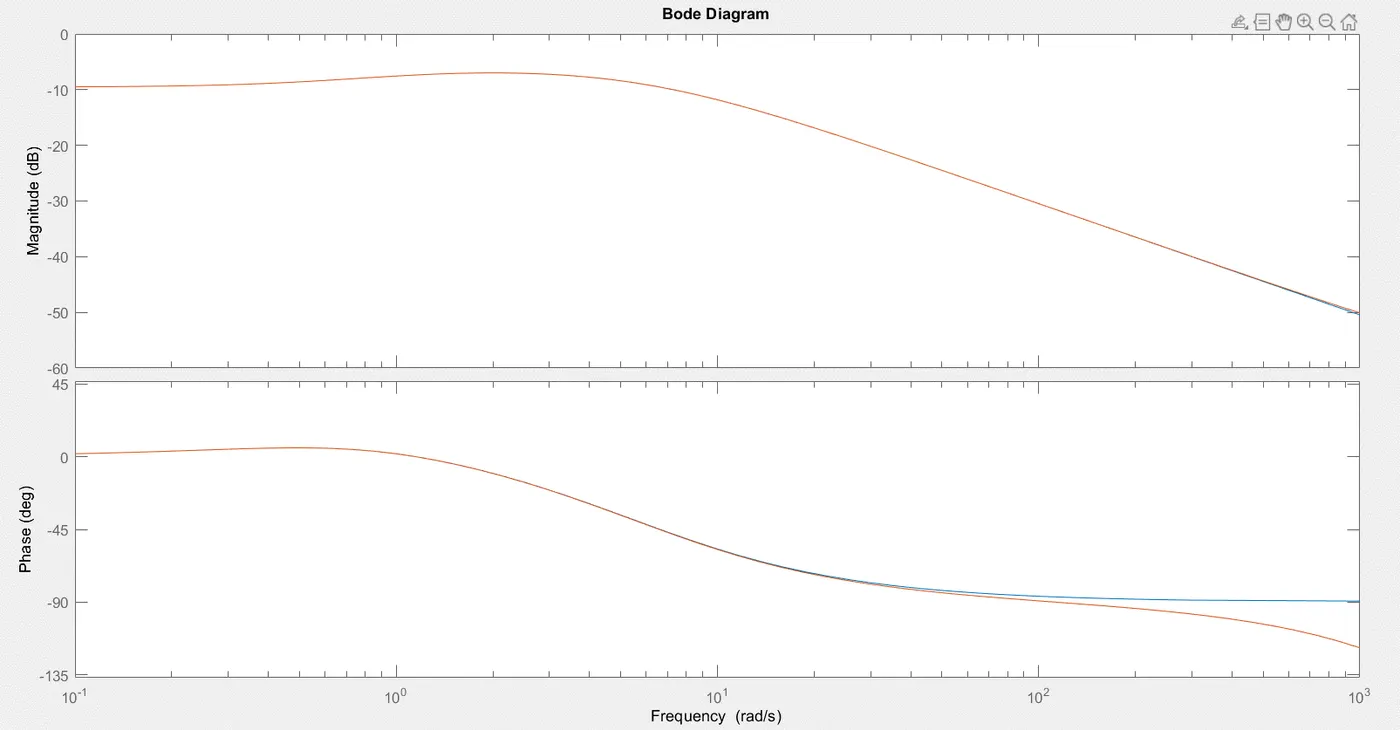
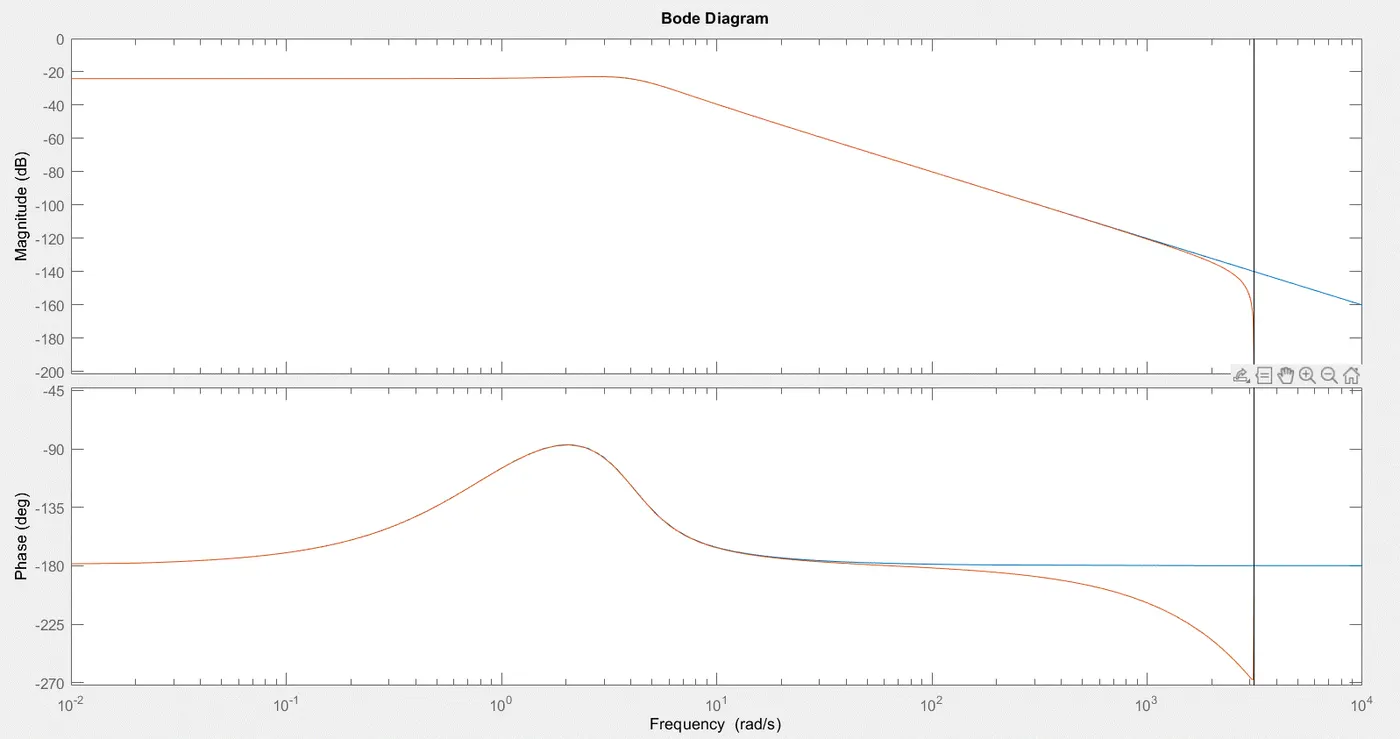
- Lowering the sampling time by 10x has made quite a difference, and more importantly has shown the importance of taking higher samples when converting from analog (continuous, s-domain) to digital (discrete, z-domain)
- The overlap is better, especially with the second order TF. As the function becomes of higher order, in this case the third order TF, even lower sampling time would be needed since the function has more variables and is more complicated.
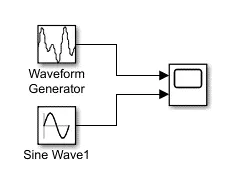
3. Explain the process of sample and hold technique in Simulink.
a.) With the help of a “sample and hold” block from the library browser.
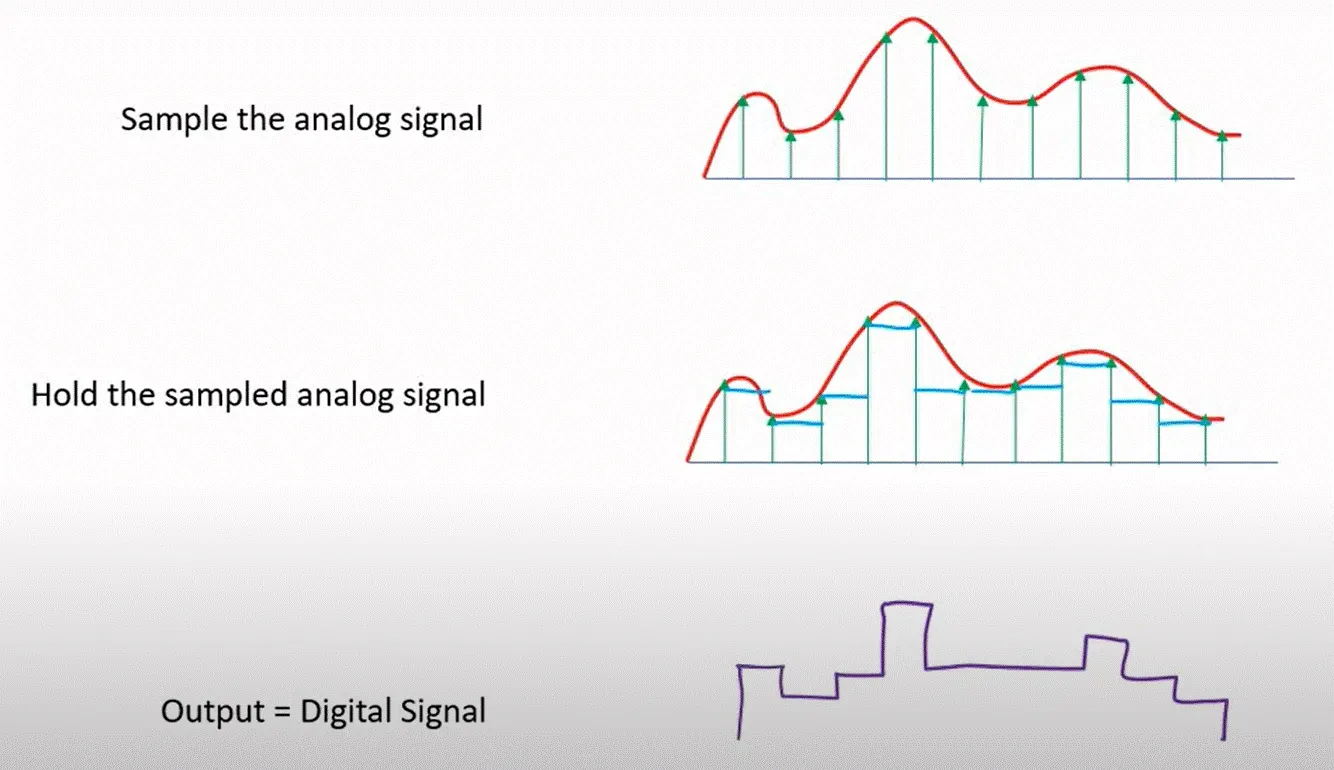
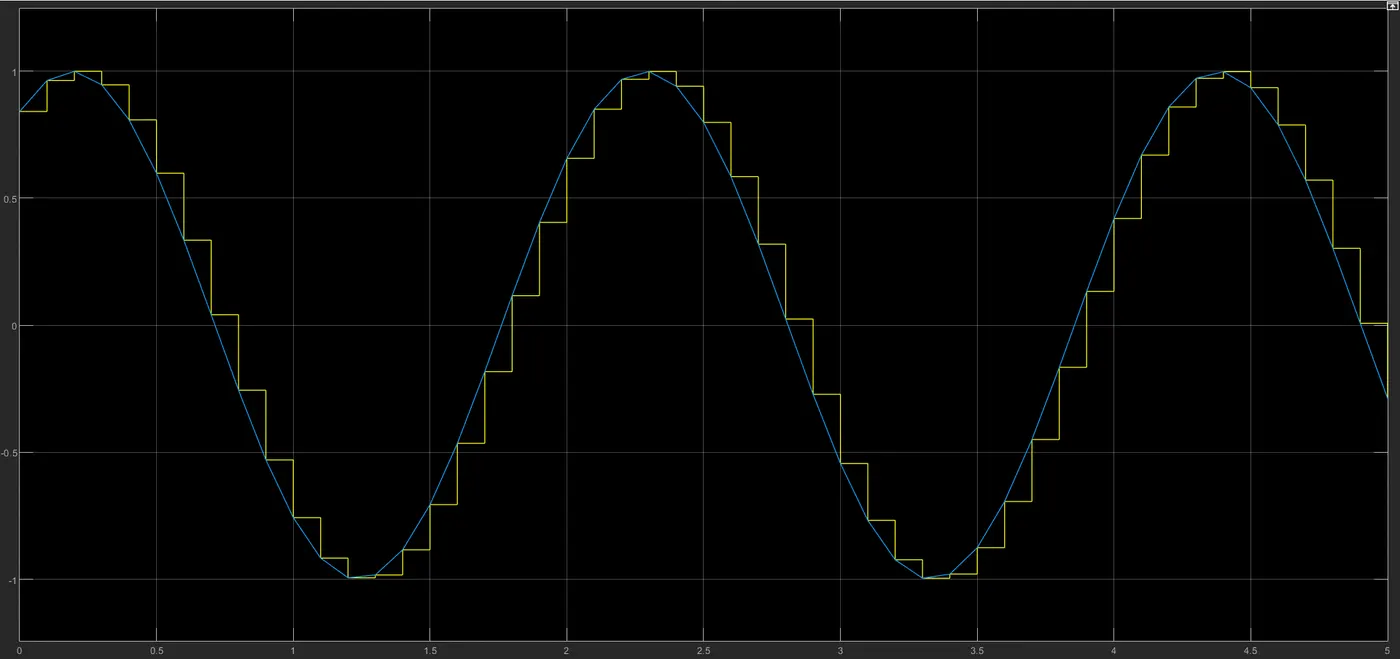
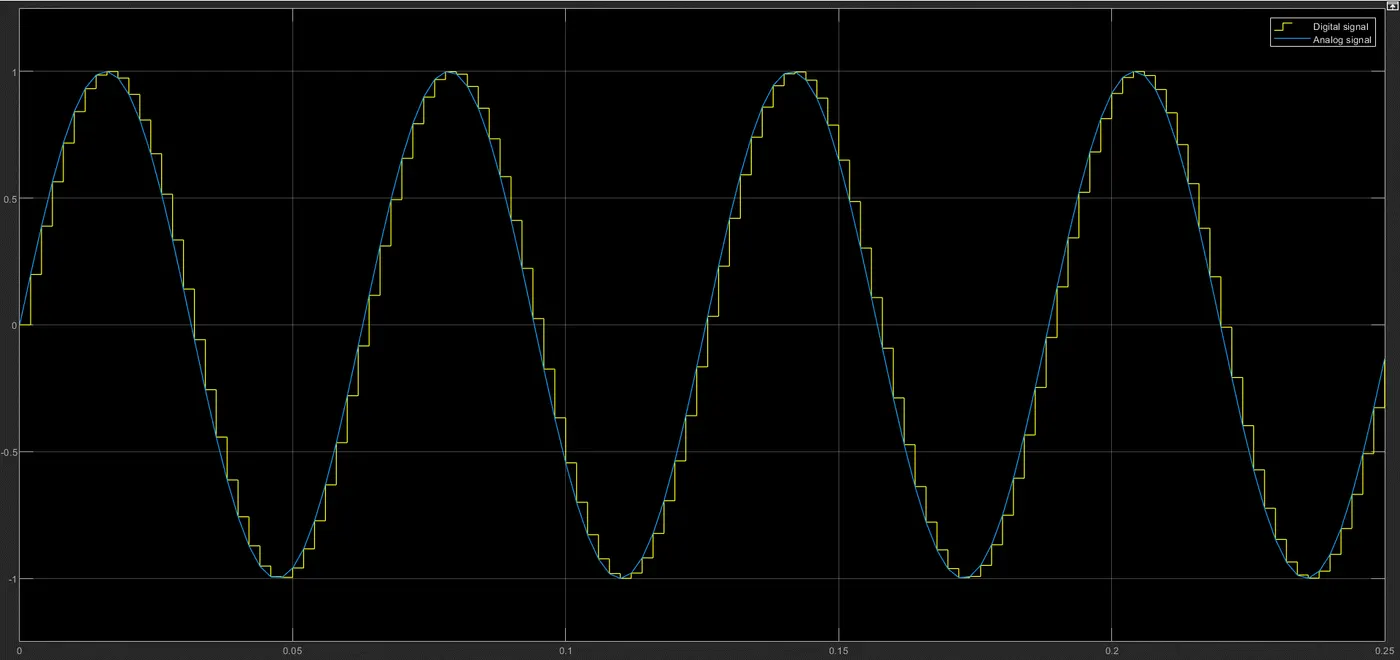
- Samples are taken at specific points from a continuous/analog system
- Next, those points are literally "held" in their position
- This allows the digital signal to be constructed very easily
- The more the sampling points, the more accurate the output, as will be demonstrated below.
Frequency of 500Hz (sampling taken every 1/500 sec):
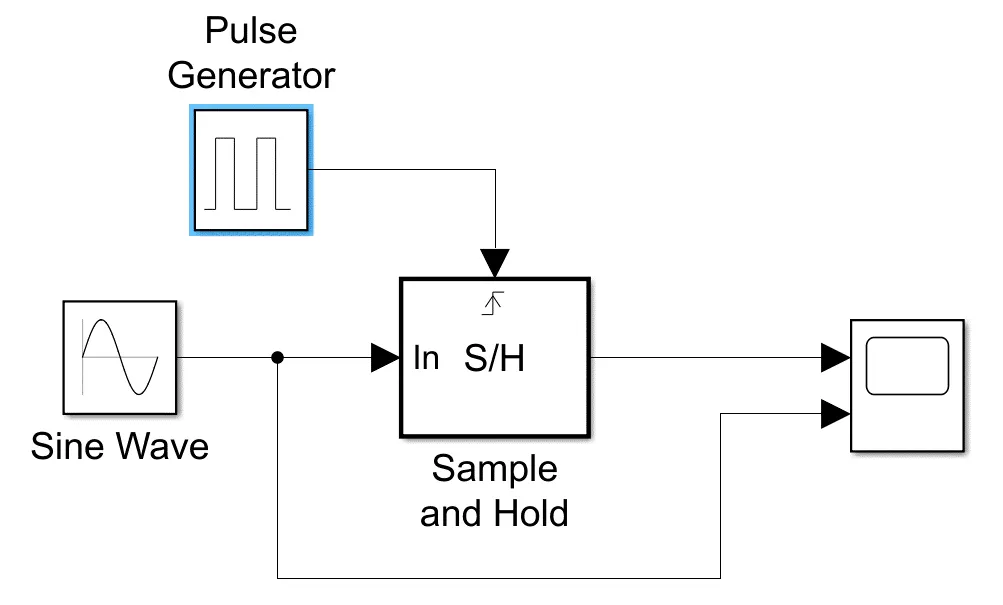
Frequency of 1500Hz (sampling taken every 1/1500 sec):
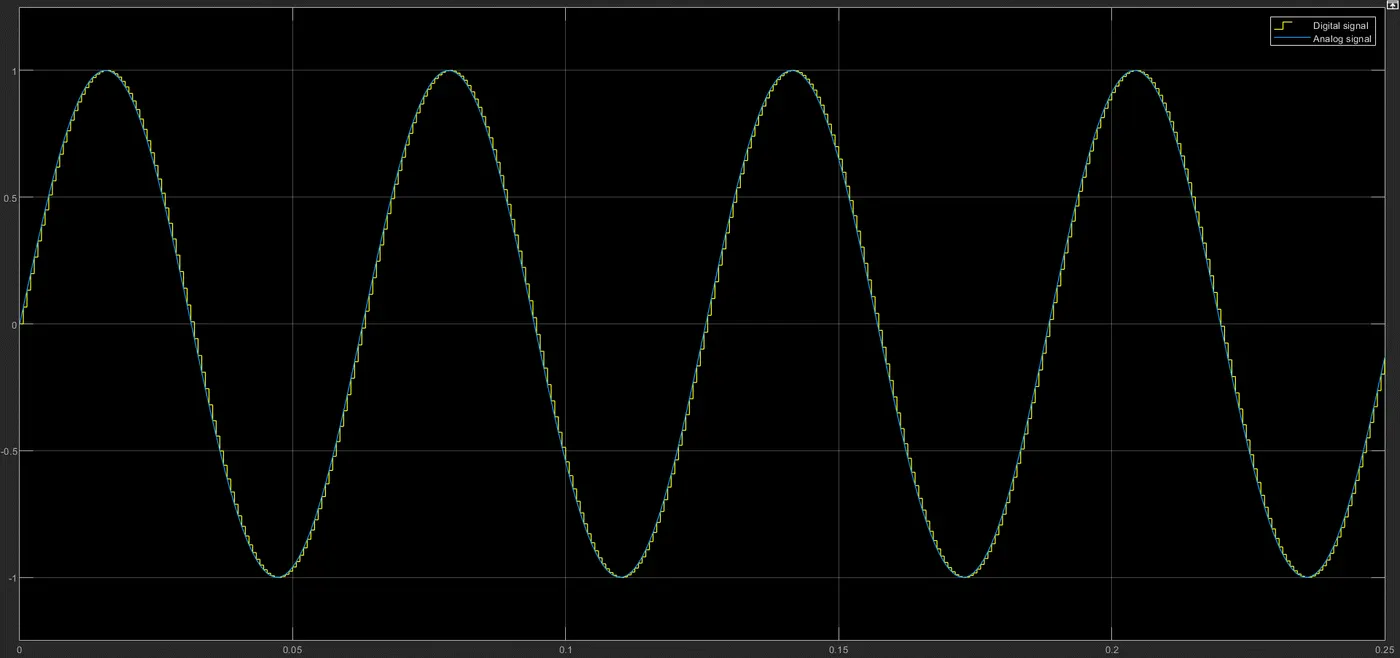
- The higher the frequency of taking samples, the more accurate the conversion from analog to digital using the sampling and hold technique.
b.) Obtain similar results without using the built-in sample and hold block