Week 7- Base Unit Design Challenges 2
AIM - TO DESIGN A BASE UNIT WITH ALL THE WELDMENTS FOR THE GIVEN CAR PANEL AND TO DESIGN THE REMAINING UNITS REQUIRED FOR THE FIXTURE ASSEMBLY .
INTRODUCTION & THEORY -
BASE UNIT -
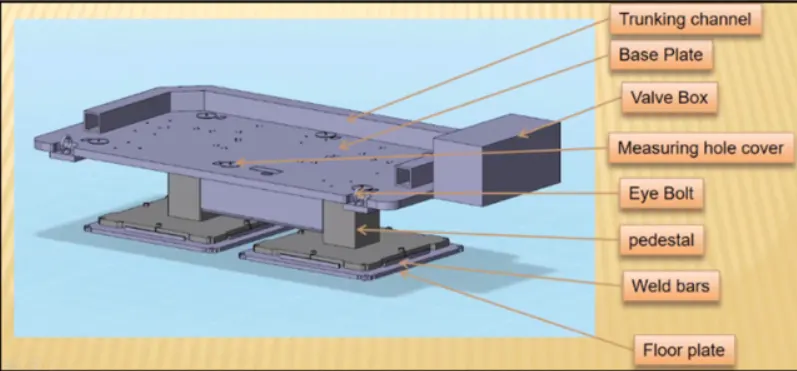
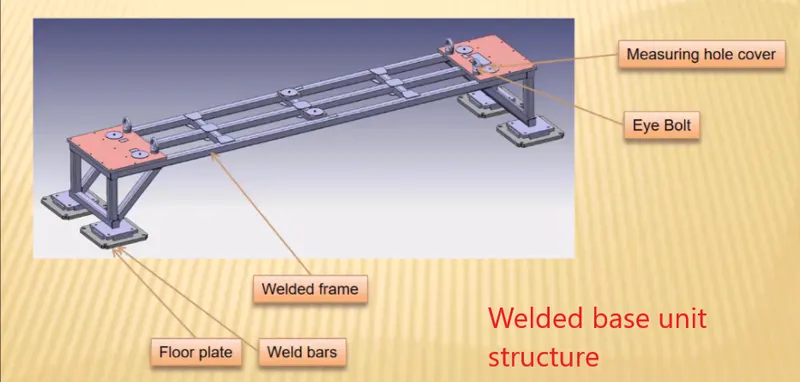
- A base unit is a unit on which all other units of the tool and other necessary parts of the tools like trunking channel , valvebox , eyebolt etc are assembled .
- Holes will be drilled on the base plate to mount all the necessary units of the tool on it .
- Base unit is an important unit in fixture assembly as it mounts all the units on it , so the base unit should be designed such that it can take up the load and absorb all the vibrations during the welding operation .
Parts of base unit -
a) Base plate -
- A base plate is a machined plate with thickness of 20 - 40 mm thickness .
- A base plate has holes drilled on it so that all the units can be mounted on it .
b) Pedestal -
- Pedestal is a part which connects base plate to the floor plate .
- It is a standard part in general and in some cases it can be welded frame integrated with base plate.
- A standard pedestal can be of different height and size.
- Depending on size of base plate , the number of pedestal varies for load distribution .
c) Trunking channel -
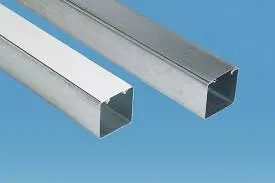
- It is a duct which accomodates all the electrical and pneumatic hoses and wires for the unit of tool .
- Trunking channel is available in different thickness and different sizes .
d) Valve box -
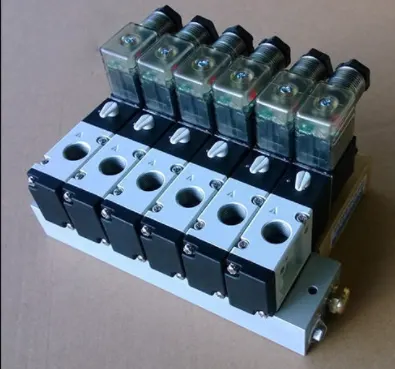
- It is a standard part which contains all the valves for the units.
- It supplies air to the pneumatic cylinders in the assembly .
- Valve box consist of solenoid valve which is used for air supply.
e) Eye bolt -
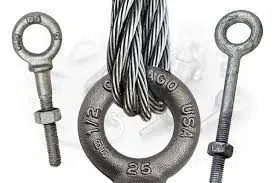
- Eyebolt is a part which is attached to the base unit , it is used for transportatiion purpose of tool.
- Lifting hooks will be used to lift the base unit or the entire tool .
- Forklift holes will also be provided in case of transportation purpose.
f) Floor plate -
- Floor plate also known as foundation plate is grounted to the floor with fixed bolt on the ground .
- A clearance of 10mm is provided between pedestal and floor plate .
- weld bars are used to weld position permanently after levelling is done .
Points that are needed to be taken into consideration while designing base unit -
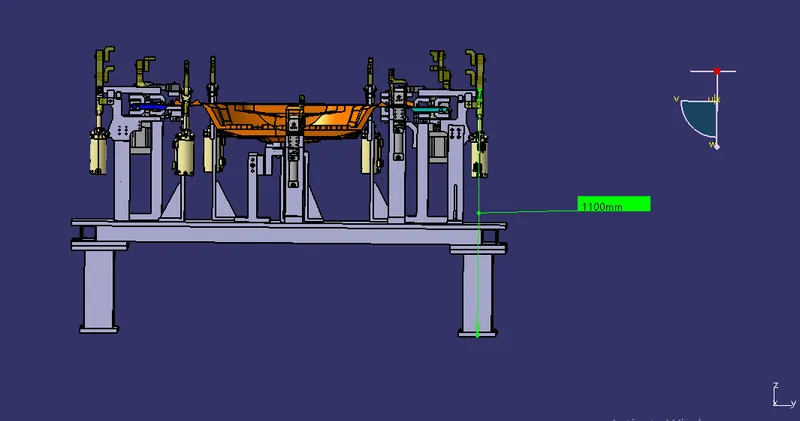
a) Working height - the working height of the base unit is an important consideration . the working height depends upon the type of welding operation like manual welding or robotic welding . for manual welding , the overall height of total tool should be 850-1100 mm in general . the working height also vary from country to country .
b) The dimension and the specification of base plate is also an important factor .below is the fundamentals given for base plate.
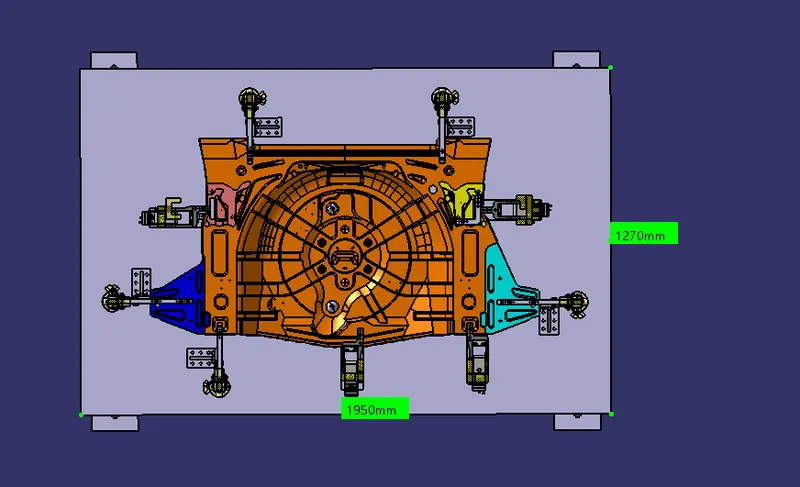
Fundamental of base plate -
- A base plate size should cover all the units with its outer periphery including the opening
- A base plate is preferred to be designed with respect to body coordinate system (b.c.s) .
- A base plate should be drilled with datum holes / measuring holes in line with the pitch with 1000 mm in general .
- Number of datum holes depend on size of the plate , a minimum of 4 holes is required .
- Datum holes should be drilled a nominal values of coordinate and in terms of 50mm and 100mm in general . ex -x200,y100,z300 .
- Datum holes should be drilled with dia 100 mm away from other units .
- Datum holes should be covered with datum plates .
c) Depending upon the units and their overall weight , we can decide if we want to use simple base unit or a welded structure base unit .
d) The base unit should be parallel to the ground , for this a height adjusting mechanism should also be provided .
e) For lifting and transportation of base unit , eyebolts should be provided , the size and number of eyebolts depend upon the base unit size .
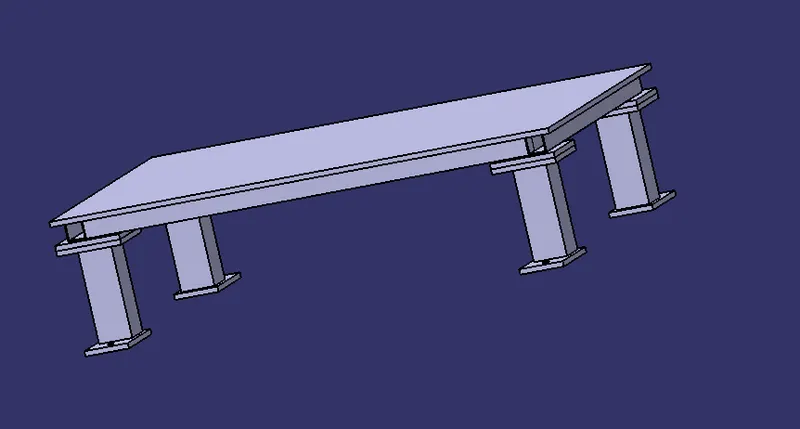
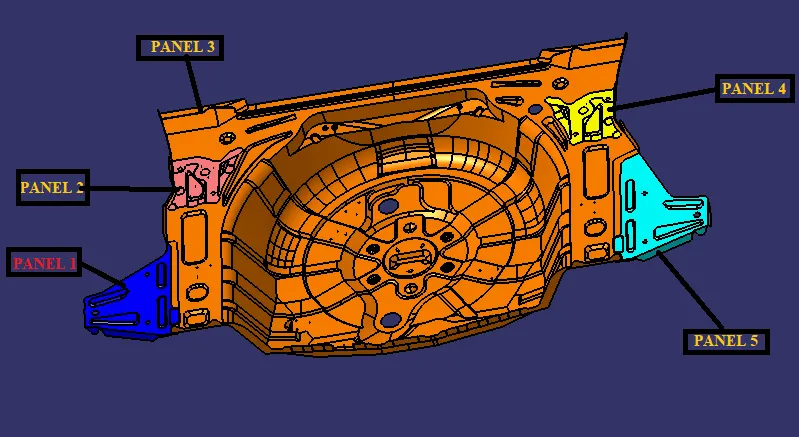
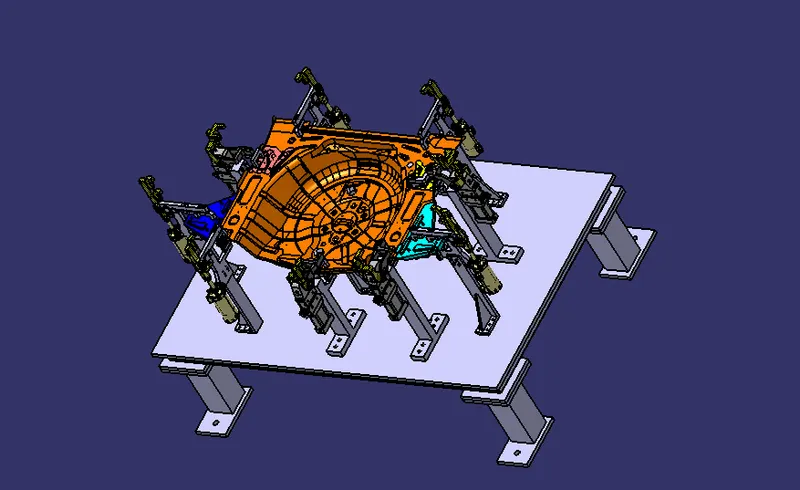
FIG: BASE UNIT
INPUT:
PANEL-1
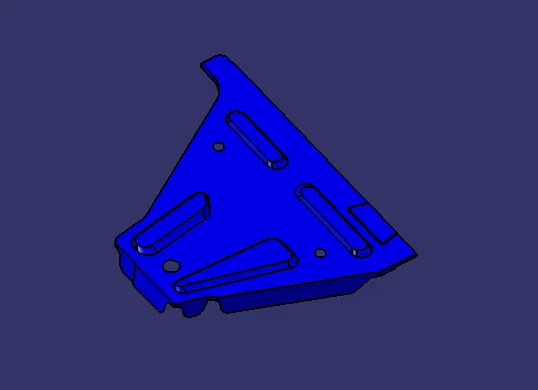
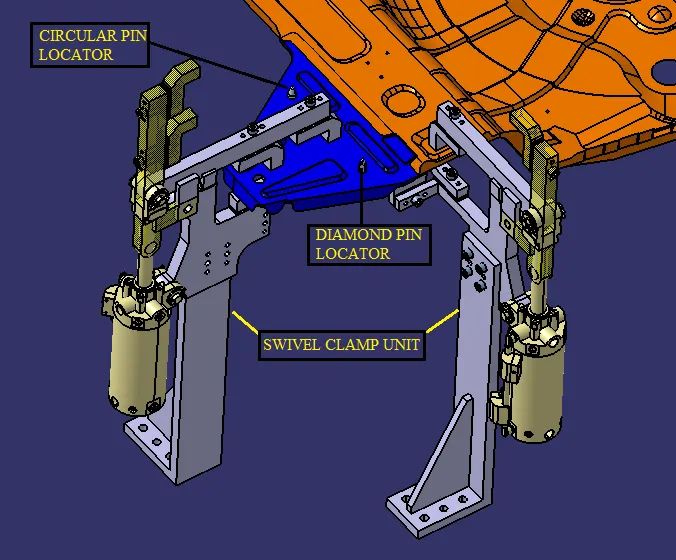
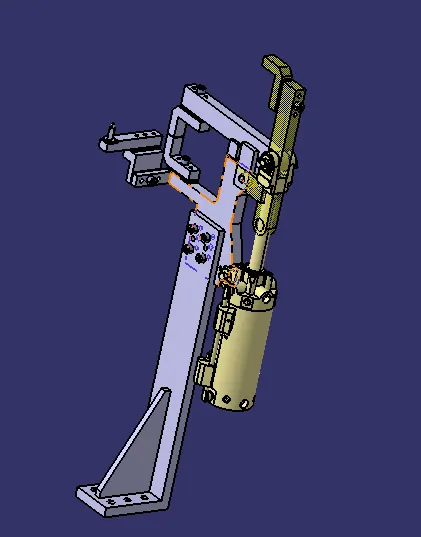
FIG:PIN CLAMP UNIT
for the panel 1 we have used two locating pins , one circular pin and one diamond pin . these two pins will restrict the movement of the panel in 4 translational and 2 rotational motions . the rest of the motions will be restricted by the two power clamps that we have provided.
PANEL-2
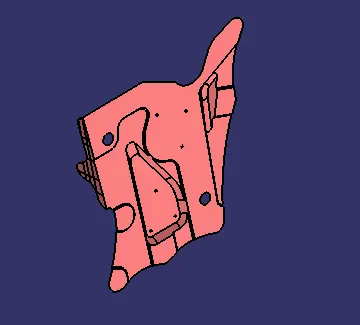
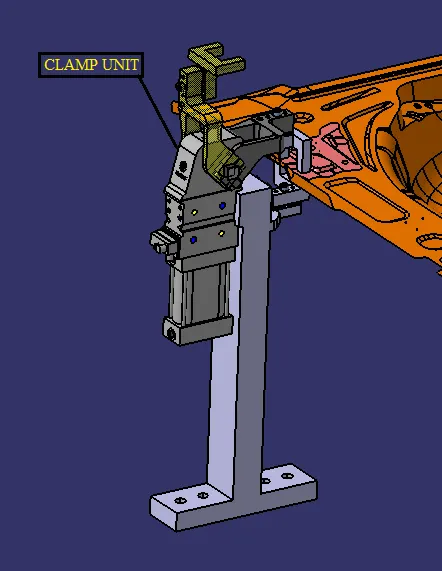
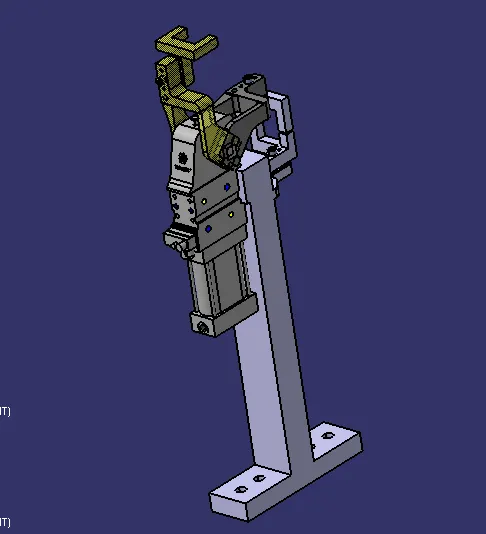
for panel 2 we are using one power clamp unit and we are not using any pin units because the pan doesent have locating points.and this is the small panel so 1 power clamp unit is ok.
PANEL-3
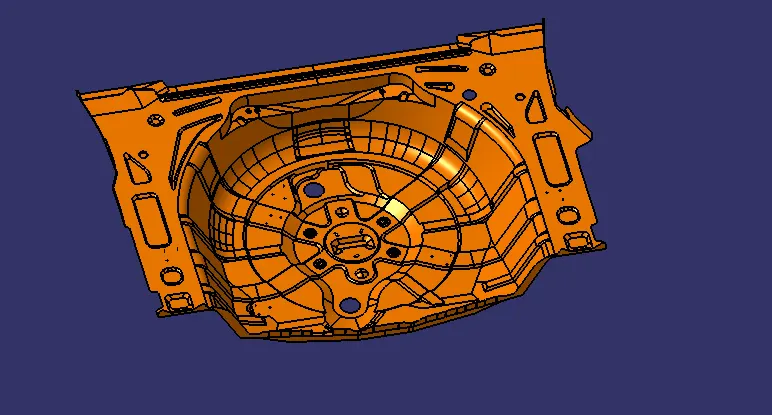
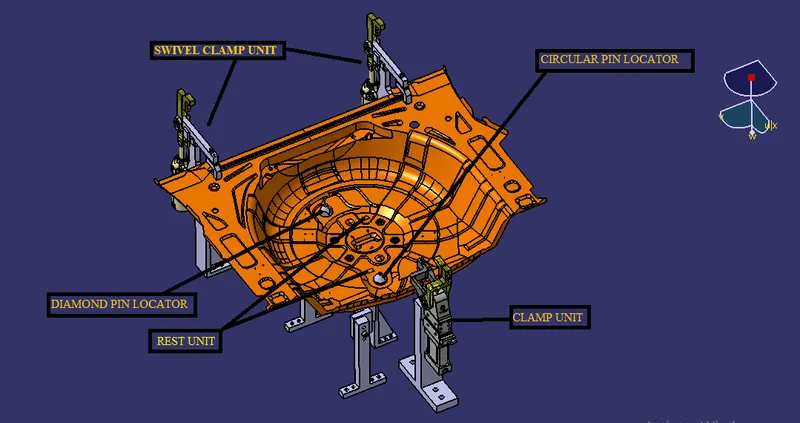
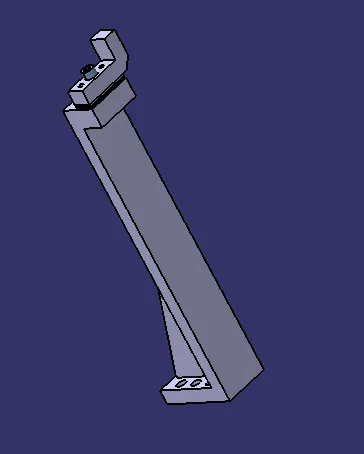
FIG: REST UNIT
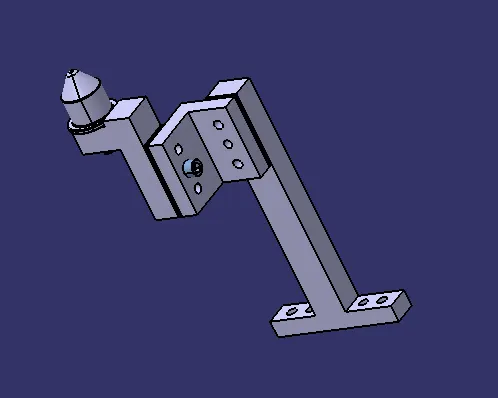
FIG: CIRCULAR PIN UNIT
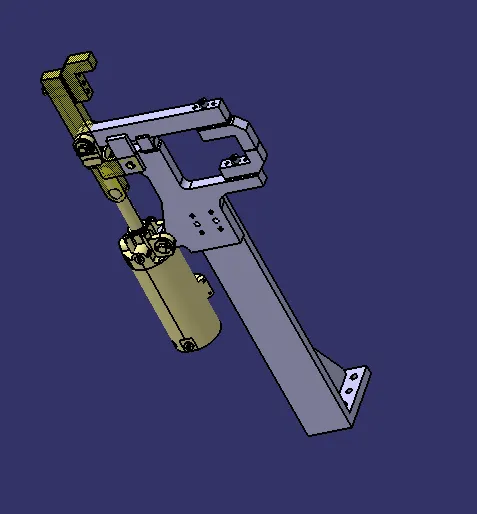
FIG: SWIVEL CLAMP UNIT
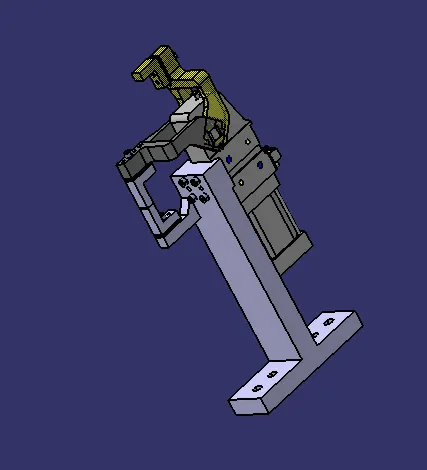
FIG:CLAMP UNIT
for the panel_1 we have used two locating pins , one circular pin and one diamond pin . these two pins will restrict the movement of the panel in 4 translational and 2 rotational motions . the rest of the motions will be restricted by the three power clamps that we have provided . since the yellow panel is big in size we have also provided two rest units .
PANEL-4
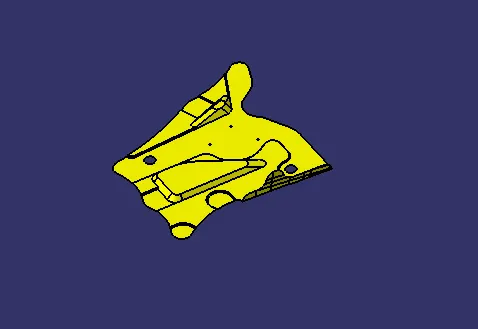
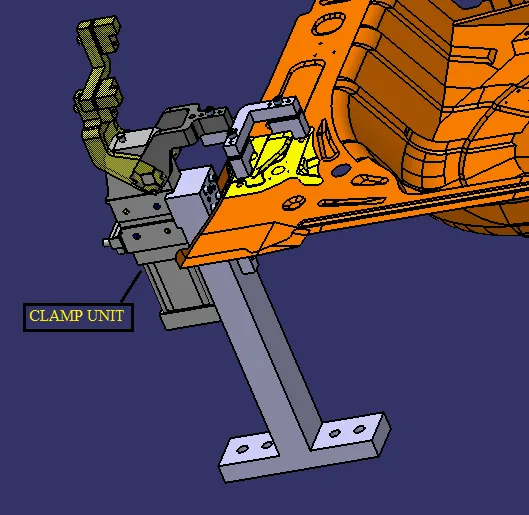
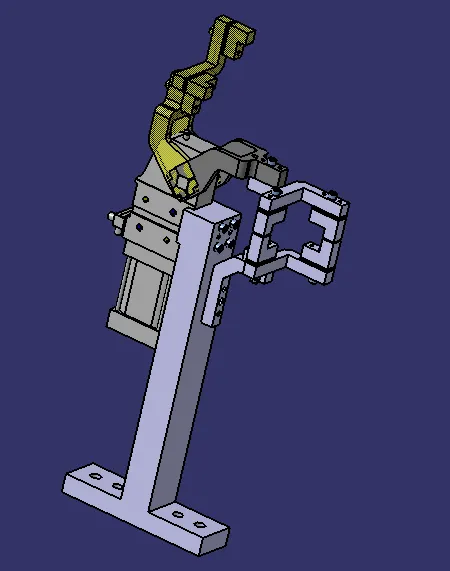
FIG: CLAMP UNIT
for panel 2 we are using one power clamp unit and we are not using any pin units because the pan doesent have locating points.and this is the small panel so 1 power clamp unit is ok.
PANEL -5
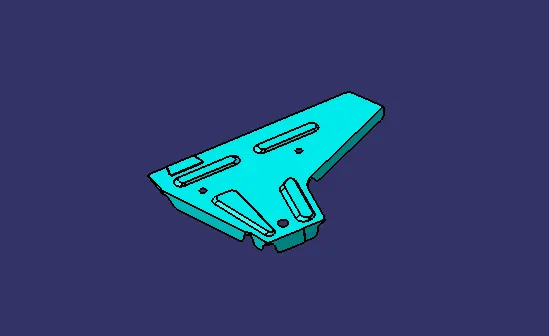
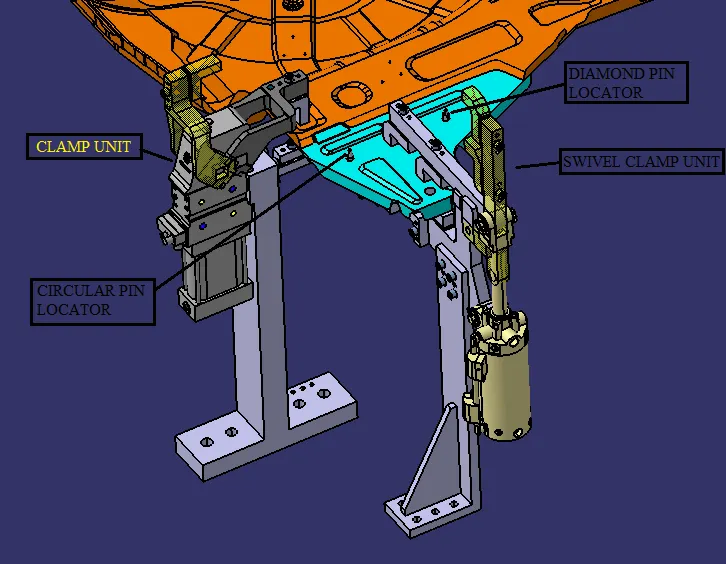
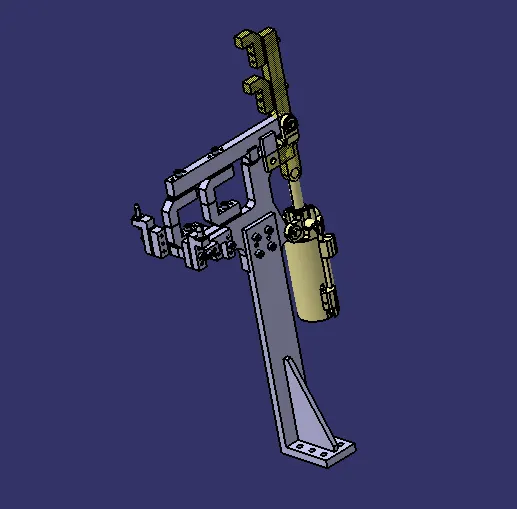
FIG: PIN CLAMP UNIT
for the panel 5 we have used two locating pins , one circular pin and one diamond pin . these two pins will restrict the movement of the panel in 4 translational and 2 rotational motions . the rest of the motions will be restricted by the TWO clamps that we have provided .
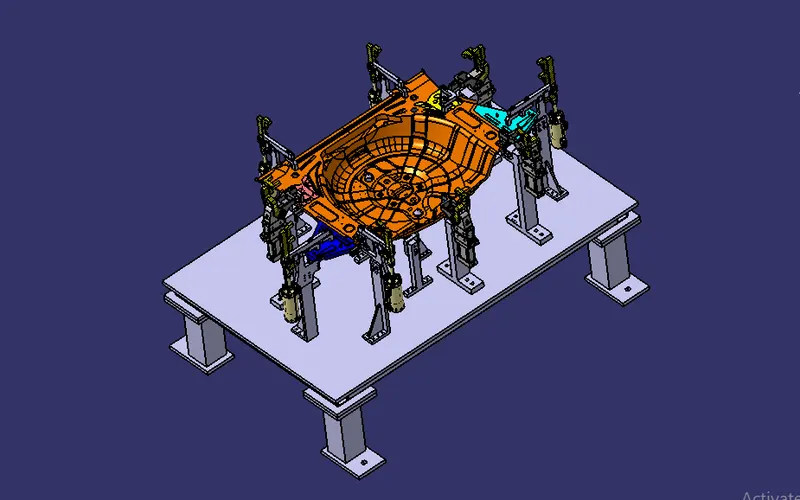
Assembly of units -
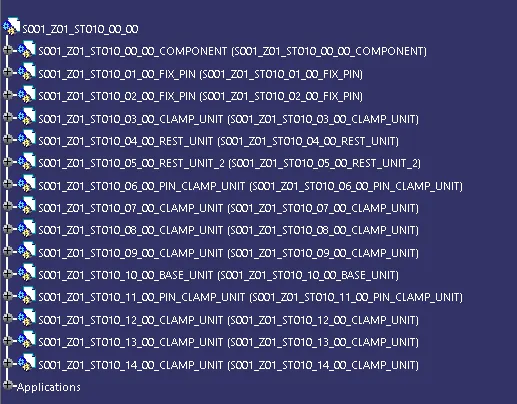
Structure of Design tree:
- A process where all the assemblies and parts are named in specific standards Different customers have different sets of standards and the structure of the design tree.
- Every company, every customer has different standards of their own structural design tree.
- So they will be giving a template on how the structuring and detailing of the design are done. And you have to follow that particular design or structuring of the tree.
- In the design tree itself if we mentioned that particular name, wherever that part is we can easily know that this part belongs to this one or this station or this assembly on a particular unit. So this helps us to avoid errors during the design study, manufacturing assembly, and inspections.
- It is an important process that helps us to identify a specific part or assembly as to which project, tool, it belongs to. Structuring a design tree is actually to avoid the errors, which might come during manufacturing assembly, or either in-house inspections as well.
- If the part or assembly are not named properly, or the design tree is not structured properly, it will create confusion to understand the design and may create major possibilities of making an error.
- Every part, every component should be named according to their procedures.
- If we did a mistake or renamed the entire standard parts from the customer as a design part. Now the customer is going to manufacture the entire part again from the scratch, but he already has that product in his itinerary. but extra cost extra time and is feasible. This is also known as an error which is actually going to increase the cost of the entire assembly as well Naming a fixture or a unit or a part gives the information as to which project zone or assembly do they belong.
- If we name the part properly or name the fixture properly ill actually tell which unit or which assembly or which zone or in which station it actually belongs
- It can help us to identify the number of items of the same types or different types that are being used in an assembly. While starting of designing a fixture, The first unit will be the base unit.
- In a Design tree, all the manufacturing parts should be first and the standard parts should be at the last. Design tree helps to study or understand the parts in the assembly easily.
CONCLUSION -
We have designed a base unit for our project and we have also designed the other necessary units to locate and clamp the panels using 3-2-1 principle restricting their D.O.F