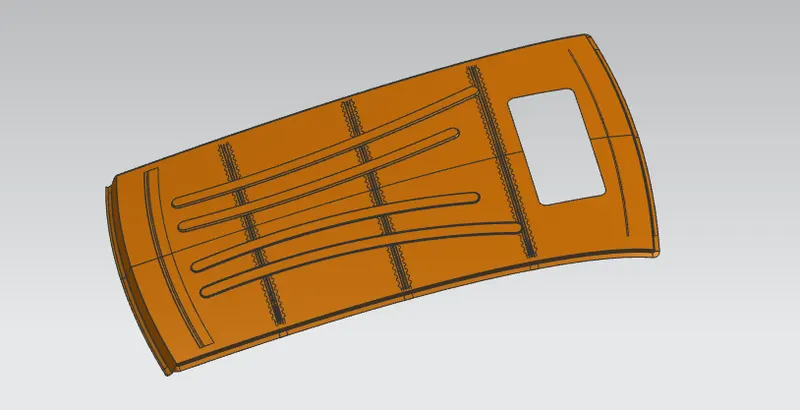
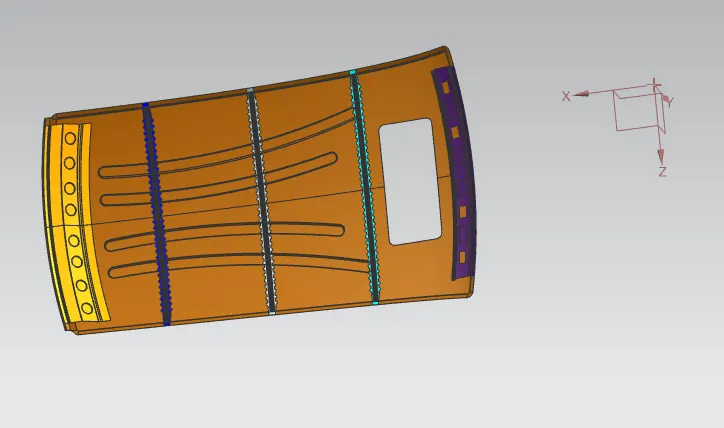
Roof challenge
AIM:
To Design a Car Roof and to do the curvature study to resist Heat distortion and snow load condition of the same.
INTRODUCTION:
Roof is not just a styling surface, it provides protection to the vehicle occupants so we need a good structure to the roof. In the roof assembly we have roof rail, roof bow, roof support etc which make the roof stronger.
As a safety point of view roof panel is undergone through varies test in which crush test and roll over test look for the strength of the part. So when designing we have to consider strength as an important point.
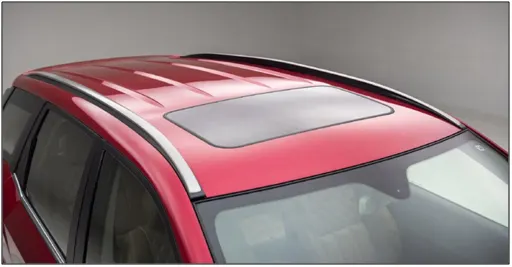
Types of Automobile roof:
- Convertible:A convertible ,cabriolet or spyder is a passenger car that can be driven with or without a roof in place.
- Hardtop:A hardtop is a rigid form of automobile roof,which for modern cars typically constructed from metal.A hardtop roof can be either fixed,detachable for separate storing or retractable within the vehicle itself.
- Sunroof:An Automotive sunroof is a movable panel that is operable to uncover a window in an automobile roof.which allows light and fresh air into the passanger compartment.
- T-top: A T-top is an automobile roof with a removable panel on each side of a rigid bar running from the center of one structural bar between pillars to the center of the next structural bar. The panels of a traditional T-top are usually made of auto grade safety glass.
- Targa Top: Itis a semi-convertible car body style with a removable roof section and a full width roll bar behind the seats.
- Vinyl roof:Vinyl roof refers to a vinyl converting for a automobile’s top.This converting was orginally designed to give the appearance of a convertible to models with a fixed roof but eventually,it evolved into styling statement in its own right.
Design consideration of roof:
- Visibility criteria
- Head clearance
- Curvature study
- Heat distortion and snow load criteria
- Draft analysis
- Safety parameters
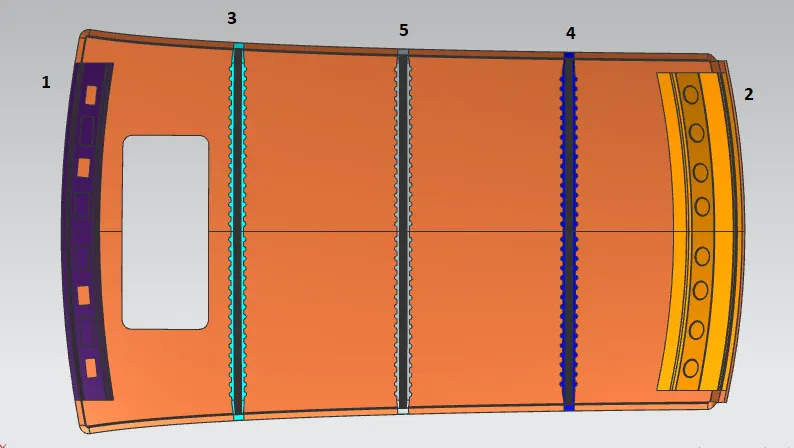
The Automobile roof consists of the following parts:
- Front roof Rail
- Rear Roof Rail
- Bow Roof 1
- Bow Roof 2
- Centre Roof Rail and bow roof 3
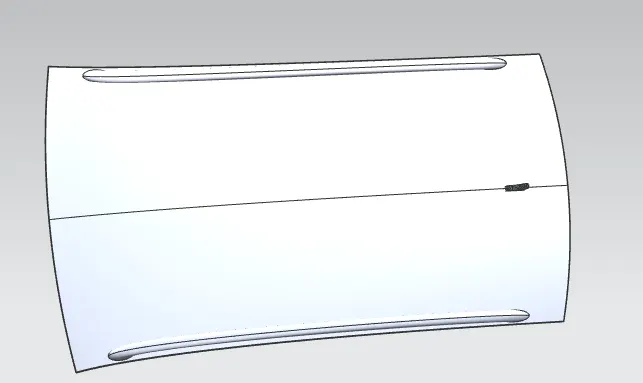
- The outer panel
ROOF:
An automobile roof or car top is the portion of an automobile that sits above the passenger compartment, protecting the vehicle occupants from sun, wind, rain, and other external elements. Because the earliest automobiles were designed in an era of horse-drawn carriages, early automobile roofs used similar materials and designs.
FRONT ROOF RAIL :
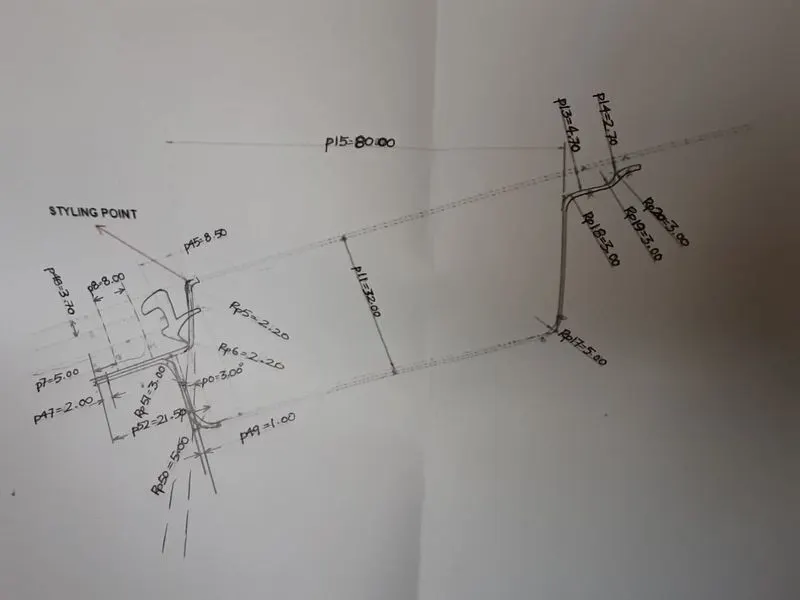
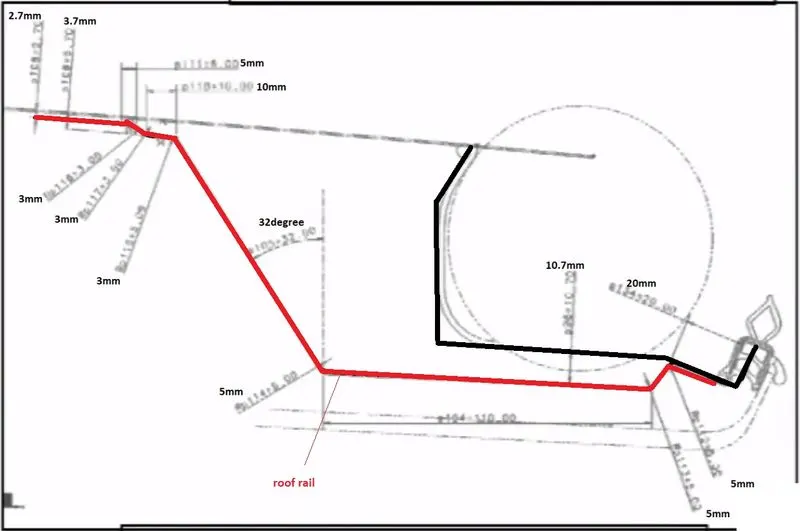
Front roof rails are used in the assembly of a roof in which it provide mounting provisions to windshield glasses and the changes in the front roof rail influences the frontal visibility of the passenger. The major design factor considered is the headroom clearance. The front roof rail also provides provision for the mounting the inside rear view mirror.
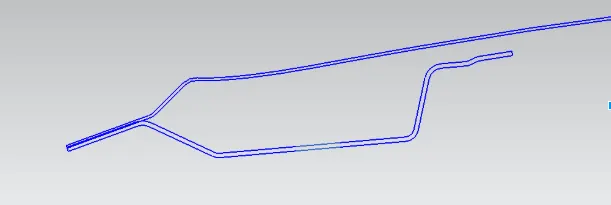
Master section for front roof rail
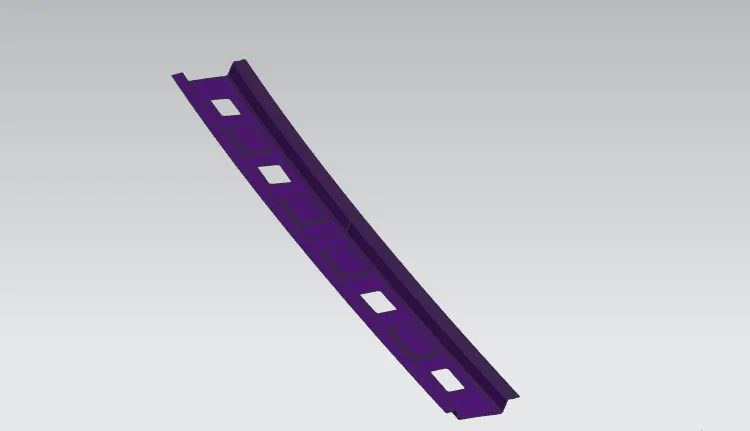
REAR ROOF RAIL:
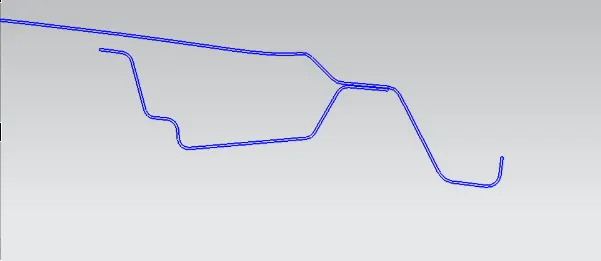
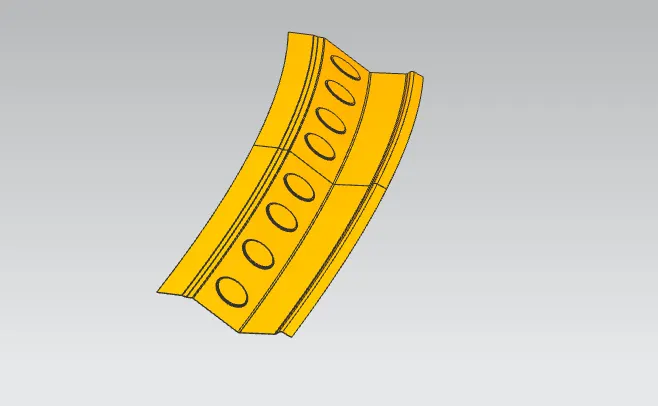
The rear roof rail is the one of the important components of roof assembly which is used for the back door mounting. Similarly to front roof rail important design consideration includes rear passenger head clearance rear visibility of the vehicle.
Master section of rear roof rail
CENTER ROOF RAIL (REINFORCEMENT CENTER):
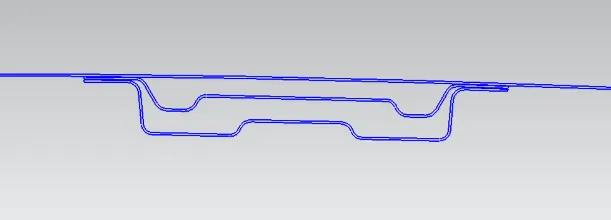
The reinforcement center is used as a cross member between bodyside LH and RH respectively. In some cases, the reinforcement center is not joined with the roof in both roof and bodyside. The reinforcement center and bow roof are joined either spot weld or by mastic sealants and provision for the same are given.
Master section of reinforcement center
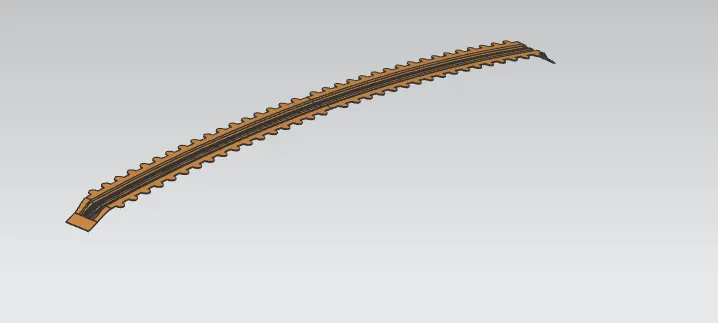
BOW ROOF:
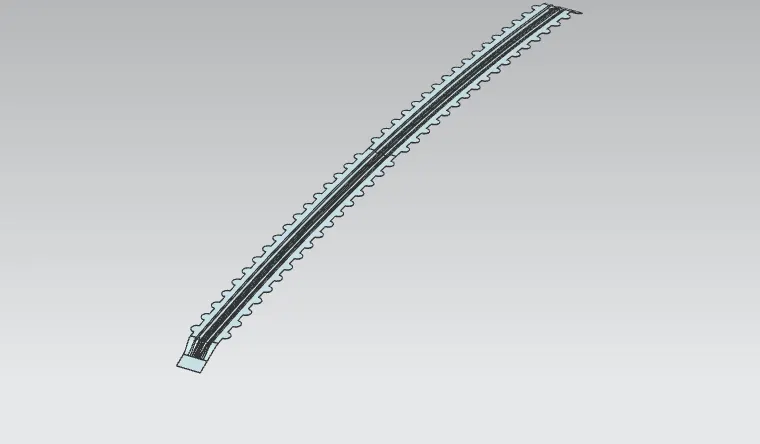
It is an additional stiffening member used in the roof assembly for the localized strength improvements and it is joined directly to roof itself with several spot welding or even with the mastic sealant.
Master section of Bow Roof
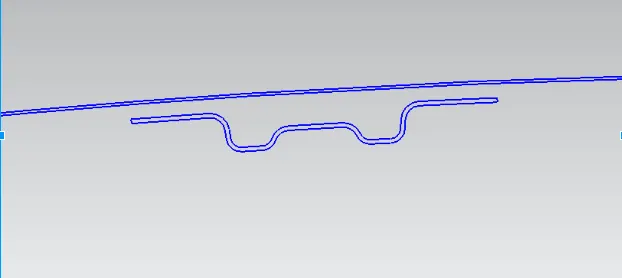
bow roof 1:
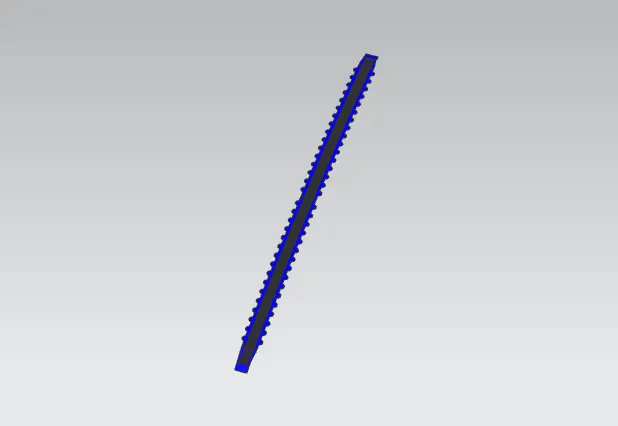
bow roof 2:
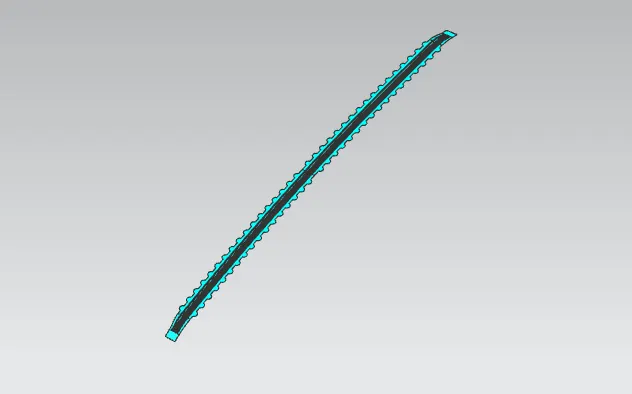
bow roof 3:
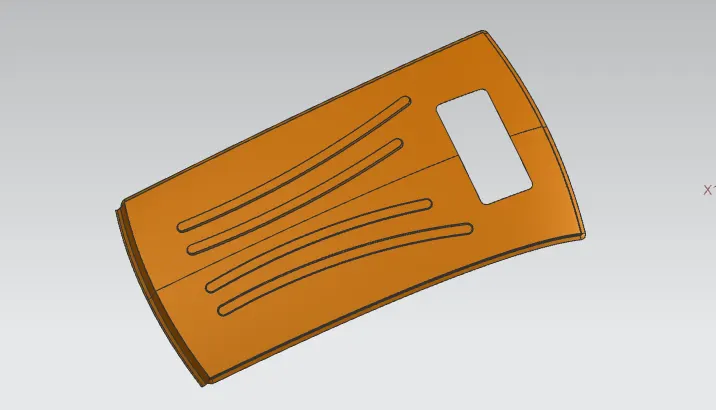
roof outer panel:
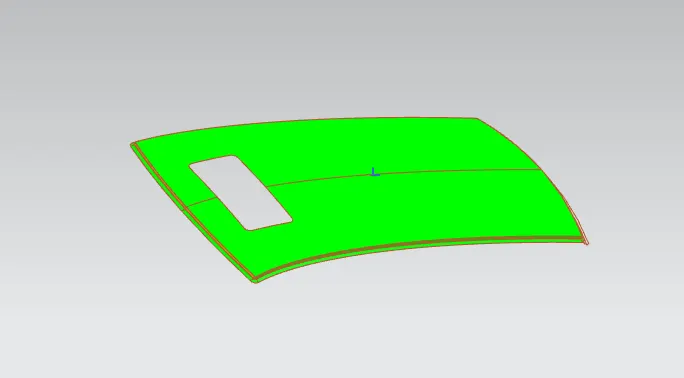
draft analysis:
Parts cannot be ejected from the tool if it is at 90- degree for this reason, a small draft is to be provided for each surface for the components in order to easily remove the components from the mould without any defects. Draft is the angle in which the part is tapered to allow it to release. Most of the sheet metal part require minimum 7 degree to 10 degree however 7 degree is widely accepted in sheet metal components design.
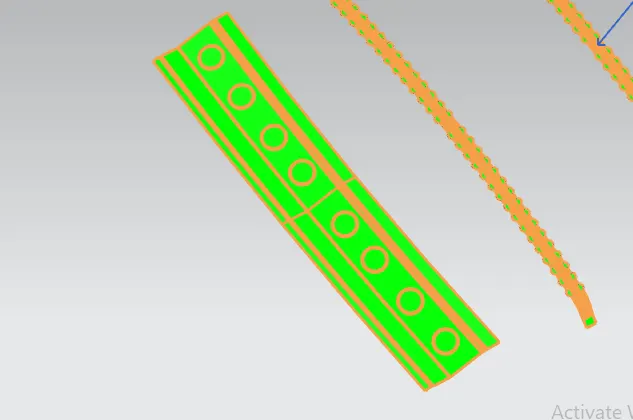
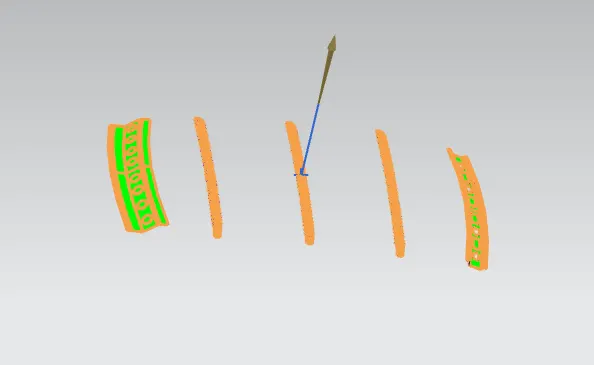
Section modulus calculation:
Section modulus is a geometric property for a given cross-section used in the design of beams or flexural members. Other geometric properties used in design include area for tension and shear, radius of gyration for compression, and moment of inertia and polar moment of inertia for stiffness. Any relationship between these properties is highly dependent on the shape in question.
Formula to calculate section modulus:
S=I/Y
where,
S - Section modulus
Y - Moment of inertia
I - Maximum distance between neutral axis andone of the extreem end of the object
Bow Roof :
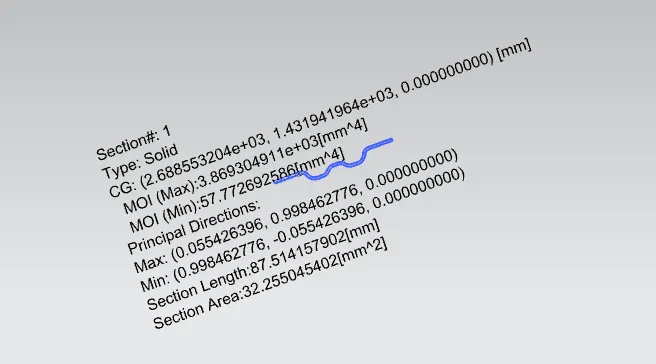
I=3869.304mm^4
y= 38.9 mm
s=11.0652 mm^3
HEAT DISTORTION CRITERIA:
Heat distortion temperature is the temperature at which the metal softens and deforms under a specific load. This study is done to check the ability of the roof to withstand high temperature with respect to the positioning of the reinforcements which contribute to increased strength.
Formula to calculate Heat Distortion,
W = [1.73 x 10^(-3) x L] + [1.85 x 10^(-8) x (R^2)/t] + [ 1.10x10^(-3) x l] - 2.68
Judgement Condition : OK< 2.7> 3.1
Where
L = Roof Length in X-Direction[mm](Roof dimension in 0-Y)
R = Roof curvature
R = 2(Rx*Ry)/(Rx+Ry)
Rx = X curvature
Ry = Y curvature
t = Roof plate thickness [mm]
l = Bow Roof Span [mm]
Heat distortion criteria:
we have sun roof in between front roof rail and bow roof 1 so we need not to find the Heat distortion criteria
| SL NO | BOW's | Rx(mm) | Ry(mm) | R(mm) | I (mm) | L (mm) | t(mm) | (R^2)/t(mm) | W(mm) | Status |
| 1 | 1st & CRR | 3606.038 | 4301.128 | 3923.031 | 473.437 | 2030.12 | 0.75 | 20520235.9201 | 1.7325 | OK |
| 2 | CRR & 2nd | 3051.388 | 10725.015 | 6101.040 | 473.627 | 2030.12 | 0.75 | 49630252.153 | 2.27 | OK |
| 3 | 2nd & RR | 2213.165 | 6939.917 | 3356.034 | 303.155 | 2030.12 | 0.75 | 15017285.634 | 1.44 | Ok |
FR - Front Roof Rail
CRR - Central Roof Rail
1st & 2nd - Bow Roof 1 and 2 respectivley
RR - Rear Roof Rail
Snow load Prediction:
This evaluation performed in cold region where snow occurs. Roof design must pass through these calculations to ensure that it has sufficient stiffness to withstand the load due to accumulation of snow over roof.
Snow load Prediction Formula:
Qr = [Iy x t2] / [α x s x [(Rx + Ry)/2]2 x 10-8]
Note: The Qr value given over here is correct. There was a typo error in the formula given in the video.
Where,
α = My x Lx2 x 10-12 , My = Y(Ly-Y)
Judgement condition = Qr ≥ 3.1
250 ≤ s ≤ 380
t = Roof plate thickness [mm]
Ly = Distance between the front and rear roof Rails on the Vehicle along with 0Y[mm]
Length of Roof panel with the center point between Roof rail Front /Rear as the front and rear reference point.
Lx = Distance between the Left and Right end of the roof on the Roof BOW [mm]
Width of the roof panel exposed on the surface.
Y = Distance front Front Roof Rail to Roof BOW[mm]
s = Distance for which Roof BOW bears divided load [mm]
s = L1/2 + L2/2
Iy = Geometrical moment of inertia of Roof BOW (Y cross-section )[mm4]
Rx = Lateral direction curvature radius of roof panel Y cross-section on Roof BOW [mm]
Roof panel curvature Radius of the Length Lx in Front view
Ry = Longitudinal Direction curvature radius of the Roof panel X cross-section on Roof BOW [mm]
Roof panel X curvature radius of length s in Side view
Snow load criteria:
| Sl no | BOW's | t | Lx mm | Ly mm | Y mm | My mm^2 | α mm^4 | s mm | Rx mm | Ry mm | Iy mm^4 | Qr | Status |
| 2 | bow 1 & CRR | 0.75 | 1097.3 | 2030.12 | 507.742 | 772975.25 | 0.935 | 508.405 | 2940.621 | 6269.2632 | 8694.5720 | 48.321 | OK |
| 3 | CRR & bow 2 | 0.75 | 1069.08 | 2030.12 | 509.069 | 774319.912 | 0.848 |
481.227 |
3247.935 | 11357.570 | 3869.304 | 108.62 | OK |
| 4 | Bow 2 &RR | 0.75 | 1056.09 | 2030.12 | 453.385 | 714867.998 | 0.860 |
DIV/0 |
4769.215 | 5712.224 | DIV/0 |
final view: