Week- 5 - Solid meshing
OBJECTIVE:
For Rear view mirror component,
- Check for the geometrical errors
- Mesh the Surfaces with the given 2D element Quality criterias given below.
|
S.No |
Quality Criteria |
Value |
|
1 |
Target/Average length |
1 |
|
2 |
Minimum Length |
0.5 |
|
3 |
Maximum Length |
2 |
- Use tetra elements to mesh the Volumes defined in the model
- check for the below quality after Volume meshing.
|
S.No |
Quality Criteria |
Value |
|
1 |
Tet collapse |
0.2 |
PROCEDURE:
Import:
The given file is imported using file>Open>File Location>File
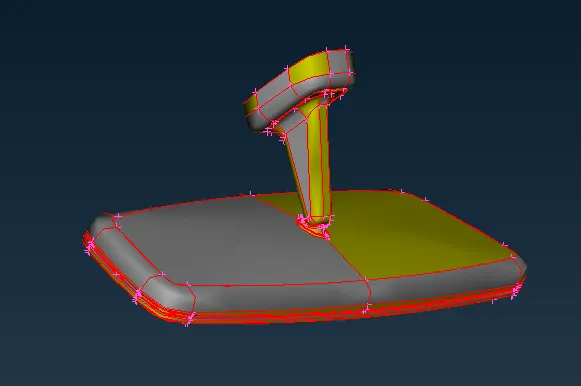
Imported file is as shown above, which is having many topo errors and disconnectivities.
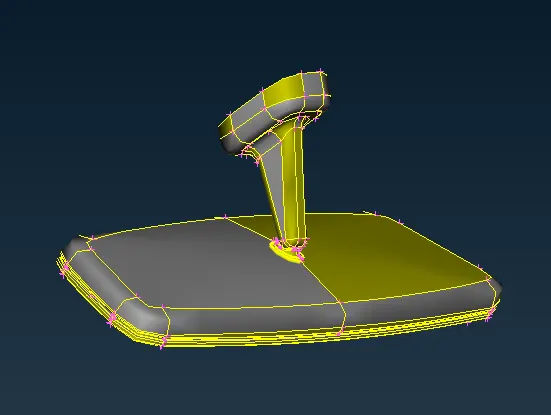
Topo option is used to clear off the topological error present in the model, above iimage shows the model after topo action is performed.
Geometry Check:
Once the topo action is done, the model is checked for geometrical errors, any error in the model is fixed using geometry check.
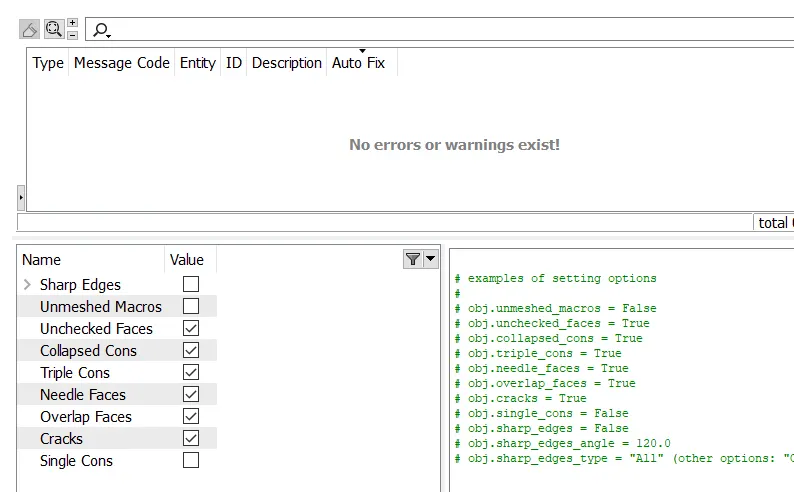
Geometry check is performed and made sure that there are no surface irregularities and can be further progressed to meshing.
Orientation:
Once imported, the orientation of the model is corrected using the orient option under faces tab.
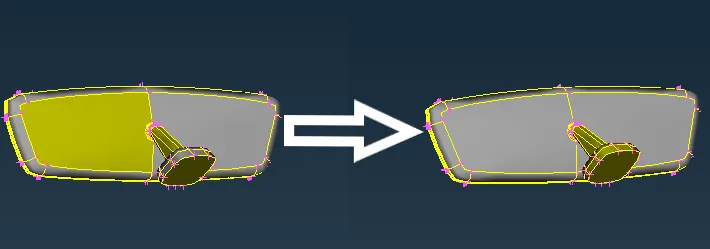
Above image shows how the orient tool changes the orientation of the entire model.
Mesh Parameters:
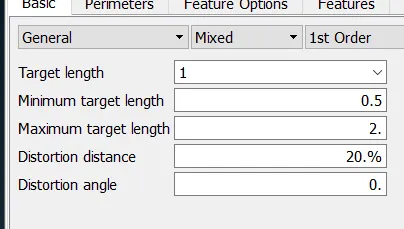
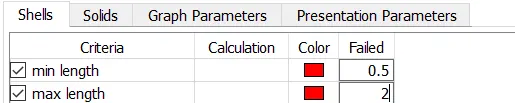

Mesh parameters are defined as specified.
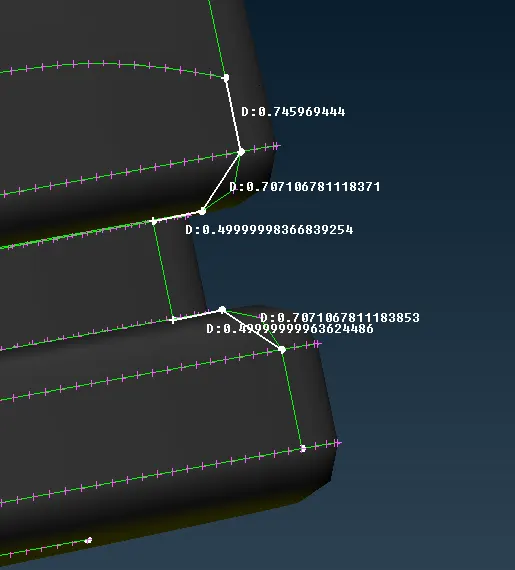
Measurement around fillets are taken and small regions are joined for better meshing without elements violating the quality criteria
Meshing:
Once the fillets are joined and surfaces are splitted to make perfect mesh, 2-D meshing of the surfaces are done.
Spot mesh option is used with ortho tria elements to capture rounded surfaces and tria elements are used foe meshing plane areas with best mesh option.
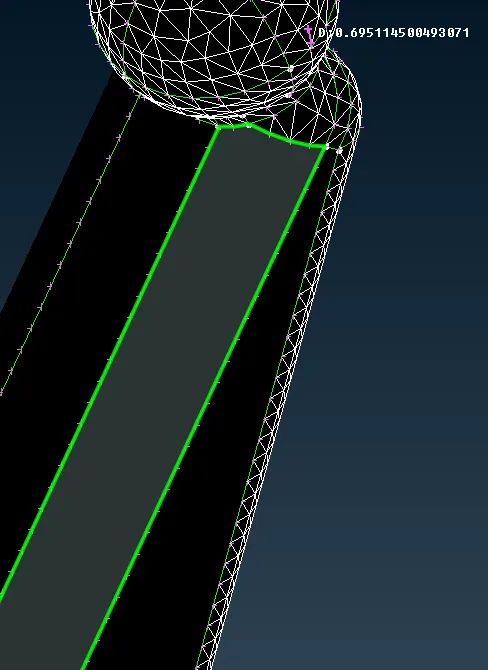
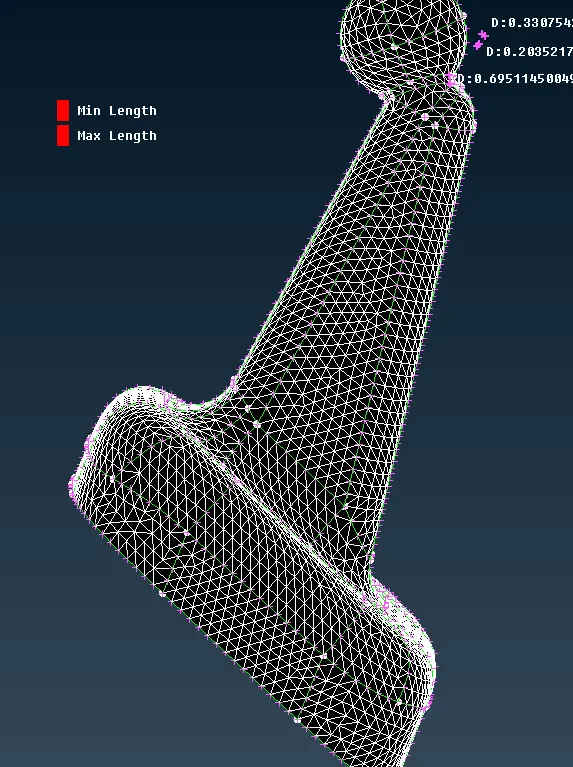
After the part is meshed with tria and ortho tria elements using spot mesh and best mesh options, new volume is defined.
Each part of the mirror model is stored under different volumes.
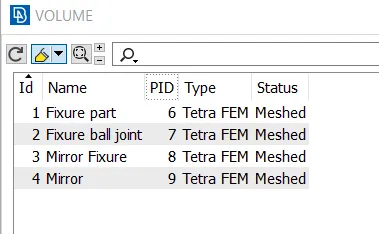
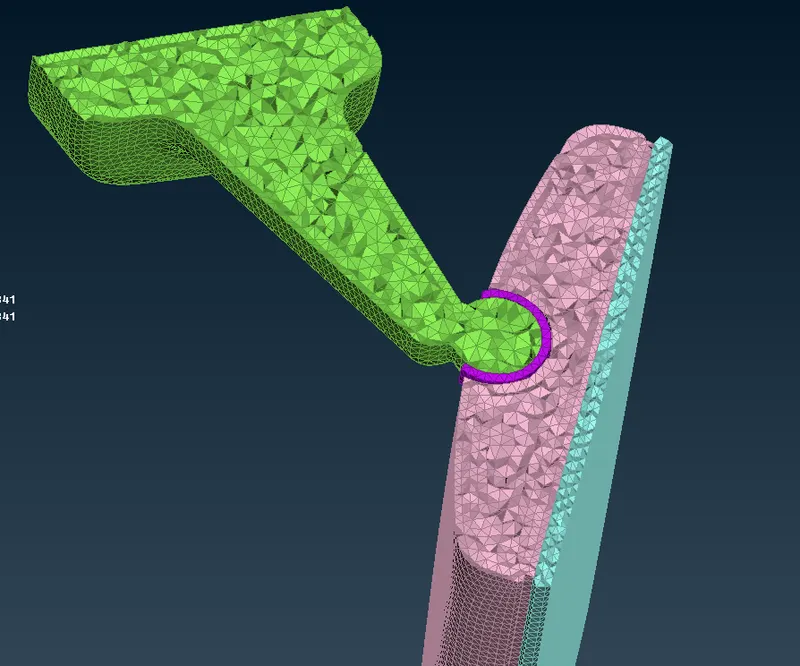
after volume is defined, Tetra fem option under unstructured mesh is used for specific volumes to obtain solid meshing.
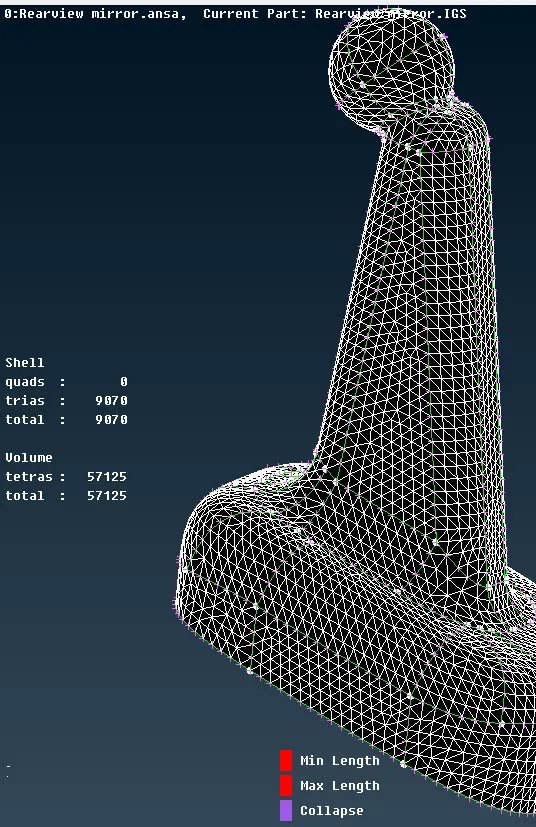
Geometry mode and fe mode is hidden and volume mode is used to view how the solid tetra meshing is obtained.
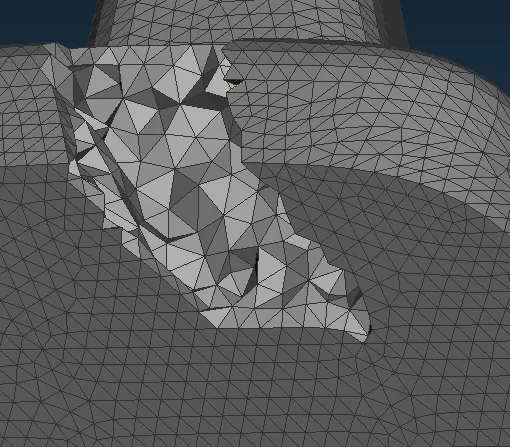
Alignment:
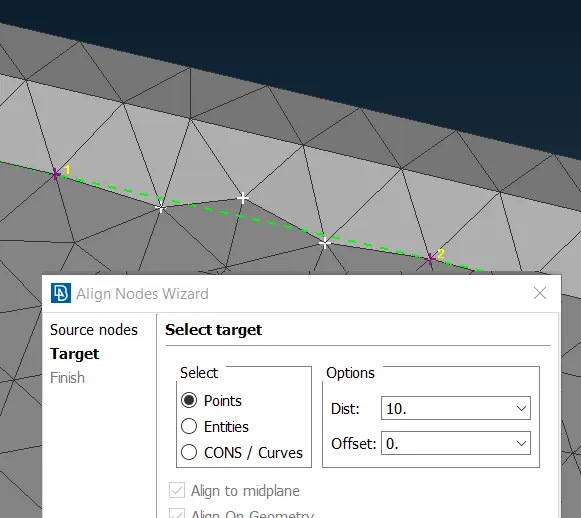
After solid mesh of the defined volumes are obtained, alignment issue around corners are corrected using align option to avoid any kinks and dips in the mesh obtained.
CONCLUSION:
Hence the given Rear view mirror model is performed with the following actions:
- Geometry check performed and cleared errors from the geometry
- Performed 2-D meshing of the model surfaces with elements following specified quality criteria
- Defined volumes for each different part of the model
- Obtained tetra mesh using TetraFEM option for respective volumes
- Checked for tet collapse criteria.
- Alignment of elements done to avoid kinks and dips in certain regions.
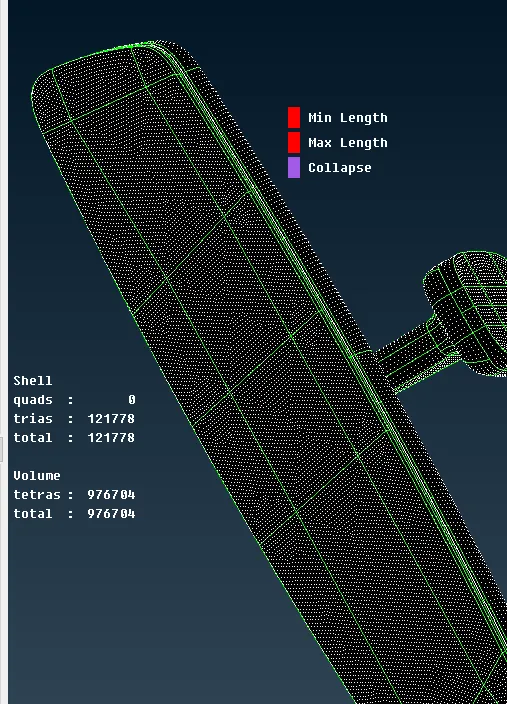
Above image shows number of tria element in shell and volume with zero quad and off elements.
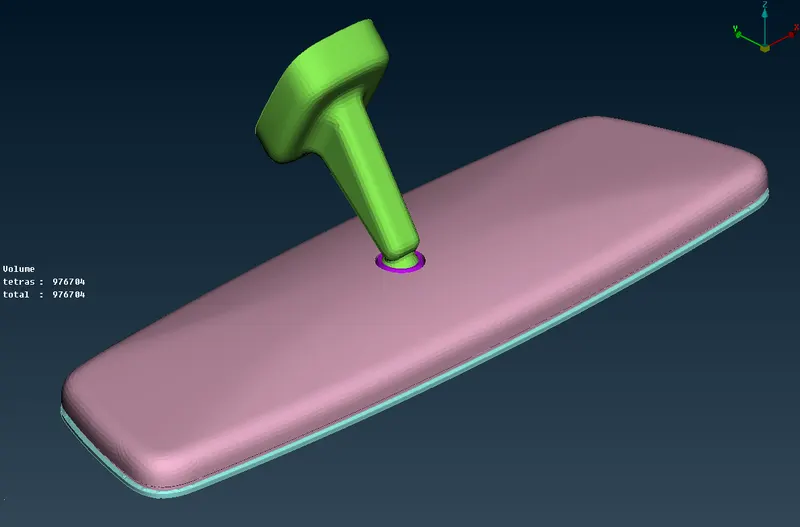
Volume mesh using tetra elements of rear view mirror model shown above.