Week 4 - CHT Analysis on Exhaust port
CHT ANALYSIS ON EXHAUST PORT
About CHT analysis: -
CHT means Conjugate Heat Transfer which can tell combination of heat transfer in solids and fluids. This numerical analysis will give brief idea about conduction, convection and radiation or coupling of anyone of these three. The CHT analysis is used in process which involves variations of temperature within solids and fluids due to thermal interaction between the solids and fluids. The rate of heat transferred heat is directly proportional to the temperature difference between the bodies.
The physics of conjugate heat transfer is common in many engineering applications, including heat exchangers and electronic component design.
y+ value according to the turbulence model:
- Here in this present simulation i used K-epsilon turbulence model.
- As, we know that range of the Y-plus value should be in between 30-300.
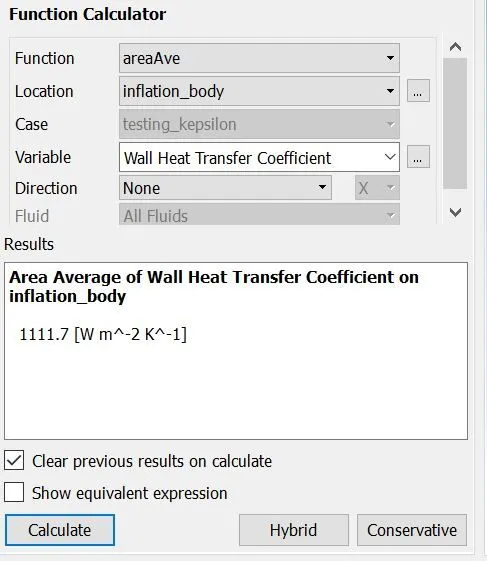
- Here our main focus is to find the heat transfer coefficient for the wall which is in between solid and fluid.
- In below figure we can see the 4 cylinders exhaust port.
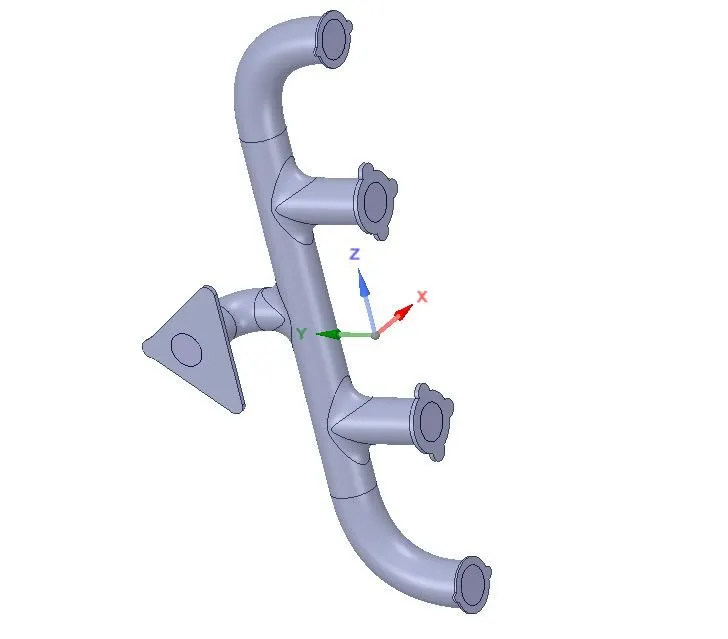
Fig (1): - Geometry of exhaust port of a 4-cylinder engine
Input parameters and boundary conditions: -
- On solid surface we are giving convective heat transfer coefficient as 20 w/m2.k . except this remaining all walls subjected to be adiabatic walls.
- Inlet’s velocity is 5 m/sec and temperature is 700k and outlet is pressure outlet.
- Our main focus is to find the possible regions of hotspots in exhaust port.
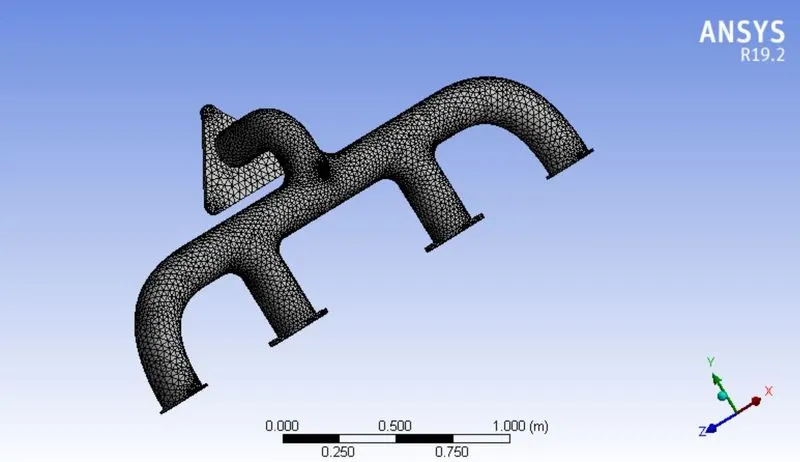
Fig (2): - Meshing of exhaust port of a 4-cylinder engine
In below figure we can see the y+ value of wall surface which is in between solid and fluid.
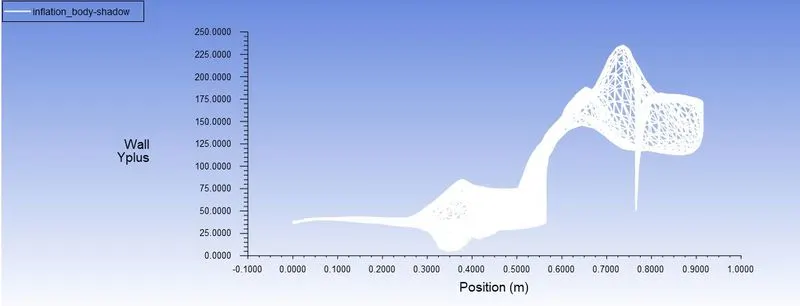
Fig (3): - Y-plus of the wall surface between solid and fluid part
- In below figure we can see that heat transfer coefficient of the wall surface.
Velocity and temperature contours: -
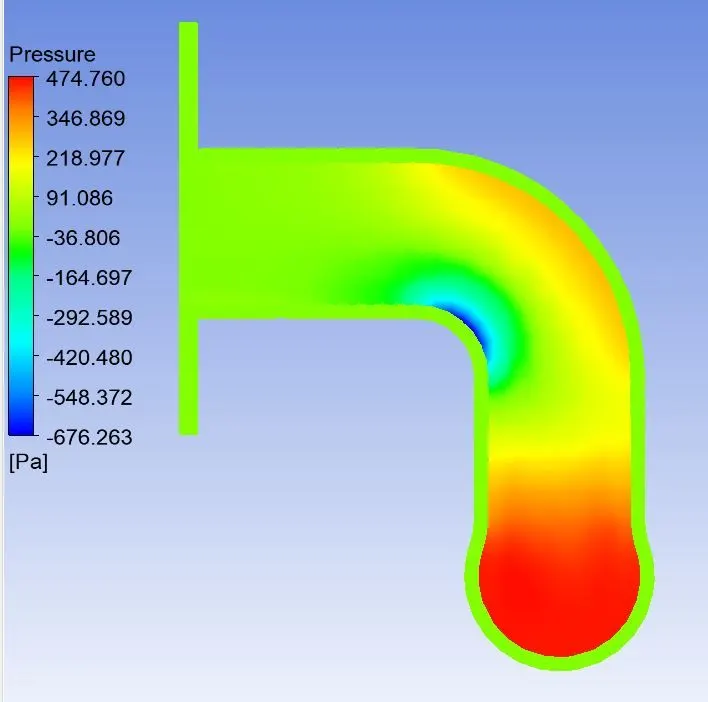
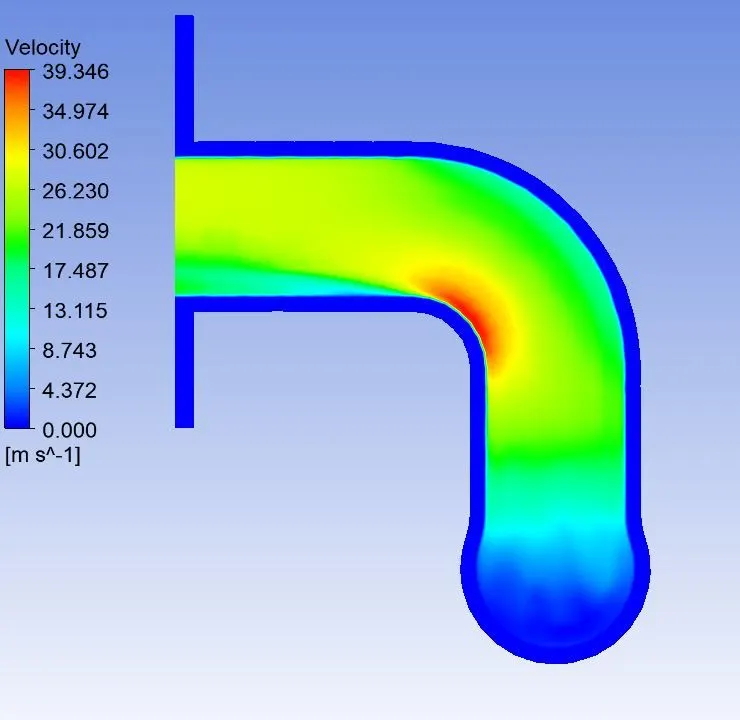
Fig (4): - Pressure and velocity contours
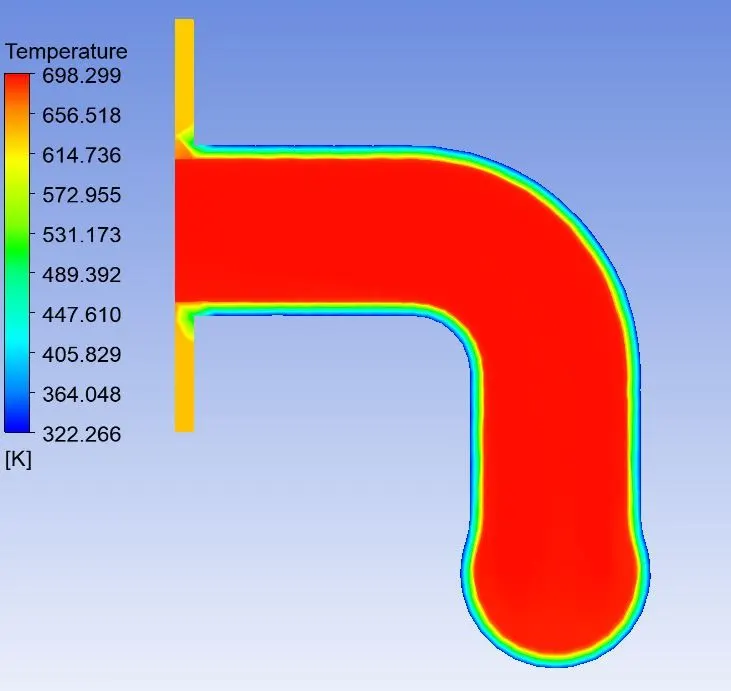
Fig (5): - Temperature contour
Heat transfer coefficient calculation: -
Factors effecting on the results prediction: -
- Element size and quality means more finer mesh then more accurate results.
- Inflation layers which is depends on turbulence modelling
- Mesh at solid and fluid interface
Verification of HTC results: -
- We can verify this numerical results with analytical values.
- There is a formula of nusselt’s number, which is describes the hear transfer rate convction to conduction.
Nu = h*L/K
Where,
h- heat transfer coefficient
Nu – Nusselt’s number
L- Characteristic Length
- This nusselt’s number is directly proportional to Reynolds number and prandlt’s number which leads to above mentioned formula.
- But, the problem is there is no exact solution of this CHT problems analytically.
- By, predicting the variables which are associated with Nusselt number formula , we can end up with analytical solutions which is a complex process to do.