Project 1 Mechanical design of battery pack
AIM: To explain about the mechanical design of battery pack
OBJECTIVE:
1. To explain about ANR26650M1-B battery pack mechanical design
SOLUTION:
1. To explain about ANR26650M1-B battery pack mechanical design
Ans.
ANR26650M1-B is an Nanophosphate High Power Lithium Ion Cell. High-performance Nanophosphate Lithium Iron phosphate (LiFePO4) battery technology delivers high power and energy density combined with excellent safety performance and extensive life cycling in a lighter weight, more compact package. Our cells have low capacity loss and impedance growth over time as well.
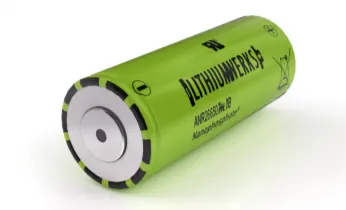
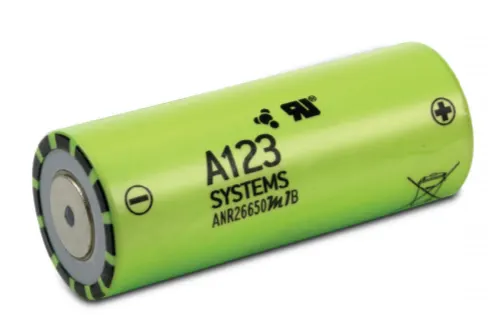
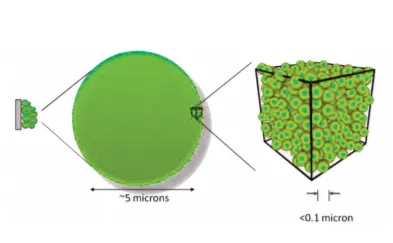
Nanophosphate battery technology offers thermal-stable chemistry, faster charging, consistent output, low capacity loss over time,
and superior total cost of ownership (TCO). It provides the foundation for safe systems while meeting the most demanding customer
requirements. Multiple layers of protection are employed at the chemistry, cell and system level to achieve an energy storage solution with
superior safety and abuse tolerance compared to metal oxide lithium-ion chemistries.
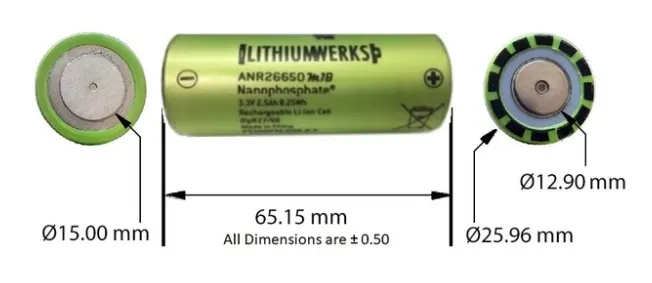
The following are the dimensions of the battery and its drawing also shown:
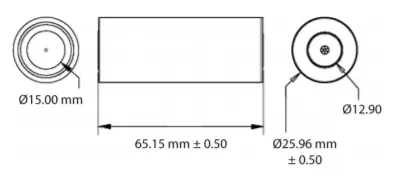
The ANR26650M1-B is the next generation of A123 Systems’ pioneering 26650 cylindrical cell, now with greater power and energy density and lower impedance. This versatile lithium ion cell is suitable for a wide variety of applications and system designs. Proven performance in the toughest conditions, combining durability, reliability, and safety, the ANR26650 cell offers an excellent combination of price-performance.
Cylindrical Cell Primary Applications
- Portable high power devices
- Stationary battery backup systems
- Grid stabilization energy storage systems
- Commercial truck and bus hybrid electric vehicles (HEVs)
Nanophosphate LiFePO4 Benefits
- Cycle Life at 1C/1C, 100% DOD, > 4000 cycles
- Safety: Excellent abuse tolerance and environmentally friendly
- Life: Excellent calendar life, 10X cycle life vs. conventional lithium ion
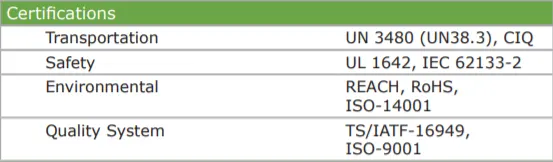
Specifications:
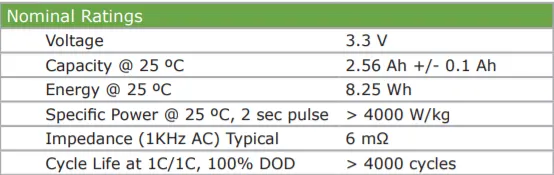
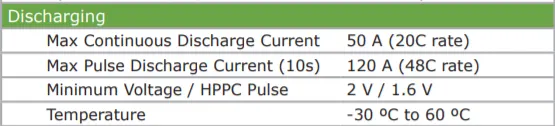
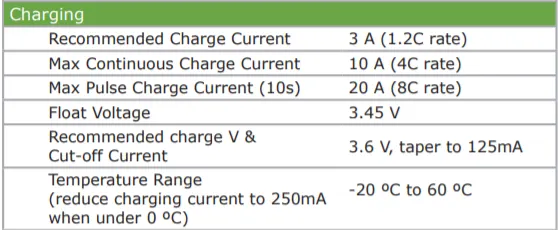


The following graphs shows the performance characteristics:
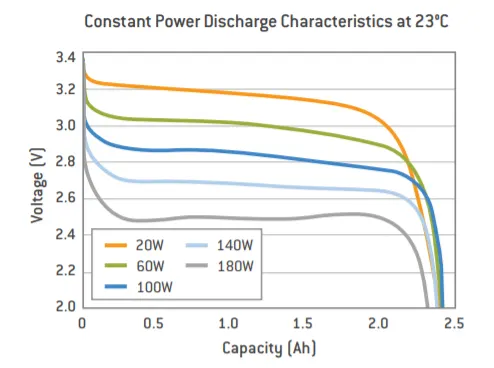
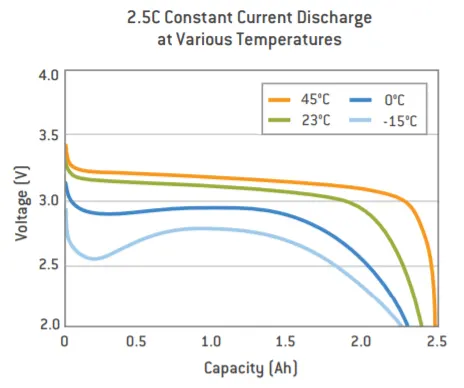
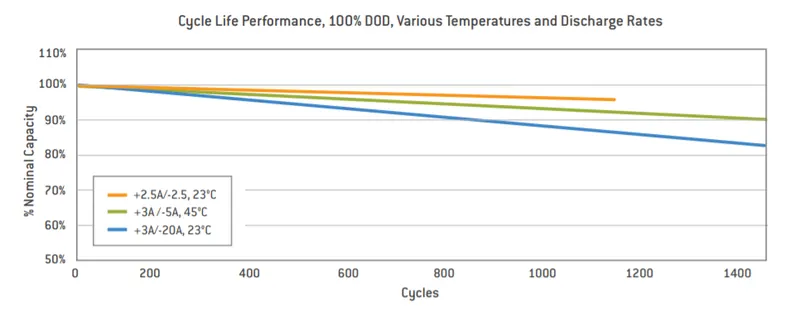
- If the discharge rate is more, the capacity of the battery is also reduced
Nanophosphate LiFePO4:
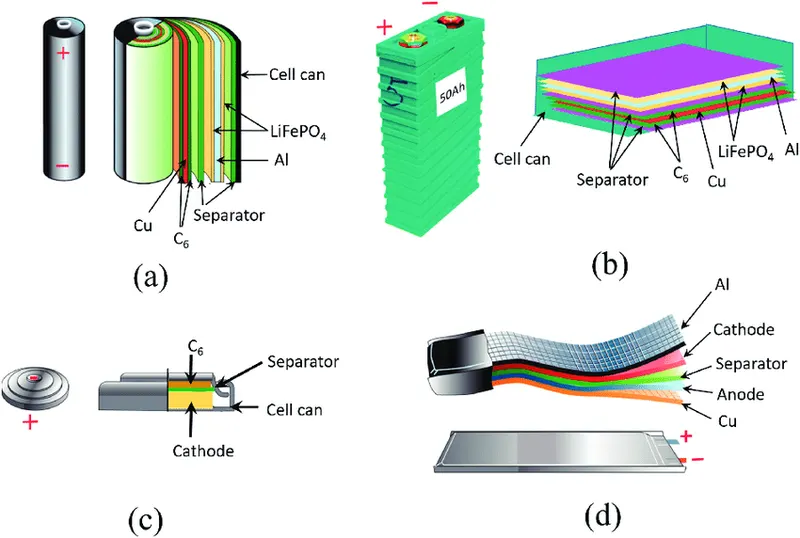
It is a type of Lithium Ion battery using Lithium Iron Phosphate (LiFePO4) or LFP as the cathode material, and a Graphitic carbon electrode with a metallic backing as the anode.
Because of low cost, low toxicity, well-defined performance, long-term stability, etc. LiFePO4 is finding a number of roles in vehicle use, utility scale stationary applications, and backup power.
LFP does not use any speculative material (neither Cobalt nor Nickel), has a good intrinsic safety and a very good life (calendar and cycle life). Its main disadvantage is to have a 20 to 50% lower energy density than other chemistries (mainly due to a lower nominal voltage at 3.2 V vs 3.6 V)
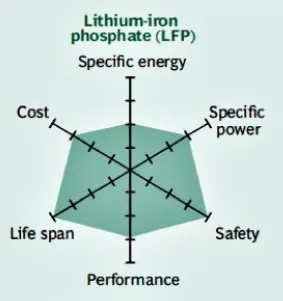
The structure or construction of LFP battery will be as follows:
Battery pack casing design:
Battery pack is combination of cells, mechanical connections, electrical connections, thermal management amd its controlling. In this problem we are describing A123 - ANR26650M1-B battery. The following are steps followed while designing the battery pack:
1. For battery pack construction, there are various tools, parts to be selected like
- ANR26650M1-B Battery
- BMS
- Ni Strips
- Spot Welder
2. For Nickel strips-
To make the battery pack, you have to to connect the cells together by means of Nickel strips or thick wire.Generally Nickel strips are widely used for this. In general two types of nickel strips are available in the market : nickel-plated steel strips and pure nickel strips. But pure nickel is best because it is little bit costlier than the the nickel plated steel, but it has much lower resistance. Low resistance means, less heat generation during the charging and discharging, which leads to longer useful battery life.
Nickel strips comes with different dimension and length.Choose the strips according to the current rating.
3. Connection of cells-
You have two options two connect the cells together : 1. Soldering 2. Spot Welding
The best choice is always Spot welding, but Spot Welder is much more costlier than a good quality Soldering Iron.
Soldering :
The problem with soldering is that you apply a lot of heat to the cell and it doesn’t dissipate very quickly. This enhance the chemical reaction in the cell which damages the cell's performance. Ultimately you will loose some capacity and life the cells.
But if you are not interested to buy a costly Spot Welder, you can solder the nickel tabs to the cell by following some precaution and tricks :
i. To minimize the contact time of your soldering iron on the cell, make sure the surface is scuffed up sufficiently and you use plenty of flux to allow for fast solder flow.
ii. It is better to have a good quality high wattage ( min 80W ) iron with good thermal capacity so it can deliver the heat to the joint quickly so you don't have to hold the iron to the battery for ages and let the heat seep into it, causing damage to the battery.
Spot Welding :
The reason we spot weld, because it is securely join the cells together without adding much heat to them.
4. Capacity and Voltage of battery pack-
To make the battery pack, you have to first finalize the nominal voltage and capacity of the pack.Either it will be in term of Volt , mAh/ Ah or Wh. You have to connect the cells in parallel to reach the desired capacity (mAh ) and connect such parallel group in series to achieve the nominal voltage (Volt ).
Given problem has requirement for battery pack capacity of 18kWh. In order to get the requirement, there should be more no.of cells connected in series and parallel.
We know,
Energy of battery = no.of cells * ( Nominal Voltage * Capacity)
From this No.of cells = Energy / (Nominal Voltage * Capacity)
From specifications of ANR26650M1-B, battery
Nominal voltage = 3.3 V
Capacity = 2.56 Ah
Energy required = 18kWh
No.of cells = 18k / (3.3*2.56)
Total No.of cells = 2130 cells
In order to get 18kWh, 2130 battery cells are required. In order to consume less space, cells are arranged in series and parallel connections.
In series - capacity is same and voltage is sum of individual cells
In parallel - voltage is same and capacity is sum of individual cells
So let's assume total voltage of battery pack is 90V
Then,
No.of cells in series required = Total voltage / (Individual voltage of cell)
Ns = 90 / 3.3
Ns = 27 cells (approx.)
Capacity of entire battery pack = Energy / Total voltage
Capacity of entire battery pack = 18k / 90 = 200 Ah
No.of cells in parallel required = Capacity of entire battery pack / Capacity of individual cell
Np = 200/2.56
Np = 79 cells (approx.)
Battery pack configuration is 27S79P
Total no.of cells obtained are 27*79 = 2133 but as per above calculation we need only 2130 cells, due to some decimal values at Np and Ns calculation I took the approx values to get required capacity extra 3 cells can be no problem.
5. Assembling the cells:
Cell holders can be used to hold the cells, which helps in maintaining gap between each cell thus providing air flow, pack will look solid and reliable in an arranged manner. It also provides safety antivibration to pack.
6. Spot welding the Nickel strips:
The Spot welder have three welding choices: fixed welding head, fixed welding head with foot switch, movable spot welding pen with foot switch.

This spot welder can be used to weld the pure nickel as well as nickel plated steel strips.You have to adjust the welder pulse and current knob according to the thickness of the nickel strips.
For 0.15 mm nickel strips, press the pulse knob 4P and current knob to 4-5.Similarly for 0.2 mm nickel strip , press the pulse knob 4P,6P and current knob to 7-8.Make sure the welding pen is compressed with the nickel strip and battery terminal, then press the foot switch.You will notice a small spark, and two dot mark on the strip.
You can check the weld quality by pulling on the nickel strip. If it doesn’t come off with hand pressure, or requires a lot of strength, then it’s a good weld. If you can easily peel it off, then you have to increase the current.
7. Adding BMS:
This is how it will looks like when we add the BMS to pack. Battery management system (BMS) is any electronic system that manages a a lithium battery pack and the main functionalities are
1. Monitors all of the parallel groups in the battery pack and disconnect it from the input power source when fully charged ( near 4.2V )
2. Balance all the cells voltage equally
3. Doesn't allow the the pack from over-discharged.
(*)
Diameter of cell = 25.96mm
Height of cell = 65.15mm
Weight of each cell = 76gm
Number of cells = 2133
Overview of battery pack:
An example of how battery pack looks like
CONCLUSION:
Mechanical design of battery pack is explained